
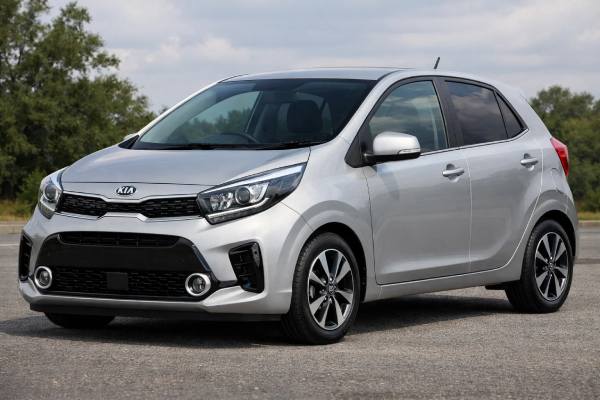
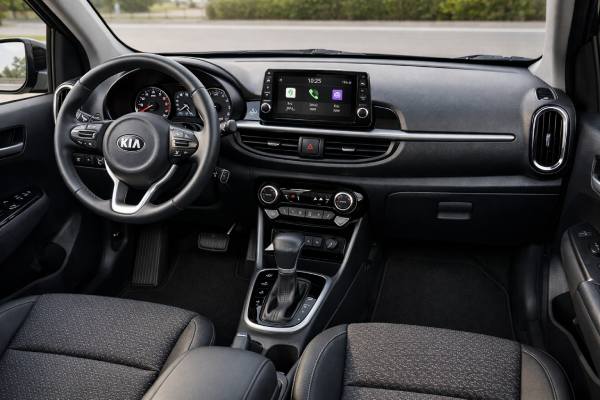
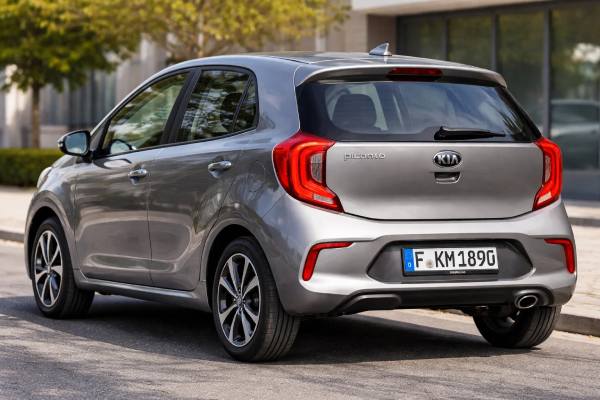
The facelifted Kia Picanto (JA) with the 1.2-liter G4LF engine targets drivers who want a small car that feels “complete” in everyday use: stable at urban speeds, easy to park, and simple to maintain. The 1.2’s biggest engineering advantage over the base 1.0 is smoothness and usable torque—especially in stop-and-go traffic and when the car is loaded. The facelift brought meaningful equipment upgrades in many markets (better infotainment, lighting, and available active safety), while the core mechanical package stayed conservative: multi-point fuel injection, straightforward cooling and accessory layout, and uncomplicated front-wheel-drive hardware.
For owners, the appeal is low running cost and predictable servicing. The trade-off is performance that is adequate rather than quick, plus equipment that varies widely by trim and region—so the best ownership experience comes from choosing the right spec and keeping up with fluid and brake maintenance.
Quick Specs and Notes
- Smooth, low-stress 1.2 for city driving; more relaxed than the 1.0 on hills and with passengers.
- Compact footprint with practical packaging—easy parking, usable cabin space for the class.
- Simple MPI fuel system and conventional drivetrain keep routine servicing straightforward.
- Check whether your trim includes advanced safety tech; many features are market- and package-dependent.
- Plan engine oil service about every 10,000–15,000 km (6,000–9,000 mi) or 12 months, sooner under severe use.
Guide contents
- Picanto JA facelift ownership fit
- Picanto JA G4LF specs tables
- Picanto JA trims and safety tech
- Reliability known issues and actions
- Maintenance plan and buying tips
- Driving feel and real-world economy
- How the Picanto stacks up
Picanto JA facelift ownership fit
This facelift-era Picanto is built around a simple promise: dependable small-car transport with enough refinement that you do not feel short-changed on a daily commute. The JA platform uses a conventional front-engine, front-wheel-drive layout with a strut front suspension and torsion-beam rear axle. That matters for ownership because it keeps alignment work, bushing replacements, and brake servicing familiar and inexpensive compared with more complex rear suspensions.
The G4LF 1.2 is the “sweet spot” engine in many markets. In plain terms, it gives you smoother idle and a more willing midrange than the smaller three-cylinder options. That translates to fewer high-rpm pulls in traffic, less vibration at stoplights, and easier merging when the car is full. It is still a light, short-wheelbase car, so you will notice crosswinds and rough surfaces more than in a larger hatchback—but the facelift tuning generally feels calmer than older city cars thanks to better sound insulation in higher trims and improved infotainment integration that reduces cabin “busy-ness.”
Where buyers should be careful is specification spread. The same “Picanto” badge can mean very different equipment: wheel sizes, headlight tech, audio screens, parking sensors, and active safety can change by grade and country. Some versions are intentionally basic; others (GT-Line and X-Line style trims) are genuinely well equipped for the segment. When you shop, focus less on the year and more on the exact trim, safety pack, and transmission.
Who it suits best:
- City and suburban drivers who value easy parking and low running costs.
- New drivers wanting a predictable chassis and light controls.
- Owners who prefer straightforward maintenance over complicated powertrains.
Who should think twice:
- Frequent high-speed motorway drivers who want stronger passing performance.
- Anyone expecting modern driver-assistance features as standard without checking the options list.
Picanto JA G4LF specs tables
Specifications vary by market and drivetrain pairing, but the tables below reflect the common facelift-era 1.2 MPI configuration used across many regions (often paired with a 5-speed manual or a 4-speed automatic). Use them as a decision guide and verify against your VIN-specific handbook or service data.
Powertrain and efficiency
| Item | Specification |
|---|---|
| Code | G4LF |
| Engine layout and cylinders | Inline-4 (I-4), DOHC, D-CVVT |
| Valves | 4 valves/cyl (16 total) |
| Bore × stroke | 71.0 × 78.8 mm (2.80 × 3.10 in) |
| Displacement | 1.2 L (1,248 cc) |
| Induction | Naturally aspirated |
| Fuel system | MPI (multi-point injection) |
| Compression ratio | ~10.5:1 |
| Max power | 84 hp (≈62 kW) @ ~5,500 rpm |
| Max torque | ~118 Nm (≈87 lb-ft) @ ~3,750 rpm |
| Timing drive | Chain (typical for this family; verify by VIN) |
| Rated efficiency | Commonly ~5.0–6.2 L/100 km (47–38 mpg US / 56–45 mpg UK), market-dependent |
| Real-world highway @ 120 km/h (75 mph) | Often ~6.0–7.0 L/100 km depending on tyres, load, and gearing |
Transmission and driveline
| Item | Specification |
|---|---|
| Transmission (common) | 5-speed manual (market-dependent) |
| Transmission (optional/common in some regions) | 4-speed automatic |
| Drive type | FWD |
| Differential | Open |
Chassis and dimensions
| Item | Specification |
|---|---|
| Suspension (front/rear) | MacPherson strut / torsion beam |
| Steering | Electric power steering |
| Brakes (typical) | Front ventilated discs / rear drums |
| Wheels and tyres (common) | 175/65 R14 or 185/55 R15 (trim-dependent) |
| Ground clearance | ~151 mm (5.9 in) |
| Length / width / height | ~3,595 / 1,595 / 1,485 mm (141.5 / 62.8 / 58.5 in) |
| Wheelbase | ~2,400 mm (94.5 in) |
| Cargo volume (VDA, seats up) | ~255 L (9.0 ft³) |
Performance and capability (typical ranges)
| Item | Typical result (varies by gearbox and market) |
|---|---|
| 0–100 km/h (0–62 mph) | ~13.5–16.0 s |
| Top speed | ~160–170 km/h (99–106 mph) |
| Braking distance 100–0 km/h | ~40–43 m (131–141 ft) with good tyres |
| Towing capacity | Often not rated or very limited; verify local homologation |
| Payload | Typically ~350–450 kg (772–992 lb), spec-dependent |
Fluids and service capacities (common references)
| Item | Specification |
|---|---|
| Engine oil | 0W-20 commonly recommended; alternatives by climate and market |
| Engine oil capacity | ~3.4 L (3.6 US qt) with filter (typical) |
| Coolant | Ethylene-glycol based long-life coolant, 50/50 mix typical |
| Coolant capacity | ~5.4 L (5.7 US qt), system total (typical) |
| Automatic transmission fluid | ATF specification varies; use handbook-listed fluid only |
| A/C refrigerant | Commonly R-134a or R-1234yf depending on market; verify by under-hood label |
| Key torque specs | See maintenance section for typical values and what to verify |
Safety and driver assistance (high-level)
| Item | Notes |
|---|---|
| Crash ratings | Euro NCAP results exist in different equipment levels; see trims section |
| ADAS | Some markets offer AEB and lane-related features in a safety pack; not universal |
Picanto JA trims and safety tech
The facelift years are less about a single “best trim” and more about matching equipment to your use. In many regions, the 1.2 engine is tied to mid or upper grades because it is positioned as the comfort/urban-upgrade choice. Common trim themes include:
Typical trims and what changes
- Base and mid grades (often 14-inch wheels): Softer ride, lower tyre cost, and usually simpler infotainment. These can be excellent value if you do not need advanced safety features.
- GT-Line style trims: Sportier bumpers, larger wheels (often 15-inch), firmer feel over sharp bumps, and more cabin tech. The tyre upgrade can improve steering response, but it also increases replacement cost.
- X-Line style trims: “Crossover-look” elements, sometimes slightly different bumpers and accessories. Mechanical differences are usually minor; focus on the option list, not the name.
Quick identifiers to check on a used car
- Wheel size and tyre profile (14 vs 15 inches).
- Headlight type (halogen vs projector-style in some markets).
- Infotainment screen size and whether it includes factory navigation.
- Parking sensors and rear camera presence.
- Steering wheel buttons and instrument cluster type (basic LCD vs larger TFT).
Safety ratings and why equipment matters
Euro NCAP testing for the Picanto shows that results can differ significantly depending on whether the car has an additional safety package. A key takeaway for buyers is that the headline star rating may not match your exact car unless the equipment list lines up. In practical terms, the difference usually comes down to whether the vehicle has camera/radar-based assistance and certain restraint or sensor calibrations.
Safety systems you should expect (market dependent)
- Core systems: ABS, electronic stability control, traction control, tyre pressure monitoring (region dependent), and front airbags.
- Additional airbags: Many trims include side and curtain airbags, but do not assume—confirm by badge/label or build sheet.
- Child-seat provisions: ISOFIX/LATCH points are common, but check for top-tether anchors and whether rear seat design makes installation easy.
- ADAS availability (often packaged): Automatic emergency braking (AEB), lane departure warning or lane keep assist, and sometimes driver attention alerts. On small cars, sensor alignment after a windshield replacement or front-end repair is a real ownership consideration—budget for calibration if the car is equipped.
The most important shopping step: match your “must-have” safety features to the exact trim and year rather than relying on the model name alone.
Reliability known issues and actions
Overall, the facelift Picanto 1.2 has a reputation for solid durability when serviced on schedule. Most problems are not catastrophic—they are the kind of age-and-use issues that show up on small cars driven hard in cities. The guide below groups issues by prevalence and cost impact so you can triage quickly.
Common (low to medium cost)
- Ignition coils or spark plug wear (40,000–100,000 km / 25,000–62,000 mi)
Symptoms: Misfire under load, rough idle, flashing check-engine light.
Likely cause: Coil degradation, worn plugs, or moisture intrusion at connectors.
Remedy: Replace plugs with the correct heat range; swap coils as needed (often best done in matched sets if multiple have failed). - 12 V battery and stop-start sensitivity (3–6 years)
Symptoms: Slow cranking, stop-start disabled, random warning lights after cold nights.
Likely cause: Battery capacity drop, especially with short-trip use.
Remedy: Test battery properly (CCA and reserve capacity), check charging voltage, and replace with the correct type (EFB/AGM where applicable). - Brake noise and corrosion from city use
Symptoms: Squeal, uneven braking feel, rear brake drag on drum setups.
Likely cause: Low-mileage corrosion, glazed friction material, or sticky hardware.
Remedy: Clean and lubricate slide points (front), service rear drums, flush brake fluid on time.
Occasional (medium cost)
- Cooling system seepage (age-related, 5–8 years)
Symptoms: Coolant smell, slow level drop, dampness near hose joints.
Likely cause: Hose clamp relaxation, thermostat housing gasket aging, minor radiator seep.
Remedy: Pressure test, replace clamps/hoses as required, refill with the correct long-life coolant mix. - Automatic transmission shift quality (higher mileage, heat exposure)
Symptoms: Harsh 2–3 shift, delayed engagement, flare under light throttle.
Likely cause: Old ATF, solenoid wear, adaptation drift.
Remedy: Drain-and-fill with the specified ATF (avoid “universal” fluids), then recheck behaviour; persistent issues may need a specialist diagnosis.
Rare (higher cost, but worth screening)
- Timing-related noise or correlation faults
Symptoms: Rattle on cold start, cam/crank correlation codes, rough running.
Likely cause: Chain/tensioner wear or oil maintenance neglect.
Remedy: Diagnose promptly; if confirmed out of spec, repair before it escalates.
Software, recalls, and service actions
Even simple cars can have important updates—especially for infotainment stability and safety sensors on ADAS-equipped trims. When you evaluate a used example:
- Ask for proof of recall completion and software updates at dealer visits.
- Verify by VIN through official recall channels and service history printouts.
- If the car has AEB/lane tech, confirm there are no unresolved camera faults and that any windshield replacement was followed by calibration.
Pre-purchase checks to request:
- Complete maintenance record (oil changes matter more than people think on small engines).
- Evidence of brake fluid changes and cooling system condition.
- Tyre brand and wear pattern (cheap mismatched tyres can make these cars feel nervous and noisy).
- For automatics: proof of at least periodic ATF servicing or a clean, smooth road test.
Maintenance plan and buying tips
A small, naturally aspirated MPI engine rewards consistent servicing. The goal is not perfection; it is avoiding long oil intervals, neglected brake fluid, and cheap consumables that create avoidable drivability issues.
Practical maintenance schedule (typical guidance)
Use distance or time, whichever comes first:
- Engine oil and filter: every 10,000–15,000 km (6,000–9,000 mi) or 12 months; severe use (short trips, heavy traffic, dusty areas) closer to 7,500–10,000 km (4,500–6,000 mi).
- Engine air filter: inspect every 15,000 km; replace around 30,000–45,000 km (19,000–28,000 mi) or sooner in dust.
- Cabin filter: every 15,000–30,000 km (9,000–19,000 mi), depending on environment.
- Spark plugs: commonly 60,000–100,000 km (37,000–62,000 mi) depending on plug type and handbook interval.
- Coolant: often long-life; many schedules fall in the 5–10 year range. Replace sooner if contamination or repeated top-ups occur.
- Brake fluid: every 2 years is a smart baseline regardless of mileage.
- Brake inspection: at every service; rear drums benefit from periodic cleaning and adjustment checks.
- Manual gearbox oil: often “lifetime” in marketing terms, but a change around 100,000 km (62,000 mi) can improve shift feel.
- Automatic transmission fluid: conservative owners service every 50,000–80,000 km (31,000–50,000 mi) with the correct ATF.
- Tyre rotation and alignment: rotate every 10,000–12,000 km (6,000–7,500 mi); align if wear is uneven or after suspension work.
- 12 V battery test: annually after year 3; expect replacement around years 4–6 depending on climate and usage.
Fluid specs and capacities (decision-friendly)
- Engine oil: 0W-20 is a common recommendation; choose the viscosity grade approved for your climate and market.
- Oil capacity: about 3.4 L with filter (plan 4 L to allow topping up).
- Coolant: long-life type, typically used as a 50/50 mix; total fill often around 5.4 L.
- ATF: do not guess—use the exact specification listed for your transmission code and region.
Typical torque values to verify
These vary by VIN and market; treat as common reference ranges and confirm for your car:
- Wheel nuts: ~90–110 Nm (66–81 lb-ft)
- Engine oil drain plug: ~30–40 Nm (22–30 lb-ft)
- Spark plugs: ~15–25 Nm (11–18 lb-ft)
Buyer’s guide: what to look for
- Cold start: listen for rattles that persist beyond a few seconds; check for stable idle.
- Cooling system: confirm the coolant level is steady, not repeatedly topped up.
- Transmission behaviour: manual should shift cleanly without crunch; automatic should engage promptly and shift smoothly under light throttle.
- Brakes: look for pulsing, pulling, or a long pedal; check rear drum service history if mileage is high.
- Suspension and steering: clunks over bumps often point to worn links or bushings; uneven tyre wear suggests alignment neglect.
- Electronics: test every switch, window, mirror, camera, and parking sensor—small electrical annoyances add up.
Long-term outlook: with routine fluids and sensible tyres, these cars tend to age well mechanically. The best “investment” is choosing a well-maintained example with the safety and comfort features you actually want.
Driving feel and real-world economy
The 1.2 facelift Picanto feels like a mature city car: light, responsive, and easy to place in traffic, without the constant vibration or strained sound that some small engines produce. The steering is typically light at parking speeds and stable enough once rolling, although it is not a feedback-rich setup. Around town, the short wheelbase makes speed bumps and sharp edges noticeable, especially on 15-inch wheels with lower-profile tyres. If comfort is a priority, the 14-inch package often rides better and costs less to maintain.
Powertrain character
- Throttle response: The 1.2 MPI is predictable and linear. It does not have turbo “punch,” but it also avoids turbo lag and heat-related complexity.
- Low-rpm pull: Stronger than the 1.0 in normal driving; fewer downshifts on gentle hills.
- Automatic behaviour (where fitted): A 4-speed automatic prioritizes smoothness over performance. Expect wider gaps between gears and higher revs on inclines compared with modern 6–8 speed units.
- Manual behaviour (where fitted): Typically the more efficient and more responsive option, with better engine braking and simpler servicing.
Real-world efficiency
Your results depend heavily on tyre choice, gearing, and traffic patterns:
- City: often ~5.8–7.2 L/100 km (41–33 mpg US / 49–39 mpg UK)
- Highway (100–120 km/h / 60–75 mph): often ~5.5–7.0 L/100 km (43–34 mpg US / 51–40 mpg UK)
- Mixed: commonly ~5.6–6.6 L/100 km (42–36 mpg US / 50–43 mpg UK)
Cold weather and short trips can add a noticeable penalty, mainly because the engine spends more time warming up and the cabin heater load increases.
Performance metrics that matter day-to-day
- 0–100 km/h: mid-teens seconds is normal; it is fine for city and suburban roads but not “quick.”
- Passing: the key is planning—overtakes require space, especially with the automatic and with passengers onboard.
- Braking feel: on well-maintained brakes and decent tyres, the pedal feel is consistent. Cheap tyres can dramatically worsen stopping and stability on wet roads.
Traction and control
This is a front-wheel-drive car; winter traction depends more on tyre quality than anything else. If you live in a cold climate, budget for proper seasonal tyres—this chassis responds well to good rubber and feels more confident than many people expect from a small hatch.
How the Picanto stacks up
In the city-car class, the facelift Picanto 1.2 competes on “total usability” rather than headline power. Its closest rivals usually include other A-segment hatchbacks and small B-segment entries in base trims. Here is how it tends to compare in real ownership terms.
Where the Picanto 1.2 wins
- Smoothness and simplicity: A naturally aspirated four-cylinder MPI setup is easy to live with. It avoids turbo complexity and typically feels more refined than a base three-cylinder in stop-start traffic.
- Packaging: The footprint is genuinely small, yet the seating position and control layout feel grown-up in better trims.
- Running costs: Tyres, brakes, and routine service items are usually affordable—especially on smaller wheel packages.
Where rivals may do better
- Highway performance: Some competitors offer small turbos or more modern automatics that feel more relaxed at speed and provide better passing response.
- Active safety availability: Depending on market, rivals may include AEB and lane features more widely as standard. On the Picanto, you must often hunt for the right safety pack or trim.
- Ride comfort on big wheels: A few competitors tune their suspension to be less busy on rough roads, though tyre choice still matters most.
Choosing between 1.0 and 1.2 in the same model
If your driving is mostly urban and you keep the car lightly loaded, a 1.0 can be perfectly fine and sometimes cheaper to buy. If you carry passengers, drive hilly routes, or simply want a calmer feel, the 1.2 is usually the better everyday engine. The fuel economy difference is often smaller than people expect—especially when the 1.0 has to work harder.
The smart buy profile
- Prioritize service history, tyre quality, and trim equipment over small differences in model year.
- For comfort and cost control: consider 14-inch wheels and a well-maintained manual gearbox.
- For safety: target a trim with the factory safety pack (where offered) and confirm all systems function correctly.
If you choose carefully, the facelift Picanto 1.2 can be one of the least stressful ways to own a small car: simple mechanicals, practical size, and enough refinement to feel “right” for daily errands and commuting.
References
- Kia Picanto FL (JA PE) e-Catalogue 2020 2020 (Technical Specifications)
- Official Kia Picanto safety rating 2017 (Safety Rating)
- Official Kia Picanto (Full Safety Package) safety rating 2017 (Safety Rating)
- New Kia Picanto Redesigned | Kia Australia 2020 (Press Release)
- Kia Recalls | Kia Europe 2026 (Recall Database)
Disclaimer
This article is for informational purposes only and is not a substitute for professional diagnosis, inspection, or repair. Specifications, torque values, service intervals, fluids, and procedures can vary by VIN, market, model year, and installed equipment. Always verify details using your official owner’s documentation and service information for your specific vehicle.
If you found this guide useful, please consider sharing it on Facebook, X (Twitter), or your favorite forum to help others find reliable maintenance and buying information.