
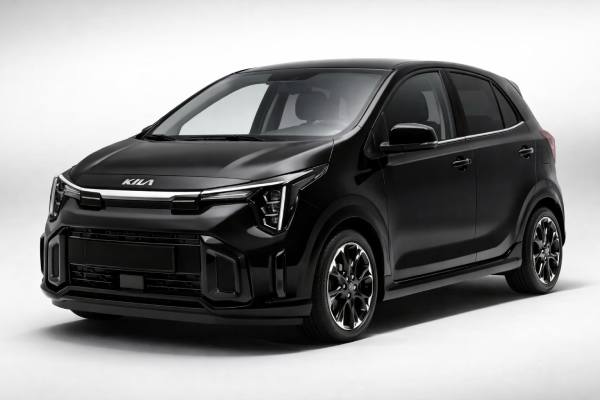
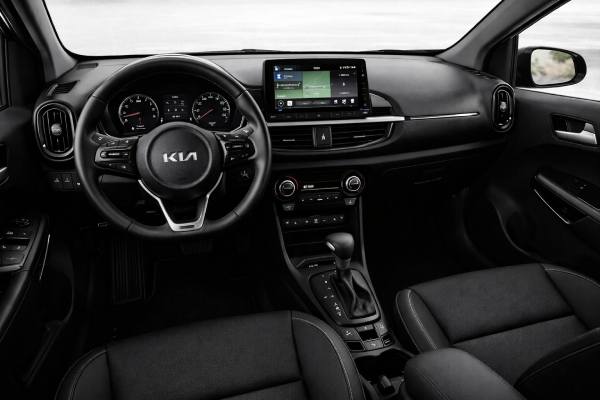
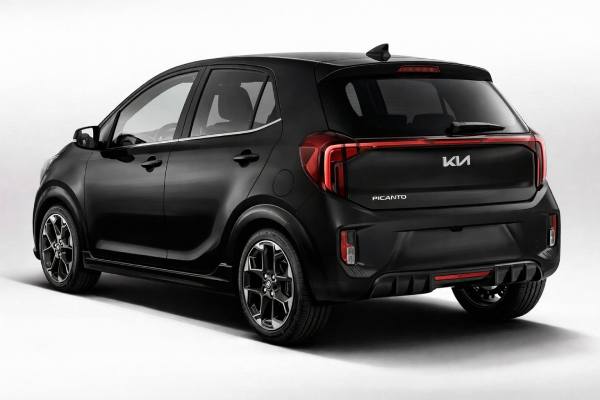
The 2023–2024 facelifted Kia Picanto (JA) with the 1.2-litre G4LF is the “grown-up” choice in the city-car class: small outside, easy to place in traffic, but mature enough on faster roads when fitted with the stronger four-cylinder. This engine is simple by modern standards—naturally aspirated, multi-point fuel injection—so it tends to reward owners who want predictable running costs over headline acceleration. The facelift focuses on usability: fresher exterior, a more modern cabin layout in many trims, and wider availability of driver-assistance features depending on market and option pack.
Where owners usually win is day-to-day livability: light controls, tight turning circle, and low tyre and brake costs. Where you need to be realistic is refinement and load: with four adults and luggage, it will feel like a small car—because it is.
Owner Snapshot
- Strong “real-world” drivability at urban speeds with fewer stress points than small turbo engines.
- Compact footprint with a practical boot for the class, especially with the rear seats folded.
- Lower consumable costs than many superminis (tyres, brakes, and basic servicing).
- Choose trims carefully: safety and driver-assistance equipment can vary a lot by market and pack.
- Plan oil services every 10,000–15,000 km (6,000–9,000 mi) or 12 months depending on usage pattern.
Navigate this guide
- Picanto JA 2023–2024 facelift in depth
- Picanto JA 1.2 G4LF specs and measurements
- Picanto JA trims, options, and safety kit
- Reliability patterns and known trouble spots
- Maintenance plan and smart buying tips
- Driving feel, performance, and real fuel use
- Rivals and value vs other city cars
Picanto JA 2023–2024 facelift in depth
The 2023–2024 facelift sits late in the JA generation’s life and is best understood as an “equipment and usability” update more than a mechanical reinvention. The core recipe stays familiar: front-wheel drive, a short wheelbase for easy parking, and a simple, naturally aspirated petrol engine that prioritizes smoothness and predictable costs over outright pace. With the 1.2 G4LF, the Picanto feels more relaxed than the smaller three-cylinder options when you’re joining faster traffic or running the air conditioning on a hot day.
In ownership terms, the biggest advantage of the 1.2 is how it delivers its power. You are not waiting for turbo boost, and you do not need to drive around a narrow torque “step.” Instead, it builds speed steadily, which makes it easier to be consistent and gentle with the drivetrain—good for long-term wear. For many drivers, it also feels quieter and less “busy” than an equally powered three-cylinder at the same speed because the engine does not need to work as hard.
The facelift typically brings cleaner front and rear styling, updated lighting signatures, and—depending on market—more modern infotainment hardware and a wider spread of convenience features. Some regions also broaden the availability of driver-assistance functions (for example forward collision assistance or lane support), but this is where you have to read the specific trim list: city cars often sell in cost-sensitive grades, and manufacturers bundle safety tech into packs.
A helpful way to think about this Picanto is “small car, full-size habits.” It wants the same care as a bigger vehicle—clean oil at sensible intervals, proper coolant condition, and brake-fluid changes on time—but it can be cheaper to keep correct because the consumables are modest and access is usually straightforward. If you are shopping used, the best examples are the ones that were serviced on time and driven regularly, not the ultra-low-mileage cars that only did short trips and spent long periods parked.
Picanto JA 1.2 G4LF specs and measurements
Below are typical specifications for the facelift-era Picanto (JA) with the 1.2-litre G4LF making about 84 hp. Exact figures can vary by country, emissions certification, wheel size, and transmission choice, so treat these as a practical baseline and verify for your VIN.
Powertrain and efficiency
| Item | Typical spec (2023–2024 facelift, 1.2) |
|---|---|
| Code | G4LF |
| Engine layout and cylinders | Inline-4, DOHC, 4 cylinders, 4 valves/cyl |
| Bore × stroke | 71.0 × 75.6 mm (2.80 × 2.98 in) |
| Displacement | 1.2 L (1,197 cc) |
| Induction | Naturally aspirated |
| Fuel system | Multi-point injection (MPI) |
| Compression ratio | ~10.5:1 (market-dependent) |
| Max power | ~84 hp (62 kW) @ ~6,000 rpm |
| Max torque | ~122 Nm (90 lb-ft) @ ~4,000 rpm |
| Timing drive | Chain |
| Rated efficiency | ~5.0–5.8 L/100 km (47–40 mpg US / 56–49 mpg UK) depending on spec |
| Real-world highway @ 120 km/h (75 mph) | ~6.0–7.0 L/100 km (39–34 mpg US / 47–40 mpg UK), weather and tyres matter |
Transmission and driveline
| Item | Typical spec |
|---|---|
| Transmission | 5-speed manual or 4-speed automatic (market-dependent) |
| Drive type | FWD |
| Differential | Open |
Chassis and dimensions
| Item | Typical spec |
|---|---|
| Suspension (front/rear) | MacPherson strut / torsion beam |
| Steering | Electric power steering (EPS); quick, light feel |
| Brakes | Front discs / rear drums (most trims) |
| Wheels and tyres (common) | 175/65 R14 or 185/55 R15; sport trims may use 195/45 R16 |
| Ground clearance | ~140 mm (~5.5 in), varies with wheel and market |
| Length / width / height | ~3,595 / 1,595 / 1,485 mm (~141.5 / 62.8 / 58.5 in) |
| Wheelbase | ~2,400 mm (~94.5 in) |
| Turning circle (kerb-to-kerb) | ~9.4–10.0 m (~31–33 ft), depending on spec definition |
| Kerb (curb) weight | ~950–1,070 kg (~2,095–2,359 lb) |
| GVWR | Market-dependent; commonly ~1,400–1,500 kg range |
| Fuel tank | ~35 L (9.2 US gal / 7.7 UK gal) |
| Cargo volume | ~255 L (~9.0 ft³) seats up; ~1,010 L (~35.7 ft³) seats down (method varies) |
Performance and capability
| Item | Typical spec |
|---|---|
| Acceleration (0–100 km/h / 0–62 mph) | ~13–14 s (manual), transmission and tyres affect results |
| Top speed | ~165–175 km/h (~103–109 mph) |
| Braking distance (100–0 km/h) | Typically ~38–42 m in tests; tyres dominate outcome |
| Towing capacity | Often not rated or very limited for this class; check handbook for your market |
| Payload | Commonly ~350–450 kg depending on trim and GVWR |
Fluids and service capacities (typical guidance)
These are common “shop planning” numbers; always confirm for your exact engine and transmission.
| Item | Typical spec |
|---|---|
| Engine oil | API/ACEA per market; commonly 5W-30; ~3.5–3.8 L (3.7–4.0 US qt) with filter |
| Coolant | Long-life ethylene glycol; typical 50/50 mix; ~4–5 L (4.2–5.3 US qt) |
| Transmission (manual) | Gear oil spec per market; capacity varies by gearbox |
| Transmission (automatic) | ATF spec per market; capacity varies by service method (drain vs total) |
| A/C refrigerant | R-1234yf or R-134a depending on market and build date; charge varies |
| Key torque specs | Wheel lug nuts commonly ~90–110 Nm (66–81 lb-ft); oil drain plug often ~30–40 Nm (22–30 lb-ft) |
Safety and driver assistance (baseline overview)
| Item | Typical reality for this model line |
|---|---|
| Crash ratings | Euro NCAP tested earlier JA-era; ratings may be “expired” and equipment-dependent |
| ADAS suite | Availability varies: AEB/forward collision assist, lane support, driver attention warning, and rear parking aids often depend on trim/pack |
Picanto JA trims, options, and safety kit
For the facelift years, the most important shopping skill is decoding trim and option structure. The Picanto is sold globally, and the same mechanical car can be delivered with very different equipment. In many markets you will see a clear “ladder” approach: entry grade focused on cost, mid grade focused on comfort, and a top grade with the styling touches (larger wheels, sportier bumpers) and the better infotainment. The 1.2 engine is often paired with mid-to-upper trims, but not always—fleet or value editions can mix the stronger engine with simpler cabins.
Trims and options: what actually changes
Instead of focusing on trim names (which vary), watch for these functional differences:
- Transmission choice: some markets reserve the automatic for specific grades. If you need a true two-pedal car, confirm availability before you fall in love with a spec sheet.
- Wheel and tyre package: 14-inch setups ride more softly and cost less; 16-inch packages can look sharper but may increase tyre noise and make potholes feel harsher.
- Infotainment level: the difference between basic audio and a newer touchscreen setup is not just convenience; it can affect camera integration, steering wheel controls, and how easy it is to update software.
- Climate equipment: manual A/C vs automatic climate control changes comfort more than many people expect in a small cabin.
- Lighting: halogen vs LED headlamps can change night driving confidence, but beam pattern matters as much as bulb technology.
Quick identifiers that help in used listings include wheel size photos, steering wheel button layouts (often different when lane support or cruise features are present), and camera presence. If the seller can share the build sheet or VIN equipment list, that is ideal.
Safety ratings: how to interpret them
City cars are tricky here because safety performance can be strongly influenced by standard vs optional systems. Earlier tests of the JA-era Picanto in Europe show results tied to the presence of additional safety equipment, and those results may be listed as expired over time. Practically, this means you should treat the “stars” as a guide to the platform’s baseline rather than a promise that every used example offers the same protection.
Safety systems and ADAS: what to look for
At minimum, most cars in this class include:
- Multiple airbags (front, side, and often curtain), plus seat-belt pretensioners.
- ABS and electronic stability control (ESC) with traction control.
- ISOFIX/LATCH child-seat mounts (usually outer rear seats).
Driver-assistance features can include:
- AEB / forward collision assistance: some versions detect vehicles and, in more advanced setups, pedestrians or cyclists.
- Lane support: can range from a simple lane departure warning to active lane-keeping assist.
- Cruise control: basic cruise is common; adaptive cruise is rare in this segment and highly market-dependent.
- Parking aids: rear sensors are common on mid trims; cameras typically appear on higher trims.
If the car has camera- or radar-based systems, remember that windscreen replacement, bumper repairs, and wheel alignment can require calibration. This is not a reason to avoid the tech, but it is a reason to prefer examples with clean accident history and correct repair documentation.
Reliability patterns and known trouble spots
The 1.2 G4LF Picanto tends to be dependable when it is serviced on time and driven regularly, but “reliable” does not mean “maintenance-free.” The pattern you often see is small, manageable issues rather than catastrophic failures—good news for most owners—plus a few avoidable problems when fluids and batteries are neglected.
Common issues (higher prevalence, usually lower cost)
- 12 V battery weakness
Symptoms: slow cranking, start-stop anomalies (if fitted), infotainment resets.
Root cause: short trips, long idle periods, battery aging.
Remedy: battery test, check charging voltage, replace with correct capacity; clean and tighten terminals. - Ignition wear: plugs and coils
Symptoms: rough idle, hesitation under load, flashing engine light.
Root cause: worn plugs, occasional coil degradation, moisture intrusion on high-mileage cars.
Remedy: replace spark plugs at the scheduled interval; replace coils only if confirmed faulty; inspect plug wells. - Rear brake drag or noise (drum setups)
Symptoms: squeal, grabbing, uneven braking after rain or long parking.
Root cause: corrosion, shoe glazing, lack of use.
Remedy: clean and adjust, replace shoes/hardware if contaminated; use the parking brake regularly to keep mechanisms moving.
Occasional issues (medium cost, drivability impact)
- Cooling system seepage (hoses, clamps, thermostat housing)
Symptoms: sweet smell, low coolant, damp residue.
Root cause: aging rubber, clamp tension, heat cycling.
Remedy: pressure test, replace the weak component, refill with the correct coolant mix and bleed properly. - Manual gearbox notchiness or clutch feel changes
Symptoms: stiff shifts when cold, clutch bite point changes.
Root cause: old gear oil (if serviceable), clutch wear, linkage adjustment.
Remedy: inspect linkage, check for leaks, service fluid if applicable, evaluate clutch life realistically. - Automatic (4-speed) shift quality degradation
Symptoms: lazy shifts, flare, mild shudder.
Root cause: old ATF, heat, stop-start urban use.
Remedy: correct ATF service method and specification; avoid “universal” fluids.
Rarer or higher-cost concerns (watchlist items)
- Timing chain noise on cold start
Symptoms: brief rattle at start-up, especially after long intervals.
Root cause: oil quality/intervals, tensioner wear over time.
Remedy: confirm oil level and correct viscosity; if noise persists, diagnose chain stretch and tensioner condition rather than guessing. - Steering or suspension knocks
Symptoms: clunks over small bumps.
Root cause: drop links, bushings, top mounts.
Remedy: isolate with a proper inspection; small parts are usually affordable, but alignment should follow.
Recalls, TSBs, and software actions
Modern cars, even simple ones, may receive software updates for infotainment stability, sensor logic, or safety systems. The practical approach is:
- Check recall status using the manufacturer’s recommended process for your country.
- Confirm completion with dealer history where possible.
- After any windscreen or bumper repair, confirm ADAS calibration if the car is equipped.
Maintenance plan and smart buying tips
A small car benefits from “boring” maintenance done consistently. Short trips are common in this class, and they are hard on oil, batteries, and brakes. If you want the Picanto to stay cheap, the best tactic is to prevent the predictable wear items from turning into secondary damage.
Practical maintenance schedule (distance and time)
Use this as a conservative baseline if your local schedule offers a wider range.
- Engine oil and filter: every 10,000–15,000 km (6,000–9,000 mi) or 12 months
If the car does frequent cold starts and short runs, stay closer to 10,000 km. - Cabin air filter: every 15,000–30,000 km or yearly if you drive in dusty urban areas.
- Engine air filter: every 30,000–45,000 km, sooner in dusty regions.
- Spark plugs: commonly 60,000–90,000 km (iridium plugs often last longer; confirm your spec).
- Coolant: often 5 years then every 2–3 years (or per long-life coolant guidance in your market).
- Brake fluid: every 2 years regardless of mileage.
- Brake inspection: at every service; city driving can wear fronts faster, while rears may corrode from lack of heat.
- Tyre rotation and alignment check: rotate every 10,000–12,000 km; check alignment annually or after pothole impacts.
- 12 V battery test: yearly after year three; many city cars need a battery around 4–6 years depending on use.
- Timing chain: no fixed replacement interval; listen for persistent start-up rattle, monitor for correlation faults, and address symptoms early.
Fluids and specifications: what matters most
For decision-making, focus on three rules:
- Use the correct oil viscosity and quality rating for your climate and emissions spec.
- Do not mix coolant types unless the manufacturer explicitly allows it.
- For automatics, use the correct ATF specification—avoid generic “multi-vehicle” fluids unless explicitly approved.
Buyer’s guide: inspection checklist
Bring this list to a viewing and you will avoid most expensive surprises:
- Cold start behavior: smooth idle, no prolonged rattles, no warning lights.
- Service history quality: consistent oil changes matter more than “dealer stamps.”
- Cooling system condition: correct coolant level, no crusty residue around joints.
- Transmission behavior: manual should shift cleanly; automatic should not flare or slam.
- Brakes and tyres: uneven wear can signal seized rear hardware or alignment issues.
- Electronics: check camera (if fitted), parking sensors, Bluetooth stability, and steering wheel controls.
- Corrosion hotspots: inspect rear suspension mounting areas, brake lines, and seam edges in salted climates.
Recommended configurations
For most owners, the best “sweet spot” is a mid trim with the safety features you actually want (AEB and lane support if available) while avoiding oversized wheels if your roads are rough. If you keep the car long term, prioritize condition and history over the newest-looking infotainment screen.
Driving feel, performance, and real fuel use
The facelifted Picanto with the 1.2 is a city-first car that can handle occasional highway work without feeling overwhelmed. Its strengths come from lightness and simplicity: it changes direction easily, it is easy to judge in tight spaces, and it does not require special driving techniques to get smooth results.
Ride, handling, and NVH (noise and vibration)
At low speed, the car feels agile and friendly. The steering is light, and the short wheelbase makes U-turns and parking maneuvers straightforward. Over broken pavement, ride quality depends heavily on wheel size: smaller wheels with taller tyre sidewalls usually ride better and sound quieter. On larger wheels, you may notice sharper impacts and more tyre roar on coarse asphalt.
At highway speed, the Picanto is stable for its size, but you will still feel crosswinds more than in a larger supermini. Cabin noise is typically dominated by tyres and road surface rather than engine strain—one reason the four-cylinder can feel more relaxed than a smaller three-cylinder.
Powertrain character
The 1.2 G4LF delivers predictable throttle response. It is happiest when you drive it smoothly and keep it in the mid-range rather than expecting strong low-end punch. With a manual, you can keep it quiet by upshifting early around town. With the 4-speed automatic (where offered), the car often feels calmer in traffic but may run higher revs on faster roads because the gearing is older-school.
Real-world efficiency
Small naturally aspirated engines can be efficient, but only when you drive them within their comfort zone. Typical real-world patterns:
- City: ~5.5–7.0 L/100 km (43–34 mpg US / 51–40 mpg UK) depending on traffic and temperature.
- Highway (100–120 km/h): ~6.0–7.0 L/100 km (39–34 mpg US / 47–40 mpg UK).
- Mixed: ~5.5–6.5 L/100 km (43–36 mpg US / 51–43 mpg UK).
Cold weather can raise consumption noticeably because short trips keep the engine in warm-up mode longer, and the heater load is significant relative to engine output.
Performance metrics that matter
In daily use, the key point is not the 0–100 number; it is how the car handles merging and overtakes. Expect steady, safe progress rather than quick bursts. If you often drive fully loaded or in hilly terrain, the manual gearbox gives you more control over revs and can feel more responsive.
Traction and braking feel
With front-wheel drive and modest power, traction is rarely a problem on dry roads. In winter, tyre choice matters more than drivetrain layout—good winter tyres transform the car. Braking feel is typically easy to modulate, but city cars that do many short runs can develop surface corrosion on rotors or drums. Regular use and periodic brake servicing help keep pedal feel consistent.
Rivals and value vs other city cars
The facelifted Picanto 1.2 sits in a competitive space: buyers want compact dimensions, low running costs, and modern safety tech, but they also want a car that does not feel “budget” every day. Here is how it tends to compare.
Against Hyundai i10
The i10 often feels closely matched in concept: similar size, similar usage, similar ownership priorities. The deciding factors are usually equipment, pricing, and which car offers the safety features you want in your market. On rough roads, compare wheel and tyre packages carefully; small differences in sidewall height can change comfort a lot.
Against Toyota Aygo X
The Aygo X typically leans more toward “city crossover” styling and may feel higher and more upright. The Picanto 1.2 often wins on a more traditional hatchback feel and, in many trims, a better balance of powertrain smoothness. If you prioritize a more elevated seating position, the Aygo X may appeal more.
Against Suzuki Ignis
The Ignis is a bit of an outlier with its tall profile and lightweight feel. It can be very practical for its footprint. The Picanto usually feels more conventional and settled, especially at higher speed, while the Ignis often attracts buyers who want a quirky, upright cabin in a tiny package.
Against Dacia Sandero
The Sandero is often the value-space champion because it is larger. If you want more rear-seat room and a more “grown-up” footprint for similar money, it is worth considering. The Picanto fights back with easier parking, typically lower tyre costs, and a “city-first” footprint that is genuinely easier to live with in dense areas.
The Picanto 1.2 verdict
Choose this Picanto if you want an honest, easy-to-run small car with a smooth, uncomplicated engine and you are willing to shop carefully for the right safety and comfort equipment. The best examples are not necessarily the newest; they are the ones with clean service history, sensible tyres, and the trim level that matches how you actually drive.
References
- Kia Picanto Specifications & Features | Kia UK 2026 (Specifications)
- Car Safety Recalls | What They Are & What To Do | Kia UK 2026 (Recall Database)
- Kia Picanto 2017 (Safety Rating)
Disclaimer
This article is for informational purposes only and is not a substitute for professional inspection, diagnosis, or repair. Specifications, torque values, service intervals, and procedures can vary by VIN, market, model year, and installed equipment. Always verify details using official documentation for your vehicle and follow qualified service guidance when performing maintenance or repairs.
If you found this guide useful, consider sharing it on Facebook, X (Twitter), or your favorite forum to help others find practical ownership information.