
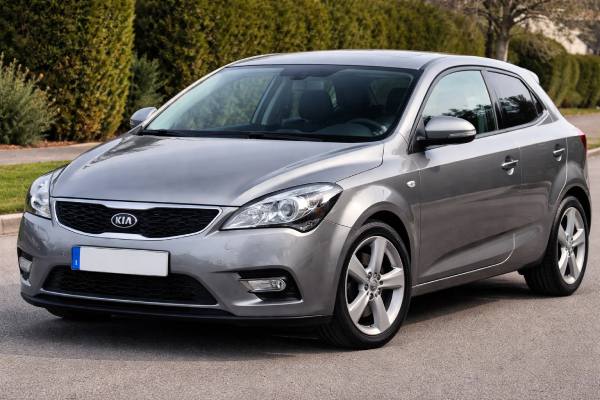
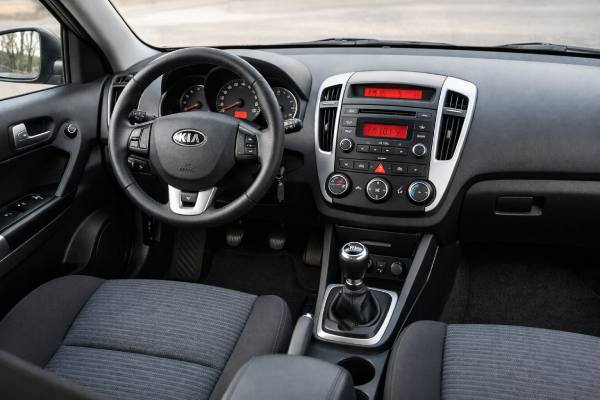
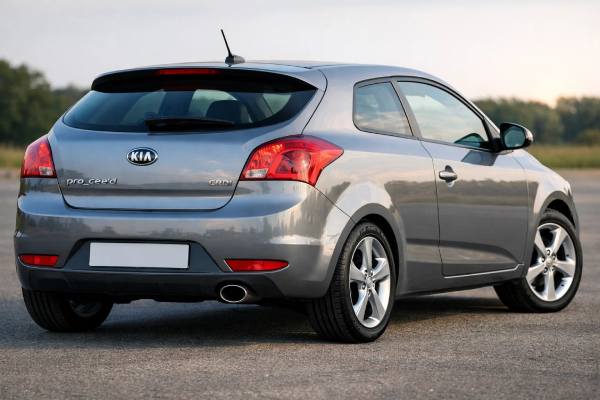
The facelifted Kia Pro Ceed (ED) with the G4FA 1.4 petrol is a very “honest” compact coupe-hatch: simple naturally aspirated power, a light front end, and running costs that stay predictable if you keep up with basic service. With 90 hp, it is not quick, but it is usually smooth around town, easy to park, and less stressful to own than many small-turbo alternatives of the same era. The key ownership story is prevention: keep oil fresh, don’t ignore cooling-system warnings, and fix small intake or ignition issues early so they don’t become drivability problems. The facelift years also tend to bring a slightly more modern cabin feel and equipment mix, while keeping the same practical fundamentals—five-seat layout, useful cargo space for a 3-door, and a chassis that tolerates rougher roads when the suspension is kept tight.
What to Know
- Solid everyday ergonomics and predictable handling; easy to drive in tight cities.
- Simple naturally aspirated 1.4 is generally low-drama when serviced on time.
- Parts availability is good, and most jobs are straightforward for independent shops.
- Watch for electric power-steering noises, aging rubber bushings, and cooling leaks.
- Plan engine-oil and filter service about every 20,000 km / 12 months (shorter for severe use).
Navigate this guide
- Kia Pro Ceed ED facelift highlights
- Kia Pro Ceed ED 1.4 specs table
- Kia Pro Ceed ED trims safety tech
- Reliability and common faults
- Maintenance schedule and buying tips
- On-road performance and economy
- Rival cars and value verdict
Kia Pro Ceed ED facelift highlights
This Pro Ceed sits in the first-generation ED family as the 3-door “sportier” body, sharing most hard points (suspension layout, drivetrain packaging, braking architecture) with the 5-door Cee’d. In these facelift years, you get a compact car that still feels mechanically straightforward: a naturally aspirated inline-four, a conventional manual gearbox, and front-wheel drive. That simplicity is the biggest reason this specific spec remains attractive on the used market—there are fewer expensive systems to surprise you.
Design changes in the facelift era are mostly about usability and perception rather than a full re-engineering. Expect small revisions to bumpers, lighting graphics, wheels, and trim finishes. Inside, the improvements typically show up as slightly better switchgear feel, updated audio/navigation options in higher trims, and more common availability of “comfort tech” (heated seats, steering-wheel controls, parking sensors) depending on market. Mechanically, the core driving experience stays familiar: light steering at parking speeds, stable straight-line behavior, and a chassis tuned more for daily comfort than aggressive cornering.
The 1.4 G4FA is best understood as a “momentum” engine. It likes revs, but it does not reward short-shifting the way a turbo motor would. Owners who are happiest with this car tend to drive it smoothly, keep it in the midrange, and accept that highway overtakes are planned rather than instant. If your usage is mostly city and suburban speeds, it fits well; if you live on fast motorways with frequent passing at 120–140 km/h, you will feel the 90 hp limit.
A practical advantage of the Pro Ceed body is that it often feels a bit tighter and less “boomy” than some wagons or taller hatchbacks, while still offering usable rear seats for occasional adult passengers. The long doors help access, but they do demand more space in tight parking lots—something to consider if you street-park daily.
Key ownership traits to keep in mind:
- The car rewards routine care more than “big repairs.” Most problems start small and become expensive only when ignored.
- Suspension and steering feel crisp when bushings and links are healthy; worn rubber makes the car feel older than it is.
- Equipment levels vary widely by country—two cars with the same engine can feel very different in daily life based on trim.
Kia Pro Ceed ED 1.4 specs table
The tables below summarize typical specifications for the facelift-era Pro Ceed (ED) with the G4FA 1.4 petrol around 90 hp. Exact figures can vary by market, emissions version (Euro 4/5), wheel and tyre package, and options.
Powertrain and efficiency
| Item | Specification |
|---|---|
| Code | G4FA |
| Engine layout and cylinders | Inline-4, DOHC, 4 cylinders, 4 valves/cyl (16V) |
| Displacement | 1.4 L (≈1,396 cc) |
| Bore × stroke | ≈77.0 × 75.6 mm (≈3.03 × 2.98 in) |
| Induction | Naturally aspirated |
| Fuel system | Multi-point injection (MPI) |
| Compression ratio | ≈10.5:1 (varies by version) |
| Max power | 90 hp (66 kW) @ ~6,000–6,300 rpm (market dependent) |
| Max torque | ~135–140 Nm (100–103 lb-ft) @ ~4,000–5,000 rpm (market dependent) |
| Timing drive | Chain |
| Rated efficiency (combined) | ≈5.8 L/100 km (≈41 mpg US / 49 mpg UK) typical NEDC-era figure |
| Real-world highway @ 120 km/h | ≈6.4–7.4 L/100 km (≈32–37 mpg US / 38–44 mpg UK), tyres and load matter |
Transmission and driveline
| Item | Specification |
|---|---|
| Transmission | 5-speed manual (most common with 1.4) |
| Drive type | FWD |
| Differential | Open |
Chassis and dimensions
| Item | Specification |
|---|---|
| Suspension (front/rear) | MacPherson strut / multi-link (typical ED layout) |
| Steering | Electric power steering (EPS) |
| Brakes | Disc/drum or disc/disc depending on trim/market; ABS standard on most |
| Wheels and tyres (popular size) | 195/65 R15 or 205/55 R16 (market dependent) |
| Ground clearance | ≈150 mm (≈5.9 in) class-typical |
| Length / width / height | ≈4,250 / 1,790 / 1,450 mm (≈167.3 / 70.5 / 57.1 in) |
| Wheelbase | ≈2,650 mm (≈104.3 in) |
| Turning circle (kerb-to-kerb) | ≈10.4–10.6 m (≈34–35 ft) |
| Kerb (curb) weight | ≈1,230–1,300 kg (≈2,710–2,870 lb) depending on equipment |
| Fuel tank | ≈53 L (≈14.0 US gal / 11.7 UK gal) |
| Cargo volume | ≈340 L (≈12.0 ft³) seats up; up to ≈1,200 L (≈42 ft³) seats down (method varies) |
Performance and capability
| Item | Typical figure |
|---|---|
| 0–100 km/h (0–62 mph) | ≈13.0–13.6 s |
| Top speed | ≈175–180 km/h (≈109–112 mph) |
| Braking distance 100–0 km/h | Strongly tyre-dependent; ~38–42 m is typical for the class when healthy |
| Towing capacity | Often limited or modest on 1.4; verify by VIN plate and handbook for your market |
| Payload | Typically ~450–550 kg depending on trim and homologation |
Fluids and service capacities (typical guidance)
These are commonly encountered values for this engine family and segment; always confirm for your exact VIN and gearbox.
| Item | Spec and typical capacity |
|---|---|
| Engine oil | API SJ/SL-era approval often listed; 5W-20 commonly specified; capacity ≈3.3 L (≈3.5 US qt) with filter |
| Coolant | Ethylene glycol long-life coolant, typically 50/50 mix; capacity often ≈5.5–6.5 L (≈5.8–6.9 US qt) |
| Manual transmission | GL-4 75W-85 or similar; capacity often ≈1.8–2.1 L (≈1.9–2.2 US qt) |
| A/C refrigerant | Often R134a in this era; charge varies by system—check under-hood label |
| Key torque specs (decision-grade) | Wheel nuts often ≈88–110 Nm (65–81 lb-ft); verify other fasteners per service manual |
Safety and driver assistance (era-appropriate)
| Item | Notes |
|---|---|
| Crash ratings | Commonly referenced as a strong performer for its era in European testing, but test versions and applicability depend on body and year |
| Core safety systems | ABS, EBD; ESC often standard or widely available by facelift years (market dependent) |
| ADAS suite | Typically none of today’s camera/radar ADAS; focus is on stability control and good passive structure |
Kia Pro Ceed ED trims safety tech
Trim names differ by country, but Pro Ceed (ED) ranges often follow a familiar ladder: entry grades focused on value, mid trims adding daily comfort, and higher trims bundling styling wheels and convenience tech. With the 1.4 90 hp, you’ll most commonly see it paired with practical “core” trims rather than sport-oriented packages, simply because buyers who wanted pace often stepped up to 1.6 petrol or diesel options.
How to identify trims quickly (practical cues):
- Wheels and brakes: 15-inch steel or basic alloys usually indicate entry trims; 16–17-inch alloys suggest higher trims. Some markets pair rear disc brakes with higher trims, while base trims may use rear drums.
- Cabin equipment: Look for steering-wheel audio buttons, trip computer display type, automatic climate control vs manual knobs, and seat heating switches. These small features often track trim level more reliably than badges.
- Lighting: Fog lights, projector-style headlamps, and LED-like rear lamp graphics (where fitted) can signal higher equipment lines.
- Convenience sensors: Rear parking sensors were often optional or higher-trim; if present, confirm they work (bumper knocks and water ingress are common age-related issues).
Options and packages that matter mechanically or functionally:
- Tyre and wheel packages: Larger wheels sharpen steering response but can worsen ride harshness and increase tyre costs. On rough roads, the “middle” wheel size is often the sweet spot.
- Stability-control package: If your market treated ESC as optional in early years, it’s one of the most meaningful safety options. If fitted, confirm no warning lights and that steering-angle calibration is correct after alignment work.
- Cruise control: Helpful on motorways, but not essential; verify operation because steering-wheel switches and clockspring wiring can age.
- Infotainment/navigation: Upgraded head units can be nice, but on older cars they should not outweigh mechanical condition in your buying decision.
Safety ratings and what they mean in practice
For an owner, the more useful question is not only “how many stars,” but what hardware your specific car actually has. A strong structure and airbags help in a crash, but avoiding the crash is equally important—good tyres, healthy brakes, and functioning ESC matter every day. On this generation, the “driver assistance” story is mostly:
- Passive safety: Front airbags, side airbags, and curtain airbags are common on better-equipped cars; verify the airbag warning light performs a normal self-check at start-up.
- Child-seat provisions: ISOFIX/LATCH points are usually present; check the plastic guides and anchor threads are intact, especially if the car has carried child seats for years.
- Electronic safety: ABS and brake-force distribution are widely present. ESC and hill-start assist may appear more commonly in facelift years, but it is still worth confirming by VIN build data or by the presence of ESC-off switch/indicator behavior.
Calibration note: if a car has ESC and EPS, an alignment job may require steering-angle sensor calibration for the system to behave correctly. A slightly off-center steering wheel can sometimes trigger ESC complaints later, so insist on a proper alignment printout when buying.
Reliability and common faults
Overall, the Pro Ceed ED with the 1.4 G4FA tends to be reliable in the “slow and steady” sense: the engine is not highly stressed, and major internal failures are uncommon when oil changes are consistent and the cooling system stays healthy. Most real problems are age-related—rubber hardening, connectors oxidizing, and small leaks turning into bigger ones.
Below are common patterns, grouped by prevalence and typical cost severity. Mileage bands are approximate because driving style and climate matter as much as odometer readings.
Common, usually low to medium cost
- Ignition coils and spark plugs (60,000–120,000 km):
Symptoms: misfire under load, rough idle, flashing engine light.
Likely cause: worn plugs, weak coil, moisture in plug wells.
Remedy: replace plugs with correct heat range, then coils as needed; inspect coil boots and valve-cover gasket for oil seepage. - Throttle body and intake deposits (urban short trips):
Symptoms: unstable idle, hesitation, occasional stalling when coming to a stop.
Cause: deposit build-up and adaptive idle values drifting.
Remedy: clean throttle body correctly, check PCV system, run a relearn procedure if required. - Cooling system seepage (8–15 years old):
Symptoms: coolant smell, slow level drop, damp hose ends.
Cause: aging hoses, thermostat housing seals, radiator end tanks.
Remedy: pressure test, replace weak components early—overheating is the expensive outcome to avoid. - Suspension wear (80,000–160,000 km):
Symptoms: front clunks over bumps, vague steering, uneven tyre wear.
Cause: drop links, control-arm bushings, ball joints, rear multi-link bushings.
Remedy: replace in pairs, then align. Fresh bushings often make the car feel “10 years newer.”
Occasional, medium to higher cost
- Electric power steering noises (“clunk” at low speed):
Symptoms: knocking or clicking in the steering column when turning at low speed or over broken pavement.
Cause: wear in a flexible coupling/bushing in the steering system on some builds.
Remedy: replace the coupling where applicable; confirm the correct fix for your VIN because similar noises can come from links or top mounts. - A/C performance drop:
Symptoms: weak cooling, intermittent compressor operation, noisy clutch (where applicable).
Cause: leaks at O-rings, condenser corrosion, compressor aging.
Remedy: proper leak test and recharge by weight; avoid repeated “top-ups” without diagnosing the leak.
Rare, but worth screening before purchase
- Timing chain noise or correlation faults:
Symptoms: persistent rattle at cold start beyond a brief moment, or timing correlation codes.
Cause: tensioner wear, guide wear, or low oil quality history.
Remedy: diagnose with scan data and mechanical inspection; address early if confirmed because chain work escalates in cost. - ABS/ESC sensor issues:
Symptoms: ABS/ESC lights, occasional brake pedal pulsing at low speed.
Cause: wheel speed sensor wiring, reluctor ring corrosion, bearing play.
Remedy: check bearing condition and sensor signal before throwing parts at it.
Recalls, campaigns, and how to verify
Because this car spans many markets, the safest statement is: recall and service-action applicability is VIN-specific. Before buying, run the VIN through an official recall checker and ask for dealer printouts showing campaign completion. If the car has steering noises, confirm whether a technical fix was performed and whether it matches the production range for your vehicle.
Maintenance schedule and buying tips
If you want this Pro Ceed to feel dependable, treat maintenance as a rhythm rather than a reaction. The 1.4 G4FA typically tolerates daily use well, but it is less forgiving of neglected oil and low coolant than it is of spirited driving.
Practical maintenance schedule (baseline)
Use the table as a planning tool; adapt for severe use (short trips, heavy traffic, dusty roads, very cold winters).
| Item | Normal use interval | Severe use guidance |
|---|---|---|
| Engine oil and filter | ~20,000 km / 12 months (or market equivalent) | ~7,500–10,000 km / 6–12 months |
| Engine air filter | Inspect every service; replace ~30,000 km | 15,000–20,000 km in dust |
| Cabin filter | 15,000–30,000 km or annually | More often in cities |
| Spark plugs | Commonly ~60,000 km (or 4 years) depending on plug type | Earlier if misfires or heavy city use |
| Coolant | Often ~5 years / ~90,000 km class-typical | Shorter if contamination or leaks |
| Brake fluid | Every 2 years | Every 2 years |
| Manual gearbox oil | Inspect for leaks; many owners refresh ~100,000–150,000 km | Earlier if hard use |
| Brake pads/rotors | Inspect every service | Inspect every service |
| Tyre rotation and alignment | 10,000–12,000 km | 8,000–10,000 km |
| 12 V battery test | Annually after year 5 | Annually |
Fluids: what matters most for decision-making
- Engine oil: The critical point is quality and frequency, not chasing exotic oils. Use an oil that meets the required API/ACEA level and the viscosity listed for your climate. Keep records.
- Coolant: Use the correct long-life coolant type and mixture. Mixing incompatible coolants is a common “slow damage” mistake that leads to deposits and seal wear.
- Gearbox oil: If the shifter feels notchy when cold, fresh fluid can help, but worn shift cables or mounts can feel similar—diagnose before spending.
Essential torque values (buying and DIY sanity checks)
These vary by VIN and hardware, so treat them as decision-grade ranges only:
- Wheel nuts: ~88–110 Nm
- Spark plugs (small-plug aluminum head typical): ~15–25 Nm
- Oil drain plug: ~30–45 Nm
If you plan to DIY, get the correct service manual for your market and confirm the exact values.
Buyer’s guide: what to inspect before paying
Paperwork and history
- Confirm oil-change cadence and receipts (annual is not enough if mileage is high).
- Verify recalls and service campaigns are closed for the VIN.
- Look for evidence of coolant services and brake fluid changes (often ignored).
Mechanical inspection
- Cold start: listen for abnormal rattles that persist; brief startup noise is less concerning than ongoing clatter.
- Steering: turn lock-to-lock at low speed; feel for knocks, notches, or uneven assist.
- Suspension: drive over small bumps; clunks often indicate links/bushings, while deep thuds can suggest mounts.
- Cooling: check for dried coolant crust near hose ends, radiator seams, and around the thermostat housing.
- Brakes: confirm the ABS light self-checks and goes out; test a firm stop for stability and vibration.
What to prioritize
- A clean, well-maintained 1.4 with modest trim is usually a better buy than a “fully loaded” car with neglected fluids.
- If you do mostly motorway driving, consider whether a higher-output engine variant fits your needs better; the 90 hp is happiest below constant high-speed passing demands.
Long-term durability outlook: if you buy a solid example and keep the maintenance rhythm, this powertrain and chassis can age gracefully. If you buy a neglected one, you will spend the first year catching up on rubber, fluids, and small electrical annoyances.
On-road performance and economy
The Pro Ceed ED 1.4 drives like a classic compact from the late-2000s/early-2010s: light on its feet, predictable, and more about smoothness than shove. The steering is typically very easy at parking speeds, which is great for city use, though it can feel a bit “filtered” on-center compared with hydraulic systems of the same era. At motorway speeds it is generally stable, but crosswinds and tyre choice influence confidence more than you might expect—fresh, quality tyres make a noticeable difference.
Ride, handling, and NVH (noise, vibration, harshness)
- Ride: With 15–16 inch wheels, the car usually rides with a soft edge over broken pavement. Larger wheels can add sharpness but also introduce more impact harshness.
- Handling: Neutral and safe. It turns in cleanly for daily driving, and the rear multi-link helps it feel composed mid-corner. Worn rear bushings are the main reason these cars start to feel loose.
- Braking feel: When the system is healthy, pedal feel is consistent and easy to modulate. If the pedal feels long, suspect fluid age, rear brake adjustment (where drums exist), or caliper slide issues.
- Cabin noise: Expect moderate road noise on coarse asphalt, and more engine sound when revving for overtakes. Door seals and tyre brand matter as the car ages.
Powertrain character
This 1.4 is smooth and generally willing, but it needs revs to deliver its best. Around town it is pleasant and linear; on hills with passengers, you will downshift more often. The 5-speed manual is typically geared for everyday use, but the lack of a 6th gear means higher revs on fast motorways, which can raise cabin noise and fuel use.
Tips to make it feel quicker without “abusing” it:
- Use the midrange deliberately (don’t lug it in too high a gear).
- Keep tyres correctly inflated and aligned.
- Ensure the engine is actually making full power—weak coils, old plugs, and a dirty throttle body make the car feel slower than it is.
Real-world economy
Official combined figures for this kind of spec often sit around the high-5s L/100 km, but real ownership varies:
- City: ~7.0–8.5 L/100 km in heavy traffic, especially in winter.
- Mixed: ~6.2–7.2 L/100 km for balanced use.
- Highway (100–120 km/h): ~6.4–7.4 L/100 km depending on wind, load, tyres, and gradients.
Cold weather penalty is real on short trips: warm-up enrichment and heater use can add a noticeable percentage. If your driving is mostly 5–10 km hops, shorten oil intervals and don’t judge the car by winter fuel consumption alone.
Rival cars and value verdict
In today’s used-market reality, the Pro Ceed ED 1.4 often competes with other “simple petrol compact” choices rather than direct 3-door coupes. The best comparison is not “which one is fastest,” but “which one is easiest to keep honest at 10–15 years old.”
Here’s how it typically stacks up against key peers:
- Volkswagen Golf (Mk5/Mk6 era): Often feels more refined inside, with strong parts support. However, some variants bring more complexity (and sometimes higher repair costs). The Pro Ceed’s advantage is usually value-for-money and straightforward servicing.
- Ford Focus (Mk2 era): Often praised for steering and chassis feel. The Kia counters with a simpler ownership vibe and, in many markets, strong warranty history and dealer support.
- Opel Astra H: Comfortable, common, and well-understood by repair shops. Depending on engine choice, the Astra can be similarly slow; condition matters more than badge.
- Renault Mégane (Mk2/early Mk3): Can be comfortable and efficient, but electrical age-related issues can be more frequent on neglected examples. A well-kept one is fine; a tired one can be frustrating.
- Toyota Auris 1.4 petrol: Usually excellent for low-drama ownership, often with a “set-and-forget” reputation. The Kia can feel more distinctive in 3-door form and may be cheaper to buy; the Toyota often wins on long-term predictability.
Who should buy the 1.4 90 hp Pro Ceed?
It’s a good match if you:
- Want a compact that’s easy to maintain and not overloaded with modern ADAS complexity.
- Drive mostly city/suburban routes and accept planned overtakes.
- Prefer comfort and predictability over outright performance.
You should look elsewhere if you:
- Regularly do high-speed motorway passing with a full load and want effortless torque.
- Need maximum rear-seat access daily (3-door practicality is real, even if the cabin is roomy).
Value verdict: a clean, documented facelift Pro Ceed 1.4 is a smart, sensible buy when priced fairly—especially if you choose condition over equipment. Spend your “budget advantage” on fresh fluids, tyres, and suspension basics, and it will usually pay you back with calm, dependable service.
References
- Engine Oil Grades and Capacities 2023 (Service Data)
- Kia Recalls | Kia Europe 2026 (Recall VIN Check)
- Check if a vehicle, part or accessory has been recalled – GOV.UK 2026 (Recall Database)
- Kia cee’d wins 5-Star Euro NCAP safety rating – Kia Slovakia s.r.o. 2007 (Safety Rating)
Disclaimer
This article is for informational purposes only and is not a substitute for professional inspection, diagnosis, or repair. Specifications, torque values, service intervals, and procedures can vary by VIN, market, production date, and equipment. Always verify details using your vehicle’s official owner’s manual, service manual, and under-hood labels, or by consulting a qualified technician.
If you found this guide useful, please consider sharing it on Facebook, X (Twitter), or your favorite forum to help others and support our work.