
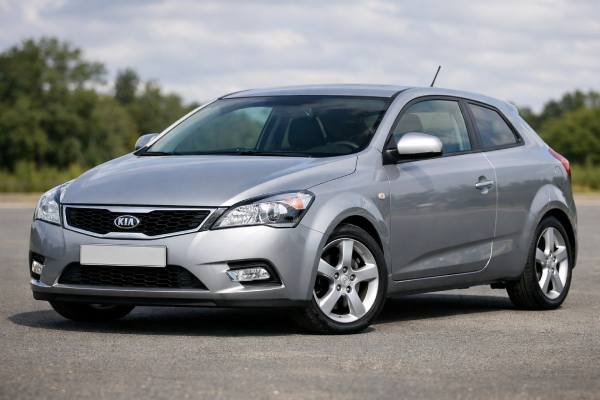
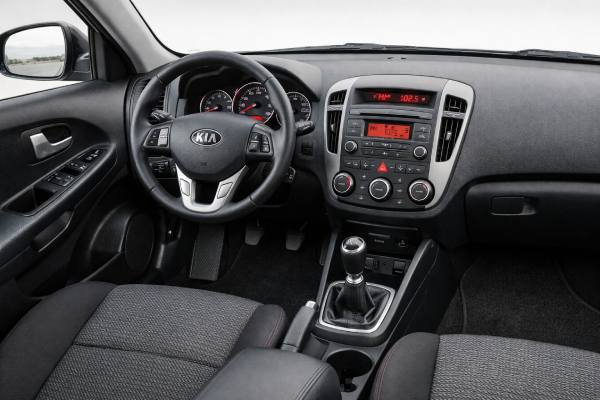
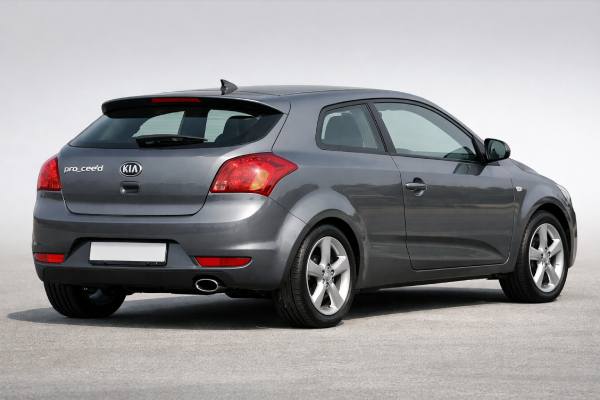
The facelifted Kia Pro Ceed (ED) with the 1.6 CRDi “D4FB” in 128 hp tune is the sweet-spot diesel for drivers who want real motorway ability without stepping up to heavier, thirstier engines. It pairs a torquey common-rail turbo-diesel with a simple front-wheel-drive layout, and it rewards owners who keep up with intake and emissions maintenance—especially if the car sees short trips.
As a used buy, the Pro Ceed’s value depends less on mileage and more on service history: correct oil, timely filter changes, and proof that any recall or service campaign work is complete. When those boxes are ticked, this powertrain can feel “bigger than it is” on the road, while still delivering strong fuel economy.
Owner Snapshot
- Strong mid-range torque makes overtakes and hills easy without high revs.
- Typically efficient on long runs, especially at steady motorway speeds.
- Practical 3-door packaging with a relatively large hatch opening for the class.
- Short-trip use can accelerate EGR and DPF loading; plan regular longer drives.
- Aim for oil and filter service about every 10,000–15,000 km (6,000–9,000 mi) or 12 months, depending on duty cycle.
Quick navigation
- Pro Ceed ED 128 CRDi in context
- Pro Ceed ED 128 CRDi specs and dimensions
- Pro Ceed ED 128 CRDi trims, safety, and ADAS
- Common faults and service actions
- Maintenance plan and buyer’s checklist
- Road feel and real-world economy
- Rivals and what to choose
Pro Ceed ED 128 CRDi in context
Think of the 128 hp D4FB Pro Ceed as the “long-leg” version of the ED platform. It is not trying to be sporty in the hot-hatch sense; instead, it is tuned for usable torque, relaxed cruising, and low fuel consumption. In daily use, that means fewer downshifts than the smaller diesels and a calmer feel at motorway speeds. Typical figures for this variant include peak torque around 260 Nm and a top speed near 197 km/h, with 0–100 km/h roughly around 11 seconds—numbers that match the real-world impression of “quick enough, always willing.”
Where owners tend to be happiest is steady-state driving: commuting on open roads, regular motorway trips, and mixed driving that gives the engine time to fully warm up. Where the car can punish neglect is exactly the opposite: lots of short runs, stop-start traffic, and long intervals between oil changes. A modern common-rail diesel uses high injection pressures and tight tolerances; clean oil and clean fuel filtration matter more than many first-time diesel owners expect.
The facelift years also matter because equipment and calibration changes can shift the ownership experience. Facelift cars typically bring improvements to interior materials, infotainment options, and sometimes emissions hardware (market-dependent). If your car is fitted with a diesel particulate filter (DPF), treat it like a maintenance item: it is designed to regenerate (burn off soot) during longer, hotter runs, but it cannot do that reliably if the engine is always shut down mid-cycle.
Bottom line: as a used purchase, this model is best judged by its operating history. A high-mile motorway car with clean servicing can be a safer bet than a low-mile “city-only” car with infrequent oil changes. The powertrain itself is fundamentally straightforward—transverse engine, FWD, manual gearbox common—but the diesel emissions and intake systems set the rules for long-term reliability.
Pro Ceed ED 128 CRDi specs and dimensions
Specs vary slightly by market and model year, but the tables below reflect the common configuration for a facelifted Pro Ceed (ED) 1.6 CRDi 128 hp. Treat these as decision-making numbers; verify VIN-specific details (especially brakes, tyre sizes, and fluid capacities) against your service documentation.
Powertrain and efficiency
| Item | Specification |
|---|---|
| Engine code | D4FB |
| Layout | Front, transverse |
| Cylinders and valvetrain | I-4, DOHC, 4 valves/cyl (16V) |
| Displacement | 1.6 L (≈1,582 cc, market-listed) |
| Induction | Turbocharged (variable-geometry turbo is common on this family) |
| Fuel system | Common-rail direct injection (CRDi) |
| Compression ratio (typical) | ~17.0:1 (varies by calibration/market) |
| Max power | 128 hp (94 kW) @ ~4,000 rpm |
| Max torque | ~260 Nm (192 lb-ft) @ ~1,900–2,750 rpm |
| Timing drive | Chain (typical for this engine family; verify by VIN) |
| Rated combined economy | ~4.3–4.6 L/100 km (≈51–55 mpg US / 61–66 mpg UK) |
| Real-world highway @ 120 km/h | commonly ~5.0–5.7 L/100 km depending on tyres, load, and wind |
Transmission and driveline
| Item | Specification |
|---|---|
| Transmission | Usually 6-speed manual (market-dependent) |
| Drive type | FWD |
| Differential | Open |
Chassis and dimensions (typical ED Pro Ceed 3-door)
| Item | Specification |
|---|---|
| Suspension (front / rear) | MacPherson strut / multi-link (common ED layout) |
| Steering | Electric or hydraulic assist depending on year/market; verify by VIN |
| Brakes | 4-wheel discs on many trims; exact diameters vary by trim |
| Wheels and tyres (popular sizes) | often 205/55 R16 or 225/45 R17 depending on trim |
| Ground clearance | typically ~150 mm (varies by wheels and market) |
| Length / width / height | ~4,250 / 1,790 / 1,450 mm (≈167.3 / 70.5 / 57.1 in) |
| Wheelbase | ~2,650 mm (≈104.3 in) |
| Turning circle | typically around 10.5–11.0 m (varies with wheel and tyre) |
| Kerb (curb) weight | commonly ~1,350–1,450 kg (≈2,980–3,200 lb), by trim and options |
| Fuel tank | commonly ~53 L (≈14.0 US gal / 11.7 UK gal), verify by market |
| Cargo volume | varies by measurement method; check handbook for VDA/SAE figure |
Performance and capability
| Item | Specification |
|---|---|
| 0–100 km/h (0–62 mph) | ~11.0 s (typical listings) |
| Top speed | ~197 km/h (122 mph) |
| Braking distance | varies heavily by tyres and brake condition; inspect rather than rely on claims |
| Towing | market- and trim-dependent; confirm from the VIN plate and handbook |
| Payload | depends on GVWR and curb weight; check plate values |
Fluids and service capacities (verify by VIN)
Because exact fill volumes and specifications can differ by sump design, gearbox type, and market, use this as a “what to ask for” checklist:
| System | What to specify at service |
|---|---|
| Engine oil | DPF cars typically require low-SAPS oil; viscosity often 5W-30 (confirm per handbook) |
| Coolant | Long-life ethylene glycol OAT-type coolant is common; confirm mix ratio and spec |
| Manual gearbox oil | GL-4 specification is typical for many manuals; verify grade and fill volume |
| Brake fluid | DOT 4 is common; replace on time to protect ABS/ESC components |
| A/C refrigerant | Type and charge depend on model year and system labeling |
| Key torque specs | Use service manual for critical fasteners; do not guess |
Safety and driver assistance
This generation predates modern camera-and-radar ADAS in most trims. Expect strong fundamentals (airbags, ABS, ESC) rather than today’s AEB and lane centering.
Pro Ceed ED 128 CRDi trims, safety, and ADAS
Trims and options: what changes the ownership experience
Trim naming varies by country, but the important differences usually fall into these buckets:
- Wheel and tyre package: 16-inch wheels tend to ride quieter and reduce the risk of rim damage; 17-inch packages often sharpen steering but can increase road noise and tyre costs.
- Brakes and stability hardware: Many cars include ABS and ESC as standard or widely fitted options. If ESC is present, confirm the warning lamp behavior on startup and scan for stored faults during a pre-purchase inspection.
- Comfort and electrical load: Heated seats, higher-output audio systems, and additional modules can increase demand on the 12 V electrical system. A weak battery or tired alternator often shows up first in winter.
Quick identifiers when shopping used
- Badging: “CRDi” on the tailgate is common, but do not rely on it. Use the VIN and engine code confirmation when possible.
- Under-bonnet labels: Emissions labels may hint at Euro rating and DPF presence.
- Exhaust clues: Some DPF-equipped cars have temperature or pressure sensor wiring visible around the exhaust/underbody.
Safety ratings: what they mean for this car
The Cee’d family achieved strong Euro NCAP results in its era, but for a used buyer the more practical question is what equipment the individual car has:
- ESC (Electronic Stability Control): a major contributor to real-world crash avoidance. If your candidate car lacks ESC, that is a meaningful safety downgrade even if airbags are similar.
- Airbag coverage: cars commonly feature front, side, and curtain airbags, but counts and coverage can vary by trim and year. Confirm via interior tags and the handbook.
- Child-seat provisions: look for ISOFIX/LATCH points and verify that any plastic guides and covers are intact.
ADAS: set expectations realistically
In facelift-era ED Pro Ceeds, true ADAS (automatic emergency braking, adaptive cruise control, lane-keeping assist) is usually not present. The “assistance” you should expect is more mechanical and stability focused:
- ABS with electronic brake-force distribution
- ESC and traction control (where fitted)
- Brake assist (often paired with ABS/ESC)
- Rear parking sensors and basic trip computer features (trim-dependent)
If the car has ESC and you plan winter driving, choose tyres carefully. The stability system works best with a tyre that maintains consistent grip front-to-rear; mismatched tyres can make the car feel twitchy and can trigger traction interventions earlier than necessary.
Common faults and service actions
Below is a practical map of the issues that tend to define diesel ownership on this platform. Treat the prevalence labels as general guidance: your risk depends heavily on maintenance quality and how the car has been driven.
Common (plan for it)
- EGR valve and intake soot build-up (medium cost):
Symptoms: rough idle, flat acceleration, smoke, occasional limp mode.
Likely cause: soot and oil mist form deposits in the EGR and intake tract, especially with short trips.
Remedy: cleaning (when appropriate), replacing a stuck EGR valve, and addressing the cause (overdue filters, boost leaks, excessive crankcase vapor). Add periodic longer drives to support cleaner operation. - DPF loading on short-trip cars (medium to high cost if ignored):
Symptoms: DPF warning, poor fuel economy, frequent regeneration attempts, occasional limp mode.
Likely cause: repeated interrupted regenerations and low exhaust temperatures.
Remedy: diagnose pressure/temperature sensors and exhaust leaks first; then consider a forced regeneration. If the filter is cracked or saturated with ash, replacement can be expensive. - Glow plug system aging (low to medium cost):
Symptoms: hard cold starts, glow plug warning lamp.
Likely cause: plug wear, relay failure, wiring issues.
Remedy: test each plug, check relay and harness, and replace failed components.
Occasional (depends on mileage and use)
- Turbo control and boost leaks (medium to high cost):
Symptoms: weak boost, overboost codes, limp mode, whistling under load.
Likely cause: split intercooler hose, vacuum actuator leaks, sticky variable vanes.
Remedy: smoke test intake piping, check vacuum lines, confirm actuator movement, and verify sensor readings before condemning the turbo. - Injector sealing or fuel system wear (medium to high cost):
Symptoms: diesel smell, ticking noise, hard starts, uneven idle.
Likely cause: injector seal leakage (“blow-by”) or injector wear.
Remedy: leak-off testing, resealing with correct procedures, and cleaning deposits where needed. - Dual-mass flywheel (DMF) and clutch wear (high cost):
Symptoms: vibration at idle, rattling when shutting off, clutch slip under load.
Likely cause: torque pulses plus city use and stop-start driving.
Remedy: clutch and DMF replacement as a set once symptoms appear.
Rare but expensive (watch for warning signs)
- Cooling system failures leading to overheating (high cost):
Symptoms: temperature spikes, coolant loss, overheating under load.
Likely cause: hose/thermostat/radiator issues; head gasket risk if overheated repeatedly.
Remedy: pressure test, repair leaks early, and never ignore overheating.
Recalls, service actions, and how to verify
Rather than guessing which campaigns apply:
- Run an official VIN recall check and save the result.
- Ask for dealer records showing completion dates and mileage.
- Scan the car for stored faults (even if the dash is clear). Diesel emissions faults often store pending codes before a warning lamp appears.
Maintenance plan and buyer’s checklist
A simple rule: this diesel lasts longest when maintenance matches the way it is used. If your driving is mostly short trips, you should service it more like a “severe duty” vehicle.
Practical maintenance schedule (distance and time)
Use the shorter interval in these cases: frequent cold starts, lots of idling, city traffic, or repeated short runs.
- Engine oil and filter: every 10,000–15,000 km (6,000–9,000 mi) or 12 months.
- If DPF-equipped, confirm you are using the correct low-ash oil type recommended for your market.
- Engine air filter: inspect every service; replace about 20,000–30,000 km or sooner in dusty areas.
- Cabin filter: typically 15,000–30,000 km or annually if you want consistent HVAC performance.
- Fuel filter: commonly 30,000–60,000 km (diesels benefit from timely changes—do not stretch it).
- Coolant: typically 4–5 years then interval-based thereafter (confirm spec and schedule by handbook).
- Brake fluid: every 2 years to protect ABS/ESC hydraulics.
- Manual gearbox oil: many owners do a preventive change around 100,000–150,000 km, especially if shifts feel notchy.
- Serpentine/aux belt and hoses: inspect annually; replace at signs of cracking, glazing, or noise.
- Glow plugs: test at higher mileages; replace proactively if cold starts degrade.
Emissions-system care that actually helps
- DPF support drive: aim for a 20–30 minute drive at stable speed (motorway or open road) every week or two if most trips are short. The goal is sustained exhaust heat.
- Watch oil level: a rising oil level can indicate fuel dilution during repeated regen attempts. Check the dipstick regularly between services.
- Use quality fuel: it supports injector life and can reduce soot formation compared with poor-quality blends.
Buyer’s inspection checklist (diesel-focused)
- Cold start test: should fire cleanly without extended cranking; mild diesel clatter is normal, heavy misfire is not.
- Idle quality: stable idle with no strong fuel smell in the cabin.
- Road test under load: steady boost, no limp mode, no hesitation at 1,800–2,500 rpm where torque peaks.
- DPF clues: warning lights, stored codes, or a history of forced regenerations.
- Clutch and DMF: listen for rattles on shutdown and feel for vibration through the pedal.
- Underside and body: check for corrosion at seams, underbody mounts, and around rear suspension pickup points (regional risk varies).
- Paperwork: service stamps are not enough—ask for invoices showing oil spec, filters, and any diesel-system work.
Long-term durability outlook
If the car has a clean service record, no chronic DPF issues, and a healthy clutch/DMF, it can be a very solid long-run companion. The biggest “surprises” tend to come from neglected emissions hardware and owners who treat a DPF diesel like a petrol car in stop-start use.
Road feel and real-world economy
Ride, handling, and NVH (noise and vibration)
The Pro Ceed’s chassis is tuned for everyday stability. On the motorway it tracks straight and feels planted, helped by the wheelbase and relatively wide track for the class. Around town, the 3-door body can make rear access less convenient, but the driving position is generally easy to live with.
- Ride: 16-inch wheel cars tend to feel calmer over broken surfaces. 17-inch wheels sharpen turn-in but can add impact harshness on potholes.
- Handling balance: front-heavy diesel weight can bring mild understeer if you enter corners too hot, but the multi-link rear helps maintain composure on uneven roads.
- Steering feel: more “accurate” than “talkative.” Expect predictable response rather than rich feedback.
- Braking: should be consistent with a firm pedal. A spongy pedal often points to overdue fluid or worn components.
Powertrain character
This engine’s personality is built around torque. Expect the strongest pull starting around 1,700–1,900 rpm, with a broad mid-range that makes it easy to keep up with traffic without chasing revs. Turbo lag is present if you demand full boost below the torque band, but it is usually modest. If you feel a big dead zone followed by a harsh surge, check for boost leaks, sticky control hardware, or sensor faults.
Real-world economy
Official combined figures are often quoted in the mid-4 L/100 km range for this configuration. In real life:
- City: commonly higher due to stop-start and slow warm-up (especially in winter).
- Highway (100–120 km/h): typically strong, and the engine’s torque means fewer downshifts on grades.
- Cold weather: expect a noticeable drop in short-trip economy; cabin heat and regeneration needs add load.
A simple way to protect both economy and reliability is to avoid shutting the engine off immediately after a hard run. A short cool-down minute (especially after climbing or sustained high speed) is a sensible habit for turbo longevity.
Rivals and what to choose
In the used market, this Pro Ceed competes with other compact diesels that target the same “commuter plus road-trip” buyer. Here is how to think about alternatives.
Versus Volkswagen Golf 1.6 TDI (Mk6-era)
- Golf strengths: broad parts availability, strong resale, refined cabin.
- Pro Ceed strengths: often better value for money, simpler equipment mix in many trims, and a reputation for being a sensible used buy when maintained.
- Decision tip: choose the best-maintained example; diesel emissions condition matters more than badge.
Versus Ford Focus 1.6 TDCi (Mk2/Mk3 transition era)
- Focus strengths: steering feel and chassis balance.
- Pro Ceed strengths: typically relaxed motorway torque delivery and often a competitive equipment list for the price.
- Decision tip: if you prioritize handling feel, the Focus can win; if you prioritize straightforward commuting and value, the Kia can.
Versus Opel/Vauxhall Astra 1.7 CDTi
- Astra strengths: robust long-run feel on some variants and common fleet history (easy to find).
- Pro Ceed strengths: packaging and often lower purchase price for similar age and mileage.
- Decision tip: compare clutch/DMF behavior carefully; this cost item can dominate ownership on any torquey diesel.
Versus Renault Mégane 1.5 dCi
- Mégane strengths: excellent economy potential and widespread support in many markets.
- Pro Ceed strengths: stronger torque and a more “effortless” feel at higher speeds in this power band.
- Decision tip: if most driving is city and gentle commuting, smaller-displacement diesels can be a better match; for frequent motorway driving, the 128 hp CRDi’s torque is the advantage.
What to buy (simple guidance)
- Best fit: drivers doing regular longer trips, commuters with motorway miles, and owners who will service on time.
- Be cautious if: your use is almost entirely short trips and you cannot adapt driving habits to support DPF regeneration (if equipped).
- Most important shopping filter: evidence of correct oil, regular services, and a clean scan for diesel-emissions faults.
References
- Kia Recalls | Kia Europe 2026 (Recall Database)
- Kia Car Owners Manual | Kia UK 2025 (Owner’s Manual)
- Kia_Rescue-sheets_03_2021_ENU 2021 (Service Manual)
- Kia cee’d wins 5-Star Euro NCAP safety rating – Kia Slovakia s.r.o. 2007 (Safety Rating)
Disclaimer
This article is for informational purposes only and is not a substitute for professional diagnosis, inspection, or repair. Specifications, torque values, service intervals, and procedures can vary by VIN, market, model year, and installed equipment, so always verify details using your official Kia owner’s and service documentation before performing work or authorizing repairs.
If this guide helped, please consider sharing it on Facebook, X (Twitter), or your favorite forum to support our work.