
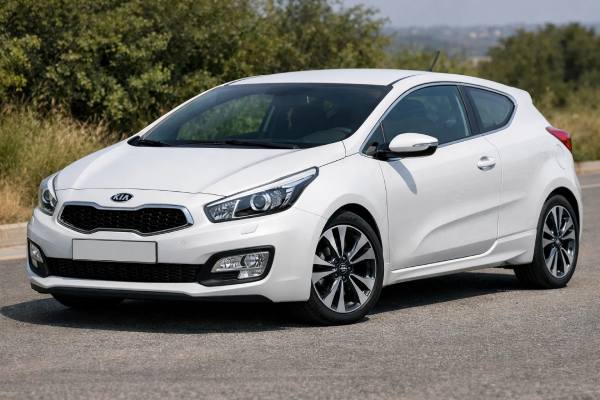
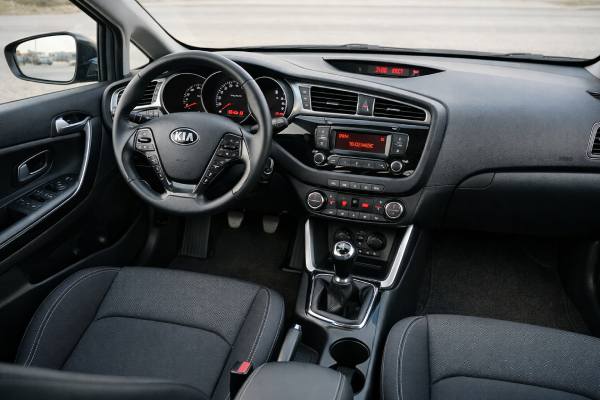
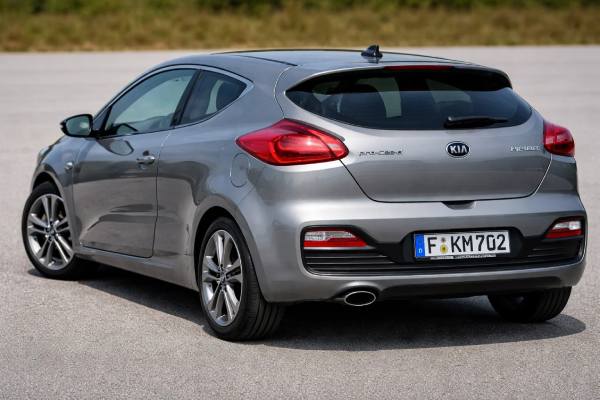
The 2012–2015 Kia Pro Cee’d (JD) with the 1.6 U-II CRDi 110 hp diesel is a straightforward European hatch built around a simple ownership promise: strong mid-range pull, low fuel spend, and long-leg highway comfort without premium-car complexity. This engine’s character suits real commuting—easy overtakes in a higher gear, calm cruising, and good range from a modest tank. The trade-offs are the typical modern-diesel ones: it rewards longer runs and consistent servicing, but dislikes repeated short trips that keep the exhaust aftertreatment cold.
What makes this version worth understanding is how “small” choices change the experience: manual vs automatic availability by market, wheel size affecting ride, and whether the car’s maintenance history shows the right oil and filter discipline for the diesel system. With the right use pattern and proof of care, it can be a practical, durable daily driver.
Fast Facts
- Strong mid-range torque makes city-to-highway driving feel relaxed, especially with the 6-speed manual.
- Efficient at steady speeds; long trips can return notably lower consumption than mixed urban use.
- Simple packaging for a sporty 3-door: useful cargo area and stable high-speed manners.
- Caveat: repeated short trips can accelerate DPF (diesel particulate filter) clogging and EGR soot buildup.
- Typical interval: change engine oil and filter every 12 months (or sooner if used for short trips).
Jump to sections
- Kia Pro Cee’d JD diesel focus
- Kia Pro Cee’d JD 110 hp data
- Kia Pro Cee’d JD grades and crash protection
- Known faults and diesel service actions
- Maintenance plan and buyer checks
- Driving character and real mpg
- Rival diesels and alternatives
Kia Pro Cee’d JD diesel focus
In the JD generation, the Pro Cee’d is the 3-door sibling in the Cee’d family—similar under the skin, but with a slightly sportier feel and a different ownership “vibe.” The 1.6 U-II CRDi 110 hp sits in the sweet spot for this body: enough torque to feel lively in daily traffic, without the extra stress (and running costs) that can come with higher-output diesels. It is not a hot hatch; it is a torque-led hatch that feels confident at normal speeds.
The big engineering story is how the diesel powertrain delivers usable performance with low consumption. The turbocharged common-rail setup builds torque early, so you tend to short-shift and ride the mid-range. That reduces noise and keeps the car feeling calm on long motorway stretches. If your driving is mostly longer commutes, this engine is often at its best: the DPF reaches temperature, the EGR system stays cleaner, and you get consistent economy.
This version is also a “systems car” in a manageable way. You still have modern diesel elements—EGR, turbo plumbing, DPF, sensors—but they’re not paired with an overly complex driveline. Most cars are front-wheel drive with a 6-speed manual; some markets offer an automatic, and that choice changes the car’s personality more than people expect. Manuals feel more direct and typically return better real-world economy; automatics can be smoother in traffic but may feel less eager if the gearbox hunts.
For owners, the key trait is predictability. When maintained on time with the correct oil specification, these engines usually behave consistently: stable idle, strong mid-range, and clean starting. When maintenance is neglected, the symptoms tend to cluster—smoky acceleration, sluggish response, frequent regeneration, or warning lights tied to airflow and emissions sensors. In other words, this is a car that rewards good records.
If you want the simplest ownership experience, prioritize: a complete service history, evidence of regular highway use, and a test drive that includes a steady-speed run long enough to reveal abnormal vibration, boost hesitation, or repeated fan cycles after stopping (which can hint at forced DPF regens).
Kia Pro Cee’d JD 110 hp data
Below are the most relevant specifications for the 2012–2015 Pro Cee’d (JD) with the 1.6 U-II CRDi ~110 hp diesel. Exact figures vary by market, emissions calibration, gearbox, wheel size, and trim—use these as a practical baseline, then verify by VIN.
Powertrain and efficiency
| Item | Spec (typical for 1.6 U-II CRDi 110) |
|---|---|
| Code | U-II CRDi (1.6 family; market-specific engine code) |
| Engine layout and cylinders | Inline-4, DOHC, 16-valve |
| Displacement | 1.6 L (≈1582 cc) |
| Induction | Turbocharged (VGT common in this family) |
| Fuel system | Common-rail direct injection |
| Max power | ~110 hp (≈81 kW) @ ~4000 rpm |
| Max torque | ~255–260 Nm (188–192 lb-ft) @ ~1900–2750 rpm |
| Timing drive | Chain (typical for this diesel family) |
| Rated efficiency (EU-era) | ~4.0–4.6 L/100 km (≈59–51 mpg US / 71–61 mpg UK) |
| Real-world highway @ 120 km/h | ~5.0–5.8 L/100 km (≈47–41 mpg US / 56–49 mpg UK) |
Transmission and driveline
| Item | Spec |
|---|---|
| Transmission | 6-speed manual (most common); 6-speed automatic in some markets |
| Drive type | FWD |
| Differential | Open |
Chassis and dimensions
| Item | Spec (typical Pro Cee’d JD) |
|---|---|
| Suspension (front/rear) | MacPherson strut / multi-link (common EU setup) |
| Steering | Electric power steering |
| Brakes | 4-wheel discs on many trims (sizes vary) |
| Wheels/tyres (common) | 205/55 R16 or 225/45 R17 (market/trim dependent) |
| Ground clearance | ~140 mm (5.5 in), approx. |
| Length / Width / Height | ~4310 / 1780 / 1430 mm (169.7 / 70.1 / 56.3 in) |
| Wheelbase | ~2650 mm (104.3 in) |
| Turning circle (kerb-to-kerb) | ~10.6–10.9 m (34.8–35.8 ft), approx. |
| Kerb weight | ~1360–1450 kg (2998–3197 lb), depending on trim/gearbox |
| Fuel tank | ~53 L (14.0 US gal / 11.7 UK gal) |
| Cargo volume | ~380 L seats up / ~1318 L seats down (method varies) |
Performance and capability (typical)
| Metric | Typical |
|---|---|
| 0–100 km/h (0–62 mph) | ~11.5–12.5 s |
| Top speed | ~182–190 km/h (113–118 mph) |
| Towing capacity | Often ~1200–1400 kg braked (market-specific) |
| Payload | Commonly ~450–550 kg (trim dependent) |
Fluids and service capacities (common baselines)
| Item | Spec (verify by VIN/market) |
|---|---|
| Engine oil | ACEA C2/C3, typically 5W-30 |
| Engine oil capacity | ~5.3 L (1.4 US qt shown per UK reference set) |
| Coolant | Long-life OAT-type (50/50 mix typical) |
| A/C refrigerant | R134a on most cars of this era (charge varies) |
Safety and driver assistance (era-typical)
| Item | Notes |
|---|---|
| Crash ratings | Cee’d family achieved a 5-star Euro NCAP result in this generation; published category scores include Adult 89%, Child 88%, Safety Assist 86% (test version-specific). ([kia.sk][1]) |
| ADAS | Usually ESC, ABS, hill-start assist; advanced AEB/ACC generally not common on early-2010s mainstream trims |
Kia Pro Cee’d JD grades and crash protection
Trim names vary widely across Europe, but the practical way to think about Pro Cee’d equipment is: base, comfort-focused mid trims, and sport-styled upper trims. The diesel 110 hp often appears in mid and upper grades because it was marketed as the “long-distance” option. When shopping, don’t get stuck on the badge—look for the hardware that changes your day-to-day experience.
Common equipment patterns (market dependent):
- Base/entry trims: manual A/C, smaller wheels (often best ride), simpler audio, fewer convenience features.
- Mid trims: dual-zone climate on some cars, upgraded infotainment, parking sensors, better seat fabrics, more sound insulation.
- Upper trims / sport packs: larger wheels, firmer ride impression due to tyres, more cosmetic sport cues, sometimes stronger lighting packages.
Quick identifiers that help you decode a car in person:
- Wheel size: 16-inch packages tend to ride better and cost less in tyres; 17-inch packages look sharper but can be noisier on rough asphalt.
- Seat trim and steering wheel controls: often signal mid/upper equipment.
- Parking sensors or camera: useful modern touch; also a clue the car was optioned higher.
- Headlights: projector or LED signatures often indicate a higher trim level (and higher replacement costs).
On safety, this generation’s Cee’d family earned strong crash performance by the standards of its time, with published Euro NCAP category percentages that include Adult 89%, Child 88%, and Safety Assist 86% for the generation’s test result. ([kia.sk][1]) That does not mean every Pro Cee’d is identically equipped. Ratings depend on the tested configuration and test protocol version, and trim levels can change standard safety-assist content.
What to confirm on the exact car (and why it matters):
- ESC (electronic stability control): should be standard on most EU cars of this era, but verify. It’s one of the biggest real-world safety multipliers in wet or evasive maneuvers.
- Airbag count and placement: front, side, and curtain airbags were common; confirm curtains are present if family use matters.
- ISOFIX/LATCH: usually present; inspect anchor condition and rear-seat belt operation.
- Tyres: correct load and speed rating—diesels are heavier on the nose; mismatched budget tyres can noticeably worsen braking and stability.
- Post-repair calibration realities: if a car has had steering angle sensor, ABS module, or alignment work, ensure warning lights are off and the steering tracks straight—modern stability systems rely on clean sensor data.
For most buyers, the best “safety option” is not a gadget—it’s evidence the car has been maintained correctly and is running on quality tyres and brakes. That is where older cars gain or lose real safety margin.
Known faults and diesel service actions
Most problems on this diesel Pro Cee’d fall into predictable buckets: airflow/emissions control, turbo plumbing, and wear items typical for a front-drive hatch. Think in terms of prevalence and cost tier, because that shapes what you inspect first.
Common (often affordable to moderate)
- EGR valve and intake soot loading (low–medium cost):
Symptoms: hesitant low-rpm response, rough idle, smoke under load, engine light.
Likely cause: soot accumulation from short trips and frequent cold running.
Remedy: cleaning or replacing EGR components; address driving pattern and service intervals. - DPF regeneration complaints (medium cost if neglected):
Symptoms: rising consumption, frequent fan operation after shutdown, warning light, limp mode.
Likely cause: too many short journeys, incorrect oil spec, or a sensor fault triggering poor regen logic.
Remedy: proper diagnostics (pressure sensors, temp sensors), forced regen if appropriate, and correcting root cause. Avoid “delete” solutions—legal and inspection risks aside, they often create new drivability issues. - Boost leaks from hoses/intercooler joints (low–medium cost):
Symptoms: whistle, loss of power, oily misting on hoses, underboost codes.
Likely cause: aged clamps, split hoses, worn seals.
Remedy: pressure test, replace suspect hose sections and clamps.
Occasional (can get expensive)
- Turbo actuator / VGT sticking (medium–high cost):
Symptoms: inconsistent boost, surging, limp mode under sustained load.
Likely cause: soot and heat cycles; sometimes linked to overdue oil changes.
Remedy: cleaning, actuator service, or turbo replacement depending on severity. - Injector sealing or fuel system sensitivity (medium–high):
Symptoms: hard starts, diesel knock, fuel smell, rough running.
Likely cause: sealing issues, contamination, or wear.
Remedy: professional test and correct parts replacement; prioritize clean fuel and timely filter changes where applicable.
Rare (but high impact)
- Cooling system neglect leading to overheating (high):
Symptoms: rising temps, coolant loss, heater performance changes.
Remedy: pressure test, repair leaks, refresh coolant correctly.
Recalls, TSBs, and service actions—how to verify
Don’t guess. Use VIN-based checks and dealer history. Kia provides recall guidance, and UK owners can also check safety recalls through official government services. ([Kia][2])
Pre-purchase checks to request (high signal):
- Proof of correct oil specification and intervals (diesels punish oil neglect).
- Evidence of longer-run use (or at least a history consistent with DPF health).
- Scan for stored codes—especially DPF differential pressure, EGR flow, and boost control.
- Inspect intercooler hoses for oil sweating and loose joints.
- Confirm recall status is clear and documented. ([GOV.UK][3])
If the seller cannot provide records, treat the car as if it needs immediate baseline servicing—and price it accordingly.
Maintenance plan and buyer checks
A good maintenance plan for the 1.6 U-II CRDi is less about exotic parts and more about consistency. Diesels live or die by oil quality, filter discipline, and use pattern.
Practical schedule (baseline for normal use)
- Engine oil and filter: every 12 months or 15,000–20,000 miles depending on market schedule; shorten if mostly short trips. UK guidance sets the JD diesel family at 20,000 miles / 12 months with ACEA C2/C3 5W-30 listed.
- Air filter: inspect every service; replace ~30,000 miles (dusty areas sooner).
- Cabin filter: every 12–24 months for HVAC performance.
- Fuel filter: if serviceable on your market spec, replace on schedule (often 40,000–60,000 miles).
- Coolant: typically 5 years, then per interval thereafter (confirm coolant type and schedule by VIN/manual).
- Brake fluid: every 2 years (moisture control matters for ABS longevity).
- Brake pads/rotors: inspect at every tyre rotation; replace by wear, not time.
- Tyres: rotate ~10,000–12,000 km; align if you see uneven wear.
- Battery (12 V): test annually after year 5; many need replacement in the 5–7 year window.
- DPF/EGR health: not a “service item,” but plan periodic longer drives (20–30 minutes at steady speed) if your routine is mostly urban.
Fluids and specifications that actually matter
- Engine oil spec: prioritize the ACEA C2/C3 requirement and the correct viscosity band for your climate; this supports emissions hardware and turbo lubrication.
- Coolant: use the correct long-life coolant type; mixing incompatible coolants causes sludge and weak corrosion protection.
- Transmission fluid: manuals generally need fewer changes, but a refresh at higher mileage can improve shift feel; automatics should follow market guidance (and benefit from careful servicing if used in heavy traffic).
Buyer’s guide: inspection checklist (high value items)
- Cold start behavior: smooth idle within seconds; no persistent knocking or heavy smoke.
- Boost delivery: a clean surge in mid-range without hesitation; watch for limp mode.
- DPF hints: excessive fan after shutdown, repeated “lazy” acceleration, or warning lights.
- Cooling system: stable temperature, no sweet smell, no crusty residue around hoses.
- Suspension and steering: listen for front-end knocks over bumps (bushings/links).
- Brakes: pulsing suggests warped rotors; uneven braking can mean seized calipers.
- Body and underside: check sills, subframes, and rear suspension mounting areas for corrosion, especially in salted-climate cars.
- Paper trail: consistent servicing beats “recent big service” with missing history.
Best ownership profile: mostly mixed or highway driving, serviced on time, and run on quality tyres. In that setup, the long-term durability outlook is good—because the engine spends more time in its efficient, clean-running temperature zone.
Driving character and real mpg
On the road, the 110 hp diesel Pro Cee’d feels defined by torque rather than top-end power. Around town, it pulls from low rpm without demanding constant downshifts, and on the motorway it settles into an easy rhythm. The chassis tuning in this generation generally prioritizes stability: it tracks straight, feels planted at speed, and keeps cabin noise at a reasonable level for a mainstream hatch—though tyre choice makes a bigger difference than many owners expect.
Ride, handling, and NVH
- Ride: 16-inch wheels typically deliver the most compliant ride and lowest impact harshness. Moving to wider 17-inch tyres can sharpen turn-in but often adds road noise and makes potholes feel sharper.
- Handling: neutral and predictable. It won’t rotate like a dedicated hot hatch, but it stays tidy and confidence-inspiring.
- Steering feel: light to moderate weight, tuned more for ease than feedback.
- Braking: consistent when the car is on good tyres; many complaints trace back to cheap pads/rotors rather than the brake system design.
Powertrain character
- Throttle response: strongest once the turbo is in its working zone; below that, it can feel a touch sleepy compared with a petrol.
- Passing performance: the mid-range torque makes 80–120 km/h passing in a higher gear feel easier than the power figure suggests.
- Manual vs automatic: manuals feel more responsive and allow you to keep the engine right in the torque band; automatics trade some punch for convenience, especially in stop-start traffic.
Real-world efficiency (what owners actually see)
Expect consumption to vary mainly with speed and trip length:
- City / short trips: often 6.0–7.5 L/100 km (39–31 mpg US / 47–38 mpg UK), especially in cold weather where the diesel runs rich for warm-up and DPF regens occur more often.
- Highway 100–120 km/h: often 5.0–5.8 L/100 km (47–41 mpg US / 56–49 mpg UK).
- Mixed driving: commonly 5.3–6.5 L/100 km (44–36 mpg US / 53–43 mpg UK).
A useful rule: if you want diesel ownership to feel “easy,” give it regular longer runs. That single habit reduces DPF drama, keeps EGR deposits down, and usually improves economy enough to offset the higher cost of diesel-specific servicing.
Rival diesels and alternatives
In the used-market landscape, the Pro Cee’d JD 1.6 CRDi 110 typically competes with other compact European diesels that target the same mission: efficient commuting with a practical cabin. Your best choice depends less on brand and more on how the specific car was used.
Where this Pro Cee’d tends to win
- Value-for-equipment: many examples were sold with a strong feature set for the money, especially mid trims.
- Relaxed torque delivery: feels easy in everyday traffic and on motorways.
- Straightforward packaging: a usable boot and stable high-speed behavior make it a credible travel car, not just a city runabout.
Where rivals may do better
- Sharper handling or broader engine choice: some competitors offer more “driver’s car” steering feel or a wider spread of petrol/diesel outputs.
- Diesel aftertreatment sophistication (later models): newer-generation diesels from rivals can be cleaner and smoother, but often add complexity and cost if neglected.
- Cabin refinement at rough-road speeds: depending on trim and tyre choice, certain rivals can be quieter or more compliant.
Practical rival short list (what to compare on your test drive)
- Volkswagen Golf 1.6 TDI: often refined, but verify EGR/DPF history and DSG servicing if automatic.
- Ford Focus 1.6/1.5 TDCi: typically engaging chassis; check service quality and diesel system health.
- Renault Mégane 1.5 dCi: strong economy reputation; condition and maintenance matter more than the badge.
- Hyundai i30 1.6 CRDi: closely related engineering in many markets; shop the best-kept example.
The best “comparison method”
- Start with service history strength (oil spec/interval proof beats everything).
- Prefer a car with longer-trip usage and clean diagnostic health (especially DPF/EGR/boost).
- Use tyres and brakes as a proxy for owner standards—good brands and even wear usually correlate with better overall care.
- Choose the wheel size that matches your roads: 16-inch for comfort and cost, 17-inch for style and sharper response.
If your driving is mostly short urban trips, a small petrol or hybrid competitor can be the smarter long-term call. If you regularly do longer commutes, this 1.6 CRDi Pro Cee’d remains a sensible, economical choice—especially when bought on condition, not mileage alone.
References
- New-generation Kia cee’d awarded top safety score by EuroNCAP – Kia Slovakia s.r.o. 2012 (Safety Rating)
- Kia C’eed – Crash Test 2012 2012 (Safety Rating)
- Engine Oil Grades and Capacities 2023 (Service Data)
- Kia Car Owners Manual | Kia UK 2026 (Owner’s Manual Portal)
- Check if a vehicle, part or accessory has been recalled – GOV.UK 2026 (Recall Database)
Disclaimer
This article is for informational purposes only and is not a substitute for professional diagnosis, inspection, or repair. Specifications, torque values, service intervals, fluid standards, and procedures can vary by VIN, market, emissions calibration, and installed equipment—always confirm details using your official owner’s manual and service documentation before performing work or authorizing repairs.
If you found this guide useful, please consider sharing it on Facebook, X (Twitter), or your favorite forum to help others and support our work.