
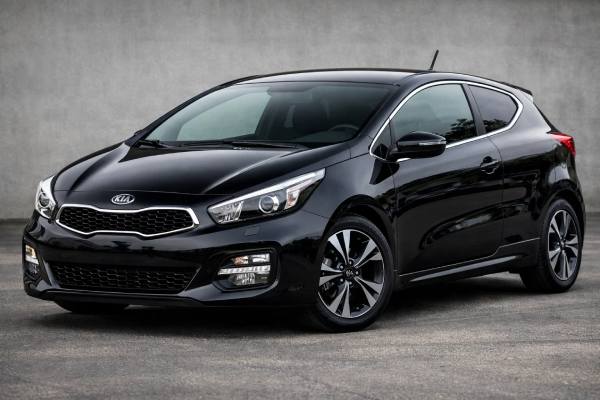
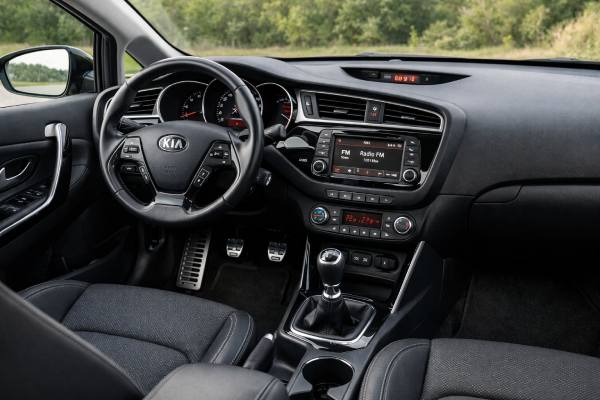
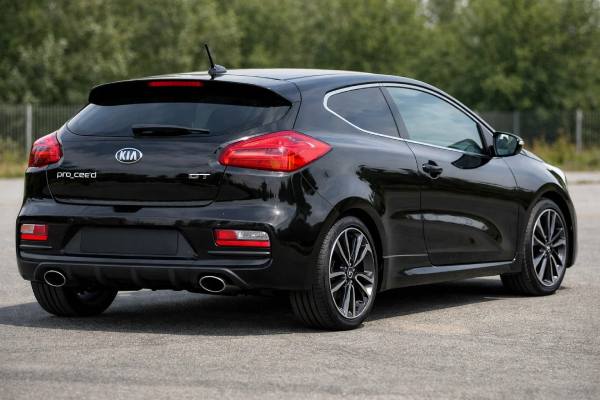
The facelift-era Kia Pro Cee’d (JD) with the 1.0 T-GDi is a smart match for drivers who want a compact hatch that feels light on its feet but still delivers the low-rpm pull of a turbo engine. In this trim, the engineering story is mostly about balance: modest power paired with strong midrange torque, a simple front-drive layout, and a chassis tuned for everyday confidence rather than track-day sharpness.
Ownership tends to be straightforward when maintenance is consistent. The big difference between a “good” and “tired” example is usually service history and usage pattern (short trips and missed oil changes are tougher on small turbo engines). If you choose well and keep up with fluids, filters, and cooling system health, this Pro Cee’d can offer low running costs, solid motorway stability, and practical practicality in a compact footprint.
Owner Snapshot
- Strong everyday torque for city and motorway merges without needing high revs.
- Compact exterior makes parking easy, yet cabin packaging works well for a 3-door.
- Generally predictable handling and braking feel on mixed roads.
- Caveat: avoid long oil-change intervals; turbocharged small engines reward clean oil.
- Typical interval: engine oil and filter every 10,000–15,000 km (6,000–9,000 mi) or 12 months (whichever comes first).
Navigate this guide
- Kia Pro Cee’d JD 1.0 T-GDi at a glance
- Kia Pro Cee’d JD 1.0 T-GDi specs and measurements
- Kia Pro Cee’d JD trims, safety, and driver tech
- Reliability trouble spots and service actions
- Maintenance routine and buying checklist
- Driving feel and real-world economy
- Rivals to compare before you buy
Kia Pro Cee’d JD 1.0 T-GDi at a glance
The 2015–2018 facelift Pro Cee’d (JD) is the three-door, style-leaning member of the Cee’d family. In 1.0 T-GDi form, it focuses on usable torque and efficiency rather than outright pace. That matters because the Pro Cee’d is not especially heavy for the class, so a 100 hp turbo engine can still feel lively in normal driving—especially once the turbo is making boost in the midrange.
A key ownership detail is how this engine achieves its flexibility. A small-displacement turbo petrol typically runs higher cylinder pressures than an older naturally aspirated 1.6, and it relies on healthy oil quality and correct warm-up habits. That does not mean it is fragile; it means maintenance discipline shows up more clearly in long-term reliability. If you are shopping used, you want evidence of timely oil services, correct oil specification, and no long gaps in the history.
In daily use, the facelift car’s strengths are “easy to live with” traits: light controls, stable straight-line tracking at motorway speeds, and a suspension tune that usually avoids harshness on rough city surfaces. Cabin noise is acceptable for the segment, although tyre choice can swing the experience more than many owners expect—especially as the car ages and cheaper tyres get fitted.
The Pro Cee’d’s practical compromise is access and rear-seat convenience. The front seats are generally supportive, but rear entry is tighter than in the five-door. If you regularly carry adults in the back, the five-door or Sportswagon is a better fit. If you mostly drive solo or as a couple, the three-door layout can be a plus: fewer doors, fewer seals, fewer rattles to chase, and a slightly “tighter” feel over time when maintained.
A well-chosen example is usually one with:
- A cold start that sounds smooth and settles quickly (no hunting idle).
- Clean boost delivery (no flat spots, no over-whistle).
- A crisp manual shift feel, or a smooth automatic with consistent take-up (depending on market availability).
- A cooling system that holds temperature steadily in traffic and on climbs.
Kia Pro Cee’d JD 1.0 T-GDi specs and measurements
Specs for the 1.0 T-GDi can vary by market, emissions certification, and gearbox. Use the tables below as a practical baseline, then confirm your exact VIN build sheet and owner documentation for final numbers.
Powertrain and efficiency
| Item | Specification |
|---|---|
| Code | Kappa II T-GDi (market naming varies) |
| Engine layout and cylinders | Inline-3 (I-3), turbocharged petrol |
| Valvetrain | DOHC, 4 valves/cyl (typical for this family) |
| Displacement | 1.0 L (≈998 cc) |
| Induction | Turbo |
| Fuel system | Direct injection (DI) |
| Compression ratio | Market-dependent (verify by VIN) |
| Max power | 100 hp (≈74 kW) @ rpm (varies by calibration) |
| Max torque | typically ~160–175 Nm (118–129 lb-ft) @ low rpm band (market-dependent) |
| Timing drive | Chain (common on modern small turbo petrols; verify by VIN) |
| Rated efficiency | typically ~4.8–5.8 L/100 km (≈49–41 mpg UK / 49–33 mpg US), depending on gearbox and wheels |
| Real-world highway @ 120 km/h (75 mph) | commonly ~6.0–7.2 L/100 km (≈47–39 mpg UK / 39–33 mpg US) |
Transmission and driveline
| Item | Specification |
|---|---|
| Transmission | Most commonly 6-speed manual (market-dependent) |
| Drive type | FWD |
| Differential | Open |
Chassis and dimensions (typical JD Pro Cee’d baseline)
| Item | Specification |
|---|---|
| Suspension (front/rear) | MacPherson strut / multi-link (common JD setup; confirm by trim/market) |
| Steering | Electric power steering (EPS) |
| Brakes | Ventilated front discs / rear discs (some trims) or rear discs/drums by market |
| Wheels/tyres (popular sizes) | often 195/65 R15, 205/55 R16, or 225/45 R17 depending on trim |
| Ground clearance | typically ~135–150 mm (5.3–5.9 in) |
| Length / width / height | approx. 4,310 mm / 1,780 mm / 1,430 mm (varies slightly by trim) |
| Wheelbase | approx. 2,650 mm (104.3 in) |
| Turning circle (kerb-to-kerb) | typically ~10.6–10.8 m (34.8–35.4 ft) |
| Kerb (curb) weight | commonly ~1,200–1,330 kg (2,646–2,932 lb) depending on equipment |
| Fuel tank | typically ~53 L (14.0 US gal / 11.7 UK gal) |
| Cargo volume | approx. 380 L seats up; higher with seats down (method varies by market) |
Performance and capability (realistic ranges)
| Metric | Typical value |
|---|---|
| 0–100 km/h (0–62 mph) | ~11.0–12.5 s (gearbox and tyres matter) |
| Top speed | ~180–190 km/h (112–118 mph) |
| Braking 100–0 km/h | often ~37–41 m (121–135 ft) on good tyres |
| Towing capacity | frequently limited on small petrol turbos; verify local homologation |
| Payload | typically ~450–550 kg (992–1,213 lb) depending on trim |
Fluids and service capacities (confirm by engine label and VIN)
Because fluids and capacities vary by production date and market, use the items below as decision-grade guidance, not final service instructions.
| System | What to use (typical) |
|---|---|
| Engine oil | Full synthetic meeting the required ACEA/API spec for your market; common viscosities: 5W-30 or 5W-40 (check cap/handbook) |
| Coolant | Long-life ethylene glycol coolant meeting Kia/Hyundai spec; usually 50/50 mix unless climate dictates otherwise |
| Manual gearbox oil | GL-4 spec oil (grade varies); confirm by gearbox code |
| A/C refrigerant | R134a is common for this era (some late cars may differ; check under-hood label) |
Key torque specs (critical fasteners, typical approach):
For wheel bolts, many Kia models use ~88–110 Nm (65–81 lb-ft) depending on wheel and market. Always confirm the exact value for your car before tightening.
Safety and driver assistance (baseline)
| Item | What to expect |
|---|---|
| Crash ratings | This generation earned strong results in period testing for its class (exact rating depends on test year and protocol) |
| IIHS | Typically not applicable for EU-market Cee’d/Pro Cee’d |
| ADAS suite | Mostly pre-ADAS era: ESC, ABS, traction control; advanced AEB/ACC usually limited or not offered on many trims |
Kia Pro Cee’d JD trims, safety, and driver tech
Trim structure differs by country, but the facelift Pro Cee’d usually follows a familiar ladder: a value-focused base grade, a mid-trim with comfort features, and a higher trim with larger wheels, upgraded lighting, and infotainment. For the 1.0 T-GDi specifically, the “best” trim is often the one that matches how you drive, not the one with the biggest wheels. Larger wheels can sharpen steering response, but they also raise tyre costs and can make the ride busier on broken pavement. If your roads are rough, a 16-inch package often delivers the most satisfaction per euro.
Common trim identifiers (quick checks):
- Wheel size and brake hardware: higher trims often move from smaller wheels to 17-inch packages, sometimes paired with rear disc brakes (market-dependent).
- Headlights: halogen vs projector or HID (where offered) can be a simple visual cue.
- Cabin features: climate control vs manual A/C, heated seats/steering wheel in cold-climate markets, and upgraded audio.
Infotainment and convenience changes in facelift years (typical patterns):
- Bluetooth and USB became increasingly standard.
- Navigation and premium audio were often bundled in option packs rather than standard.
- Rear camera availability improved in later years, usually as part of a higher infotainment package.
Safety ratings: how to interpret them for this car
For a 2015–2018 facelift model, the most common confusion is that crash-test protocols changed significantly through the 2010s. A “5-star” in an older protocol does not equal a “5-star” in a newer protocol. The Pro Cee’d/JD platform is generally well regarded structurally, but you should read ratings as “relative to its testing year,” not as a direct comparison to 2020s small cars with more advanced crash avoidance tech.
Safety systems you should expect
Even without modern camera/radar driver assistance, these cars typically include the essentials that matter in day-to-day risk reduction:
- ABS (anti-lock braking) to keep steering control under hard braking.
- ESC (electronic stability control) to reduce loss-of-control crashes on wet or icy roads.
- Traction control to help manage wheelspin.
- Multiple airbags (front and side; curtain airbags often included on many trims).
Child-seat practicality:
ISOFIX/LATCH points are commonly present, but access through the three-door body is the real constraint. If you will fit a child seat often, plan on extra time and check that the front seat travel allows enough clearance for your specific seat.
After-service calibration note:
If your car has steering-angle sensors and stability-control systems (it will), alignment changes and low-quality suspension repairs can cause steering pull, traction-control oddness, and premature tyre wear. After suspension work, a proper alignment and a steering-angle reset (when required) keep the car feeling “factory normal.”
Reliability trouble spots and service actions
A small turbo petrol can be very dependable, but it is less forgiving of neglect. For the facelift Pro Cee’d 1.0 T-GDi, you can think in three categories: air and vacuum integrity (boost system), lubrication quality (turbo and timing components), and cooling stability (thermal management).
Common issues (higher prevalence)
- Boost leaks (low/medium cost)
Symptoms: softer-than-usual acceleration, inconsistent torque, occasional whistle, sometimes an engine light.
Likely causes: cracked charge pipes, tired clamps, intercooler end-tank seepage, or vacuum line issues.
Remedy: smoke test the intake/boost system; replace weak hoses/clamps; confirm turbo control operation. - Carbon buildup on intake valves (medium cost, usage-dependent)
Symptoms: rough idle, hesitation, reduced efficiency, occasional misfire codes.
Likely causes: direct injection does not wash the intake valves with fuel; short trips and low-load driving accelerate deposits.
Remedy: targeted intake cleaning when symptoms appear; prevent with regular highway runs and correct oil change intervals. - Ignition coil or plug wear (low/medium cost)
Symptoms: misfires under load, hesitation, poor fuel economy.
Likely causes: plugs past interval, heat cycling, or coil aging.
Remedy: fit correct-spec plugs (heat range matters on turbo engines); replace coils if misfire follows a coil.
Occasional issues (market and age dependent)
- Turbocharger control faults (medium/high cost depending on root cause)
Symptoms: limp mode, inconsistent boost, underboost/overboost codes.
Likely causes: wastegate actuator issues, sticky linkage, sensor faults, or boost control solenoid problems.
Remedy: diagnose with live data (requested vs actual boost); fix the control issue before replacing the turbo. - Cooling system weak points (medium cost)
Symptoms: slow coolant loss, temperature fluctuation in traffic, heater performance changes.
Likely causes: ageing hoses, thermostat behavior, radiator seepage, or water pump wear.
Remedy: pressure test; replace weak components proactively rather than “topping up forever.”
Rare but expensive if ignored
- Oil starvation or severe oil degradation (high cost)
Symptoms: turbo noise, blue smoke, timing chain noise, metal in oil, low oil pressure warnings.
Likely causes: extended oil intervals, wrong oil spec, or chronic low oil level.
Remedy: stop driving and diagnose immediately. Prevent by keeping oil clean and correctly filled.
Recalls, TSBs, and software updates
Without listing every campaign by country, your best practice is simple:
- Ask the seller for proof of recall completion and dealer service entries.
- Run a VIN check with an authorized Kia service center in your country.
- If the car has drivability quirks (hesitation, unstable idle), ask a dealer to confirm whether ECU updates apply to your VIN.
A used Pro Cee’d that has had “the right updates” often feels smoother and more consistent than one that has only had basic oil services.
Maintenance routine and buying checklist
If you want this 1.0 T-GDi to stay happy beyond 150,000 km (93,000 mi), your goal is to reduce stress on the turbo and keep fluids fresh. The schedule below is intentionally practical; it reflects what typically works well for small turbo petrols in mixed European driving.
Practical maintenance schedule (distance or time, whichever comes first)
- Engine oil and filter: every 10,000–15,000 km or 12 months
If you do short trips, cold starts, or heavy city traffic, lean toward 10,000 km. - Engine air filter: inspect every 15,000–30,000 km; replace as needed
Dusty regions and city pollution shorten life. - Cabin air filter: every 12 months (or sooner if airflow drops)
- Spark plugs: typically 45,000–60,000 km (turbo engines are pickier about plug condition)
- Coolant: commonly 5 years / 100,000–150,000 km, then at shorter intervals
Confirm the exact coolant type and interval for your market. - Brake fluid: every 2 years
This is one of the most cost-effective safety services you can do. - Brake pads and discs: inspect every service; replace based on thickness and vibration
If you feel a steering shake under braking, check front discs for runout and pad deposits. - Manual gearbox oil: often “inspect” or long-life, but a 60,000–100,000 km change can improve shift feel and longevity (especially in hot/cold extremes).
- Tyres and alignment: rotate every 10,000–12,000 km; align if you see uneven wear or steering pull.
- 12 V battery: test annually after year 5; many batteries last 5–7 years.
Fluids: what matters most
For buying and planning costs, these are the “big three” questions:
- Does the service record show correct oil spec and reasonable intervals?
- Has the coolant ever been changed, and is the level stable today?
- Does the gearbox feel healthy (no notchiness, no crunching, no clutch slip)?
Buyer’s inspection checklist (used market)
Engine and turbo
- Cold start: listen for rattles that persist beyond a few seconds.
- Idle: stable, no hunting.
- Test drive: boost should build smoothly; no flat spots or sudden limp mode.
Cooling system
- Temperature gauge should settle and stay steady.
- Look for dried coolant residue around hose joints and radiator edges.
Chassis
- Front suspension knocks over sharp bumps can indicate drop links or bushings.
- Check rear alignment and tyre wear; uneven wear can signal tired bushings or past kerb impacts.
Electrical and cabin
- Confirm all windows, mirrors, A/C, infotainment, and parking sensors/camera (if fitted).
- Water ingress checks: lift boot floor and feel for dampness, especially after heavy rain.
Long-term durability outlook
These cars age well when serviced on time and driven regularly enough to reach full operating temperature. The biggest “avoid” is a car with unknown oil history and lots of short-trip use. The biggest “buy” sign is a steady owner who did routine fluids, quality tyres, and occasional preventive work.
Driving feel and real-world economy
The 1.0 T-GDi Pro Cee’d tends to feel more flexible than the power figure suggests. Around town, you can lean on midrange torque rather than revving it out, and that makes the car feel relaxed in traffic. On the motorway, the car’s stability is one of its quiet strengths: it tracks straight, resists crosswinds reasonably well for a compact hatch, and feels planted when changing lanes—assuming the tyres and alignment are in good shape.
Ride, handling, and NVH
- Ride quality: with 15–16 inch wheels, the facelift Pro Cee’d usually filters sharp edges well. With larger wheels and low-profile tyres, impacts feel more immediate, and cabin noise rises.
- Handling balance: predictable front-drive behavior—mild understeer at the limit, with stability control stepping in early enough to feel safe rather than sporty.
- Steering feel: light at parking speeds and more weighted on the move. Feedback is adequate, not talkative.
- Cabin noise: tyre roar is the main variable. Cheap tyres can make the car feel louder and less “grown up” at 120 km/h.
Powertrain character
Expect a small amount of turbo delay if you floor it at very low rpm, but the useful zone arrives quickly. The engine’s sweet spot is usually midrange: it accelerates cleanly without needing constant downshifts. With a manual, you can short-shift and still make progress. If your market offers an automatic with this engine, prioritize smooth engagement and consistent shifts in the test drive; hesitation or flare is not something to ignore.
Real-world economy (what owners typically see)
Real consumption depends heavily on speed and trip length:
- City (stop-start): often 6.5–8.0 L/100 km (≈43–35 mpg UK / 36–29 mpg US)
- Highway (100–120 km/h): often 6.0–7.2 L/100 km (≈47–39 mpg UK / 39–33 mpg US)
- Mixed use: often 5.8–7.0 L/100 km (≈49–40 mpg UK / 41–34 mpg US)
Cold weather delta: short winter trips can add 10–25% consumption because the engine runs richer when cold and cabin heat demand rises.
Performance metrics that change the verdict
For most buyers, two “feel” tests matter more than published numbers:
- 80–120 km/h passing (50–75 mph): should feel decisive with a downshift; if it feels flat, suspect boost leaks or ignition issues.
- Braking confidence: the pedal should be firm and consistent. If it feels spongy, budget for brake fluid and a full brake inspection.
Rivals to compare before you buy
The facelift Pro Cee’d 1.0 T-GDi sits in a competitive space: compact hatchbacks that aim for low running costs but still feel solid on the motorway. Your best rival depends on what you value most—ride comfort, cabin tech, repair costs, or resale.
If you want a more “premium” driving feel
- Volkswagen Golf 1.0 TSI (similar era): often feels more refined inside and can be quieter at speed. Parts and servicing can cost more, and options complexity is higher.
- Audi A3 1.0 TFSI: stronger brand appeal and cabin finish, but upkeep and insurance often rise.
If you prioritize low running costs and simple ownership
- Hyundai i30 1.0 T-GDi: closely related in feel and engineering philosophy; sometimes easier to find with clear service history depending on your market.
- Toyota Auris 1.33/1.6 (non-turbo): less torque-rich than the Kia, but often very forgiving of urban use and short trips. If you value simplicity over midrange punch, it can be a calm choice.
If you care about handling feel
- Ford Focus 1.0 EcoBoost: sharper steering and chassis tuning. Maintenance discipline matters here too; buy only with excellent history and a healthy cooling system.
- Mazda 3 (NA petrol): usually excellent steering feel and reliability reputation; you trade turbo torque for linear power delivery.
Why the Pro Cee’d still makes sense
If you want a compact car that is easy to park, stable on the motorway, and generally affordable to run, the Pro Cee’d is a sensible middle ground. It may not lead the class in cabin sparkle or cutting-edge driver assistance, but it offers a strong ownership “floor” when maintained: predictable parts needs, straightforward servicing, and a durable-feeling chassis that does not fall apart quickly when driven daily.
The best reason to choose it over rivals is fit: if the three-door layout works for your life and you find one with strong history, it can feel like a lot of car for the money.
References
- Kia Pro_Cee’d 2013 (Safety Rating)
- Kia Pro_Cee’d – ANCAP Safety Rating 2013 (Safety Rating Report)
- Service Intervalls V25.1 2025 (Service Schedule)
- Rescue sheets 2021 (Technical Guide)
Disclaimer
This article is for informational purposes only and is not a substitute for professional inspection, diagnosis, or repair. Specifications, torque values, service intervals, and procedures vary by VIN, market, production date, and equipment. Always verify details using your vehicle’s official service documentation and labels, and consult a qualified technician for safety-critical work.
If this guide helped you, please consider sharing it on Facebook, X (Twitter), or your favorite forum to support our work.