
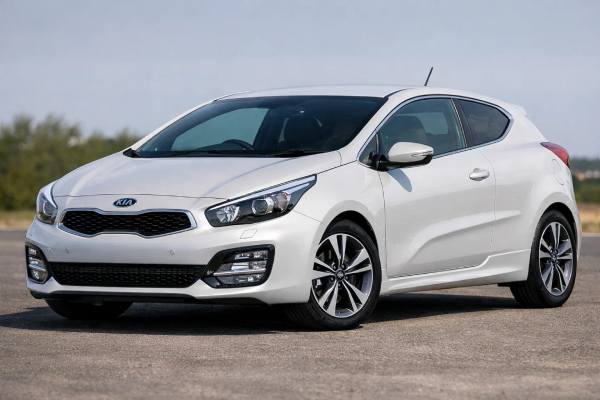

The 2015–2018 facelift Kia Pro Cee’d (JD) with the 1.6 Gamma GDi sits in a sweet spot: naturally aspirated simplicity, direct-injection efficiency, and a chassis that still feels tidy and European. With 135 hp and a rev-happy powerband, it rewards drivers who don’t mind using the upper half of the tachometer—while staying sensible on fuel when driven smoothly. This version also benefits from a mature platform, so most common quirks are well-known and easy to screen for during a pre-purchase inspection. The trade-off is typical for early-era GDI engines: it can be sensitive to short-trip use and inconsistent oil quality, and intake-valve carbon build-up is a real long-term consideration. Buy the right example, maintain it on time, and it can be a durable, enjoyable daily coupe-hatch.
Quick Specs and Notes
- Strong steering feel and balanced handling for a front-drive coupe-hatch, especially on 17-inch wheels with good tyres.
- 1.6 GDi is mechanically straightforward (no turbo), with predictable power delivery and fewer heat-stress concerns than boosted engines.
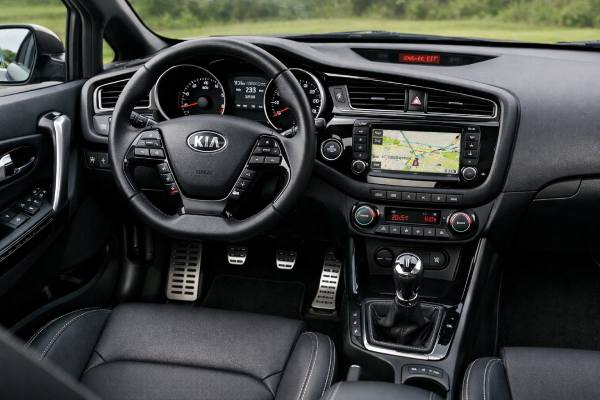
- Cabin ergonomics are user-friendly and long-distance comfort is better than many “sporty-looking” rivals.
- Plan for intake cleaning over the long term if the car has lived on short trips or cheap fuel.
- Typical service cadence is 20,000 miles / 12 months (market-dependent; follow your VIN schedule).
Navigate this guide
- Pro Cee’d JD 1.6 GDi ownership profile
- Pro Cee’d JD 1.6 GDi data tables
- Pro Cee’d JD equipment and safety
- Common faults, recalls, and updates
- Service plan and buying advice
- On-road performance and economy
- Competitors and ownership value
Pro Cee’d JD 1.6 GDi ownership profile
This facelift Pro Cee’d pairs the “Gamma” 1.6 GDi with a chassis tuned for everyday confidence rather than raw aggression. In practice, it feels like a well-sorted compact hatch that happens to have a sleeker 3-door silhouette: stable at motorway speeds, light on its feet in city driving, and composed on rougher pavement if the suspension isn’t tired.
The 1.6 GDi’s defining trait is how it makes its power. Unlike a small turbo that delivers early torque, this engine builds progressively and encourages clean, linear throttle use. Around town it’s calm and predictable; on a back road it prefers to be worked—downshift, let it spin, and it becomes much more responsive. For owners who value low drama, that’s a plus: fewer turbo-related heat and lubrication demands, fewer expensive boost-control parts, and less sensitivity to neglected intercooler plumbing. For owners who expect strong low-end shove, it can feel flat below ~2,500 rpm.
Where this Pro Cee’d shines is “real ownership usability.” Cabin layout is straightforward, visibility is decent for a coupe-hatch, and the driving position suits long commutes. The cargo opening is practical for the class, but rear-seat access is the compromise—fine for occasional passengers, less ideal for daily family duty. Typical running costs are predictable: tyres, brakes, and routine fluids more than “surprises,” provided the engine has been serviced with the correct oil grade and intervals.
Who should choose it? Drivers who want a stylish compact that’s engaging without being stiff or loud, and buyers who prefer naturally aspirated reliability patterns over modern downsized turbo complexity. Who should skip it? Anyone who mainly drives very short trips in cold weather and rarely reaches full operating temperature—direct injection engines generally dislike that lifestyle.
Pro Cee’d JD 1.6 GDi data tables
Below are practical, decision-grade specifications for the 2015–2018 facelift Pro Cee’d JD with the 1.6 Gamma GDi (135 hp). Exact figures can vary by market, wheel package, and transmission, so treat these as “typical” and verify by VIN documentation.
Powertrain and efficiency (typical)
| Item | Specification |
|---|---|
| Code | Gamma GDi (commonly G4FD, market dependent) |
| Engine layout and cylinders | Inline-4, DOHC, 16 valves (4 valves/cyl) |
| Bore × stroke | ~77.0 × 85.4 mm (check engine plate for confirmation) |
| Displacement | 1.6 L (1,591 cc) |
| Induction | Naturally aspirated |
| Fuel system | Gasoline direct injection (GDi) |
| Compression ratio | Typically ~11.0:1 |
| Max power | 135 hp (99 kW) @ ~6,300 rpm |
| Max torque | ~164 Nm (121 lb-ft) @ ~4,850 rpm |
| Timing drive | Chain |
| Rated efficiency | Commonly ~5.9–6.5 L/100 km (40–36 mpg US / 48–43 mpg UK) depending on gearbox and wheels |
| Real-world highway @ 120 km/h | Often ~7.0–7.8 L/100 km (34–30 mpg US / 40–36 mpg UK) in good condition |
Transmission and driveline
| Item | Specification |
|---|---|
| Transmission | Typically 6-speed manual; some markets offer a 6-speed automatic |
| Drive type | FWD |
| Differential | Open |
Chassis and dimensions (typical Pro Cee’d JD)
| Item | Specification |
|---|---|
| Suspension (front/rear) | MacPherson strut / multi-link (most JD trims) |
| Steering | Electric power steering |
| Brakes | 4-wheel discs (sizes vary by trim) |
| Popular tyre size | 225/45 R17 (common); some trims run 16 or 18-inch packages |
| Ground clearance | ~140 mm (5.5 in) |
| Length / width / height | ~4,310 / 1,780 / 1,430 mm (169.7 / 70.1 / 56.3 in) |
| Wheelbase | ~2,650 mm (104.3 in) |
| Turning circle | ~10.6 m (34.8 ft) |
| Kerb weight | ~1,220–1,320 kg (2,690–2,910 lb) |
| Fuel tank | ~53 L (14.0 US gal / 11.7 UK gal) |
| Cargo volume | ~380 L (13.4 ft³) seats up, ~1,200+ L (42+ ft³) seats down (method varies) |
Performance and capability (typical)
| Item | Specification |
|---|---|
| 0–100 km/h (0–62 mph) | ~9.5–10.5 s |
| Top speed | ~190–200 km/h (118–124 mph) |
| Braking 100–0 km/h | Commonly ~36–40 m on quality tyres (test-dependent) |
| Towing capacity | Market-specific; some regions list towing, others do not |
| Payload | Trim/market-specific |
Fluids and service capacities (decision-grade)
| Item | Specification |
|---|---|
| Engine oil | Typically ACEA A5; commonly 5W-30 |
| Engine oil capacity | ~3.6 L (3.8 US qt) (verify for your exact engine) |
| Coolant | Long-life ethylene glycol mix (commonly 50/50); capacity varies |
| A/C refrigerant | Vehicle-specific; check under-hood label |
Safety and driver assistance (baseline context)
| Item | Specification |
|---|---|
| Crash ratings (Euro NCAP) | 5-star class result for the Ceed family generation; Adult 89%, Child 88%, Pedestrian 61%, Safety Assist 86% (rating protocol year matters) |
| Core safety systems | ESC, ABS, multiple airbags, ISOFIX/LATCH (trim/market dependent) |
| ADAS | Limited by era/trim; some cars have basic lane or parking aids rather than modern AEB suites |
Pro Cee’d JD equipment and safety
Trims and options that matter in real use
Across Europe, the facelift Pro Cee’d typically appears in mid-to-high trims where daily comfort is strong: dual-zone climate, heated seats/steering wheel (market dependent), parking sensors and camera, and upgraded infotainment. The key is not the badge on the tailgate—it’s the wheel/tyre and brake package, lighting, and cabin tech level.
Practical identifiers you can use when shopping:
- Wheel size: 16-inch setups ride better and cost less in tyres; 17-inch often feels the best blend; 18-inch looks great but can introduce sharper impacts and higher tyre spend.
- Headlights: projector or HID/LED (where fitted) often signal a higher trim; check for hazing and auto-levelling operation.
- Infotainment: screen size and the presence of factory navigation tend to correlate with reverse camera and steering-wheel controls.
- Rear suspension: most JD variants use a multi-link rear, but always confirm the car hasn’t been repaired with incorrect parts after an accident.
Year-to-year changes (2015–2018 facelift window) usually revolve around option packaging and infotainment updates rather than major mechanical revisions on the 1.6 GDi. The most meaningful “change” for owners is simply that later cars often have better feature availability for the money.
Safety ratings and what they mean today
The Ceed generation achieved strong occupant protection for its time, with high adult and child scores and a solid Safety Assist result under the period’s test rules. Two important clarifications:
- Protocol drift: a 5-star result from the early 2010s doesn’t equal a modern 5-star; newer tests emphasize advanced driver assistance and pedestrian/cyclist avoidance systems.
- Trim dependency: safety equipment such as speed limiter functions, certain seatbelt reminders, and lighting performance can vary by trim and market.
Safety systems and ADAS reality check
Expect robust fundamentals: front, side, and curtain airbags on many trims; ESC; ABS; brake assist; hill start assist; and ISOFIX mounts. Advanced features like autonomous emergency braking, adaptive cruise, and lane centering are typically not widespread on this era of Pro Cee’d, so your best safety upgrade is often tyres and brake condition:
- Premium tyres in the correct load/speed rating can materially improve stopping distance and wet stability.
- Fresh brake fluid (every 2 years) helps maintain consistent pedal feel under repeated braking.
After windshield replacement or front-end repairs, verify that any sensors (parking, rain/light, camera if equipped) work correctly and that warning lights self-test and extinguish normally.
Common faults, recalls, and updates
This section focuses on patterns seen on the 1.6 Gamma GDi era and the JD platform. Not every car will experience these, but they’re the areas where inspection and maintenance discipline pay off.
Engine and fuel system (GDi-specific)
Common (low–medium cost):
- Ignition coils or plugs aging: Symptoms include misfires under load, rough idle, or flashing MIL. Remedy is usually plugs (correct heat range) and coil replacement as needed.
- PCV valve and breather hoses: Can contribute to oil misting and unstable idle; inexpensive to service.
Occasional (medium cost):
- Intake-valve carbon build-up (direct injection trait): Symptoms are hesitation, uneven idle, reduced midrange, and poorer economy—often worse with frequent short trips. Remedy is intake cleaning (often walnut blasting) and addressing contributing factors (oil quality, PCV function, driving profile).
- High-pressure fuel system sensitivity: Hard starts or stumble can point to injector performance, fuel pressure control, or sensor issues. A proper scan with fuel trims and pressure readings matters here.
Rare (higher cost):
- Timing chain stretch or tensioner issues are uncommon but possible at high mileage or with neglected oil changes. Listen for cold-start rattle and check for correlation/timing codes.
Cooling, belts, and leaks
Common (low cost):
- Thermostat or coolant sensor issues can present as slow warm-up or temperature fluctuations.
- Accessory belt wear and idler noise show up with age; inspect for cracks and chirps.
Occasional (medium cost):
- Small seepage around hose joints or plastic housings can appear with age; pressure-test the cooling system during inspection if there’s any smell or residue.
Driveline, chassis, and brakes
Common (medium cost):
- Manual gearbox clutch wear: Look for high bite point, slip in higher gears, and vibration. If fitted, a dual-mass flywheel can add cost when replacement is due.
- Front suspension wear: Drop links and bushings can knock over bumps; not usually expensive, but it affects steering precision.
Occasional (medium cost):
- Rear multi-link bushings can soften with age, causing rear steer feel or uneven tyre wear. Alignment checks matter after suspension work.
- Brake caliper slider sticking (especially where winters are harsh): Symptoms are uneven pad wear and hot wheel smell. Remedy is cleaning, greasing, and replacing sliders/boots as needed.
Recalls, TSBs, and software updates
Rather than guessing which campaigns apply, use a VIN-based approach:
- Run an official recall check for your registration/VIN.
- Ask the seller for dealer invoices showing completion.
- During a test drive, verify there are no lingering warning lights and that all convenience electronics behave consistently.
Even without major “performance” updates, routine software revisions can address sensor fault logic, drivability edge cases, or infotainment stability. If the car shows intermittent faults with no obvious hardware cause, a dealer-level scan for calibration updates is often a sensible first step.
Service plan and buying advice
A 1.6 GDi Pro Cee’d can be a very reasonable long-term car if you maintain it like a direct-injection engine (clean oil, good filters, and periodic “heat cycles” where the engine reaches full temperature).
Practical maintenance schedule (use VIN schedule where possible)
Every 10,000–20,000 miles (15,000–30,000 km) or 12 months
- Engine oil and filter (use the specified ACEA/API grade; avoid bargain filters).
- Inspect air filter; replace as needed (often every 20,000 miles / 30,000 km).
- Rotate tyres and check alignment if wear is uneven.
- Inspect brakes, including inner pad thickness and caliper slider movement.
Every 2 years
- Brake fluid flush (helps ABS/ESC longevity and pedal consistency).
- Cabin air filter (often yearly for city drivers).
Every 40,000–60,000 miles (60,000–100,000 km)
- Spark plugs (direct injection can be pickier about plug condition).
- Coolant system inspection and pressure test if there’s any history of loss or overheating.
As needed / condition-based
- Intake cleaning if symptoms or driving profile suggest carbon build-up.
- Battery test annually after year 5; replace preventively when cold cranking declines.
Fluids, specs, and “decision” numbers
- Engine oil: commonly ACEA A5, 5W-30 for this family; capacity is typically ~3.6 L (verify by VIN and handbook).
- Service intervals: some markets list 20,000 miles / 12 months for non-turbo petrol variants; others use shorter distance intervals—always follow your official schedule and driving conditions.
Essential torque values (typical guidance—verify for your model)
- Wheel lug nuts: ~90–110 Nm (66–81 lb-ft)
- Engine oil drain plug: ~35–45 Nm (26–33 lb-ft)
- Spark plugs: ~15–25 Nm (11–18 lb-ft)
Buyer’s guide: what to check before paying
- Cold start behavior: listen for abnormal rattles, unstable idle, or delayed cranking.
- Scan for codes: even if the dash is clean, stored pending codes can reveal misfire history or sensor drift.
- Oil quality and intervals: receipts matter; sludge or burnt oil smell is a red flag.
- Tyre wear pattern: inside-edge wear suggests alignment or worn bushings.
- Brake health: check for steering shake under braking (warped discs) and sticky calipers.
- GDi drivability: smooth pull from 2,000–6,000 rpm with no hesitation is what you want.
Best picks are usually cars with full history, clean oil habits, and evidence of brake fluid changes—those owners tend to have done the “invisible” maintenance that keeps a JD feeling tight.
On-road performance and economy
Ride, handling, and NVH
The facelift Pro Cee’d JD is at its best as a composed daily driver with a sporty edge. The steering is light at parking speeds and firms up enough on the move to feel precise, especially with fresh front suspension links and a correct alignment. In fast corners, the chassis stays predictable: moderate body control, safe understeer when pushed, and stable braking if the rear suspension is healthy.
NVH (noise, vibration, and harshness) depends heavily on wheel size and tyre choice. On 16-inch wheels it can feel surprisingly refined; 18-inch packages can add impact harshness and more road roar on coarse asphalt. Wind noise is generally reasonable for the class, but door seals and mirrors can get louder with age or poor repair work.
Powertrain character and real-world pace
The 1.6 GDi’s personality is “smooth and willing” rather than punchy. Expect:
- Crisp response once rolling, but not much low-rpm torque compared with turbo rivals.
- Best passing performance after a downshift; the engine likes revs.
- With a manual gearbox, it feels more energetic because you can keep it in the 3,000–6,000 rpm band.
Typical performance numbers land around ~9.5–10.5 seconds 0–100 km/h, depending on transmission, tyres, and conditions. That’s quick enough to feel lively in everyday traffic, and the car’s stability makes it easy to use its performance safely.
Efficiency in the real world
A well-maintained 1.6 GDi can deliver sensible fuel economy, but it’s sensitive to use-case:
- City: ~7.5–9.0 L/100 km (31–26 mpg US / 38–31 mpg UK) depending on traffic and warm-up time.
- Highway (100–120 km/h): often ~6.5–7.8 L/100 km (36–30 mpg US / 43–36 mpg UK) if tyres and alignment are good.
- Mixed: commonly ~6.8–8.0 L/100 km (35–29 mpg US / 42–35 mpg UK).
Cold weather and short trips can raise consumption sharply, and that same short-trip profile can accelerate carbon build-up. If your driving is mostly short urban hops, occasional longer runs where the engine reaches full temperature are not just good for economy—they can be good for long-term drivability.
Competitors and ownership value
The facelift Pro Cee’d 1.6 GDi competes less on outright speed and more on “total package” livability. Here’s how it tends to stack up against common alternatives in the used market:
Versus small-turbo sporty coupes and hatchbacks
Cars like the Volkswagen Scirocco or turbocharged warm hatches often feel faster at low rpm and can be easier to drive quickly without shifting. The Pro Cee’d counters with simpler heat management and fewer boost-related parts to age. If you’re buying at higher mileage, that simplicity can translate into more predictable ownership—provided you take the GDi carbon topic seriously.
Versus mainstream hatchbacks with similar power
Compared with a Ford Focus with a naturally aspirated petrol, the Pro Cee’d usually feels a touch more “special” in styling and cabin vibe, with competitive comfort. Running costs are broadly similar; the Kia’s advantage is often value-for-money equipment on higher trims.
Versus within the Hyundai-Kia family
A Hyundai Veloster with a similar era 1.6 can feel more playful in design, but ownership experience varies strongly by engine variant and previous care. The Pro Cee’d tends to be the more conventional, easier-to-live-with choice with a broader parts and service familiarity in many European markets.
The value verdict
Choose the 1.6 GDi Pro Cee’d if you want:
- A stylish 3-door with a grown-up ride and honest handling.
- Naturally aspirated predictability (no turbocharger lifecycle).
- Good equipment for the money—especially heated comfort features and parking aids.
Avoid it if you need:
- Strong low-rpm torque without downshifting.
- Modern ADAS (AEB/ACC/lane centering) as a must-have.
In the used market, the “best” car is usually the one with boring paperwork: consistent oil changes, brake fluid service, quality tyres, and a clean scan report. If those boxes are ticked, this facelift Pro Cee’d can be a satisfying long-term daily.
References
- Kia Car Owners Manual | Kia UK 2026 (Owner’s Manual Portal)
- Engine Oil Grades and Capacities 2024 (Service Specification)
- Service Intervals 2026 (Service Schedule)
- New-generation Kia cee’d awarded top safety score by EuroNCAP – Kia Slovakia s.r.o. 2012 (Safety Rating)
- Check if a vehicle, part or accessory has been recalled – GOV.UK 2026 (Recall Database)
Disclaimer
This article is for informational purposes only and is not a substitute for professional diagnosis, inspection, or repair. Specifications, torque values, service intervals, and procedures can vary by VIN, market, model year, and fitted equipment—always verify details using your official owner’s manual and service documentation for your specific vehicle.
If you found this guide useful, please consider sharing it on Facebook, X (Twitter), or your favorite forum to help others and support our work.