
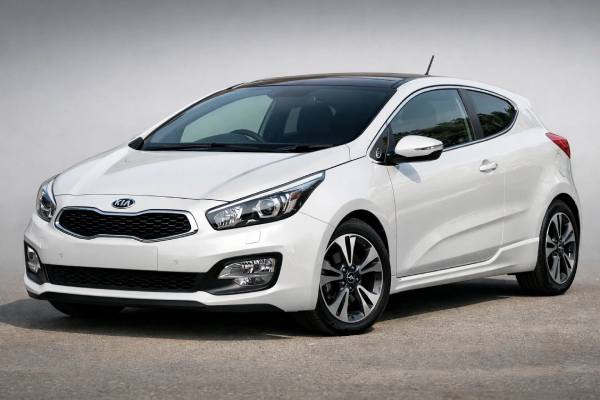
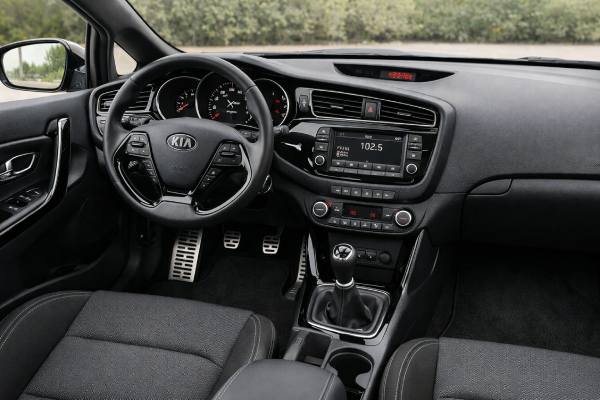
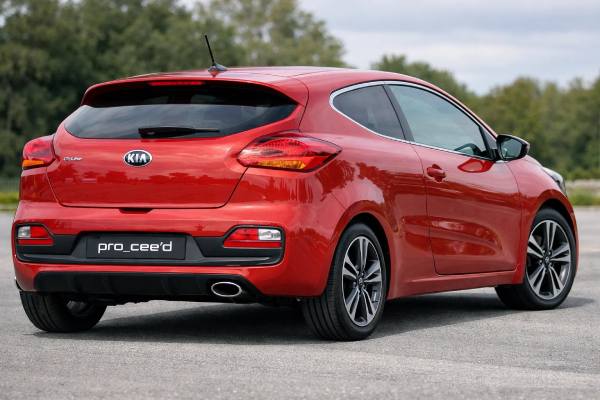
The 2015–2018 facelift Kia Pro Cee’d (JD) with the 1.6 U-II CRDi 134 hp diesel is the “long-distance” version of this three-door hatch. It’s built around a strong mid-range torque band, low fuel use at steady speeds, and a chassis that feels more grown-up than many compact coupes of its era. The upside is easy overtaking without high revs and a relaxed motorway character. The trade-offs are the usual modern diesel obligations: the exhaust aftertreatment system (especially the diesel particulate filter, or DPF) needs the right driving pattern, and neglected maintenance tends to show up first in EGR, intake, and turbo control components.
If you’re shopping used, focus less on the badge and more on service history quality, driving profile (short trips vs highway), and evidence that key software updates and service actions were completed.
Owner Snapshot
- Strong mid-range pull makes it feel quicker than the power figure suggests, especially from 60–120 km/h.
- Typically very efficient at steady speeds; best suited to regular motorway or mixed use.
- Simple, predictable FWD handling with good straight-line stability for a three-door hatch.
- Main caveat: frequent short trips can load the DPF/EGR system and trigger limp mode or forced regeneration needs.
- Sensible interval: engine oil and filter every 12 months or 15,000 km (earlier if mostly city driving).
What’s inside
- Pro Cee’d JD 134 diesel profile
- U-II CRDi specs and measurements
- Equipment lines and safety tech
- Reliability issues and service bulletins
- Maintenance plan and buying tips
- Real-world driving and economy
- Rivals and smart alternatives
Pro Cee’d JD 134 diesel profile
Think of this facelift Pro Cee’d as a compact “GT-style” cruiser rather than a hot hatch. The three-door body gives it a longer front door and a slightly more coupe-like feel than the five-door, and the diesel powertrain shifts the personality toward calm, economical momentum. With roughly 134 hp on paper, it doesn’t chase revs; it leans on torque. In daily use, that matters more than peak power because most overtakes happen between 1,800 and 3,200 rpm. When the turbo is in its sweet spot, the car pulls cleanly without drama.
Engineering-wise, the U-II 1.6 CRDi is a common-rail, turbocharged diesel with intercooling and a DPF. In facelift form, these cars are generally Euro 6–aligned in many markets, so emissions control is more involved than earlier diesels. That’s not a dealbreaker, but it changes ownership: the engine is happiest when it reaches full temperature regularly and sees sustained loads (motorway runs, longer commutes). If the car lived a life of short cold trips, you should assume the intake tract and EGR system are dirtier and the DPF has had a harder job.
The JD platform itself is a strong point. Suspension tuning tends to be composed on the highway, steering is light but consistent, and the cabin feels solid for the class. Most complaints are not about the core chassis, but about “diesel peripheral” items: sensors, EGR components, turbo actuators, and clutch/dual-mass flywheel wear depending on how it was driven.
Ownership sweet spot: a driver who wants low fuel bills, decent punch at real speeds, and a compact three-door that still behaves like a normal, comfortable C-segment car rather than a stiff sports coupe.
U-II CRDi specs and measurements
Below are common specifications for the 2015–2018 facelift Pro Cee’d (JD) with the 1.6 U-II CRDi 134 hp diesel. Exact figures vary slightly by market, gearbox, wheels, and emissions calibration, so treat the numbers as the right planning baseline and confirm by VIN.
Powertrain and efficiency
| Item | Spec (typical) |
|---|---|
| Engine family / code | U-II CRDi (often referenced as 1.6 CRDi U2) |
| Layout | Inline-4, DOHC, 16-valve |
| Displacement | 1.6 L (≈1,582 cc) |
| Bore × stroke | ≈77.2 × 84.5 mm |
| Induction | Turbocharged, intercooled (VGT common) |
| Fuel system | Common-rail direct injection |
| Compression ratio | ≈17:1 (varies by revision) |
| Max power | 134 hp (100 kW) @ ~4,000 rpm |
| Max torque | typically 260–280 Nm @ ~1,750–2,500 rpm |
| Timing drive | Chain (inspect for noise/stretch symptoms over high mileage) |
| Rated consumption | commonly ~4.0–4.8 L/100 km (market/test dependent) |
| Real-world @ 120 km/h | often ~5.0–5.8 L/100 km depending on tyres, wind, load |
Transmission and driveline
| Item | Spec (typical) |
|---|---|
| Drive type | FWD |
| Gearboxes | 6-speed manual common; some markets also offer dual-clutch automatic |
| Differential | Open (traction control does the work in low grip) |
Chassis and dimensions
| Item | Spec (typical) |
|---|---|
| Front suspension | MacPherson strut |
| Rear suspension | Multi-link (common on JD in many trims/markets) |
| Steering | Electric power steering (EPS) |
| Brakes | 4-wheel discs; sizes vary by trim |
| Common tyre sizes | 205/55 R16 or 225/45 R17 |
| Length / width / height | ~4,310 / 1,780 / 1,430 mm |
| Wheelbase | ~2,650 mm |
| Turning circle | ~10.6–10.8 m (kerb-to-kerb typical) |
| Kerb weight | ~1,300–1,450 kg depending on spec |
| Fuel tank | ~53 L |
| Cargo volume | ~380 L seats up; ~1,200+ L seats down (method varies) |
Performance (typical)
| Item | Spec (typical) |
|---|---|
| 0–100 km/h | ~9.5–10.8 s (gearbox/tyres affect this) |
| Top speed | ~195–205 km/h |
| Braking 100–0 km/h | ~36–39 m on good tyres (test dependent) |
Fluids and service capacities (planning values)
| Fluid / item | Typical spec |
|---|---|
| Engine oil | Low-SAPs diesel oil; commonly 5W-30 meeting ACEA C2/C3 (market dependent) |
| Engine oil capacity | ~5.3 L with filter (common U-II diesel figure) |
| Coolant | Long-life OAT coolant; usually 50:50 mix; capacity often ~6 L class |
| Manual gearbox oil | GL-4 75W-85 class in many applications; capacity ~2.0 L class |
| A/C refrigerant | R134a; charge often ~500–600 g (equipment dependent) |
| Wheel nut torque | commonly ~88–108 Nm (confirm by wheel type) |
Safety and driver assistance (typical)
| Item | Notes |
|---|---|
| Core safety | ESC, ABS, traction control, multiple airbags, ISOFIX |
| ADAS | Market dependent; many cars rely on ESC + good brakes rather than modern AEB suites |
Equipment lines and safety tech
Trim names vary by country, but facelift Pro Cee’d models usually follow a familiar ladder: entry trims focus on value, mid trims add comfort and connectivity, and upper trims add wheel upgrades, lighting, and convenience features. For this diesel specifically, the “must-have” options are often the boring ones: better headlights for night driving, parking sensors/camera for the long doors, and heated seats if you live in a cold climate (it reduces the temptation to idle for heat, which is not great for a DPF-equipped diesel).
Trims and options that matter most
- Wheels and tyres: 17-inch packages look sharper but cost more in tyres and can add road noise. If you value comfort and economy, 16-inch setups often ride better and are cheaper to keep aligned and shod.
- Lighting: Projector or HID/LED-style upgrades (when fitted) can materially improve night safety. If your car has levelling or cornering features, keep them calibrated after suspension work.
- Infotainment: Higher trims may add navigation, upgraded audio, and better Bluetooth/USB integration. Functionally, the key is that everything works without battery drain or intermittent resets.
- Climate and winter packs: Heated seats/steering wheel are common on better-equipped cars. On diesels, they can improve comfort without prolonged idling.
Quick identifiers when shopping used
- Badging and wheels: Many cars advertise “CRDi” plus trim badges; wheels often signal the package level.
- Interior tells: Dual-zone climate, heated seat switches, larger infotainment screens, and steering-wheel controls usually track higher trims.
- Build year vs model year: Facelift cars are 2015–2018, but registration dates can mislead. Use the VIN build date and equipment list.
Safety ratings and what they mean here
This generation of Cee’d family models is typically associated with a strong Euro NCAP result for its era. The important nuance: crash-test protocols evolve. A “5-star” rating from an earlier test cycle is still good news structurally, but it is not directly comparable to a late-2020s 5-star car with advanced automatic emergency braking (AEB) and more demanding vulnerable road user tests.
Safety systems and ADAS availability
Most facelift Pro Cee’d diesels include:
- ABS + ESC: The foundation for stability in wet/icy conditions.
- Traction control: Helpful with diesel torque on cold tyres.
- ISOFIX/LATCH: Useful if you carry kids; check the rear seat access practicality in a three-door.
- Parking aids: Common and genuinely valuable because long doors make tight parking awkward.
ADAS features (lane warning, blind-spot monitoring, smart cruise) may appear in some markets and higher trims, but don’t assume they exist. If ADAS is fitted, confirm it works and budget for calibration after windshield replacement, alignment, or bumper repairs.
Reliability issues and service bulletins
At its core, the 1.6 U-II CRDi is capable of high mileage, but reliability depends heavily on driving pattern and maintenance discipline. Below are issues you’ll see most often, mapped by prevalence and typical cost tier. Treat these as “what to check,” not guarantees.
Common (most likely over time)
- DPF loading and regeneration problems (medium cost):
Symptoms: DPF warning light, frequent fan operation after shutdown, rising fuel consumption, limp mode.
Likely causes: repeated short trips, interrupted regenerations, failed differential pressure sensor, or soot/ash accumulation.
Remedy: confirm the car can complete regenerations; scan soot load, check sensors and exhaust leaks, and use the right low-SAPs oil. A forced regeneration is sometimes a temporary fix; a heavily ash-loaded filter is not. - EGR valve/cooler contamination (medium cost):
Symptoms: hesitation, rough idle, fault codes, increased smoke.
Likely causes: soot buildup accelerated by cold operation.
Remedy: cleaning or replacement depending on design and severity; confirm software updates that improve driveability and reduce repeat clogging. - Intake deposits and boost leaks (low to medium cost):
Symptoms: reduced power, hissing under load, underboost codes.
Likely causes: split intercooler hoses, tired clamps, oily residue collecting at joints.
Remedy: pressure test intake piping and replace weak hoses/clamps.
Occasional (depends on use and mileage)
- Turbo actuator or VGT control issues (medium to high cost):
Symptoms: inconsistent boost, limp mode under load, whistling or surge.
Likely causes: soot-related sticking, actuator wear, vacuum/solenoid issues (where used).
Remedy: diagnose control system first (lines, solenoids, sensor plausibility) before condemning the turbo. - Injector sealing or fuel delivery faults (medium cost):
Symptoms: hard starts, diesel smell, uneven idle, higher correction values on scan.
Likely causes: seal leakage, injector wear, contaminated fuel.
Remedy: proper leak-off testing and correction checks; address seals and fuel filter condition. - Dual-mass flywheel (DMF) and clutch wear (medium to high cost, manuals):
Symptoms: rattling at idle, shudder on take-off, slipping in higher gears.
Likely causes: city driving, high-torque low-rpm lugging, poor driving technique.
Remedy: replace clutch kit and DMF together when indicated.
Rare (but expensive if ignored)
- Cooling system neglect (high cost if overheated):
Symptoms: overheating, coolant loss, heater performance changes.
Likely causes: aging hoses, thermostat issues, radiator damage.
Remedy: fix leaks early; overheating a diesel can escalate to head gasket or turbo damage.
Software updates and service actions
Even when the engine is mechanically fine, calibration updates can matter: they may address hesitation, sensor plausibility faults, regeneration strategy, or transmission shift quality (for automatics). When inspecting a car, ask for proof of dealer service actions and check for stored fault codes even if the dash is clear.
How to verify recalls and campaign completion
Use an official VIN recall check and confirm with dealer records. Many used cars have had work done without paperwork, so treat “I think it was done” as “not confirmed” until you see evidence.
Maintenance plan and buying tips
A modern diesel rewards consistency. The goal is simple: keep oil clean, keep air and fuel filtration strong, and make sure the emissions system gets the conditions it needs to stay healthy.
Practical maintenance schedule (good real-world baseline)
- Engine oil and filter: every 12 months or 15,000 km (consider 10,000–12,000 km if mostly city). Use a low-SAPs spec appropriate for DPF systems.
- Air filter: inspect every service; replace about every 30,000 km (more often in dusty areas).
- Cabin filter: every 15,000–30,000 km or annually if you run the HVAC year-round.
- Fuel filter: every 60,000 km (earlier if fuel quality is uncertain or the car shows hard-start symptoms).
- Coolant: typically 5 years / 100,000–150,000 km (confirm by market coolant spec).
- Brake fluid: every 2 years, regardless of mileage.
- Manual gearbox oil: not always listed as routine, but a change around 100,000–120,000 km can improve shift quality and longevity.
- DPF/EGR health checks: at least annually if the car sees short trips; scan soot load and check for pending codes.
- Aux belt and pulleys: inspect every service; replace at signs of cracking, noise, or vibration.
Key fluids and “decision” torque values (typical ranges)
- Engine oil: commonly 5W-30 low-SAPs; capacity about 5.3 L with filter in many U-II applications.
- Wheel nuts: often 88–108 Nm (confirm for your wheels).
- Oil drain plug: typically in the 30–40 Nm class (confirm by pan design).
Buyer’s checklist (what to inspect before purchase)
- Cold start behavior: it should fire quickly and settle without hunting. Excess smoke or roughness is a clue to glow plug, injector, or EGR issues.
- DPF evidence: ask about driving pattern; scan for soot load, regeneration history (if available), and pressure sensor readings.
- Turbo response: under steady acceleration the boost should feel smooth, not “on/off.” Any limp mode history deserves deeper diagnosis.
- Clutch/DMF (manual): listen for rattles at idle, feel for shudder on take-off, and test pull in a higher gear to check for slip.
- Cooling system: inspect for dried coolant residue around hoses, radiator edges, and water pump area.
- Electrics and infotainment: intermittent battery drain and reset issues are common used-car annoyances; confirm everything sleeps properly.
Long-term durability outlook
With correct oil, sensible intervals, and the right usage pattern, these cars can be durable and economical. The biggest longevity lever is avoiding a “short-trip only” lifestyle. If your routine is mostly 3–5 km hops, a petrol model may be the smarter long-term choice.
Real-world driving and economy
On the road, the 134 hp U-II CRDi Pro Cee’d is defined by usable torque rather than excitement. Around town, it feels strong from low revs, but it also reminds you it’s a diesel: the engine is quieter once warm, yet you’ll still hear a mild clatter at idle and under light load. The clutch and gearing (on manuals) are typically set up for economy; short-shift driving suits it. On the motorway, the car settles into an easy stride, and that’s where this powertrain makes the most sense.
Ride, handling, and NVH
- Ride: generally composed, with the biggest differences coming from wheel size and tyre choice. 17-inch tyres can sharpen response but add impact harshness on broken surfaces.
- Steering: light, consistent EPS. It’s more about confidence than feedback; alignment and tyre condition make a noticeable difference.
- Braking feel: usually stable and easy to modulate. If the pedal feels long or inconsistent, suspect old brake fluid, cheap pads, or seized caliper slides.
- Cabin noise: wind and tyre noise are often more noticeable than engine noise at cruising speeds, especially on wider tyres.
Powertrain character and passing performance
The engine’s best work is done in the mid-range. Expect the strongest push from roughly 1,800–3,200 rpm; below that you may feel a brief turbo “wait,” and above that the gains taper off. For passing, it’s typically happier to use torque than downshift repeatedly. If the car feels flat, look first for boost leaks, sensor issues, or a DPF/EGR system that isn’t operating cleanly.
Real-world economy (typical ranges)
Actual consumption varies strongly by speed and trip length:
- City: commonly 5.5–7.0 L/100 km (short trips and cold weather push it up).
- Highway (100–120 km/h): often 5.0–5.8 L/100 km with good tyres and steady driving.
- Mixed: commonly 4.8–6.0 L/100 km.
Cold weather typically adds a noticeable penalty because warm-up takes longer and regeneration events may be more frequent.
Practical “diesel best practice” for daily use
- Give it at least one longer run (20–30 minutes) weekly if your normal use is short.
- Avoid switching off mid-regeneration if you can (fans running, idle slightly higher, consumption temporarily elevated).
- Use quality fuel and keep the fuel filter interval sensible; common-rail systems dislike contamination.
Rivals and smart alternatives
The Pro Cee’d occupies an interesting niche: it’s a three-door hatch with coupe vibes, but it’s priced and engineered like a mainstream C-segment car. That means its best rivals are often “normal” hatches with similar engines rather than dedicated coupes.
Comparable rivals (diesel or torque-focused options)
- Volkswagen Golf / Scirocco 1.6 TDI: Often more refined in cabin materials, with strong resale. Maintenance costs can be higher, and some rivals have their own emissions-system sensitivities.
- Ford Focus (diesel): Usually sharper steering and handling balance. Ride quality varies by trim; check suspension wear closely.
- Opel/Vauxhall Astra GTC (diesel): Similar three-door style appeal. Good highway behavior, but verify parts availability and service history quality.
- SEAT Leon SC / Škoda Rapid space alternatives: If you want a “sporty look with practicality,” some alternatives offer more rear access and similar economy.
- Hyundai i30 (diesel): Mechanical cousin in spirit; often a sensible cross-shop with similar strengths and similar diesel maintenance needs.
Where the Pro Cee’d 1.6 CRDi 134 stands out
- Comfortable long-run personality: It’s easy to live with on the motorway, with torque that reduces driver effort.
- Ownership value: When maintained correctly, it can deliver very low running costs per kilometer.
- Simple FWD dynamics: Predictable and stable, especially on good tyres.
When a different choice is smarter
- If your driving is mostly short, cold trips, a petrol Pro Cee’d (or a small turbo petrol from the same era) can be lower stress long-term.
- If you want modern AEB and newer safety tech, consider a later-generation car where ADAS is more widely standard.
- If rear-seat access matters often, the three-door layout becomes tiring; a five-door Cee’d or wagon may fit better with minimal driving compromise.
The best “rival” is often the same car with the right history. A clean, well-documented diesel that did regular highway miles is usually a safer buy than a higher-spec example with patchy records and city-only use.
References
- Kia Car Owners Manual | Kia UK 2026 (Owner’s Manual Portal)
- 7.2 Kia Service Intervals V25.12.xlsx 2025 (Service Intervals)
- Kia C’eed – Crash Test 2012 2012 (Safety Rating)
- Check if a vehicle, part or accessory has been recalled – GOV.UK 2026 (Recall Database)
Disclaimer
This article is for informational purposes only and is not a substitute for professional diagnosis, inspection, or repair. Specifications, torque values, service intervals, and procedures can vary by VIN, market, model year, and equipment. Always verify details using the official documentation for your exact vehicle and follow manufacturer service guidance.
If this guide helped, please consider sharing it on Facebook, X (Twitter), or your favorite forum to support our work.