
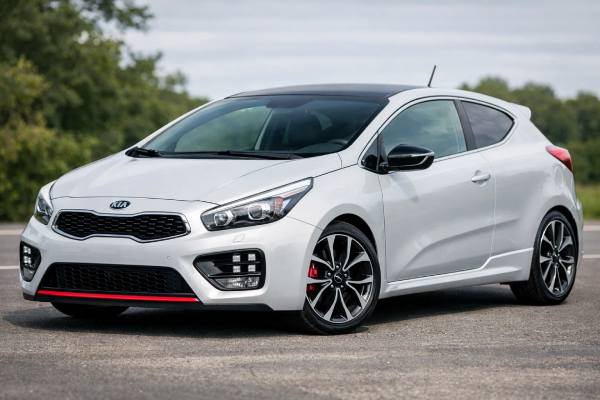
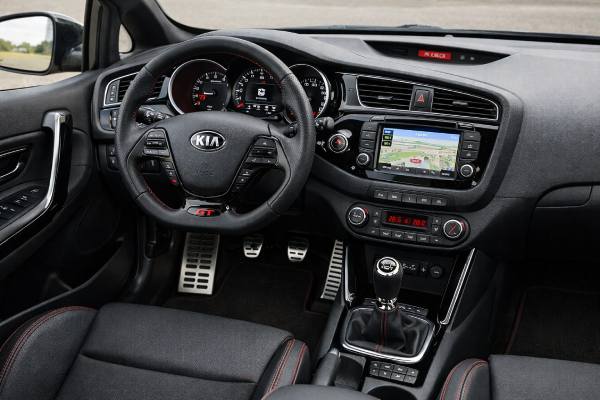

The facelifted Kia Pro Cee’d GT (JD) sits in a sweet spot for drivers who want a genuinely quick hot hatch feel without stepping into the cost and complexity of more extreme performance models. Its 1.6-litre turbocharged gasoline direct-injection engine (Gamma II T-GDi) delivers strong mid-range torque, so the car feels eager in real traffic—especially on 50–120 km/h passing pulls—while remaining usable as a daily driver with real luggage space and a comfortable seating position.
For ownership, the GT’s “big wins” are straightforward: predictable mechanical layout, widely available service parts, and a chassis tune that feels tied down at speed. The areas that reward extra attention are typical of small turbo GDI engines: oil quality and change frequency, spark plug health, and intake cleanliness over higher mileage. If you shop carefully and maintain it proactively, the Pro Cee’d GT can be a satisfying, durable warm-to-hot hatch for long-term use.
Owner Snapshot
- Strong mid-range pull and stable high-speed manners make it feel faster than the headline power suggests.
- Practical 3-door body with useful cargo space, plus solid standard equipment for the era.
- Simple, engaging 6-speed manual setup (most markets) keeps running costs more predictable than many dual-clutch rivals.
- Plan for typical turbo GDI needs: high-quality oil, clean intake tract, and timely ignition maintenance.
- A sensible baseline is engine oil and filter every 10,000–12,000 km (6,000–7,500 mi) or 12 months, whichever comes first.
Navigate this guide
- Kia Pro Cee’d GT facelift ownership picture
- Kia Pro Cee’d GT 1.6 T-GDi specs
- Kia Pro Cee’d GT trims and safety tech
- Common GT issues and service actions
- Maintenance plan and buying advice
- Real-world driving and fuel use
- How the GT stacks up against rivals
Kia Pro Cee’d GT facelift ownership picture
Think of the 2015–2018 Pro Cee’d GT as a “grown-up” hot hatch: quick enough to entertain, calm enough to commute, and practical enough to live with. The facelift years matter because Kia steadily refined NVH (noise, vibration, harshness), infotainment availability, and minor trim details, while the mechanical formula stayed consistent: a compact turbo four-cylinder, front-wheel drive, and a sport-focused suspension tune.
On the road, the GT’s character comes from torque delivery more than peak horsepower. In everyday driving, you feel the engine’s boost arriving early and carrying through the mid-range, which is where most passing and merging happens. That also means your maintenance choices should match a turbo engine’s realities—oil control, heat management, and clean combustion support systems—rather than treating it like a simple naturally aspirated hatchback.
From a buyer’s perspective, the Pro Cee’d GT typically appeals to three groups:
- Daily drivers who want “one car for everything.” The GT can handle winter commutes and long motorway trips, then still feel special on a weekend back road.
- Value shoppers comparing used performance cars. The GT’s equipment-per-euro is often strong, especially when you find a car with documented servicing.
- Enthusiasts who prefer a manual, analog feel. It is not the last word in track hardware, but it is engaging without being fragile.
Where owners sometimes get surprised is not the engine’s strength, but the “performance-car math” around it: tyres, brakes, and suspension consumables cost more than on a base Pro Cee’d. The car is also sensitive to tyre quality and alignment—cheap tyres or incorrect toe settings can make it tramline, feel nervous in wet conditions, and wear tyres quickly.
If you treat the GT like a performance-oriented daily—warm it properly, change fluids on time, and address small drivability issues early—it tends to reward you with consistent, predictable ownership rather than drama.
Kia Pro Cee’d GT 1.6 T-GDi specs
Below are practical, “decision-grade” specifications for the facelift Pro Cee’d GT. Exact figures can vary by market, wheels/tyres, emissions cycle (NEDC vs WLTP transition years), and optional equipment.
Powertrain and efficiency (Gamma II T-GDi)
| Item | Specification |
|---|---|
| Code | Gamma II T-GDi (1.6 turbo GDI) |
| Engine layout and cylinders | Inline-4; DOHC; 4 valves/cyl |
| Displacement | 1.6 L (≈1,591 cc) |
| Induction | Turbocharged |
| Fuel system | Direct injection (GDI) |
| Compression ratio | Typically around 9.5:1–10.0:1 (market dependent) |
| Max power | 201 hp (150 kW) @ ~6,000 rpm (typical) |
| Max torque | ~265 Nm (195 lb-ft) @ ~1,750–4,500 rpm (typical) |
| Timing drive | Chain |
| Rated efficiency | Commonly ~7.0–7.8 L/100 km combined (NEDC-era listings vary) |
| Real-world highway @ 120 km/h | Often ~7.2–8.2 L/100 km depending on tyres, wind, and temperature |
Transmission and driveline
| Item | Specification |
|---|---|
| Transmission | 6-speed manual (most markets) |
| Drive type | FWD |
| Differential | Open (traction control manages wheelspin) |
Chassis and dimensions (typical JD Pro Cee’d GT)
| Item | Specification |
|---|---|
| Suspension (front/rear) | MacPherson strut / multi-link |
| Steering | Electric power steering |
| Brakes | Ventilated discs front / discs rear (diameters vary by market) |
| Wheels and tyres (common) | 225/40 R18 |
| Ground clearance | Typically ~130–140 mm (varies by load and market) |
| Length / width / height | ~4,310 mm / ~1,780 mm / ~1,430 mm (market dependent) |
| Wheelbase | ~2,650 mm |
| Turning circle (kerb-to-kerb) | Often ~10.6 m |
| Kerb weight | Commonly ~1,350–1,450 kg (spec dependent) |
| Fuel tank | ~53 L |
| Cargo volume | Varies by measurement method; practical “daily use” is strong for the class |
Performance and capability (typical)
| Item | Specification |
|---|---|
| 0–100 km/h (0–62 mph) | ~7.5–8.0 s |
| Top speed | ~225–230 km/h (140–143 mph) |
| Braking distance | Strong with good tyres; varies widely by tyre and pad choice |
| Towing | Market-specific; many GT listings are modest or “not recommended” |
| Payload | Market- and tyre-rating dependent |
Fluids and service capacities (check by VIN)
| Item | Specification |
|---|---|
| Engine oil | ACEA A5/B5 or equivalent (market dependent); often 5W-30; ~4.0–4.5 L with filter |
| Coolant | Long-life ethylene glycol mix; typically 50/50; ~6–7 L (approx.) |
| Manual gearbox oil | MTF spec by market; ~1.8–2.2 L (approx.) |
| A/C refrigerant | Usually R-134a on these years (verify under-hood label) |
| Key torque specs | Wheel nuts often ~90–110 Nm; drain plug commonly ~35–45 Nm (verify per service manual) |
Safety and driver assistance (typical for the generation)
| Item | Specification |
|---|---|
| Crash ratings | Euro NCAP (generation test-era): 5 stars; Adult 89% / Child 88% / VRU 61% / Safety Assist 86% |
| IIHS | Generally not applicable to this Europe-focused model line |
| ADAS suite | Typically ESC, multi-airbags; AEB/lane support depends heavily on market and trim year |
Kia Pro Cee’d GT trims and safety tech
For most markets, the “GT” is less about a long trim ladder and more about a focused package: the turbo engine, sport suspension, larger brakes, 18-inch wheels, and GT-specific seats and styling. That said, equipment can still vary substantially by country and by the original buyer’s options, so it helps to know what to look for on a used car.
Trims and options: what commonly changes
Even when the badge says “GT,” differences often show up in these areas:
- Infotainment generation and navigation: Some cars have factory navigation with a larger screen; others have a simpler audio unit. Check Bluetooth stability, USB port function, and screen delamination or dead pixels.
- Headlights: Halogen vs HID/LED setups vary by market. Headlight performance matters more than people expect on a fast hatch; tired projector lenses can make night driving feel unsafe.
- Seat trim and heating: Heated seats and heated steering wheels are common in colder markets. Seat bolsters on GT seats can wear; inspect the outer driver bolster carefully.
- Parking aids and camera: Rear sensors are common; a reversing camera is not universal. Verify camera clarity and that guidelines move predictably with steering input.
- Sunroof/panoramic roof (where offered): Check drains and listen for wind noise; water ingress is rare but costly when it happens.
Quick identifiers that help in listings:
- GT bumpers and wheels are usually obvious, but always confirm the engine in the VIN decode or registration data—some markets have “GT-Line” appearance trims that are not the GT drivetrain.
- Inspect the brake setup and tyre size: 18-inch wheels with performance tyres are a strong hint you are looking at the genuine GT package.
Safety ratings and what they mean in practice
Euro NCAP testing for the Cee’d generation showed strong occupant protection for its time, including a 5-star rating and high adult/child scores. The most important ownership takeaway is not the badge or the stars, but whether the individual car still performs like a safe car today:
- Tyres of the right load/speed rating, with even wear and good wet grip.
- Brakes in excellent condition, with correct pad compound for road use.
- Suspension and steering free of play, so ESC and ABS can work as designed.
Safety systems and calibration notes
Most Pro Cee’d GT models include:
- Multiple airbags (front, side, curtain).
- ESC (electronic stability control) and traction control.
- ABS with brake assist.
If your car has parking sensors, a camera, or lane/camera-based driver assistance (rare on earlier cars, more likely later), treat sensor alignment and windscreen replacement as “calibration events.” A poor windscreen fit or a misaligned sensor bracket can cause annoying warnings—or worse, silently reduce system performance.
Common GT issues and service actions
A well-kept Pro Cee’d GT is not known for constant failures, but it does have predictable weak points. The best way to think about reliability is to separate high-frequency nuisances from low-frequency, high-cost items and to understand when they typically appear.
Common (higher frequency), usually manageable
- Ignition coil or plug wear (often 60,000–120,000 km):
Symptoms: misfire under boost, rough idle, flashing MIL.
Likely cause: worn plugs, heat-stressed coil, or plug gap growth.
Remedy: use correct heat range plugs, replace coils as needed, and confirm no oil in plug wells. - GDI intake valve deposits (more likely with short trips):
Symptoms: hesitant throttle response, uneven idle, reduced efficiency.
Likely cause: direct injection doesn’t “wash” intake valves with fuel.
Remedy: periodic intake cleaning (method depends on severity), plus consistent oil changes and good fuel. - Turbo control/wastegate rattle (varies):
Symptoms: metallic rattle at certain RPM or on lift-off; usually no power loss.
Likely cause: wear in actuator linkage or wastegate mechanism.
Remedy: inspection first; replacement only if performance or boost control is affected. - PCV system and oil vapor management:
Symptoms: oil misting, increased intake contamination, occasional idle oddities.
Remedy: inspect PCV valve and hoses; address leaks early.
Occasional (medium frequency), medium cost
- Cooling system leaks (age-related):
Symptoms: slow coolant loss, sweet smell after hot shutdown.
Likely cause: hose clamps, thermostat housing, or radiator seam seepage.
Remedy: pressure test; replace affected plastic housings proactively if brittle. - Clutch and dual-mass flywheel wear (driving-style dependent):
Symptoms: shudder on take-off, rattly noises at idle with clutch engaged, slipping under boost.
Remedy: replace clutch kit; DMF replacement depends on measured play/noise.
Rare, but potentially expensive
- High-pressure fuel system faults:
Symptoms: hard starts, power reduction, lean codes under load.
Remedy: proper diagnosis matters; don’t shotgun parts—test pressure under load. - Timing chain stretch (usually maintenance-related):
Symptoms: cold start rattle, correlation codes, rough running.
Remedy: inspect guides/tensioner; act early before it becomes a bigger job.
Recalls, TSBs, and how to verify
Because recall campaigns are market- and VIN-specific, the most reliable approach is to run a VIN check and request dealer records showing completion. Start with Kia’s recall checker for your market. ([Yumpu][1]) If a car has incomplete campaigns, treat that as a negotiation point—especially when the remedy involves airbags, braking switches, or fuel system components.
Maintenance plan and buying advice
The Pro Cee’d GT responds best to a maintenance plan that’s slightly more conservative than a base model’s schedule. Turbo heat and GDI behavior reward clean oil, healthy ignition, and consistent cooling performance.
Practical maintenance schedule (road-focused)
Use this as an ownership baseline; adjust for heavy city use, short trips, or tuned vehicles.
- Engine oil and filter: every 10,000–12,000 km or 12 months.
Use the correct spec for your market. For high-speed motorway use or hot climates, shorten the interval. - Engine air filter: inspect every service; replace 30,000 km (earlier in dusty areas).
- Cabin air filter: 15,000 km or 12 months (keeps HVAC efficient and reduces fogging).
- Spark plugs: typically 60,000 km for turbo GDI use unless your market specifies longer-life plugs.
- Brake fluid: every 2 years regardless of mileage.
- Coolant: often 5 years / ~100,000 km, then shorter intervals thereafter (confirm by VIN).
- Manual transmission fluid: consider 90,000–120,000 km as a longevity service, especially if shifts feel notchy.
- Tyres and alignment: rotate/inspect every 10,000–12,000 km; align yearly or after pothole impacts.
Consumables: what to budget for
- Tyres: 18-inch performance tyres are a meaningful running cost. Expect faster wear if alignment is off or if you drive hard.
- Front brakes: spirited use eats pads and can heat-stress discs; choose quality road pads rather than aggressive track compounds unless you track the car.
- Suspension wear items: front control arm bushings, drop links, and dampers can age like any sporty hatch.
Buyer’s inspection checklist (GT-specific)
Before purchase, try to see the car cold and warm, and ask for invoices, not just stamps.
- Cold start behavior: listen for chain rattle and confirm stable idle after 30–60 seconds.
- Boost under load: full-throttle pull in 3rd/4th should be clean, with no misfire and no limp mode.
- Clutch and flywheel: test for slip on a high-gear pull; listen for idle rattles.
- Cooling system: check coolant level consistency, signs of dried coolant at joints, and heater performance.
- Tyre wear pattern: uneven inner wear suggests alignment or bushing issues.
- Electrical sanity check: windows, mirrors, seat heaters, camera/sensors, and infotainment stability.
Long-term durability outlook
A stock, well-serviced Pro Cee’d GT can age well. The biggest risk factor is not “bad engineering,” but neglected maintenance on a turbo GDI car—extended oil intervals, weak ignition parts, and ignored cooling or boost-control symptoms. Buy the best-maintained example you can, even if it costs more upfront.
Real-world driving and fuel use
The Pro Cee’d GT’s driving experience is defined by balance: it feels planted and confident, with enough power to be fun without demanding constant attention. Compared with lighter, more hardcore hot hatches, it leans slightly toward stability and refinement—an advantage if your driving includes long motorway stretches.
Ride, handling, and NVH
- Straight-line stability: a strong point. The GT feels composed at higher speeds, especially on good tyres.
- Cornering balance: neutral-to-safe. It rotates predictably, but the open differential means you rely on throttle discipline and traction control when exiting tight corners.
- Steering feel: typically accurate but not overflowing with feedback. Alignment and tyre choice make a bigger difference than many owners expect.
- Braking feel: solid when components are fresh. If the pedal feels long, suspect old brake fluid, tired pads, or overheated discs from prior use.
- Cabin noise: acceptable for the class, but 18-inch tyres can add roar on coarse asphalt.
Powertrain character
The 1.6 T-GDi’s strength is usable torque. Around town, it feels responsive once you are in the boost window. Turbo lag exists, but it is manageable; the key is smooth throttle application rather than stabbing the pedal. The 6-speed manual is generally well matched: keep it in the mid-range for fast progress, or short-shift for relaxed cruising.
If the car hesitates, surges, or misfires under load, don’t dismiss it as “just how turbo cars are.” Those symptoms usually point to ignition wear, boost control issues, or intake contamination—fixable problems that become expensive if ignored.
Real-world efficiency (what most owners see)
Fuel consumption depends heavily on speed and temperature:
- City: often 9.0–11.5 L/100 km (stop-start traffic pushes it higher).
- Highway (100–120 km/h): commonly 7.2–8.2 L/100 km.
- Mixed driving: often 8.0–9.5 L/100 km.
Cold weather and short trips can add 10–20% consumption because the engine spends more time warming up, and turbo engines tend to run richer under load until fully up to temperature.
How the GT stacks up against rivals
In the 2015–2018 used performance market, the Pro Cee’d GT is typically cross-shopped with mainstream hot hatches and a few coupe-like alternatives. Its advantage is not “best at everything,” but a strong blend of pace, equipment, and everyday usability.
Where the Pro Cee’d GT wins
- Value and equipment: You often get heated seats, good infotainment, and a sporty interior feel for less money than a comparable Golf GTI or Focus ST in similar condition.
- Mid-range performance: The torque curve suits real roads. It feels quick without needing to be revved constantly.
- Daily comfort: It is firm, but generally less punishing than some harder-edged rivals.
- Sensible complexity: A manual FWD turbo hatch can be cheaper to own long-term than dual-clutch alternatives when mileage climbs.
Where rivals can be stronger
- Traction out of slow corners: Cars with a limited-slip differential (factory LSD or strong e-diff strategies) can put power down more cleanly.
- Steering and chassis “edge”: A Fiesta ST (smaller class) or later i30 N (newer) can feel more alive and adjustable.
- Top-end tuning potential: Some competitors have deeper aftermarket ecosystems and more cooling headroom for sustained track use.
Rival snapshots (typical comparisons)
- Volkswagen Golf GTI (Mk7): more polished and often more efficient; usually costs more to buy and maintain.
- Ford Focus ST: punchy and fun, but can be harder on tyres and fuel; condition varies widely.
- SEAT Leon Cupra / FR: quick and capable; DSG models add complexity but can be excellent when maintained.
- Peugeot 308 GT: refined and efficient; less “raw,” often a comfort-leaning alternative.
- Volkswagen Scirocco (late models): style-forward and quick, but practicality and rear access can be less friendly.
If your priority is a hot hatch that feels special without becoming a constant project, the Pro Cee’d GT makes sense—especially when you find one that is stock, well-serviced, and sitting on quality tyres with clean alignment.
References
- Kia Car Owners Manual | Kia UK 2026 (Owner’s Manual Portal)
- Kia Car Safety Recalls | Kia UK 2026 (Recall Database)
- Euro NCAP When innovation and a world first brings higher vehicle safety 2012 (Press Release)
- euroncap_kia_ceed_2012_5stars.pdf 2012 (Safety Rating)
- Servicing Your Kia | Chorleygroupkia Lancashire 2026 (Service Intervals Guidance)
Disclaimer
This article is for informational purposes only and is not a substitute for professional inspection, diagnosis, or repair. Specifications, torque values, fluid types and capacities, service intervals, and procedures can vary by VIN, market, model year, and installed equipment. Always verify details using official Kia service information and documentation for the specific vehicle you are working on.
If this guide helped, please consider sharing it on Facebook, X (Twitter), or your favorite forum to support our work.