
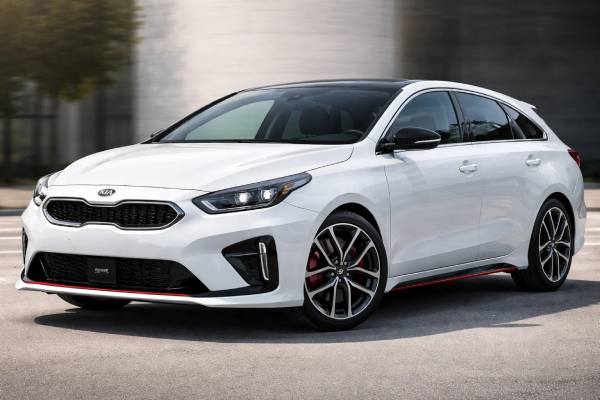
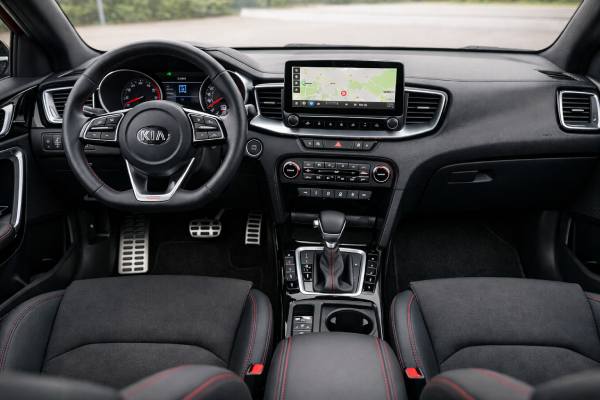
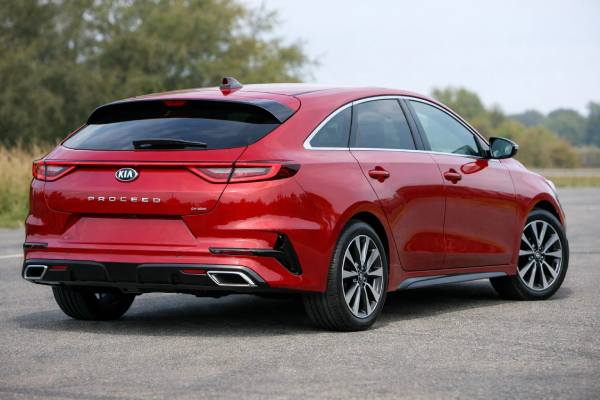
The 2019–2021 Kia ProCeed (CD) with the 1.0 T-GDi is the “sensible fastback” in the Ceed family: sleek wagon-like utility in a lower, longer body, paired with a small turbo petrol that prioritizes usable torque and running costs. In most markets this three-cylinder, direct-injection engine feels livelier than its size suggests around town, and it can cruise comfortably if you keep expectations realistic at motorway speeds. The ownership story is usually positive when service basics are followed—correct oil, clean intake air, fresh plugs on time—but direct injection and turbocharging mean it rewards the right maintenance rhythm and good fuel habits.
This guide focuses on what changes the day-to-day experience: the real packaging, typical performance, the reliability patterns that matter, and how to choose a trim that matches your priorities.
What to Know
- Strong everyday pull for a 1.0 thanks to turbo torque; best in urban and mixed driving.
- ProCeed body adds useful cargo space and a long load floor without SUV height or weight.
- Most issues are preventable: short-trip use and delayed oil changes are the usual triggers.
- Plan for spark plugs around 60,000 km (37,000 mi) or sooner if misfires appear.
- Brake fluid is a time-based item: refresh about every 2 years, regardless of mileage.
Contents and shortcuts
- Kia ProCeed CD model focus
- Kia ProCeed CD 1.0 T-GDi specs
- Kia ProCeed CD trims and safety tech
- Reliability patterns and known fixes
- Maintenance plan and buying tips
- Road feel and real economy
- Rival check for ProCeed CD
Kia ProCeed CD model focus
The ProCeed CD is not a typical “shooting brake” in the classic rear-drive sense, but it borrows the idea: a low roofline, long rear overhang, and a tailgate that makes it more practical than it looks. Compared with the standard Ceed hatch, the ProCeed’s body is longer and more cargo-friendly, while keeping a car-like seating height and a planted stance. It’s a useful middle ground if you want the visual presence of something sportier but still need a real boot and an easy loading opening.
With the 1.0 T-GDi (118 hp), the engineering goal is efficiency with enough torque to feel responsive in normal traffic. The turbocharger does the heavy lifting at low to mid rpm, so the car can pull cleanly from low speeds without constantly hunting for gears. That said, it’s still a small displacement engine: hard acceleration at motorway speeds often means a downshift and higher revs. Owners who enjoy smooth, relaxed driving usually like it most.
Where this configuration shines:
- City and suburban commuting: quick throttle response once the turbo is in its comfort zone, and generally good fuel economy.
- Mixed roads: the torque band makes it easy to ride the wave through curves and roundabouts without frantic shifting.
- Packaging: the ProCeed’s tailgate and load length make it genuinely useful for luggage, sports gear, and flat-pack errands.
Where it asks for realism:
- Fully loaded highway trips: it can do them, but overtakes require planning and the engine will be audible when pushed.
- Short trips in cold weather: direct injection engines can accumulate deposits and dilution faster if they never fully warm up.
In this period (2019–2021), equipment levels tend to be generous for the class—infotainment, driver aids, and comfort features can vary widely by trim and option packs, so choosing the “right” car matters as much as the engine choice.
Kia ProCeed CD 1.0 T-GDi specs
Below are typical specifications for the 2019–2021 ProCeed CD with the 1.0 T-GDi around 118 hp. Exact figures can vary by market, emissions package (OPF/GPF), wheels/tyres, and transmission choice.
Powertrain and efficiency (typical)
| Item | Spec |
|---|---|
| Code | Kappa II T-GDi (market-dependent designation) |
| Engine layout and cylinders | Inline-3, DOHC, 4 valves/cyl |
| Displacement | 1.0 L (998 cc) |
| Induction | Turbocharged |
| Fuel system | Direct injection (GDi) |
| Max power | ~118 hp (88 kW) @ ~6,000 rpm (varies) |
| Max torque | ~172 Nm (127 lb-ft) @ ~1,500–4,000 rpm (varies) |
| Timing drive | Chain |
| Rated efficiency | Typically ~5.4–6.3 L/100 km (varies by WLTP and wheels) |
| Real-world highway @ 120 km/h | Often ~6.2–7.2 L/100 km depending on wind, tyres, and load |
Transmission and driveline
| Item | Spec |
|---|---|
| Transmission | Commonly 6-speed manual; some markets offer 7-speed DCT |
| Drive type | FWD |
| Differential | Open (traction and stability systems manage wheelspin) |
Chassis, tyres, and dimensions (typical for ProCeed body)
| Item | Spec |
|---|---|
| Suspension (front/rear) | MacPherson strut / multi-link (rear layout may vary by market/engine) |
| Steering | Electric power steering |
| Brakes | Disc front; rear disc common on many trims (verify by trim) |
| Popular tyre sizes | 225/45 R17 or 225/40 R18 (trim-dependent) |
| Ground clearance | Typically ~135–150 mm (varies by wheels and market) |
| Length / Width / Height | ~4605 mm / 1800 mm / ~1422 mm (varies) |
| Wheelbase | ~2650 mm |
| Turning circle (kerb-to-kerb) | ~10.6–10.9 m (varies) |
| Kerb weight | Commonly ~1,300–1,420 kg (varies by equipment and gearbox) |
| Fuel tank | Typically ~50 L |
| Cargo volume | Commonly cited around ~594 L seats up and ~1,545 L seats down (method varies; verify for your market) |
Performance and capability (typical)
| Metric | Typical value |
|---|---|
| 0–100 km/h (0–62 mph) | ~11.0–12.0 s (gearbox and wheels matter) |
| Top speed | ~190–200 km/h |
| Braking distance 100–0 km/h | Depends heavily on tyres; expect roughly mid- to high-30 m range in good conditions |
| Towing capacity | Market-dependent; many 1.0 petrol variants are rated modestly or not at all—verify your VIN plate/manual |
| Payload | Varies by trim; check door jamb label and handbook |
Fluids and service capacities (decision-grade guidance)
Because VIN, gearbox, and cooling package change the numbers, treat the following as “what to ask for,” not universal constants:
| System | What to use (typical) |
|---|---|
| Engine oil | Full-synthetic meeting the manufacturer spec; common grades include 0W-30 or 5W-30 (market/climate dependent) |
| Coolant | OEM long-life coolant; confirm spec and mix ratio in service info |
| Manual gearbox oil | Manufacturer-specified gear oil (often “fill for life” on paper, but serviceable) |
| DCT fluid (if equipped) | Use only the specified DCT fluid; service intervals vary by market and duty cycle |
| A/C refrigerant | Typically R-1234yf in this era for EU markets (verify under-hood label) |
Key torque specs (typical “critical fasteners to look up”)
Instead of guessing torque numbers, treat these as the fasteners you should verify in official service info for your exact VIN:
- Wheel lug nuts/bolts
- Spark plugs
- Oil drain plug
- Brake caliper carrier bolts
- Front strut pinch bolts and subframe bolts (if disturbed)
Safety and driver assistance (high-level)
| Item | Typical availability |
|---|---|
| ESC, ABS, brake assist | Standard in most markets |
| Airbags | Multiple airbags common; exact count varies by trim/market |
| AEB / lane support / ACC | Often tied to option packs; verify by trim year |
| Crash ratings | See next sections (test version matters) |
Kia ProCeed CD trims and safety tech
Trim naming changes by country, but the ProCeed CD is usually offered in a ladder that looks like: entry/mid trims focused on value, and sportier “GT-Line” style trims with larger wheels and more interior tech. The 1.0 T-GDi typically appears in the mainstream trims rather than the full GT performance variant.
Trims and options that change the experience
When you compare cars, focus on functional differences rather than badges:
- Wheels and tyres: 18-inch wheels look great but often cost you ride comfort and a bit of real-world fuel economy. If your roads are rough, 17-inch setups are usually the sweet spot.
- Seats: some trims add more aggressive bolstering or adjustable lumbar support. For long drives, seat spec matters more than engine output.
- Lighting: full LED headlights (and the beam pattern quality) can be a major safety upgrade. Headlight performance is also a common “hidden” cost if housings are expensive.
- Infotainment: earlier units may differ in screen size, navigation availability, and update methods. Check whether your region supports official map updates and whether Apple CarPlay/Android Auto is wired or wireless.
- Driver assistance packs: AEB (autonomous emergency braking), lane keeping assistance, blind-spot monitoring, and rear cross-traffic alert often sit inside optional “safety packs.” Two identical-looking cars can have very different safety equipment.
Quick identifiers during inspection:
- Steering wheel buttons: cars with lane/driver assistance usually have extra controls for lane systems, cruise type, and speed limiter functions.
- Front camera/radar hardware: look for a camera module near the rear-view mirror and a radar panel behind the front grille (if equipped).
- Tyre placard and wheel size: door jamb label and wheel stamping help confirm the factory wheel package.
Safety ratings: what they mean for ProCeed
The ProCeed CD shares its underlying structure with the Ceed family, and crash-test results often apply at the platform level—but only within the same test protocol year and equipment assumptions. If a rating references an “optional safety pack,” your car may not match that result unless it has the same equipment.
As a buyer, your most useful approach is:
- Confirm the test year and protocol for the model family.
- Confirm whether AEB and lane support were standard or optional in that test.
- Check your specific car’s build sheet/trim to see if it matches.
Safety systems and ADAS: service implications
Modern driver aids are helpful, but they add repair and calibration steps:
- Windshield replacement may require camera recalibration for lane support and AEB.
- Front bumper repairs can affect radar alignment.
- After suspension or steering work, some cars benefit from steering angle sensor recalibration and ADAS checks.
For owners, this doesn’t mean “avoid ADAS.” It means budget for proper repairs and avoid bargain bodywork that skips calibrations.
Reliability patterns and known fixes
The 1.0 T-GDi can be dependable, but its long-term results depend more on operating style than many older engines. Turbocharging and direct injection increase performance per litre, but they also raise the consequences of neglected maintenance.
Below is a practical map of issues by prevalence and typical cost tier.
Common (worth expecting)
- Carbon build-up on intake valves (medium cost, usually later-life):
Symptoms: rough idle, reduced response, occasional misfires, higher fuel use.
Root cause: direct injection sprays fuel into the cylinder, not over the intake valves, so oil vapour deposits can accumulate.
Remedy: intake cleaning (walnut blasting in some shops), improve PCV health, reduce short-trip patterns where possible. - Ignition coil or spark plug sensitivity (low to medium):
Symptoms: misfire under load, hesitation, check engine light.
Root cause: plugs wearing early, incorrect plug type/heat range, coil ageing.
Remedy: correct plugs on schedule, replace failing coils as sets if repeated. - Brake wear variability (low to medium):
Symptoms: vibration, squeal, uneven pad wear.
Root cause: driving style, pad compound, rear brake slider pin maintenance.
Remedy: proper slider service, quality pads/rotors, correct bedding.
Occasional (depends on use and climate)
- Turbo control noise or wastegate rattle (medium):
Symptoms: metallic rattle on light throttle, inconsistent boost feel.
Root cause: wear in wastegate linkage or actuator tolerances.
Remedy: inspect and confirm boost control operation; repair varies from adjustment to turbo replacement in worst cases. - Oil dilution risk with repeated short trips (medium to high if ignored):
Symptoms: rising oil level, fuel smell in oil, increased wear risk.
Root cause: frequent cold starts and incomplete warm-up.
Remedy: shorten oil intervals, regular longer drives, correct oil spec. - Cooling system seepage (medium):
Symptoms: slow coolant loss, sweet smell, dried residue.
Root cause: hose clamps, thermostat housing, or water pump seepage (varies).
Remedy: pressure test, fix early before overheating.
Rare (but expensive if it happens)
- LSPI-related engine damage (high):
LSPI (low-speed pre-ignition) is an abnormal combustion event that can affect small turbo DI engines in general.
Symptoms: knocking under load at low rpm, in severe cases internal damage.
Risk factors: lugging the engine (high load, low rpm), wrong oil spec, poor fuel quality.
Remedy: correct oil spec, avoid full-throttle below the torque band, downshift instead.
Software and calibrations
If your car shows driveability quirks—hesitation, odd idle behavior, repeated sensor faults—ask a dealer or specialist to check for:
- ECU updates that smooth throttle and boost control
- Transmission software updates (especially if DCT-equipped)
- Infotainment updates if stability or connectivity is poor
Recalls and service actions
Because recall campaigns vary by region, the safest routine is:
- Run an official VIN recall check.
- Confirm completion with dealer records.
- Keep a folder of campaign printouts, especially if you plan to sell.
Maintenance plan and buying tips
A ProCeed CD 1.0 T-GDi that has been serviced “on paper” can still be a poor buy if its usage pattern was harsh (endless short trips, long drain intervals, cheap oil). Your goal is to line up the maintenance schedule with how the engine actually lives.
Practical maintenance schedule (distance and time)
Use the stricter interval when your driving is short-trip heavy, cold-climate, or mostly city.
- Engine oil and filter: every 10,000–15,000 km or 12 months
Short trips, cold climate, or high load: lean toward 10,000 km. - Engine air filter: inspect every service; replace around 30,000 km (dusty areas sooner)
- Cabin filter: every 15,000–30,000 km or 12 months if allergies/urban use
- Spark plugs: around 60,000 km (or per handbook); sooner if misfires occur
- Brake fluid: every 2 years
- Coolant: often long-life (commonly up to 10 years for first change in many modern cars), then by interval in the handbook
- Manual transmission oil: often not scheduled, but consider a preventive change around 90,000–120,000 km if you keep the car long-term
- DCT fluid (if equipped): follow the exact spec and interval for your market; many dual-clutch units benefit from periodic fluid service
- Tyre rotation and alignment: rotate every 10,000–12,000 km, alignment check yearly or when tyres wear unevenly
- 12 V battery test: annually after year 3; replacement commonly 4–6 years depending on climate and usage
Fluids and parts: what to insist on
- Use the correct oil specification, not just the viscosity grade. The spec matters for turbocharger protection and combustion behavior.
- Use OEM-spec spark plugs. Small turbo engines can be picky about plug design and heat range.
- If the car is GPF/OPF-equipped, avoid repeated short trips that never heat the exhaust fully—this helps keep regeneration events healthy.
Buyer’s guide: inspection checklist
Bring this list to a test drive and inspection.
Service history
- Evidence of annual oil changes (time matters as much as mileage)
- Correct oil spec noted on invoices (or at least a reputable shop with consistent records)
- Spark plugs changed on schedule
- Any warranty or campaign work documented
Mechanical checks
- Cold start: listen for abnormal rattles beyond a brief startup settle
- Idle quality: should be steady once warm
- Acceleration: no surging or flat spots; boost should feel consistent
- Cooling system: check coolant level and signs of seepage
- Brakes: smooth stops, no steering shake, even pad wear if visible through wheels
Electronics and ADAS
- Confirm all cameras/sensors function and no warning lights are present
- If equipped with lane support or AEB, ask if the windshield has been replaced and whether calibration was done
Common reconditioning costs
- Tyres (especially on 18-inch packages)
- Brake pads/rotors depending on previous driving style
- Battery if the car has seen many short trips
Which trims to seek or avoid (practical view)
- Seek: cars with the safety pack you actually want (AEB/lane support), and wheel sizes that fit your roads (often 17-inch).
- Be cautious: heavily modified cars, or “cheap” examples with missing service proof—small turbo DI engines usually don’t forgive neglect.
Overall durability outlook: with correct oil, sensible warm-up habits, and timely plugs, many owners see a stable long-term ownership pattern. The expensive outcomes usually come from ignored misfires, overheating, or long drain intervals.
Road feel and real economy
The ProCeed CD drives like a well-sorted European-focused compact: stable at speed, easy to place in traffic, and generally more composed than you might expect from its “style-first” silhouette.
Ride, handling, and NVH
- Straight-line stability: strong. The longer body and wheelbase help it feel settled on motorways.
- Cornering balance: typically neutral and predictable. It’s not a hot hatch in 1.0 form, but it’s tidy and confidence-inspiring.
- Steering feel: light to moderate. You get accuracy more than rich feedback—normal for electric steering in this class.
- Braking feel: usually consistent; pedal feel depends on pads and tyre quality.
- Cabin noise: wind and tyre noise rise notably with larger wheels and wider tyres. The 1.0 engine is smooth enough at cruise but becomes present when pushed uphill or during high-speed passing.
Powertrain character
The 1.0 T-GDi’s strength is torque delivery in the everyday band:
- In-town, it pulls cleanly without needing high revs.
- On open roads, it prefers being kept in the midrange; downshifts are normal for brisk overtakes.
- If your car is manual, smooth driving is easy once you learn the engine’s “happy zone.” If DCT-equipped, low-speed behavior can range from excellent to slightly hesitant depending on software version and driving style.
A useful habit: avoid lugging the engine (high throttle at low rpm). Downshift earlier and let it spin a bit—your engine and turbo will usually feel happier.
Real-world efficiency (what owners often see)
Real fuel economy depends heavily on speed and trip length. Typical patterns:
- City (short trips): higher consumption, often 7.0–9.0 L/100 km depending on traffic and warm-up time
- Highway 100–120 km/h: often 6.2–7.2 L/100 km
- Mixed driving: commonly 6.0–7.5 L/100 km
Cold weather and short trips can push any small turbo DI engine into less impressive numbers, mainly because it spends more time warming up and enriching the mixture.
Key performance metrics that matter in practice
- 0–100 km/h: adequate rather than quick, but it’s the midrange response that makes daily driving pleasant.
- Passing power (80–120 km/h): plan a downshift and expect more engine sound; it’s normal.
- Tyre choice matters: a quieter, lower-rolling-resistance tyre can improve both economy and comfort more than many people expect.
In short: it’s a “momentum-friendly” car. If you drive smoothly and keep it in the torque band, it feels stronger than the spec sheet suggests.
Rival check for ProCeed CD
The ProCeed CD 1.0 T-GDi sits in a busy space: compact wagons/fastbacks with premium-ish styling and enough practicality for real life. Your best rival depends on what you value most.
If you want similar practicality with a different flavor
- Hyundai i30 Fastback / Wagon 1.0 T-GDi: close mechanical cousin in many markets. Often a touch more comfort-focused, with similar strengths and maintenance needs.
- Škoda Octavia (petrol small turbo): usually offers more rear-seat space and a bigger boot. It can feel “bigger class” in usability, but pricing and trim availability vary.
If your priority is the best small-turbo efficiency
- Volkswagen Golf 1.0 TSI / Seat Leon 1.0 TSI: often very polished drivetrains with strong economy at steady speeds. The feel can be more “solid” in some trims, but equipment can be expensive to match.
- Ford Focus 1.0 EcoBoost: engaging chassis and strong steering feel. Reliability depends heavily on the exact engine generation and service history—do your homework.
If you want the liveliest petrol feel without going full GT
- Consider stepping up within the same family (where available) to a larger turbo petrol (for example 1.4/1.5 T-GDi variants). You gain relaxed overtaking and lower strain at high speed, at the cost of higher fuel use and sometimes higher purchase price.
Where the ProCeed 1.0 wins
- Styling plus real tailgate practicality
- A balanced chassis that feels stable and predictable
- Often strong value when equipped well, especially in markets where option packs were common
Where rivals can beat it
- Rear-seat space and outright boot volume (Octavia-type cars)
- High-speed passing performance (larger engines)
- Sometimes cabin isolation and premium feel (depends on trim and tyre choice)
A simple decision rule:
- Choose the ProCeed 1.0 if you want style + usable cargo + sensible running costs and you’re realistic about performance.
- Choose a larger-engine alternative if you regularly do fully loaded motorway travel or you want strong overtaking without frequent downshifts.
References
- Official Kia Cee’d 2019 safety rating 2019 (Safety Rating)
- Car Safety Recalls | What They Are & What To Do | Kia UK 2026 (Recall Information)
- Kia Car Owners Manual | Kia UK 2026 (Owner’s Manual)
Disclaimer
This article is for informational purposes only and is not a substitute for professional diagnosis, inspection, or repair. Specifications, torque values, service intervals, and procedures can vary by VIN, market, model year, transmission, and installed equipment. Always verify details using your vehicle’s official owner’s literature and service documentation, and follow qualified technician guidance for safety-critical work.
If this guide helped, please consider sharing it on Facebook, X (Twitter), or your favorite forum or group to support our work.