
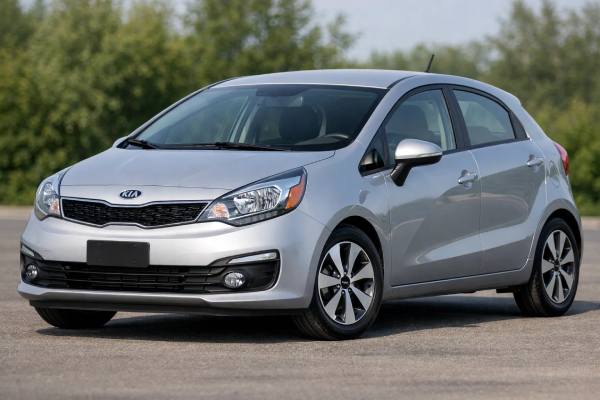
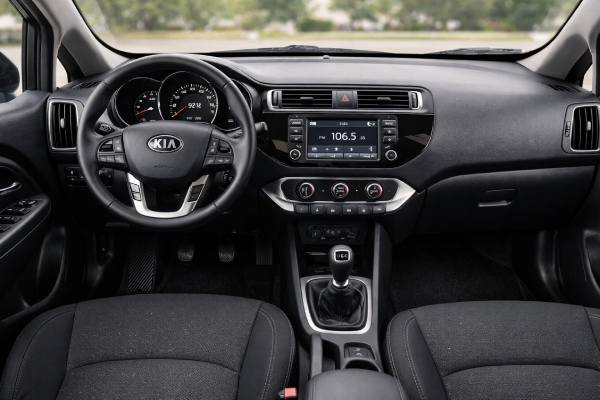
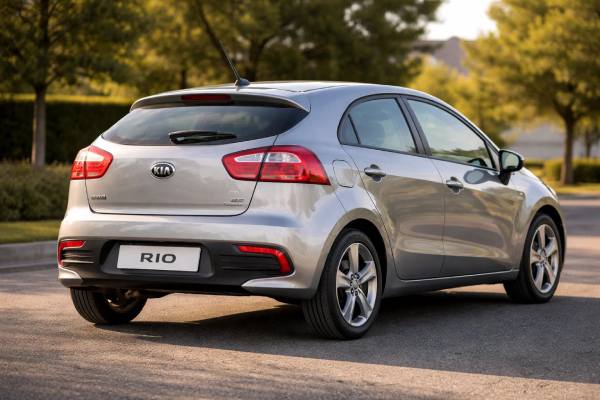
The facelifted 2015–2017 Kia Rio (UB) with the 1.2 CVVT petrol engine is a “simple on purpose” supermini: light, straightforward, and easy to keep on the road. This version uses a naturally aspirated 1.2-liter four-cylinder with multi-port injection and variable valve timing, tuned more for smoothness and low running costs than outright speed. That simplicity is a real ownership advantage—fewer high-stress parts, predictable servicing, and generally good tolerance of mixed driving.
Where buyers should focus is condition and maintenance history rather than chasing rare options. A Rio that has had regular oil services, fresh brake fluid, and timely wear-item replacement will usually feel tight and quiet for its age. Choose carefully and you get a practical hatchback with sensible efficiency, stable highway manners, and an ownership profile that suits city commuting and first-car duties.
What to Know
- Durable, low-stress 1.2 CVVT powertrain is well suited to daily commuting and short trips.
- Practical cabin packaging and an easy-driving clutch and steering setup make it beginner-friendly.
- Good parts availability and simple service access keep routine costs predictable.
- Watch for suspension knocks, worn tires, and neglected brake-fluid changes on higher-mileage cars.
- Plan engine oil and filter service about every 10,000 miles (16,000 km) or 12 months, whichever comes first.
On this page
- Kia Rio UB facelift basics
- Kia Rio UB 1.2 CVVT specs and measurements
- Kia Rio UB trims, safety, and driver aids
- Fault patterns and service actions
- Upkeep plan and used buying checklist
- On-road feel and real-world economy
- How it stacks up against rivals
Kia Rio UB facelift basics
Think of the 2015–2017 Rio (UB) 1.2 CVVT as the “clean design” version of the Rio lineup. The facelift brought subtle exterior tweaks and, depending on market, improvements in infotainment and available convenience features. But the core character stayed the same: a compact hatch focused on low operating costs, decent refinement for the class, and predictable road manners.
The 1.2 CVVT engine (commonly known as the Kappa 1.25 family in many markets) is naturally aspirated and uses multi-port injection (MPI). That matters for long-term ownership: MPI tends to be less sensitive to intake valve carbon build-up than direct injection engines, and it usually behaves well on varied fuel quality. Output is modest—about 84 hp—so expectations should match the mission. It’s happiest in urban traffic and steady commuting, where smooth throttle response and light vehicle weight feel more important than acceleration numbers.
Most cars pair this engine with a 5-speed manual. In some regions an automatic exists, but it’s the manual that best suits the engine’s power band and keeps fuel use in check. The gearbox is geared for everyday drivability rather than sporty response, and it rewards early upshifts if you’re trying to maximize economy.
Chassis layout is conventional and proven: MacPherson struts up front, a torsion-beam rear axle, and front disc brakes with rear drums on many trims (rear discs can appear on higher grades in some markets). The advantage is durability and straightforward servicing. The tradeoff is that it won’t ride like a larger car over broken pavement, and higher-mileage examples can develop knocks if bushings and links have aged.
Ownership sweet spots tend to be:
- Cars with complete service history (oil, filters, and brake fluid done on time).
- Honest tire wear (even wear indicates alignment and suspension are likely healthy).
- A quiet front end over speed bumps (suggests good drop links, top mounts, and bushings).
If you want a Rio that feels “newer” than its age, prioritize condition over equipment level. A tidy base car often drives better than a neglected high-trim one.
Kia Rio UB 1.2 CVVT specs and measurements
Below are the specs most owners and buyers actually use. Values can vary slightly by market, body style (3-door/5-door/sedan), wheel size, and transmission, so treat them as representative for the 2015–2017 facelift hatch.
Powertrain and efficiency
| Item | Specification |
|---|---|
| Engine code (common) | G4LA (market-dependent) |
| Layout | Front, transverse |
| Cylinders / valvetrain | Inline-4; DOHC; 4 valves/cyl |
| Bore × stroke | 71.0 × 78.8 mm (2.80 × 3.10 in) |
| Displacement | 1.2 L (1,248 cc) |
| Induction / fuel system | Naturally aspirated; MPI |
| Compression ratio | ~10.5:1 |
| Max power | 84 hp (62 kW) @ ~6,000 rpm |
| Max torque | ~121 Nm (89 lb-ft) @ ~4,000 rpm |
| Timing drive | Chain |
| Rated efficiency (typical) | ~5.0–5.6 L/100 km (42–47 mpg US / 50–56 mpg UK) |
| Real-world highway @ 120 km/h | ~6.0–6.8 L/100 km (35–39 mpg US / 42–47 mpg UK) |
Transmission and driveline
| Item | Specification |
|---|---|
| Transmission (typical) | 5-speed manual |
| Drive type | FWD |
| Differential | Open |
Chassis and dimensions
| Item | Specification |
|---|---|
| Suspension (front/rear) | MacPherson strut / torsion beam |
| Steering | Electric power steering (EPS) |
| Brakes (typical) | Front discs / rear drums (trim-dependent) |
| Common tire size | 185/65 R15 |
| Ground clearance (typical) | ~140 mm (5.5 in) |
| Length / width / height | ~4,050 / 1,720 / 1,455 mm (159.4 / 67.7 / 57.3 in) |
| Wheelbase | ~2,570 mm (101.2 in) |
| Turning circle (kerb-to-kerb) | ~10.2 m (33.5 ft) |
| Kerb weight (range) | ~1,050–1,130 kg (2,315–2,495 lb) |
| GVWR (typical) | ~1,560 kg (3,439 lb) |
| Fuel tank | ~43–45 L (11.4–11.9 US gal / 9.5–9.9 UK gal) |
| Cargo volume (hatch, typical) | ~288 L (10.2 ft³) seats up; ~900+ L (31+ ft³) seats down (method varies) |
Performance and capability
| Item | Specification |
|---|---|
| 0–100 km/h (0–62 mph) | ~13.0–14.0 s |
| Top speed | ~165–170 km/h (103–106 mph) |
| Towing / payload | Often not rated or limited in some markets; check handbook for your VIN |
Fluids, service capacities, and key torque specs
These are decision-grade “what to expect” figures—verify exact amounts for your engine variant and market handbook.
| Item | Typical specification |
|---|---|
| Engine oil | Usually ACEA A3/B4 or market equivalent; common viscosity 5W-30 (climate dependent); ~3.3–3.6 L (3.5–3.8 US qt) with filter |
| Coolant | Ethylene glycol long-life; 50/50 mix typical; ~5–6 L (5.3–6.3 US qt) |
| Manual gearbox oil | Typically 75W-85 or 75W-90 (spec varies); ~1.6–2.0 L (1.7–2.1 US qt) |
| A/C refrigerant | R-134a in many markets; charge varies by equipment |
| Critical fasteners (examples) | Wheel nuts commonly ~85–110 Nm (63–81 lb-ft) depending on wheel; always confirm for your wheels |
Kia Rio UB trims, safety, and driver aids
Trim structure varies more than people expect because the Rio was sold globally with different naming. The easiest way to think about it is by “equipment bands” rather than the badge on the tailgate:
- Entry grade: cloth seats, smaller infotainment, steel wheels with covers, manual A/C or basic climate setup, and the core safety suite (airbags, ABS, ESC in many markets).
- Mid grade: alloy wheels, better audio (often with Bluetooth), steering-wheel controls, improved seat fabrics, and convenience items like rear electric windows.
- Upper grade / sporty appearance packs (where offered): larger wheels, projector or LED running lights, more screen-based infotainment, reversing camera, and interior trim upgrades.
Mechanical and functional differences that matter
For the 1.2 CVVT, performance differences by trim are mostly due to wheel and tire size and sometimes gear ratios if a different gearbox is paired in your market. Larger wheels can sharpen steering response but usually cost ride comfort and a bit of fuel economy. If you care about low running costs, 15-inch wheels with a taller tire sidewall are often the sweet spot.
Also pay attention to brake hardware. Many 1.2 cars run rear drums, which are generally durable and cheap to service, but they can feel less crisp than rear discs under repeated hard braking. For normal commuting, that’s rarely a dealbreaker.
Safety ratings: what they really mean for this Rio
Safety scores depend on test year and equipment fitted. For this generation, Euro NCAP results show a meaningful split between “standard equipment” and versions assessed with an optional safety pack (where available). That safety pack can affect the Safety Assist score in particular, because it may add features like autonomous emergency braking (AEB) and lane support.
A practical takeaway: don’t assume two identical-looking Rios have the same active safety kit. Check the car itself for telltales—camera modules near the mirror, radar/bumper sensors, lane-assist buttons, and the instrument-cluster menus that show driver-assistance settings.
Safety systems and ADAS availability
Across most markets you should expect the basics:
- ABS (anti-lock braking) and ESC (electronic stability control) depending on local regulations and year.
- Front airbags, often side and curtain airbags on many trims, but confirm count and placement.
- ISOFIX/LATCH child-seat anchors on the rear outboard seats.
Where the facelift can surprise people is infotainment and sensor-related servicing. If your car has parking sensors, a camera, or any lane/AEB functions, collision repair and windshield replacement may require correct aiming or calibration. That’s not unique to Kia, but it matters when budgeting for repairs.
Fault patterns and service actions
The 1.2 CVVT Rio is generally a low-drama car, but age and urban mileage create predictable patterns. Below is a practical map of what tends to show up, how serious it is, and what to do about it.
Common and usually low-cost
- Front suspension knocks (common, low–medium cost):
Symptoms: clunks over small bumps, vague steering feel.
Likely causes: worn stabilizer links, tired strut top mounts, or lower control arm bushings.
Remedy: replace links/mounts as needed; follow with alignment if any arms are changed. - Brake vibration or noise (common, low cost):
Symptoms: steering shimmy when braking, squeal at low speeds.
Likely causes: uneven pad deposits, inexpensive pads, or seized slider pins.
Remedy: clean and lubricate caliper slides; replace pads/rotors if thickness or runout is out of spec. - Battery and charging complaints (common, low cost):
Symptoms: slow cranking, random warning lights, infotainment resets.
Likely causes: aging 12 V battery, corroded terminals, or short-trip usage.
Remedy: load-test battery; clean terminals; check charging voltage.
Occasional and medium cost
- Ignition coil or spark plug wear (occasional, medium cost if ignored):
Symptoms: misfire under load, rough idle, check-engine light.
Likely causes: worn plugs, failing coil, or moisture intrusion at boots.
Remedy: replace plugs at interval; swap coil(s) if misfire follows. - Cooling system seepage (occasional, medium cost):
Symptoms: slow coolant loss, sweet smell, damp radiator corners.
Likely causes: aging hoses, thermostat housing seep, radiator end-tank seep on older cars.
Remedy: pressure test; replace the leaking component; refresh coolant.
Rare but worth attention
- Timing chain noise (rare, higher cost if severe):
Symptoms: rattling on cold start that persists, timing correlation faults.
Likely causes: tensioner wear or oil-quality-related deposits.
Remedy: confirm oil grade and service frequency; investigate early if noise persists. - EPS (electric power steering) noises (rare–occasional, medium cost):
Symptoms: clicking or clunking through the steering column.
Likely causes: column coupler wear or internal play (market-dependent).
Remedy: proper diagnosis before parts replacement—many noises originate in suspension, not EPS.
Recalls, TSBs, and software updates
The exact campaigns vary by country. For any used Rio, verify recall completion through official channels using the VIN and ask for dealer history printouts when possible. Software updates are typically aimed at drivability, sensor faults, or infotainment stability; if a car has intermittent warning lights with no mechanical cause found, a module update can be part of the official fix.
Upkeep plan and used buying checklist
A Rio like this lives or dies on routine maintenance. The good news is that it’s not complicated—consistent basics matter more than “special tricks.”
Practical maintenance schedule
Use whichever limit comes first (distance or time). If the car does mostly short trips, reduce intervals modestly.
- Engine oil and filter: every 10,000 miles (16,000 km) or 12 months. For heavy city use or very hot climates, many owners find 8,000–12,000 km a safer rhythm.
- Engine air filter: inspect every service; replace about 30,000 km (dusty regions sooner).
- Cabin air filter: every 15,000–30,000 km or yearly if allergies/dust are an issue.
- Spark plugs: typically 60,000–100,000 km depending on plug type and market schedule; replace earlier if misfires develop.
- Coolant: often 5 years first change, then every 2–3 years (follow your handbook).
- Brake fluid: every 2 years regardless of mileage—this is a high-value service many used cars miss.
- Manual gearbox oil: not always listed as routine, but a change around 100,000–150,000 km can improve shift quality and longevity.
- Brake pads/rotors: inspect every service; replace by thickness and condition, not mileage alone.
- Tires: rotate about every 10,000–12,000 km; align if you see uneven wear or after front-end work.
- 12 V battery: test annually after year 4; many batteries last 4–6 years.
Fluids and parts: what to buy for
Budget-friendly maintenance is an advantage of this model, but don’t go ultra-cheap on the essentials. Use a quality oil that meets the required ACEA/API spec for your market and the correct coolant type. For brakes and suspension, decent mid-tier parts typically pay back in noise reduction and longevity.
Used-buyer inspection checklist
- Cold start: listen for persistent rattles, check idle stability, and confirm no warning lights remain on.
- Test drive on rough road: clunks suggest links/mounts/bushings; a “loose” feel can indicate alignment or tired dampers.
- Braking from 60–20 km/h: feel for pulsation (rotors) and pull (caliper or tire issues).
- Steering feel: any clicking through the wheel needs careful diagnosis.
- Rust and corrosion points: check rear beam area, pinch welds, and underbody seams—especially in salted climates.
- Service proof: look for oil, brake fluid, and coolant history. Missing brake-fluid changes are a common red flag.
Durability outlook
With steady oil service and timely wear-item replacement, the 1.2 CVVT Rio can age gracefully. Most “big bills” come from neglected suspension/brakes, not from the engine itself.
On-road feel and real-world economy
The Rio’s driving experience is defined by light controls and an easy-going powertrain. It doesn’t try to feel sporty; instead, it aims for confidence and consistency.
Ride, handling, and NVH
Around town, the compact footprint and light steering make it effortless to place in traffic and park. The suspension is tuned more for control than plushness, so sharp edges (potholes, broken expansion joints) can feel abrupt—especially on larger wheels with lower-profile tires. On the flip side, the car usually tracks straight at highway speed, and the torsion-beam rear setup is predictable in quick lane changes.
Noise, vibration, and harshness (NVH) are acceptable for a supermini, but you’ll notice:
- Tire roar increases noticeably with aggressive tire tread patterns.
- Wind noise picks up around typical motorway speeds.
- Engine noise is modest when cruising, but it becomes more present when you ask for acceleration.
Powertrain character
With ~84 hp, acceleration is adequate rather than brisk. The engine feels smooth and cooperative at low and mid rpm, and the CVVT system helps it avoid the “flat” feeling older small engines can have. For best results:
- Short-shift in town and use the torque band rather than revving hard.
- When merging or passing, drop a gear early and let it pull at mid rpm.
The 5-speed manual generally suits the engine well. If your market has an automatic, expect slower response and slightly higher fuel use; it can still be fine for city driving, but it’s not the enthusiast choice.
Real-world efficiency
In mixed driving, many owners see economy close to the official combined numbers if tires and alignment are healthy. As a realistic expectation:
- City: roughly 6.2–7.5 L/100 km (31–38 mpg US / 38–46 mpg UK), depending on traffic and short-trip frequency.
- Highway (100–120 km/h): roughly 5.8–6.8 L/100 km (35–41 mpg US / 42–49 mpg UK).
- Cold weather: expect a noticeable penalty, especially on short runs where the engine spends more time warming up.
The biggest economy killers are underinflated tires, dragging brakes, and overdue alignment—not “engine age.”
Key metrics that change the verdict
The headline 0–100 km/h time (around the mid-13s) doesn’t tell the whole story. What matters day-to-day is that the car stays composed, brakes consistently, and returns predictable economy. If your test drive reveals wandering steering, brake vibration, or loud suspension knocks, fix costs can quickly outweigh a small purchase-price discount.
How it stacks up against rivals
In the supermini class, the Rio 1.2 CVVT competes on simplicity and value rather than flash. Here’s how it typically compares when cross-shopping used cars of similar age.
Versus Volkswagen Polo 1.2 / 1.0
A comparable Polo can feel more solid inside and sometimes quieter at speed, but it may bring higher parts and labor costs. Depending on engine variant, some Polos use turbocharged small engines, which can deliver stronger torque but add heat and complexity. If you want low-stress ownership and straightforward servicing, the Rio often feels like the safer bet.
Versus Ford Fiesta 1.25 / 1.0 EcoBoost
The Fiesta is usually the more engaging drive—sharper steering and better cornering balance. The Rio counters with a calmer, more “appliance-like” personality and often lower day-to-day fuss. If you value handling fun, Fiesta wins; if you want easy commuting and predictable upkeep, Rio is attractive.
Versus Toyota Yaris 1.0 / 1.3
The Yaris has a strong reliability reputation and tends to hold value well. The Rio often offers more features for the money in some markets, with competitive practicality. If you’re focused purely on long-term dependability and resale, Yaris is tough to beat; if purchase price and equipment matter most, a well-kept Rio can be a smarter value.
Versus Hyundai i20 (similar platform family)
The i20 is the closest cousin. Shopping comes down to condition, service history, and equipment. Choose the cleaner example, because ownership experience is dominated by maintenance and suspension/brake condition at this age.
Where the Rio wins
- Simple MPI engine that’s generally tolerant and easy to service.
- Good usability per dollar on the used market.
- Predictable repair profile: wear items and routine maintenance dominate.
Where to be cautious
- If you frequently carry heavy loads or drive mountainous routes, the 1.2 may feel strained—consider a higher-output engine if available.
- Neglected examples can feel noisy and loose due to suspension wear; buy on condition, not mileage alone.
References
- >> OWNER’S MANUAL QUICK REFERENCE GUIDE 2016 (Owner’s Manual)
- Service Intervals V25.1 2025 (Service Schedule)
- Official Kia Rio safety rating 2017 (Safety Rating)
- Official Kia Rio (full safety package) safety rating 2017 (Safety Rating)
Disclaimer
This article is for informational purposes only and is not a substitute for professional inspection, diagnosis, or repair. Specifications, torque values, service intervals, and procedures can vary by VIN, market, production date, and equipment; always verify details using official Kia documentation for your exact vehicle.
If this guide helped, consider sharing it on Facebook, X (Twitter), or your favorite forum to support our work.