
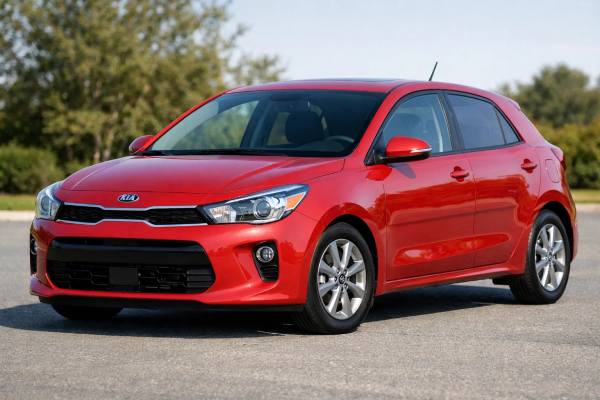
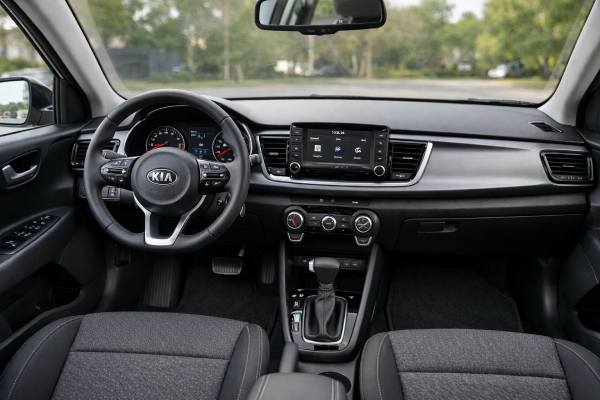
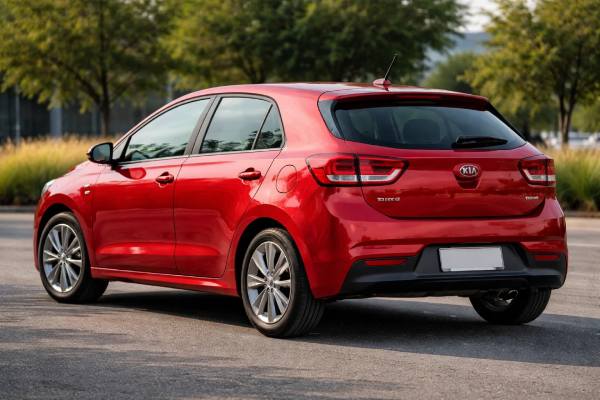
The 2017–2020 Kia Rio (YB) with the 1.25 MPI (around 84 hp, market dependent) is a classic “keep it simple” supermini: naturally aspirated, multi-point injection, and engineered to be easy to service. It is not designed to feel fast, but it is designed to feel consistent—especially in stop-start city use where smooth low-speed control matters more than peak power. Compared with many small turbo rivals, the 1.25 MPI typically asks for less special-case care (no turbo heat management or boost-dependent driving style), and it usually rewards owners who stick to routine fluids, filters, and brakes.
The real shopping challenge is not the engine, but the configuration. Safety equipment and driver assistance can vary dramatically by trim and option pack, even within the same model year. If you confirm equipment carefully and buy on condition, the Rio 1.25 MPI can be a dependable, predictable daily.
Key Takeaways
- Simple naturally aspirated MPI engine favors smooth drivability and uncomplicated servicing.
- Compact size and light controls make it easy in tight city traffic and parking.
- Safety and driver-assist features vary widely—confirm exact pack and sensors before buying.
- Plan engine oil service roughly every 10,000–12,000 miles (16,000–20,000 km) or 12 months, depending on usage and market guidance.
- Performance is adequate, not sporty; it rewards steady momentum driving more than hard acceleration.
Navigate this guide
- Kia Rio YB 1.25 MPI explained
- Kia Rio YB 1.25 MPI specs and dimensions
- Kia Rio YB trims, safety and ADAS
- Common issues, recalls and service actions
- Maintenance schedule and buyer’s checklist
- Driving feel and real-world economy
- How the Rio stacks up against rivals
Kia Rio YB 1.25 MPI explained
Think of the Rio (YB) 1.25 MPI as a small car built around “predictable engineering.” The engine is a naturally aspirated inline-four with multi-point fuel injection (MPI), meaning it sprays fuel into the intake ports rather than directly into the combustion chamber. For owners, that usually translates into steady drivability, straightforward cold starts, and fewer edge cases in everyday maintenance. It also means the car tends to feel the same in a wide range of conditions: hot city commutes, short errands, and moderate motorway runs.
On the road, this engine’s character is more about smoothness than punch. You will not get a surge of torque the way a small turbo can deliver at low rpm, so the Rio 1.25 asks you to plan: keep a little momentum, downshift on hills, and accept that quick overtakes require space. The upside is throttle control that feels linear at parking speeds and in traffic, which is where many superminis spend most of their lives.
The YB platform itself is tuned for stability and comfort rather than sharp, sporty response. Most cars are front-wheel drive with a simple driveline layout. Suspension choices are typical for the class, and they make the Rio easy to align and inexpensive to refresh when the time comes. Cabin packaging is efficient: it is not a “big small car,” but it usually seats four adults comfortably for short to medium trips, and the hatchback is genuinely practical for shopping and airport runs.
What makes the ownership experience vary most is trim and equipment. In some markets the 1.25 MPI comes in value-focused trims with minimal driver assistance, while other examples add useful safety tech through an option pack. That difference affects day-to-day confidence (night driving, emergency braking support) and ownership costs (sensor calibration after repairs). If you treat “Rio 1.25” as a single fixed spec, you can miss the most important part of the purchase. Buy the best-maintained car with the safety and comfort equipment you actually want, and the 1.25 MPI powertrain will usually do its job quietly in the background.
Kia Rio YB 1.25 MPI specs and dimensions
Specifications below focus on the 2017–2020 Rio (YB) with the 1.25 MPI gasoline engine. Numbers can vary by market (tax ratings, emissions calibration, transmission pairing, and wheel size). Use these tables as a practical baseline, then confirm exact values by VIN, registration documents, and local owner information.
Powertrain and efficiency
| Item | Typical specification |
|---|---|
| Engine code / family | 1.25 MPI (Kappa-family naming varies by market) |
| Engine layout and cylinders | Inline-4, DOHC, 16-valve (4 valves/cyl) |
| Displacement | 1.25 L (about 1,248 cc) |
| Induction | Naturally aspirated |
| Fuel system | MPI (multi-point injection) |
| Compression ratio | Typically around 10–11:1 (market dependent) |
| Max power | About 84 hp (62 kW) at roughly 5,500–6,000 rpm (market dependent) |
| Max torque | About 121–122 Nm (90 lb-ft) at roughly 4,000 rpm (market dependent) |
| Timing drive | Commonly chain-driven on this engine family (confirm by VIN) |
| Rated efficiency | Often around 4.7–6.5 L/100 km combined depending on test cycle and wheels |
| Real-world highway @ 120 km/h (75 mph) | Commonly around 6.0–7.5 L/100 km (31–39 mpg US), conditions dependent |
Transmission and driveline
| Item | Typical specification |
|---|---|
| Transmission | Most commonly 5-speed manual (some markets pair different gearboxes) |
| Drive type | FWD |
| Differential | Open |
Chassis and dimensions (typical hatchback baseline)
| Item | Typical specification |
|---|---|
| Suspension (front/rear) | MacPherson strut / torsion beam |
| Steering | Electric power steering |
| Brakes | Front discs; rear discs or rear drums (trim and market dependent) |
| Wheels and tyres (common) | 185/65 R15 or 195/55 R16 (most popular sizes vary by market) |
| Ground clearance | Often around 140 mm (5.5 in), market dependent |
| Length / width / height | Around 4,065 / 1,725 / 1,450 mm (160.0 / 67.9 / 57.1 in), body dependent |
| Wheelbase | Around 2,580 mm (101.6 in) |
| Turning circle (kerb-to-kerb) | Around 10.2 m (33.5 ft) |
| Kerb weight | Often around 1,080–1,160 kg (2,381–2,557 lb), equipment dependent |
| GVWR | Market dependent; commonly in the mid-1.5-ton range on many trims |
| Fuel tank | Often around 45 L (11.9 US gal / 9.9 UK gal) |
| Cargo volume | Often around 325 L (about 11.5 ft³) seats up; seats down varies (measurement method matters) |
Performance and capability (typical)
| Item | Typical specification |
|---|---|
| 0–100 km/h (0–62 mph) | Often around 12.5–13.5 s (gearbox and body dependent) |
| Top speed | Often around 165–175 km/h (103–109 mph), market dependent |
| Braking 100–0 km/h | Strongly tyre and brake-spec dependent; treat test figures as trim-specific |
| Towing capacity | Often limited or not approved in some markets; verify by VIN plate |
| Payload | Often around 400–500 kg (880–1,100 lb), trim dependent |
Fluids and service capacities (baseline guidance)
| Item | Typical guidance (verify by VIN) |
|---|---|
| Engine oil | 0W-20 or 5W-20 is common in many Kia applications; capacity typically around the mid-3 L range |
| Coolant | Long-life coolant; capacity typically around 5 L class for this engine size |
| Manual gearbox oil | Specification varies by gearbox; do not substitute without confirming |
| A/C refrigerant | Type and charge vary; check under-hood label |
| Key torque specs | Wheel nuts and drain plugs vary by market hardware; use official service data for the exact vehicle |
Kia Rio YB trims, safety and ADAS
For the Rio YB 1.25 MPI, trims are less about mechanical differences and more about equipment—especially safety systems. That is why shopping by trim name alone can mislead you: the “same” trim label can differ across countries, and some important features arrive only through an optional safety pack.
Trims and options: what typically changes
Most markets build the range in layers:
- Entry trims: smaller wheels, basic infotainment, fewer convenience features. The engine and suspension layout typically remain the same, but the car may have rear drum brakes and fewer airbags depending on regulations and build.
- Mid trims: upgrades usually include a touchscreen, better audio controls, improved lighting, and more comfort features (heated items in cold-climate markets).
- Upper trims: often add cosmetic upgrades plus the most important functional additions: improved headlights, parking sensors or camera, and the option packages that bundle active safety features.
Mechanical differences can still matter in practice:
- Wheel and tyre packages change ride comfort, road noise, and braking grip.
- Rear brake type (drum vs disc) affects feel and maintenance approach. Drums can last well but need correct adjustment and clean hardware; discs can feel more consistent but may corrode faster if the car sits.
- Lighting can be a safety feature, not just a style feature. Headlight performance varies more than many buyers expect.
Quick identifiers you can check during inspection:
- Camera module near the mirror suggests lane support or sign recognition on some configurations.
- Front bumper sensor windows or grille sensor mounts suggest AEB radar on some systems.
- Steering wheel button sets can hint at cruise control type and driver assistance availability.
- Dashboard warning icons at key-on reveal whether the car even has the control modules for certain functions.
Safety ratings: why you may see different outcomes
This generation can be associated with different star outcomes depending on whether the test configuration includes an optional safety pack. In plain language: the structure and airbags can perform well, but the “crash avoidance” score depends heavily on whether the car has AEB and lane assistance fitted and credited in the test configuration.
Safety systems and ADAS: what to verify by year and trim
Treat these as “must confirm” items, not assumptions:
- Airbag count and coverage: front, side, and curtain availability can vary by market.
- ISOFIX/LATCH and top tethers: check access and condition if you use child seats.
- AEB capability: some systems operate mainly at city speeds; others cover higher speeds and may include pedestrian detection. AEB presence also changes repair costs after front-end damage.
- Lane systems: lane departure warning is not the same as lane keeping assist. The first warns; the second can apply steering input.
- Calibration after service: windshield replacement, bumper removal, wheel alignment, or steering component replacement may require sensor calibration on ADAS-equipped cars. Ask for records, and budget for calibration if history is unclear.
If you want the safest real-world configuration, prioritize a Rio with the relevant safety pack and intact original sensors. If you want the simplest long-term ownership, a lower-tech car can reduce calibration and sensor-related surprises—but confirm it still meets your personal safety expectations.
Common issues, recalls and service actions
The Rio YB 1.25 MPI is usually a straightforward car to maintain, and most problems fall into familiar small-car categories. The most expensive issues typically come from neglect (overdue fluids, ignored overheating warnings, or repeated short-trip use without basic maintenance). Below is a practical map of what owners and buyers should watch for, organized by prevalence and cost tier.
Common (high prevalence, low-to-medium cost)
- Ignition wear: spark plugs and coils
Symptoms: rough idle, hesitation, poor fuel economy, engine light under load.
Root cause: age, heat cycling, and extended plug intervals.
Remedy: replace plugs at the correct interval; test coils if misfires appear. Use the correct plug type and gap. - 12 V battery and charging stability
Symptoms: slow crank, intermittent warning lights, infotainment resets, stop-start quirks on ISG-equipped cars.
Root cause: short-trip use, aging battery, loose terminals, or tired ground points.
Remedy: load-test the battery, clean and tighten terminals, confirm alternator output, and replace a weak battery before winter. - Brake hardware sticking or uneven wear
Symptoms: pulling, squeal, vibration, hot wheel after short drives.
Root cause: seized slide pins, corrosion, low-quality pads, or infrequent servicing.
Remedy: clean and lubricate caliper hardware, replace pads and rotors or drums if worn, and flush brake fluid on schedule.
Occasional (medium prevalence, medium cost)
- Cooling system leaks and thermostat behavior
Symptoms: coolant smell, low reservoir level, slow warm-up, temperature fluctuations.
Root cause: hose clamp fatigue, radiator seam seepage, thermostat sticking, or water-pump aging.
Remedy: pressure-test and fix early. Overheating is the risk multiplier that can turn a small leak into a big repair. - Suspension noise on rough roads
Symptoms: clunks over bumps, vague steering on-center, uneven tyre wear.
Root cause: worn drop links, top mounts, bushings, or ball joints (accelerated by potholes and larger wheels).
Remedy: replace worn components in pairs where appropriate and align afterward.
Rare (low prevalence, higher cost if ignored)
- Timing chain stretch or tensioner wear
Symptoms: persistent rattle on cold start, fault codes related to timing correlation, rough running.
Root cause: extended oil-change intervals or low oil level over time.
Remedy: diagnose promptly. If a chain service is needed, it is usually labor-heavy, so prevention through correct oil and intervals is the best strategy.
Recalls, TSBs, and service actions: how to verify
Even a reliable model can have campaign work. Verification is simple but often skipped:
- Run an official VIN recall check for your market’s regulator or manufacturer portal.
- Ask for proof of completion (dealer invoice, campaign closure note, or service history printout).
- Inspect for quality of prior repairs if the car has had bodywork near sensors or lighting.
A used Rio with complete campaign history and tidy maintenance records is usually a safer buy than a lower-mileage example with missing documentation. Treat unexplained warning lights, coolant loss, or inconsistent service stamps as reasons to slow down and inspect more deeply.
Maintenance schedule and buyer’s checklist
The Rio YB 1.25 MPI thrives on routine care. Because it is a simple drivetrain, most “big problems” are avoidable: they start as small warning signs (low coolant, overdue oil, uneven brakes) that were ignored. A practical schedule and a disciplined inspection approach are the best value upgrades you can give this car.
Practical maintenance schedule (distance or time, whichever comes first)
- Engine oil and filter: commonly 16,000–20,000 km (10,000–12,000 miles) or 12 months in many markets. If the car does frequent short trips, reduce the interval.
- Engine air filter: inspect every service; replace roughly every 20,000–30,000 km (12,000–18,000 miles), sooner in dust.
- Cabin air filter: every 12 months is a good default, or more often for allergy season or heavy city use.
- Coolant: long-life coolant is typical; many owners plan a 5-year change cycle unless local guidance differs.
- Spark plugs: often 60,000–100,000 km depending on plug type; confirm what is installed.
- Brake fluid: every 2 years is a conservative moisture-control interval.
- Brakes: inspect pad thickness, slide pins, and brake hoses at each service; clean hardware annually if winter salt is common.
- Manual gearbox oil: not always scheduled early, but a change around 100,000–120,000 km can improve shift feel on high-mileage cars.
- Tyres: rotate every 10,000–12,000 km; check alignment yearly and after suspension work.
- 12 V battery: test annually after year three; replace proactively if cold cranking weakens.
Fluids and specifications: what to confirm before servicing
Do not rely on “close enough” fluids:
- Engine oil viscosity and standard must match the owner documentation for the market (viscosity can differ by climate and emissions calibration).
- Coolant type should be the correct long-life formulation; mixing types can reduce corrosion protection.
- Gearbox oil must match the gearbox specification; friction modifiers matter.
Essential buyer’s checklist (fast but thorough)
- Cold start and idle: should be stable within seconds. Listen for persistent rattles.
- Cooling system health: check coolant level and look for dried residue at hose joints and radiator seams. Confirm the cabin heater works well after warm-up.
- Clutch and gearbox (manual): clutch bite should be predictable; shifts should not crunch. A high bite point can suggest wear.
- Brake feel: the car should stop straight with a firm pedal. Any pulling or heat smell after a short drive can indicate sticking hardware.
- Tyre wear pattern: inner-edge wear hints at alignment or bushing issues.
- Electrics: test windows, locks, lights, and charging ports. Low-voltage faults can mimic “bigger” issues.
- ADAS equipment (if fitted): confirm no warning lights and inspect sensor areas for cracks, misaligned bumper brackets, or non-original glass.
Long-term outlook: with consistent oil service, clean coolant, and timely brakes, the 1.25 MPI Rio is usually an easy car to keep. The smartest buying strategy is to prioritize maintenance history and equipment verification over small mileage differences.
Driving feel and real-world economy
On the road, the Rio YB 1.25 MPI feels like a city-first car that can handle highway duty when needed. The controls are light, visibility is generally good, and the engine responds smoothly at low speeds. Because the engine is naturally aspirated, it builds power progressively: it feels calm when you are gentle, and it becomes noticeably busier when you ask for quick acceleration.
Ride, handling, and NVH
- Ride quality: with 15-inch wheels and taller sidewalls, the Rio typically rides more comfortably over potholes and broken tarmac. Larger wheels can look better but may add sharpness over expansion joints.
- Handling balance: safe understeer is the default. The car is predictable in quick lane changes, but it is tuned for stability rather than playful rotation.
- Steering feel: parking assistance is light and convenient; on-center feel can be slightly numb, which is normal in this class with electric assist.
- Cabin noise: at city speeds, the Rio is usually pleasant. At motorway speeds, tyre and wind noise become more noticeable than in larger cars, especially on coarse surfaces.
Powertrain character and best driving style
- City driving: the engine’s smooth throttle makes creeping and low-speed maneuvering easy.
- Hills and overtakes: you will downshift more often than in a turbo rival. The engine likes revs, so it is normal to see higher rpm during merges.
- Momentum driving: the Rio rewards a steady approach. Gentle acceleration, anticipating traffic, and avoiding unnecessary braking often feel more natural than “stop and sprint.”
Real-world efficiency (what owners typically experience)
Real-world fuel use depends heavily on speed, temperature, tyre choice, and traffic density. A practical expectation range is:
- City-heavy use: often 6.5–8.0 L/100 km (29–36 mpg US), with short trips and A/C pushing the higher end.
- Highway 100–120 km/h: often 5.5–7.0 L/100 km (34–43 mpg US), depending on wind and load.
- Mixed driving: commonly 6.0–7.2 L/100 km (33–39 mpg US).
Cold weather can increase consumption because the engine spends longer warming up and the cabin heater load rises. If your routine is mostly short trips, the biggest efficiency gain often comes from maintenance basics: correct tyre pressures, a clean air filter, fresh oil, and properly functioning brakes that are not dragging.
Performance summary: the 1.25 MPI will not feel quick, but it is consistent. If your priority is relaxed commuting, predictable response, and reasonable running costs, it fits the job well.
How the Rio stacks up against rivals
The Rio YB 1.25 MPI competes in a crowded class where rivals often specialize: some feel sportier, some feel more premium, and some focus on low purchase price. The Rio’s strongest argument is not “best in one metric,” but the blend of simplicity and usability—especially if you choose a well-equipped example.
If you want stronger performance
Small turbo rivals (often 1.0-liter class engines) usually feel quicker at low rpm and require fewer downshifts. They can be excellent, but they may introduce additional variables: turbo heat, more complex air plumbing, and higher sensitivity to oil quality and interval discipline. If you drive a lot of hills or high-speed motorways, a turbo alternative can feel less strained. If you mainly commute in town, the Rio’s steady nature can feel easier to live with.
If you want the sharpest handling
Models that prioritize steering and chassis response often feel more eager on a twisty road. The trade-off can be firmer ride quality and higher tyre wear if you drive on rough urban surfaces. The Rio’s tuning is more comfort-stable than sporty, which is often the better match for everyday roads and mixed drivers in a household.
If you want the most safety tech for the money
This is where careful shopping matters most. Some competitors include AEB and lane features more widely as standard equipment in later years, while the Rio may rely on safety packs in some markets. If advanced driver assistance is a must-have, compare the specific vehicle’s equipment list rather than the model reputation. A well-specced Rio can be competitive; a base Rio can be noticeably behind.
If you want maximum value and practicality
Budget-focused rivals can be cheaper to buy and may offer impressive interior space for the price. The Rio often answers with a more “finished” feel in controls, paint, and cabin fit, plus a broad service network in many regions. In the used market, the best value move is often choosing the cleanest, best-documented car—regardless of badge—because small cars amplify the cost of deferred maintenance.
Quick buying guidance
Choose the Rio YB 1.25 MPI if you want:
- A straightforward naturally aspirated engine and predictable servicing.
- A compact car that is easy in city life and stable on occasional highway runs.
- A purchase strategy based on condition, records, and verified equipment.
Consider a rival if you need:
- Stronger low-rpm torque for frequent hills and overtakes.
- Standard ADAS features without relying on option packs.
- A more engaging chassis feel as a priority.
In short, the Rio’s best version is a well-maintained car with the right safety pack for your needs. When you find that combination, it becomes a dependable daily rather than a compromise.
References
- SPECIFICATION 2018 (Technical Specifications)
- Engine Oil Grades and Capacities 2023 (Service and Fluids)
- Official Kia Rio safety rating 2017 (Safety Rating)
- Vehicle Detail Search – 2018 KIA RIO 4 DR FWD | NHTSA 2018 (Recall Database)
Disclaimer
This article is for informational purposes only and is not a substitute for professional inspection, diagnosis, or repair. Specifications, torque values, service intervals, and procedures vary by VIN, market, model year, and equipment. Always verify details using official Kia documentation and the correct service information for your exact vehicle.
If you found this guide useful, please consider sharing it on Facebook, X (Twitter), or other platforms to support our work.