

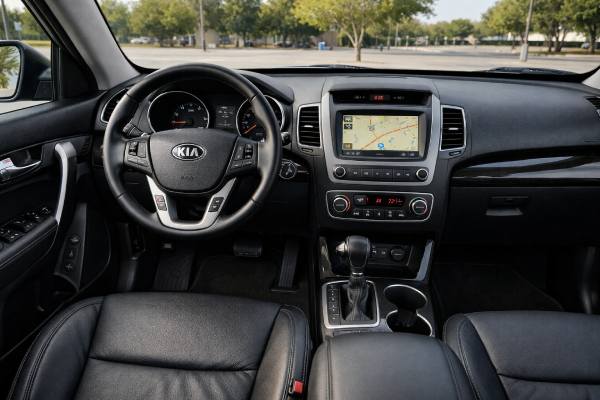
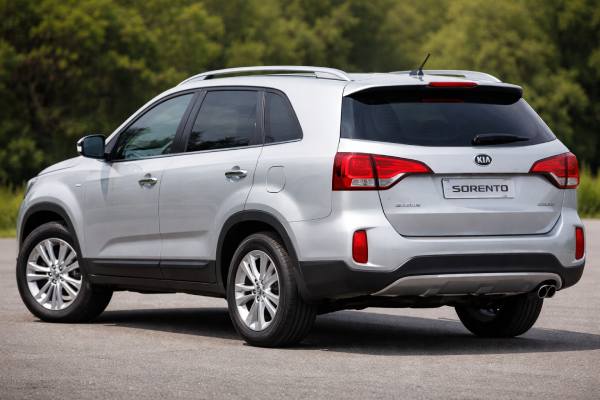
The 2013–2014 facelift Kia Sorento (XM) with the 2.4-liter G4KE inline-four is the “practical spec” of this generation: straightforward naturally aspirated power, a modern 6-speed automatic in most markets, and a chassis tuned more for stability and comfort than sharp handling. In 2WD form, listings sometimes call it “RWD,” but the XM platform is typically a front-drive-based layout (2WD) with an optional AWD system on some trims and regions—so always confirm by VIN and the underbody (rear differential/propshaft present or not).
For owners, the upside is predictable running costs and fewer drivetrain parts than AWD. The trade-off is that the 2.4 works hard in a heavy midsize SUV, so maintenance quality (oil changes, cooling health, and transmission fluid condition) has an outsized effect on long-term reliability and drivability.
What to Know
- Strong value if you want a roomy midsize SUV without AWD hardware and its extra fluid services.
- The 2.4 is smooth and simple, but acceleration is only “adequate” when fully loaded or at highway speeds.
- Watch for oil-consumption signs and cooling-system neglect as mileage climbs.
- Change engine oil every 10,000 km (6,000 mi) or 12 months (5,000 km / 3,000 mi for severe use).
- Plan on a full brake-fluid flush about every 2 years to keep the ABS module and calipers happy.
Quick navigation
- Sorento XM facelift 2.4 profile
- Sorento XM G4KE data and capacities
- Sorento XM trims, safety, and tech
- Common faults, recalls, and fixes
- Service schedule and buying advice
- Road feel and fuel use
- Rivals and best alternatives
Sorento XM facelift 2.4 profile
This facelifted 2013–2014 Sorento XM sits in the sweet spot of the model’s lifecycle: the interior, infotainment, and noise isolation are generally improved versus earlier XM years, while the underlying mechanical package stays familiar and widely serviceable. The G4KE 2.4-liter engine (Theta family) is a naturally aspirated, chain-driven inline-four designed around everyday torque and durability, not performance flair. In a midsize SUV, that means the engine is frequently in the mid-range on inclines and during highway merges—normal behavior, but it makes oil quality and cooling health especially important.
The 2WD layout is also a big ownership lever. Compared with AWD, you have fewer rotating parts, fewer seals, and fewer fluid services (no rear differential and no transfer case/center coupling in typical 2WD builds). That usually reduces long-term maintenance cost and removes a couple of common “older SUV” issues like driveline vibration from worn propshaft couplers or transfer-case seepage. The downside is traction: in wet climates, steep driveways, or winter regions, tires matter more than drivetrain badges. A good all-season or winter tire set does more for safety than chasing an AWD badge with unknown fluid history.
For buyers, the best way to think about this Sorento is as a family-hauler with occasional utility duties. It’s comfortable at 100–120 km/h, stable in crosswinds, and generally friendly for long trips thanks to a tall seating position and a compliant ride. Where it’s less happy is repeated hard acceleration (especially with passengers and cargo), frequent towing, or very short-trip use that never fully warms the oil—conditions that accelerate deposits and moisture buildup.
Advantages that remain strong today:
- Cabin space and seating flexibility for the footprint, especially with the available third row in some markets (note: third-row availability varies).
- Predictable maintenance with standard fluids and common parts availability.
- 2WD simplicity that can be a long-term reliability win if you don’t need AWD traction.
If you’re shopping, prioritize vehicles with clean service records, smooth shifting, and a cooling system that reaches operating temperature quickly and stays there under load. A “cheap” example that runs slightly hot or shifts oddly often becomes expensive fast.
Sorento XM G4KE data and capacities
Below are practical specs for the 2013–2014 Sorento XM facelift with the 2.4-liter G4KE and 2WD. Exact values can vary by market (emissions calibration, wheel/tire package, trim weight, and gearbox coding). Use this as a decision guide, then verify by VIN-based documentation.
Powertrain and efficiency
| Item | Specification |
|---|---|
| Code | G4KE |
| Engine layout and cylinders | Inline-4, DOHC, 4 valves/cyl (typical) |
| Displacement | 2.4 L (≈ 2359 cc) |
| Induction | Naturally aspirated |
| Fuel system | Gasoline direct injection (common on facelift 191 hp tune; market dependent) |
| Max power | 191 hp (≈ 142 kW) @ rpm (varies by market) |
| Max torque | ≈ 245–250 Nm (≈ 181–184 lb-ft) @ rpm (varies by market) |
| Timing drive | Chain |
| Rated efficiency | Typically ~9–11 L/100 km combined (varies by test cycle and wheel size) |
| Real-world highway @ 120 km/h | Often ~8.5–10.0 L/100 km depending on tires, load, wind |
Transmission and driveline
| Item | Specification |
|---|---|
| Transmission | 6-speed automatic (common) |
| Drive type | 2WD (commonly front-drive-based; confirm by VIN/listing and underbody) |
| Differential | Open |
Chassis and dimensions (typical for XM facelift)
| Item | Specification |
|---|---|
| Suspension (front/rear) | MacPherson strut / multi-link (typical) |
| Steering | Electric power steering (common), ratio varies |
| Brakes | 4-wheel discs; sizes vary by trim |
| Wheels/tires (common) | 235/60 R18 or similar (market/trim dependent) |
| Ground clearance | ~180–185 mm (varies) |
| Length / width / height | ~4685–4690 / ~1885 / ~1710 mm (varies by roof rails) |
| Wheelbase | ~2700 mm |
| Turning circle (kerb-to-kerb) | ~11.0–11.5 m (varies) |
| Kerb weight | ~1700–1850 kg (trim and seating dependent) |
| Fuel tank | Often ~64 L (market dependent) |
| Cargo volume | Highly trim- and method-dependent; verify by region (VDA/SAE differences) |
Performance and capability (realistic expectations)
| Metric | Typical result |
|---|---|
| 0–100 km/h (0–62 mph) | ~10.5–12.0 s (trim, tires, elevation) |
| Top speed | ~185–195 km/h (varies) |
| Braking 100–0 km/h | Commonly ~40–43 m on good tires (test dependent) |
| Towing capacity | Often modest with the 2.4 (commonly ~750–900 kg braked; verify by VIN/market) |
| Payload | Varies widely; check door jamb label |
Fluids and service capacities (common ranges—verify by VIN)
| System | Spec and typical capacity |
|---|---|
| Engine oil | API/ACEA market spec; often 5W-30 or 5W-20; ~4.3–5.0 L with filter |
| Coolant | Long-life ethylene glycol; typically 50/50 mix; ~7–9 L total system |
| Automatic transmission fluid | Manufacturer-specified ATF; service drain is partial; full exchange varies (~4–8 L depending on method) |
| A/C refrigerant | R-134a in many markets; charge varies by sticker |
| Brake fluid | DOT 3 or DOT 4 depending on market |
Key torque specs (common “decision” values—verify before final tightening)
| Fastener | Typical torque |
|---|---|
| Wheel lug nuts | ~90–110 Nm (66–81 lb-ft) |
| Engine oil drain plug | ~25–35 Nm (18–26 lb-ft) |
| Spark plugs | Commonly ~15–25 Nm (11–18 lb-ft), dependent on plug type |
If you’re maintaining one of these at home, the best habit is documenting what you actually drained and refilled (in liters), then watching for trend changes over time. That catches early oil consumption, coolant loss, and transmission seepage before they become roadside problems.
Sorento XM trims, safety, and tech
Trim naming varies (LX/EX/SX in some markets, or regional equivalents), but the 2013–2014 facelift generally reshuffled equipment into clearer tiers: base models focus on practicality, mid trims add comfort and convenience, and top trims add appearance and tech. For a 2.4-liter 2WD build, your main “mechanical” differences usually come from wheel size, brake package, and sometimes cooling capacity or towing prep—not from the engine itself.
Trims and options: what matters for ownership
When you’re comparing two similar Sorentos, prioritize options that reduce your future spend or improve daily usability:
- Wheel size and tire cost: 18-inch wheels are often the best balance for ride comfort and replacement cost. Larger wheels can look better but raise tire prices and can feel harsher over potholes.
- Seat material and climate comfort: Leather and heated seats age well if maintained; ventilated seats (where fitted) are a comfort win but add moving parts.
- Infotainment and camera systems: Backup cameras and parking sensors materially reduce low-speed damage risk. If the head unit is glitchy, check for software updates and confirm all steering wheel buttons work.
- Third-row seating: If present, it’s usually best for kids. Confirm the seat mechanisms latch securely and that cargo-floor panels are not cracked or missing.
Quick identifiers you can use during inspection:
- VIN/build plate and door sticker: confirms drivetrain, GVWR, and often tire size.
- Underbody check: 2WD builds typically lack a rear differential and propshaft; AWD builds have both.
- Cluster and switchgear: higher trims often have more driver-info screens and additional seat/climate switches.
Safety ratings: how to interpret them
Safety ratings can differ by region because test protocols and vehicle specs differ. In many markets, this generation achieved strong headline results for its time, but remember two realities:
- Ratings are year- and test-version-specific. A “5-star” result under an older protocol isn’t the same as today’s standards.
- Tires and brakes matter. The best safety system is traction—good tires, correct pressures, and fresh brake fluid.
Safety systems and driver assistance (ADAS)
On the 2013–2014 Sorento XM facelift, expect a solid core safety package:
- Multiple airbags (front, side, and curtains are common depending on trim and market)
- ABS and electronic stability control (ESC)
- Brake assist and traction control
Advanced driver assistance (like automatic emergency braking, adaptive cruise, or lane centering) is generally limited or absent on this era, depending on region. That’s not a deal-breaker, but it means you should be picky about:
- Headlight condition and aim (cloudy lenses reduce night visibility)
- Brake feel consistency (spongy pedal can indicate old fluid or air)
- Alignment (a drifting steering wheel increases fatigue and tire wear)
After any suspension work or windshield replacement, confirm the steering angle sensor calibration (if required by scan tool) so ESC behaves correctly in slippery conditions.
Common faults, recalls, and fixes
A 2013–2014 Sorento XM facelift can be a dependable daily vehicle, but like many early-2010s crossovers, it has a handful of repeat patterns. Below is a practical map by prevalence and severity/cost tier, along with symptoms and the usual fix direction.
Common (watch closely)
- Oil consumption (medium to high severity if ignored)
Symptoms: Oil level drops between services, blue haze on start-up, oil smell, catalytic converter efficiency codes over time.
Likely causes: Ring wear, deposit buildup from extended oil intervals, PCV (positive crankcase ventilation) issues.
Remedy: Tighten oil-change discipline; verify PCV function; perform a documented consumption test. If severe, internal repair may be needed—pricey, so confirm before purchase. - Coil packs and spark plugs (low to medium)
Symptoms: Misfire under load, rough idle, flashing check-engine light in severe cases.
Likely causes: Aging coils, incorrect plug type/gap, oil in plug wells from valve cover seep.
Remedy: Replace plugs with correct spec; replace weak coils; address valve cover gasket if oil is present. - Cooling system wear (medium)
Symptoms: Temperature creep in traffic, weak cabin heat, coolant smell, slow coolant loss.
Likely causes: Aging radiator, thermostat sticking, coolant neglect, hose seepage.
Remedy: Pressure test; replace thermostat and weak hoses; refresh coolant with proper mix; keep the radiator fins clean.
Occasional (depends on climate and use)
- Front suspension bushings and links (low to medium)
Symptoms: Clunks over bumps, vague steering, uneven tire wear.
Likely causes: Worn control arm bushings, stabilizer links, strut mounts.
Remedy: Replace worn components and align; don’t “chase” alignment without fixing play first. - Brake caliper slide sticking (low to medium)
Symptoms: Pulling, hot wheel smell, uneven pad wear, reduced fuel economy.
Likely causes: Dry or corroded slide pins, old brake fluid, torn boots.
Remedy: Service slides and boots; flush brake fluid; replace caliper if piston is sticking. - Electrical gremlins from weak battery/grounds (low)
Symptoms: Random warning lights, slow cranking, infotainment resets.
Likely causes: Aging 12 V battery, corroded terminals, weak chassis ground.
Remedy: Battery test, clean terminals, verify alternator output; inspect grounding points.
Rare but expensive (confirm during inspection)
- Automatic transmission shift quality issues (medium to high)
Symptoms: Harsh 2–3 shift, delayed engagement, shudder at light throttle.
Likely causes: Old ATF, adaptive shift learning mismatches, internal wear in high-mile units.
Remedy: Correct fluid service (using the specified ATF), check for software updates, and test drive when fully warm. Avoid units with persistent shudder. - Steering rack noise or play (medium)
Symptoms: Clunk at low speed, steering looseness, fluid not applicable if EPS but still mechanical play.
Remedy: Confirm source; replace components as needed; ensure alignment is corrected afterward.
Recalls, TSBs, and verification approach
Because recall campaigns differ by market and engine family, don’t rely on generic lists. Do this instead:
- Run an official VIN check in your region and confirm “completed” status, not just “open.”
- Ask for dealer printouts or invoices showing recall/field action completion.
- Inspect for evidence of correct service (proper fuses, updated parts, dated repair records).
For a pre-purchase inspection, request a scan for stored codes (including pending), a cold start observation, and a warm road test with several low-speed stops and highway merges. Those steps catch most expensive problems early.
Service schedule and buying advice
The best way to keep a 2013–2014 Sorento 2.4 healthy is to treat it like a hardworking engine in a heavy body: frequent clean oil, stable cooling temperatures, and proactive fluid maintenance. Below is a practical schedule that works well for mixed driving. If you do short trips, heavy city traffic, dusty roads, or frequent steep grades, use the “severe” intervals.
Practical maintenance schedule (distance/time)
- Engine oil and filter: every 10,000 km (6,000 mi) or 12 months; severe use 5,000 km (3,000 mi) or 6 months.
Use the viscosity recommended for your climate and ensure the oil meets the correct API/ACEA spec for your market. - Engine air filter: inspect every 15,000 km, replace every 30,000 km (dusty areas sooner).
- Cabin air filter: every 15,000–20,000 km or annually if you want strong HVAC airflow.
- Coolant: typically every 5 years / 100,000 km, then every 3 years / 60,000 km (verify coolant type).
Any unexplained loss needs a pressure test. - Spark plugs: commonly 60,000–100,000 km depending on plug type and calibration.
Replace coils only when weak unless you’re solving repeated misfires. - Timing chain: no fixed replacement interval in normal use; inspect if you hear persistent cold-start rattle, see timing correlation codes, or have chronic oil neglect history.
- Serpentine/aux belt and hoses: inspect every 30,000 km; replace at first cracking, glazing, or coolant/oil contamination.
- Automatic transmission fluid: conservative service every 60,000 km (40,000 mi); severe use 40,000 km (25,000 mi).
If the unit has a history of shudder, correct fluid and method matter more than “universal” ATF claims. - Brake fluid: every 2 years regardless of mileage.
- Brake pads/rotors: inspect every 15,000 km; service caliper slides at pad changes.
- Tire rotation: every 10,000–12,000 km; align annually or with any uneven wear.
- 12 V battery: test annually after year 3; replacement window often 4–6 years depending on climate.
Buyer’s guide: what to check before you pay
Bring a flashlight and don’t rush. Focus on these high-yield checks:
- Oil level and condition: verify the dipstick level is correct and oil isn’t heavily fuel-diluted or gritty. Low oil is a red flag.
- Cold start behavior: listen for abnormal rattles, observe idle stability, and confirm no blue smoke.
- Cooling stability: during a long test drive, watch for temperature creep and confirm strong cabin heat.
- Transmission behavior: ensure smooth engagement from Park to Drive/Reverse, no flare or harsh bangs, and no shudder at light throttle.
- Brakes: confirm straight braking, no pulsing (warped rotors), and no spongy pedal.
- Suspension noise: clunks over bumps often mean worn links/bushings—common and fixable, but negotiate price accordingly.
- Rust and corrosion hotspots: check subframes, brake lines, and body seams (especially in salt climates).
- Electronics: confirm every window, lock, HVAC mode, and camera/sensor works—repairs can be more annoying than expensive.
Long-term durability outlook
A well-maintained 2.4 Sorento XM can be a solid long-term vehicle. The biggest difference between a “great” one and a “problem” one is oil discipline and proof of correct fluid services. If you can only choose one thing to prioritize in records, choose consistent oil and cooling system maintenance, then confirm transmission service history.
Road feel and fuel use
On the road, the 2013–2014 facelift Sorento is tuned like a modern family crossover: stable at speed, comfortable over broken pavement, and quiet enough for long drives without fatigue. Steering feel is usually light to medium with an emphasis on ease rather than feedback. In city driving, it’s easy to place and the elevated seating position helps visibility, though the turning circle can feel “midsize” in tight parking lots.
Ride, handling, and NVH (noise, vibration, harshness)
- Ride quality: generally compliant. The Sorento absorbs highway expansion joints well, but large wheels and low-profile tires can transmit sharper impacts. If you want comfort, prioritize the smaller wheel package and higher tire sidewall.
- Cornering balance: safe and predictable. Expect moderate body roll; the chassis prefers smooth inputs rather than aggressive turn-in.
- Braking feel: usually confidence-inspiring when serviced, but it’s sensitive to old brake fluid and seized caliper slides. A firm pedal and linear response are what you want.
- Cabin noise: wind and tire noise are reasonable for the era, but worn door seals and cheap tires can raise noise levels noticeably.
Powertrain character
The 2.4-liter G4KE’s personality is “steady,” not fast. Around town it feels fine, but on highway merges and steep grades it needs revs. The 6-speed automatic typically keeps the engine in the useful band, but it may downshift decisively when you ask for passing power. That’s normal; what’s not normal is delayed engagement, repeated hunting on gentle grades, or a shudder sensation under light throttle.
Driving tips that make it feel better:
- Use a smooth, progressive throttle rather than stabbing the pedal.
- If your trim has a manual shift mode, downshift early on long grades to keep temperatures stable and reduce constant gear changes.
- Keep tires properly inflated; underinflation makes it feel heavier and increases fuel use.
Real-world efficiency
Fuel economy depends heavily on speed and load. At European motorway speeds (120 km/h), the Sorento’s shape and weight show up in consumption:
- City driving: often lands around 11–13 L/100 km depending on traffic and warm-up time.
- Highway (100–120 km/h): commonly 8.5–10.0 L/100 km, with headwinds and roof racks pushing higher.
- Mixed use: many owners see 9.5–11.5 L/100 km.
Cold weather can increase consumption by 10–20% because the engine runs richer when warming up and the HVAC load is higher. Short trips amplify that effect.
Traction and control (2WD reality)
Because this is a 2WD setup, traction depends on:
- Tire quality and tread depth
- Weight distribution and loading
- Stability control function
If you live in snow regions, dedicated winter tires matter more than drivetrain myths. A good winter tire set often outperforms an AWD vehicle on worn all-seasons in real stopping distance and control.
Rivals and best alternatives
Cross-shopping is where the 2013–2014 Sorento 2.4 makes the most sense. It’s best for buyers who want space, comfort, and predictable ownership—without paying for AWD complexity or a turbocharged engine.
How it stacks up against common rivals
Versus Toyota Highlander (similar years):
Highlander tends to lead on long-term powertrain reputation and resale value, but often costs more upfront. If budget is tight, Sorento can be a smarter buy—provided service history is strong. If you plan to keep the vehicle for a decade with minimal surprises, Highlander is the conservative choice.
Versus Honda Pilot (similar years):
Pilot usually offers stronger V6 performance and a roomy cabin, but it’s larger and can be thirstier. If you want a calmer, more compact feel with good everyday usability, the Sorento is easier to live with. If you tow regularly or travel with a full load, Pilot’s torque advantage is meaningful.
Versus Ford Edge (2.0/3.5 era):
Edge can feel more “car-like” in steering and handling, but equipment and reliability can be more variable by engine and year. Sorento’s advantage is a more traditional SUV packaging and often better interior practicality.
Versus Hyundai Santa Fe (platform cousin):
Santa Fe is often the closest alternative: similar mechanical DNA, similar maintenance logic, and similar strengths. Choose the one with the cleaner service record and the better condition, not the badge.
Who should choose the Sorento 2.4 2WD
You’re a good match if you:
- Want midsize SUV space and comfort, mostly on paved roads
- Prefer naturally aspirated simplicity over turbos
- Don’t need frequent towing or mountain passing performance
- Are willing to stay strict on oil and fluid maintenance
Who should consider something else
You may be happier in a V6 model or a different SUV if you:
- Regularly carry 5–7 adults plus luggage
- Drive steep grades at highway speed often
- Tow more than light utility trailers
- Want modern ADAS features (AEB, lane centering, advanced headlight performance)
In short: the 2013–2014 Sorento XM 2.4 is a strong “family utility” vehicle when bought carefully. The best examples are the ones that look boring on paper—clean service records, unmodified, consistent fluids, and no unresolved warning lights.
References
- 2014 KIA SORENTO SUV 2WD 2014 (Safety Ratings and Recall Database)
- 2014 Kia Sorento 2014 (Official Fuel Economy Data)
- Kia Owners Manuals 2024 (Owner’s Manual Portal)
- euroncap_kia_sorento_2009_5stars.pdf 2009 (Safety Rating)
Disclaimer
This article is for informational purposes only and is not a substitute for professional diagnosis, inspection, or repair. Specifications, torque values, service intervals, and procedures can vary by VIN, market, engine calibration, and equipment. Always verify details using official owner/service documentation for your specific vehicle and follow qualified technician guidance when needed.
If this guide helped, please consider sharing it on Facebook, X (Twitter), or your favorite forum to support our work.