

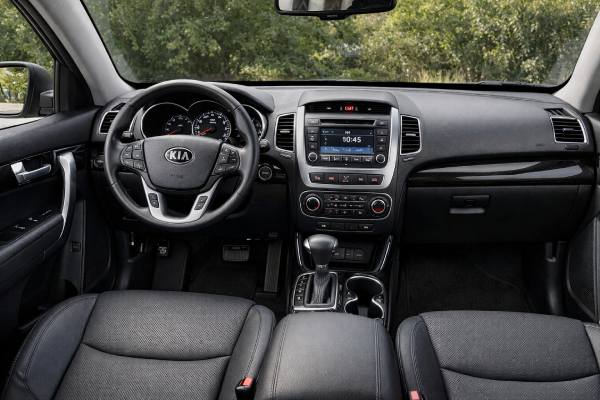

The 2013–2014 facelift Kia Sorento XM with the 2.2 CRDi diesel and AWD is built around a simple promise: move a family-sized crossover with the kind of effortlessness that gasoline four-cylinders rarely deliver. The D4HB diesel’s strong mid-range torque suits the Sorento’s weight, while the on-demand AWD system adds confident traction on wet roads, winter surfaces, and steep, loose driveways. The ownership picture is equally clear: this powertrain rewards correct diesel maintenance (low-ash oil for the DPF, clean fuel, and timely driveline fluid services), and it punishes neglect with expensive emissions and turbo-related repairs. The facelift years are also a sweet spot for refinement—usually quieter and better equipped than earlier XM builds—without the complexity of newer, ADAS-heavy generations. Buy it for long-distance comfort, load-carrying confidence, and real-world efficiency, then keep it healthy with disciplined service.
Top Highlights
- Strong low-rpm torque makes merging, hills, and full-load driving feel relaxed.
- AWD adds real winter-road confidence without a truck-style 4×4 weight penalty.
- Excellent long-distance efficiency when the DPF and EGR systems are kept healthy.
- Budget for diesel-specific upkeep: DPF, EGR, and boost hoses are common age-related costs.
- Service rear differential and AWD coupling fluids every 60,000–80,000 km (37,000–50,000 mi) (sooner for towing or frequent snow use).
Navigate this guide
- Sorento XM AWD diesel essentials
- Sorento XM AWD 2.2 CRDi spec tables
- Sorento XM AWD trims and safety gear
- Reliability diesel AWD problem map
- Maintenance schedule and buyer playbook
- Driving impressions and real economy
- How this Sorento compares to rivals
Sorento XM AWD diesel essentials
The facelift Sorento XM with the D4HB 2.2 CRDi and AWD works best when you think of it as a long-legged family crossover with light-duty “all-weather” capability rather than a rugged off-roader. The diesel’s advantage is obvious the first time you drive it loaded: the engine doesn’t need high rpm to make progress. With peak torque arriving early, you spend less time pushing the throttle and more time cruising in the middle gears. That makes this powertrain especially satisfying for highway commuting, hilly terrain, and family travel with a full cabin.
The AWD system in most XM Sorentos is an electronically controlled, on-demand setup. In normal driving it behaves like a front-drive vehicle (platform-dependent by market), then sends torque rearward when it detects slip or high demand. Some trims add a low-speed “lock” function that requests a more even split for slippery starts. The benefit is traction without constant drivetrain drag, but the system still depends on healthy fluids, correct tire sizes, and matching tread depths. Uneven tires force the coupling to work harder, creating heat and premature wear.
The facelift years (2013–2014) usually bring improvements that matter in ownership:
- Better cabin refinement (less wind noise, improved trim fit in many markets)
- More consistent feature packaging (cameras, sensors, infotainment options)
- Small calibration changes that can affect shifting feel and emissions behavior
Where owners can get caught out is diesel reality. The D4HB is efficient and strong, but it is also an emissions-era diesel with EGR (exhaust gas recirculation) and a DPF (diesel particulate filter). If the vehicle lives on short trips, the exhaust may not get hot enough to regenerate the DPF consistently. That pattern leads to rising soot load, frequent forced regenerations, and eventually warning lights and limp modes. The “right” usage pattern includes regular steady-speed drives and avoiding long idle warm-ups.
In short, this Sorento is at its best as a distance-covering, load-carrying crossover that sees proper maintenance. Buy based on service history and driveline condition, and it can be one of the most satisfying XM variants to live with.
Sorento XM AWD 2.2 CRDi spec tables
The tables below cover typical specifications for the 2013–2014 facelift Sorento XM AWD with the D4HB 2.2 CRDi around 197 hp. Exact values vary by market, emissions standard, and transmission, so confirm with your VIN documentation and under-hood labels.
Powertrain and efficiency
| Item | Typical specification |
|---|---|
| Code | D4HB |
| Engine layout and cylinders | Inline-4 (I-4), DOHC, 4 valves/cyl |
| Bore × stroke | ~85.4 × 96.0 mm (3.36 × 3.78 in) |
| Displacement | 2.2 L (2,199 cc) |
| Induction | Turbocharged (often VGT), intercooled |
| Fuel system | Common-rail direct injection (CRDi) |
| Compression ratio | ~16.0:1 (variant dependent) |
| Max power | 197 hp (145 kW) @ ~3,800 rpm |
| Max torque | ~421 Nm (310 lb-ft) @ ~1,800–2,500 rpm |
| Timing drive | Chain |
| Rated efficiency | ~6.5–7.5 L/100 km (36–31 mpg US / 43–38 mpg UK), test-cycle dependent |
| Real-world highway @ 120 km/h | often ~7.5–8.5 L/100 km (31–28 mpg US / 38–33 mpg UK), load dependent |
Transmission and driveline
| Item | Typical specification |
|---|---|
| Transmission | 6-speed automatic (common) or 6-speed manual (market-dependent) |
| Drive type | On-demand AWD |
| Differential | Open front and rear; traction control manages wheel slip |
Chassis and dimensions
| Item | Typical range |
|---|---|
| Suspension (front/rear) | MacPherson strut / multi-link |
| Steering | Rack and pinion; assist type varies by market |
| Brakes | 4-wheel disc (diameters vary by trim) |
| Wheels and tires (popular) | 235/65 R17 or 235/60 R18 (common) |
| Ground clearance | ~185 mm (7.3 in), market and wheels dependent |
| Length / width / height | ~4,685 / 1,885 / 1,685–1,735 mm (184.4 / 74.2 / 66.3–68.3 in) |
| Wheelbase | ~2,700 mm (106.3 in) |
| Turning circle (kerb-to-kerb) | ~11.0 m (36 ft) typical |
| Kerb weight | ~1,800–1,950 kg (3,970–4,300 lb), trim and seats dependent |
| GVWR | commonly ~2,510–2,600 kg (5,530–5,730 lb), market dependent |
| Fuel tank | often ~64 L (16.9 US gal / 14.1 UK gal) |
Performance and capability
| Item | Typical range |
|---|---|
| 0–100 km/h (0–62 mph) | ~9.0–10.0 s |
| Top speed | ~190–200 km/h (118–124 mph) |
| Towing capacity | often ~1,800–2,000 kg (3,970–4,410 lb) braked, market dependent |
| Payload | commonly ~500–650 kg (1,100–1,430 lb) |
Fluids and service capacities
| Item | Typical guidance (verify for your VIN) |
|---|---|
| Engine oil | Low-ash diesel oil for DPF-equipped engines; viscosity often 5W-30 |
| Engine oil capacity | ~6.5–7.0 L (6.9–7.4 US qt) with filter |
| Coolant | Long-life ethylene glycol; mix commonly 50/50 |
| Transmission/ATF | OEM-specified fluid for the 6-speed unit; do not mix types |
| Rear differential / AWD coupling | Gear oil spec varies; confirm correct viscosity and spec in official documents |
| A/C refrigerant | Type and charge vary by market; confirm under-hood label |
| Key torque specs | Use factory specs; common examples include wheel lugs ~90–110 Nm (66–81 lb-ft), but verify for your wheels |
Safety and driver assistance
Expect strong fundamentals: ABS, ESC, traction control, multiple airbags, and child-seat anchors. Depending on trim/market, you may also see blind-spot monitoring, rear cross-traffic alert, and parking sensors/camera. Treat any listing claims of modern AEB or lane-centering as something to verify by option code and physical inspection.
Sorento XM AWD trims and safety gear
Trim naming varies across regions, but the way equipment changes is consistent. For the AWD diesel Sorento XM facelift, the most meaningful differences are the ones that affect running costs and winter usability: wheel size, cooling capability, and the presence of driver-aid sensors that can be expensive to repair after minor collisions.
Trim and option themes you’ll typically see
- Entry trims usually cover the essentials: ESC, multiple airbags, basic infotainment, and smaller wheels. These often ride well and keep tire costs reasonable.
- Mid trims tend to add comfort features that matter in daily life: dual-zone climate control, heated seats, upgraded audio, and sometimes a rear camera.
- Upper trims often bundle larger wheels, upgraded lighting, more parking sensors, and convenience tech such as blind-spot monitoring. They feel more modern, but they also have more sensors and modules that can age, especially if the vehicle has seen bumper repairs.
Mechanical or functional differences to watch
Even if the engine and AWD are the same, a few options change how the car ages:
- Wheel and tire packages: Larger wheels reduce tire sidewall height. That can increase impact harshness and accelerate wear in bushings, ball joints, and wheel bearings—especially on rough roads. If durability is your priority, smaller wheels are often the smarter long-term choice.
- Tow preparation: In some markets, towing capability depends on factory cooling and wiring. A proper tow package can reduce thermal stress on the transmission during long climbs.
- Seating (5 vs 7): Seven-seat configurations add weight and change how often the rear suspension operates near its limits. Check rear dampers and rear spring sag on higher-mileage 7-seat examples.
- AWD controls: Some trims include a lock mode. It is useful on slippery surfaces, but it should not be used continuously on dry pavement, because it increases driveline heat and can cause binding.
Safety ratings and how to interpret them
Safety results can be confusing because different regions publish different test versions, and the Sorento XM spans multiple model years. The practical approach is:
- Use ratings as context, not as a single “safe/unsafe” stamp
- Verify the vehicle has the safety equipment you care about (curtain airbags, ESC)
- Prioritize tire quality and brake maintenance, because those influence real stopping distances more than trim badges
Safety systems and ADAS: ownership realities
On a 2013–2014 crossover, the most important active safety system is still ESC working correctly on good tires. If your Sorento has blind-spot monitoring or rear cross-traffic alert, remember these systems rely on sensors, wiring, and correct bumper alignment. After any rear-quarter impact, a sensor can become unreliable. During a test drive, you want “boring consistency”: no intermittent warnings, no random beeps, and no features that stop working after 20–30 minutes of driving.
Choosing the “best” trim is ultimately choosing the equipment that improves your day-to-day use without adding fragile complexity you do not want to maintain.
Reliability diesel AWD problem map
Reliability on the AWD diesel Sorento XM is less about the rotating assembly and more about the systems that support a modern turbo diesel: air path, fuel system, and emissions aftertreatment. The AWD system adds its own maintenance needs, but it’s usually predictable if fluids and tires are handled correctly.
Common issues (often preventable, low to medium cost)
- EGR and intake soot buildup: Symptoms include hesitation off-idle, rough idle, or reduced power. Root cause is soot mixing with oil vapor in the intake path. Remedy is cleaning the EGR/throttle/intake components and ensuring crankcase ventilation is functioning properly.
- DPF loading from short-trip use: Symptoms include frequent fan operation after shutdown, rising fuel consumption, warning lights, and eventually limp mode. Root cause is incomplete regeneration because the exhaust never stays hot long enough. Remedy is correcting usage (regular steady-speed drives), using correct low-ash oil, and fixing any faults that create excess soot (boost leaks, sticking EGR, faulty sensors).
- Boost hose and intercooler leaks: Symptoms are underboost codes, whistling, oily residue on hoses, and flat acceleration. Remedy is pressure testing the charge-air system before replacing expensive turbo parts.
Occasional issues (medium to high cost)
- Turbo actuator and control faults: Variable-geometry turbo control can become sticky with soot or develop actuator issues. Symptoms include inconsistent boost, overboost/underboost codes, or limp mode under load. Remedy may involve cleaning, actuator repair, or turbo replacement depending on diagnosis.
- Fuel system sensitivity: Common-rail diesels rely on clean fuel. A neglected fuel filter or water contamination can cause hard starts, rough running, and rail-pressure faults. Remedy is strict filter changes and addressing contamination early.
- Injector sealing problems: Symptoms include a ticking sound, diesel smell, and soot residue around injectors. Remedy is resealing with correct hardware and properly cleaned seats.
AWD driveline: what adds risk
- Tire mismatch stress: Different tire brands, different rolling diameters, or uneven tread depth can force the coupling to slip constantly, creating heat. Remedy is matching tires closely and replacing in sets when possible.
- Rear differential or coupling fluid neglect: Symptoms include humming, binding, or vibration under load. Remedy is timely fluid changes using the correct spec.
- Prop shaft and CV joint wear: High mileage and winter salt accelerate wear. Symptoms include vibration at speed, clunks on takeoff, or clicking in tight turns.
Recalls, TSBs, and software updates
The safest approach is procedural:
- Run an official VIN check for recalls and service actions
- Ask for invoices proving completion
- Treat “updated at a friend’s shop” claims cautiously unless you see documentation
Most expensive diesel failures have a “long warning phase.” A careful inspection, scan for stored codes, and a long test drive under load catch problems early.
Maintenance schedule and buyer playbook
A disciplined maintenance plan is the difference between a diesel Sorento that feels unstoppable and one that becomes a chain of emissions and driveline repairs. The goal is simple: keep soot and heat under control, keep fluids fresh, and catch small air or fuel issues before they become expensive.
Practical maintenance schedule
Use this as a conservative baseline for mixed driving. Short trips, towing, heavy city use, or cold climates justify shorter intervals.
- Engine oil and filter: every 10,000–12,000 km (6,000–7,500 mi) or 12 months. Always use the correct low-ash oil specification required for DPF-equipped diesels in your market.
- Fuel filter: every 30,000–40,000 km (19,000–25,000 mi) or 24 months. Shorten if fuel quality is uncertain.
- Engine air filter: inspect at every oil change; replace about 20,000–30,000 km (12,000–18,000 mi) in dusty conditions.
- Cabin air filter: every 15,000–20,000 km (9,000–12,000 mi) or annually.
- Coolant: if history is unknown, consider refreshing around 5 years / 100,000 km (60,000 mi), then follow official intervals.
- Automatic transmission fluid (if equipped): drain-and-fill around 60,000–80,000 km (40,000–50,000 mi); earlier for towing or mountain use.
- Rear differential and AWD coupling/transfer fluids: every 60,000–80,000 km (37,000–50,000 mi); sooner for frequent snow use or towing.
- Brake fluid: every 2 years, regardless of mileage.
- Brake inspection: check pad wear, rotor condition, and caliper slider pins at each tire rotation.
- Tire rotation and alignment: rotate every 10,000–12,000 km (6,000–7,500 mi); align yearly or after impacts.
- 12 V battery test: yearly; low voltage can trigger misleading warnings.
Fluids and torque values: decision-grade notes
- Oil spec matters more than viscosity debates. Using the wrong low-ash specification can shorten DPF life.
- ATF must match the transmission’s requirements. A “universal” fluid is rarely universal in practice.
- Driveline fluids are not optional on AWD. They are cheaper than couplings, bearings, and differentials.
- Torque values: wheel lugs often fall in the 90–110 Nm (66–81 lb-ft) range, but confirm for your wheels. Over-tightening drain plugs and filter housings is a common cause of leaks.
Buyer’s playbook: what to check before you commit
- Service history evidence: oil type/interval, fuel filter receipts, and any EGR/DPF work.
- Long test drive: include steady-speed cruising, hills, and a few strong accelerations to test boost control.
- DPF behavior clues: repeated warnings, frequent forced regenerations, or unexplained “recent DPF replacement” without invoices is a red flag.
- Boost and air path: look for oily residue around intercooler hoses and listen for abnormal whistle.
- AWD health: check for vibration under load and binding in tight turns; confirm matching tires.
- Scan for stored codes: stored faults tell the truth even when the dash is quiet.
- Undercarriage inspection: salt corrosion on brake lines, subframes, and suspension mounts matters more than minor paint defects.
A well-maintained diesel AWD Sorento rewards you with effortless torque and strong winter usability. A neglected one can turn emissions and driveline upkeep into a repeating bill.
Driving impressions and real economy
On the road, the AWD diesel Sorento XM facelift feels like a mature, stable long-distance vehicle. The steering usually prioritizes straight-line security over lively feedback, which suits highway travel and winter conditions. You sit high, visibility is good, and the chassis feels planted at speed. In town, the Sorento’s size is noticeable, but it remains easy to place once you’re used to the hood line and rear overhang—especially if equipped with parking sensors and a camera.
Ride, handling, and NVH
Ride quality is strongest on smaller wheel packages with taller tire sidewalls. Larger wheels can sharpen response, but they also transmit more impact harshness on broken pavement. The suspension is generally well matched to family use, but worn bushings and tired dampers can make the vehicle feel heavy and slightly delayed over repeated bumps. Common test-drive tells include:
- Clunks over potholes (sway bar links or control arm bushings)
- Steering shimmy under braking (rotor runout or worn suspension)
- A hum that changes with gentle steering input (wheel bearing wear)
Cabin noise at 100–120 km/h (60–75 mph) depends heavily on tires. Aggressive tread patterns can make the vehicle seem “louder and older” quickly. If quiet cruising matters, choose touring-oriented tires and keep pressures correct.
Powertrain character and AWD behavior
The D4HB’s torque makes the Sorento feel stronger than the horsepower figure suggests. Around town, it pulls from low rpm with minimal throttle. On the highway, overtakes often happen without drama because boost arrives early and stays consistent through the midrange. The 6-speed automatic (where fitted) usually upshifts early and holds gears calmly on gentle grades. If you feel repeated hunting on mild hills, it can indicate old ATF, an underboost issue, or simply an overloaded vehicle on tall tires.
AWD engagement is typically unobtrusive. In slick conditions you may feel a subtle change in traction as torque is sent rearward. If you feel shuddering, binding in tight turns, or persistent vibration under load, prioritize a driveline inspection.
Real-world fuel economy
A realistic picture for mixed driving looks like this:
- City: often 8.5–10.5 L/100 km (28–22 mpg US / 33–27 mpg UK) depending on traffic and warm-up time
- Highway at 120 km/h: often 7.5–8.5 L/100 km (31–28 mpg US / 38–33 mpg UK)
- Mixed: commonly 7.8–9.5 L/100 km (30–25 mpg US / 36–30 mpg UK)
Cold weather can raise consumption and increase DPF stress because the exhaust stays cooler. A simple habit helps: at least once a week, drive 20–30 minutes at steady speed with the engine fully warm. That supports regeneration cycles and reduces moisture buildup in the exhaust.
How this Sorento compares to rivals
The AWD diesel Sorento XM facelift competes best where torque, long-distance comfort, and winter usability matter more than cutting-edge driver aids. In many markets, rivals split into two camps: gasoline crossovers that are simpler but thirstier, and diesels that may be efficient but feel more stressed under load.
Versus Hyundai Santa Fe (closest relative)
In many regions, Santa Fe models share similar platform philosophy and diesel options. Differences often come down to trim packaging, ride tuning, and service history. Because these vehicles age based on maintenance discipline, the “best” choice is usually the one with documented oil specification, fuel filter changes, and evidence of driveline fluid service. A slightly higher-mileage example with excellent records can be the safer buy than a low-mileage short-trip vehicle with unclear history.
Versus Toyota Highlander and Honda Pilot (simplicity benchmarks)
Where available, these typically win on ownership predictability, especially in gasoline form. The Sorento diesel can return better long-distance economy and feel stronger in midrange pull, but it demands more attention to emissions-system health. If you want the lowest risk of DPF/EGR-related costs and you do mostly short trips, a gasoline rival may fit better even if it uses more fuel.
Versus Nissan X-Trail, Ford Kuga, and smaller crossovers
Smaller crossovers can be easier to park and may cost less to keep in tires and brakes. Under load, though, the Sorento often feels more stable and less strained—especially on highways and hills. If you regularly carry passengers, use the third row, or tow moderately, the Sorento’s size and diesel torque can feel like a meaningful upgrade.
Where the Sorento XM diesel AWD makes the most sense
This model is a strong fit for:
- Drivers who cover distance, travel on highways, or live in hilly regions
- Families who drive loaded and want confident winter traction
- Owners willing to follow correct diesel oil and fuel filter discipline
It is a weaker match for:
- Short-trip city usage with frequent cold starts and long idle warm-ups
- Buyers who cannot verify maintenance history
- Drivers who want modern AEB and lane-centering as core priorities
A well-maintained Sorento XM AWD diesel can deliver a rare blend of torque, refinement, and real-world efficiency. The key is buying one that has lived the right life—regular warm drives, clean fluids, and documented care.
References
- Owner’s Manuals and Documents 2026 (Owner’s Manual)
- Check for Recalls: Vehicle, Car Seat, Tire, Equipment 2026 (Recall Database)
- Kia Sorento – Euro NCAP Results 2009 2009 (Safety Rating)
- Kia Sorento | Safety Rating & Report | ANCAP 2013 (Safety Rating)
Disclaimer
This article is for informational purposes only and is not a substitute for professional inspection, diagnosis, or repair. Specifications, torque values, fluid types, capacities, intervals, and procedures vary by VIN, market, production date, emissions equipment, and trim. Always verify details against your official owner’s manual, service documentation, and dealer VIN records before performing maintenance or repairs.
If this guide was useful, please share it on Facebook, X/Twitter, or your preferred community channel to help support our work.