
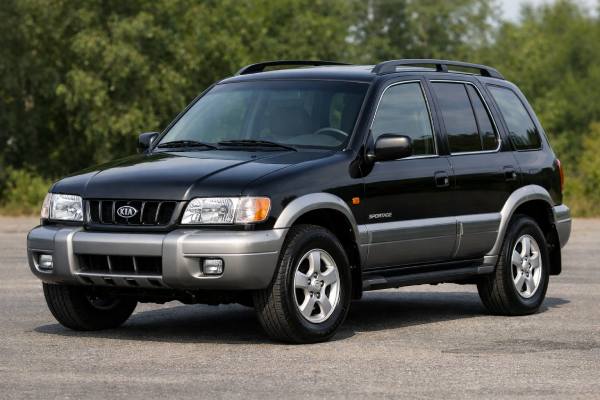
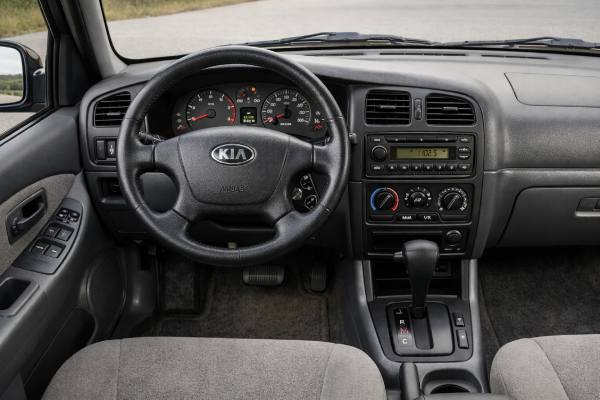
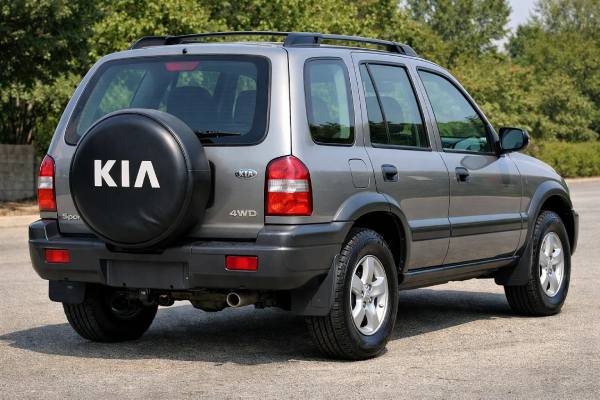
The 2000–2002 facelifted Kia Sportage AWD is one of those rare compact SUVs that still feels like a scaled-down truck. It uses a body-on-frame layout, a simple naturally aspirated 2.0-liter FE-DOHC four-cylinder, and a genuine low-range transfer case on four-wheel-drive versions. That gives it a very different character from soft-road crossovers of the same era. It is slower, noisier, and less polished, but it is also easier to understand mechanically and often cheaper to repair than newer SUVs with more electronics.
For owners and buyers, the big story is balance. A good Sportage can be a durable, honest utility vehicle with useful off-road hardware and straightforward servicing. A neglected one can become a rust, suspension, and cooling-system project very quickly. The facelift years are worth attention because they combine the mature version of the first-generation package with decent equipment, but condition matters far more than badge, trim, or mileage alone.
Owner Snapshot
- Strong body-on-frame design and low-range four-wheel-drive hardware give it more real off-road ability than many same-era compact SUVs.
- The FE-DOHC 2.0-liter engine is simple and parts support is still workable in many markets.
- Cabin refinement, fuel economy, and straight-line speed are modest by modern standards.
- Rust, overdue timing-belt service, and worn front suspension parts are the main ownership risks.
- A practical baseline service interval is every 9,000 miles or 12 months, with closer checks on older vehicles.
Navigate this guide
- Kia Sportage AWD profile
- Kia Sportage AWD specs
- Kia Sportage AWD trims and safety
- Reliability and common faults
- Maintenance and buying advice
- Real-world driving and economy
- How it stacks up to rivals
Kia Sportage AWD profile
The facelifted first-generation Kia Sportage sits in a useful niche. It is compact on the outside, easy to place on narrow roads, and simple in concept, yet it offers the sort of hard-point engineering that later compact SUVs moved away from. The key elements are the boxed ladder frame, double-wishbone front suspension, live rear axle, and part-time four-wheel-drive system with a two-speed transfer case. In daily use, that means the Sportage behaves more like a light-duty 4×4 than a crossover, even if many classified ads describe it as AWD.
That distinction matters. A modern all-wheel-drive crossover usually runs full-time on-road with electronic torque distribution. The facelift Sportage instead uses a more traditional setup intended to send drive where needed when surfaces get loose. That gives it genuine traction advantages on mud, rough tracks, snow, and steep loose climbs, but it also means owners need to understand tyre matching, driveline wind-up, and proper use of low range.
The FE-DOHC 2.0-liter engine is another part of the model’s appeal. It is not a high-output unit, but it is a conventional naturally aspirated four-cylinder with multi-point fuel injection and no turbocharger, direct injection, or complex hybrid hardware. In most factory and catalog references, output lands at roughly 126 hp or 128 PS, though many sales listings round that figure to 130 hp. In practice, this is not a quick SUV. It is adequate rather than eager, and the manual gearbox usually suits the engine better than the automatic.
Ownership appeal comes from honesty more than polish. The Sportage has upright visibility, practical load space, a spare mounted outside the cabin, and enough ground clearance to be useful away from tarmac. The facelift years also benefited from a more settled equipment mix in many markets. Air conditioning, power accessories, split-fold rear seating, alloy wheels, and airbags were commonly available, especially on better-equipped five-door versions.
The trade-off is age. By now, every 2000–2002 Sportage is an old vehicle, and old SUVs fail by condition rather than brochure promise. Structural corrosion, tired suspension joints, brittle cooling parts, overdue timing-belt work, and neglected four-wheel-drive servicing matter far more than trim names. A clean, documented example can still be a genuinely useful tool. A cheap but rusty one can easily cost more to sort than it is worth. That is why the facelift Sportage works best for buyers who value mechanical simplicity, light off-road use, and low purchase cost more than speed, comfort, or modern safety technology.
Kia Sportage AWD specs
For this generation, exact figures vary by market, body style, transmission, and homologation standard. The table below focuses on the facelifted 2000–2002 five-door AWD or 4WD wagon with the FE-DOHC 2.0-liter petrol engine, using the most consistent public data for that configuration. Where regional variation is common, that is noted clearly.
| Category | Specification |
|---|---|
| Code | FE / FED |
| Engine layout and cylinders | Inline-4, 4 cylinders, DOHC, 4 valves per cylinder |
| Bore × stroke | 86.0 × 86.0 mm (3.39 × 3.39 in) |
| Displacement | 2.0 L (1,998 cc) |
| Induction | Naturally aspirated |
| Fuel system | Multi-point fuel injection |
| Compression ratio | 9.2:1 |
| Max power | about 126–130 hp (94 kW) @ 5,300 rpm |
| Max torque | 175 Nm (129 lb-ft) @ 4,700 rpm |
| Timing drive | Belt |
| Transmission and driveline | Specification |
|---|---|
| Transmission | 5-speed manual or 4-speed automatic |
| Automatic transmission code | Commonly catalogued as Mazda A44DE / Aisin Warner AW03-72LE on some markets |
| Drive type | Part-time 4WD rather than modern full-time AWD |
| Transfer case | 2-speed, low-range equipped |
| Differential | Open differential layout in standard form |
| Chassis and dimensions | Specification |
|---|---|
| Suspension front | Double wishbone |
| Suspension rear | Live axle |
| Brakes | Front vented discs, rear drums |
| Common tyre size | 205/70 R15 or P205/75R15 depending market |
| Ground clearance | about 195 mm (7.7 in) |
| Length | about 4,325–4,435 mm (170.3–174.6 in), market dependent |
| Width | about 1,730–1,764 mm (68.1–69.4 in), market dependent |
| Height | about 1,650 mm (65.0 in) |
| Wheelbase | 2,650 mm (104.3 in) |
| Turning circle | about 11.2 m (36.7 ft) |
| Kerb weight | about 1,575–1,580 kg (3,472–3,483 lb) |
| GVWR | about 2,060 kg (4,542 lb) |
| Fuel tank | about 60–65 L depending market |
| Cargo volume | about 485–1,320 L, depending measurement method |
| Performance and efficiency | Specification |
|---|---|
| 0–100 km/h | roughly 15–16 seconds |
| Top speed | about 163–172 km/h (101–107 mph), market and gearbox dependent |
| Rated efficiency | about 12.4–13.1 L/100 km combined for 4WD models |
| EPA equivalent | about 18–19 mpg US combined, 21–22.8 mpg UK combined |
| Highway at 120 km/h | typically around 11.2–11.8 L/100 km if healthy and lightly loaded |
| Towing capacity | up to about 1,800 kg (3,968 lb) where permitted |
| Payload | about 480 kg (1,058 lb) |
| Fluids and service items | Specification |
|---|---|
| Engine oil | API SG; 10W-30 commonly listed |
| Engine oil capacity | 4.2 L (4.4 US qt) |
| Brake fluid | DOT-rated fluid per market manual |
| Coolant | Verify by VIN and market manual before refill |
| Transfer case and differential oils | Verify by gearbox and market manual before refill |
| Key torque specs | Always confirm against official service documentation for VIN-specific work |
A few details deserve context. First, the power figure. Many listings say 130 hp, but factory and technical catalog data often show 126 hp or 128 PS. Those numbers describe the same engine in slightly different rating language, so buyers should not treat that gap as a meaningful performance difference. Second, “AWD” is best read as shorthand. Mechanically, this Sportage is closer to an old-school part-time 4WD vehicle than to a later electronically managed AWD crossover. Third, public safety-score data for this exact facelifted variant is limited. Equipment is easier to verify than formal crash ratings, so airbags, ABS fitment, structural condition, and recall completion matter more than star-count comparisons.
Kia Sportage AWD trims and safety
Trim structure on the facelift Sportage depends heavily on market, but the broad picture is consistent. Kia sold the first-generation Sportage in both five-door wagon and two-door convertible forms, with 4×2 and 4×4 driveline options in several regions. For most buyers looking at the 2000–2002 facelift today, the relevant version is the five-door wagon with four-wheel drive, since that is the most practical and the easiest to live with.
On many five-door models, standard equipment was decent for the period. Better-equipped examples commonly include air conditioning, alloy wheels, privacy glass, power windows, power door locks, electric mirrors, cloth upholstery, a split-folding rear seat, roof rails, and an audio unit with multiple speakers. Some markets also offered appearance packages, cruise control, and minor interior trim upgrades. The important difference is not usually cosmetic. It is functional.
Four-wheel-drive versions add the hardware that gives the Sportage its real identity: part-time 4WD, shift-on-the-move engagement features on some trims, and a two-speed transfer case. That is the equipment gap buyers should care about most. A neat 4×2 Sportage can still be useful, but it loses the low-range capability and much of the model’s character. Automatic transmission examples are easier in traffic, though the manual is generally the better fit for a 130-hp class engine and often feels a little more durable over the long term.
Wheel and tyre packages were simple by modern standards. Fifteen-inch wheels dominate, with tyre sizes around 205-section depending on market. There were no major factory suspension personalities to sort through, but trim and market could affect ABS availability, wheel design, roof-rack specification, interior materials, and body cladding. That means a visual inspection still matters. Two apparently identical Sportages can have very different equipment levels.
Safety equipment is period-correct rather than modern. Depending on market and trim, the facelift Sportage offered dual front airbags, side-door impact beams, a driver knee airbag on some versions, child-seat anchoring provisions, and optional four-wheel ABS on certain 4×4 models. Electronic stability control, side curtain airbags, lane systems, adaptive cruise, automatic emergency braking, blind-spot monitoring, and all other modern driver-assistance features are absent. There is no real ADAS suite to discuss here.
That also shapes how safety ratings should be read. Public crash-test coverage for the exact 2000–2002 facelift AWD model is not as broad or as easy to verify as it is for newer vehicles. For that reason, the smarter safety approach is practical rather than theoretical. Check whether the car has airbags present and intact, whether ABS is fitted and working, whether seat belts latch correctly, whether recall work was completed, and whether the structure is free from serious corrosion. On an older Sportage, actual condition is a larger safety factor than trim level alone. A rust-free example with fully working restraint systems is a far better buy than a nicer-looking but structurally tired one.
Reliability and common faults
The facelift Sportage is mechanically simple enough to be dependable, but only when routine care happened on time. Its faults are mostly old-vehicle faults: corrosion, overdue belt service, worn front-end parts, cooling issues, and neglected driveline maintenance. None of that is unusual for a body-on-frame compact SUV from this era, but it means a buyer should judge the vehicle by maintenance history and underside condition first.
The most common and most serious issue is rust. Severity ranges from low-cost surface corrosion to structural failure. Common hot spots include the frame, body mounts, sills, floor edges, rear arches, rear suspension mounting areas, brake and fuel lines, and the area around the fuel tank and straps. Symptoms include flaky scale, swelling seams, damp carpets, fuel smells, MOT or inspection advisories, and poor jack-point integrity. The remedy depends on severity. Surface treatment is manageable; structural rot is often not worth chasing on a cheap example.
Timing-belt neglect is the next big risk. The FE-DOHC engine uses a belt, not a chain, so there is no chain-stretch narrative to hide behind. If belt history is missing, assume the job is due. The typical symptom is not always noise. Often the clue is simply missing paperwork. The practical remedy is a full belt service with tensioners, idlers, and preferably the water pump at the same time.
Front suspension wear is also common, especially on rough roads. Upper ball joints, bushes, and steering-related wear points can cause vague tracking, clunks, tyre-edge wear, and looseness under braking. Because the Sportage uses a more truck-like suspension concept than a crossover, tired components make a noticeable difference to confidence and tyre life. Worn wheel bearings and old dampers are also typical on higher-mileage vehicles.
Cooling-system age issues sit in the occasional-to-common band. Watch for fan faults, tired radiators, brittle hoses, thermostat trouble, and overheating under load. On 2002 models in particular, a cooling-fan recall campaign is one of the notable official service actions. Buyers should also know that front seat belt buckle recall work affected late-1990s to early-2000s Sportage production in some markets.
A practical fault map looks like this:
- Common, high severity: structural rust, brake-line corrosion, fuel-tank area corrosion.
- Common, medium severity: overdue timing belt, worn upper ball joints, steering play.
- Occasional, medium severity: overheating, fan-control faults, transfer-case or hub engagement issues.
- Occasional, low to medium severity: oil leaks, tired door electrics, dragging rear brakes, seized parking-brake cables.
- Rare, high severity: severe accident damage hidden under cosmetic restoration.
The good news is that the Sportage does not usually fail in mysterious ways. Symptoms normally point to physical wear. The weak point is not complexity; it is neglect. Before buying, ask for full service records, proof of major belt work, evidence of recent fluid changes, recall completion records, and an underside inspection. A seller who can show those items is selling a different class of Sportage from one offering only a cheap price and a fresh wash.
Maintenance and buying advice
The smartest way to own a facelift Sportage is to treat it like an aging utility vehicle, not a disposable old SUV. Official service-interval material for this generation points to a 9,000-mile or 12-month baseline, and that is a useful planning number. In real ownership, older examples that do short trips, sit outside, tow, or see winter roads benefit from closer attention.
A practical maintenance plan looks like this:
| Item | Practical interval |
|---|---|
| Engine oil and filter | Every 9,000 miles or 12 months; shorten on hard use |
| Engine air filter | Inspect every service; replace around 15,000–30,000 miles as needed |
| Cabin filter | Check if fitted; replace when airflow drops or annually in dusty use |
| Coolant | Refresh by age if history is unknown; verify spec by manual |
| Spark plugs | About 30,000–60,000 miles depending on plug type |
| Timing belt kit | Around 60,000 miles or 5 years if no VIN-specific proof says otherwise |
| Auxiliary belts and hoses | Inspect every service; replace on cracks, glazing, swelling, or noise |
| Manual gearbox oil | Check condition and leaks; renew if history is unknown |
| Automatic transmission fluid | Inspect condition carefully; service preventively on unknown-history cars |
| Transfer case and differential oils | Renew regularly, especially after towing, off-road use, or water exposure |
| Brake fluid | Every 2 years |
| Pads, discs, drums, and lines | Inspect at every service |
| Tyre rotation | Every 6,000–8,000 miles |
| Alignment check | Annually or after suspension work |
| 12 V battery test | Yearly after year 4 |
The one fluid figure owners often want first is engine oil. Public Kia service material commonly lists API SG 10W-30 with a 4.2-liter fill. Everything else should be checked against the vehicle’s market documentation because this generation saw regional variation in gearboxes, emissions equipment, and ancillary parts.
For buyers, the inspection checklist is straightforward:
- Inspect the frame, sills, floor, rear arches, body mounts, brake lines, and fuel-tank area with the car raised.
- Ask for timing-belt proof, not just a verbal claim.
- Check for cold-start smoke, coolant smell, overheating history, and stable idle.
- Test four-wheel-drive engagement and low range on an appropriate surface.
- Listen for front-end knocks and feel for steering play.
- Confirm that all seat belts latch properly and airbags have not been tampered with.
- Check for mismatched tyres, which can stress part-time four-wheel-drive hardware.
- Look for signs of poor repairs, especially under fresh underseal.
The best facelift Sportage to buy is usually a rust-free five-door 4WD with manual transmission, documented timing-belt service, working low range, and clean cooling-system history. The ones to avoid are structurally rusty trucks, automatic examples with neglected fluid history, and any car wearing fresh cosmetic paint over an ugly underside. Long term, durability is decent when major service is done on time. The body and chassis usually determine whether the vehicle is worth saving.
Real-world driving and economy
On the road, the facelift Sportage feels exactly like what it is: a compact ladder-frame SUV designed before crossovers softened the class. That brings both charm and compromise. At city speeds, the upright view out, compact footprint, and simple controls make it easy to place. On broken roads, the suspension has decent tolerance for potholes and rough surfaces, and the vehicle’s ruggedness comes through clearly. It does not feel delicate.
As speed rises, the trade-offs appear. Steering is usually slower and less talkative than in a Honda CR-V or Toyota RAV4 of similar age. Body roll is noticeable, and the rear axle reminds you that this is not a unibody family wagon. Straight-line stability is acceptable in a healthy example, but worn bushes, poor alignment, or uneven tyres make the Sportage feel loose more quickly than more road-focused rivals.
The FE-DOHC 2.0-liter engine is smooth enough, but it is not especially torquey at very low rpm. It likes to work through the mid-range, and the manual gearbox helps keep it in the right place. The automatic suits relaxed driving, yet it makes the Sportage feel slower and can blunt overtaking performance. Expect calm, planned progress rather than effortless thrust. A 0–100 km/h time in the mid-15-second range tells the story well enough.
Noise, vibration, and harshness are average for the era and poor by modern standards. Engine note is not unpleasant, but wind and tyre noise become obvious at motorway speeds. The reward is traction and durability. On muddy tracks, wet grass, snow, and rutted lanes, the Sportage’s low range and truck-based layout let it keep moving where softer compact SUVs start to run out of confidence. Open differentials limit ultimate crawling ability, but the hardware is still genuinely useful.
Real-world fuel use is one of the weaker points. Official four-wheel-drive figures land around 18–19 mpg US combined, which translates to roughly 12.4–13.1 L/100 km. Highway economy can sit around 11.2–11.8 L/100 km if the engine is healthy, the tyres are correct, and speeds are moderate. In city use, winter conditions, or full-load work, it is easy to see consumption move into the 14–16 L/100 km range. That is the price of older gearing, boxy aerodynamics, and body-on-frame mass.
Tyres matter more than many owners think. A fresh matched set improves steering, braking, wet-road confidence, and four-wheel-drive behaviour noticeably. For moderate towing or full-load use, the Sportage remains stable enough if suspension and brakes are in good order, but expect a clear fuel-use penalty and slower grade performance. In simple terms, it drives like a small old-school 4×4: honest, usable, and more capable off tarmac than its modest power output suggests.
How it stacks up to rivals
The facelift Kia Sportage makes most sense when compared with compact SUVs that split into two camps. One camp includes road-biased unibody rivals like the first-generation Honda CR-V and Toyota RAV4. The other includes more traditional small 4x4s like the Suzuki Grand Vitara. The Sportage lands closer to the second group.
Against a CR-V or RAV4, the Sportage loses on refinement, fuel economy, steering feel, and usually long-term body durability. Those Japanese rivals are easier daily drivers and typically feel more car-like. They also tend to hold together better cosmetically. If your use is mostly commuting, family road trips, and wet-weather driving on paved roads, they are usually the better answer.
Against a Suzuki Grand Vitara, the Kia is more competitive. Both offer genuine utility appeal and more traditional SUV engineering than crossover buyers might expect. The Kia’s main strength is value. It often costs less to buy, and the FE-DOHC engine is simple to understand. The Suzuki often wins on packaging neatness and reputation, but the Sportage can still be the smarter purchase if condition and service history are clearly better.
Here is the quick rival picture:
- Choose the Sportage if you want low-range capability, body-on-frame simplicity, low entry cost, and do not mind modest performance.
- Choose a CR-V if you want better road manners, easier daily use, and a more polished cabin feel.
- Choose a RAV4 if you want the most balanced all-rounder with lighter, more efficient on-road behaviour.
- Choose a Grand Vitara if you want a similarly traditional small 4×4 with strong off-road credibility.
The facelift Sportage’s strongest argument is that it gives buyers a real utility SUV experience in a compact package. Its weakest argument is that it asks more of the owner. You have to watch rust closely, stay ahead of belt service, inspect the underbody properly, and accept economy that is mediocre even for its era.
That makes the verdict easy to frame. The 2000–2002 Sportage AWD is not the best compact SUV of its period for everyone. It is, however, a compelling choice for buyers who want something rugged, understandable, and inexpensive to get into, especially if they need low-range traction rather than just the image of an SUV. Buy the cleanest one you can find, verify recall and service history, and it can still deliver honest value. Buy on price alone, and it can become a restoration project in disguise.
References
- Engine Oil Grades and Capacities – Kia 2024 (Service Guide)
- 7.2 Kia Service Intervals V25.12.xlsx 2025 (Service Intervals)
- Gas Mileage of 2001 Kia Sportage 2026 (Fuel Economy Database)
- Check for Recalls: Vehicle, Car Seat, Tire, Equipment | NHTSA 2026 (Recall Database)
- 2002MY Kia Sportage Cooling Fan 2007 (Recall)
Disclaimer
This article is for informational purposes only and is not a substitute for professional diagnosis, repair, or safety inspection. Specifications, torque values, service intervals, procedures, and equipment can vary by VIN, market, transmission, body style, and production date, so always verify details against the correct official service documentation for your vehicle.
If this guide helped you, please consider sharing it on Facebook, X, or another platform to support our work.