

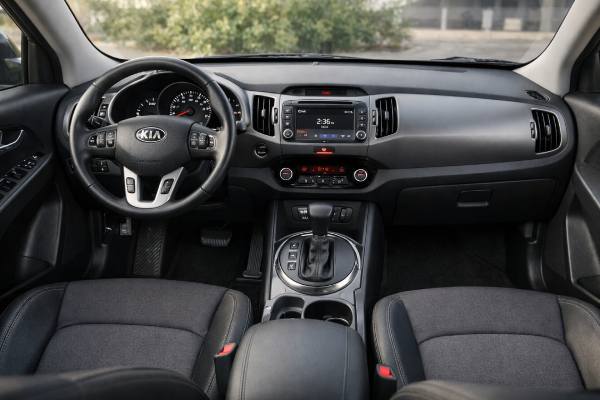
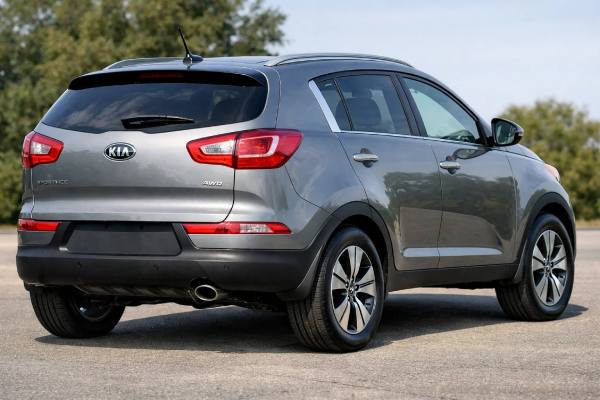
The 2010–2013 Kia Sportage SL with the 2.0-litre D4HA diesel in 184 hp front-wheel-drive form is one of the most convincing early Sportage variants for drivers who mainly use paved roads. It keeps the stronger torque-rich diesel, the better body structure, and the more modern cabin of the SL generation, but it avoids the extra weight, tyre sensitivity, and driveline maintenance of AWD. That combination gives this version a clear identity. It is not an off-road model, and it does not pretend to be one. Instead, it is a fast-enough, efficient-enough, practical compact SUV that suits motorway driving, family duty, and moderate towing very well. The best examples still feel mature today. The weak ones usually fail for predictable reasons: short-trip diesel use, skipped oil changes, DPF trouble, and general neglect. Buy with a calm, mechanical mindset and this Sportage still makes a lot of sense.
Quick Specs and Notes
- The 184 hp diesel gives the front-drive SL stronger overtaking power and easier motorway cruising than the petrol versions.
- FWD reduces weight, running costs, and driveline complexity compared with the AWD diesel.
- The SL platform brought a major step forward in crash protection, cabin quality, and everyday refinement over the older KM model.
- Repeated short trips can trigger DPF and EGR trouble, so usage pattern matters as much as mileage.
- A practical oil-service target is every 10,000–15,000 km or 12 months, with shorter intervals for towing, cold starts, or urban stop-start use.
On this page
- Kia Sportage SL diesel snapshot
- Kia Sportage SL spec tables
- Kia Sportage SL trims and safeguards
- Known weak points and recalls
- Service roadmap and buyer checks
- Front-drive performance and economy
- FWD Sportage versus peers
Kia Sportage SL diesel snapshot
The third-generation SL Sportage was the moment Kia’s compact SUV became a truly mainstream choice rather than a budget alternative. The design looked sharper, the body was stiffer, the cabin felt more mature, and the overall chassis balance was far closer to the class leaders. In front-wheel-drive 2.0 diesel form, the package became even more focused. This is arguably the most road-biased version of the early SL diesel range, and for many buyers that is exactly the point.
The D4HA 2.0-litre diesel belongs to Kia and Hyundai’s R-family. In this 184 hp tune, it gives the Sportage the kind of torque curve that makes a compact SUV feel easy to use. Power arrives without drama, but the real strength is the mid-range. It pulls cleanly at motorway speeds, does not need constant downshifts on hills, and feels more confident under load than the smaller diesels or the naturally aspirated petrol engines. For family use or longer-distance driving, that matters more than headline acceleration numbers.
Front-wheel drive changes the character in useful ways. It trims weight, slightly improves fuel use, and removes the rear differential, transfer hardware, and AWD coupling from the maintenance picture. That does not make the car exciting, but it does make it efficient and straightforward. If you spend almost all your time on tarmac, the FWD version is usually the rational choice. You give up the extra winter traction of AWD, but you gain simpler long-term ownership and lower tyre sensitivity.
The rest of the platform supports that road-focused identity. The SL rides on a steel unibody with independent suspension front and rear, electric power steering, and a cabin layout that still feels clear and usable. It is also much safer than the older Sportage generations were. That matters because this model was sold at a time when compact SUVs started being judged more seriously on crash performance and family practicality, not just styling and ground clearance.
What makes the 184 hp FWD diesel especially interesting today is that it avoids two common compromises. It is stronger and more relaxed than the lower-output diesel, yet it is lighter and less mechanically complex than the AWD version. That gives it a sweet-spot reputation among buyers who want the strongest diesel without the extra driveline. The condition caveat is simple, though: diesel hardware rewards correct use. A motorway-driven Sportage with good service history can age well. A short-trip city diesel with weak maintenance can quickly become a list of soot, oil, and warning-light problems. This is a good version, but it is not a neglect-proof one.
Kia Sportage SL spec tables
The figures below focus on the 2010–2013 Kia Sportage SL in front-wheel-drive form with the 2.0-litre D4HA diesel rated at 184 hp. This version was primarily documented in European-style markets, often with a 6-speed manual gearbox. Minor differences by trim, wheel package, and local emissions calibration are normal.
| Powertrain and efficiency | Data |
|---|---|
| Code | D4HA |
| Engine layout and cylinders | Inline-4, 4 cylinders, DOHC, 4 valves per cylinder |
| Bore × stroke | 84.0 × 90.0 mm (3.31 × 3.54 in) |
| Displacement | 2.0 L (1,995 cc) |
| Induction | Turbocharged, variable-geometry turbo |
| Fuel system | Common-rail direct injection |
| Compression ratio | About 16.5:1 |
| Max power | 184 hp (135 kW) @ 4,000 rpm |
| Max torque | 392 Nm (289 lb-ft) @ 1,800–2,500 rpm |
| Timing drive | Chain |
| Transmission | 6-speed manual in most period FWD specifications |
| Drive type | FWD |
| Differential | Open front differential |
| Rated efficiency | Typically around 5.0–5.2 L/100 km combined (47.0–45.2 mpg US / 56.5–54.3 mpg UK) |
| Real-world highway @ 120 km/h | Usually about 6.0–6.8 L/100 km (39.2–34.6 mpg US / 47.1–41.5 mpg UK) |
| Chassis and dimensions | Data |
|---|---|
| Suspension, front / rear | MacPherson strut / multi-link independent |
| Steering | Electric power-assisted rack-and-pinion |
| Brakes | Front ventilated discs, rear solid discs |
| Wheels and tyres | Common sizes 215/70 R16, 225/60 R17, or 235/55 R18 |
| Ground clearance | About 172 mm (6.8 in) |
| Length / width / height | 4,440 / 1,855 / 1,635 mm (174.8 / 73.0 / 64.4 in) |
| Height with roof rails | 1,645 mm (64.8 in) |
| Wheelbase | 2,640 mm (103.9 in) |
| Turning circle | About 10.6 m (34.8 ft) |
| Kerb weight | Typically in the mid-1,500 kg range, depending on trim |
| GVWR | About 2,235 kg (4,927 lb), market dependent |
| Fuel tank | 55–58 L depending on market literature |
| Cargo volume | About 491–503 L seats up and 1,480–1,492 L seats folded, depending on spare-wheel package |
| Performance and capability | Data |
|---|---|
| 0–100 km/h (0–62 mph) | Commonly published around 9.8–10.3 s |
| Top speed | Commonly published around 194–200 km/h (121–124 mph) |
| Braking distance | No single open factory figure consistently published |
| Towing capacity | 750 kg (1,653 lb) unbraked / up to 2,000 kg (4,409 lb) braked |
| Tow-ball load | 80 kg (176 lb) |
| Payload | Roughly 500–600 kg, trim dependent |
| Fluids and service capacities | Data |
|---|---|
| Engine oil | ACEA C3 with DPF, commonly 5W-30; 8.0 L (8.5 US qt) |
| Coolant | Ethylene-glycol based coolant for aluminum systems; about 8.4–8.5 L |
| Manual transmission fluid | API GL-4 SAE 75W/85; about 1.8–1.9 L |
| Automatic transmission fluid | Not typical for this exact FWD 184 hp baseline in period European specs |
| Rear differential / transfer case | Not applicable on FWD |
| Brake and clutch fluid | DOT 3 or DOT 4; about 0.7–0.8 L |
| A/C refrigerant | R-134a |
| Wheel nut torque | 88–107 Nm (65–79 lb-ft) |
| Safety and driver assistance | Data |
|---|---|
| Euro NCAP | 5 stars; adult 93%, child 86%, pedestrian 49%, safety assist 86% |
| IIHS | Strong original test-era performance for the generation, including 2011 Top Safety Pick status in North America |
| Headlight rating | No later-style IIHS headlight rating published |
| ADAS suite | No AEB, ACC, lane-centering, blind-spot monitoring, or rear cross-traffic alert |
| Stability systems | ABS and ESC in major markets |
This is a strong paper spec for an early-2010s compact SUV. The important distinction is not peak horsepower alone, but how much useful torque and towing ability this version adds without the cost and complexity of AWD.
Kia Sportage SL trims and safeguards
Trim naming changed from one country to another, but the 184 hp front-drive diesel generally did not sit at the bottom of the SL range. In many European-style markets it was positioned as an upper diesel option for buyers who wanted performance and economy without paying for AWD. That often meant a better standard equipment mix than the lower-power diesels or base petrol models.
The practical takeaway is that many surviving FWD 184 cars come with a decent level of equipment. Alloy wheels, climate control, cruise control, parking sensors, upgraded cloth or part-leather trim, and better audio systems were all common depending on market and grade. Some cars also received panoramic roofs, reversing cameras, smart-key entry, or larger factory wheels. Those items help showroom appeal, but they should not dominate the buying decision. Mechanical condition still matters more than trim hierarchy.
For this version, the drivetrain itself is the major differentiator. The 184 hp diesel and front-wheel drive create a different ownership case from the AWD diesel. You lose the extra low-grip traction, but you gain lower mass, slightly better efficiency, less tyre sensitivity, and fewer fluid-filled driveline components to maintain. For drivers in milder climates or those who simply do not need AWD, that is a fair trade. The FWD car is also often the cleaner handler on dry roads because it carries less driveline drag and less rear-axle complexity.
Wheel choice matters more than many buyers think. Sixteen-inch cars usually ride best and cost less to maintain. Seventeen-inch versions often strike the best overall balance. Eighteen-inch cars can look more expensive, but they also bring higher tyre bills and a slightly busier ride on poor surfaces. On an older diesel crossover, that matters because worn suspension bushes and hard aftermarket tyres can quickly make a good chassis feel worse than it is.
Safety was a real SL strength when the model launched. Euro NCAP awarded the Sportage five stars in 2010, with particularly strong adult and child scores for the class. IIHS also rated the redesigned generation strongly enough for Top Safety Pick recognition in the original test era. That tells you this was a serious step forward for Kia. Typical equipment included front airbags, front side airbags, curtain airbags, ABS, ESC, child-seat anchors, and hill-start assistance. Some markets also offered downhill brake control and parking assistance systems.
The limitation is modernity, not basic design. This generation predates the widespread adoption of autonomous emergency braking, adaptive cruise control, lane-centering, and blind-spot warning. So, on a used example, safety depends heavily on condition. A Sportage with good tyres, proper brake work, healthy dampers, and no crash shortcuts is a much better buy than a higher-trim car with warning lights and cosmetic upgrades. In this class and age bracket, maintenance is part of the safety equipment.
Known weak points and recalls
The 184 hp FWD diesel is fundamentally a strong powertrain, but it is service-sensitive. That means most major ownership problems are not mysteries. They come from predictable patterns: short-trip use, long oil intervals, poor fuel, delayed filter changes, and drivers ignoring early warnings. The car itself is usually better than the maintenance it receives.
The most common diesel-specific problem is DPF loading. This engine wants distance and heat. If it spends its life on short urban trips, the particulate filter may struggle to regenerate properly. The signs are familiar: higher fuel use, a warning light, limp-home behavior, rougher response, and sometimes a cooling fan that seems to run too often. Kia’s own manual describes a sustained drive at more than 60 km/h, with the engine around 1,500–2,000 rpm for roughly 25 minutes, as the basic regeneration-support routine when the warning remains active. If that does not clear the warning, the fix is diagnosis, not more denial.
The next usual issue area is the EGR and intake side. Soot buildup, sticky valves, tired boost hoses, and dirty intake components can all cause flat response, smoke, or recurring engine-management warnings. On a fifteen-year-old diesel, a “low power” complaint can easily be a combination of two or three smaller problems rather than one failed part. That is why a proper diagnostic approach matters.
Timing-chain wear is another point to watch. The D4HA does not have a belt replacement interval, but that does not make the timing system maintenance-free. Long oil intervals, low oil level, and cheap oil can accelerate tensioner, guide, and chain wear. Cold-start rattle that lasts too long, timing-correlation faults, or a rough idle on a neglected engine should not be dismissed as normal diesel noise.
Beyond the engine, this FWD version has a useful advantage over AWD: it avoids rear differential and transfer-case failures entirely. That simplifies long-term ownership. But you still need to watch front-end wear. Driveshaft joints, wheel bearings, lower-arm bushes, anti-roll-bar links, front brake hardware, and engine mounts are all normal age-related items now. Rear brake corrosion can also appear on lightly used cars, especially if they spend most of their time on gentle motorway runs.
Recall history matters. The wider 2010–2013 Sportage range has been included in HECU fire-risk recall action in some markets, and completion should be verified by VIN rather than assumed. Stop-lamp-switch campaign history on early SLs also matters because intermittent brake-light, cruise-control, and ESC-light complaints can trace back there. For a used buyer, that means asking for more than a service book. You want recall completion records, recent scan reports if available, and believable evidence that the car’s warning lights have not simply been cleared for sale.
Service roadmap and buyer checks
Owning the 184 hp diesel Sportage well is mostly about preventive discipline. The car does not demand exotic work, but it wants the right work done at the right time. That starts with oil quality and ends with honest inspection before parts fail expensively. If you treat it like a serious diesel rather than a cheap used SUV, it usually responds well.
A practical maintenance plan for real ownership looks like this:
| Item | Practical interval |
|---|---|
| Engine oil and filter | Every 10,000–15,000 km or 12 months |
| Engine air filter | Inspect every service; replace about every 20,000–30,000 km |
| Cabin air filter | Every 12 months or sooner if airflow drops |
| Fuel filter | Replace on schedule and sooner if poor fuel or water contamination is suspected |
| Timing chain | No fixed interval; inspect for rattle, stretch symptoms, and timing faults |
| Coolant | Refresh by age and condition, not only by appearance |
| Manual gearbox oil | About every 60,000 km in real-world use |
| Brake fluid | Every 2 years |
| Brake pads and rotors inspection | Every service |
| Tyre rotation | About every 10,000–12,000 km |
| Alignment check | At tyre replacement or after suspension work |
| 12 V battery test | Annually after year four |
| Auxiliary belt and hoses | Inspect every service |
Factory interval charts in some markets stretched to 20,000 miles or 12 months for later Sportage servicing, but that is too generous for an older high-output diesel in mixed real use. Shortening the oil interval is cheap insurance against chain wear, turbo stress, and soot-related contamination.
The fluid picture is straightforward. The DPF-equipped 2.0 diesel takes ACEA C3 oil, typically 5W-30, with an 8.0-litre fill including filter. The manual gearbox uses GL-4 75W/85 fluid. Coolant is an ethylene-glycol type suitable for aluminum engines and radiators. Brake and clutch fluid are DOT 3 or DOT 4. Wheel nut torque stays in the 88–107 Nm range. Those numbers are enough to help buyers ask informed questions before committing to a car.
The inspection checklist is where money is really saved:
- Start the engine fully cold and listen for chain rattle that lasts too long.
- Check for DPF or engine-management warnings.
- Ask how the car was used. A long-distance diesel is usually a better bet than a short-hop urban diesel.
- Look for oil traces around the timing cover, sump, intercooler hoses, and vacuum plumbing.
- Inspect the front tyres for even wear and confirm all four tyres match closely in type and brand.
- Check under the car for rust on brake lines, rear floor seams, exhaust hangers, and subframe areas.
- Test clutch take-up and look for driveline vibration under load.
- Verify recall completion by VIN.
The best examples are not necessarily the cheapest or the lowest-mileage. They are the cars with honest records, healthy tyres, recent fluid work, and a believable use history. That matters more than glossy paint or a larger wheel package.
Front-drive performance and economy
The front-drive 184 hp diesel is arguably the most satisfying early SL Sportage for ordinary road use. It is not a performance SUV, but it feels eager enough that the car never seems under-engined. The torque arrives early, the mid-range is strong, and overtaking feels much easier than in the 136 hp diesel or the naturally aspirated petrol versions. On a fast A-road or motorway, that makes the whole vehicle feel calmer and more expensive than its badge image once suggested.
The six-speed manual is part of the appeal. It lets the driver stay in the meat of the torque band and makes the most of the engine’s flexibility. This version does not need many revs to get moving briskly, and that helps both refinement and economy. Around town, it pulls well from low speed. On the open road, it settles into a relaxed cruise without requiring constant gear changes. That is why the manual FWD version often feels like the purist’s diesel Sportage: enough power, good response, and fewer parts than the AWD or automatic setups.
Front-wheel drive changes the handling more than the brochure might suggest. The car feels lighter on its feet than the AWD diesel, and the steering is not burdened by extra driveline drag at the rear. Grip on dry roads is secure, and the chassis stays composed in normal cornering. You still feel SUV height and mass, of course, but the balance is predictable. On broken roads, the SL platform is much more mature than the older KM. The car tracks cleanly and does not feel loose or agricultural.
Ride quality depends a lot on wheel size and tyre quality. Sixteen- and seventeen-inch cars usually ride best and generate the least road noise. Eighteen-inch examples can feel sharper at low speed, especially if they are on cheap or ageing tyres. Noise levels are otherwise respectable for the class. The diesel is audible, particularly from cold, but once warmed up it fades into the background more successfully than many older four-cylinder diesels did.
Fuel economy remains one of the car’s strongest arguments. In real use, expect around 6.0–6.8 L/100 km on a genuine 120 km/h highway run, about 7.2–8.8 L/100 km in dense city use, and roughly 6.5–7.8 L/100 km in mixed driving. That is good for a 184 hp compact SUV of this period. The main caveat is that short-trip operation can ruin both economy and emissions health. A car that never gets hot enough to complete regeneration will use more fuel and cause more problems over time.
The one thing this FWD Sportage does not offer is extra bad-weather traction. In heavy snow, steep muddy ramps, or wet grass with a trailer, the AWD version is the better tool. But on dry and wet tarmac, the FWD diesel often feels like the sharper road car. If you live where winter grip is not the top priority, this version has a very strong logic to it.
FWD Sportage versus peers
Against the Hyundai ix35, the Sportage’s closest relative, the choice usually comes down to condition and taste. The mechanical package is very closely related, so the cleaner car with the better history is normally the right buy. The Kia often wins on styling and dashboard drama. The Hyundai often appeals to buyers who want a quieter visual design. Neither is clearly superior once service history is taken seriously.
The Toyota RAV4 of the same period remains the safer emotional choice for many people because of its brand reputation. The Kia counters with stronger styling, often better equipment value, and in diesel markets a very convincing torque-and-economy case. If you are buying on perceived risk alone, the Toyota often wins. If you are buying on actual condition and cost versus equipment, the Sportage becomes much harder to dismiss.
The Honda CR-V is the family-practicality benchmark. It usually feels roomier inside and has a very easy ownership image. The Sportage FWD diesel answers with a stronger diesel powertrain for motorway work, a more assertive design, and a slightly firmer, more planted road feel. Families who care most about packaging may still prefer the Honda. Drivers who spend more time at highway speed may prefer the Kia diesel’s torque and cruising ease.
The Nissan Qashqai is also a common cross-shop target. It often feels lighter and more urban, especially in lower trims. The Sportage tends to feel more substantial and more SUV-like, which can be either a strength or a weakness depending on what you want. For long-distance use and load-carrying confidence, the Kia often leaves a stronger impression. For city maneuvering and lighter-duty use, the Nissan can feel easier.
The real value of the 184 hp front-drive Sportage is its balance. It offers strong diesel performance without the added cost and complexity of AWD. It brings solid safety credentials for its era, respectable cabin space, useful towing ability, and a chassis that still feels mature enough today. It is not the ideal choice for drivers who only do short urban hops, because the diesel hardware needs proper use. It is also not the best choice for buyers who need winter traction above everything else. But for the driver who mostly lives on paved roads, covers meaningful distance, and wants a straightforward, torque-rich compact SUV, this version sits in a very sweet spot.
References
- Instruktionsbok 2013 (Owner’s Manual)
- Service Intervals 2016 (Service Information)
- Kia Sportage – Euro NCAP Results 2010 2010 (Safety Rating)
- 2011 Kia Sportage 2011 (Safety Rating)
- Part 573 Safety Recall Report 23V-652 2023 (Recall Database)
Disclaimer
This article is for informational purposes only and is not a substitute for professional diagnosis or repair. Specifications, torque values, intervals, procedures, and fitted equipment vary by VIN, market, trim, and transmission, so always verify details against the correct official service documentation for the exact vehicle.
If this guide was useful, please consider sharing it on Facebook, X, or another platform to support our work.