
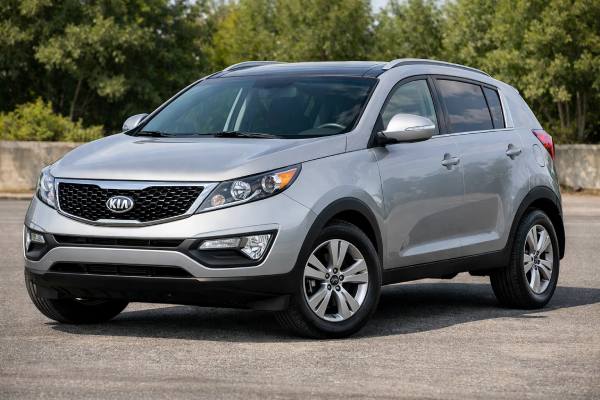
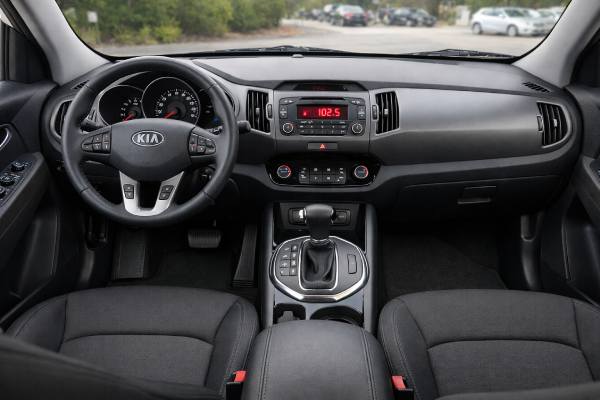
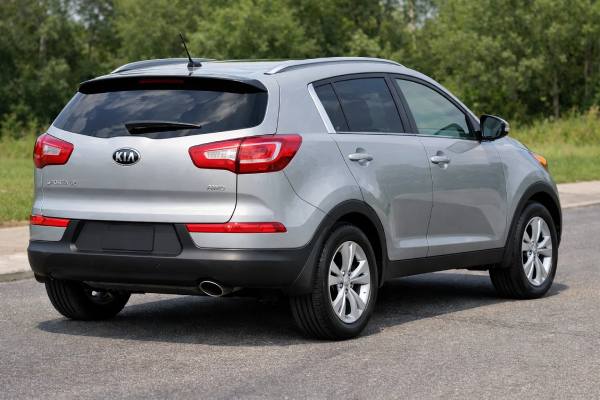
The 2010–2013 Kia Sportage SL in AWD diesel form is one of the most convincing versions of this generation. It combines the sharper third-generation body, a roomy cabin, and a more modern chassis with Kia’s 2.0-liter D4HA common-rail turbo-diesel and the brand’s on-demand AWD system. In everyday use, that means strong low-rpm pulling power, secure traction in bad weather, and better long-distance ease than the smaller petrol models.
It also means you need to buy carefully. This is not the simple old-school Sportage of the KM era. The D4HA uses a variable-geometry turbocharger, high-pressure fuel injection, a timing chain, emissions hardware, and—on many cars—either a dual-mass flywheel or a six-speed automatic. A good one feels refined, capable, and efficient for its size. A neglected one can become expensive through DPF trouble, EGR fouling, overdue AWD fluid service, or suspension wear. Condition, history, and usage pattern matter more than trim alone.
Quick Specs and Notes
- The 2.0 diesel AWD is the most complete all-round SL for torque, towing confidence, and winter traction.
- Strong low-rpm pull and a settled multi-link rear suspension make it a better long-distance car than the smaller petrol versions.
- The cabin, rear seat, and cargo space still work well for family use.
- Short-trip driving can shorten DPF, EGR, and battery life, especially on lightly maintained cars.
- A sensible routine is oil service every 10,000 to 15,000 km or 12 months, even if broader schedules allow longer.
Explore the sections
- Kia Sportage SL diesel character
- Kia Sportage SL diesel figures
- Kia Sportage SL diesel grades and safety
- Weak spots and service campaigns
- Maintenance plan and buying checks
- Diesel AWD road manners
- Sportage SL versus rival SUVs
Kia Sportage SL diesel character
The AWD 2.0 diesel is the version of the early SL Sportage that best matches the body’s intent. The third-generation Sportage moved the model away from the more upright, value-led feel of the KM and into the modern crossover class. It became lower, wider, more style-driven, and much more mature inside. In diesel AWD form, it also gained the powertrain most suited to the heavier, more premium end of the range.
The D4HA is a 2.0-liter common-rail four-cylinder turbo-diesel with a variable-geometry turbocharger, dual overhead camshafts, four valves per cylinder, and chain-driven camshafts. In 184 hp trim, it delivers much more real-world urge than the base petrol engines. More important than the peak number is the torque curve. This engine makes its useful force low in the rev range, which changes the whole character of the Sportage. It feels easier leaving junctions, more relaxed climbing grades, and less strained with passengers or luggage on board.
The AWD system is also a real part of the appeal, not just a badge. Kia’s on-demand setup is front-biased in normal driving, then sends torque rearward when slip or load conditions demand it. The lock function can force a more even split at lower speed, which helps on snow, mud, wet grass, or steep loose surfaces. It is not a low-range off-road system, and the Sportage is still limited by road-oriented tyres and modest ground clearance. But for winter roads and mixed-weather family use, the AWD version makes sense.
This model also benefits from the SL chassis itself. Kia used a MacPherson-strut front end and a multi-link rear suspension, which gives the Sportage a calmer, more planted feel than many cheaper crossovers from the same era. That matters especially on diesel AWD versions, which are heavier but also more naturally suited to long-distance use. Compared with the smaller petrol models, the 2.0 diesel feels more like the powertrain the body was designed around.
The ownership trade-off is complexity. A diesel SL can be excellent when used properly, especially by drivers who cover enough distance for the DPF and EGR systems to stay healthy. It is much less happy as a neglected short-trip town car. That is why this version can be either the smartest used Sportage or the costliest one to rescue. The concept is strong. The buying standard simply needs to be high.
Kia Sportage SL diesel figures
The 2010–2013 Sportage AWD 2.0 diesel sits in the part of the compact-SUV market where strong torque, respectable efficiency, and everyday usability matter more than outright speed. This section focuses on the 184 hp D4HA AWD setup, with note where manual and automatic figures differ or where exact numbers vary slightly by market.
Powertrain and efficiency
| Item | Kia Sportage AWD (SL) 2.0 Diesel |
|---|---|
| Code | D4HA |
| Engine layout and cylinders | Inline-4, DOHC, 4 cylinders, 4 valves/cyl |
| Bore × stroke | 84.0 × 90.0 mm (3.31 × 3.54 in) |
| Displacement | 2.0 L (1,995 cc) |
| Induction | Turbocharged, variable-geometry turbo |
| Fuel system | Common-rail direct injection |
| Compression ratio | 16.5:1 class, market dependent |
| Max power | 184 hp (135 kW) @ 4,000 rpm |
| Max torque | 392 Nm (289 lb-ft) @ 1,800–2,500 rpm |
| Timing drive | Chain |
| Rated efficiency | Around 5.9–6.3 L/100 km combined on AWD versions |
| Rated efficiency in mpg | About 39.9–37.3 mpg US / 47.9–44.8 mpg UK combined |
| Real-world highway @ 120 km/h (75 mph) | Usually about 6.6–7.4 L/100 km in healthy trim |
Transmission, driveline, chassis, and dimensions
| Item | Kia Sportage AWD (SL) 2.0 Diesel |
|---|---|
| Transmission | 6-speed manual or 6-speed automatic |
| Drive type | AWD |
| Differential | Open front and rear, electronically managed center coupling |
| AWD function | On-demand torque transfer with low-speed lock mode |
| Suspension (front/rear) | MacPherson strut / multi-link |
| Steering | Rack-and-pinion, motor-driven power assist |
| Brakes | Four-wheel discs; vented front discs, solid rear discs |
| Wheels and tyres | Common AWD size: 235/55 R18 |
| Ground clearance | About 172 mm (6.8 in) |
| Length / width / height | 4,440 / 1,855 / 1,635 mm (174.8 / 73.0 / 64.4 in) |
| Height with roof rails | 1,645 mm (64.8 in) |
| Wheelbase | 2,640 mm (103.9 in) |
| Front / rear track | 1,600 / 1,601 mm on 18-inch wheels |
| Turning circle | About 10.6 m (34.8 ft) |
| Kerb weight | Around 1,600–1,700 kg (3,527–3,748 lb), trim and gearbox dependent |
| GVWR | Market dependent; verify VIN plate |
| Fuel tank | 58 L (15.3 US gal / 12.8 UK gal) |
| Cargo volume | Commonly quoted around 564 / 1,353 L VDA; verify by market spec sheet |
Performance, fluids, and safety
| Item | Kia Sportage AWD (SL) 2.0 Diesel |
|---|---|
| 0–100 km/h (0–62 mph) | Typically about 9.5–10.0 s |
| Top speed | About 194–195 km/h (121 mph) |
| Towing capacity | Often up to 1,900 kg (4,189 lb) braked in European auto AWD form; verify by VIN and homologation |
| Payload | Usually around the mid-400 to low-500 kg range, market dependent |
| Engine oil | 8.0 L (8.5 US qt) with DPF; ACEA C3 |
| Manual transmission oil | 1.8 L (1.9 US qt); API GL-4 SAE 75W/85 |
| Automatic transmission fluid | 7.8 L (8.2 US qt); Kia original ATF SP-IV |
| Rear differential oil | 0.65 L (0.69 US qt); API GL-5 SAE 75W/90 |
| Transfer case oil | 0.6 L (0.63 US qt); API GL-5 SAE 75W/90 |
| Coolant | 8.4 L (8.9 US qt) automatic / 8.5 L (9.0 US qt) manual |
| Brake / clutch fluid | 0.7–0.8 L; DOT-3 or DOT-4 |
| Fuel type | Diesel |
| Wheel-nut torque | 88–107 Nm (65–79 lb-ft) |
| Crash ratings | Euro NCAP 5 stars; adult 93%, child 86%, pedestrian 49%, safety assist 86% |
| IIHS | Good in moderate overlap front, roof strength, and head restraints; original side test Good for 2011 model only; later small overlap Poor |
| ADAS suite | No AEB, ACC, lane-keep assist, or blind-spot monitoring |
The specs show why this engine is attractive. It gives the SL body enough torque to feel properly matched, while still delivering good long-distance economy for an AWD compact SUV. The main caution is that the diesel powertrain’s benefits depend heavily on service history and usage pattern.
Kia Sportage SL diesel grades and safety
The 184 hp AWD diesel sat near the stronger end of the pre-facelift SL range in Europe and many export markets. In simple terms, this was not the bargain-basement Sportage. It was the version chosen by buyers who wanted the more capable engine, the extra traction of AWD, and usually a better level of trim and equipment. That matters in the used market, because many surviving examples are EX, KX, Spirit, Premium, or similarly named middle-to-upper trims rather than stripped entry models.
Equipment varied by country, but the pattern stayed consistent. Diesel AWD cars often came with 17- or 18-inch alloys, climate control, cruise control, upgraded audio, parking sensors, heated seats, and richer cabin finishes than the entry petrol versions. Higher trims could add leather, panoramic glass roofs, navigation, HID headlamps, keyless entry, power seats, or camera systems. The practical point is that diesel AWD cars are usually worth paying a little more for if the added equipment works properly, because the underlying vehicle is better suited to long-distance and family use than the smaller petrol models.
There are also meaningful functional differences by trim and market. Wheel size affects ride quality more than many buyers expect. The 18-inch 235/55 setup gives the Sportage a better visual stance and stronger grip, but the 17-inch package is usually the sweeter daily compromise for comfort, winter tyre cost, and pothole resistance. Transmission choice matters too. The manual can feel sharper and slightly more economical, but the automatic suits the diesel’s torque delivery and often pairs better with the more upscale trims.
Safety is a major SL strength. Euro NCAP awarded the Sportage five stars and tested a left-hand-drive 2.0 diesel EX. The detailed results were strong for the time: 93 percent for adult occupant protection, 86 percent for child occupant protection, 49 percent for pedestrian protection, and 86 percent for safety assist. Euro NCAP also named the Sportage the best-performing small off-road 4×4 in its 2010 category. For a compact SUV launched at this price point, that was a serious result and one of the reasons the SL generation gained credibility so quickly.
The U.S.-market body shell of the redesigned Sportage also performed well in IIHS’s original test regime, earning Good ratings in the moderate-overlap frontal, roof-strength, and head-restraint evaluations. The original side-test Good result officially applied to 2011 models. Later, once IIHS introduced the more demanding driver-side small-overlap test, the generation performed poorly. That does not erase the real step forward of the SL, but it does place the safety story in context. This is a strong early-2010s family crossover, not a current benchmark.
In terms of equipment, most diesel AWD trims offered ABS, ESC, multiple airbags, hill-start assist, downhill brake control, and child-seat anchors. What they did not offer was modern driver assistance. There is no autonomous emergency braking, no adaptive cruise control, and no lane-centering here. The Sportage’s safety case rests on body structure, airbags, and stability systems, not on semi-automated intervention.
Weak spots and service campaigns
The 2.0 CRDi AWD Sportage can be a very strong used buy, but its reliability pattern is more demanding than the simpler petrol versions. The main reason is not that the D4HA is a bad engine. It is that the diesel engine’s torque, emissions equipment, and AWD hardware all reward proper use and punish neglect. Most problem areas follow that theme.
The most common medium-cost issue on short-trip cars is DPF and EGR trouble. If the car spends most of its life doing brief cold starts, urban errands, and interrupted regenerations, soot loading rises and the EGR side gets dirtier. Symptoms include repeated regeneration behavior, cooling fans running after shutdown, reduced performance, warning lights, limp mode, or uneven response. The likely root causes are a blocked DPF, sticky EGR valve, or related pressure and temperature sensor issues. The correct remedy is diagnosis first, then forced regeneration, cleaning, repair, or replacement based on measured condition. A simple clear-the-code approach rarely solves the real problem for long.
Turbo and boost-control faults are less common but still important. Split boost hoses, sticky variable-vane mechanisms, vacuum issues, or tired actuator hardware can cause underboost, hesitation, or inconsistent torque delivery. On higher-mileage manual cars, the dual-mass flywheel and clutch can also become expensive wear items. Symptoms are rattle at idle, vibration under load, shudder on takeoff, or a slipping clutch during a full-torque pull. Buyers need to distinguish normal diesel vibration from genuine drivetrain wear.
The AWD system itself is usually reliable if serviced and matched with correct tyres. Trouble starts when owners ignore rear differential and transfer-case oil, fit mismatched tyres, or drive for long periods with uneven rolling diameters. Whine, coupling hesitation, or driveline bind are not common first-order faults, but when they appear they usually trace back to neglect rather than a weak design.
Suspension wear is typical compact-SUV aging rather than a Kia-specific drama. Expect anti-roll-bar links, lower-arm bushes, dampers, wheel bearings, and alignment-related tyre wear to show up with mileage. The heavier diesel AWD puts more load into the chassis than a base petrol FWD, so a tired example can feel clumsy quickly.
Software and calibrations are more relevant on this model than on older simple SUVs, but they are usually not the main story. Dealer ECU or transmission updates can help drivability, regeneration strategy, and sensor logic on some cars, yet the underlying mechanical condition still matters more than software alone. A rough, smoky, or limp-mode diesel usually needs real diagnosis, not blind reflashing.
Recall and campaign coverage varies heavily by market. On the U.S.-market SL platform, certain 2011 Sportage models had a stop-lamp-switch recall, and 2011–2013 Sportage vehicles were later included in the HECU multi-fuse fire-risk campaign. Those specific campaigns do not automatically define every European diesel Sportage, but they do show why official VIN checks matter on imported, re-registered, or unclear-history cars. For any used diesel AWD SL, ask for service invoices, emission-system work, and proof of campaign completion where applicable. On this model, paperwork is worth almost as much as condition.
Maintenance plan and buying checks
A diesel AWD Sportage is at its best when maintenance is proactive rather than reactive. Broad Kia service guides put many 2011–2015 Sportage models on a 20,000-mile or 12-month schedule in some markets, while Irish Kia guidance lists 2010–2012 diesel models at 20,000 km or 12 months. In real used-car ownership, those figures are better treated as outer limits than ideal targets. For the D4HA, shorter oil intervals and more deliberate drivetrain fluid service are a sensible investment.
A practical maintenance plan looks like this:
- Engine oil and filter: every 10,000 to 15,000 km or 12 months, especially on cars that do short trips, towing, or repeated cold starts.
- Engine air filter: inspect every service and replace when dirty, usually every 20,000 to 30,000 km.
- Cabin filter: inspect every annual service and replace regularly.
- Fuel filter: important on common-rail diesels; change on schedule and use quality parts.
- Coolant: inspect condition and level often, then replace by time and history rather than waiting for visible trouble.
- Brake fluid: every 2 years.
- Manual gearbox oil or automatic ATF: do not treat either as lifetime fill on an older AWD SUV.
- Rear differential and transfer case oil: service on history, use, and mileage; this is a real maintenance item on AWD cars.
- DPF and EGR health: not a scheduled replacement item, but track regen behavior and investigate warnings early.
- Timing chain: no fixed routine replacement, but listen for unusual chain noise and watch for timing-related faults on neglected engines.
- Serpentine belts and hoses: inspect every annual service.
- Tyres and alignment: rotate, match all four closely, and inspect alignment regularly.
- 12 V battery: test from year four onward; weak batteries can trigger multiple diesel-driveability complaints.
The key fluid data from the owner manual are especially useful here. Engine oil capacity for the 2.0 diesel is 8.0 L with DPF and the required oil class is ACEA C3. Manual transmission oil is 1.8 L, automatic transmission fluid is 7.8 L and should meet SP-IV requirements, the rear diff takes 0.65 L of 75W/90 GL-5 oil, the transfer case takes 0.6 L of the same grade, coolant capacity is 8.4 L on the automatic and 8.5 L on the manual, and wheel-nut torque is 88–107 Nm.
Buyer inspection should begin with usage history. A diesel that has lived on motorway miles is usually a much better prospect than a low-mileage urban car that barely warmed through. On cold start, the engine should fire cleanly, idle evenly, and not blow excessive smoke. On the road, it should pull hard from low rpm without surging, limp mode, or obvious turbo hesitation. Then inspect underneath for leaking dampers, worn bushes, diff seepage, and tyre mismatch.
The best examples are those with long-trip use, full service records, correct oils, matched tyres, and evidence of recent drivetrain-fluid service. The cars to avoid are bargain diesels used only in town, with repeated warning-light history and no proof of DPF-aware maintenance. Long term, the AWD diesel can be durable and satisfying. It just is not a model to maintain carelessly.
Diesel AWD road manners
On the road, the 184 hp diesel is the Sportage SL powertrain that feels most naturally suited to the vehicle’s size and purpose. The body is not especially heavy by modern standards, but it is large enough that the smaller petrols can feel a little breathless once loaded. The diesel avoids that. It delivers its torque early and cleanly, so the Sportage feels more relaxed in normal driving and less dependent on revs or frequent downshifts.
In town, the Sportage is easy enough to place despite the thicker body shape. Steering is light, visibility is reasonable for the class, and the torque-rich engine helps it move away smoothly with less effort than the naturally aspirated petrol options. The diesel is not silent, especially when cold, but once warm it settles into the background well enough. The automatic version is the easier daily companion in traffic, while the manual gives a little more control and sometimes slightly better fuel economy.
The chassis remains one of the SL’s strongest points. The multi-link rear suspension gives the car better composure over rough roads than many people expect from an early-2010s mainstream crossover. Ride quality is firm enough to feel controlled but not harsh, and straight-line stability is good. On poorer roads the Sportage stays settled, which helps explain why the diesel suits it so well. This is a crossover built more for long, mixed journeys than for city stop-start use alone.
Handling is safe and predictable. There is some nose weight from the diesel engine, but body control is tidy and the car does not feel top-heavy. The AWD system is more about secure traction than entertaining corner exits. In rain, slush, or snow, it gives the Sportage a calmer, more stable feel than the front-drive models. The lock mode is useful on very slippery surfaces, though it is not something to leave engaged on dry roads. Tyres make a huge difference here. A good winter or all-weather set changes the vehicle more than any brochure claim.
Performance is strong enough to matter. A healthy 184 hp diesel AWD Sportage reaches 100 km/h in roughly the mid-to-high 9-second range, depending on gearbox and test conditions. That is not hot-hatch quick, but for a practical AWD SUV of this era it is more than enough. More importantly, overtaking and climbing are easy. The diesel feels confident at the exact sort of speeds and loads where the smaller engines begin to sound strained.
Real-world fuel use is one of the powertrain’s main virtues. Official combined figures around 5.9 to 6.3 L/100 km made sense when new, and a well-kept car still can be efficient. In actual mixed driving, most owners see something like 6.8 to 7.8 L/100 km. Town-heavy work pushes that higher, while steady open-road use can keep it in the mid-sixes. At a true 120 km/h motorway cruise, 6.6 to 7.4 L/100 km is realistic in good condition. Cold weather, winter tyres, roof accessories, short trips, or a dirty DPF can all raise those numbers.
This is not the quietest or most playful SL Sportage, but it is arguably the most complete. It feels grown-up, easy to use, and genuinely capable in poor weather, which is exactly what many compact-SUV buyers still want.
Sportage SL versus rival SUVs
The AWD 2.0 diesel Sportage needs to be judged against the diesel compact crossovers that mattered in Europe and similar markets. The nearest mechanical relative is the Hyundai ix35 or Tucson of the same era, and in truth those two are often separated more by condition, trim, and price than by engineering. If the Kia is cleaner underneath, has stronger service records, or costs less for the same standard, it is just as rational a buy as the Hyundai.
Against the Nissan Qashqai, the Sportage feels more like a true SUV and less like a lifted hatchback. The Qashqai can feel a little lighter and more car-like in some versions, but the Kia usually counters with a stronger sense of substance, better rear-seat presence, and a more planted ride. Against the Volkswagen Tiguan, the Sportage gives up some badge prestige and sometimes a touch of cabin polish, yet it often wins on value and on avoiding some of the more expensive aging risks found in certain European diesel and DSG combinations.
The Honda CR-V and Toyota RAV4 remain the reputation benchmarks, even though their diesel and AWD availability varied by market. Those two still carry stronger long-term trust in the used market. They often age more gracefully in terms of resale and buyer confidence. The Sportage answers with better price-to-equipment value and styling that still looks modern enough. The SL generation was a genuine design success, and that matters when cars of similar age are parked side by side.
The exact diesel AWD Sportage also deserves comparison with its own siblings. The 1.6 petrol is cheaper to run if you mainly drive short distances, but it does not suit the body as well once the car is loaded. The 2.4 petrol AWD works nicely in markets where it was sold, but it cannot match the diesel’s low-rpm economy and towing confidence. The turbo SX has more straight-line pace, but as a used car it is the narrower, more specialized choice. For many buyers, the diesel AWD is the real sweet spot if they actually use the vehicle for distance, weather, and load.
That leads to the key verdict. The Sportage SL 2.0 diesel AWD is not automatically the safest used buy in its class. A neglected one can be more expensive to sort than a simpler petrol rival. But when bought on evidence—service history, correct usage pattern, healthy emissions hardware, and matched AWD tyres—it becomes one of the most satisfying value picks in this age range. It offers strong torque, good traction, modern-enough styling, and practical family use in a package that still feels coherent. Buy it for the right reasons, and it makes sense. Buy it just because it looks cheap, and the rival list gets more persuasive very quickly.
References
- sportage-brochure.pdf – Kia 2013 (Brochure)
- käyttöohjekirja 2013 (Owner’s Manual)
- Kia Service Intervals 2023 (Service Guide)
- KIA Sportage 2010 (Safety Rating)
- 2011 Kia Sportage 2026 (Safety Rating)
Disclaimer
This article is for informational purposes only and is not a substitute for professional diagnosis or repair. Specifications, torque values, intervals, fluids, towing limits, procedures, and campaign coverage can vary by VIN, market, gearbox, trim, and production date, so always verify details against the official service documentation and recall records for the exact vehicle.
If this guide helped you, please consider sharing it on Facebook, X, or another social platform to support our work.