
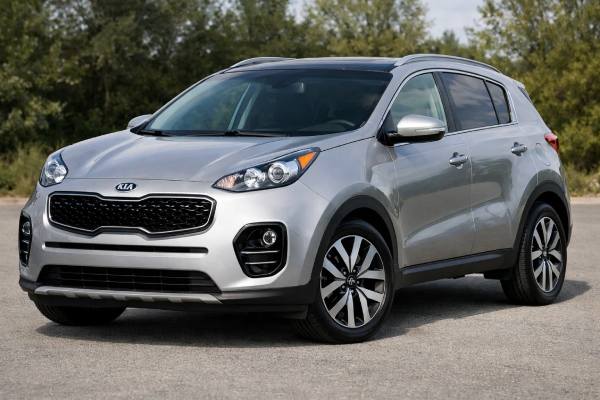
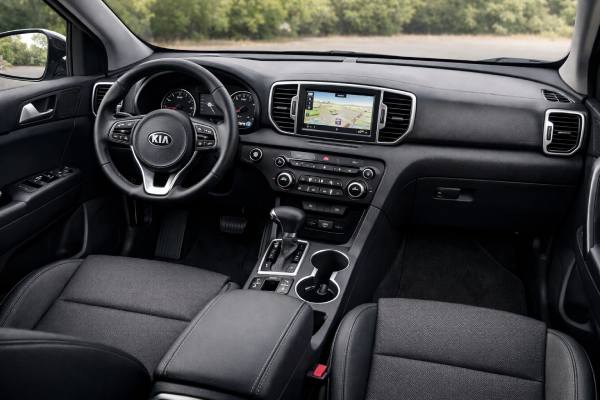
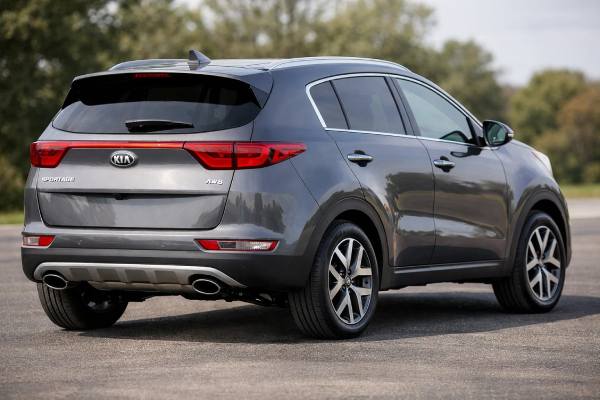
The 2016–2018 Kia Sportage QL with the G4NA 2.0-litre petrol engine and AWD sits in a useful middle ground of the compact-SUV market. It is not the fastest version of the fourth-generation Sportage, and it was not the headline powertrain in every region, but that is part of its appeal. You get a simple naturally aspirated four-cylinder, a conventional automatic in many AWD versions, a roomy cabin, and the stronger QL body structure that Kia introduced with this generation. For buyers who want a family SUV that feels mature, easy to live with, and less mechanically fussy than some small-turbo alternatives, this specification makes sense. The trade-off is that fuel economy is only average, performance is adequate rather than brisk, and exact equipment differs a lot by market. That makes VIN-specific verification important before you buy, service, or order parts.
Owner Snapshot
- The 2.0 MPI engine and AWD layout suit steady, long-term ownership better than outright speed.
- The QL body is stiffer and more refined than the older Sportage, which helps ride comfort and cabin calm.
- Cabin and cargo space are strong for the class, with an official 466 L boot in five-seat use on common specs.
- Check recall completion, AWD service history, brake condition, and battery health before buying.
- A common Kia service baseline for this era is every 12 months, with many markets listing 15,000 km or 20,000 miles depending on region and engine type.
Navigate this guide
- Kia Sportage QL ownership picture
- Kia Sportage QL specs and data
- Kia Sportage QL trims and safety
- Reliability issues and service actions
- Maintenance schedule and buying advice
- On-road character and economy
- Sportage QL versus key rivals
Kia Sportage QL ownership picture
The fourth-generation QL Sportage was a more serious engineering step than its sharp styling first suggests. Kia highlighted a body shell with 51% Advanced High Strength Steel, broader use of structural adhesive, and a large increase in torsional rigidity over the previous generation. In plain terms, that gave the QL a sturdier foundation for crash performance, suspension tuning, and noise control. For owners, that translates into a body structure that feels more solid than the older Sportage and helps the car behave like a mature family SUV rather than a lightly raised hatchback.
For the specific AWD G4NA 2.0-litre petrol version, the ownership story is shaped more by balance than by headline numbers. This engine is a naturally aspirated Nu-family four-cylinder, so it does not deliver the low-rpm shove of a turbo motor. Instead, it offers predictable throttle response, simpler long-term packaging, and fewer obvious stress points than some downsized turbo rivals from the same period. Many used buyers now see that as a benefit. The AWD system is an on-demand setup rather than a heavy-duty off-road transfer case. It is designed to shift torque as grip changes, which helps on wet roads, loose surfaces, and light snow, but it does not make the Sportage a true off-road machine.
This version also needs to be understood as a market-sensitive model. Europe focused heavily on 1.6 petrol and diesel QL versions at launch, while other regions sold the 2.0 MPI more broadly, sometimes with AWD and sometimes without it. That matters because ride height, roof-rail fitment, wheel size, transmission pairing, safety equipment, and service data can vary more than buyers expect. Two cars that look nearly identical can differ in tyre size, infotainment, driver-assistance features, and even service intervals.
On the road, the appeal is straightforward. The QL Sportage feels like a comfort-first family SUV with enough structural polish to seem a class above some cheaper rivals of the same era. It suits buyers who want easy entry and exit, useful rear-seat space, secure all-weather traction, and predictable maintenance demands. It is less convincing for drivers who care most about brisk overtaking, lively cornering, or top-tier fuel economy. Put simply, the 2.0 AWD QL is a sensible used-car choice when condition and service history are strong, but it is not a trim you buy for speed or drama.
Kia Sportage QL specs and data
Because the 155 hp 2.0 MPI AWD configuration was sold differently across regions, the cleanest way to read the data is to separate what Kia published consistently from what remained market-specific. The core engine figures are stable. Some performance, towing, and service-capacity items are not. The tables below focus on the specs that are most relevant to this exact powertrain family and QL body style.
| Item | Specification |
|---|---|
| Engine code | G4NA |
| Engine layout | Inline-4, DOHC, 16-valve |
| Cylinders | 4 |
| Valves per cylinder | 4 |
| Bore × stroke | 81.0 × 97.0 mm (3.19 × 3.82 in) |
| Displacement | 2.0 L (1,999 cc) |
| Induction | Naturally aspirated |
| Fuel system | Multi-point injection |
| Compression ratio | 10.3:1 |
| Max power | 155 hp (114 kW) @ 6,200 rpm |
| Max torque | 192 Nm (142 lb-ft) @ 4,000 rpm |
| Transmission | 6-speed automatic on many AWD versions |
| Drive type | On-demand AWD |
| Timing drive | Timing chain |
| Rated efficiency | Market-dependent; no single universal figure for all AWD 155 hp versions |
| 0–100 km/h and top speed | Not consistently published in open official material for every market-specific AWD version |
The engine layout and output make it clear what kind of SUV this is. The G4NA is a simple naturally aspirated petrol four-cylinder tuned for steady delivery rather than aggressive response. Peak torque arrives high enough in the rev range that the Sportage feels calm and manageable, but never especially quick, especially when loaded.
| Item | Specification |
|---|---|
| Front suspension | MacPherson strut |
| Rear suspension | Multi-link |
| Steering | MDPS electric power steering |
| Brakes | Front ventilated disc / rear solid disc |
| Common tyre size | 225/55 R18 on many upper-volume specs |
| Ground clearance | 172 mm (6.8 in) |
| Length | 4,480 mm (176.4 in) |
| Width | 1,855 mm (73.0 in) |
| Height | About 1,635–1,655 mm (64.4–65.2 in), depending on market and roof rails |
| Wheelbase | 2,670 mm (105.1 in) |
| Turning circle | 5.3 m (17.4 ft) |
| Fuel tank | 62 L (16.4 US gal / 13.6 UK gal) |
| Cargo volume | 466 L / 1,455 L (16.5 / 51.4 ft³), VDA |
| Kerb weight, GVWR, payload | Market- and equipment-dependent |
| Towing capacity | Strongly market-dependent; verify VIN plate and local handbook |
These chassis and dimension numbers help explain the QL’s everyday strengths. The wheelbase is long enough to support decent rear legroom, and the multi-link rear suspension is a useful asset for ride quality and body control. The 466 L boot is also a strong figure for a compact SUV of this era.
| Safety item | Published result |
|---|---|
| Euro NCAP | 5 stars |
| Euro NCAP adult occupant | 90% |
| Euro NCAP child occupant | 83% |
| Euro NCAP safety assist | 71% |
| IIHS 2017 | Top Safety Pick when equipped with optional front crash prevention |
| IIHS headlights | Poor |
| IIHS front crash prevention | Optional system rated Superior |
| Core passive safety | 6 airbags and ISOFIX in many markets |
| Core active safety | ABS, ESC, VSM, HAC commonly fitted |
One important caveat for service planning is that open official sources do not always publish every fluid fill, brake-disc diameter, A/C charge, torque value, or regional performance number in one place for this exact 2016–2018 AWD 2.0 MPI variant. For those items, the VIN-specific service manual or dealer parts system remains the right source. That is normal for a global SUV sold in many markets with different trim combinations.
Kia Sportage QL trims and safety
Trim structure on the QL Sportage depends heavily on region, but the overall pattern is familiar. Lower and mid-grade versions usually carried the 2.0 MPI as the comfort-oriented mainstream choice, while sportier trims focused more on wheel size, body details, seat trim, and convenience features than on major mechanical changes. For used buyers, that means the same 2.0 AWD powertrain may appear in a wide spread of equipment levels, from practical cloth-seat family trims to sharper-looking, better-equipped variants.
A quick way to spot a higher-spec example is to check the exterior and cabin details. GT Line-style trims in many markets added larger alloy wheels, distinct bumpers, extra brightwork, sport-themed cabin trim, paddle shifters, and more heavily bolstered seats. Other upper trims often included dual-zone climate control, a larger infotainment screen, upgraded audio, keyless entry, powered seats, and a powered tailgate. Lower trims more often kept smaller wheels, cloth upholstery, and simpler media or climate systems. In daily use, the difference between a well-kept mid trim and a tired top trim is often bigger than the brochure gap between them, so condition still matters more than badge wording.
Safety equipment was one of the QL’s strongest selling points for its time, but buyers still need to separate standard fundamentals from optional driver aids. The core package usually included multiple airbags, ESC, vehicle stability management, hill-start assist, and ISOFIX child-seat anchorage. More advanced assistance systems such as Autonomous Emergency Braking, Lane Keeping Assist, Blind Spot Detection, Rear Cross Traffic Alert, High Beam Assist, and traffic-sign support were available in many regions, but they were not always standard. That means you should confirm the exact equipment on the car rather than assuming every late QL has the full ADAS suite.
In crash-test terms, the QL did well. It earned a five-star Euro NCAP result and also performed strongly in U.S. IIHS testing, with Top Safety Pick status available when the optional front crash-prevention system was fitted. The main weakness often discussed in IIHS results was headlight performance, which matters more in the real world than many buyers realize. On a used car, poor-quality replacement bulbs, cloudy lenses, or poor alignment can make that weakness worse, so a night drive is worth the effort.
One service implication is easy to miss. On cars fitted with camera- or radar-based assistance, windscreen replacement, front-end repairs, bumper painting, or poor wheel alignment can affect system calibration. If you are buying a repaired car, ask whether ADAS calibration was carried out after the work. The QL is fundamentally a safe and well-structured SUV, but the exact safety value of the car in front of you depends on what was fitted, how it was repaired, and whether those systems still work as intended.
Reliability issues and service actions
The basic character of the 2.0 MPI AWD Sportage is reassuring. It is generally a wear-and-maintenance vehicle rather than one defined by a single famous failure point. Age now matters more than brochure quality, though. A carefully serviced car can still feel tight and dependable, while a neglected one can become expensive through a stack of smaller faults. The best way to understand reliability on this model is by prevalence and repair cost rather than by dramatic anecdotes.
Common, usually low to medium cost
- Battery and charging-condition complaints: stop-start systems often stop working before the battery fully fails. Symptoms include lazy cranking, warning messages, or intermittent electrical oddities. Short-trip use makes this more likely.
- Brake corrosion and sticking hardware: lightly used cars, especially in wet or salted climates, can develop rear brake drag, uneven pad wear, squeal, or rusty disc faces.
- Tyre wear and alignment sensitivity: larger-wheel cars can show inner-edge wear when alignment drifts or when bushes begin to soften.
Occasional, medium cost
- Suspension wear: drop links, top mounts, bushes, and occasionally wheel bearings can become noisy on rough-road cars.
- AWD neglect: cars with mismatched tyres, skipped driveline services, or frequent heavy use can show driveline vibration or shudder.
- Camera, parking sensor, or infotainment glitches: moisture, age, or poor accident repair can lead to intermittent electronic faults.
Rare, higher cost, and worth checking by VIN
- HECU-related fire recall on certain U.S.-market vehicles: affected vehicles needed a recall remedy to reduce fire risk.
- Tow-hitch harness recall on certain U.S.-market vehicles with accessory harness fitment: this applies to specific vehicles and accessories rather than every Sportage.
For engine-specific planning, the good news is that the 2.0 MPI uses a timing chain rather than a scheduled timing belt. That removes one major routine replacement cost, but it does not eliminate inspection. On high-mileage examples, it is still wise to listen for cold-start chain noise and to scan for cam/crank correlation faults before buying. A quiet engine, clean idle, and smooth warm restart are more important here than chasing isolated stories online.
Cooling-system condition also matters. Any used compact SUV of this age can develop hose aging, tired clamps, radiator corrosion, or thermostat-related issues. Look for dried coolant residue, smell for sweet vapor after a drive, and check that the engine warms up normally and stays stable in traffic. Oil leaks are usually smaller seepage issues rather than dramatic failures, but rocker-cover area leaks should still be caught early before they spread onto other components.
Before buying, ask for full service history, evidence of recall completion, proof of brake and fluid work, and matching tyres on all four corners. A road test should include full-lock turns, low-speed creeping, a firm stop from speed, and a rough-surface section to reveal suspension wear or driveline vibration. On this Sportage, disciplined inspection usually tells you more than broad model reputation alone.
Maintenance schedule and buying advice
For this Sportage, the safest ownership strategy is to separate the official minimum from the smart long-term plan. Published Kia service schedules for Sportage petrol models vary by market, with some regions using 15,000 km or 12 months and others stretching farther. That means the correct baseline is always the VIN-market handbook first, then a shorter interval if the vehicle does heavy city work, repeated short trips, winter use, towing, or hot-weather driving.
| Item | Practical plan |
|---|---|
| Engine oil and filter | Follow the VIN-market schedule as the official baseline; for hard use, a conservative 10,000–12,000 km or annual change is wise |
| Engine air filter | Inspect every service; replace roughly every 15,000–30,000 km depending on dust and climate |
| Cabin filter | Replace yearly or about every 15,000–20,000 km |
| Spark plugs | Inspect by about 60,000 km; replace by condition and plug type, often around 90,000–100,000 km |
| Brake fluid | Every 2 years |
| Brake pads and rotors | Inspect at every service; low-use cars may need cleaning before they need parts |
| ATF | Consider a preventive change around 60,000–80,000 km on city-driven, towing, or hot-climate cars |
| AWD driveline fluids | Inspect history; a preventive service around 40,000–60,000 km is sensible on hard-used cars |
| Coolant | Verify exact type and interval by VIN; inspect yearly and replace on age, contamination, or component repair if history is unknown |
| Tyre rotation | About every 10,000 km |
| Alignment | Check whenever steering pulls, tyres wear unevenly, or after suspension work |
| 12 V battery | Test annually after year 4 |
| Timing chain | No fixed routine replacement interval; inspect if noise or timing-correlation faults appear |
That table reflects a cautious real-world plan rather than a one-size-fits-all factory schedule. Open official documents for this exact 2.0 AWD combination do not always list every fluid capacity and torque value in one public place, so fluids, wheel-fastener torque, and A/C service data should be checked against the VIN-specific service information before ordering parts or starting major work.
A few buyer notes are especially useful on this model:
- Prefer cars with matching tyres and evidence of regular tyre rotation. AWD systems do best when all four tyres stay close in rolling diameter.
- Inspect the underside, rear brakes, and exhaust heat-shield area for corrosion, especially in salted-road regions.
- Test the air conditioning, reverse camera, parking sensors, window regulators, and all switchgear. Small electrical faults are more common than major engine problems.
- Check whether the car has a tyre mobility kit or a spare-wheel setup, because equipment varies by trim and market.
- If the car has AEB, lane support, blind-spot warning, or rear cross-traffic alert, confirm that any previous glass or bumper work was followed by proper calibration.
The best used examples are usually mid- to upper-spec cars with documented servicing, sensible wheel packages, and unmodified suspension. From a long-term durability viewpoint, this is a good SUV to buy on condition, not on trim badge alone. A cared-for 2.0 AWD can age well; a neglected one becomes expensive through a series of medium-size jobs rather than one single catastrophic failure.
On-road character and economy
The QL Sportage’s strongest dynamic trait is how grown-up it feels for an everyday family SUV. The stiffer body helps it track straight at speed, and the suspension tune leans toward stability and calm rather than sporty sharpness. Steering is light and easy in town, with enough weighting on the move to feel secure but not especially talkative. In corners, the Sportage stays tidy and predictable. It does not encourage enthusiastic driving the way a Mazda CX-5 can, but it is composed and confidence-building in poor weather.
The 2.0 MPI engine fits that character. Throttle response is clean and predictable, but this is not a torque-rich motor. Around town it feels smooth and easy; on faster roads it needs revs and a committed kickdown to overtake with authority. The conventional automatic helps because it is usually smoother in creeping traffic and at parking speeds than some dual-clutch rivals from the same era. The trade-off is simple: when fully loaded or climbing hills, the 155 hp tune feels adequate rather than strong.
A realistic owner expectation looks like this:
- City use: about 9.5–11.0 L/100 km
- Highway at 100–120 km/h: about 7.5–8.5 L/100 km
- Mixed driving: about 8.5–9.5 L/100 km
Those figures can move around with tyre choice, temperature, traffic, and roof accessories, but they fit the Sportage’s overall identity. It is competent, calm, and usable, though not especially efficient for an AWD compact SUV with a naturally aspirated petrol engine.
NVH is one of the nicer surprises. The QL generation’s stronger shell and better structural engineering help the cabin feel more insulated than the previous Sportage. Wind and tyre noise still depend heavily on wheel size and tyre brand, but on sensible 17- or 18-inch tyres the car generally feels refined enough for family trips and long motorway runs. Under load, the 2.0 engine sounds workmanlike rather than polished, yet it is rarely harsh.
For buyers who need traction more than speed, the verdict is clear. The 2.0 AWD Sportage is at its best in steady, real-world use: school runs, wet-road commuting, winter weather, and light holiday loading. It is less convincing as an enthusiast’s SUV or a fuel-saver’s choice. That does not make it a weak package. It simply means the car makes most sense when your priorities are comfort, predictability, and all-weather ease rather than pace or standout efficiency.
Sportage QL versus key rivals
Against its main 2016–2018 rivals, the 2.0 AWD Sportage works best as the value-and-balance pick.
Compared with a Toyota RAV4 of the same era, the Kia often feels more design-led inside and can look better equipped for the money on the used market. The Toyota usually wins on long-term reputation and powertrain efficiency, especially in hybrid form, but the Sportage counters with a modern-looking cabin and a solid, reassuring road feel.
Against the Honda CR-V, the Sportage gives away some packaging cleverness and, in many cases, some fuel efficiency. The Honda is often the more rational space-and-economy choice. The Kia responds with stronger styling, a more substantial dashboard design, and often more appealing used-value positioning.
Next to the Mazda CX-5, the Sportage is the softer and calmer car. The Mazda is sharper to steer and more rewarding for keen drivers. The Kia is easier-going and often the better fit for drivers who care more about comfort, simple controls, and a less demanding day-to-day character.
The closest rival is the Hyundai Tucson, because it shares so much underneath. Here the decision often comes down to condition, trim, and personal taste. The Sportage tends to feel more expressive in design and a touch more premium in cabin ambience, while the Tucson often seems more conservative and family-neutral.
So who should choose the 2016–2018 Sportage AWD 2.0? The ideal owner is someone who wants a compact SUV with honest mechanicals, decent safety, useful space, and secure traction, and who is willing to trade outright pace and class-leading economy for that mix. If you buy a clean one, verify recall completion, and maintain it on a sensible schedule, it remains a very reasonable used SUV. It may not dominate any single category, but it avoids many of the downsides that can make used compact crossovers frustrating to own.
References
- Kia Sportage 2016 (Press Kit)
- Born to dare 2016 (Official Brochure)
- Five-star safety ratings for all-new Kia Optima and Sportage 2015 (Safety Rating)
- 2017 Kia Sportage 2017 (Safety Rating)
- Kia Service Intervals 2025 (Service Schedule)
Disclaimer
This article is for informational purposes only and is not a substitute for professional diagnosis or repair. Specifications, torque values, service intervals, procedures, and equipment vary by VIN, market, and trim, so always verify critical information against the official owner’s manual, service documentation, and parts data for your exact vehicle.
If this guide helped you, please consider sharing it on Facebook, X, or another platform to support our work.