
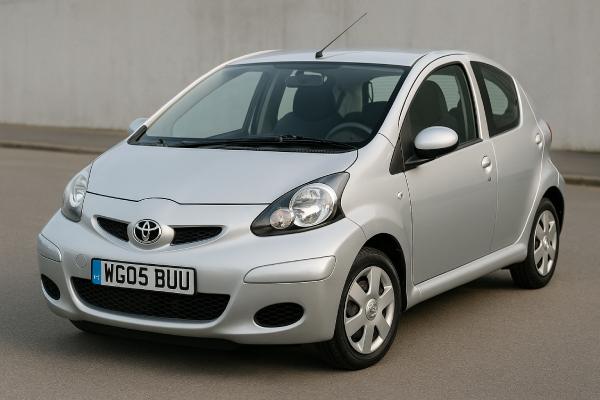
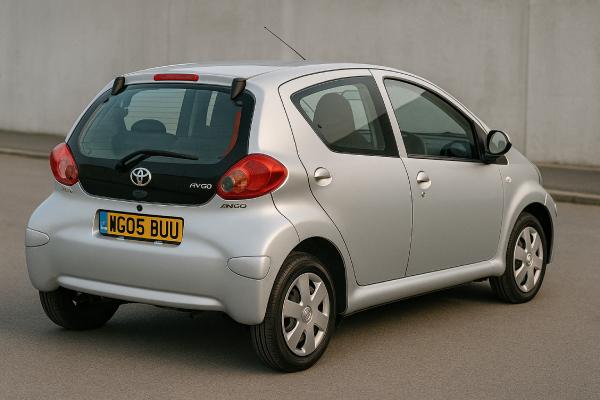
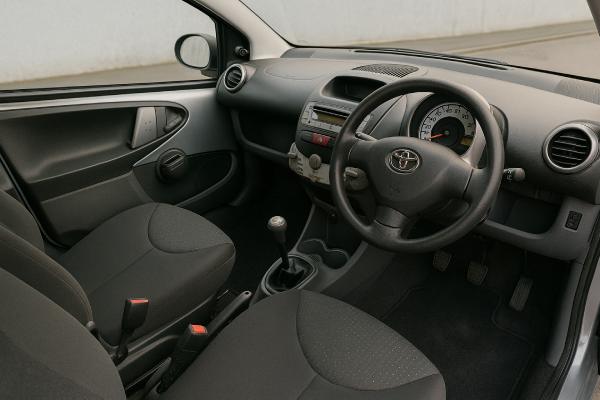
The first-generation Toyota Aygo is a four-seat city hatch that launched in Europe in 2005, sharing its platform with the Peugeot 107 and Citroën C1. This article focuses on the 2005–2007 diesel Aygo, internally known as WNB10 and powered by Toyota’s 2WZ-TV 1.4-litre turbo-diesel rated at 54 hp. It sits below the Yaris in Toyota’s lineup and targets urban drivers who value simplicity, very low running costs, and compact dimensions that still seat four. Highlights include a light body, tidy chassis tuning, and straightforward mechanicals. Owners typically care about whether the diesel is robust, how efficient it is in everyday driving, and what to watch for at higher mileages. Below you’ll find a clear, European-market overview of specs, safety results, maintenance intervals, common issues, and real-world buying advice tailored to this specific engine/years.
Fast Facts
- Very frugal city car: real-world mixed economy around 4.5–5.0 L/100 km (47–52 mpg US) with gentle driving.
- Compact outside, usable inside: short 3.41 m length, tight ~9.5 m turning circle, and 139 L boot.
- Simple, durable running gear: proven 1.4-litre turbo-diesel with straightforward 5-speed manual.
- Watch for EGR and injector-seal issues on higher-mileage cars; timing belt due by time/km.
- Typical service anchor: engine oil and filter every 15,000 km or 12 months (whichever comes first).
Explore the sections
- Aygo 1.4 D-4D overview
- Aygo 1.4 diesel specs
- Trims, safety and options
- Reliability and known issues
- Maintenance and buying guide
- Driving and real-world economy
- Aygo vs rivals
Aygo 1.4 D-4D overview
Toyota designed the first-gen Aygo as a purpose-built city car: short overhangs, a wheel-at-each-corner stance, very light body-in-white, and simple packaging that still fits four adults in a pinch. Power for the diesel comes from Toyota’s 2WZ-TV 1.4-litre turbo-diesel (closely related to the widely used 1.4 HDi/D-4D family), outputting 54 hp and 130 Nm. It’s paired to a 5-speed manual, front-wheel drive, and electric power steering. The diesel arrived shortly after launch and appealed to high-mileage drivers and commuters who wanted maximum range between fill-ups.
Positioning is straightforward: below the Yaris, above micro-EVs or quadricycles, and in the thick of the European A-segment alongside the Peugeot 107/Citroën C1 twins, Fiat Panda/500, and VW up!/Skoda Citigo/Seat Mii (the latter came later). While cabin trim is basic, Toyota concentrated spend on structure, low-speed crash repairability, and a robust braking/ABS package. The footprint makes urban life easy: at roughly 3.41 m long and 1.62 m wide, it slides into spaces that defeat larger superminis. The rear bench folds to expand the 139-litre boot; with seats down it becomes genuinely useful for a city runabout.
The WNB10 diesel’s appeal is the combination of diesel torque at low rpm, extremely low NEDC-era CO₂, and simplicity. There’s no complex driver-assistance tech to maintain on these years; the safety story centers on structure, airbags and ABS/EBD. As a used buy, the diesel rewards regular, by-the-book servicing (fresh oil, fuel/air filtration, belt on time) and inspections for the few known wear points. Treated well, it can be a long-lived, low-cost commuter that still feels honest and nimble in tight streets.
Aygo 1.4 diesel specs
Engine and Performance
| Item | Detail |
|---|---|
| Engine code | 2WZ-TV (1.4-litre turbo-diesel, 8-valve SOHC) |
| Displacement | 1.4 L (1,398 cc) |
| Induction & fueling | Turbocharged, common-rail direct injection |
| Rated power | 54 hp (40 kW) @ ~4,000 rpm |
| Rated torque | 130 Nm (96 lb-ft) @ ~1,750 rpm |
| Compression | ~17.9:1 |
| Emissions standard (new) | Euro 4 era (market-dependent equipment) |
| Timing | Belt-driven camshaft |
| Usable fuel tank | 35 L (9.2 US gal) |
| Official combined economy (period) | ~4.1–4.2 L/100 km (57–69 mpg US/UK; NEDC) |
| Real-world highway @ 120 km/h (75 mph) | ~4.7–5.2 L/100 km (45–50 mpg US), range ~600–700 km per tank with reserve kept |
Transmission and Driveline
| Item | Detail |
|---|---|
| Gearbox | 5-speed manual (FWD) |
| Final drive | Conventional open differential |
| Gearbox behavior | Short lower gears for city pull-away; low mass clutch; relaxed 5th for motorway economy |
Chassis and Dimensions
| Item | Detail |
|---|---|
| Front / rear suspension | MacPherson strut / torsion-beam axle |
| Steering | Electric power steering (rack-and-pinion) |
| Brakes | 247 mm ventilated front discs; 200 mm rear drums; ABS with EBD |
| Wheels/tyres (typical) | 14×4.5J steel or alloy; 155/65 R14 tyres |
| Aerodynamics | Cd ≈ 0.30; frontal area ≈ 1.9–2.0 m² (approximate) |
| Length × width × height | 3,405 × 1,615 × 1,465 mm (134.1 × 63.6 × 57.7 in) |
| Wheelbase | 2,340 mm (92.1 in) |
| Kerb/kerb weight (typical range) | ~790–890 kg (1,742–1,962 lb), trim-dependent |
| GVWR | ~1,180–1,245 kg (2,601–2,745 lb) |
| Turning circle (kerb-to-kerb) | ~9.5 m (~31.2 ft) |
| Ground clearance | ~160 mm (~6.3 in), varies with load/tyres |
| Cargo volume | 139 L seats up; considerably larger with seats folded |
| Roof load (typical) | Up to ~50 kg with approved bars; confirm per vehicle documents |
| Towing | Not approved in some markets; where homologated, check registration/handbook before towing |
Fluids and Capacities
| System | Specification & capacity (typical) |
|---|---|
| Engine oil | ACEA C2-grade 5W-30 low-SAPS diesel oil; capacity ~3.8–3.9 L (4.0–4.1 US qt) with filter |
| Coolant | Toyota Super Long Life Coolant (pink); ~4.4 L system fill (check bleed procedure) |
| Manual transmission | API GL-4 75W/75W-80; ~1.7–2.0 L (service fill varies by box/version) |
| Brake fluid | DOT 3 or DOT 4 (check cap/manual); replace on time, not mileage |
| Tyre pressures (typical) | 14-inch fitment ~2.3 bar front / 2.1 bar rear (33/30 psi); adjust for load/speed |
| Selected torque values | Wheel bolts/nuts commonly around 103 Nm (76 lb-ft); always verify for your VIN/year |
Performance and Economy
| Metric | Result (typical for 54 hp diesel) |
|---|---|
| 0–100 km/h (0–62 mph) | ~15.5–16.8 s (vehicle/conditions dependent) |
| Top speed | ~154 km/h (96 mph) |
| Mixed economy (owner-reported) | 4.5–5.0 L/100 km (47–52 mpg US; 56–60 mpg UK) |
| Urban | 5.0–5.8 L/100 km (40–47 mpg US) if driven gently |
| Extra-urban | Low 4s L/100 km achievable with steady driving |
| Range per tank (mixed) | Typically 650–800 km (depending on speed, load, weather) |
| Payload | ~300–350 kg (varies by trim) |
Notes: Figures consolidate official period data and widely observed owner results for the 2005–2007 diesel. Differences by tyre, climate, road grade, and fuel quality are normal.
Trims, safety and options
Trims and equipment (Europe, 2005–2007)
Toyota offered three main grades at launch: Aygo, Aygo+ and Sport (names vary slightly by country). Mechanical content is essentially the same across trims for the diesel. Key differentiators were safety details, convenience features, and audio.
- Aygo (base): driver/passenger airbags, ABS with EBD, manual windows/mirrors, simple audio with two speakers, steel wheels, ISOFIX provision may depend by market/year.
- Aygo+: adds side airbags, ISOFIX mounts standard, electric front windows, upgraded audio (more speakers), some trim enhancements.
- Sport: cosmetic upgrades (alloys, trim), tachometer, four-speaker audio with tweeters; otherwise similar mechanicals.
Identifiers: Early UK cars used simple grade badges; VIN/option stickers and build sheets confirm fit. Tachometer presence and alloy wheels are quick tells for Sport. Head unit/speaker count helps distinguish Aygo vs Aygo+/Sport.
Year-to-year touches (2005–2007): Diesel availability staggered by market (early 2006 in some regions). Equipment packaging (side airbags, ISOFIX) became more consistent as production matured. The petrol model could be paired with MMT automated manual; the diesel is commonly found with the standard 5-speed manual.
Safety ratings and hardware
- Euro NCAP (2005 test): Aygo achieved four stars for adult occupant protection (26 pts), three stars for child protection (36 pts), and two stars for pedestrian protection (14 pts). That was competitive for A-segment cars at the time.
- Structure & restraints: Toyota’s “Minimal Intrusion Cabin System” with load paths to keep deformation away from the passenger cell. Standard front airbags; side airbags were grade-dependent on early cars. Front seatbelt pretensioners and load limiters are fitted.
- Child seats: ISOFIX/LATCH anchorages on rear seats depending on trim/year; always check your car for anchor presence and child-seat compatibility.
- ADAS: No modern driver-assist on these years. Expect ABS/EBD only.
- Service notes: After any airbag/SRS, front bumper or steering repair, follow factory calibration/inspection guidance (clock-spring alignment, sensor checks). If the car has had front end repairs, confirm that crumple-box components, bumper carriers and headlamp brackets are correctly replaced and torqued.
Reliability and known issues
Overall, the diesel Aygo is a robust, simple A-segment commuter. Age and mileage matter more than complexity. Below are the issues seen most often on 2005–2007 diesels, ranked by prevalence and cost impact.
Common (expect on older/high-mileage cars)
- EGR soot buildup → Symptoms: rough idle, hesitation, black smoke, engine-management light. Cause: carbon accumulation in valve and passages. Fix: remove and clean EGR and intake throat; ensure software up to date; quality fuel and periodic motorway runs help.
- Injector copper-seal leaks (“black death”) → Symptoms: chuffing sound, diesel smell, tar-like deposits around injectors. Cause: hardened/leaking copper washers. Fix: remove injectors, clean seats with cutter, fit new seals/bolts to spec, re-torque after heat-cycle if specified.
- Glow plug aging/failures → Symptoms: hard cold starts, codes. Fix: replace glow plugs; check relay/control; use anti-seize and correct removal technique to avoid thread damage.
- Small coolant weeps (hoses, plastic tees) → Symptoms: slow coolant loss, pink crust. Fix: pressure test; replace suspect hose/tee; refill/bleed with SLLC.
Occasional
- Vacuum pump oil seepage → Oily residue near pump. Replace gasket or pump; clean mating surface thoroughly.
- Crank pulley (harmonic damper) degradation → Rubber separates on high mileage; belt noise, charging issues. Replace pulley and belt.
- Rear wheel bearings → Rumbling that rises with speed. Replace complete hub/bearing as a unit; torque to spec.
- Cabin water ingress (tailgate seal, rear lamp seals) → Damp boot carpet. Reseat or replace seals; ensure vents and high-mount stop-lamp gasket are sound.
Rare but high-impact
- Turbo lubrication neglect leading to wear → Typically linked to extended oil intervals/incorrect oil. Watch for whine, oil in intercooler tract, excessive smoke. Fix: assess shaft play; if replacing turbo, clean oil feed/return and intercooler, check crankcase ventilation.
- Timing belt past its time/age limit → Age-related belt cracking or failed tensioner is catastrophic. Replace belt, tensioner, idler(s), and water pump on schedule; follow locking-tool procedure.
Recalls, TSBs, and campaigns (high-level)
- Accelerator pedal action / sticking (certain A-segment vehicles, market dependent): Some Aygo variants were covered by recall actions in Europe. Verify by VIN with an official recall checker before purchase.
- Other campaign work: Running changes affected minor items (e.g., washer jets, lamp sealing, bracket updates). Ask the seller for a dealer printout of completed campaigns.
Verification: Always run the VIN through the official recall portal and ask the servicing dealer for a campaign/TSB completion record. For this age, paper invoices and stamped service books are as important as digital history.
Maintenance and buying guide
Service schedule (practical baseline)
- Engine oil & filter: every 15,000 km / 12 months. Use ACEA C2 5W-30 low-SAPS; replace the sump washer; confirm level after first start.
- Fuel filter: every 40,000–60,000 km / 2–4 years; sooner if contaminated fuel suspected. Prime properly after replacement.
- Engine air filter: inspect at 15,000 km / 1 year; replace by 30,000 km / 2 years (earlier in dusty use).
- Cabin filter: 12 months (pollen/odour control and blower health).
- Timing belt kit (belt, tensioner, idlers): up to 240,000 km or 10 years, whichever comes first, under normal load; 180,000 km / 10 years if heavy duty/short trips. Replace water pump and auxiliary belt at the same visit.
- Coolant (Toyota SLLC): first change around 10 years / 160,000 km, then 5 years / 80,000 km thereafter; confirm coolant type and follow bleed procedure.
- Brake fluid: every 2 years regardless of mileage.
- Manual transmission oil: “lifetime” in period literature, but a 100,000–120,000 km refresh (GL-4 75W/75W-80) helps shift quality and bearing life.
- Clutch: inspect free play and bite point at each service; expect eventual replacement on city-heavy cars.
- Glow plugs & battery: test annually before winter; replace weak units promptly.
- Tyres/Alignment: rotate front↔rear every 10,000–15,000 km, check alignment annually (toe-out on a light car will eat front tyres).
- Brake pads/discs/drums: inspect every service; drums adjust/clean as needed.
- Exhaust mounts/flex pipe: quick check on the lift—light cars can crack flex joints over time.
Fluids & torques essentials (decision-making):
Engine oil capacity about 3.8–3.9 L including filter; coolant near 4.4 L total; manual gearbox ~1.7–2.0 L. Wheel fasteners commonly torque around 103 Nm (76 lb-ft)—always verify against your handbook for the exact figure.
Buyer’s checklist (diesel WNB10)
Powertrain
- Cold start from stone-cold engine: listen for smooth cranking, quick fire, minimal smoke.
- Injector area: lift the plastic cover—any hiss/smell or tar suggests seal work ahead.
- EGR/Intake: inconsistent idle or limp-home codes often trace to soot—budget for cleaning.
- Timing belt proof: invoice with parts list and mileage/date; if absent and the car is at/over time, negotiate for replacement.
- Turbo health: brief whistle is normal; siren noise, oil mist at outlet, or limp modes are not.
Chassis & body
- Rear wheel bearings: droning on test drive; feel for play when wheels are off the ground.
- Brake balance: straight stops and even rear shoe bite; long handbrake travel suggests drums need service.
- Water ingress: check boot carpet, rear lamp seams, tailgate seal.
- Underside corrosion: rear axle beam, brake lines, exhaust hangers; most Aygos age well but inspect carefully.
Interior/electrics
- HVAC blower: debris or cabin filter neglect can cause squeal; check heater performance.
- Cluster/telltales: ensure all lamps self-test; ABS light must prove out.
- Keys/immobiliser: verify two working keys; programming older transponders can add cost.
Good years/trims to seek: Any 2006–2007 diesel with verifiable belt service and clean injector area. Avoid: cars with no service history, persistent starting issues, or evidence of heavy tune modifications.
Durability outlook: With routine fluids, timely belt service, and clean air/fuel, the diesel Aygo often surpasses 200,000–300,000 km of economical service. Most “big bills” on neglected cars trace back to overdue timing belts, poor oil quality, or ignored injector seals.
Driving and real-world economy
Ride & NVH: The Aygo’s low mass helps the suspension cope with broken city tarmac; expect a firm, tidy ride that feels less floaty than some rivals. Short wheelbase can lead to a choppy secondary motion on expansion joints, but body control is decent and rattles are rare on tight examples. Road noise rises on coarse motorway surfaces—tyre choice matters.
Steering & handling: Electric power steering is light at parking speeds and predictable at 100–130 km/h. Front grip is limited by eco-tyres, yet balance is neutral and friendly. The torsion-beam rear is stable under lift-off; gentle trail-brake rotates the car without surprises. Brakes are simple and confidence-inspiring in urban use; repeated high-speed stops will show the limits of small discs/drums.
Powertrain character: The 1.4-litre diesel’s party trick is low-rpm pull. It steps off cleanly from ~1,500 rpm and cruises contentedly at an indicated 110–120 km/h with modest throttle. There’s no drama—peak power is modest—so plan overtakes and use third/fourth for best response on two-lanes. The 5-speed’s ratios are well chosen for city work; on motorways, the cabin is more “busy” than larger superminis, but perfectly serviceable.
Real-world efficiency:
- City: 5.0–5.8 L/100 km (40–47 mpg US) with smooth, anticipatory driving.
- Highway 100–120 km/h: 4.5–5.2 L/100 km (45–52 mpg US) depending on wind/grade.
- Mixed: 4.5–5.0 L/100 km (47–52 mpg US) is a sensible expectation.
Cold weather, short trips, and roof boxes will push consumption upward; switching to quality winter diesel and keeping tyres correctly inflated helps.
Key metrics (what matters day-to-day):
- 0–100 km/h: mid-16s seconds—adequate for its class; use revs and clear gaps for merges.
- 50–80 km/h (3rd): acceptably brisk thanks to 130 Nm at low rpm—this is where the diesel feels strongest.
- 100–0 km/h braking: short wheelbase and low mass give reassuring straight-line stops; keep quality tyres and fresh brake fluid.
- Load sensitivity: Four adults plus luggage make the diesel work; fuel use rises and acceleration softens. If your routine involves frequent full-load motorway trips or towing, a larger supermini is a better match.
Aygo vs rivals
Citroën C1 / Peugeot 107 (2005–2007 diesel): The Aygo’s platform-mates share most mechanicals and performance. Equipment and pricing varied by brand and market—pick the best-kept example with documentation rather than chasing badges. Toyota dealers and parts pipelines are a plus in many regions.
Fiat Panda 1.3 Multijet: Punchier mid-range and broader trim choice, but more complex ancillaries and variable cabin/trim durability. The Panda feels roomier; finding a truly tidy diesel is the trick.
VW up!/Škoda Citigo/SEAT Mii (later rivals, petrol only): Newer feel and quieter cabins, but no diesel option; real-world economy from small petrols is competitive, and safety/infotainment leap ahead with age. Used price levels differ.
Ford Ka (2008–, diesel rare): Less common in diesel form; rust resistance and parts support can be more hit-or-miss. Dynamics are pleasant; running costs similar.
Verdict vs class: If your priority is lowest running cost per kilometre and simple upkeep, a well-maintained Aygo diesel delivers. If you need refined motorway performance and modern ADAS, look to newer petrol A-segment cars or step up to a B-segment supermini.
References
- TOYOTA AYGO (Gen 1) Press Pack (PDF) 2022 (Press Pack)
- Excellent Safety Rating For Aygo 2005 (Safety Rating)
- 2005 AYGO DPL 2005 (Press Release)
- Euro NCAP New Results: Toyota Aygo and Twins Disappoint in Safety Tests 2012 (Safety Rating)
- Check if a vehicle, part or accessory has been recalled 2018 (Recall Database)
Disclaimer
This guide is for informational purposes only and is not a substitute for professional diagnosis or repair. Specifications, torque values, maintenance intervals, and procedures vary by VIN, model year, market, and installed equipment. Always verify details against your official Toyota service documentation and follow manufacturer safety procedures.
If you found this helpful, consider sharing it with fellow owners on Facebook or X/Twitter to support xcar’s work.