
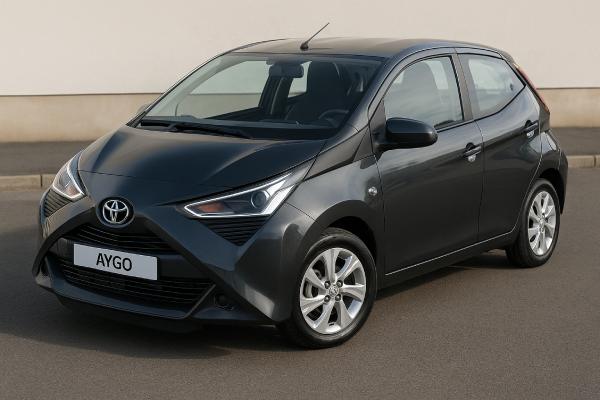
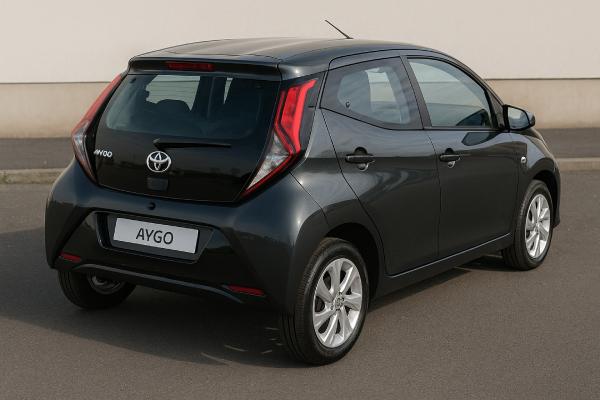
The facelifted Toyota Aygo (KGB40, 2018–2021) is a three-door or five-door A-segment city hatch designed for dense urban life yet capable of cross-town commutes. It’s the mid-cycle refresh of the second-generation Aygo, powered here by Toyota’s updated 1KR-B52 1.0-litre three-cylinder petrol rated at 72 hp and paired to a 5-speed manual or “x-shift” automated manual transmission. This article focuses on the European-market car (Aygo wasn’t sold in North America), covering what owners and buyers most want to know: exact specifications, real-world economy, safety performance and features, reliability patterns, maintenance details with useful torque values, and a practical buyer’s checklist. The 2018 update sharpened the styling, refined NVH, and revised the engine and calibration for better response and WLTP compliance. Its appeal remains simplicity and low running costs: a light kerb weight, timing chain, straightforward suspension, and a compact footprint that makes narrow streets, tight ramps, and parallel parking easy. If you want cheap-to-own, easy-to-park motoring with Toyota’s parts support, this facelifted Aygo is still a smart city tool.
Top Highlights
- Light, simple 1.0-litre triple with a timing chain; low city fuel use and easy DIY service access.
- Tiny turning circle (5.1 m) and short length (3,455 mm) make parking effortless.
- Later trims widely offer Toyota Safety Sense (AEB, Lane Departure Alert) for added peace of mind.
- Caveat: x-shift automated manual can feel jerky and wears clutches faster in stop-start traffic.
- Service rhythm: oil and inspection every 12 months or 10,000 miles (15,000 km).
What’s inside
- Aygo 2018–2021 overview
- Specifications and technical data
- Trims, options, and safety
- Reliability and service actions
- Maintenance and buyer’s guide
- Driving impressions and economy
- How Aygo compares to rivals
Aygo 2018–2021 overview
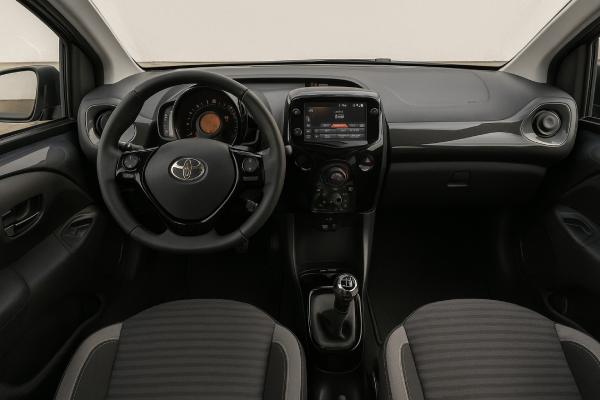
The 2018 facelift brought subtle but meaningful improvements to the Aygo’s city-car formula. Outside, the “X-face” was cleaned up with new LED light signatures, fresh wheels, and colourways; inside, fabrics and trim were updated, sound insulation was improved in key areas, and infotainment availability widened. The powertrain is the revised 1KR-B52, an evolution of Toyota’s 998 cc triple with dual VVT-i (variable valve timing on both cams), multi-port injection, and a chain-driven DOHC valvetrain. Calibration changes and friction reductions deliver 53 kW (72 hp) at 6,000 rpm and 93 Nm (69 lb-ft) at 4,400 rpm, meeting Euro 6 with WLTP fuel-consumption certification.
Underneath, Aygo stays deliberately simple: MacPherson struts up front, torsion beam rear, ventilated front discs with rear drums, and electric power steering tuned for light parking effort yet consistent motorway tracking. Because the car weighs from ~840 to 905 kg depending on trim and gearbox, the modest engine feels adequate around town and returns strong urban economy. The short 2,340 mm wheelbase and 5.1 m kerb-to-kerb turning radius make multi-point manoeuvres painless.
Two transmissions were offered: a 5-speed manual (best for control and durability) and x-shift, an automated manual that actuates a conventional clutch and shifts the 5-speed for you. x-shift can lurch if you keep your foot planted during upshifts; it’s smoother if you ease the throttle as it changes gear. Safety progressed through the run: airbags, stability control, ISOFIX, and—on many 2018–2021 cars—Toyota Safety Sense with Pre-Collision System (AEB), Lane Departure Alert (LDA), and in some markets Automatic High Beam (AHB). Practicality remains class-typical: 168 L of luggage space seats-up, split-fold seatbacks, and a low load lip. The facelift’s biggest draws are low total cost of ownership, excellent parts availability, and tight-city usability, with the known trade-offs of limited high-speed refinement and modest overtaking performance.
Specifications and technical data
Engine and performance
| Item | Specification |
|---|---|
| Code / type | 1KR-B52, 3-cyl inline, 12-valve DOHC, dual VVT-i, chain drive |
| Displacement | 998 cc (1.0 L) |
| Induction / fueling | Naturally aspirated · Multi-port injection |
| Compression ratio | 11.8:1 |
| Rated output | 72 hp (53 kW) @ 6,000 rpm |
| Rated torque | 93 Nm (69 lb-ft) @ 4,400 rpm |
| Emissions standard | Euro 6 (WLTP-certified consumption) |
| Fuel tank | 35 L (9.2 US gal) |
| Aerodynamics | Cd 0.28 |
Transmission and driveline
| Item | 5-speed manual | x-shift (automated manual) |
|---|---|---|
| 1st / 2nd / 3rd | 3.545 / 1.913 / 1.310 | 3.545 / 1.913 / 1.161 |
| 4th / 5th / Rev | 1.027 / 0.850 / 3.214 | 0.973 / 0.804 / 3.2124 |
| Final drive | 3.550 | 4.294 |
| Differential | Open (no LSD) | Open (no LSD) |
| Drive | Front-wheel drive | Front-wheel drive |
Chassis and dimensions
| Item | Specification |
|---|---|
| Suspension (F/R) | MacPherson strut / Torsion beam |
| Brakes (F/R) | Ventilated discs 247×20 mm / Drums 200 mm |
| Steering | Electric rack-and-pinion |
| Wheel/tyre (typical) | 15×—, 165/60 R15 (market/trim variations exist) |
| Length / Width / Height | 3,455 / 1,615 / 1,460 mm (136.0 / 63.6 / 57.5 in) |
| Wheelbase | 2,340 mm (92.1 in) |
| Kerb weight | 840–905 kg (1,852–1,996 lb) by spec |
| GVWR | 1,240 kg (2,734 lb) |
| Turning circle (tyre) | 5.1 m (16.7 ft) |
| Luggage volume (seats up) | 168 L (5.9 cu ft) |
Fluids and capacities
| System | Specification / Notes |
|---|---|
| Engine oil | Toyota-approved 0W-20 (see owner’s manual for alternatives by climate) |
| Oil capacity (service fill) | Refer to service data by VIN (pan and filter variants exist) |
| Coolant | Toyota Super Long Life Coolant (pink) premix |
| Transaxle oil | Low-viscosity GL-4 75W to Toyota spec (manual/x-shift) |
| Brake fluid | DOT 3 or DOT 4 (as marked on reservoir cap) |
| Key torque | Wheel nuts: 103 Nm (76 lb-ft) |
Performance and economy
| Metric | 5-speed manual | x-shift |
|---|---|---|
| 0–100 km/h (0–62 mph) | 13.8 s | 15.2 s |
| Top speed | 160 km/h (99 mph) | 160 km/h (99 mph) |
| WLTP combined | 4.2–4.7 L/100 km (56.4–53.2 mpg UK · 47.0–44.3 mpg US) | 4.3–4.9 L/100 km (54.3–51.3 mpg UK · 45.2–42.7 mpg US) |
| CO₂ (WLTP) | 114–120 g/km | 118–124 g/km |
| Real-world highway (120 km/h / 75 mph) | ~4.8–5.5 L/100 km (49–43 mpg US; 59–52 mpg UK) depending on tyres, load, wind |
Towing and loads
Many markets list no braked towing capacity for Aygo. Verify your registration documents; roof loads are modest and speed-limited when fitted with cross bars.
Trims, options, and safety
Trims and options (Europe, facelift years)
Naming varies by country, but you will commonly see x-play, x-trend, x-cite, JBL Edition, x-clusiv and other specials. Mechanical spec is largely uniform: the same 1.0-litre engine, same brakes and suspension. Differences that matter to buyers:
- Wheels/tyres: Base/mid cars often on 15-inch steel; upper trims and specials add 15-inch alloys (occasionally different designs).
- Infotainment: The 7-inch x-touch screen is widespread from mid-grade up; some editions add integrated navigation or JBL audio (JBL Edition). Smartphone integration rolled out across later model years where regulations allowed.
- Roof: Select markets offered a fabric “x-wave” sliding roof; it slightly alters headroom and adds seals to maintain.
- x-shift gearbox: Usually optional across trims; paddles on some editions. Choose for two-pedal convenience, not performance.
Quick identifiers
- VIN/build plate shows KGB40 with 1KR engine family references.
- Wheel design, roof fabric, and seat fabrics are the easiest visual tells among editions.
- Options are best confirmed against the original order sheet, build spec, or dealer printout by VIN.
Year-to-year highlights
- 2018 (launch of facelift): Exterior/interior refresh; revised engine (1KR-B52) and calibration; improved NVH.
- 2019–2020: Rolling special editions (e.g., JBL Edition with branded audio); wider smartphone integration; incremental trim reshuffles.
- 2021: Final model-year updates and specials; Aygo line sunsets in favour of Aygo X successor.
Safety ratings (Euro NCAP brief)
- Testing around the facelift period shows two ratings: a base configuration using standard equipment and an enhanced rating when fitted with the optional Safety Pack. The base car typically scores 3 stars, while cars with the Safety Pack achieve 4 stars under 2017 protocols.
- Child-seat compatibility uses ISOFIX lower anchors and top tethers on the outer rear seats; always check your specific child-seat model against the vehicle’s approved list.
Safety systems and ADAS
- Airbags: Front, side, and curtain (count by market/year).
- Active systems: ESC, traction control, Hill-Start Assist.
- Toyota Safety Sense (availability varies by trim/year):
- Pre-Collision System (AEB) for urban speeds.
- Lane Departure Alert (LDA).
- Automatic High Beam (AHB) in some markets.
- Service note: Windscreen replacement, front emblem/bumper removal, or ride-height/alignment changes on Safety Sense cars can require camera/radar calibration using manufacturer procedures.
Reliability and service actions
The facelifted Aygo is generally robust, benefiting from a timing chain, non-direct fuel injection, and simple driveline. Age, usage pattern, and maintenance quality are the big variables. Below are the patterns seen most often on 2018–2021 cars, organized by prevalence and cost.
Engine and ancillaries (1KR-B52)
- Water pump seep/leak (common · low–medium): Pink coolant residue at the pump weep hole or a sweet smell after shutdown. Often appears from 50–90k miles (80–145k km). Remedy: replace pump and gasket; refill/bleed with SLLC.
- Auxiliary/serpentine belt noise (common · low): Glazing or cracking from short-trip use. Symptom: chirp/squeal at start-up or when wet. Replace belt; inspect tensioner.
- PCV/throttle body deposits (occasional · low): Rough idle or stumble; clean throttle body and PCV circuit; replace PCV if sticking.
- Oil consumption (occasional · medium): Typically linked to extended intervals or incorrect oil grade; verify consumption with measured top-offs. Remedies range from shorter intervals and ring-cleaning strategies to internal work (rare on well-maintained cars).
- Timing chain rattle at cold start (rare to occasional with high mileage · medium): Brief rattle on first start is acceptable; persistent noise or correlation faults require inspection of chain, guides, and tensioner and replacement if out of spec.
Fuel, ignition, and emissions
- Aging oxygen (lambda) sensors (expected wear): Triggered by economy/emissions codes; use OE-quality parts to avoid persistent faults.
- EVAP small leak codes (occasional): Loose fuel cap or cracked hoses. Smoke test if codes persist.
Driveline and gearbox
- Clutch wear (x-shift) (common · medium): Heavy stop-start use shortens clutch life; signs are slip, judder, or incorrect bite point. Calibrate clutch; replace friction set when worn.
- Manual gearbox feel (occasional): Notchy shifts improve with a fresh GL-4 75W change and linkage check. The gearset itself is durable.
Chassis and body
- Front drop links/top mounts (occasional on rough roads): Knock over sharp bumps; replace affected parts.
- Rear wheel bearings (occasional): Low growl rising with speed; hub/bearing replacement cures it.
- Corrosion hotspots (generally minor): Hatch lower seam, door bottoms, exhaust brackets. Inspect and treat early.
Electrical/infotainment
- 12 V battery (3–6-year horizon): Slow crank, infotainment glitches; test annually after year 3 and replace on failing capacity.
- x-touch head-unit quirks (occasional): Resolved with firmware updates; verify software status during pre-purchase inspection.
Service actions, recalls, and extended coverage
- Aygo has had targeted campaigns across its life; scope varies by VIN and country. Use the official recall checker with your VIN/registration and keep printed proof of completed campaigns in the vehicle history file.
- What to bring when inspecting a used car: A printout from the official checker, plus dealer service history showing completed recalls and any customer-satisfaction programs.
Pre-purchase checks to request
- Full service history with annual oil changes; invoices for coolant and brake-fluid replacement.
- Evidence of water-pump replacement (if mileage suggests) and any clutch work (x-shift).
- Brake/tyre condition and alignment report (uneven wear suggests geometry issues).
- For Safety Sense cars, proof of camera/radar calibration after windscreen or front-end work.
- Cold-start test: no sustained timing rattle; stable idle; no warning lights.
Maintenance and buyer’s guide
Practical maintenance schedule (typical European pattern — verify by VIN)
- Engine oil & filter: Every 12 months or 10,000 miles (15,000 km). Use Toyota-approved 0W-20 (alternatives per climate in the owner’s manual).
- Engine air filter: Inspect annually; replace 20–30k miles (32–48k km) or earlier in dusty conditions.
- Cabin (pollen) filter: Inspect annually; replace every 12–24 months.
- Spark plugs (iridium): Check by 60k miles (96k km); replace when gap out of spec or misfire history exists.
- Coolant (SLLC, pink): First change typically 10 years/100,000 miles (160,000 km), then every 5 years/50,000 miles (80,000 km). Top up with the exact Toyota pink premix only.
- Brake fluid: Replace every 2 years regardless of mileage.
- Transaxle oil (manual/x-shift): Inspect for leaks/condition; many owners refresh 60–90k miles (96–145k km) for shift quality.
- Aux belt: Inspect annually; replace at first signs of cracking/noise (~60–90k miles typical).
- Timing chain: No fixed replacement interval. Replace chain/guides/tensioner only when stretch/noise/correlation faults indicate.
- Tyres & alignment: Rotate every 10–12k miles; target pressures per door placard (commonly ~2.2–2.3 bar / 32–33 psi).
- 12 V battery: Load-test annually from year 3; expect 3–6 years service life.
- Brakes: Inspect pad thickness, rear drum adjustment and slider lubrication at every service.
Fluid specs and essential torques
- Engine oil: Toyota 0W-20; use approved alternatives only as permitted.
- Coolant: Toyota Super Long Life Coolant (pink) premix.
- Transaxle oil: Toyota-spec low-vis GL-4 75W.
- Brake fluid: DOT 3/4 (as marked).
- Wheel nuts: 103 Nm (76 lb-ft).
- Spark-plug gap: typically 1.0–1.1 mm; torque per service data.
DIY-friendliness
Routine items (oil/filter, engine and cabin air filters, wipers, bulb checks, basic brake inspections) are accessible with basic tools. Protect under-tray fasteners with proper bit sizes and modest torque. On Safety Sense cars, avoid disturbing the camera/radar mounts unless you can arrange professional calibration afterward.
Used-car checklist
- Engine cold start: No persistent chain rattle; stable idle; clean exhaust note.
- Cooling system: No coolant smell; no pink residue at water pump; heater warms promptly.
- Clutch/gearbox: Manual should take up smoothly without judder; x-shift should upshift cleanly if you lift slightly during changes.
- Brakes/tyres/suspension: Even tyre wear; quiet over speed bumps; no front top-mount clunk.
- Electrics/infotainment: Test all windows/locks; confirm Bluetooth and camera operation; check for head-unit updates.
- Body/corrosion: Inspect hatch lower seam, door bottoms, and exhaust brackets; look for overspray or panel misalignment indicating prior crash repairs.
- Paperwork: Service book/invoices, recall checker printout, and any clutch or water-pump receipts.
Long-term outlook
Well-maintained 1KR engines commonly exceed 150–200k miles (240–320k km) without internal overhaul. Consumables are inexpensive; parts supply is excellent. The x-shift clutch/actuator is the single largest likely driveline expense; the manual remains the value choice.
Driving impressions and economy
Ride, handling, NVH
At low speeds the Aygo feels nimble and friendly. The steering is light yet precise, and the 5.1 m turning circle is a real advantage in car parks and tight streets. Spring/damper tuning prioritises compliance over absolute body control—appropriate for the class—and the ventilated/disc and drum brake arrangement is well matched to the car’s mass. On motorways (100–120 km/h) it tracks straight and true, but wind and tyre noise are noticeable compared to larger superminis. The facelift added targeted insulation and revised engine mounts that make the cabin calmer than early cars, but this is still a city-class hatch, not a tourer. If you value ride comfort on broken surfaces, 14–15-inch wheels with sensible tyre profiles are preferable to dressy, low-profile fitments.
Powertrain character
The 1KR-B52 is smoothest above 3,000 rpm and happiest if you treat the throttle progressively. The manual’s ratios are well chosen for town use, and the engine willingly revs to its power peak at 6,000 rpm. The x-shift automated manual can feel slow-witted if you don’t adapt; the technique is to lift the throttle briefly during upshifts and use manual mode with paddles when you want predictable timing. Hill starts and creeping are improved versus early calibrations but still benefit from measured pedal inputs.
Braking and control
Pedal feel is reassuring with a linear bite. Repeated hard stops can bring mild fade—normal for the segment—so fresh fluid and quality pads matter. Electronic stability control is conservative but unobtrusive in the wet, and Hill-Start Assist saves the handbrake on steep ramps.
Efficiency in the real world
WLTP figures place the Aygo around 4.2–4.9 L/100 km combined (roughly 44–47 mpg US / 53–56 mpg UK depending on gearbox and trim). In mixed use, owners who keep tyres at placard pressures, avoid long high-rpm stints, and anticipate traffic typically see ~4.6–5.4 L/100 km (43–51 mpg US; 52–61 mpg UK). A steady 120 km/h (75 mph) cruise yields ~4.8–5.5 L/100 km (49–43 mpg US; 59–52 mpg UK), with headwinds and roof accessories adding noticeable penalties. Cold weather increases consumption; use of cabin heat is the main driver, so expect a ~5–15% winter delta on short trips.
Performance metrics that matter
- 0–100 km/h (0–62 mph): 13.8 s (manual) / 15.2 s (x-shift).
- 50–80 mph (80–130 km/h) passing: Plan ahead and downshift early (3rd/4th in manual; force a kickdown in x-shift).
- Braking 100–0 km/h: Class-appropriate distances; confidence depends heavily on tyre brand/condition.
Loads and towing
Most markets do not rate Aygo for braked towing; if a towbar is fitted for bike racks, obey the low permitted nose weight and speed limits. With four adults aboard, adopt smooth inputs, protect brake temperatures on long descents, and maintain safe following distances.
How Aygo compares to rivals
Peugeot 108 / Citroën C1 (platform siblings)
Mechanically near-identical to Aygo (built on the same line), differing mostly in styling, interior trims, and dealer experience. Toyota’s network breadth and perceived durability often support slightly stronger residual values. Shop on condition, spec, and history, not badge.
Volkswagen up! / Škoda Citigo / SEAT Mii
Feel a size up inside, with slightly calmer motorway manners and, in some versions, stronger mid-range torque. Running costs and some parts can be higher, and certain DSG-equipped variants have their own long-term considerations. Aygo counters with lower weight, simple maintenance, and usually cheaper consumables.
Hyundai i10 / Kia Picanto
Grown-up refinement for the class with generous equipment lists and long warranties when newer. They may edge Aygo on space and motorway polish. The Toyota fights back with turning circle, kerb weight, and a robust service network.
Fiat 500 / Panda
Character and style are strong, but reliability varies by engine/year. Aygo tends to win on predictable durability and total cost of ownership; Fiat counters with design and trim choices.
Verdict
If your priorities are low running costs, tight-city agility, and simple, durable hardware, the facelifted Aygo remains a top pick. Choose a manual for the most natural drive and the lowest long-term costs; consider x-shift only if you truly want two-pedal convenience and accept its character. Our used-buy recommendation is a late-build (2020–2021) car with Toyota Safety Sense and a complete annual service history.
References
- TOYOTA AYGO TECHNICAL SPECIFICATIONS 2021 (Technical Specifications)
- Aygo Archive (2018–2022) – Toyota Media Site 2025 (Press Pack Hub)
- Official Toyota Aygo safety rating 2017 (Safety Rating)
- Recalls | Owners 2025 (Recall Database)
- Servicing, MOT & Maintenance 2025 (Owner Services)
Disclaimer
This article is for informational purposes only and is not a substitute for professional diagnosis, repair, or official service instructions. Specifications, torque values, intervals, and procedures vary by VIN, model year, market, and equipment. Always verify figures and methods against your vehicle’s owner’s manual and factory service information, and follow all safety guidance.
If this guide helped, please consider sharing it with fellow owners on Facebook or X/Twitter—it supports xcar’s work and helps other Aygo drivers.