
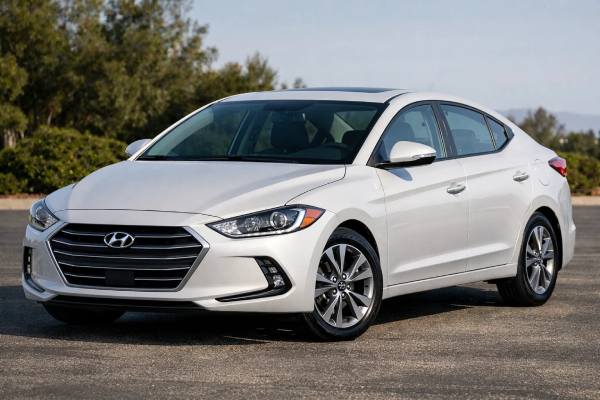
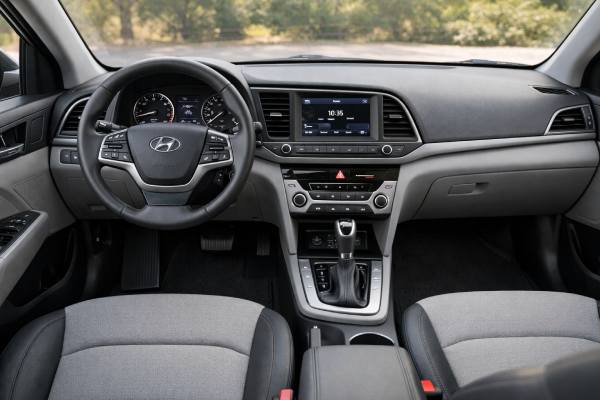
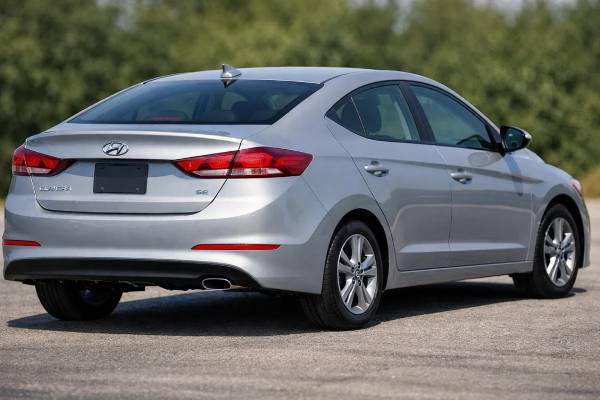
The Hyundai Elantra AD 2.0 MPI Atkinson is one of those compact sedans that looks ordinary until you judge it on the things that matter over time. For 2017–2018, Hyundai paired the AD body with a naturally aspirated 2.0-litre Nu engine using an Atkinson-cycle tune, then backed it with simple front-wheel-drive packaging, a roomy cabin, and low-stress everyday manners. The result was not a sport sedan, but it was efficient, smooth, and easier to own long term than many small turbo rivals. The AD generation also improved crash structure, cabin refinement, and driver-assistance availability compared with earlier Elantras. That makes it a sensible used buy now, especially for owners who want a compact car that still feels modern without becoming complicated. The main warning is that market differences matter. Trim names, brake hardware, safety equipment, and even some service details vary by VIN and region. Buy by actual equipment and condition, not by badge alone.
Quick Specs and Notes
- The 2.0 MPI Atkinson engine is simple, chain-driven, and usually cheaper to own than a similar turbocharged compact-car engine.
- Cabin room and rear-seat legroom are real strengths, and the sedan boot is useful for family duty.
- Fuel economy is still competitive, especially with the six-speed automatic on steady highway runs.
- Certain 2017 cars should be checked for EPS motor recall work and thermostat campaign completion.
- A practical oil and filter interval is every 12,000 km or 12 months, or every 6,000 km in severe service.
On this page
- Elantra AD Platform View
- Elantra AD 2.0 Technicals
- Elantra AD Trim and Safety
- Failure Trends and Campaigns
- Service Plan and Buyer Tips
- Road Manners and Economy
- Elantra AD and Its Rivals
Elantra AD Platform View
The AD-generation Elantra was a meaningful step forward for Hyundai’s compact-car formula. Earlier Elantras were competent and often well priced, but the AD was the version that began to feel more complete as a product. It added a stiffer body shell, cleaner cabin design, more mature ride quality, and a broader safety story. That matters because this car was never meant to win by excitement alone. It was designed to be light, efficient, roomy, and easy to live with.
The 2.0 MPI Atkinson version suits that role well. Hyundai tuned the Nu 2.0-litre four-cylinder for efficiency rather than outright punch, which explains both its appeal and its limitation. On paper, 147 hp does not sound especially strong, and in hard acceleration it is only adequate. In daily use, though, the engine is smooth, predictable, and free of turbo lag. It also avoids direct injection on this version, which is a genuine ownership advantage. Multi-point injection means fewer worries about intake-valve carbon buildup than on many GDI engines, and that helps explain why the 2.0 MPI has a calmer long-term reputation.
The AD’s packaging is one of its quiet strengths. Hyundai gave the car a 2,700 mm wheelbase, which is generous in this class, and the benefit shows up most clearly in the rear seat. The Elantra does not feel cramped in the way some stylish compact sedans do, and the boot remains useful enough for airport runs, family errands, or a week’s luggage. That is a major reason this car still makes sense as a used sedan, even in a market that now favors crossovers.
Mechanically, the car stays conventional. The front suspension uses MacPherson struts, the rear uses a torsion-beam axle, the steering is electric, and the driveline is front-wheel drive only. None of that is unusual, but the real achievement is that Hyundai made those familiar ingredients work well together. The AD is stable on the highway, easy in town, and generally quieter than some cheaper compacts from the same era. It is not an enthusiast chassis, but it does not feel flimsy or unfinished either.
Another point in the AD’s favor is that its market role was broad. Hyundai sold it both as a value-focused commuter and, in higher trims, as a more upscale small sedan. That means used buyers can still find versions with a basic mechanical layout but meaningful comfort and safety upgrades. It also means two Elantras with the same engine can feel very different depending on trim, tyres, braking hardware, and options.
That last point is important. A 2017–2018 Elantra AD 2.0 MPI should be judged less like a single fixed spec and more like a family of closely related cars. The design itself is sound. The key is choosing the right example.
Elantra AD 2.0 Technicals
For 2017–2018, the best-documented version of the Elantra AD 2.0 MPI Atkinson is the North American sedan, where Hyundai published detailed trim-by-trim specifications. Those official figures give a clear picture of the engine, gearing, dimensions, wheel packages, and fuel economy. A few details, such as exact service-fill quantities in every market, still vary by VIN and handbook, so those are noted where needed.
| Powertrain and efficiency | Figure |
|---|---|
| Code | Nu 2.0 MPI Atkinson cycle family |
| Engine layout and cylinders | Inline-4, DOHC, 4 cylinders |
| Valves per cylinder | 4 |
| Bore × stroke | 81.0 × 97.0 mm (3.19 × 3.82 in) |
| Displacement | 2.0 L (1,999 cc) |
| Induction | Naturally aspirated |
| Fuel system | MPI / port injection |
| Compression ratio | 12.5:1 |
| Max power | 147 hp (110 kW) @ 6,200 rpm |
| Max torque | 179 Nm (132 lb-ft) @ 4,500 rpm |
| Timing drive | Chain |
| Rated efficiency | 7.1–8.1 L/100 km combined depending on transmission and trim, equivalent to roughly 29–33 mpg US |
| Real-world highway @ 120 km/h | Usually around 6.4–7.3 L/100 km in healthy condition |
| Transmission and driveline | Figure |
|---|---|
| Transmission | 6-speed manual or 6-speed automatic with lock-up torque converter |
| Drive type | FWD |
| Differential | Open |
| Chassis and dimensions | Figure |
|---|---|
| Suspension, front | MacPherson strut with coil springs |
| Suspension, rear | Coupled torsion beam axle |
| Steering | Motor-driven power steering |
| Steering ratio | About 14.2:1 |
| Turning circle, kerb-to-kerb | 10.6 m (34.8 ft) |
| Brakes | Front 280 mm ventilated discs; rear 203 mm drums on base SE, 262 mm solid rear discs on higher trims |
| Wheels and tyres | 195/65 R15, 205/55 R16, or 225/45 R17 depending on trim |
| Length | 4,570 mm (179.9 in) |
| Width | 1,801 mm (70.9 in) |
| Height | 1,435 mm (56.5 in) |
| Wheelbase | 2,700 mm (106.3 in) |
| Kerb weight | 1,255–1,350 kg (2,767–2,976 lb) depending on trim and transmission |
| GVWR | 1,760–1,780 kg (3,880–3,924 lb) |
| Fuel tank | 53.0 L (14.0 US gal / 11.7 UK gal) |
| Cargo volume | About 407 L (14.4 ft³), SAE-style measure |
| Performance and capability | Figure |
|---|---|
| 0–100 km/h (0–62 mph) | Usually around 9.8–10.5 s depending on transmission and test conditions |
| Top speed | Commonly listed around 195–200 km/h (121–124 mph), market dependent |
| Braking distance | No dependable official open figure for the exact 2.0 MPI Atkinson trim |
| Towing capacity | Market dependent; verify from VIN and local handbook |
| Payload | Varies by trim and market; verify from registration label |
| Fluids and service capacities | Figure |
|---|---|
| Engine oil | SAE 5W-30 is the common safe baseline; 5W-20 or 5W-40 may appear in market-specific literature; about 3.6–3.7 L with filter |
| Coolant | Phosphate-based ethylene glycol coolant, commonly used in 50:50 mix |
| Manual transmission oil | API GL-4 manual transaxle fluid, roughly 1.7–2.0 L |
| Automatic transmission fluid | Hyundai SP-IV specification |
| Differential / transfer case | Not applicable |
| A/C refrigerant | R-134a; verify charge quantity on the under-bonnet label |
| A/C compressor oil | Verify from system label and service manual |
| Key torque specs | Public data is inconsistent for this exact trim; verify wheel nuts, drain plug, spark plugs, and caliper fasteners from official service data |
| Safety and driver assistance | Figure |
|---|---|
| Euro NCAP | No clear Euro NCAP result directly attributable to this exact 2017–2018 North American 2.0 MPI sedan configuration |
| IIHS | Good in driver-side small overlap, moderate overlap front, side, roof strength, and head restraints for applicable 2017–20 sedans built after March 2016 |
| Headlight rating | Good with optional HID projector setup; Poor with standard halogen setup |
| Front crash prevention | Optional system rated Superior in IIHS testing |
| Child-seat anchors | IIHS LATCH ease of use rated Acceptable |
This technical picture explains why the AD 2.0 MPI feels balanced rather than dramatic. It has enough power, modest weight, practical dimensions, and no obviously unnecessary mechanical complexity. That is a strong foundation for a used family sedan.
Elantra AD Trim and Safety
Trim structure on the AD 2.0 MPI is simpler to understand if you use the United States as the baseline region. For 2017, Hyundai sold the 2.0-litre sedan mainly in SE, Value Edition, and Limited form. For 2018, the lineup shifted to SE, SEL, Value Edition, and Limited. That change matters because 2018 cars gained a clearer middle trim and redistributed some safety and convenience features.
The base SE was the value car. In 2017 and 2018 it used the 2.0 Atkinson engine, offered the 6-speed manual, and kept equipment sensible rather than luxurious. That meant smaller wheels, fewer convenience extras, and, on some versions, rear drum brakes. Even so, it still carried the core structure, airbags, ESC, and the practical packaging that define the AD. For buyers who care most about keeping long-term costs low, the SE manual is often the simplest version of the range.
The mid-range cars are more interesting for most buyers. In 2017, the Value Edition added items such as blind-spot detection with rear cross-traffic alert, hands-free trunk access, heated front seats, automatic climate control, and more polished trim details. In 2018, the SEL became the key middle spec, while Value Edition remained the feature-heavy choice. Importantly, 2018 also made four-wheel disc brakes more accessible and moved some safety and convenience items down the range. That means a 2018 SEL or Value Edition often represents the best balance between equipment and simplicity.
The Limited is the most complete version, but also the one where option detail matters most. It could be fitted with the Ultimate Package, which added the key active-safety hardware that shaped the Elantra’s strongest IIHS story. In those cars, buyers got features such as Forward Collision Warning, Automatic Emergency Braking, Lane Departure Warning, Lane Keep Assist, Smart Cruise Control, HID headlights with Dynamic Bending Light, and better crash-avoidance performance. Without that package, the Limited is still a nice trim. With it, the car becomes far more appealing from a safety standpoint.
Safety equipment on the AD is strong for the period. Hyundai gave the sedan advanced dual front airbags, front side airbags, curtain airbags, a driver’s knee airbag, ABS, EBD, Brake Assist, ESC, traction control, and front seatbelt pretensioners across the mainstream U.S. range. The platform then backed that up with good IIHS crashworthiness results. On models built after March 2016, driver-side small overlap, moderate overlap front, side impact, roof strength, and head restraints all scored Good. Child-seat anchor ease of use was Acceptable. The weak point was lighting: standard halogen setups were rated Poor, while the optional HID package achieved Good.
That distinction matters because it also shaped the 2018 Top Safety Pick+ result. The Elantra 4-door sedan earned that award only when equipped with optional front crash prevention and specific headlights, and only on vehicles built after December 2017. So, for used buyers, the phrase “Top Safety Pick+ Elantra” is not enough by itself. The car has to be the right build period with the right equipment.
That is the key trim lesson on the AD. A mid-level car may be the best value. But the best safety-equipped car is the one with the correct hardware, not just the highest badge.
Failure Trends and Campaigns
The Hyundai Elantra AD 2.0 MPI Atkinson has a better long-term reputation than some owners expect, mostly because its problems are usually ordinary rather than dramatic. The Nu 2.0 MPI on these 2017–2018 cars is not the engine that usually drives the worst Hyundai headlines. That is a genuine advantage. But “better reputation” does not mean “no known weak spots.”
The most common issues are low to medium severity and tend to cluster around normal wear items. Ignition coils, spark plugs, batteries, and throttle-body contamination can all cause rough idle, light hesitation, or hard starting. These faults often make the car feel more serious than it really is. A healthy 2.0 MPI should start quickly, idle cleanly, and respond smoothly. If it does not, the fix is often a return to service basics rather than anything catastrophic.
Cooling-system and thermostat behavior matter more than most buyers realize. Hyundai issued a service campaign for certain 2017 Elantra 2.0 MPI cars because the thermostat could fail to regulate temperature correctly and trigger DTC P0128. Hyundai’s published campaign procedure stated that thermostat replacement was required on affected vehicles even without a stored P0128 fault. This is a good example of why dealer history matters. A car can drive normally and still have missed a useful factory campaign.
Steering is another area to inspect carefully. A narrow 2017 recall campaign covered certain early-production Elantra AD cars because an MDPS motor-to-ECU connector issue could illuminate the EPS warning lamp and cause the vehicle to revert to manual steering effort. Beyond that recall, later technical guidance also addressed worm-shaft bearing noise in the column on some AD cars. The practical symptom is a click, grind, or rough bearing noise from the steering column rather than a vague handling issue. It is usually fixable, but it is not something to ignore on a test drive.
The broader recall issue for the AD is ABS-module fire risk. Hyundai’s later safety recall work on affected vehicles addressed the possibility of an internal short in the ABS module that could increase the risk of an engine-compartment fire even when the vehicle was parked and turned off. That is not a drivability problem in the usual sense, but it is a serious reason to verify open-campaign status by VIN before purchase.
Suspension and brake wear are predictable but worth budgeting for. Front lower-arm bushes, drop links, dampers, top mounts, rear beam bushes, and wheel bearings all wear in familiar ways. Disc-brake cars can also suffer sticky rear calipers if maintenance has been ignored. None of that is unusual, but once several small issues pile up together, the AD loses the composed feel that makes it attractive in the first place.
The good news is that the 2.0 MPI layout avoids one common worry from many modern engines: intake carbon buildup from direct injection. Because this engine is port-injected, that issue is far less central to ownership than it is on many competitors. In plain terms, the AD’s reliability story is usually about maintenance discipline and campaign completion, not about living with one fundamental design flaw.
Service Plan and Buyer Tips
The AD 2.0 MPI is happiest when maintenance stays boring and regular. That is the kind of engine that rewards simple habits: fresh oil, clean filters, good coolant, and honest inspection of the chain, brakes, and suspension. If you are buying one without a very complete history, the smart move is to establish a new baseline quickly instead of waiting for problems to announce themselves.
| Item | Practical interval | Notes |
|---|---|---|
| Engine oil and filter | Every 12,000 km or 12 months | Severe use: 6,000 km or 6 months |
| Engine air filter | Inspect every service, replace around 48,000 km | Earlier in dusty conditions |
| Cabin air filter | About every 24,000 km or 24 months | Sooner if airflow drops |
| Spark plugs | Long-life iridium plugs can run a long interval, but inspect earlier on rough-running cars | Replace earlier if misfire appears |
| Coolant | First major replacement can be long-life by market schedule, but verify age and condition closely | Do not ignore unexplained top-ups |
| Brake fluid | Every 2–3 years | Moisture contamination matters |
| Drive belts and tensioner | Inspect regularly from mid-life onward | Replace on cracks, noise, or slip |
| Manual transaxle oil | Refresh around 80,000–100,000 km or on unknown history | Use GL-4 only |
| Automatic transmission fluid | Inspect condition early and refresh prudently in hard use | Use Hyundai SP-IV only |
| Tyres and alignment | Check monthly and at every service | Uneven wear often points to bushings or geometry |
| Battery | Test yearly after age 4 | Weak voltage creates false complaints |
| Timing chain system | No fixed belt-style interval | Inspect on noise, poor service history, or timing faults |
The fluid story is simple. Use the correct oil, not just a familiar brand. The 2.0 MPI generally works well on quality 5W-30, with climate and handbook allowances for other approved grades. Oil capacity is around 3.6 to 3.7 litres with filter on common service references. Manual gearbox oil is roughly 1.7 to 2.0 litres of the correct GL-4 fluid, and automatic cars require Hyundai SP-IV. The coolant should be the correct phosphate-based formula and mixed properly. This is not the kind of car that benefits from improvisation.
From a buying perspective, the AD should be inspected in a set order. Start with the paperwork. Confirm oil changes, campaign completion, brake-fluid history, battery age, and any thermostat or steering work. Then check the car cold. Listen for chain noise, rough idle, or long crank time. On the road, pay attention to steering feel, suspension thumps, brake straightness, and whether the automatic shifts smoothly. The car should feel light and calm, not tired or loose.
A smart buyer also checks the trim against the hardware. If a seller advertises top safety or premium equipment, verify the actual features. Does it have the right headlights? Does it have the correct driver-assistance package? Does it have rear discs or drums? On the AD, these details matter.
The best-value cars are usually mid-range 2018 models or clean SE manuals with clear history. The best fully equipped cars are Limited examples with the right optional safety hardware and confirmed campaign completion. The ones to avoid are neglected bargain cars with warning lights, cheap tyres, noisy steering, and vague service records. Long-term durability is strong enough to justify ownership, but only if the car starts from a healthy baseline.
Road Manners and Economy
The Elantra AD 2.0 MPI Atkinson is easy to underestimate from the driver’s seat. It does not deliver the sharp turn-in of a Focus or the crisp engine feel of a sportier compact, yet after a few days it starts to make sense. The controls are light, the cabin is calm enough, and the whole car feels tuned for the kind of driving most owners actually do. That is the point.
Around town, the 2.0 MPI is smooth and predictable. Throttle response is linear, low-speed creep on the automatic is easy to manage, and visibility is decent enough for a modern compact sedan. The engine is not especially strong below 2,000 rpm, but it is consistent. There is no turbo surge and no awkward transition in power delivery. The manual gearbox makes the most of the engine if you want the most direct response, while the six-speed automatic suits the car’s relaxed nature and usually helps fuel economy.
On open roads, the Elantra’s real strengths appear. Straight-line stability is good, the cabin stays composed, and the long wheelbase gives the car a mature feel for the class. The steering is accurate but not especially communicative. That means the AD is more pleasant on a long commute than on a deliberately demanding road. The chassis is tuned to stay settled rather than playful, and the torsion-beam rear axle reflects that priority. In daily use, it works well.
Ride quality is one of the car’s better traits, especially on smaller wheel packages. A 15- or 16-inch car usually rides more fluently than a 17-inch Limited. That is worth remembering when choosing between trims. The larger wheels look better and may be tied to stronger equipment, but the smaller ones often preserve the Elantra’s best comfort balance. Cheap tyres or worn dampers can undo that quickly, so condition still matters more than brochure specification.
Noise, vibration, and harshness are acceptable for the class. Engine noise is subdued in light use, more noticeable under hard acceleration, and rarely intrusive at a steady cruise. Wind and tyre noise increase on the highway, but the car remains entirely usable for long trips. Again, tyre choice makes a big difference. A well-kept Elantra feels quieter than many used examples suggest because so many have been fitted with bargain rubber.
Real-world fuel use remains one of the strongest reasons to buy the 2.0 Atkinson car. In mixed driving, expect roughly 6.8–7.8 L/100 km from a healthy automatic and a little more or less depending on route, climate, and driver style. Heavy city use can move that into the high-8s, while a gentle highway run often lands around 6.2–6.8 L/100 km. A steady 120 km/h cruise usually sits near the high-6s if alignment, tyres, and ignition condition are all right. Those are still respectable numbers for a naturally aspirated compact sedan.
The AD’s driving verdict is therefore simple. It is not exciting, but it is coherent. The engine, chassis, and cabin all aim at the same goal: easy, efficient, everyday transport. In that role, it is very convincing.
Elantra AD and Its Rivals
The Elantra AD 2.0 MPI Atkinson compares best when you judge it as a complete ownership package rather than by one flashy strength. Against rivals such as the Toyota Corolla, Honda Civic, Mazda3, Ford Focus sedan, Kia Forte, and Chevrolet Cruze, the Hyundai was rarely the most exciting or the most prestigious. But it was often one of the easiest to justify.
Compared with a Corolla, the Elantra usually feels more style-conscious and sometimes more generously equipped for the money, though Toyota still holds the stronger default reliability image. Against a Civic, the Hyundai gives away some sharpness and perhaps some interior polish, but it often counters with easier pricing and a more relaxed character. Against a Mazda3, it loses on steering feel and enthusiasm, yet wins on back-seat space and a lower-stress ownership feel. That pattern repeats through the class. The Elantra is not the dramatic class leader. It is the balanced one.
The 2.0 MPI Atkinson version sharpens that case because it stays mechanically simple. A lot of late-2010s compacts moved toward smaller turbo engines, dual-clutch gearboxes, or more complicated trim strategies. The Elantra’s 2.0 MPI keeps things conventional: a naturally aspirated four-cylinder, a normal six-speed automatic, and a layout that most independent workshops understand. For long-term owners, that simplicity has real value.
The AD also holds up well on packaging. It remains one of the more useful sedans in the compact class because it offers real rear-seat room and a practical boot without feeling oversized. Buyers moving out of an older midsize sedan sometimes find the Elantra easier to accept than they expected because it does not feel cramped in the places that matter most.
Where it gives ground is emotional appeal. If your priority is steering precision, standout styling inside the cabin, or hot-hatch-adjacent road manners, other cars are more memorable. But that is not what the 2.0 MPI Elantra is for. It is for the buyer who wants a rational compact with strong safety fundamentals, decent ride quality, good economy, and manageable ownership costs.
Within Hyundai’s own lineup, the 2.0 MPI is the sensible middle point. It avoids the complexity of the turbo cars, delivers better everyday flexibility than the smaller naturally aspirated engines in some markets, and feels like the engine the AD chassis was really meant to use in normal life. That is why it still makes sense as a used sedan.
So how does it compare to rivals in one line? It is the compact sedan for people who want a calm, roomy, efficient car with fewer long-term surprises than the class average. That remains a strong argument.
References
- 2018 HYUNDAI ELANTRA SEDAN SPECIFICATIONS 2018 (Technical Data)
- 2018 HYUNDAI ELANTRA SEDAN FEATURES & OPTIONS 2018 (Brochure)
- 2017 Hyundai Elantra 2017 (Safety Rating)
- Part 573 Safety Recall Report 20V-061 2020 (Recall Database)
- ENGINE THERMOSTAT REPLACEMENT P0128 (SERVICE CAMPAIGN TLL) 2018 (TSB)
Disclaimer
This article is for informational purposes only and is not a substitute for professional diagnosis or repair. Specifications, torque values, service intervals, procedures, and equipment can vary by VIN, market, build date, and trim, so always verify against the vehicle’s official service documentation and recall history before carrying out maintenance or making a purchase decision.
If this guide helped you, please consider sharing it on Facebook, X, or another platform to support our work.