
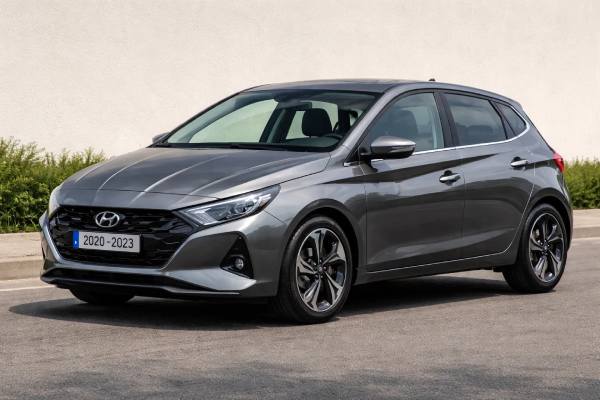
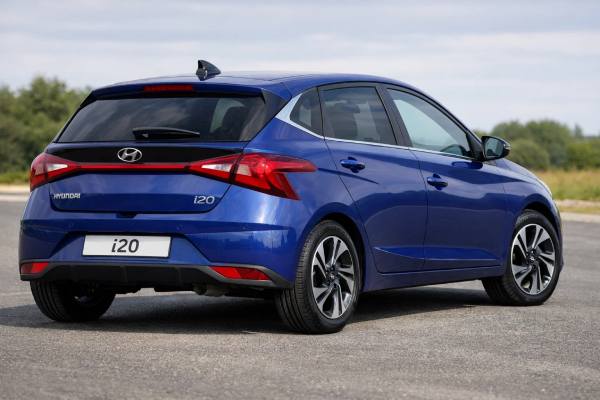
The Hyundai i20 BC3 1.0 T-GDi 48V 120 is the version of the third-generation i20 that best shows how far Hyundai’s small hatchback had moved upmarket by 2020. It combines a compact turbocharged three-cylinder petrol engine with a 48-volt mild-hybrid system, useful low-rpm torque, and a body that is still easy to park but noticeably roomier and more sophisticated than older i20s. In this form, the car feels more like a modern all-round hatch than a basic city runabout. The mild-hybrid setup is also more than a marketing label: it supports coasting and stop-start functions, helps efficiency, and pairs with either the 6-speed intelligent manual or the 7-speed dual-clutch transmission. For used buyers, the big strengths are space, technology, efficiency, and a broad equipment spread. The cautions are equally clear. This is still a small turbocharged car, so oil quality, battery health, software updates, and service history matter far more than they do on the simpler older naturally aspirated models.
Key Takeaways
- Strong 200 Nm torque makes the 120 hp mild-hybrid feel much more effortless than the old non-turbo i20 engines.
- The BC3 body is roomy for the class, with a genuinely useful 352 L boot and improved rear-seat space.
- SmartSense safety features and a more modern cabin give it a clear step up over earlier i20 generations.
- The engine is sound when maintained, but missed oil changes, weak 12 V support, and ignored warning lights are not small issues on a 48V turbo car.
- A practical oil and filter interval is every 10,000 to 15,000 km or 12 months, with shorter intervals for repeated short-trip use.
Jump to sections
- Hyundai i20 BC3 hybrid profile
- Hyundai i20 BC3 numbers and capacities
- Hyundai i20 BC3 grades and driver aids
- Reliability patterns and factory fixes
- Maintenance plan and buyer filter
- Real-world dynamics and economy
- BC3 i20 against competitors
Hyundai i20 BC3 hybrid profile
The BC3-generation i20 marked a real change in tone for Hyundai’s supermini. Earlier i20s were sensible, roomy, and often good value, but they still felt aimed at buyers who mainly wanted simple transport. The BC3 broadened that appeal. It kept the practical layout, but it added much sharper design, a more digital dashboard environment, better safety technology, and a cleaner sense of identity. In 1.0 T-GDi 48V 120 form, it also gained the engine that most clearly matches the chassis.
That matters because this version is not defined by raw horsepower alone. The important figure is torque. With 200 Nm available, the 120 hp mild-hybrid feels stronger in ordinary driving than most small hatchbacks with similar paper outputs. It steps away more cleanly, needs fewer downshifts, and feels calmer on faster roads than the old naturally aspirated petrol engines that used to dominate this class. The 48V system also helps the overall impression. It supports efficiency features such as coasting and smoother stop-start operation, and in iMT form it can decouple the engine under light-load conditions to save fuel.
The engine is paired with two distinct transmission choices. The 6-speed intelligent manual transmission gives the car a slightly lighter, more direct feel and is generally the pick for drivers who want maximum control and slightly sharper response. The 7-speed dual-clutch transmission makes the i20 more relaxed in traffic and is usually the better choice for buyers who spend most of their time in town. Neither turns the i20 into a hot hatch. Instead, they change the character of an already well-rounded supermini.
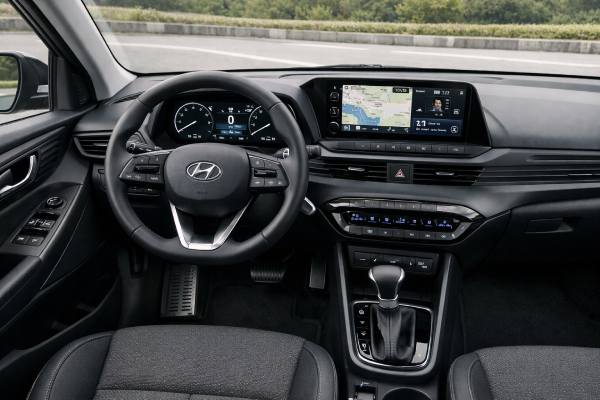
The BC3’s cabin is another reason this version stands out. The dashboard design is cleaner and more modern than the old GB-generation car, infotainment is much stronger, and the interior space is unusually good for a hatch of this size. Rear passengers fit better than many buyers expect, and the luggage area is big enough for a weekly shop, an airport run, or light family duty without compromise. Hyundai also pushed the safety and connectivity story much harder here than before, so the car no longer feels like a budget alternative with a few compromises hidden in the detail.
Its weaknesses are the normal ones for a modern small turbo hatch. There is more drivetrain complexity than in the simple older 1.2 MPI cars. Battery condition matters more. Software calibration matters more. Oil quality matters more. But if the buyer understands those points and wants the best non-N version of the BC3 line for balanced everyday use, the 1.0 T-GDi 48V 120 is a very convincing choice. It is quick enough, efficient enough, roomy enough, and modern enough to feel relevant well beyond its launch years.
Hyundai i20 BC3 numbers and capacities
The BC3 i20 1.0 T-GDi 48V 120 sits at the top of the mainstream petrol range below the i20 N. Official European technical data shows that Hyundai aimed for a broad performance-and-efficiency balance rather than a narrow sporty brief. The tables below focus on the exact 120 hp 48V car while noting where transmission or trim changes alter the figures.
Powertrain and efficiency
| Item | Hyundai i20 (BC3) 1.0 T-GDi 48V 120 |
|---|---|
| Code | G3LE / Kappa-family listing varies by market; verify by VIN |
| Engine layout and cylinders | Inline-3, DOHC, 12-valve |
| Valves per cylinder | 4 |
| Bore × stroke | 71 × 84 mm |
| Displacement | 1.0 L (998 cc) |
| Mild-hybrid motor | 48V mild-hybrid starter-generator |
| Motor count and axle | Single belt-driven starter-generator, engine-mounted |
| System voltage | 48 V |
| Battery chemistry | Lithium-ion polymer |
| Induction | Turbocharged |
| Fuel system | Gasoline direct injection |
| Compression ratio | 10.5:1 |
| Max power | 120 hp (88.2 kW) @ 6,000 rpm |
| Max torque | 200 Nm in Hyundai technical data tables; some market literature rounds differently, so verify by VIN and market sheet |
| Timing drive | Chain |
| Rated efficiency | WLTP combined typically 5.5–5.1 L/100 km |
| Real-world highway @ 120 km/h | Usually about 6.0–6.8 L/100 km depending on tyres, weather, and transmission |
Transmission and driveline
| Item | 6iMT | 7DCT |
|---|---|---|
| Transmission | 6-speed intelligent manual | 7-speed dual-clutch |
| Drive type | FWD | FWD |
| Differential | Open | Open |
| 0–100 km/h | 10.1 s | 10.3 s |
| Top speed | 190 km/h | 190 km/h |
Chassis and dimensions
| Item | Figure |
|---|---|
| Front suspension | MacPherson strut |
| Rear suspension | Coupled torsion beam axle |
| Steering type | Rack-and-pinion / column-type motor-driven power steering |
| Steering ratio | 15.0 (DC) / 13.1 (BLAC) in Hyundai technical data |
| Lock-to-lock | 2.7 turns |
| Front brakes | Ventilated discs |
| Front brake diameter | 256 mm on smaller-wheel cars / 280 mm on 15-inch-plus brake package |
| Rear brakes | Drum standard / solid disc optional depending on trim |
| Rear brake diameter | 203.2 mm drum / 262 × 10T mm optional disc |
| Wheels and tyres | 185/65 R15, 195/55 R16, 215/45 R17 |
| Ground clearance | 140 mm |
| Length | 4,040 mm |
| Width | 1,775 mm |
| Height | 1,450 mm |
| Wheelbase | 2,580 mm |
| Turning circle | 5.2 m |
| Kerb weight | About 1,090–1,200 kg (6iMT) / 1,115–1,225 kg (7DCT) |
| GVWR | 1,620 kg (6iMT) / 1,650 kg (7DCT) |
| Fuel tank | Typically 40 L in published market specifications |
| Cargo volume | 352 L seats up / 1,165 L seats down, VDA |
Capability and published load figures
| Item | Figure |
|---|---|
| Payload | About 420–530 kg (6iMT) / 425–535 kg (7DCT) |
| Braked towing | Up to 1,110 kg in published market specifications |
| Unbraked towing | 450 kg |
Fluids and service capacities
| Item | Figure |
|---|---|
| Engine oil specification | Hyundai-approved low-ash oil; owner-manual guidance for the BC3 1.0 T-GDi family commonly lists ACEA C2 |
| Engine oil viscosity | 0W-20 is commonly specified; climate-dependent alternatives may appear by market |
| Engine oil capacity | 3.6 L |
| Coolant type | Ethylene-glycol base coolant for aluminium radiator |
| Coolant capacity | About 5.73 L |
| Manual / iMT fluid | API GL-4, SAE 70W |
| Manual / iMT capacity | About 1.5–1.6 L |
| DCT fluid | API GL-4, SAE 70W |
| DCT capacity | About 1.6–1.7 L |
| iMT actuator fluid | DOT-4 LV type fluid |
| iMT actuator capacity | About 0.082 L |
| A/C refrigerant | Verify by under-bonnet label |
| A/C compressor oil | Verify by service documentation |
| Key torque specs | Wheel nuts commonly 88–107 Nm |
Safety and driver assistance
| Item | Figure |
|---|---|
| Euro NCAP | 4 stars (2021 application of Bayon test to i20) |
| Adult occupant | 76% |
| Child occupant | 82% |
| Vulnerable road users | 76% |
| Safety assist | 67% |
| Headlight rating | IIHS not applicable in this Europe-focused context |
| ADAS suite | FCA, LKA, DAW, HBA, ISLA, lane support, and trim-dependent extras such as BCA, RCCA, NSCC, and LFA depending on market and pack |
The main practical takeaway is that the BC3 120 48V gives you a genuinely strong mainstream supermini powertrain without forcing you into the high-cost end of the range. The 6iMT is slightly sharper, the 7DCT slightly easier, and both fit the car well.
Hyundai i20 BC3 grades and driver aids
Trim choice changes the BC3 i20 more than many buyers first assume. The engine gives the 120 mild-hybrid its underlying character, but the grade determines whether the car feels like a tidy, well-equipped small hatch or a much more technology-heavy mini-grand-tourer for the class. Hyundai pushed the BC3 upmarket in design and cabin layout, so even mid-level cars feel more polished than older i20 generations.
In most European markets, the 1.0 T-GDi 48V 120 sat in better-equipped versions rather than the most basic fleet-grade trims. That makes sense. Hyundai clearly saw the 120 as the aspirational mainstream engine, not the entry one. As a result, many used examples come with 16-inch or 17-inch wheels, touchscreen infotainment, digital driver displays, smartphone integration, climate control, reversing camera or parking sensors, and a broader safety spec than earlier i20s. That is a strength, but it also means buyers need to check functionality carefully because there are simply more systems involved.
Wheel and suspension packaging have a bigger effect than many owners expect. Cars on 16-inch wheels usually strike the best overall balance because they look right, preserve ride comfort, and keep tyre costs reasonable. Seventeen-inch cars look better and can make the car feel slightly more planted at first turn-in, but the gains are modest and the ride edge is sharper. For most owners, the 16-inch setup is the sweet spot. Hyundai’s own technical data also shows brake hardware can vary by trim, with rear discs optional rather than universal, so buyers should verify exact brake configuration by VIN rather than badge.
The safety story is one of the BC3’s strongest cards, but it needs context. Euro NCAP applied the 2021 Bayon test rating to the i20 because the two cars share the same safety equipment and architecture in the relevant areas. That gave the i20 a 4-star rating with strong child-occupant performance and respectable vulnerable-road-user protection, but not a 5-star overall outcome. The key reason is not weak crash engineering. It is that the standard active-safety package, especially AEB performance against other vehicles, was not class-leading under that newer protocol.
Even so, the BC3 i20 offers one of the more complete safety menus in the segment. Depending on trim and market, buyers may find Forward Collision-Avoidance Assist, Lane Keep Assist, Lane Following Assist, Driver Attention Warning, High Beam Assist, Intelligent Speed Limit Assist, Blind-spot Collision-Avoidance Assist, Rear Cross-traffic Collision-Avoidance Assist, Navigation-based Smart Cruise Control, and eCall. That is a much richer active-safety story than the earlier GB-generation car could offer.
The important buying point is that not all of those systems are standard on every 120 hp i20. Some are pack-dependent, some market-dependent, and some tied to upper trims. So a used buyer should not assume from engine alone. Check the car’s physical equipment, the instrument-cluster menus, and any ADAS buttons or camera/radar features. After accident repairs or windscreen replacement, calibration quality also matters. A well-equipped i20 with correctly functioning driver aids is a real strength. A poorly repaired one with warning messages or misaligned sensors is the opposite.
Reliability patterns and factory fixes
The BC3 i20 1.0 T-GDi 48V 120 is still young enough that its reliability story is more about patterns and risk areas than about an old-car legend. That is good news. There is no widely documented Europe-wide defect that defines the entire model. The less good news is that this version is clearly more complex than the older naturally aspirated i20s, so maintenance quality matters more and neglect becomes visible more quickly.
The most important engine-side issue is oil discipline. This turbo three-cylinder and its timing chain are much happier with clean, correct-spec oil than with long, casual service gaps. If the car has had infrequent oil changes, poor-quality oil, or repeated short cold-start use without full warm-up cycles, timing noise, rough startup behaviour, and general loss of mechanical smoothness become more likely. That does not mean the engine is fragile. It means it responds badly to lazy ownership. A cold-start rattle that persists, repeated timing correlation faults, or unexplained roughness should never be dismissed as “just a three-cylinder thing.”
The second area to watch is the 48V mild-hybrid system and its support electronics. This is not a full hybrid, so there is no traction battery in the usual sense, but the 48V battery, starter-generator, and supporting electrical hardware still matter. When healthy, the system improves start-stop response and coasting behaviour. When the 12V and 48V sides of the car are not healthy, owners may notice stop-start disabled messages, uneven restarting, warning lamps, or inconsistent coasting function. In many cases, weak auxiliary battery performance or software calibration is part of the story. That is why battery health checks and software history are more useful here than on older simple petrol i20s.
Fuel and air management are the third watchpoint. This engine uses direct injection and turbocharging, so ignition quality, spark-plug condition, and air-path integrity matter. Hesitation, flat response, misfire under load, or odd boost behaviour should point you toward plugs, coils, intake leaks, or sensor diagnosis rather than internet folklore. Public official sources do not show a model-defining intake-carbon crisis for this engine, but short-trip urban cars should still be inspected more carefully than high-mileage motorway cars with strong maintenance history.
Transmission choice affects the reliability picture too. The 6iMT is simpler in some ways but introduces its own actuator and control logic. The 7DCT is easy to live with when healthy, but any shudder, repeated hesitation, or clutch overheating behaviour deserves proper diagnosis and software-check history. Neither transmission should be written off automatically. Condition matters more than prejudice.
On the chassis side, the usual supermini wear points still apply: tyres, alignment, drop links, bushings, and brake corrosion on low-mileage cars. On better-equipped cars, small electronic faults in cameras, parking sensors, or infotainment can also shape the ownership experience. As for recalls and service actions, the safe approach is VIN-first. Public official sources do not show one dominant campaign issue that defines this 120 48V version, but every buyer should still check Hyundai’s recall portal, ask for dealer records, and confirm any software or service campaigns were completed. On a car like this, paperwork is not an accessory. It is part of the mechanical condition.
Maintenance plan and buyer filter
The best way to own a BC3 i20 1.0 T-GDi 48V 120 is to treat it as a modern small turbo car, not as a simple old naturally aspirated hatch. That means shorter real-world oil intervals, careful battery monitoring, and less tolerance for “it still runs fine” service habits. Fortunately, none of this requires exotic maintenance. It just requires discipline.
Practical maintenance schedule
| Item | Practical interval |
|---|---|
| Engine oil and filter | Every 10,000 to 15,000 km or 12 months |
| Severe-use oil and filter | Every 7,500 to 10,000 km or 6 months |
| Engine air filter | Inspect every service, replace around 20,000 to 30,000 km depending on use |
| Cabin air filter | Every 15,000 to 20,000 km or 12 to 24 months |
| Spark plugs | Around 60,000 to 70,000 km |
| Coolant | First major replacement around 100,000 km or 5 years, then about every 30,000 to 40,000 km or 2 years |
| Brake fluid | Every 2 to 3 years |
| iMT / manual fluid | Refresh around 80,000 to 120,000 km if service history is unclear |
| DCT fluid | Refresh according to transmission condition, service history, and workshop guidance |
| Auxiliary belt and hoses | Inspect every service |
| Brake pads, discs, drums, and lines | Inspect every service |
| Tyre rotation and alignment | Check regularly and after suspension work |
| 12 V battery | Test annually after about year 4 |
| 48V battery and hybrid functions | Scan if warning messages or stop-start/coasting issues appear |
| Timing chain system | Inspect if there is cold-start rattle, fault-code history, or timing-noise symptoms |
Practical fluid and decision figures
| Item | Figure |
|---|---|
| Engine oil capacity | 3.6 L |
| Coolant capacity | About 5.73 L |
| iMT / manual fluid | About 1.5–1.6 L |
| DCT fluid | About 1.6–1.7 L |
| iMT actuator fluid | About 0.082 L |
| Fuel tank | Typically 40 L |
| Wheel nut torque | 88–107 Nm |
For buyers, the inspection checklist starts with service evidence, not cosmetics. You want invoices showing repeated oil services, not just a stamped history with long gaps. On this engine, oil interval quality is one of the best predictors of future confidence. It is also wise to look for spark-plug replacement, battery replacement, brake-fluid service, and any software updates related to powertrain or ADAS behaviour.
Then inspect the car as a system. Uneven tyre wear can reveal alignment or crash-repair issues. A replacement windscreen should make you think about ADAS recalibration. Under the bonnet, any sign of repeated coolant loss, untidy aftermarket wiring, or oil residue around the turbo plumbing deserves follow-up. Inside, test everything: infotainment, cameras, parking sensors, climate control, charging functions, cluster warnings, and every steering-wheel button.
On the road, a strong example should start cleanly, idle steadily, pull smoothly from low revs, and feel more flexible than a small four-cylinder supermini has any right to feel. The iMT should not feel confused, and the DCT should not shudder or flare repeatedly. The trims to seek are usually 16-inch-wheel cars with a strong spec and full history. The versions to avoid are the cheapest cars with vague oil history, recurring warning lights, and obvious signs that the owner treated them like a disposable runabout. Long term, the BC3 120 can be durable. But it only stays durable when the owner respects the fact that it is a modern turbo mild-hybrid, not a basic appliance.
Real-world dynamics and economy
The BC3 i20 1.0 T-GDi 48V 120 feels more mature on the road than older i20s, and the engine is a big reason why. In traffic, the car responds with less effort than the paper specs suggest. The torque comes in low enough that the engine does not need to be revved hard to feel useful, and that makes the i20 easier to drive smoothly than most entry-level superminis. Around town, it feels quick enough. On open roads, it feels relaxed enough. That balance is its best trick.
The 6iMT version usually feels slightly more alert because it is lighter and gives the driver direct control over the torque band. The intelligent-manual function also allows coasting and contributes to the car’s mild-hybrid efficiency story. The 7DCT makes more sense for people who spend their lives in stop-start driving and want automatic convenience. It adds a little weight and a slightly softer edge to the drivetrain, but it still suits the engine well. Neither version is especially dramatic. Both are simply better matched to real-world driving than the old naturally aspirated small petrol alternatives.
Ride and handling are similarly well judged. The BC3 is not a hot hatch, but it is noticeably more planted and composed than earlier i20s. Straight-line stability is strong for the class, the steering is light but accurate enough, and the body resists feeling flimsy or busy on rough roads. On 16-inch wheels, it has the best overall balance. Seventeen-inch cars look better, but they let more tyre slap and sharp-edge harshness into the cabin. Fifteen-inch cars are often the softest-riding and cheapest to keep, but most 120 hp cars sit higher in the range.
Noise and refinement are improved, though not magically transformed. There is still some three-cylinder character at idle and under hard load, but once warm the engine is smoother than many buyers expect. At motorway speed, wind and tyre noise become more noticeable, yet the car still feels like a mature supermini rather than a bargain-basement small hatch. Compared with a diesel rival, it is quieter around town and easier to justify for mixed use. Compared with the 84 hp 1.2, it feels much less strained when loaded or climbing.
Real-world economy is one of the reasons this version makes sense. A healthy 6iMT car typically lands around 5.6 to 6.4 L/100 km in mixed use, which is roughly 42.0 to 36.8 mpg US or 50.4 to 44.1 mpg UK. Highway running at 100–120 km/h often sits around 5.9 to 6.6 L/100 km, or about 39.9 to 35.6 mpg US and 47.9 to 42.8 mpg UK. City use can move closer to 6.3 to 7.2 L/100 km, especially in cold weather or short-trip driving. The 7DCT is usually a touch thirstier in the worst urban conditions, though not by a dramatic margin. The bottom line is simple: the BC3 120 48V feels noticeably stronger than the small-engine figures suggest, but it still returns fuel economy that fits the supermini brief.
BC3 i20 against competitors
The BC3 i20 1.0 T-GDi 48V 120 sits in a useful middle ground among modern superminis. It is not the sharpest-driving car in the class, and it is not the outright economy champion in town when compared with full hybrids. But it offers one of the better blends of space, equipment, everyday torque, and low-drama ownership potential if maintained properly.
Against older-style naturally aspirated rivals, the Hyundai’s advantage is obvious. The turbocharged 120 hp engine simply makes ordinary driving easier. Hills, passengers, luggage, and overtakes require less planning, and the car feels more like a small family hatch than a city-special on the edge of its comfort zone. That matters for anyone who wants one small car to do everything.
Against more overtly sporty rivals, the i20 loses some steering sparkle and chassis playfulness. Cars such as the sharper end of the supermini class can feel more eager on a good road. But the Hyundai answers back with a calmer all-round character. The rear seat is genuinely useful, the boot is strong for the segment, and the cabin technology feels well judged rather than gimmicky. For many owners, that will matter more every day than an extra layer of front-end response.
Against small diesels, the BC3 120 mild-hybrid petrol is usually the easier modern recommendation. A diesel may still beat it on steady motorway economy, but the petrol hybrid is smoother around town, better suited to mixed and shorter journeys, and less exposed to the use-case restrictions that make late-era small diesels harder to justify. That makes it a much safer one-car answer for many households.
Against full hybrids, especially for urban use, the Hyundai does give away some low-speed efficiency advantage. If your driving is almost entirely city-based, a hybrid competitor can make stronger sense. But the i20 often wins back ground with price, cabin simplicity, boot usefulness, and a more conventional driving feel.
So who should buy the BC3 1.0 T-GDi 48V 120? The best fit is a driver who wants one compact hatchback that is small enough for daily urban life but refined and strong enough for regional trips, motorway work, and ordinary family duties. The best versions are 16-inch-wheel cars with full history, healthy batteries, and no unresolved powertrain or ADAS warnings. The wrong versions are the cheap examples with poor oil history, repeated warning lights, and signs of careless repair. Buy carefully, and the BC3 120 mild-hybrid is one of the most rounded mainstream i20s Hyundai has made.
References
- The All-New Hyundai i20: emotional design meets advanced technology 2020 (Press Kit)
- 20201001_Technical Data_i20_v2_clean – Hyundai Europe 2020 (Technical Data)
- Handleidingen | Hyundai Motor Nederland 2026 (Owner’s Manual)
- EuroNCAP | Hyundai i20 2021 (Safety Rating)
- Home | Hyundai Recalls & Service Campaigns 2026 (Recall Database)
Disclaimer
This article is for informational purposes only and is not a substitute for professional diagnosis, inspection, or repair. Specifications, torque values, service intervals, fluid requirements, and procedures can vary by VIN, market, trim, transmission, and fitted equipment, so always verify against the official service documentation for the exact vehicle.
If this guide helped you, please consider sharing it on Facebook, X, or another platform to support our work.