
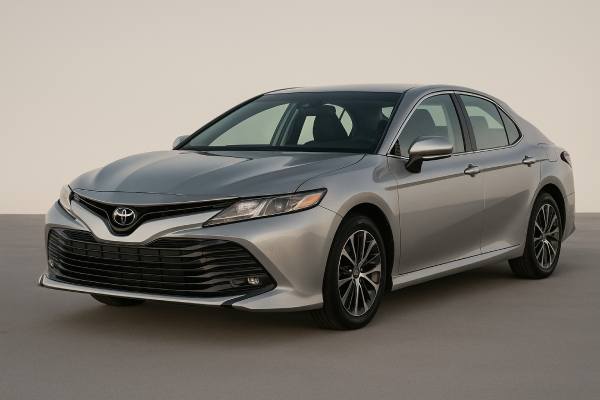
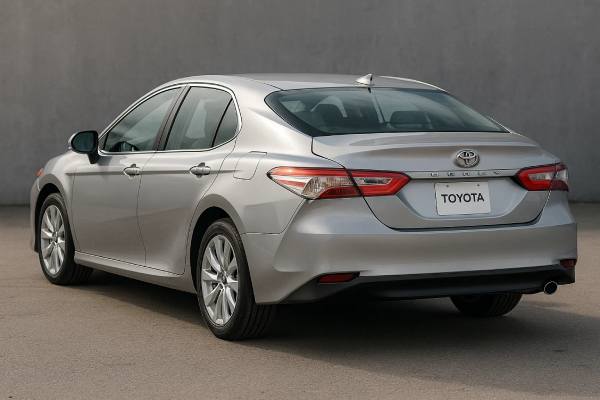
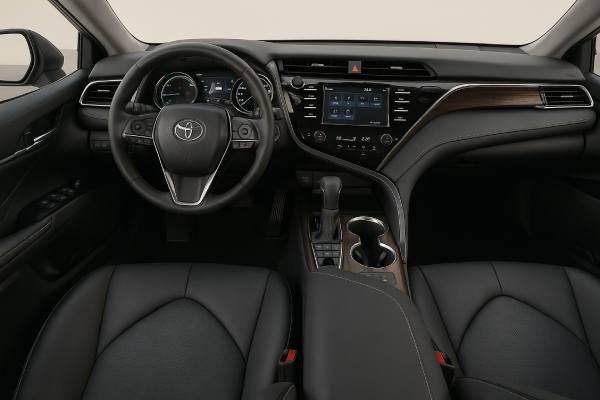
The eighth-generation Toyota Camry (AXVA70) launched for 2018 reset the family-sedan template with Toyota’s TNGA-K platform, a stiffer body, lower seating position, and the new 2.5-liter “Dynamic Force” A25A-FKS engine. Paired to an 8-speed automatic, the 203-hp four-cylinder prioritizes real-world efficiency without feeling flat, and the chassis’ quieter ride and better body control make long trips easy. Safety tech took a step forward, too: Toyota Safety Sense with automatic emergency braking was standard, and crash scores were among the best in the class. Ownership is straightforward—fluids are common, access is decent, and the car tolerates mixed city/highway use. If you want a midsize that fades into the background on maintenance yet stays composed at 75 mph, this Camry is the safe play. Below is everything shoppers and owners need: verified specs, trims and equipment, reliability patterns, service guidance, and how it stacks against rivals.
Fast Facts
- Balanced daily driver: calm highway manners, low wind/road noise, composed braking.
- Efficient 2.5-liter: typical 29/41 mpg (city/highway) depending on trim and wheels.
- Safety standout: strong crash-test performance with widely available driver assists.
- Watch for early 8-speed calibration updates; confirm the latest transmission software is installed.
- Routine oil service: every 10,000 miles or 12 months with 0W-16 (short-trip use: halve the interval).
Navigate this guide
- AXVA70 Detailed Overview
- Camry A25A-FKS Specs
- Camry Trims, Safety and ADAS
- Reliability and Known Issues
- Maintenance and Buying Advice
- Real-World Driving and Economy
- How Camry Compares
AXVA70 Detailed Overview
The 2018–2020 Camry (internal code AXVA70 for 2.5-liter FWD gasoline) rides on Toyota’s TNGA-K architecture. That brings a lower center of gravity, a wider stance, and tighter body control than the outgoing car. The seating position drops compared with the prior generation, and the cowl is lower, improving forward visibility. Toyota paired the platform to the A25A-FKS 2.5-liter “Dynamic Force” engine and an 8-speed “Direct Shift” automatic. The powertrain’s signature is efficiency via a long stroke, high compression, wide-angle intake ports, and combined port/direct injection, so it pulls cleanly once rolling and sips fuel at highway speeds.
Ride and refinement lean toward comfort: LE/XLE grades smooth out expansion joints, while SE/XSE firmer tuning curbs roll without making daily use harsh. Tires strongly influence noise and steering response; 17-inch all-seasons keep the car quietest, while 18/19-inch packages trade a touch of road noise for sharper turn-in. Brakes are confidence-inspiring with a progressive pedal that’s easy to modulate in traffic.
Cabin packaging is solid for the class. Adults fit comfortably in the rear, the trunk opening is wide, and the rear seatbacks fold for long items. Controls are straightforward; the infotainment head unit evolved during these years (including phone integration updates), but the key functions remain hard-button accessible and easy to learn.
Safety is a selling point. All grades include a robust active-safety suite (forward collision warning with automatic braking, lane departure warning with steering assist, adaptive cruise on most trims) plus a strong body structure. This car tested well in crash evaluations and headlight performance varies by trim but can reach the top rating when equipped correctly.
A few clarifications: in 2020 Toyota added an AWD variant paired with this 2.5-liter engine; it uses a different driveline and slightly different ratings. This guide focuses on the common FWD 203-hp configuration (dual-exhaust XSE 2.5 makes a touch more power). If you’re cross-shopping used cars, confirm the exact trim and driveline, as wheels, seats, lighting, and ADAS content vary materially.
Camry A25A-FKS Specs
Engine and Performance
| Item | Detail |
|---|---|
| Code | A25A-FKS (Dynamic Force) |
| Layout & valvetrain | Inline-4, DOHC, 4 valves/cyl, dual VVT (VVT-iE intake) |
| Displacement | 2.5 L (2,487 cc) |
| Bore × stroke | 87.5 mm × 103.4 mm (3.44 in × 4.07 in) |
| Compression ratio | 13.0:1 |
| Induction & fuel | Naturally aspirated; D-4S combined direct + port injection |
| Max power | 203 hp (151 kW) @ 6,600 rpm |
| Max torque | 249 Nm (184 lb-ft) @ ~4,800–5,000 rpm |
| Timing drive | Chain |
| Emissions/efficiency std. | EPA-certified gasoline |
| Rated economy (typical) | 29/41/34 mpg US (city/hwy/combined), ~8.1/5.7/6.9 L/100 km (LE/SE) |
| Real-world highway @ 120 km/h (75 mph) | ~6.2–7.1 L/100 km (38–33 mpg US), tire/weather dependent |
| Aerodynamics | Cd not officially published; TNGA-K body targets reduced drag |
Transmission and Driveline
| Item | Detail |
|---|---|
| Transmission | 8-speed automatic, “Direct Shift” (UB80E/UA80 family) |
| Drive | FWD |
| Final drive | 2.802 |
| Gear ratios | 1st 5.250 • 2nd 3.028 • 3rd 1.950 • 4th 1.456 • 5th 1.220 • 6th 1.000 • 7th 0.808 • 8th 0.673 • Rev 4.014 |
Chassis and Dimensions
| Item | Detail |
|---|---|
| Suspension (F/R) | MacPherson strut / multi-link |
| Steering | Electric power steering |
| Brakes | 4-wheel discs; ABS with EBD and brake assist |
| Wheels/tires (common) | 205/65R16, 215/55R17, 235/45R18; 235/40R19 (sport) |
| Length | 4,881–4,896 mm (192.1–192.7 in) |
| Width | 1,839 mm (72.4 in) |
| Height | 1,445 mm (56.9 in) |
| Wheelbase | 2,824 mm (111.2 in) |
| Curb weight (approx.) | 1,470–1,540 kg (3,240–3,395 lb), trim/wheel dependent |
| Turning circle | ~11.0 m (36.1 ft) |
| Fuel tank | ~60 L (15.8 US gal / 13.2 UK gal) |
| Cargo volume (trunk) | ~428 L (15.1 ft³), seats folded for pass-through |
Performance and Capability
| Metric | Value |
|---|---|
| 0–60 mph / 0–100 km/h | Not officially published; independent tests ~7.6–8.2 s |
| Top speed | Governor-limited; not a manufacturer performance focus |
| Braking 100–0 km/h | Varies by tire; typical midsize-sedan distances |
| Towing | No factory tow rating in baseline market |
| Roof load | Not specified; use accessory crossbars within rating |
Fluids and Service Capacities (verify by VIN/build date)
| System | Specification | Capacity (typical) |
|---|---|---|
| Engine oil | SAE 0W-16 (primary); 0W-20 acceptable if 0W-16 unavailable | ~4.5 L (4.8 qt) with filter |
| Coolant | Toyota Super Long Life (Pink), premixed | System capacity varies; inspect/replace per schedule |
| ATF | Toyota ATF WS | Service fill varies; drain-and-fill typically ~3–4 L |
| Brakes | DOT 3 or DOT 4 | Fill to max line; flush interval-based |
| A/C refrigerant | R-1234yf | Charge by label; varies by HVAC spec |
| Key torques | Wheel lugs ~103 Nm (76 lb-ft); oil drain plug ~39 Nm (29 lb-ft) |
Electrical
| Item | Detail |
|---|---|
| Alternator | Typical ~130 A class (varies by equipment) |
| 12V battery | Group size varies; AGM/flooded per trim/climate |
| Spark plugs | Long-life iridium; gap ~1.0–1.1 mm (0.039–0.043 in) |
Safety and Driver Assistance
| Category | Summary |
|---|---|
| Crash ratings | Strong overall performance; see section below for year/trim nuances |
| Headlights | Rating varies by trim/option; up to “Good” when equipped |
| ADAS suite | Pre-collision w/ pedestrian detection, lane departure w/ steering assist, adaptive cruise (grade-dependent), auto high beams; blind spot + rear cross-traffic available/standard by trim/year |
Camry Trims, Safety and ADAS
Trims and options (2018–2020, FWD 2.5):
- L (2018–2019): Entry grade with 16-inch wheels, cloth upholstery, and core Toyota Safety Sense features. Basic audio; limited options.
- LE: Most common value trim; 17-inch wheels, power driver’s seat, split-fold rear seat, full TSS features, and popular convenience packages (keyless start, blind-spot monitoring).
- SE: Adds firmer suspension calibration, sport exterior bits, and 18-inch wheel option; steering feels more direct on appropriate tires.
- XLE: Comfort-oriented with leather, larger touchscreen choices, available panoramic roof, and more active-safety content standard.
- XSE (2.5): Sport-lux mix; unique wheels/trim. Note the dual-exhaust 2.5 may be rated slightly higher than 203 hp; confirm with the window sticker or spec label.
Quick identifiers:
- Badges: “SE” and “XSE” carry sport fascia/diffuser cues; LE/XLE are cleaner.
- Interior tells: SE/XSE get bolstered seats and different trim textures; XLE/XSE offer leather and JBL audio.
- Build codes: A VIN with engine code “A25A” denotes the 2.5-liter Dynamic Force gasoline engine. The internal Toyota platform code for this 2.5 FWD gasoline Camry is AXVA70.
Year-to-year notes:
- 2018 launch: New platform, powertrains, safety suite standard.
- 2019: Feature adjustments and package reshuffling; infotainment and lighting options broaden.
- 2020: Introduction of an AWD variant (separate driveline and ratings). TRD performance model appears with the V6 (outside this guide’s scope).
Safety ratings (high level):
The 2018 Camry earned excellent results in crash tests, with strong structure performance and available headlights that achieve top marks when properly optioned. Passenger-side small overlap results and headlight scores depend on trim and equipment; LE/XLE/SE with the right lighting can reach the best ratings. Standard active safety features include automatic emergency braking with pedestrian detection, lane departure alert with steering assist, automatic high beams, and adaptive cruise on most trims. Blind spot monitoring and rear cross-traffic alert become standard or widely available on higher grades. Always verify exact ADAS content: camera/radar calibration matters after windshield, bumper, or suspension work and can require specific shop procedures.
Child-seat and occupant protection:
Lower anchors and tethers are accessible; outboard LATCH points are easy to reach. Rear doors open wide enough for rear-facing seat installation. If you service airbags or seat sensors, follow the factory disable/enable procedure and torque specs for seat bolts.
Reliability and Known Issues
Overall reliability is a strong suit. The A25A-FKS four-cylinder uses a timing chain, long-life iridium plugs, and combined port/direct injection that helps keep intake valves clean. The 8-speed automatic, once updated to the latest calibration, behaves predictably in daily use. Below is a focused owner’s map by prevalence and impact.
Common / low-to-medium cost
- Early 8-speed shift quality (low speeds, light throttle):
Symptoms: Hesitation or short hunting between 1–3 gears in stop-and-go.
Root cause: Early transmission/engine calibration strategy.
Remedy: Dealer software update (ECM/TCM reflash) and drive-cycle relearn. Confirm your car has the latest calibration; it’s a noticeable improvement. - Wind/tire noise variability:
Symptoms: More roar on coarse surfaces with 18–19″ tires.
Cause: Tire compound and wheel size.
Remedy: Rotate on schedule, keep pressures set cold, consider quieter-tread replacements when due; a fresh door seal or felt tape can quell minor rustle at the mirror triangle. - A/C odor over time:
Symptoms: Musty smell at start-up.
Cause: Evaporator condensation growth.
Remedy: Cabin filter at short intervals; periodic HVAC cleaner via cowl intake; run A/C briefly before shutdown to dry the core.
Occasional / medium cost
- Water pump seepage (aging miles):
Symptoms: Coolant residue near pump, sweet smell, slow level drop.
Cause: Mechanical seal wear.
Remedy: Replace pump and gasket; refill/bleed with Toyota pink coolant. - Accessory belt noise (cold start):
Symptoms: Brief chirp/squeak in cold/damp conditions.
Cause: Belt glazing/tension.
Remedy: Inspect belt and pulleys; replace if cracked/glazed; verify tensioner action.
Rare / higher cost
- Wheel bearing hum (high mileage/rough roads):
Symptoms: Speed-dependent growl that shifts with steering load.
Root cause: Bearing wear.
Remedy: Replace affected hub/bearing assembly; perform alignment check afterward.
Software and calibrations:
Keeping ECM/TCM software current pays dividends—in smoother low-speed behavior, cleaner kickdown logic, and settled idle on hot restarts. Many shops can verify calibration IDs; dealer tools can also check ADAS calibration status after windshield/bumper work.
Corrosion and underbody:
TNGA-K bodies resist red rust well in moderate climates. In snowbelt regions, rinse the rear multi-link arms, subframe pockets, and brake backing plates; treat chips on the hood/rockers early.
Pre-purchase checks to request
- Full service history (oil change intervals, coolant, brake fluid, spark plugs by mileage).
- Proof of any transmission software updates.
- Evidence of post-collision ADAS camera/radar calibration if glass or bumper was replaced.
- Two working smart keys and functioning TPMS sensors.
- Tire date codes, even wear, and alignment printout.
Maintenance and Buying Advice
Baseline maintenance schedule (time/distance; adjust for severe duty):
- Engine oil & filter: 10,000 miles / 12 months with SAE 0W-16; halve to 5,000 miles for short-trip, dusty, or extreme-cold duty.
- Engine air filter: Inspect 15,000; replace ~30,000 miles (more often in dusty regions).
- Cabin filter: 12–15,000 miles or annually.
- Coolant (Toyota pink): First replacement ~100,000 miles (160,000 km) / 10 years, then ~50,000 miles (80,000 km) / 5 years thereafter.
- Spark plugs (iridium): ~120,000 miles (190,000 km); inspect earlier if misfire DTCs.
- Serpentine belt & hoses: Inspect 30,000 miles; replace when cracked/glazed or at 90–120,000 miles preemptively.
- Brake fluid: Replace every 2–3 years; moisture content matters for pedal feel.
- ATF (Toyota WS): “Lifetime” in the book; best practice is drain-and-fill every 60–90,000 miles if you plan to keep the car beyond 150,000.
- Alignment & tire rotation: Rotate 5,000–7,500 miles; align if edge wear or pull appears.
- 12-V battery: Test annually after year 3; typical life 4–6 years.
Fluid quick notes
- Oil spec: Use 0W-16 meeting ILSAC standards; 0W-20 is acceptable if 0W-16 isn’t available, but resume 0W-16 next service.
- Coolant: Use Toyota Super Long Life (pink).
- ATF: Toyota ATF WS only; level-set with the proper temperature procedure.
- Brake fluid: DOT 3 or DOT 4; don’t mix silicone types.
DIY access tips
- Top-side oil filter makes basic service clean; use the correct cap tool and new O-ring.
- Accessory belt inspection is straightforward from the right wheel-well splash area.
- Spark plugs are long-interval; coil-on-plug layout eases replacement when due.
Buyer’s guide—what to seek/avoid
- Best all-rounders: LE (value/ride) and SE (tighter steering/looks) with the 17–18″ tire packages.
- XLE/XSE shoppers: Verify the exact headlight package if top headlight scores matter to you; also check for the premium audio and driver-assist bundles you want.
- Avoid: Poorly documented cars with missed routine services; uneven tire wear suggests alignment/suspension neglect.
- Drive test: Cold start (listen for belt noise), gentle roll-ons (feel for early 8-speed hesitancy—an update usually fixes it), steady-state at 70–75 mph (look for vibration—often tires/wheels).
Long-term durability outlook
With routine fluids and software up to date, the 2.5/8-speed Camry has an excellent record for 200,000-mile ownership: no timing belt to replace, plugs last long, cooling systems are robust, and the chassis tolerates rough roads if alignment is maintained.
Real-World Driving and Economy
Ride, handling, NVH:
This Camry is tuned for confidence over flash. The body shell feels tight, and the suspension settles quickly after big bumps. On 17-inch tires, it’s quiet and comfortable; on 18/19-inch packages, you gain sharper initial turn-in at the expense of a bit more patter on coarse asphalt. Straight-line stability at 75 mph is excellent—small corrections keep it centered, and the electric steering is calm on-center. Braking is easy to modulate and repeatable on long descents when you use engine braking in the 7th/8th gears.
Powertrain character:
The A25A-FKS is at its best from 2,500–5,500 rpm. Throttle response is linear; the wide powerband and the 8-speed’s close intermediate ratios keep the engine in an efficient window. In normal mode the transmission upshifts early for economy; Sport mode sharpens downshifts and holds gears longer on grades. There’s no turbo lag to manage, and the combination is smoother after the latest software.
Observed economy (typical ranges):
- City: ~8.1–9.8 L/100 km (29–24 mpg US) depending on trips, weather, and tire size.
- Highway (100–120 km/h / 60–75 mph): ~5.6–7.1 L/100 km (42–33 mpg US), best on 17-inch all-seasons.
- Mixed: ~6.7–7.8 L/100 km (35–30 mpg US).
Cold weather and short hops increase consumption; 18/19-inch tires also shave a bit off highway numbers. Keeping tires at spec pressures and using cruise on open roads gives easy gains.
Traction and stability:
FWD traction management is unobtrusive; stability control intervenes progressively and can be left on in rain/snow. If you see heavy winters, quality all-seasons or dedicated winter tires transform confidence. The SE/XSE suspension tuning pairs well with all-weather rubber—body motions stay tidy without harshness.
Load and road-trip use:
The trunk is usefully shaped, and the rear seatbacks fold for skis or long boxes. Fully loaded for a vacation, expect a modest fuel-economy penalty (~5–10%) and slightly longer stopping distances—normal for the class.
How Camry Compares
Honda Accord 1.5T/2.0T (2018–2020):
The Accord feels lighter on its feet and has a more open cabin. The 1.5T’s real-world economy is competitive, but some owners report oil dilution in specific use cases and years. The Camry counters with naturally aspirated simplicity, consistently strong safety scores, and fewer powertrain complaints.
Mazda6 2.5 (2018–2021):
A driver’s sedan with great steering and cabin design. The Camry rides quieter over broken pavement and tends to be cheaper to maintain; Mazda’s 2.5T adds punch but likes premium fuel when pushed.
Hyundai Sonata 2.4/1.6T (2018–2019):
Value-packed features and long warranty. The Camry’s A-to-B refinement and residual values are stronger; Toyota’s ADAS calibration is conservative and polished, and long-term parts availability is excellent.
Nissan Altima 2.5 (2019–2020):
Comfortable and available AWD earlier than Camry in this generation. The Nissan’s CVT keeps revs low but can feel less natural; Toyota’s 8-speed provides a more conventional shift feel and long-term serviceability.
Subaru Legacy 2.5 (2018–2020):
Standard AWD and composed ride. Camry’s four-cylinder is generally more efficient on the highway in FWD form, and Toyota’s interior materials wear very well over time.
If you value low running costs, high safety, and a calm highway demeanour, the AXVA70 Camry 2.5 stays near the top of the list. Choose LE/SE for value and comfort; XLE/XSE if you want amenities and available top-rated headlights.
References
- Benchmarking a 2018 Toyota Camry 2.5-Liter Atkinson Cycle Engine with Cooled EGR 2019 (Technical Paper)
- Benchmarking a 2018 Toyota Camry UB80E Eight-Speed Automatic Transmission (SAE 2020-01-1286) (April 14, 2020) 2020 (Technical Paper)
- All-New 2018 Toyota Camry Gains Emotionally-Charged Design, Improved Dynamics and Fuel Efficiency 2017 (Press Release / Preliminary Specifications)
- 2018 Toyota Camry 2018 (Safety Rating)
- 2018 Toyota Camry 2018 (EPA Fuel Economy)
Disclaimer
This guide is for informational purposes and is not a substitute for professional diagnosis, repair, or official service procedures. Specifications, torque values, fluid capacities, intervals, and features can vary by VIN, model year, trim, market, and options. Always verify against your vehicle’s official service documentation, under-hood labels, and the owner’s manual before servicing or purchasing parts. If you found this helpful, please consider sharing it on your social channels to support xcar’s work.