
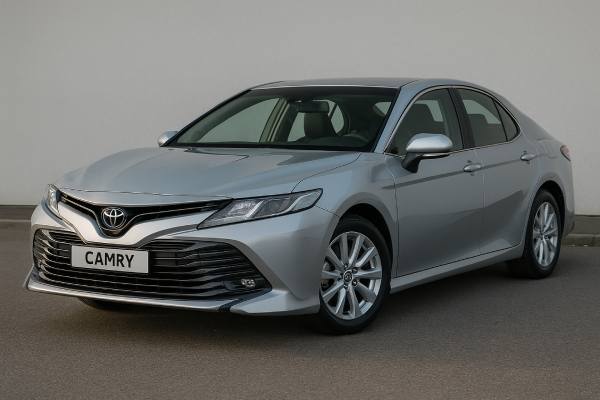
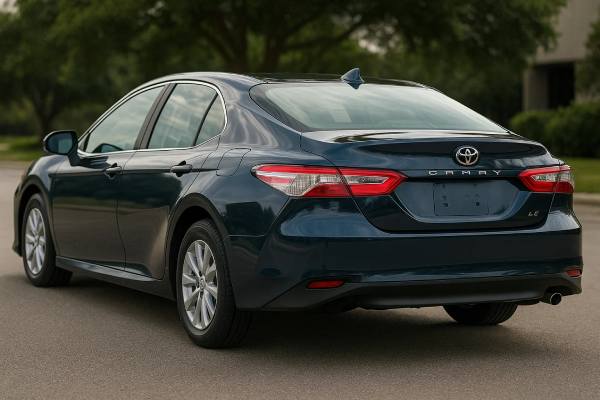
The eighth-generation Toyota Camry (AXVA70) landed with a clean-sheet TNGA-K platform, a stiffer body, and the new 2.5-liter “Dynamic Force” A25A-FKS engine. In SE and XSE grades this four-cylinder is rated at 206 hp thanks to a dual-outlet exhaust and minor calibration changes. Paired with an eight-speed “Direct Shift” automatic, it delivers uncommon efficiency for a midsize sedan while keeping the driving experience responsive and refined. Owners value the quiet cabin, roomy rear seat, and consistently low running costs. Shoppers should still pay attention to trim-specific features (headlights, driver assists, wheel and tire packages) and known service campaigns from the earliest build months. This guide focuses on the 206-hp four-cylinder Camry sold from model years 2018–2020, translating specs into real-world context and offering practical maintenance advice and purchase checks to help you choose the right car and keep it in top shape.
Fast Facts
- Strong blend of pace and economy: 0–60 mph in the mid-7s with real-world 30+ mpg mixed (US).
- Stable, quiet highway manners; stiff TNGA body benefits ride and steering precision.
- Cabin space and trunk are generous; seats fold for longer items (60/40 on most trims).
- Watch for addressed recalls on early 2018s (vacuum pump, specific engine build window).
- Typical oil change interval: 10,000 miles / 12 months with 0W-16 (shorten to 5,000 miles for severe use).
Navigate this guide
- Camry AXVA70 2.5 Overview
- AXVA70 206 hp Specifications
- Camry AXVA70 Trims and Safety
- Reliability and Common Issues
- Maintenance and Buyer’s Guide
- Driving and Performance
- Camry vs Key Rivals
Camry AXVA70 2.5 Overview
Toyota’s AXVA70-series Camry replaced the previous XV50 with a platform and powertrain rethink. The TNGA-K architecture increased torsional rigidity and lowered the center of gravity, allowing more precise suspension tuning without sacrificing comfort. The A25A-FKS 2.5-liter four-cylinder is central to the 206-hp SE/XSE story: it uses a long-stroke design, combined port and direct fuel injection (D-4S), a high 13.0:1 compression ratio, and wide “VVT-iE” cam phasing to operate with Atkinson-like efficiency during light loads and switch toward conventional timing when you ask for power. The dual-outlet exhaust fitted to SE/XSE grades helps it breathe slightly better than L/LE/XLE versions (rated at 203 hp).
The eight-speed automatic (Aisin UB80E family) targets quick step-off, low-rpm cruising, and smooth part-throttle behavior. Short lower gears keep the engine in its torque band around town; tall overdrives lower noise and fuel use on the highway. Most 206-hp cars are front-wheel drive, and the chassis setup varies by trim: SE/XSE use firmer springs, specific dampers, thicker anti-roll bars, and unique bushings to add control without a harsh ride. Wheel sizes span 18 to 19 inches with all-season tires; these packages influence both steering feel and braking distances.
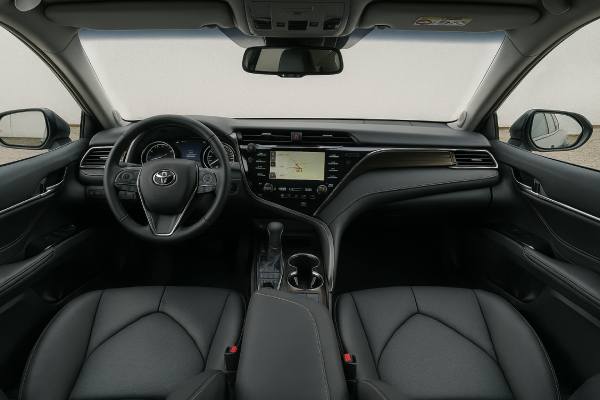
Inside, the Camry feels more upscale than past generations. The dash “waterfall” layout angles controls toward the driver and opens space for front-row storage. Android Auto and Apple CarPlay arrived during this generation (standardization varied by model year), and Toyota Safety Sense P driver aids were included on every trim, with additional ADAS features added on higher grades. Rear-seat room is competitive, and the trunk remains a strong point for family duty. The overall result is a midsize sedan that prioritizes confidence and value without feeling dull, and the 206-hp variant is the sweet spot for many buyers who want a touch more response without the thirst of the V6.
AXVA70 206 hp Specifications
Below are core technical data for the 206-hp A25A-FKS Camry in SE/XSE grades (2018–2020), with baseline North American figures first and metric equivalents shown.
Engine and Performance
| Item | Specification |
|---|---|
| Code | A25A-FKS (Dynamic Force) |
| Layout & cylinders | Inline-4, DOHC, 16-valve; Dual VVT-iE (intake) / VVT-i (exhaust) |
| Displacement | 2.5 L (2,487 cc) |
| Bore × stroke | 87.5 × 103.4 mm (3.44 × 4.07 in) |
| Induction | Naturally aspirated; dual-outlet exhaust (SE/XSE) |
| Fuel system | D-4S combined direct + port injection |
| Compression ratio | 13.0:1 |
| Max power (SE/XSE) | 206 hp (154 kW) @ 6,600 rpm |
| Max torque (SE/XSE) | 186 lb-ft (252 Nm) @ 5,000 rpm |
| Timing drive | Chain |
| Emissions/efficiency std. | EPA Tier 3; LEV III-SULEV30 (typical) |
| Rated efficiency (XSE/SE) | 28/39/32 mpg US city/hwy/combined (8.4/6.0/7.4 L/100 km) |
| Real-world highway @ 75 mph (120 km/h) | ~34–38 mpg US (6.9–6.2 L/100 km), tire/wind dependent |
| Aerodynamics | Cd approx. 0.27–0.28 depending on trim and equipment |
Transmission and Driveline
| Item | Specification |
|---|---|
| Transmission | 8-speed automatic, “Direct Shift” (Aisin UB80E family) with manual mode |
| Drive type | FWD |
| Final drive ratio | ~2.80:1 (varies by calibration) |
| Gear ratios | 1st 5.250, 2nd 3.029, 3rd 1.950, 4th 1.456, 5th 1.220, 6th 1.000, 7th 0.808, 8th 0.673, Rev 4.014 |
Chassis and Dimensions
| Item | Specification |
|---|---|
| Front/rear suspension | MacPherson strut / multi-link; SE/XSE sport tuning |
| Steering | Electric power assist; variable ratio by grade |
| Brakes | 4-wheel disc; front vented ~296 mm (11.7 in), rear solid ~281 mm (11.1 in) typical |
| Wheels/tires (SE/XSE) | 235/45 R18 or 235/40 R19 all-season |
| Ground clearance | ~145 mm (5.7 in) |
| Length / width / height | ~4,880 / 1,840 / 1,445 mm (192.1–192.7 / 72.4 / 56.9 in) |
| Wheelbase | 2,825 mm (111.2 in) |
| Turning circle (curb-to-curb) | ~11.0 m (36.1 ft) |
| Curb weight (typical SE/XSE) | ~1,500–1,560 kg (3,300–3,440 lb) |
| GVWR | ~2,060–2,100 kg (4,540–4,630 lb) |
| Fuel tank | 60 L (15.8 US gal / 13.2 UK gal) |
| Cargo volume (SAE) | 427 L (15.1 ft³) seats up |
Performance and Capability
| Metric | Value |
|---|---|
| 0–100 km/h (0–62 mph) | ~7.6–8.0 s (tire and surface dependent) |
| Top speed | ~210 km/h (130 mph) electronically limited (typical) |
| 100–0 km/h braking | ~37–39 m (121–128 ft) on all-season tires |
| Towing / payload / roof load | Not rated for towing in many markets; payload typically ~385–430 kg (850–950 lb); roof load ~45–68 kg (100–150 lb) with approved crossbars |
Fluids and Service Capacities
| System | Specification / Capacity |
|---|---|
| Engine oil | Toyota Genuine 0W-16; capacity ~4.5 L (4.8 US qt) with filter |
| Coolant | Toyota Super Long Life Coolant (pink); ~6.0–6.7 L (6.3–7.1 US qt) depending on variant |
| Automatic trans. | Toyota WS ATF; drain-and-fill ~3.5–4.0 L (3.7–4.2 US qt) typical |
| A/C refrigerant | R-1234yf; charge ~500–600 g (17.6–21.2 oz) typical |
| A/C compressor oil | ND-Oil 12; ~80–120 mL (2.7–4.1 fl oz) typical |
| Key torque specs | Wheel nuts 103 Nm (76 lb-ft); drain plug and filter housing as specified in service manual |
Electrical
| Item | Specification |
|---|---|
| Alternator (12 V) | ~130 A (varies) |
| 12 V battery | Group size H5/H6 type (varies by audio/option); ~60–70 Ah |
| Spark plugs | Fine-iridium; gap ~1.1 mm (0.043 in); replacement ~120,000 miles (193,000 km) |
Safety and Driver Assistance
| Category | Details |
|---|---|
| Crash ratings | IIHS overall good in major tests; Top Safety Pick/Top Safety Pick+ achievable depending on headlights and options by year |
| Headlight rating | Trim-dependent from Acceptable to Good (adaptive units rated best) |
| ADAS suite | Toyota Safety Sense P standard: pre-collision with pedestrian detection, lane departure alert with steering assist, auto high beams, dynamic radar cruise control. Blind-spot monitor and rear cross-traffic alert widely available/standard by trim and year. |
Camry AXVA70 Trims and Safety
Trim structure (focus on 206-hp cars). In this period, the 206-hp output is tied to SE and XSE grades (dual-outlet exhaust and sport calibration). The mainstream L/LE/XLE grades use the same A25A-FKS but are rated at 203 hp with a single-outlet exhaust and comfort-oriented chassis tune. If you are shopping specifically for the 206-hp engine, prioritize SE (value-oriented sport) and XSE (feature-rich sport). Both include a leather-wrapped steering wheel, paddle shifters on many builds, and unique exterior cues; XSE adds larger wheels, leather or SofTex-trimmed seats with more adjustments, and additional tech packages.
Mechanical differences by trim. SE/XSE employ firmer springs and dampers, recalibrated EPAS, and thicker anti-roll bars. Wheel/tire packages are broader (235 section) and may come in 18-in or 19-in sizes on XSE. Braking hardware is similar in size across four-cylinder trims, but tire compound and wheel size affect stopping distances and steering precision. The eight-speed’s shift logic differs slightly between eco/normal/sport modes; SE/XSE add sportier calibrations with more assertive kickdown.
Feature and package identifiers.
- Exterior tells: SE has a subtle rear lip spoiler and blacked-out grille; XSE adds a more aggressive fascia and, on many builds, contrasting roof color. Dual-outlet exhaust is visible on both.
- Interior cues: SE often features SofTex-trim with patterned inserts; XSE offers leather with accent stitching, larger infotainment screens (varied by year), JBL audio availability, and a 7-in or larger driver display on higher packages.
- VIN/build codes: Model codes commonly start with 2546 (SE I-4) and 2548 (XSE I-4) for this period.
- Year-to-year changes (highlights): Infotainment integration improves over time (wider rollout of Apple CarPlay/Android Auto by 2019/2020 on many configurations). Headlight performance ratings vary by unit: adaptive LED headlights available on certain higher trims score best in independent tests.
Safety ratings and airbags. All Camry four-cylinders in this era perform strongly in crash testing, with multi-airbag coverage (front, side, side-curtain, driver knee, and front passenger seat-cushion airbags). Toyota Safety Sense P is standard, and many cars include blind-spot monitoring with rear cross-traffic alert; parking sonar and a panoramic camera appear on upscale packages. For child seats, the rear outboard positions have LATCH anchors with generous access; the middle position typically borrows anchors (confirm in your vehicle guide).
ADAS calibration notes. After windshield replacements or front bumper repairs, radar and camera sensors may require calibration. Shops familiar with Toyota ADAS can complete static and dynamic procedures; ensure this is documented in the service history. Wheel alignment, tire size, and ride height affect lane-keeping performance—keep within factory specifications to avoid nuisance alerts.
Reliability and Common Issues
The AXVA70 Camry has a strong reliability record, especially when maintained on schedule. The A25A-FKS and UB80E eight-speed are efficient, durable units when serviced with the correct fluids and software calibrations. Still, prospective buyers should be aware of a few patterns and service actions from the first model years.
Powertrain and engine.
- Early-production 2018 pistons (specific build window): A small batch of engines built during a narrow timeframe used pistons outside specification. Symptoms: rough running, noise, or no-start on very low-mileage cars. Remedy: engine replacement under a safety recall/service action on affected VINs. Verify status via the official VIN check and service records.
- Vacuum pump campaign (2018/2019): Certain early vehicles could experience loss of brake assist from a faulty vacuum pump. Symptoms: hard brake pedal, warning lights. Remedy: pump inspection/replacement per the official campaign, completed at no cost on affected vehicles.
Automatic transmission (UB80E family).
- Driveability updates: Early software calibrations on some cars exhibited low-speed hesitation or busy shifting. Symptoms: slight flare or indecisive gear hunting on gentle throttle. Remedy: TCM/ECM reflash to the latest calibration and, if needed, a throttle-body clean and idle relearn. With correct tires and updated software, shift quality is typically smooth.
Fuel and emissions.
- Charcoal canister and EVAP readiness: Occasional evap-system codes after refueling have been reported. Symptoms: CEL with small/very small leak codes. Remedy: inspect/gently retorque fuel cap, smoke-test EVAP lines and purge valve; replace faulty components as needed.
- Low-pressure fuel pump (industry-wide supplier issue on multiple models): Some vehicles across Toyota’s lineup were recalled; check each Camry’s VIN to confirm applicability.
Cooling and HVAC.
- Cabin air flap noise or weak airflow: Symptoms: intermittent clicking behind the dash or reduced flow. Remedy: inspect blend door actuators and cabin filter; replace the actuator if clicking persists.
Chassis and NVH.
- Alignment-sensitive tire wear: The sport suspension is still compliant, but toe settings matter. Symptoms: inner shoulder wear on 18–19-inch tires. Remedy: rotate every 5,000–7,500 miles and ensure a precise alignment with loaded ride heights.
- Brake judder (pad imprint): Symptoms: steering wheel vibration on light braking from highway speeds. Remedy: proper bed-in, rotor resurfacing/replacement, and quality pads mitigate recurrence.
Electronics.
- Head unit and CarPlay activation (by year): Software updates improved boot time, connection stability, and camera switching on many cars. Remedy: confirm latest multimedia software and map/firmware updates where applicable.
- ADAS sensor faults after glass work: Symptoms: lane departure/unavailable messages or false alerts. Remedy: camera/radar recalibration and an alignment check.
Corrosion and body.
- Body corrosion is generally low, but inspect rear subframe fasteners, exhaust hangers, and underbody shields in salt-belt regions. Door bottoms and trunk seams should be checked for debris accumulation and drain blockage.
Recalls, TSBs, and coverage.
- Ask sellers for a printed VIN recall status and dealer campaign completion records. Where available, obtain TCM/ECM calibration IDs and dates. Keep copies of safety recall remedy invoices—these help downstream insurance and warranty claims. Extended coverage campaigns, when issued, usually list VIN ranges and time/mileage limits; capture screenshots or PDFs for your files.
Pre-purchase checks to request.
- Full maintenance history (engine oil, coolant, brake fluid, transmission service).
- Confirmation of vacuum pump and early piston campaign completion if VIN/build dates align.
- Recent alignment sheet and tire tread-depth readings; even wear patterns are a good sign.
- Two working keys/fobs and documentation of ADAS calibrations after any windshield replacement.
- Cold-start test (listen for timing chain rattle—rare—or accessory noise) and a thorough road test including a highway merge and a gentle 25–45 mph cruise to feel shift quality.
Maintenance and Buyer’s Guide
Service schedule (typical, confirm by VIN/options).
- Engine oil and filter: 10,000 miles / 12 months with 0W-16; halve the interval (5,000 miles) for short-trip, dusty, or extreme-temperature use.
- Engine air filter: Inspect at 15,000; replace 30,000–45,000 miles (more often in dusty areas).
- Cabin filter: Replace yearly or 15,000 miles; sooner if airflow drops.
- Coolant (SLLC): First replacement at 100,000 miles (160,000 km) / 10 years; then every 50,000 miles (80,000 km) / 5 years.
- Spark plugs (iridium): 120,000 miles (193,000 km).
- Automatic trans (WS ATF): Although “lifetime” in some literature, a drain-and-fill every 60,000–90,000 miles (100,000–145,000 km) helps shift quality and longevity—especially under heat or towing.
- Brake fluid: Flush every 3 years regardless of mileage.
- Brake pads/rotors: Inspect every 5,000–7,500 miles; replace as needed. Proper bed-in reduces judder.
- Serpentine belt: Inspect each service; replace if cracked/noisy by ~100,000 miles.
- PCV, throttle body: Inspect/clean ~60,000 miles.
- 12 V battery: Test annually after year 3; expect replacement in the 4–6-year window.
- Wheel alignment and rotation: Rotate tires every 5,000–7,500 miles; align if the car pulls, the steering wheel is off-center, or tires show shoulder wear.
Fluid specs and quick capacities (decision pointers).
- Oil: 0W-16 API SP / ILSAC GF-6B; ~4.5 L with filter.
- Coolant: Toyota SLLC (pink), pre-mixed 50/50.
- ATF: Toyota WS (World Standard).
- Brake fluid: DOT 3 or DOT 4 as labeled on cap (DOT 3 typical).
- Torque essentials: Wheel nuts 103 Nm (76 lb-ft). Oil drain plug and filter housing torque per service manual; overtightening causes leaks—use a torque wrench.
DIY or shop? Oil and filter changes are straightforward with top access to the cartridge housing (use the correct cap tool and a new O-ring). The transmission has separate fill and check procedures—temperature-based fluid level checks are shop-friendly unless you have a scan tool. ADAS calibration, coolant vacuum-fill, and transmission level checks are best left to qualified technicians.
Buyer’s checklist.
- Exterior/interior: Headlight lens clarity (especially on non-adaptive units), windshield for camera area damage, even panel gaps, water leaks in trunk after heavy rain.
- Underhood: Look for coolant crusting, oil seepage around timing cover (rare), and intact airbox clips.
- Underbody: Inspect plastic undertrays and fender liners; damaged pieces can channel water/debris toward wiring.
- Wheels/tires/brakes: Confirm appropriate load-index and speed-rated tires; check rotor lip and pad thickness.
- Electronics: Pair a phone, test CarPlay/Android Auto, verify all cameras and parking sensors.
- Drive test: Cold start, gentle roll-on from 15–45 mph for shift feel, highway cruise at 70–75 mph for NVH, several stops to assess brake straightness and pedal feel.
Which years/trims to target. For the 206-hp engine, 2019–2020 SE/XSE combine the sport chassis and dual-outlet exhaust with the most mature infotainment and calibration set. A well-maintained 2018 is still an excellent buy—just confirm all campaigns/updates are completed. If you prioritize the quietest ride and maximum highway mpg, test an LE/XLE (203 hp) for comparison; if you prefer sharper tuning and steering weight, the 206-hp SE/XSE is the right pick.
Durability outlook. With regular fluids and sensible tire choices, expect 200,000+ miles (320,000+ km) from the powertrain. The eight-speed is robust when kept cool and clean; gentle warm-ups, fresh WS fluid, and unblocked transmission cooling pathways all help. The body and interior materials resist age well if seals are kept clean and UV exposure is managed.
Driving and Performance
Ride and handling. The AXVA70’s stiffer shell lets the suspension do more with less. On SE/XSE, spring and damper rates are a notch firmer than L/LE/XLE, adding body-control without punishing impacts. Over expansion joints the car remains settled, and secondary motions are well-damped. Highway stability is excellent; the Camry tracks straight with minimal steering correction and low wind noise. In town, the electric steering is light at parking speeds and builds reasonable heft as you go, though feedback is filtered by all-season tires. XSE’s 19-inch package tightens transient response but transmits a bit more texture on broken pavement—check this against your local roads.
Powertrain character. The 206-hp A25A-FKS feels eager above 3,500 rpm and impressively quiet at cruise. It blends long-stroke torque with a willingness to rev, and the dual-injection system smooths tip-in. In daily driving, the eight-speed keeps revs low; Sport mode holds gears longer and quickens downshifts for on-ramps and passing. Manual mode is useful for hills or maintaining engine braking. Once warm, low-speed creep and parking maneuvers are easy to meter.
Measured performance. Expect 0–60 mph in about 7.6–7.9 seconds on mainstream tires, with 50–70 mph passing in the 4–5 second range once the gearbox kicks down. Braking distances around 121–128 ft (37–39 m) from 60 mph are typical on SE/XSE with healthy tires and rotors. The car resists fade in everyday use; spirited mountain descents benefit from downshifts and occasional cool-down.
Real-world efficiency. The XSE/SE 206-hp model is EPA-rated at 28/39/32 mpg US (8.4/6.0/7.4 L/100 km) on regular fuel. At 70–75 mph (113–121 km/h), many owners report 34–38 mpg US (6.9–6.2 L/100 km) depending on temperature, wind, and wheel/tire setup. Winter blends and short trips can decrease economy ~10–20%. Maintaining tire pressures near door-jamb specs and avoiding aggressive throttle early in a drive preserves fuel economy.
Traction and control. Traction and stability control tune is conservative but unobtrusive; it trims wheelspin cleanly on wet starts and keeps yaw in check if you lift abruptly mid-corner. Snow performance depends heavily on tires. With a good set of winters, the Camry manages light to moderate snow fine; all-seasons can struggle on steep grades. There is no factory limited-slip differential—smooth inputs are rewarded.
Load and braking confidence. Four passengers and luggage barely dent ride quality; the rear springs hold their line well. Under full load, leave extra room for braking and expect a modest increase in stopping distances. The cooling system is sized generously; long highway climbs in summer remain uneventful if the cooling stack is clean and the A/C condenser is not blocked by debris.
Camry vs Key Rivals
Honda Accord 1.5T/2.0T (2018–2020). The Accord is lighter on its feet with more steering feedback and punchy turbo torque, especially the 2.0T. However, turbos demand top-tier maintenance and high-quality oil, and some drivers prefer the Camry’s naturally aspirated response and long-term simplicity. Camry’s real-world highway mpg is often higher, and four-cylinder longevity favors Toyota’s simpler layout.
Nissan Altima 2.5/VC-Turbo (2019–2020). Altima rides comfortably and offers available AWD, but the CVT changes the character—some like the smoothness; others dislike elastic response. The Camry’s eight-speed gives a more traditional, connected feel and typically better long-term transmission durability.
Mazda6 2.5/2.5T (2018–2020). The Mazda6 handles beautifully and feels premium inside, especially in Signature trim. The Camry counters with stronger resale, lower ownership costs, and superior fuel economy in non-turbo form. If cornering feel is your top priority, test both; if total cost and efficiency matter more, Camry wins.
Hyundai Sonata/Kia Optima (2018–2020). High feature density and sharp styling are strengths; warranty coverage is robust. Camry retains an advantage in residuals and, for many buyers, perceived mechanical robustness. In driver-assist availability, the playing field is level—compare specific features and headlight performance by trim.
Toyota Camry V6 (2GR-FKS). The V6 is quick and refined, but the four-cylinder 206-hp model is meaningfully more efficient and lighter over the nose, helping turn-in. If you live in hilly country or carry full loads often, the V6’s effortless surge might appeal; for the other 95% of drives, the 206-hp four-cyl balances pep and economy better.
References
- Ready for Launch: The Countdown Begins for the Highly Anticipated All-New 2018 Toyota Camry 2017 (Press Release)
- Fuel Economy of 2018 Toyota Camry 2018 (EPA Ratings)
- 2018 Toyota Camry 2018–2024 (Safety Rating)
- Benchmarking a 2018 Toyota Camry UB80E Eight-Speed Automatic Transmission (SAE 2020-01-1286) 2020 (Technical Paper Summary)
- Vehicle Detail Search – 2018 TOYOTA CAMRY 2018–2020 (Recall Database)
Disclaimer
This article is for informational purposes only and is not a substitute for professional diagnosis, repair, or manufacturer service information. Specifications, torque values, maintenance intervals, and procedures can vary by VIN, market, options, and software level. Always verify details against your vehicle’s official owner’s manual, service manual, and current technical bulletins. If you found this guide useful, please consider sharing it with friends and enthusiasts on Facebook or X/Twitter to support xcar’s work.