
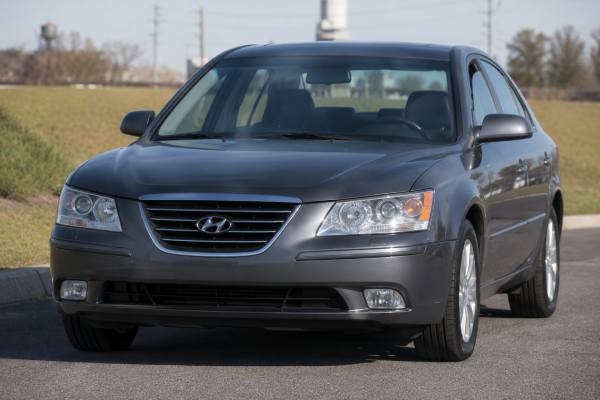
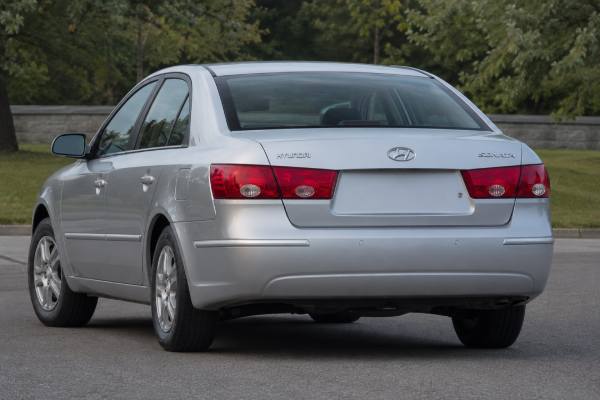
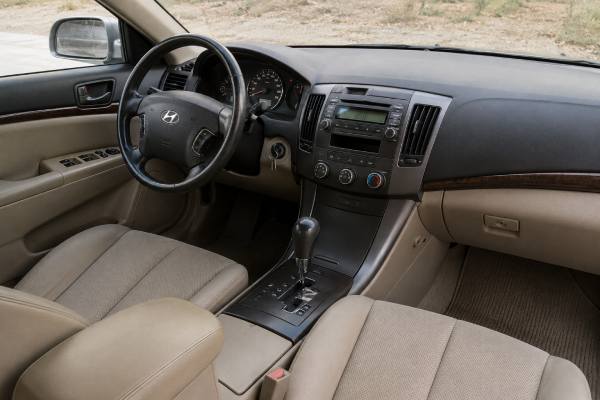
The 2006–2008 Hyundai Sonata NF with the Lambda 3.3-liter V6 is one of the more interesting used midsize sedans from Hyundai’s mid-2000s rise. It combined a roomy body, a strong naturally aspirated V6, standard automatic transmission, front-wheel drive, generous safety equipment for its era, and a value-focused ownership proposition that still matters on the used market.
This guide focuses on the 235 hp 3.3L V6 version sold mainly in North American-style GLS V6, SE V6, LX, and Limited V6 forms, depending on year and market. It covers the practical facts a buyer or owner needs: specifications, dimensions, performance, safety equipment, common problems, maintenance needs, and how the Sonata NF V6 compares with rivals such as the Toyota Camry V6, Honda Accord V6, Nissan Altima V6, and Chevrolet Malibu V6.
At a Glance
- Strong 3.3L Lambda V6 gives smooth, relaxed highway performance and useful passing power.
- Roomy cabin, large trunk, standard ABS, stability control, and six airbags made it well equipped for its class.
- Timing chain design avoids scheduled belt replacement, but startup rattle, oil leaks, sensors, mounts, and transmission behavior need checking.
- Engine oil service is typically every 7,500 miles / 12,000 km or 6 months in normal use; severe use calls for 3,000 miles / 4,800 km or 3 months.
- Best buys are clean, rust-free V6 cars with recall proof, smooth cold starts, clean ATF history, working A/C, and no oil leak near the alternator.
Table of Contents
- Sonata NF V6 Model Brief
- Sonata NF V6 Specs
- Sonata NF V6 Trims and Safety
- Common Faults and Recalls
- Maintenance and Buying Checks
- Road Manners and Economy
- Rivals and Final Verdict
Sonata NF V6 Model Brief
The NF-generation Sonata marked a major step forward for Hyundai. Compared with earlier Sonatas, it was larger, stiffer, more spacious, and far more competitive in safety equipment. The 3.3L V6 version sat above the four-cylinder models and was aimed at buyers who wanted Camry or Accord V6 performance without the same purchase price.
The engine is the naturally aspirated Lambda G6DB V6. It uses a 60-degree aluminum V6 layout, dual overhead camshafts, four valves per cylinder, continuously variable valve timing, multi-point fuel injection, and a timing chain. Output for the 2006–2008 U.S.-market-style version is commonly listed at 235 hp at 6,000 rpm and around 224–226 lb-ft of torque at 3,500 rpm. It is not a high-strung engine; its strength is smooth midrange power and easy highway acceleration.
All 3.3L Sonata NF models use front-wheel drive and a five-speed SHIFTRONIC automatic transmission. There was no manual V6 and no AWD version for this model range. The V6 also brought larger brakes than the base four-cylinder cars, and higher trims added alloy wheels, upgraded audio, leather, sunroof availability, power driver’s seat, heated seats, and convenience features.
As a used car, the Sonata NF V6 makes the most sense for buyers who value comfort, space, low entry price, and simple mechanical design. It is not as sharp to drive as a Honda Accord V6 and not as polished as a Toyota Camry V6, but it can be a good long-distance sedan when maintained properly.
Its biggest practical advantages are:
- Smooth V6 power with no turbocharger complexity.
- Timing chain instead of a scheduled timing belt.
- A large cabin and trunk for the money.
- Standard safety equipment that was strong for the mid-2000s.
- Parts availability and relatively simple mechanical access for many jobs.
Its biggest ownership caveats are age-related rather than design-concept related. These cars are now old enough that rubber, gaskets, mounts, suspension bushings, sensors, brake lines, subframes, and electrical connectors matter more than the odometer alone. A low-mileage car that sat outside in a snowy region can need more work than a higher-mileage car with warm-climate history and regular maintenance.
The V6 is also more expensive to service than the four-cylinder. Rear-bank spark plugs, valve cover gasket work, and some cooling or oil leak repairs take more labor because of the transverse V6 packaging. Fuel economy is also only fair by modern standards. For daily city driving, a four-cylinder Sonata is cheaper to run; for highway comfort and relaxed passing, the V6 is the better experience.
Sonata NF V6 Specs
The tables below focus on the 2006–2008 Hyundai Sonata NF 3.3L Lambda V6 with automatic transmission. Some figures vary slightly by market, trim, wheel package, test method, and model year, so VIN-specific service information should always be used for repair work.
Powertrain and Efficiency
| Item | 2006–2008 Sonata NF 3.3 V6 |
|---|---|
| Engine code | Lambda G6DB |
| Engine layout and cylinders | Front transverse 60-degree V6, 6 cylinders, DOHC, 4 valves per cylinder, CVVT |
| Bore × stroke | 92.0 × 83.8 mm (3.62 × 3.30 in) |
| Displacement | 3.3 L (3,342 cc) |
| Induction | Naturally aspirated |
| Fuel system | Multi-point fuel injection |
| Compression ratio | 10.4:1 |
| Maximum power | 235 hp (about 175 kW) at 6,000 rpm |
| Maximum torque | 304–306 Nm (224–226 lb-ft) at 3,500 rpm |
| Timing drive | Chain |
| Rated efficiency | About 10.7–11.2 L/100 km combined; roughly 21–22 mpg US / 25–26 mpg UK, depending on year and EPA adjustment |
| Real-world highway at 120 km/h / 75 mph | Typically about 8.5–9.8 L/100 km (24–28 mpg US / 29–34 mpg UK) when healthy, lightly loaded, and on correct tyres |
Transmission and Driveline
| Item | Specification |
|---|---|
| Transmission | 5-speed SHIFTRONIC automatic; commonly Hyundai A5HF1 family, confirm by VIN/build tag |
| Drive type | Front-wheel drive |
| Differential | Open front differential integrated with transaxle |
Chassis, Dimensions, and Capacities
| Item | Specification |
|---|---|
| Front suspension | Independent double-wishbone type with coil springs and stabilizer bar on many U.S. specifications; some catalogs describe the broader NF layout differently by market |
| Rear suspension | Independent multi-link with coil springs and stabilizer bar |
| Steering | Hydraulic rack and pinion; approx. 16.9:1 ratio, about 3.3 turns lock-to-lock |
| Brakes | Vented front discs about 300 mm (11.8 in); rear discs about 284 mm (11.2 in) |
| Common tyre sizes | 215/60 R16 on many GLS/LX cars; 225/50 R17 on sport or higher wheel packages |
| Ground clearance | 160 mm (6.3 in) |
| Length / width / height | 4,800 / 1,832 / 1,474–1,475 mm (188.9 / 72.1 / 58.0 in) |
| Wheelbase | 2,730 mm (107.4–107.5 in) |
| Turning circle, kerb-to-kerb | About 10.9 m (35.8 ft) |
| Curb weight | About 1,568–1,571 kg (3,458–3,463 lb), trim dependent |
| GVWR | About 2,130 kg (4,696 lb) |
| Fuel tank | 70 L (18.5 US gal / 15.4 UK gal) |
| Cargo volume | About 462–523 L (16.3–18.5 ft³), depending on SAE/VDA-type reporting method |
Performance and Capability
| Metric | Typical figure |
|---|---|
| 0–100 km/h / 0–62 mph | About 7.7 seconds |
| 0–60 mph | About 7.3–7.6 seconds, depending on test conditions |
| Top speed | About 230 km/h (143 mph) where unrestricted and market applicable |
| 100–0 km/h braking distance | Typically mid-40 m range on period all-season tyres; exact tested setup matters |
| Towing capacity | Up to about 907 kg (2,000 lb) in markets where rated; lower or not recommended in some markets |
| Payload | About 559 kg (1,232 lb), depending on trim and specification |
Fluids and Service Capacities
| System | Specification and capacity |
|---|---|
| Engine oil | API SJ/SL or later, ILSAC GF-3 or later; 5W-20 preferred for economy, 5W-30 acceptable in broad temperatures, 10W-30 for warmer conditions; 5.2 L (5.49 US qt) |
| Engine coolant | Ethylene-glycol coolant suitable for aluminum engines; commonly 50/50 premix with distilled water; about 8.2 L (8.66 US qt) |
| Automatic transmission fluid | Hyundai Genuine ATF SP-III or approved SP-III equivalent; drain-and-fill amount varies, total dry capacity roughly 8 L class |
| Differential / transfer case | Not separate; integrated FWD transaxle, no transfer case |
| Brake fluid | DOT 3 or DOT 4, replace by time and moisture condition |
| Power steering | Hyundai-approved PSF; many service references specify PSF-3 family fluid |
| A/C refrigerant | R-134a; about 550 g (19.4 oz), verify under-hood label |
| A/C compressor oil | PAG 46 / FD46XG type, about 150 mL (5.1 fl oz), verify compressor and label |
| Key torque values | Oil drain plug about 39 Nm (29 lb-ft); wheel nuts about 88–107 Nm (65–79 lb-ft); spark plugs commonly about 20–30 Nm (15–22 lb-ft), verify by plug type |
Safety and Driver Assistance
| Item | 2006–2008 Sonata NF V6 |
|---|---|
| IIHS moderate overlap front | Good; rating applies to 2006–2010 models |
| IIHS side impact | Acceptable in original side test |
| IIHS roof strength | Marginal in later IIHS reporting |
| IIHS head restraints and seats | Good |
| Euro NCAP | Older 2006-era star format where applicable; not directly comparable with modern adult/child/VRU percentage scoring |
| Headlight rating | No modern IIHS headlight rating for this generation |
| ADAS suite | No modern AEB, ACC, LKA, lane centering, traffic sign assist, or cyclist/pedestrian detection; ESC/TCS/ABS were the key active systems |
Sonata NF V6 Trims and Safety
The V6 Sonata NF was offered differently by market, but the common North American pattern is simple: four-cylinder cars filled the lower price points, while the V6 was sold in better-equipped trims. In 2006, the V6 appeared in GLS V6 and LX V6 forms. By 2007–2008, naming shifted toward GLS V6, SE V6, and Limited V6 in many listings.
Trim and Option Highlights
The GLS V6 is usually the value trim. It gives the 3.3L engine, five-speed automatic, larger V6 brakes, power equipment, air conditioning, cruise control, ABS, stability control, traction control, and the main passive-safety package. Some cars have cloth seats and 16-inch wheels, while optioned cars may have a sunroof or 17-inch package.
The SE V6 is the sportier one to look for if you want the better stance and wheel package. It commonly adds 17-inch alloy wheels, 225/50 R17 tyres, firmer visual trim, and sometimes a spoiler or sport-oriented interior cues depending on year. It is not a true sport sedan, but the tyre package makes the car feel more planted than the base 16-inch setup.
The LX or Limited V6 is the comfort-focused version. Typical identifiers include leather seating, heated front seats, automatic climate control, upgraded audio, power driver’s seat, sunroof availability, auto-dimming mirror, Homelink-style garage controls, and more upscale interior trim. On 2008 cars, Limited badging and richer cabin equipment make it easier to spot.
Quick identifiers include:
- Badges: GLS V6, SE V6, LX, or Limited depending on year.
- Wheels: 16-inch alloys on many standard V6 cars; 17-inch 225/50 R17 package on sportier or higher trims.
- Interior tells: Leather, heated seats, automatic climate control, sunroof, and upgraded mirror usually point to LX/Limited-type trim.
- Mechanical tells: V6 cars have dual exhaust outlets, the 3.3L engine cover, five-speed automatic, and larger front brake hardware.
- VIN/build confirmation: Use the VIN, emissions label, and parts catalog to verify engine, transmission, production date, and recall applicability.
Year-to-Year Notes
The 2006 model introduced the NF generation in many markets and brought a much stronger safety and equipment story than previous Sonatas. Early-build 2006 cars are important to inspect for completed safety campaigns, especially those involving seat-related or electronic stability control issues.
By 2007, equipment packaging became more settled, and some recall populations shifted depending on production date. By 2008, the Sonata was a mature version of the pre-facelift NF in North America, with V6 trims commonly advertised as GLS V6, SE V6, and Limited V6.
The 2009 Sonata received more substantial updates, so this article does not treat 2009–2010 facelift equipment as directly applicable to 2006–2008 cars.
Safety Systems and Child-Seat Provisions
The Sonata NF was well equipped for its time. Standard safety equipment on most U.S.-market cars included six airbags: dual front airbags, front seat-mounted side-impact airbags, and full-length side curtain airbags. It also included front active head restraints, three-point belts for all seating positions, ABS, electronic brake-force distribution, traction control, and electronic stability control.
Child-seat support is provided through rear LATCH anchors and top tether points. As with any older sedan, buyers should physically test child-seat installation before purchase if family use is a priority. Rear-seat space is generous, but seat cushion shape and belt geometry can affect how securely a specific child seat fits.
Modern driver assistance is essentially absent. There is no factory automatic emergency braking, adaptive cruise control, blind-spot monitoring, lane keeping assist, rear cross-traffic alert, cyclist detection, or traffic sign recognition. The key active safety advantage is stability control, which was not universal among all midsize sedans at the time.
Any collision repair near the front bumper, crash sensors, steering angle sensor, wheel speed sensors, or airbag components should be inspected carefully. ESC and airbag warning lights should illuminate at key-on and then go out. A seller claiming that a warning light is “just a sensor” should be treated cautiously until diagnostic codes prove the fault.
Common Faults and Recalls
The 3.3L Sonata NF is not known as an exotic or fragile car, but it is old enough that condition matters more than reputation. Most issues are manageable if caught early. The expensive cars to avoid are those with neglected oil changes, overheating history, harsh transmission engagement, structural rust, water leaks, or unresolved safety recalls.
| Issue | Prevalence | Severity / Cost | Typical signs | Best response |
|---|---|---|---|---|
| Valve cover gasket oil leaks | Common with age | Medium | Burning oil smell, oil near alternator, smoke after sitting | Replace gaskets and inspect plug wells, PCV, and alternator contamination |
| Timing chain tensioner rattle | Occasional | Medium to high | Brief cold-start rattle, cam correlation codes, rough running if severe | Diagnose oil pressure, tensioners, guides, chain stretch, and cam timing |
| Ignition coils and spark plug issues | Occasional | Low to medium | Misfire under load, flashing check-engine light, rough idle | Scan misfire data, replace plugs with correct type, replace weak coils |
| Automatic shift flare or harsh shifts | Occasional | Medium to high | Delayed 2–3 shift, hard engagement, limp mode, speed sensor codes | Check ATF condition, codes, range switch, input/output speed sensors, TCM updates |
| Front suspension and steering wear | Common with mileage | Low to medium | Clunks, wandering, uneven tyre wear, vibration | Inspect control arms, ball joints, tie rods, struts, mounts, and alignment |
| Rust and brake-line corrosion | Climate dependent | Medium to high | Rust at subframes, brake lines, rocker seams, rear suspension mounts | Lift inspection before purchase; avoid structurally rusty examples |
| A/C and electrical aging | Occasional | Low to high | Weak cooling, blower faults, warning lights, window or lock issues | Verify all electrical functions, scan modules, leak-test A/C before recharge |
Engine-Specific Concerns
The Lambda V6 uses a chain, so there is no routine timing belt interval. That is good for ownership cost, but it does not mean the timing system can be ignored forever. A healthy engine may make a brief mechanical sound at startup, but repeated chain rattle, especially after warm restarts, deserves attention. Worn tensioners, oil pressure delay, chain guide wear, or stretched chains can become expensive if ignored.
Oil leaks are more common than internal engine failure. Valve cover gaskets are the usual suspect, and the rear bank takes more labor. The front-bank leak can drip near hot exhaust parts; the rear or side leakage can contaminate ignition components. A leak above the alternator is especially important because oil saturation can shorten alternator life.
Misfires often come from old spark plugs, aging ignition coils, oil in plug wells, vacuum leaks, or intake-related service errors. Because rear spark plug access is more involved, some cars receive partial maintenance, with the front plugs replaced and the rear plugs neglected. A buyer should ask for proof that all six plugs were serviced.
Transmission and Driveline
The five-speed automatic should shift smoothly when cold and hot. Lightly firm shifts are normal for an older Hyundai automatic, but flare, slipping, banging into gear, delayed reverse, or limp-home mode are not. Check for codes even if the check-engine light is off. Range switch faults, input/output speed sensor faults, old ATF, and wiring issues can imitate deeper transmission failure.
A proper road test should include gentle acceleration, full-throttle kickdown, manual SHIFTRONIC selection, stop-and-go driving, and a hot restart. Burnt ATF or evidence of universal “multi-vehicle” fluid in place of SP-III is a warning sign.
Recalls and Service Actions
Important recall themes for 2006–2008 Sonata NF cars include electronic stability control behavior on certain early cars, airbag/occupant classification system concerns, stop-lamp switch faults on some Hyundai/Kia vehicles of the era, visor airbag warning label issues on certain 2006 cars, and ABS-module electrical fire risk on certain 2006 Sonata vehicles included in Hyundai Campaign 172.
The ABS-module recall is especially important because the remedy involves installing a relay into the ABS module electrical circuit on affected vehicles. A VIN check is essential because recall applicability depends on production details, not just model year.
Before purchase, request:
- Completed recall records from a Hyundai dealer or national recall database.
- A clean scan report showing no current airbag, ABS, ESC, or transmission codes.
- Proof of oil, coolant, spark plug, and ATF service.
- Evidence that valve cover leaks and alternator contamination were handled properly.
- Lift inspection for rust, brake lines, subframes, and suspension mounts.
- Cold-start video or in-person cold start to check chain rattle and misfires.
Maintenance and Buying Checks
A Sonata NF V6 can be inexpensive to own, but only if you maintain it like an aging V6 sedan rather than a disposable cheap car. The best schedule is conservative: use correct fluids, shorten intervals for city or hot-climate use, and treat leaks early.
| Item | Recommended interval | Notes |
|---|---|---|
| Engine oil and filter | 7,500 miles / 12,000 km or 6 months normal; 3,000 miles / 4,800 km or 3 months severe | Use 5W-20 or 5W-30 meeting Hyundai/API/ILSAC requirements; shorter intervals help chain and tensioner life |
| Engine air filter | 15,000–30,000 miles / 24,000–48,000 km | Inspect more often in dusty areas |
| Cabin air filter | 12 months or 12,000–15,000 miles / 19,000–24,000 km | Replace sooner if blower output is weak or odor is present |
| Spark plugs | About 60,000–100,000 miles / 96,000–160,000 km depending plug type and service history | Replace all six; inspect coils and plug wells for oil |
| Coolant | Initial long-life interval may be longer; for used cars, refresh every 3–5 years | Use aluminum-safe ethylene-glycol coolant and correct mix |
| Automatic transmission fluid | 30,000–60,000 miles / 48,000–96,000 km in used-car service | Use SP-III specification; avoid power flushing neglected units |
| Brake fluid | Every 2–3 years | Moisture damages ABS components and calipers |
| Brake pads and rotors | Inspect every 6–12 months | Check slider pins, rear calipers, parking brake, and brake-line corrosion |
| Timing chain system | No scheduled belt-style replacement | Inspect if rattle, cam timing codes, metal debris, or poor oil history is present |
| Serpentine belt and hoses | Inspect yearly; replace about 60,000–90,000 miles / 96,000–145,000 km or when cracked | Include tensioner, idlers, radiator hoses, and heater hoses |
| Tyre rotation and alignment | Rotate every 5,000–7,500 miles / 8,000–12,000 km; align when wear appears | 17-inch tyres make worn suspension more noticeable |
| 12 V battery | Test yearly after 3 years; typical replacement at 4–6 years | Weak voltage can trigger confusing electrical symptoms |
Buyer’s Inspection Checklist
Start with the body. Check rocker panels, lower doors, wheel arches, rear subframe areas, brake lines, fuel lines, radiator support, and suspension mounting points. Cosmetic rust can be negotiated; structural rust or flaky brake lines can make a cheap Sonata a poor buy.
Then check the engine cold. It should start quickly, settle into a smooth idle, and avoid prolonged chain rattle. Open the hood and inspect the valve covers, timing cover seams, oil filter housing area, coolant reservoir, radiator side tanks, and power steering lines. Look for fresh cleaning around leak-prone areas, which may indicate a leak was hidden before sale.
During the road test, confirm:
- Smooth 1–2, 2–3, 3–4, and 4–5 shifts.
- No flare on moderate acceleration.
- No harsh reverse engagement.
- Straight braking without steering shake.
- Stable idle with A/C on.
- No coolant temperature creep in traffic.
- No ABS, ESC, airbag, or check-engine lights.
- Working cruise control, windows, locks, audio, blower speeds, and heated seats if equipped.
Expect normal reconditioning on most examples: tyres, brakes, struts, engine mounts, valve cover gaskets, spark plugs, coils, battery, fluids, and suspension links. A car that has already had these done with records is worth more than a cheaper car needing everything.
Best Years and Trims
For this exact 2006–2008 V6 range, condition is more important than year. A clean 2006 with completed recalls and no rust is better than a neglected 2008 Limited. Still, later 2007–2008 cars may be easier to shop because trim naming is clearer and early-production recall concerns are less likely.
Choose the SE V6 if you want the sportier look and 17-inch wheel package. Choose the Limited V6 if you want leather, comfort features, and a more upscale cabin. Choose the GLS V6 only if its service history and price are strong, because equipment is plainer but mechanical performance is similar.
Avoid cars with unresolved ABS/airbag warnings, heavy rust, contaminated alternator from oil leaks, repeated transmission limp mode, overheating history, or sellers who cannot explain maintenance.
Road Manners and Economy
The Sonata NF V6 is a comfort-first sedan. It feels best on open roads, where the 3.3L engine can settle into a quiet cruise and the long wheelbase gives the car a relaxed, stable feel. It is not a precision sport sedan, but it is composed enough for daily use and has enough power to make highway merging easy.
Ride, Handling, and NVH
The ride is generally soft to medium-soft on 16-inch tyres. It absorbs broken pavement better than many newer sedans with low-profile tyres, although worn struts and tired bushings can make the car feel floaty. With the 17-inch package, steering response improves and the car feels more settled in corners, but impact harshness increases.
Steering is light and easy. It does not give the same feedback as an Accord, but it suits the car’s role. Around town, the turning circle is manageable, visibility is good, and the sedan shape makes parking simple.
Noise levels are respectable for the era. The V6 is smooth, wind noise is moderate at highway speeds, and tyre noise depends heavily on tyre choice. Cheap tyres can make the cabin much louder than it should be. Engine mounts also matter; collapsed mounts can add vibration at idle and during gear engagement.
Braking feel is adequate when the system is fresh. The V6’s larger brakes help, but old fluid, sticky caliper pins, warped rotors, or cheap pads can make the pedal feel inconsistent. Any steering shake under braking should be investigated before blaming wheel balance.
Powertrain Character
The Lambda V6 is the highlight. It is smooth, naturally aspirated, and more responsive than many four-cylinder sedans of the same era. Throttle response is easy to manage, and the engine pulls well from the midrange. It does not have modern turbo torque at very low rpm, but it builds power cleanly and suits relaxed driving.
The five-speed automatic is not as quick as a modern 8-speed or dual-clutch gearbox. It may hesitate before kickdown and can feel busy in rolling traffic, but a healthy unit should not slip or flare. The manual shift gate is useful for hills or passing, though it does not transform the car into a performance sedan.
For overtaking, the Sonata V6 is much more confident than the four-cylinder. The 80–120 km/h / 50–75 mph range is where the engine feels useful, especially with one or two passengers. Fully loaded, it still copes well, but braking and tyre condition become more important.
Real-World Fuel Economy
Fuel economy is the main trade-off. In city use, expect roughly 12.5–15.5 L/100 km, or about 15–19 mpg US / 18–23 mpg UK, depending on traffic, trip length, temperature, and driving style. Short trips in winter can be worse.
On highways at 100–110 km/h / 60–68 mph, a healthy car may return about 7.8–9.0 L/100 km, or roughly 26–30 mpg US / 31–36 mpg UK. At 120 km/h / 75 mph, expect closer to 8.5–9.8 L/100 km, or about 24–28 mpg US / 29–34 mpg UK. Mixed driving commonly lands around 10.5–12.0 L/100 km, or 20–22 mpg US / 24–26 mpg UK.
Cold weather, underinflated tyres, dragging brakes, old oxygen sensors, weak thermostats, dirty air filters, and cheap winter tyres can all reduce economy. If a Sonata V6 is using far more fuel than expected, scan fuel trims, check coolant temperature, inspect brakes, and verify tyre pressure before assuming the engine is worn.
Load and Towing
The V6 has enough power for passengers and luggage, and the trunk is large for a midsize sedan. Some markets list towing capacity around 907 kg / 2,000 lb, but towing with an older front-wheel-drive sedan should be treated conservatively. Use trailer brakes where required, keep tongue weight modest, avoid overheating the transmission, and shorten ATF service intervals if towing is part of regular use.
Rivals and Final Verdict
The Sonata NF V6 competes most directly with the Toyota Camry V6, Honda Accord V6, Nissan Altima V6, Chevrolet Malibu V6, Ford Fusion V6, Mazda6 V6, and Kia Optima/Magentis V6 of the same era. It usually wins on purchase price and equipment value, but it does not dominate every category.
| Rival | Where the rival is stronger | Where the Sonata V6 is stronger |
|---|---|---|
| Toyota Camry V6 | Refinement, resale value, long-term reputation | Lower purchase price, strong standard safety kit, good space |
| Honda Accord V6 | Handling, steering feel, engine character | Softer ride, lower price, simpler relaxed personality |
| Nissan Altima V6 | Quicker acceleration, sportier feel | More conservative cabin, often cheaper, less aggressive character |
| Chevrolet Malibu V6 | Parts familiarity in North America, simple domestic servicing | Better safety equipment story and stronger cabin space in many trims |
| Mazda6 V6 | Sharper handling, driver involvement | More rear-seat room, softer ride, stronger value as a comfort sedan |
| Kia Optima/Magentis V6 | Similar mechanical base, sometimes cheaper | Often broader availability and stronger recognition in used listings |
The Camry V6 is the safer choice for buyers who want refinement and resale value. The Accord V6 is the better choice for drivers who care about steering and chassis feel. The Altima V6 is quicker and more energetic. The Mazda6 V6 is more engaging. The Sonata V6 is the value play: spacious, smooth, comfortable, and well equipped for less money.
That value only works if the specific car is healthy. A neglected Sonata V6 can quickly erase its low purchase price through oil leak repairs, suspension work, transmission diagnostics, tyres, brakes, and electrical fixes. A well-kept one, however, can be a pleasant and practical sedan with enough performance to still feel useful today.
Buy one if you want a comfortable, roomy, inexpensive V6 sedan and you can find a clean example with service records. Skip it if fuel economy is a priority, if rust is present, if the transmission behaves poorly, or if the car has unresolved safety warning lights. The best Sonata NF V6 is not necessarily the lowest-mileage one; it is the one with clean structure, completed recalls, correct fluids, smooth powertrain behavior, and proof that the expensive age-related items have already been handled.
References
- HYUNDAI 2008 SONATA AUTOMOBILE OWNER’S MANUAL | ManualsLib 2008 (Owner’s Manual mirror) ([ManualsLib][1])
- Hyundai Sonata V (NF) 3.3i V6 24V (235 Hp) Automatic | Technical specs, data, fuel consumption, Dimensions 2026 (Technical Data) ([Auto Data][2])
- Gas Mileage of 2008 Hyundai Sonata 2026 (Official Fuel Economy Data) ([fueleconomy.gov][3])
- 2006 Hyundai Sonata 2026 (Safety Rating) ([IIHS][4])
- Part 573 Safety Recall Report 18V-026 2018 (Recall Database) ([NHTSA][5])
Disclaimer
This article is for informational purposes only and is not a substitute for professional diagnosis, repair, inspection, or manufacturer service procedures. Specifications, torque values, capacities, software updates, recall applicability, maintenance intervals, and repair procedures can vary by VIN, market, production date, trim, and equipment. Always verify details against official Hyundai service documentation, the vehicle’s labels, dealer records, and a qualified technician’s inspection.
If this guide helped you, please consider sharing it on Facebook, X/Twitter, or another platform to support our work.