
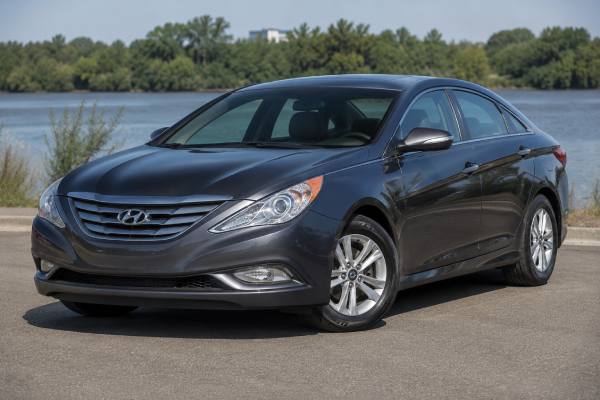
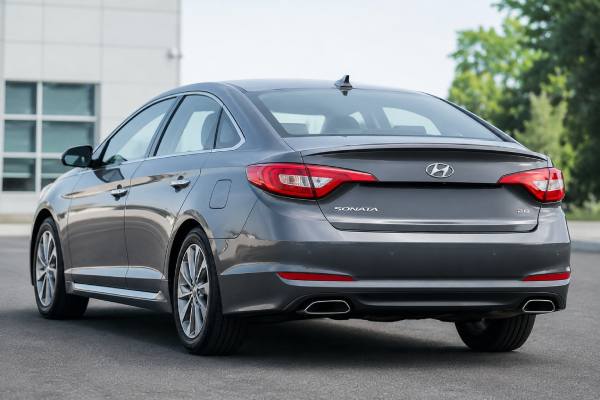
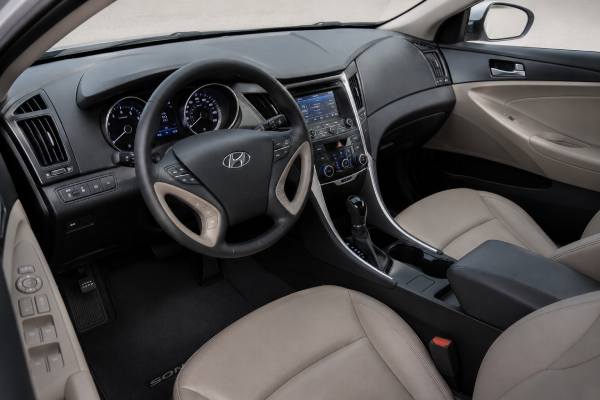
The 2014 Hyundai Sonata YF 2.4 GDi with the 192 hp Theta II engine is best understood as the final, facelifted version of the sixth-generation Sonata in North American SE specification. It combined a roomy sedan body, a naturally aspirated direct-injected four-cylinder engine, a six-speed automatic transmission, and a noticeably richer equipment list than many earlier YF models.
For buyers, the appeal is simple: strong space for the money, good highway economy, a large trunk, and a smoother, quieter cabin after Hyundai’s 2014 updates. The caution is just as important: this engine family has well-known recall and warranty history, so condition, service records, and VIN-specific campaign completion matter more than mileage alone.
Fast Facts
- The 192 hp version is tied to the SE 2.4 GDi trim with dual exhaust; GLS and Limited 2.4 models are typically rated at 190 hp.
- Strengths include a spacious cabin, 16.4 cu ft trunk, good highway range, and generous 2014 equipment.
- The main ownership caveat is Theta II GDi bearing-wear recall history, so verified recall completion is essential.
- Engine oil service is commonly planned every 7,500 miles / 12 months in normal use, or sooner in severe service.
- The 2.4 GDi uses a timing chain, so there is no routine timing-belt replacement interval.
Table of Contents
- Hyundai Sonata YF 2014 Profile
- Hyundai Sonata YF 2.4 GDi Specs
- Hyundai Sonata YF Trim and Safety
- Reliability Issues and Recalls
- Maintenance and Used Buying Checks
- Driving Feel and Real Economy
- Sonata YF Against Key Rivals
Hyundai Sonata YF 2014 Profile
The Hyundai Sonata YF was already a bold-looking midsize sedan when it arrived for the 2011 model year, but the 2014 facelift made it feel more mature. Hyundai revised the exterior detailing, added more technology, improved noise isolation, updated the steering calibration, and expanded available safety features. In the 2.4 GDi SE version, the Sonata stayed naturally aspirated, front-wheel drive, and automatic-only, but gained a slightly higher 192 hp rating thanks to its trim-specific dual exhaust setup.
This article focuses on the 2014 facelifted Sonata YF with the 2.4-liter Theta II gasoline direct-injection engine in 192 hp form. That is important because the same model year also included 190 hp 2.4 GDi versions, a 2.0T turbo variant, and hybrid versions. The 192 hp car is not the fastest Sonata of its year, but it is the most balanced naturally aspirated performance trim: easier to maintain than the turbo, stronger than many base midsize sedans, and better equipped than the entry GLS.
The body is a conventional four-door sedan with seating for five. Its packaging is one of its best traits. The cabin is wide, the front seats offer generous legroom, and the trunk is large for the class. Hyundai also classified the Sonata as a “large car” under EPA interior-volume rules, even though shoppers typically compare it with the Toyota Camry, Honda Accord, Nissan Altima, Ford Fusion, Chevrolet Malibu, and Volkswagen Passat.
The facelift does not turn the Sonata into a sports sedan. The SE suspension is firmer than GLS and Limited versions, and the steering has selectable modes, but the car’s character remains comfort-biased. It works best as a daily commuter, highway sedan, and family car. Its 2.4 GDi engine has enough power for merging and passing, while the six-speed automatic is smooth when maintained and correctly calibrated.
The biggest ownership issue is engine history. Hyundai’s Theta II GDi engines were the subject of major recall and service-campaign activity related to bearing wear, engine noise, reduced power, warning lights, and possible stalling. A good 2014 Sonata 2.4 GDi can be a sensible used buy, but only when its recall status, oil-change record, engine behavior, and any replacement-engine documentation are clear.
Hyundai Sonata YF 2.4 GDi Specs
The figures below apply to the 2014 Sonata YF facelift 2.4 GDi SE-style 192 hp specification unless noted. Some values vary by market, emission certification, tire package, production date, and VIN, so service work should always be checked against the underhood labels and official repair data.
Powertrain and efficiency
| Item | Specification |
|---|---|
| Engine family / code | Theta II 2.4 GDi, commonly listed as G4KJ |
| Layout | Inline-4, aluminum block/head, DOHC |
| Valvetrain | 4 valves per cylinder, Dual CVVT |
| Bore × stroke | 88.0 × 97.0 mm / 3.46 × 3.82 in |
| Displacement | 2.4 L / 2,359 cc |
| Induction | Naturally aspirated |
| Fuel system | Gasoline direct injection |
| Compression ratio | 11.3:1 |
| Max power | 192 hp / 143 kW @ 6,300 rpm |
| Max torque | 245 Nm / 181 lb-ft @ 4,250 rpm |
| Timing drive | Chain |
| Fuel | Regular unleaded gasoline |
| Rated efficiency | About 8.7 L/100 km combined / 27 mpg US / 32.4 mpg UK under current EPA listing; period Hyundai material may show 24/35/28 mpg US |
| Real-world highway at 120 km/h / 75 mph | Typically about 7.5–8.4 L/100 km / 28–31 mpg US when healthy and lightly loaded |
Transmission and driveline
| Item | Specification |
|---|---|
| Transmission | 6-speed automatic with SHIFTRONIC manual mode |
| Common transmission family | Hyundai A6-series automatic; verify exact code by VIN |
| Drive type | Front-wheel drive |
| Differential | Open front differential |
| Towing | Not a strong towing platform; follow market-specific owner documentation before fitting any hitch |
Chassis, dimensions, and capacities
| Item | Specification |
|---|---|
| Front suspension | MacPherson strut |
| Rear suspension | Independent multi-link |
| SE chassis note | Sport-tuned springs/stabilizer bars; 18-inch tire package |
| Steering | Electric power-assisted rack-and-pinion; selectable steering modes |
| Steering ratio | Commonly listed around 14.5:1; verify by market |
| Turning circle | 10.9 m / 35.8 ft |
| Front brakes | Vented discs, about 300 mm / 11.8 in |
| Rear brakes | Solid discs, about 284 mm / 11.2 in |
| Common SE tire size | 225/45 R18 |
| Ground clearance | About 135 mm / 5.3 in |
| Length | 4,820 mm / 189.8 in |
| Width | 1,835 mm / 72.2 in, excluding mirrors |
| Height | 1,470 mm / 57.9 in |
| Wheelbase | 2,795 mm / 110.0 in |
| Curb weight | About 1,472 kg / 3,245 lb for 2.4 SE |
| GVWR | About 2,030 kg / 4,475 lb, depending on label |
| Fuel tank | 70 L / 18.5 US gal / 15.4 UK gal |
| Cargo volume | 464 L / 16.4 ft³ trunk, SAE-style figure |
Performance and service data
| Item | Specification |
|---|---|
| 0–100 km/h / 0–62 mph | Roughly 8.5–9.0 seconds depending on tires, load, fuel, and test method |
| Top speed | Commonly around 205–210 km/h / 127–130 mph where unrestricted |
| 100–0 km/h braking | Typically mid-40 m range on good tires; tire condition strongly affects result |
| Engine oil | API/ILSAC gasoline oil; 5W-20 commonly preferred, 5W-30 also commonly permitted by climate |
| Engine oil capacity | About 5.0 L / 5.3 US qt with filter on many 2.4 GDi engines; confirm dipstick/engine variant |
| Coolant | Ethylene-glycol, aluminum-compatible coolant, typically 50/50 premix |
| Automatic transmission fluid | Hyundai/Kia ATF SP-IV specification |
| Brake fluid | DOT 3 or DOT 4, as specified on cap/manual |
| A/C refrigerant | R-134a; exact charge should be read from the underhood label |
| Key torque values | Wheel nuts about 88–107 Nm / 65–79 lb-ft; oil drain plug often around 34–44 Nm / 25–33 lb-ft; verify before service |
Safety and driver assistance
| Item | Result or availability |
|---|---|
| NHTSA | 5-star overall rating commonly listed for 2014 Sonata |
| IIHS small overlap front | Marginal |
| IIHS moderate overlap front | Good |
| IIHS side | Good |
| IIHS roof strength | Good |
| IIHS head restraints/seats | Good |
| IIHS headlight rating | Not rated under later IIHS headlight program |
| Euro NCAP | No directly comparable Euro NCAP result for this exact U.S.-market 2014 2.4 GDi configuration |
| ADAS | Blind Spot Detection optional on SE, standard on Limited; no modern AEB/ACC/lane-centering suite |
Hyundai Sonata YF Trim and Safety
The 2014 Sonata lineup was broader than the 192 hp version alone. In the U.S. market, the main gasoline trims were GLS, SE, and Limited, with the 2.0T available separately on sportier versions. The 2.4 GDi SE is the important trim for this article because it is the version Hyundai rated at 192 hp and 181 lb-ft, while many non-SE 2.4 GDi versions are listed at 190 hp and 179 lb-ft.
The SE is easy to identify if the car is original. Look for 18-inch alloy wheels, a body-colored rear spoiler, sportier interior trim, a leather-wrapped steering wheel, and trim-specific chassis tuning. The dual exhaust is the key mechanical clue tied to the higher output. A VIN decode, Monroney label, or dealer build sheet is still the safest way to confirm original trim because wheels, spoilers, and exhausts can be changed during a car’s life.
GLS models were the value trims. They could be well equipped with option packages, but they were not the 192 hp SE specification. Limited models leaned more toward comfort, with features such as upgraded interior appointments, available navigation, and additional convenience equipment. For 2014, Hyundai added or expanded features such as rearview camera availability, HD Radio, an 8-inch navigation screen on upper trims, tire-specific TPMS, and Blind Spot Detection availability.
Safety equipment was competitive for the time but should not be confused with modern driver-assistance systems. Standard passive and active safety equipment included advanced front airbags, front seat-mounted side airbags, full-length side curtain airbags, active front head restraints, three-point belts for all seating positions, front pretensioners and load limiters, ABS, Brake Assist, Electronic Brake-force Distribution, Electronic Stability Control, traction control, and LATCH anchors for outboard rear child seats.
Blind Spot Detection was new for the 2014 Sonata. It was available on SE through a package and standard on Limited. The rearview camera was standard on SE and Limited and included in the popular equipment package on GLS. However, there was no factory automatic emergency braking, adaptive cruise control, lane keeping assist, traffic sign recognition, or cyclist/pedestrian AEB system like shoppers expect on many newer sedans.
Crash-test performance is a mixed but generally respectable story. The Sonata YF earned Good ratings in several IIHS categories, including moderate overlap front, side, roof strength, and head restraints. The weaker point is the IIHS small-overlap driver-side result, which was Marginal. That matters because the small-overlap test was designed to stress a different part of the front structure than the older moderate-overlap test. For buyers comparing older family sedans, the Sonata is not unsafe by period standards, but newer designs generally perform better in small-overlap and advanced crash-avoidance testing.
Reliability Issues and Recalls
Reliability on a 2014 Sonata 2.4 GDi depends heavily on engine history. The car itself is simple by modern standards, but the Theta II GDi engine family has a significant record of recalls, campaigns, inspections, software updates, and extended-coverage discussions. A low-mileage example with poor oil history can be a worse buy than a higher-mileage car with documented engine inspection, recall completion, and frequent oil service.
The highest-severity issue is connecting-rod bearing wear and engine seizure risk. Typical warning signs include a rhythmic knock from the lower engine, oil-pressure warning lamp, check-engine lamp, reduced power, hesitation, limp mode, or diagnostic trouble code P1326 after knock-sensor detection software is installed. The root concern is bearing distress that can restrict normal operation and, in severe cases, lead to loss of motive power. The correct response is not to keep driving and hope it clears. The car should be inspected by a Hyundai dealer or qualified workshop familiar with the campaign procedures.
Common and important issues to check include:
| Issue | Prevalence | Severity / cost | Symptoms | Practical remedy |
|---|---|---|---|---|
| Theta II bearing wear / knock | Common enough to define buyer risk | High | Knock, P1326, oil lamp, limp mode, stalling | Verify recalls; dealer inspection; engine repair/replacement if qualified |
| Oil consumption | Occasional to common with age | Medium to high | Low oil between changes, smoke, fouled plugs | Consumption test, leak check, compression/leakdown, avoid neglected cars |
| GDi intake deposits | Occasional | Medium | Rough idle, hesitation, misfire | Diagnosis first; intake cleaning if confirmed |
| High-pressure fuel pipe concern after engine replacement | Recall-linked | High | Fuel smell after engine work | Inspect fuel pipe installation; replace if leaking |
| Shift cable recall | Recall-linked | Medium | Gear indicator mismatch, park engagement issue | Confirm campaign completion |
| MDPS steering coupler wear | Common on many Hyundai/Kia products of the era | Low to medium | Clunk in steering over small bumps | Replace flexible coupler and inspect column |
| Suspension wear | Common with mileage | Low to medium | Clunks, uneven tire wear, wandering | Inspect struts, end links, bushings, ball joints, alignment |
| Rust-belt corrosion | Climate-dependent | Medium | Brake-line corrosion, subframe/body seam rust | Inspect underside carefully before purchase |
Software and calibration history matter. Hyundai’s knock-sensor detection software is designed to recognize vibration patterns consistent with bearing distress and trigger warnings or reduced-power operation. A car that has never had campaign software or recall work completed is a riskier purchase, even if it runs well during a short test drive.
A pre-purchase inspection should request four things before money changes hands: a VIN recall printout, dealer campaign history, oil-change records, and documentation for any engine replacement. If an engine was replaced, check whether the high-pressure fuel pipe recall inspection was also completed. During the test drive, listen to cold-start noise, check for hot idle knock, confirm smooth transmission engagement, scan all modules for stored codes, and look for oil leaks around the timing cover, valve cover, oil pan, and filter housing area.
The best examples are not necessarily the cheapest. A slightly more expensive Sonata with verified campaign completion, clean oil records, no abnormal engine noise, and fresh tires/brakes is usually a better buy than a bargain car with missing history.
Maintenance and Used Buying Checks
A 2014 Sonata 2.4 GDi rewards conservative maintenance. Direct injection, timing-chain operation, and the known engine history make oil quality and oil level especially important. Even if the owner’s manual permits longer normal-service intervals, many used-car owners shorten oil changes to reduce risk, especially in hot climates, short-trip use, heavy traffic, or winter operation.
| Maintenance item | Practical interval |
|---|---|
| Engine oil and filter | 7,500 miles / 12 months normal use; 3,750–5,000 miles in severe use or for extra caution |
| Engine air filter | Inspect every 15,000 miles; replace around 30,000 miles or sooner in dusty use |
| Cabin air filter | 12,000–15,000 miles or yearly |
| Spark plugs | Around 105,000 miles for long-life plugs, sooner if misfire or oil consumption is present |
| Coolant | Often first service around 120,000 miles / 10 years, then shorter follow-up intervals; verify manual |
| Automatic transmission fluid | No casual dipstick service; consider SP-IV fluid service around 60,000 miles in severe use |
| Brake fluid | Every 2–3 years is a sensible preventive interval |
| Brake pads and rotors | Inspect at every tire rotation or oil service |
| Tire rotation | Every 5,000–7,500 miles |
| Alignment check | Yearly, after tire impact, or when tire wear is uneven |
| Serpentine belt and hoses | Inspect yearly after 60,000 miles |
| 12 V battery | Test yearly after 3 years; many last 4–6 years |
| Timing chain | No routine replacement; inspect if rattle, correlation codes, tensioner noise, or guide wear appears |
The most important fluid choices are engine oil and ATF. Use oil that meets the correct gasoline-engine API/ILSAC specification and the viscosity range listed for the climate. Hyundai often listed 5W-20 for economy, with 5W-30 also commonly suitable depending on conditions. ATF should meet Hyundai/Kia SP-IV specification; universal fluid should only be used if it clearly states the correct approval and the shop understands the sealed-style service procedure.
Buyer checks should be methodical:
- Start with the VIN. Confirm open recalls, completed recalls, engine campaign history, and any engine replacement record.
- Inspect the oil. Low, sludgy, fuel-smelling, or glittery oil is a warning sign.
- Listen cold and hot. A short rattle can be accessory or chain-related, but deep rhythmic knocking is serious.
- Scan for codes. Pay attention to P1326, misfire codes, cam/crank correlation codes, fuel-pressure codes, and transmission codes.
- Check the underside. Look for rusted brake lines, exhaust corrosion, torn bushings, leaking shocks, and damaged splash shields.
- Test the transmission. Engagement should be prompt, shifts should be clean, and there should be no flare or harsh bang into gear.
- Confirm tires match. The SE’s 18-inch tires make alignment and tire quality more noticeable than on smaller-wheel trims.
For long-term durability, the Sonata YF 2.4 GDi can be a useful and comfortable sedan when maintained, but it is not a “buy blind” used car. The safest ownership path is frequent oil service, quick attention to warning lights, verified recall completion, and avoiding cars with uncertain engine history.
Driving Feel and Real Economy
The 2014 Sonata SE 2.4 GDi feels stronger than many base midsize sedans of its era, but it does not drive like a performance model. The naturally aspirated engine builds power cleanly as revs rise, and the 6-speed automatic keeps the car relaxed in normal driving. Throttle response is good once moving, though the car can feel softer at very low rpm because peak torque arrives at 4,250 rpm rather than near idle.
The transmission is generally smooth. It is not as quick as a modern dual-clutch or 8-speed automatic, but it suits the engine’s character. Kickdown is predictable, and the SHIFTRONIC manual gate gives the driver some control on hills or during passing. Harsh shifts, flare, delayed engagement, or repeated hunting are not normal traits to ignore; they suggest the need for fluid, software, mount, or internal transmission diagnosis.
Ride quality depends on tires. The SE’s 18-inch wheels and lower-profile tires give sharper response and better body control than softer GLS versions, but they also add impact firmness and tire noise. The 2014 improvements to carpeting, pillar foam, and vibration damping help cabin refinement, especially at steady highway speed. Wind noise is reasonable, and the engine is quiet when cruising, but coarse pavement can still make itself heard through the large tires.
Steering is one of the more debated parts of the car. Hyundai added selectable steering modes, with Comfort, Normal, and Sport changing assist level and feel. Comfort is light for parking, Sport adds weight for highway driving, and Normal is the best everyday setting for most drivers. Feedback is not as natural as the best hydraulic systems or the Honda Accord’s better electric tuning, but the car tracks well when the alignment and tires are good.
Real-world economy is respectable rather than class-leading. Expect roughly 9.8–11.8 L/100 km / 20–24 mpg US in city driving, 6.7–7.6 L/100 km / 31–35 mpg US on calmer 100 km/h highway trips, and about 7.5–8.4 L/100 km / 28–31 mpg US around 120 km/h / 75 mph. Mixed driving often lands near 8.7–10.0 L/100 km / 24–27 mpg US. Cold weather, winter tires, short trips, old spark plugs, dragging brakes, and low tire pressure can easily worsen those numbers by 10–20 percent.
Braking feel is predictable for daily use. Pedal response is not especially sporty, but the four-wheel disc setup is adequate when the pads, rotors, calipers, and tires are in good condition. Before buying, repeated stops should not cause vibration, pulling, burning smell, or a sinking pedal. On older cars, brake quality often says more about maintenance than the original design.
Sonata YF Against Key Rivals
The 2014 Sonata YF 2.4 GDi competes most directly with four-cylinder versions of the Toyota Camry, Honda Accord, Nissan Altima, Ford Fusion, Chevrolet Malibu, and Volkswagen Passat. Its strongest arguments are space, value, features, trunk volume, and power-per-dollar. Its weakest arguments are engine-recall complexity, steering feel, and the Marginal IIHS small-overlap result.
| Rival | Sonata advantage | Rival advantage |
|---|---|---|
| Toyota Camry 2.5 | More distinctive cabin/exterior styling, strong equipment value, large trunk | Simpler long-term reputation, softer ride, lower buyer anxiety |
| Honda Accord 2.4 | Roomy trunk, strong feature content, conventional automatic feel | Better chassis balance, strong fuel economy, excellent resale |
| Nissan Altima 2.5 | Conventional automatic instead of CVT, roomy cabin | Better EPA economy in many trims, lighter feel |
| Ford Fusion 2.5 | Larger trunk, lighter-feeling powertrain | More refined styling/interior feel to some buyers, available AWD on other trims |
| Chevrolet Malibu 2.5 | More rear-seat/trunk usefulness | Quieter, heavier road feel in some trims |
| Volkswagen Passat 2.5 | Higher 2.4 GDi output, generous feature value | Big rear seat, relaxed highway character |
Against the Camry, the Sonata is usually the value play. It often costs less used and may include more equipment at the same price. The Camry counters with a calmer ownership reputation and a less complicated engine-risk profile. Against the Accord, the Sonata offers a big trunk and a smooth automatic, while the Accord feels more polished in steering, chassis response, and fuel efficiency.
The Nissan Altima is a strong economy rival, especially for drivers who do mostly highway miles, but some buyers prefer the Sonata’s conventional automatic over Nissan’s CVT. The Ford Fusion often feels more European and substantial, but the base 2.5 is not especially quick. The Malibu is comfortable but less spacious in the back. The Passat has excellent rear-seat room, yet the Sonata’s 2.4 GDi feels more energetic than the older 2.5-liter five-cylinder.
The best reason to buy the Sonata YF 2.4 GDi SE is not that it beats every rival in every category. It does not. The best reason is that a well-documented example can deliver a lot of sedan for the money: strong space, a large trunk, good equipment, useful highway economy, and enough power for normal family use. The best reason to walk away is uncertainty. If the engine history is unclear, warning lights are present, recall records are missing, or the seller cannot explain maintenance, one of its rivals may be the safer purchase.
References
- MAJOR UPDATE FOR 2014 HYUNDAI SONATA DELIVERS NEW LEVELS OF REFINEMENT, SAFETY AND TECHNOLOGY 2013 (Manufacturer Publication) ([Hyundai News][1])
- Gas Mileage of 2014 Hyundai Sonata 2026 (Fuel Economy Rating) ([Fuel Economy][2])
- 2014 Hyundai Sonata 2026 (Safety Rating) ([IIHS Crash Testing][3])
- Part 573 Safety Recall Report 17V-226 2017 (Recall Database)
- Service Campaign T3G Dealer Best Practice 2020 (Service Campaign)
Disclaimer
This article is for informational purposes only and is not a substitute for professional diagnosis, repair, inspection, or service advice. Specifications, torque values, fluid capacities, service intervals, recall eligibility, and procedures can vary by VIN, market, production date, equipment, and later service updates. Always verify details against the official owner’s manual, service manual, underhood labels, dealer records, and VIN-specific recall information before maintaining, repairing, or buying a vehicle.
If this guide helped, please consider sharing it on Facebook, X/Twitter, or another platform to support our work.