
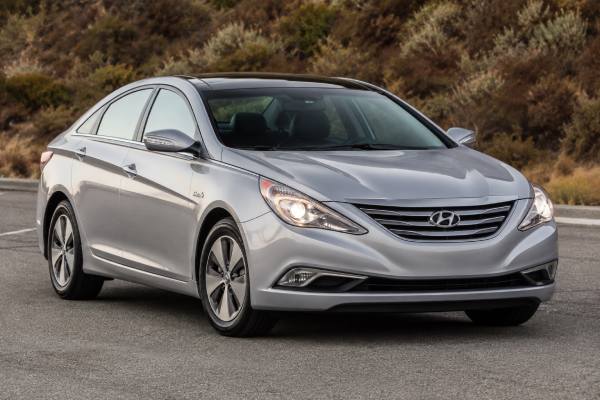
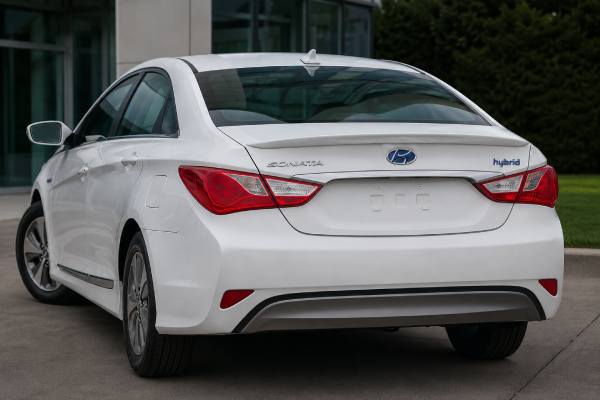
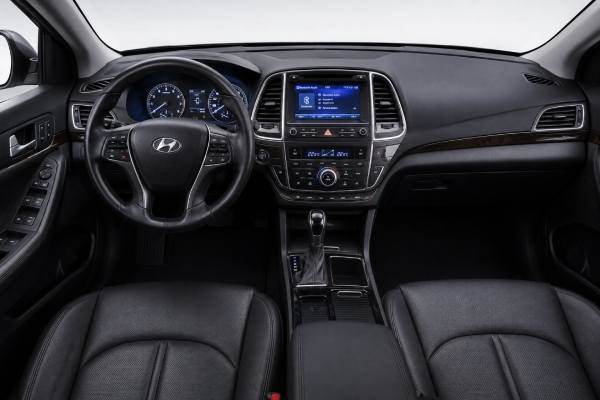
The 2013–2015 Hyundai Sonata Hybrid is the facelifted YF-generation hybrid sedan, powered by Hyundai’s 2.4-liter Theta II Atkinson-cycle gasoline engine, a front electric motor, a lithium-polymer high-voltage battery, and a six-speed hybrid automatic transmission. It is not the later LF-generation Sonata Hybrid; this matters because the body, hybrid system, interior layout, safety equipment, and some service concerns are different.
For buyers, this Sonata Hybrid is best understood as a comfortable, roomy, value-focused midsize sedan with better fuel economy than the regular gasoline Sonata, but not the class-leading efficiency or long-term reputation of the Toyota Camry Hybrid. The key to buying one well is checking recall completion, engine history, hybrid battery health, brake condition, cooling-system service, and the age-related electronics that now matter on a decade-old hybrid.
At a Glance
- 199 hp combined output gives the Sonata Hybrid relaxed highway performance and smoother passing than many older economy-focused hybrids.
- The conventional six-speed hybrid automatic feels more familiar than an eCVT, especially in steady cruising.
- EPA economy is about 35 mpg city, 38 mpg highway, and 37 mpg combined in U.S. ratings, with real-world results depending heavily on speed and weather.
- Major ownership caveat: verify engine, ABS module fire-risk, seat-belt, and other VIN-specific recall work before purchase.
- A practical service rhythm is oil and filter every 7,500 miles or 12 months in normal use, shortened to about 3,750–5,000 miles for severe city, cold, or short-trip use.
Table of Contents
- Sonata YF Hybrid Primer
- Sonata YF Hybrid Specs
- Sonata YF Trims and Safety
- Known Issues and Recalls
- Maintenance and Buying Advice
- Road Manners and Efficiency
- Sonata Hybrid Rival Check
Sonata YF Hybrid Primer
The Hyundai Sonata Hybrid YF facelift covers the later version of Hyundai’s first-generation Sonata Hybrid sold in many markets through the 2013, 2014, and 2015 model years. The car uses a 2.4-liter Theta II gasoline engine tuned for Atkinson-cycle efficiency, paired with a 35 kW electric motor and a lithium-polymer high-voltage battery pack. Total system output is rated at 199 hp, which puts it on the stronger side of early-2010s hybrid midsize sedans.
One of the most important differences is the transmission. Unlike Toyota’s Camry Hybrid, which uses an eCVT-style hybrid transaxle, the Sonata Hybrid uses a conventional-feeling six-speed automatic adapted for hybrid operation. That makes the car feel more like a normal automatic sedan during acceleration, with stepped gear changes instead of the high-rpm “rubber band” sound some drivers associate with older hybrids. The trade-off is that low-speed blending between electric drive, gasoline power, regenerative braking, and automatic gear changes is not always as seamless as the best eCVT hybrids.
The facelifted YF Hybrid is also a value-focused car. It offers a large cabin, a comfortable ride, good highway stability, and respectable equipment for the money. The trunk is smaller than the regular Sonata’s because the hybrid battery occupies space behind the rear seat, but the remaining cargo area is still usable for daily driving, commuting, and airport runs.
For used buyers, the car’s age matters as much as its mileage. A low-mileage example can still need tires, brake service, coolant work, a 12 V battery, software updates, and hybrid-system inspection because time affects rubber parts, electronics, battery modules, and brake hardware. A high-mileage example with excellent service records and completed recalls can be a better buy than a neglected low-mileage car with warning lights and missing maintenance history.
The most attractive examples are usually 2014–2015 cars with clean titles, full service records, matching tires, no hybrid warning lights, no engine knock, and documentation showing recall completion. The 2013 model can also be worthwhile, but it deserves extra care because some engine-related campaign coverage and production-date details affect earlier cars more directly.
This is not a car to buy purely because it is cheap. It is a car to buy because it has been maintained, scanned, inspected, and verified. When the engine is healthy, the hybrid battery is stable, and recall work is complete, the Sonata Hybrid can still be a refined and economical commuter. When those checks are skipped, one major hybrid, ABS, or engine issue can quickly erase the savings.
Sonata YF Hybrid Specs
The figures below apply to the facelifted Hyundai Sonata Hybrid YF with the 2.4-liter Theta II HEV powertrain. Some values vary by market, trim, wheel package, build date, and VIN-specific parts catalog, so service-critical specifications should always be checked against the official manual for the exact vehicle.
| Item | Specification |
|---|---|
| Model years covered | 2013, 2014, 2015 facelift YF Sonata Hybrid |
| Engine family / code | Theta II 2.4 HEV, commonly listed as G4KK family |
| Engine layout | Inline-4, DOHC, 4 valves per cylinder, Atkinson-cycle calibration |
| Bore × stroke | 88.0 × 97.0 mm / 3.46 × 3.82 in |
| Displacement | 2.4 L / 2,359 cc |
| Induction | Naturally aspirated |
| Fuel system | Multi-point fuel injection |
| Compression ratio | About 13.0:1 |
| Electric motor | 35 kW front traction motor integrated with the hybrid transaxle |
| High-voltage battery | Lithium-polymer, 270 V nominal system, 72-cell pack |
| Combined output | 199 hp / 148 kW combined system output |
| Engine torque | About 154 lb-ft / 209 Nm for the gasoline engine; combined torque is not simply additive |
| Timing drive | Timing chain |
| EPA fuel economy | 35 city / 38 highway / 37 combined mpg US, about 6.7 / 6.2 / 6.4 L/100 km |
| Real highway at 120 km/h / 75 mph | Typically about 6.5–7.4 L/100 km, or 32–36 mpg US, depending on tires, wind, temperature, and load |
| Item | Specification |
|---|---|
| Transmission | Six-speed hybrid automatic, A6MF2H family |
| Drive type | Front-wheel drive |
| Differential | Open front differential |
| Front suspension | MacPherson strut |
| Rear suspension | Multi-link independent rear suspension |
| Steering | Electric power-assisted rack-and-pinion |
| Brakes | Four-wheel disc brakes with regenerative braking; rotor size varies by catalog and VIN |
| Common tire size | P205/65R16 on 16 × 6.5J wheels; some trims use larger wheel packages by market |
| Ground clearance | About 130 mm / 5.1 in |
| Length / width / height | 4,820 / 1,835 / 1,465 mm, or 189.8 / 72.2 / 57.7 in |
| Wheelbase | 2,795 mm / 110.0 in |
| Turning circle | About 10.9 m / 35.8 ft kerb-to-kerb |
| Curb weight | About 1,590–1,650 kg / 3,500–3,640 lb, depending on trim and equipment |
| GVWR | About 2,080 kg / 4,586 lb |
| Fuel tank | 65 L / 17.2 US gal / 14.3 UK gal |
| Cargo volume | About 343 L / 12.1 ft³ trunk volume; sedan body, no wagon-style seats-down cargo rating |
| Item | Typical figure |
|---|---|
| 0–100 km/h / 0–62 mph | About 8.8–9.2 seconds |
| 0–60 mph | About 8.4–8.8 seconds |
| Top speed | About 190–195 km/h / 118–121 mph |
| 100–0 km/h braking | Typically around 40–42 m / 131–138 ft when tires and brakes are in good condition |
| Towing | Not recommended or not rated in many North American owner documents; verify local market documentation |
| Payload estimate | About 430–500 kg / 950–1,100 lb depending on curb weight and equipment |
| System | Specification and capacity |
|---|---|
| Engine oil | API SM / ILSAC GF-4 or later; 5W-20 commonly preferred for fuel economy; about 4.6 L / 4.86 US qt or 4.8 L / 5.07 US qt depending on dipstick version |
| Engine coolant | Ethylene-glycol coolant suitable for aluminum engines, commonly 50/50 premix; about 6.6–6.9 L / 6.97–7.29 US qt |
| Inverter coolant | Hybrid inverter loop coolant; about 2.26 L / 2.39 US qt |
| Automatic transmission fluid | Hyundai/Kia SP-IV or approved equivalent; total capacity about 6.6 L / 6.97 US qt, with less removed during drain-and-fill |
| Brake fluid | DOT 3 or DOT 4; about 0.7–0.8 L / 0.7–0.8 US qt |
| A/C refrigerant | R-134a; commonly about 550 g / 19.4 oz, but verify the under-hood label |
| A/C compressor oil | Hybrid-compatible electric compressor oil; do not substitute ordinary PAG oil unless the service manual specifies it |
| Wheel lug nut torque | 88–107 Nm / 65–79 lb-ft |
| Engine oil drain plug | Commonly about 39 Nm / 29 lb-ft with a new sealing washer; verify by VIN and service manual |
Sonata YF Trims and Safety
The YF Sonata Hybrid was generally offered in base and Limited-style trims in North America, with market-specific naming elsewhere. The base car focused on value and efficiency, while the Limited added comfort and appearance equipment. Mechanically, the core hybrid system is the same: 2.4-liter hybrid gasoline engine, front motor, lithium-polymer battery, six-speed hybrid automatic, and front-wheel drive.
Trims, options, and identifiers
Common equipment on later facelift cars includes automatic climate control, Bluetooth, keyless start on many examples, alloy wheels, stability control, regenerative braking, and a hybrid information display. Limited models commonly add leather seating, heated seating features, upgraded trim, larger or more distinctive wheels depending on package, navigation availability, premium audio availability, and additional convenience features.
Quick identifiers include:
- Hybrid badges on the rear and body sides.
- Aerodynamic grille and bumper details that differ from the regular YF Sonata.
- Hybrid-specific instrument cluster with charge, eco, and energy-flow displays.
- Battery packaging behind the rear seat, reducing trunk volume compared with the regular gasoline Sonata.
- Orange high-voltage cabling under the hood, which should not be touched unless the vehicle is properly powered down by trained service personnel.
Year-to-year differences are mostly equipment and packaging rather than a major powertrain redesign. The 2013 facelift brought styling and equipment updates compared with earlier YF Hybrid cars. The 2014 and 2015 models are broadly similar, and the 2015 YF Hybrid continued as a carryover even as the regular gasoline Sonata moved to the newer LF generation in some markets. That overlap is a common source of confusion when searching parts, crash ratings, and repair information.
Safety ratings and body generation
The Sonata Hybrid was generally well rated for its period, with strong federal crash-test results. However, buyers should be careful when comparing ratings because the 2015 regular Sonata and the 2015 Sonata Hybrid may not always refer to the same body generation. The regular 2015 Sonata in many markets is the newer LF platform, while the 2015 Sonata Hybrid remained the older YF body.
For that reason, avoid relying on a generic “2015 Sonata” safety page unless it specifically matches the YF-generation Hybrid. Use the exact model year, body style, trim, and VIN when checking crash-test data, recalls, and safety campaigns.
Airbags and driver assistance
The YF Sonata Hybrid uses a conventional safety package for its era rather than modern advanced driver assistance. Expect front airbags, front side airbags, side curtain airbags, anti-lock brakes, brake assist, electronic stability control, traction control, tire-pressure monitoring, and rear child-seat anchors. Rearview camera and navigation-based features may be present depending on year and trim.
Do not expect today’s full ADAS suite. Automatic emergency braking, adaptive cruise control, lane-centering assistance, cyclist detection, and traffic-sign recognition were not typical features for this YF Hybrid. Some markets or packages may include parking aids or camera functions, but the car should be assessed as an older midsize sedan with basic electronic stability and braking assistance, not as a modern semi-assisted vehicle.
Any crash repair near cameras, sensors, airbag components, seat-belt pretensioners, steering-angle sensors, or brake electronics should be followed by proper diagnostics and calibration where required. This matters more on a used hybrid because warning lights may be cleared without the underlying fault being solved.
Known Issues and Recalls
Reliability on the 2013–2015 Sonata Hybrid is best judged in layers: engine health, hybrid-system health, recall completion, brake and ABS condition, chassis wear, and age-related electronics. The basic car can last well, but a neglected example can become expensive quickly.
| Issue | Prevalence | Severity | Symptoms and remedy |
|---|---|---|---|
| Theta II hybrid engine bearing wear | Occasional, VIN and production-date dependent | High | Knocking, oil warning, reduced power, burning smell, smoke, or check-engine light. Verify recall coverage, knock-sensor software, inspection results, and engine replacement history where applicable. |
| ABS module fire-risk recall | VIN-specific campaign across affected years | High | May have no warning before failure. Confirm recall completion; the remedy involves dealer service to reduce fire risk. |
| Seat-belt anchor / pretensioner campaign | VIN-specific | High safety importance | Front seat-belt anchor connection may require inspection or repair. Confirm records and physical completion. |
| Weak 12 V battery | Common with age | Low to medium | No-start condition, warning lights, random electrical faults. Load-test and replace if weak before chasing hybrid faults. |
| High-voltage battery aging | Occasional, age and heat dependent | Medium to high | Reduced EV assist, louder cooling fan, poor economy, hybrid warnings. Scan battery data, cell balance, state of health, and cooling fan operation. |
| Inverter coolant or hybrid cooling faults | Occasional | Medium | Hybrid warning messages, overheating codes, low coolant, pump or bleeding issues. Repair leaks, service coolant, and confirm pump operation. |
| Regenerative-brake rotor corrosion | Common in wet or salty climates | Low to medium | Grinding, pulsation, rust ridges, uneven rear rotor wear. Clean and lubricate hardware; replace pads or rotors when needed. |
| Suspension and steering wear | Occasional after 80,000–140,000 miles | Medium | Clunks, wandering, tire feathering, bearing hum, loose steering feel. Inspect end links, bushings, ball joints, bearings, and alignment. |
Engine and software concerns
The most important engine-related concern is connecting-rod bearing wear on affected Theta II hybrid engines. A car may show warning signs such as cold or hot knocking, metallic rattle, low oil pressure, misfire-like roughness, reduced power, oil leaks, burning smell, smoke, or a flashing engine warning. The official remedy path for affected vehicles includes inspection and, where needed, engine replacement, along with knock-sensor detection software.
A clean used Sonata Hybrid should have records showing whether the engine campaign applies and whether it has been completed. Do not assume that a quiet engine has completed recall work. Also do not assume that a replaced engine solves every future concern; oil-change history, correct oil level, cooling health, and software status still matter.
Timing is chain-driven, so there is no routine timing-belt interval. The chain should be quiet at startup and during light acceleration. Rattle, timing-correlation faults, poor maintenance, or oil-starvation history are reasons for deeper inspection.
Hybrid-system checks
The high-voltage battery is a lithium-polymer pack and can last a long time when kept cool and balanced, but these cars are now old enough that battery condition varies widely. A basic road test is not enough. A proper inspection should include a hybrid-system scan for state of health, cell or block voltage deviation, stored BMS codes, fan operation, contactor behavior, inverter coolant temperature, and DC–DC converter performance.
A weak 12 V battery can mimic larger hybrid problems. Before condemning expensive hybrid parts, the 12 V battery should be load-tested, terminals checked, grounds inspected, and charging behavior verified. Many warning-light complaints begin with low 12 V voltage.
Recalls and service actions
VIN-specific recall completion is essential. Important campaign areas include engine bearing inspection and software, ABS module fire-risk repair, seat-belt anchor or pretensioner inspection, and certain shift-linkage or range-indication issues on affected Sonata vehicles. The ABS campaign is especially important because risk may exist while the vehicle is parked or driven, and some notices instruct owners to park outside until repaired.
The correct buying process is simple:
- Run an official VIN recall check.
- Ask a Hyundai dealer for campaign completion history.
- Compare the records with the seller’s receipts.
- Scan all control modules, not only the engine ECU.
- Reject any car with unresolved safety campaigns unless the price and repair plan are clear before purchase.
Maintenance and Buying Advice
A Sonata Hybrid YF rewards ordinary maintenance but punishes neglect. The hybrid system reduces some friction-brake wear, but it adds battery cooling, inverter coolant, high-voltage safety procedures, and hybrid diagnostics to the ownership routine.
| Item | Practical interval | Notes |
|---|---|---|
| Engine oil and filter | Every 7,500 miles / 12 months normal; 3,750–5,000 miles / 6 months severe use | Use correct API / ILSAC oil. Check level often because engine damage risk rises sharply when oil is low. |
| Tire rotation | Every 7,500 miles / 12 months | Maintain even wear and correct pressure; mismatched tires hurt economy and stability. |
| Brake inspection | Every 7,500–15,000 miles | Inspect rotors, sliders, calipers, parking brake, and regen blending. Hybrids can rust rotors from light friction-brake use. |
| Cabin air filter | Every 15,000 miles or yearly | Replace sooner in dusty or pollen-heavy areas. |
| Engine air filter | Inspect around 15,000 miles; replace around 30,000 miles or as needed | A dirty filter can reduce economy and throttle response. |
| Brake fluid | Every 2–3 years in practical ownership | Use DOT 3 or DOT 4. Moisture-contaminated fluid can damage expensive brake components. |
| Engine and inverter coolant | Follow official long-life coolant schedule; inspect level and condition at every service | Use the correct coolant and bleeding procedure, especially for inverter loop service. |
| Automatic transmission fluid | Inspect regularly; consider drain-and-fill around 60,000–75,000 miles in long-term ownership | Use SP-IV or approved equivalent. Correct level procedure matters. |
| Spark plugs | Around 97,500–105,000 miles, depending on market schedule | Use the correct iridium plugs and torque specification. |
| Timing chain | No routine replacement interval | Inspect for rattle, correlation faults, guide wear, tensioner issues, and oil-starvation symptoms. |
| 12 V battery | Test yearly after 3 years; replacement often needed around 4–6 years | A weak 12 V battery can cause misleading hybrid and brake warnings. |
| HV battery cooling path | Inspect yearly or every 15,000–30,000 miles | Keep vents and fan path clean. Pet hair, dust, and blocked airflow shorten battery life. |
Buyer inspection checklist
Before buying, start with paperwork. Look for oil-change receipts, coolant service, brake fluid service, tire records, recall completion, software updates, and any engine or hybrid battery replacement documentation. A “dealer maintained” claim is not enough unless it is supported by service records.
On the car itself, check:
- Cold-start engine noise, especially knocking or sharp metallic rattle.
- Oil level, oil leaks, coolant level, coolant smell, and signs of overheating.
- Hybrid warning lights, check-engine lights, ABS lights, and airbag lights.
- Smooth EV-to-engine transitions during gentle acceleration.
- Transmission engagement from Park to Drive and Reverse.
- Brake pedal feel, rotor rust, brake pulsation, and ABS warnings.
- Even tire wear, matching tire sizes, and correct load/speed rating.
- Suspension clunks over small bumps and wheel-bearing noise at highway speed.
- Trunk area for water intrusion near the battery area.
- Interior electronics, backup camera, navigation, audio, HVAC, and keyless start.
- Evidence of flood, salvage, poorly repaired crash damage, or missing underbody panels.
A pre-purchase scan should include engine, transmission, hybrid control, battery management, ABS, airbag, body control, and electric power steering modules. Many sellers only show a generic OBD-II scan that reads the engine ECU. That is not enough for this car.
Best years and trims
For most buyers, a clean 2014 or 2015 with completed recalls is the safest target. These later facelift cars benefit from the mature version of the YF Hybrid package and often have better equipment. A 2013 can still be good, but engine campaign status and production date deserve extra attention.
The base trim is often the smarter long-term buy because it has fewer expensive luxury features to age. The Limited is better if you value leather, navigation, upgraded audio, and convenience features, but inspect every option carefully. A cheap Limited with failed electronics, old tires, unresolved recalls, and no hybrid battery data is not a bargain.
Avoid cars with unresolved ABS or engine campaigns, persistent hybrid warning lights, engine knock, poor oil history, mismatched high-voltage battery repairs, flood evidence, overheating history, or sellers who refuse a full scan. A well-kept Sonata Hybrid can be durable; a neglected one can cost more than the purchase price to sort properly.
Road Manners and Efficiency
The Sonata Hybrid’s driving character is calm, comfortable, and highway-oriented. It is not sporty, but it has enough power for normal commuting and long-distance travel. The 199 hp system output gives it better passing confidence than older low-output hybrids, especially once the gasoline engine and electric motor are working together.
At city speeds, the car can move briefly on electric power under light load, then blend in the gasoline engine as speed, temperature, battery state, or cabin heat demand requires. The transition is usually smooth when the car is healthy, but it is not as polished as newer hybrids. A slight step, hum, or change in pedal feel can be normal. Harsh engagement, shudder, repeated warning lights, or delayed Drive/Reverse selection is not normal.
The six-speed automatic gives the Sonata Hybrid a familiar rhythm. It changes gears, downshifts for passing, and cruises at low revs on the highway. Drivers who dislike eCVT behavior may prefer this feel. However, the system can feel less fluid in stop-and-go traffic than a Toyota-style hybrid, because gear changes, engine restart, regenerative braking, and clutch operation all have to blend cleanly.
Ride comfort is one of the car’s strengths. The long wheelbase, midsize body, and independent rear suspension make it stable on the highway and relaxed over ordinary pavement. Steering is light and easy rather than communicative. It is pleasant for commuting, but enthusiastic drivers will notice body roll, modest front-end grip, and economy-focused tires.
Braking feel is typical of older hybrids. The first part of pedal travel blends regenerative braking with friction braking, so the pedal can feel slightly artificial compared with a conventional sedan. On a good car, stopping should be smooth and predictable. Pulsation, grinding, a sinking pedal, or inconsistent handoff between regen and friction braking points to service needs.
Real-world fuel economy depends strongly on speed and conditions. In moderate weather, expect about:
- City: 6.7–7.4 L/100 km, or 32–35 mpg US / 38–42 mpg UK.
- Mixed driving: 6.4–7.1 L/100 km, or 33–37 mpg US / 40–44 mpg UK.
- Highway at 100–110 km/h: 5.9–6.7 L/100 km, or 35–40 mpg US / 42–48 mpg UK.
- Highway at 120 km/h / 75 mph: 6.5–7.4 L/100 km, or 32–36 mpg US / 38–43 mpg UK.
Cold weather can reduce economy by 15–30 percent on short trips because the gasoline engine runs more often for heat, the battery delivers less power when cold, tire pressure drops, and winter tires increase rolling resistance. Short trips are the worst case; longer steady drives allow the system to warm up and recover efficiency.
The Sonata Hybrid is not a tow car in most North American documentation. Even if a market lists a small towing figure, the better assumption is that the car is meant for passengers and luggage, not regular trailer use. Heavy loads, steep grades, old coolant, and hot weather place extra stress on the engine, transmission, inverter loop, and brakes.
Sonata Hybrid Rival Check
The Sonata Hybrid’s main rivals are the Toyota Camry Hybrid, Ford Fusion Hybrid, Honda Accord Hybrid, and Kia Optima Hybrid. All are midsize sedans with better economy than standard gasoline models, but they differ sharply in feel, long-term reputation, and used-market risk.
| Model | Main strengths | Main drawbacks | Best buyer fit |
|---|---|---|---|
| Hyundai Sonata Hybrid YF | Strong value, roomy cabin, comfortable ride, familiar six-speed automatic feel | Recall verification is critical; not the most efficient or refined hybrid in class | Budget-focused commuter buyer who can verify maintenance and hybrid health |
| Toyota Camry Hybrid | Excellent durability reputation, strong resale, smooth hybrid system | Usually costs more used; eCVT feel is not for everyone | Buyer prioritizing long-term confidence and resale value |
| Ford Fusion Hybrid | Good handling, modern cabin design, strong efficiency potential | Rear seat and trunk packaging can feel tighter; real-world economy varies | Driver who wants sharper styling and a more European-feeling chassis |
| Honda Accord Hybrid | Excellent efficiency, strong performance, refined hybrid operation | Higher used prices and fewer early examples in some markets | Buyer willing to pay more for performance and economy |
| Kia Optima Hybrid | Closely related powertrain, distinctive styling, similar value appeal | Shares many family inspection concerns with Sonata Hybrid | Buyer who likes the Hyundai-Kia hybrid package but prefers Kia styling |
The Camry Hybrid is the safer emotional choice for many used buyers because Toyota’s hybrid reputation is so strong. It usually costs more, but it is easier to recommend to buyers who do not want to study recalls, service campaigns, and hybrid-system scan data in detail. The Accord Hybrid is the strongest technical rival, especially for efficiency and acceleration, but prices often reflect that.
The Fusion Hybrid can be attractive because it drives well and looks modern, but trunk space and real-world economy should be checked carefully. The Kia Optima Hybrid is mechanically close enough to the Sonata Hybrid that the buying logic is similar: choose the cleanest, best-documented car rather than shopping by badge alone.
The Sonata Hybrid makes the most sense when it is priced below comparable Toyota and Honda hybrids and comes with unusually good documentation. Its strongest case is value: a comfortable, spacious, efficient sedan that feels more conventional than many hybrids. Its weakest case is risk: unresolved recalls, unclear engine history, aging hybrid parts, and expensive diagnostics can turn a cheap example into a poor deal.
The right verdict is conditional. Buy one only after a VIN recall check, full module scan, engine-noise check, battery-health review, and road test. When those checks are positive, the facelifted YF Sonata Hybrid remains a practical and pleasant used hybrid sedan.
References
- 2015 HYUNDAI SONATA HYBRID CONTINUES TO DELIVER EXCEPTIONAL VALUE AND FUEL-EFFICIENCY 2014 (Manufacturer Publication)
- Fuel Economy of the 2015 Hyundai Sonata Hybrid Limited 2015 (Official Fuel Economy Data)
- Part 573 Safety Recall Report 20V-746 2020 (Recall Database)
- IMPORTANT SAFETY RECALL 2023 (Recall Notice)
- Recommended Lubricants And Capacities; Engine Oil Dipstick – Hyundai Sonata Hybrid 2015 Owner’s Manual [Page 514] | ManualsLib 2015 (Owner’s Manual)
Disclaimer
This article is for informational purposes only and is not a substitute for professional diagnosis, repair, or inspection. Specifications, torque values, service intervals, capacities, procedures, safety equipment, and recall applicability can vary by VIN, market, production date, trim, and installed equipment. Always verify service-critical information against official Hyundai service documentation and a qualified technician’s diagnosis.
If this guide helped you, please consider sharing it on Facebook, X/Twitter, or another platform so more owners and buyers can make informed maintenance and purchase decisions.