
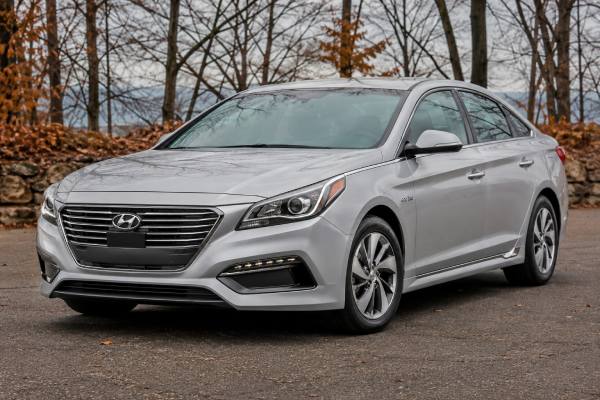
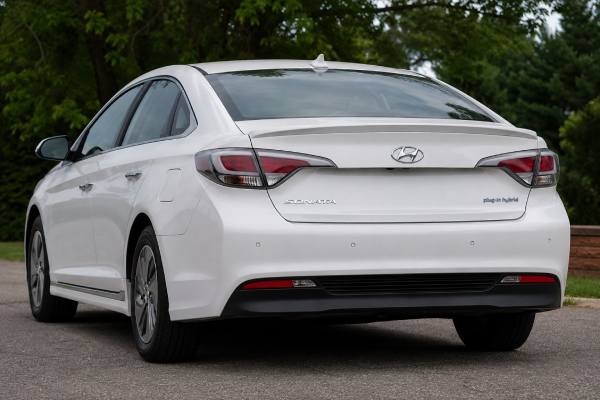
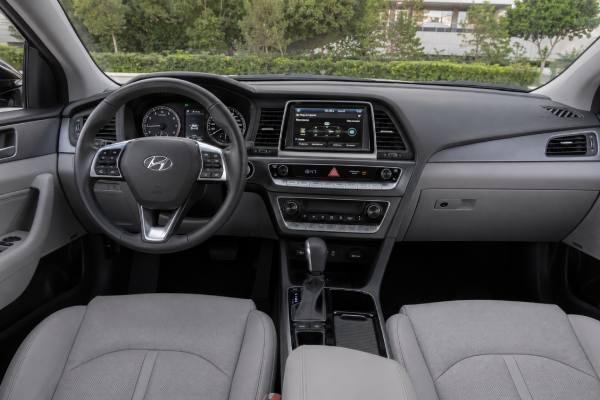
The 2016–2017 Hyundai Sonata Plug-in Hybrid is the LF-generation Sonata adapted into a practical, long-range plug-in hybrid sedan. It combines a 2.0-liter Nu GDi gasoline engine, a stronger electric motor than the regular Sonata Hybrid, a 9.8 kWh lithium-ion polymer battery, front-wheel drive, and a conventional 6-speed automatic transmission instead of the eCVT layout used by many hybrid rivals.
Its main appeal is simple: it gives you midsize sedan comfort with enough electric range for many short commutes, while still behaving like a normal hybrid on longer trips. The buying decision depends heavily on battery health, recall completion, charging access, and whether the reduced trunk space works for your daily use.
Final Verdict
The 2016–2017 Hyundai Sonata Plug-in Hybrid is a good used choice for drivers who want a roomy, quiet midsize sedan and can charge regularly at home or work. Its strongest appeal is the blend of 27-mile electric range, smooth hybrid operation, and familiar 6-speed automatic feel. It suits commuters, small families, and low-mileage daily drivers better than people who take frequent long highway trips without charging. The main tradeoff is plug-in-specific complexity, especially battery, BMS, charging, and recall history. Buy only with proof of completed Hyundai campaigns, a clean hybrid-system scan, and a battery health check.
| Pros | Cons |
|---|---|
| 27-mile EPA electric range suits many daily commutes | Small 9.9 cu ft trunk due to PHEV battery packaging |
| 202 hp system output feels stronger than economy hybrids | Battery and charging-system repairs need hybrid-qualified diagnosis |
| 6-speed automatic gives familiar stepped-gear driving feel | Charge-sustaining MPG trails some regular hybrid sedans |
| Spacious LF Sonata cabin with good rear-seat comfort | Used supply is limited because U.S. availability was restricted |
| Strong crash-test structure when properly equipped and built | Recall completion is essential before purchase |
Table of Contents
- LF Sonata PHEV Overview
- Specifications and Technical Data
- Trims, Options, Safety and ADAS
- Reliability, Issues and Service Actions
- Maintenance and Buyer’s Guide
- Driving, Performance and Efficiency
- How the Sonata PHEV Compares to Rivals
LF Sonata PHEV Overview
The LF Sonata Plug-in Hybrid is best understood as a comfortable midsize sedan first and an efficiency-focused plug-in second. It is not a high-performance PHEV, but it offers a useful electric commute range, a large cabin, and long total driving range without requiring the owner to depend on public charging.
Hyundai sold this version in the U.S. for the 2016 and 2017 model years covered here, with availability concentrated in plug-in-friendly states. It used the seventh-generation Sonata body and shared much of its cabin, structure, suspension layout, and general comfort character with the regular LF Sonata. The difference is under the floor and behind the rear seat: a larger plug-in battery, onboard charger, hybrid electronics, and a stronger electric motor than the non-plug-in Sonata Hybrid.
The powertrain is a parallel hybrid system. That means the gasoline engine and electric motor can both help drive the front wheels through the automatic transmission. In EV mode, the car can run on electric power for short trips when the battery has enough charge. When the battery is depleted, it continues as a conventional hybrid, using regenerative braking and engine assistance to maintain efficiency.
This setup creates a different ownership pattern from a regular hybrid. A driver with a 10- to 25-mile daily commute and home charging can use very little gasoline during the workweek. A driver who rarely plugs in will see it behave more like a heavier Sonata Hybrid with a smaller trunk. That distinction matters because the PHEV hardware adds weight and complexity, and its benefits depend on regular charging.
The LF Sonata PHEV’s strengths are comfort, quietness, cabin space, and predictable operation. The ride is tuned more for calm commuting than sporty handling. The 6-speed automatic gives a familiar feel, and the electric motor helps smooth low-speed movement. It is also less visually unusual than some plug-in rivals, which can be a benefit for buyers who want efficiency without a futuristic shape.
The main compromises are cargo capacity, used-market scarcity, and electrified-system inspection needs. The trunk is much smaller than the regular Sonata’s because the battery occupies space behind the rear seat and trunk area. Used examples also vary widely in charging history, climate exposure, recall completion, and dealer service records. For this car, a clean body and low mileage are not enough; the hybrid system must be checked properly before purchase.
Specifications and Technical Data
The 2016–2017 Sonata Plug-in Hybrid uses Hyundai’s Nu 2.0 GDi gasoline engine paired with a 50 kW electric motor, a 9.8 kWh lithium-ion polymer battery, and a 6-speed automatic transmission. It is front-wheel drive only, seats five, and is packaged as a midsize four-door sedan. The key technical point is that its efficiency depends on charging access: with regular charging it can cover many short trips electrically, but without charging it operates as a conventional hybrid with extra battery weight.
| Item | Specification |
|---|---|
| Engine family | Hyundai Nu 2.0 GDi hybrid gasoline engine |
| Engine layout | 1,999 cc inline-4, DOHC, 16 valves, DCVVT |
| Fuel system | Gasoline direct injection |
| Induction | Naturally aspirated |
| Compression ratio | 13.5:1 |
| Gasoline engine output | 154 hp at 6,000 rpm; 190 Nm (140 lb-ft) at 5,000 rpm |
| Electric motor | Interior permanent-magnet synchronous motor |
| Electric motor output | 50 kW (67 hp); 205 Nm (151 lb-ft) |
| Combined system output | 202 hp at 6,000 rpm |
| Battery | 9.8 kWh lithium-ion polymer, max 360 V |
| Timing drive | Timing chain |
| Fuel requirement | Regular unleaded gasoline, 87 AKI or higher |
| Item | Specification |
|---|---|
| Transmission | 6-speed automatic with SHIFTRONIC manual mode |
| Drive type | Front-wheel drive |
| Charging connector | SAE J1772 AC charging port in U.S.-market cars |
| Level 1 charging | About 9 hours on a household 120 V supply |
| Level 2 charging | About 3 hours on a 240 V AC charger |
| DC fast charging | Not supported |
| Official EV range | 43 km (27 miles) |
| Item | Specification |
|---|---|
| Body style | Four-door midsize sedan, 5 seats |
| Length | 4,854 mm (191.1 in) |
| Width | 1,864 mm (73.4 in) |
| Height | 1,471 mm (57.9 in) |
| Wheelbase | 2,804 mm (110.4 in) |
| Curb weight | About 1,718–1,728 kg (3,787–3,810 lb) |
| Passenger volume | About 3,005 L (106.1 cu ft) |
| Trunk volume | About 280 L (9.9 cu ft) |
| Fuel tank | 55 L (14.5 U.S. gal) |
| Suspension | Front MacPherson strut; rear independent multi-link |
| Common tire size | 215/55R17 |
| Turning circle | About 10.9 m (35.6 ft) |
| Item | 2016 | 2017 |
|---|---|---|
| EV range | 43 km (27 miles) | 43 km (27 miles) |
| Electric efficiency | 99 MPGe combined | 99 MPGe combined |
| Hybrid-mode combined economy | 5.9 L/100 km (40 mpg US) | 6.0 L/100 km (39 mpg US) |
| Typical tested 0–60 mph | About 8 seconds | About 7.7 seconds |
| Typical tested top speed | About 198 km/h (123 mph) | About 198 km/h (123 mph) |
| Item | Reference value |
|---|---|
| Engine oil viscosity | SAE 5W-20 preferred; 5W-30 acceptable by climate/spec |
| Engine oil capacity | About 4.1 L (4.3 qt) with filter |
| Brake fluid | DOT 3 or DOT 4 meeting Hyundai requirements |
| Automatic transmission fluid | Hyundai-approved ATF for 6-speed automatic; verify by VIN |
| Wheel lug nut torque | Approximately 107–127 Nm (79–94 lb-ft) |
| Oil drain plug torque | Approximately 39 Nm (29 lb-ft) |
Trims, Options, Safety and ADAS
The U.S.-market 2016–2017 Sonata Plug-in Hybrid was offered mainly in Base and Limited forms, with the Limited adding the equipment most used buyers want. Mechanically, the core PHEV system is the same, so the trim decision is mostly about safety tech, cabin comfort, infotainment, lighting, and interior materials.
Trims and equipment
Base models are already reasonably well equipped for a midsize PHEV. Expect 17-inch aero-style alloy wheels, dual-zone climate control, a rearview camera, keyless entry and start, heated front seats, and plug-in-specific displays. Limited models add a more upscale cabin, leather seating surfaces, additional convenience equipment, upgraded audio, and more available driver-assistance features.
Quick identifiers include Plug-in Hybrid badging, a charging door on the front fender area, hybrid/EV displays in the cluster, reduced trunk depth, and the absence of the normal Sonata’s full-size trunk packaging. VIN decoding and Hyundai dealer build records are the best way to confirm original trim and options because some listings use “Hybrid” and “Plug-in Hybrid” loosely.
For year-to-year changes, the 2017 model mostly carried forward the 2016 formula. The practical differences on used cars are more likely to come from trim, option packages, software updates, recall completion, and state-specific emissions/warranty coverage than from major mechanical revisions.
Safety ratings and structure
The LF Sonata platform performed well in major crash testing, but ratings can depend on build date and equipment. IIHS listed the 2016 Sonata as a Top Safety Pick+ when equipped with optional front crash prevention and built after the relevant structural updates. Crashworthiness ratings were generally strong, but headlights were a weak point in the IIHS evaluation, and LATCH ease-of-use was rated lower than the crash structure itself.
NHTSA ratings for the broader Sonata/Sonata Hybrid family were strong, but buyers should be careful not to assume every published rating applies identically to every plug-in trim. The plug-in model has different battery packaging and was not always tested separately by every rating body. The safest wording for a buyer is that the LF Sonata structure has strong test history, while the exact rating applicability should be checked by model year, trim, build date, and rating organization.
Safety systems and driver assistance
Standard safety equipment includes seven airbags, including a driver’s knee airbag, stability control, traction control, anti-lock brakes, brake assist, tire-pressure monitoring, and a rearview camera. Rear outboard LATCH lower anchors and rear tether anchors make it family-usable, although the lower anchors can be set deeper than ideal in some seats.
Available driver-assistance features include Blind Spot Detection, Rear Cross-Traffic Alert, Lane Change Assist, Lane Departure Warning, Forward Collision Warning, Automatic Emergency Braking, and Smart Cruise Control depending on trim and package. On used cars, confirm these systems work with a road test and scan. Windshield replacement, front-end repairs, radar replacement, alignment work, or collision damage can require calibration of camera/radar-based systems. A cheap repair history is not always cheap if it leaves ADAS misaligned.
Reliability, Issues and Service Actions
The Sonata Plug-in Hybrid can be reliable when maintained correctly, but it is not a car to buy casually without documentation. Its most important risks are plug-in-specific recalls, battery/BMS condition, 12 V electrical health, charging hardware, and normal age-related wear in the suspension, brakes, tires, and cooling system.
| Area | Prevalence | Severity | What to check |
|---|---|---|---|
| Open recalls or incomplete campaigns | Common enough to verify on every car | High | Hyundai VIN check, NHTSA VIN check, dealer records |
| Hybrid battery/BMS faults | Occasional | High | Hybrid warning lights, DTC scan, battery health report |
| 12 V battery weakness | Common with age | Low to medium | Slow wake-up, warning lights, no-start symptoms |
| Charging-port or onboard-charger faults | Occasional | Medium to high | Test Level 1 and Level 2 charging before purchase |
| Brake rotor corrosion | Common in wet/salted climates | Low to medium | Pulsation, rust ridges, uneven pad contact |
| GDi intake deposits | Occasional at higher mileage | Medium | Rough idle, misfires, poor fuel economy |
| Suspension and wheel bearings | Age/mileage related | Low to medium | Clunks, humming, uneven tire wear |
Important recalls and service actions
The most important plug-in-specific campaign is the Voltage Protection Device/BMS recall affecting certain 2016–2017 Sonata Plug-in Hybrid vehicles. The issue involved the hybrid battery overvoltage protection system. The remedy replaced the relevant BMS components and wiring to convert the system to an updated overvoltage protection design. A car without proof of this work should be treated as a major risk until a Hyundai dealer confirms status by VIN.
Another important recall is the Smart Junction Box turn-signal software campaign, covering certain 2016–2017 Sonata Plug-in Hybrid vehicles along with related Sonata models. The concern was unintended opposite-direction turn signal activation under certain circumstances, with a software update as the remedy.
For 2017 PHEV examples, also check the trunk latch recall that applied to 2017–2018 Sonata Plug-in Hybrid vehicles. The concern involved the emergency trunk release/latch function under certain heat conditions. Even if the car looks well maintained, recall status should be verified separately because recalls do not always appear in ordinary service invoices.
Symptoms, causes and remedies
A “Check Hybrid System” warning, reduced power, EV mode refusal, charging interruption, or high-voltage isolation fault needs proper hybrid diagnostics, not parts swapping. The likely root cause can range from a weak 12 V battery to BMS faults, contactor faults, onboard charger issues, battery temperature-sensor faults, cooling-fan problems, or unresolved campaign work.
A 12 V battery that tests weak can create misleading warnings because control modules need stable voltage before the hybrid system wakes up correctly. If a seller says the car “just needs a battery,” verify both the 12 V battery and high-voltage system with a scan after replacement.
The gasoline engine is a direct-injection Nu unit. It uses a timing chain rather than a routine timing belt. Chain replacement is not a scheduled maintenance item, but chain noise, cam/crank correlation codes, poor oil-change history, or guide/tensioner wear should be taken seriously. Direct injection can also lead to intake-valve deposits over time, especially with short trips and low engine temperature operation.
The 6-speed automatic is generally more familiar-feeling than an eCVT, but it should shift smoothly in EV, hybrid, and engine-on operation. Harsh engagement, slipping, delayed Drive/Reverse engagement, or flares during kickdown call for a fluid history review and scan. Do not judge the transmission only during a short EV-mode drive; force the engine to run and test all normal driving modes.
Maintenance and Buyer’s Guide
Maintenance should be stricter than the minimum schedule if the car is used mainly for short trips, cold starts, hot city traffic, or infrequent charging. The best used Sonata PHEV is one with regular oil changes, completed recalls, fresh brake fluid, documented coolant service, healthy tires, clean charging behavior, and a dealer-readable hybrid-system history.
| Interval | Service items |
|---|---|
| Every 7,500 miles or 12 months | Engine oil/filter, tire rotation, brake inspection, suspension check, fluid levels, charging-port check |
| Every 15,000 miles | Cabin air filter, brake and steering inspection, drive belts and hoses inspection |
| Every 30,000 miles | Engine air filter, brake fluid service or testing, fuel-line inspection, cooling-system inspection |
| Every 60,000 miles | ATF service under severe use, alignment check, deeper suspension and mount inspection |
| Every 90,000–105,000 miles | Spark plugs, thorough GDi and ignition check, hybrid cooling fan/duct inspection |
| By 10 years or 120,000 miles | Coolant service if not already performed; inspect inverter/electronics cooling system |
| Every 3–5 years | 12 V battery testing/replacement as needed; inspect charge cable and port seals |
For severe use, shorten oil changes to about 5,000 miles or 6 months. Many PHEV owners do short engine runs, which can leave moisture and fuel dilution in the oil. A plug-in hybrid may show low gasoline use, but the engine still needs clean oil because it starts and stops frequently.
There is no routine timing-belt replacement because the Nu engine uses a timing chain. Inspect for chain noise, poor cold-start behavior, oil sludge, and timing-correlation codes. Replace chain components only when symptoms, measurements, or diagnostic data show a problem.
For the hybrid side, inspect the battery-cooling intake path, cooling fans, charge port, onboard charger behavior, DC–DC converter function, and high-voltage contactor operation through a proper scan. A battery state-of-health report is valuable, especially for high-mileage cars, cars from hot climates, and cars with incomplete service histories.
Pre-purchase checklist
Before buying, ask for:
- Hyundai dealer printout showing completed campaigns and open recalls.
- Full maintenance history, not just oil-change stickers.
- Hybrid-system scan with no current or pending high-voltage codes.
- Battery state-of-health or dealer diagnostic report.
- Proof that the car charges on both Level 1 and Level 2 AC.
- Smooth transition between EV and engine operation.
- Brake inspection showing no severe rotor corrosion or seized slide pins.
- Clean underbody, subframes, suspension mounting points, and trunk battery area.
- Evidence that ADAS and radar/camera systems work if fitted.
Recommended buys are clean Limited models with complete recall records, functioning ADAS, healthy battery diagnostics, and regular use in moderate climates. Be cautious with cars that have unexplained hybrid warnings, failed charging tests, flood history, rebuilt titles, missing dealer records, or sellers who cannot demonstrate charging. Long-term durability is good when the PHEV system is healthy, but repair costs can rise quickly if the battery, BMS, OBC, or hybrid electronics need major work outside warranty.
Driving, Performance and Efficiency
The Sonata Plug-in Hybrid drives like a quiet midsize sedan with extra electric smoothness at low speeds. It is comfortable, stable, and easy to operate, but it is tuned for commuting rather than sharp handling or enthusiastic driving.
The electric motor gives a clean step-off from rest, especially in city traffic. The engine starts smoothly in most conditions, though drivers who are sensitive to hybrid transitions may feel the switch when accelerating harder or when the battery is depleted. Compared with eCVT hybrids, the 6-speed automatic makes acceleration feel more conventional because the revs rise and fall with gear changes.
Steering effort is light to moderate, with more emphasis on ease than feedback. The car tracks well on the highway, and the long wheelbase helps ride comfort. The added PHEV battery weight can make the car feel planted, but it is still front-wheel-drive and economy-tire-biased. On rough roads, the suspension is generally composed, though worn shocks, aged tires, or bent wheels can make the ride feel busier than it should.
Braking feel is one of the areas to test carefully. Like most hybrids, the Sonata blends regenerative and friction braking. In normal use it is smooth enough, but corrosion on lightly used rotors can create vibration, scraping, or inconsistent pedal feel. A buyer should test gentle stops, firm stops, and low-speed parking maneuvers.
Efficiency depends more on use pattern than almost any other ownership factor. With nightly charging and a short commute, many drivers can cover most daily miles electrically. In mixed EV use, fuel consumption can be extremely low. Once the battery is depleted, the car returns to roughly 39–40 mpg combined in hybrid operation, depending on model year and conditions. Cold weather, cabin heat use, winter tires, short engine warm-up cycles, and highway speeds above 70 mph all reduce results.
In realistic terms:
- EV-only city range is often close to the official 27 miles in mild weather with gentle driving.
- Mixed EV range may fall into the low-20-mile range with highway speeds or HVAC use.
- Winter range can drop meaningfully, especially with heater demand and cold-soaked battery temperatures.
- Charge-sustaining highway economy is usually closer to a normal hybrid sedan than to the headline MPGe number.
Charging is simple. The car does not support DC fast charging, and it does not need it because the battery is small. A full Level 2 charge takes about 3 hours, while a household outlet can refill the pack overnight. For this PHEV, full-charge time is the useful metric; a 10–80% charging figure is less meaningful than it is for a full battery-electric vehicle.
Performance is adequate and sometimes better than expected. Independent testing has placed 0–60 mph around the high-7-second range, which is strong enough for merging and passing. The stronger electric motor helps mid-speed response, but this is not a sport sedan. The best way to drive it is smoothly: use EV mode for low-speed trips, let the hybrid system manage longer drives, and keep tires properly inflated.
Hyundai does not recommend this Sonata for trailer towing. If you need towing, heavy cargo use, or frequent mountain driving at full load, a larger hybrid SUV or conventional vehicle is a better fit.
How the Sonata PHEV Compares to Rivals
The Sonata Plug-in Hybrid is strongest against rivals when cabin space, comfort, and a normal-sedan driving feel matter more than maximum EV range or maximum fuel economy. It is less compelling if you rarely charge, need a large trunk, or want the most advanced plug-in system available.
The Ford Fusion Energi is the closest direct rival. It also offers midsize sedan comfort and plug-in capability, but it has a smaller usable trunk and an eCVT-style driving character. The Hyundai’s 6-speed automatic feels more familiar, while the Ford may be easier to find in some used markets. Both require careful battery and charging-system checks.
The Chevrolet Volt is a more EV-focused plug-in. It offers much longer electric range and can suit drivers who want to use electricity most of the time. However, it is smaller inside, has a different hatchback layout, and does not feel like a conventional midsize sedan. For a commuter who prioritizes electric driving, the Volt is often the stronger PHEV. For rear-seat space and relaxed sedan comfort, the Sonata is more appealing.
The Toyota Prius Prime is more efficient and has Toyota’s strong hybrid reputation, but it is smaller, less powerful, and more economy-car-like in cabin feel. It is a better choice for maximum efficiency and lower operating cost. The Sonata is better for buyers who want a wider cabin, a calmer highway ride, and less unusual styling.
The Kia Optima Plug-in Hybrid is closely related in concept and drivetrain philosophy. It is worth cross-shopping because availability, pricing, equipment, and condition vary by region. The choice between the two often comes down to service history, recall completion, battery health, and trim rather than one car being clearly superior.
Against non-plug-in hybrids such as the Toyota Camry Hybrid, Honda Accord Hybrid, and regular Sonata Hybrid, the Sonata PHEV only wins if you can plug in often. Without regular charging, a conventional hybrid may deliver similar or better real-world economy with less weight, more trunk room, and less plug-in-specific complexity. That is the central buying rule: the Sonata PHEV is a smart used buy when your routine lets the plug-in hardware work for you.
References
- 2017 HYUNDAI SONATA PLUG-IN HYBRID DELIVERS CLASS-LEADING 27-MILE ALL-ELECTRIC RANGE 2016 (Manufacturer Specifications)
- Electric Vehicles & Plug-in Hybrids 2016 (Efficiency Data)
- 2016 Hyundai Sonata 2016 (Safety Rating)
- RECALL TSB 2018 (TSB / Recall Campaign 175)
- Part 573 Safety Recall Report 21V-749 2021 (Recall Database)
Disclaimer
This article is for informational purposes only and is not a substitute for professional diagnosis, repair, or inspection. Specifications, torque values, fluid requirements, service intervals, warranty coverage, recall applicability, and repair procedures can vary by VIN, market, build date, trim, and equipment. Always verify critical information against the official owner’s manual, warranty booklet, Hyundai service documentation, and dealer VIN records before buying, servicing, or repairing a vehicle.
If you found this article useful, please consider sharing it on Facebook, X/Twitter, or your preferred social platform to support our work.