
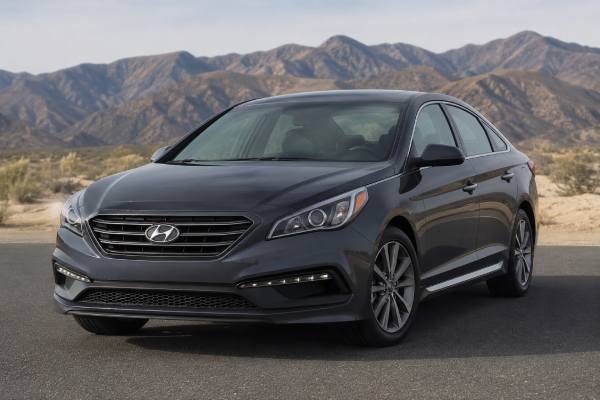
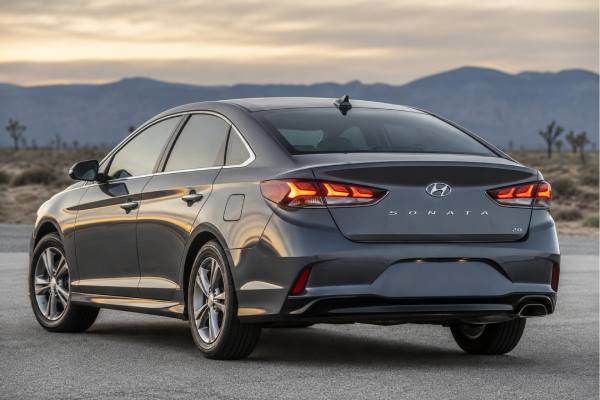
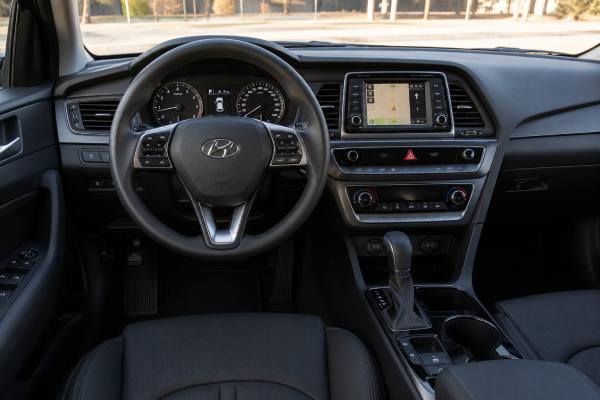
The facelifted 2018–2019 Hyundai Sonata LF with the Theta II 2.0 T-GDi engine is the strongest regular-production version of this generation in many North American markets. It combines a roomy midsize sedan body, front-wheel drive, a turbocharged 245 hp gasoline engine, and an 8-speed automatic transmission.
For used-car buyers, the appeal is clear: it offers much of the space and comfort of a family sedan with noticeably stronger acceleration than the base 2.4-liter Sonata. The main question is not whether the Sonata 2.0T is powerful enough; it is whether the specific car has been maintained well enough to make sense as a long-term buy. This guide focuses on the facelift LF Sonata 2.0T from 2018 and 2019, including specs, safety, reliability concerns, maintenance, performance, and buying advice.
Final Verdict
The 2018–2019 Hyundai Sonata LF 2.0T is a good choice for buyers who want a spacious, comfortable midsize sedan with strong turbocharged performance and generous equipment for the money. It suits commuters, small families, and drivers who want more passing power than the base Sonata without moving into a luxury brand. Its main tradeoff is ownership sensitivity: the Theta II turbo engine rewards frequent oil changes, correct fluids, and careful inspection. Buy one only with strong service records, completed recalls or campaigns, a clean cold start, and no signs of oil consumption, overheating, harsh shifting, or neglected turbo-related maintenance.
| Pros | Cons |
|---|---|
| 245 hp turbo engine gives strong midsize-sedan passing power | Theta II turbo requires disciplined oil and cooling-system care |
| 8-speed automatic improves refinement over earlier Sonata 2.0T versions | Shift quality depends heavily on software condition and fluid history |
| Large cabin and 16.3 cu ft trunk remain family-friendly | FWD layout limits enthusiast appeal versus sportier rear-drive sedans |
| Limited 2.0T can be very well equipped for used prices | Advanced safety features depend on trim, package, and build |
| IIHS Top Safety Pick+ possible with correct headlights and AEB | Headlight rating varies by trim and equipment configuration |
Table of Contents
- Hyundai Sonata LF 2.0T Overview
- Sonata 2.0T Specifications and Technical Data
- Trims, Options, Safety and Driver Assistance
- Reliability, Common Issues and Service Actions
- Maintenance and Used Buying Guide
- Driving, Performance and Real-World Efficiency
- How the Sonata 2.0T Compares to Rivals
Hyundai Sonata LF 2.0T Overview
The 2018–2019 Hyundai Sonata LF 2.0T is the performance-oriented turbo version of the facelifted seventh-generation Sonata. It is still a comfort-focused midsize sedan first, but the 2.0-liter turbo engine gives it a much stronger feel than the regular naturally aspirated Sonata models.
The LF Sonata was sold as a practical family sedan with a roomy cabin, a large trunk, good highway manners, and strong value. The 2018 facelift brought revised exterior styling, updated interior details, revised infotainment availability, and a new 8-speed automatic transmission for the 2.0T. That transmission is one of the key differences from earlier LF Sonata 2.0T models, which used a 6-speed automatic.
The 2.0T version uses Hyundai’s Theta II turbocharged gasoline direct-injection engine. In this application, output is rated at 245 hp and 260 lb-ft of torque. The torque arrives low in the rev range, which makes the car feel responsive in daily driving, especially when merging, overtaking, or climbing grades with passengers aboard.
This article focuses on the facelifted 2018–2019 Sonata 2.0T sedan, not the hybrid, plug-in hybrid, 2.4-liter naturally aspirated model, or market-specific versions with different equipment. The baseline is the North American-style LF facelift model, where the 2.0T was offered as Sport 2.0T and Limited 2.0T in 2018, with the 2019 lineup focused mainly on the Limited 2.0T in many listings.
The Sonata 2.0T’s strongest selling points are comfort, space, equipment, and value. It is not as sharp as a Mazda6 2.5 Turbo or as quick as a Honda Accord 2.0T, but it offers a relaxed, well-equipped driving experience with useful power and a large cabin. For many used buyers, that balance matters more than lap-time handling.
The main ownership concern is maintenance discipline. Turbocharged direct-injection engines run hotter and are less forgiving of stretched oil intervals, poor-quality oil, overheating, and neglected spark plugs. A clean, well-maintained Sonata 2.0T can be a satisfying used sedan. A neglected one can quickly become expensive because engine, turbo, cooling, and automatic-transmission issues are not cheap compared with the car’s used-market value.
Sonata 2.0T Specifications and Technical Data
The 2018–2019 Sonata 2.0T uses a front-mounted 2.0-liter turbocharged inline-four, an 8-speed torque-converter automatic transmission, and front-wheel drive. The technical package is designed for strong everyday torque rather than sports-sedan balance. The most important specs for buyers are the powertrain, fuel economy, tire package, fluid requirements, weight, and safety-related equipment compatibility.
| Item | Specification |
|---|---|
| Engine family | Theta II 2.0 T-GDi turbocharged gasoline inline-four |
| Displacement | 1,998 cc, 2.0 liters |
| Bore x stroke | 86.0 mm x 86.0 mm |
| Induction | Twin-scroll turbocharger with intercooling |
| Fuel system | Gasoline direct injection |
| Valvetrain | DOHC, 16 valves, dual continuously variable valve timing |
| Compression ratio | 10.0:1 |
| Maximum power | 245 hp at 6,000 rpm, about 183 kW |
| Maximum torque | 260 lb-ft from 1,350–4,000 rpm, about 353 Nm |
| Timing drive | Timing chain |
| EPA fuel economy | 23 city, 32 highway, 26 combined mpg US |
| Item | Specification |
|---|---|
| Transmission | 8-speed automatic with torque converter |
| Manual control | SHIFTRONIC manual shift mode |
| Drive type | Front-wheel drive |
| Final drive ratio | 3.320:1 |
| Steering | Rack-mounted motor-driven power steering |
| Turning circle | 35.8 ft, about 10.9 m |
| Item | Specification |
|---|---|
| Body style | Four-door midsize sedan, five seats |
| Length | 191.1 in, about 4,855 mm |
| Width | 73.4 in, about 1,865 mm |
| Height | 58.1 in, about 1,475 mm |
| Wheelbase | 110.4 in, about 2,805 mm |
| Ground clearance | 5.3 in, about 135 mm |
| Curb weight | About 3,483–3,527 lb, about 1,580–1,600 kg |
| Passenger volume | 106.1 cu ft, about 3,005 L |
| Trunk volume | 16.3 cu ft, about 462 L |
| Fuel tank | 18.5 US gal, about 70 L |
| Towing | Not recommended for this application |
| Item | Specification |
|---|---|
| Front suspension | MacPherson strut with stabilizer bar |
| Rear suspension | Independent multi-link with stabilizer bar |
| Front brakes | 12.6 in ventilated discs |
| Rear brakes | 11.2 in solid discs |
| Common 2.0T tire size | 235/45R18 |
| Common wheel size | 18 x 7.5 in alloy |
| Cold tire pressure | 235 kPa, 34 psi |
| Wheel-nut torque | 107–127 Nm, 79–94 lb-ft |
| Item | Specification |
|---|---|
| Engine oil capacity | 4.8 L, about 5.07 US qt |
| Recommended oil viscosity | 5W-30 commonly specified for 2.0 T-GDi |
| Automatic transmission fluid | SP-IV specification, about 7.1 L total capacity |
| Engine coolant | Ethylene-glycol-based coolant, about 7.5 L |
| Brake fluid | DOT 3 or DOT 4, about 0.7–0.8 L |
The most practical takeaway from these specs is that the Sonata 2.0T is not a lightweight sport sedan. It is a large front-drive family car with a strong torque curve. That makes it pleasant in highway and suburban use, but it also means front tires, brakes, engine mounts, and transmission behavior should be checked carefully on any used example.
Trims, Options, Safety and Driver Assistance
The 2.0T version was positioned above the ordinary Sonata trims, so most examples have better wheels, stronger equipment, and more driver-assistance availability than base cars. The exact equipment still depends on year, trim, package, and market, so buyers should confirm the build sheet instead of relying only on badges.
For 2018, the important 2.0T trims were generally Sport 2.0T and Limited 2.0T. Sport 2.0T focused more on the turbo engine, 18-inch wheels, sportier appearance details, and a slightly more aggressive personality. Limited 2.0T added a more premium equipment mix, often including richer interior trim, comfort features, and broader access to advanced driver-assistance technology.
For 2019, the 2.0T offering in many North American price sheets was centered on the Limited 2.0T. That makes the 2019 model simpler to shop, but it also means there may be fewer cars available than the base 2.4-liter Sonata. A 2019 Limited 2.0T is usually the one to seek if you want the strongest blend of turbo performance and factory equipment.
Quick trim identifiers
Useful identifiers include the 2.0T rear badge, 18-inch wheel and 235/45R18 tire package, turbo engine cover and plumbing under the hood, trim-specific interior equipment, and the original window sticker or dealer build sheet. On used cars, do not rely on cosmetic pieces alone. Wheels, badges, bumpers, and infotainment units can be changed after a crash or by a previous owner.
A proper pre-purchase check should match the VIN, engine, trim, equipment, and recall history. This matters especially for safety technology, because two Sonata 2.0T cars that look similar from the outside may not have the same headlamps, adaptive cruise control, forward collision system, or lane-support features.
Safety ratings and structure
The 2018 and 2019 Hyundai Sonata achieved strong IIHS crashworthiness results when properly equipped. The 2019 Sonata was rated a Top Safety Pick+ by the IIHS when fitted with optional front crash prevention and specific headlights. The wording is important: the award does not automatically apply equally to every headlamp and package combination.
The main crashworthiness categories were strong, but headlight ratings varied. Limited and properly equipped Limited 2.0T models are more likely to have the better headlamp setup than lower trims, but buyers should verify the exact equipment. A car with weaker headlights may still be structurally safe, yet it may not qualify for the same overall safety award.
Driver-assistance equipment
Core safety equipment includes stability control, anti-lock brakes, brake-force distribution, multiple airbags, rear child-seat anchors, and a body structure designed for modern midsize-sedan crash tests. Blind-spot detection was widely available and standard on some configurations.
Advanced features may include forward collision warning, automatic emergency braking, adaptive cruise control, lane departure warning, lane keeping assist, rear cross-traffic alert, and automatic high beams, depending on trim and package. These systems are useful, but they also create inspection points. After windshield replacement, front-end repair, bumper repair, suspension alignment, or collision work, camera and radar calibration may be required for the systems to behave correctly.
For families, the Sonata’s wide rear seat and sedan shape make child-seat installation easier than in many compact cars. Still, check the actual anchor access and seat-belt geometry with your own child seats before purchase, especially if you need three-across seating.
Reliability, Common Issues and Service Actions
A well-maintained Sonata 2.0T can be a satisfying used car, but this is not the Sonata version to buy casually without records. The turbocharged Theta II GDI engine, 8-speed automatic, electronic driver aids, and 18-inch tire package all make inspection and maintenance history more important than on a simpler base sedan.
| System | Risk level | Symptoms | Likely remedy |
|---|---|---|---|
| Engine oil consumption | Medium to high | Low oil, smoke, ticking, knock, frequent top-ups | Consumption test, leak check, engine diagnosis |
| Turbo and boost system | Medium | Whistle, boost loss, oil in pipes, hesitation | Inspect turbo, PCV, intercooler hoses, clamps |
| GDI carbon buildup | Medium | Rough idle, misfire, poor cold running | Diagnosis, intake cleaning if confirmed |
| Ignition coils and plugs | Low to medium | Misfire under boost, flashing warning light | Correct plugs, coils, scan and road test |
| 8-speed automatic | Medium | Harsh shift, flare, delayed engagement | Software check, fluid service, further diagnosis |
| Suspension and steering | Medium | Clunks, wandering, uneven tire wear | Inspect bushings, ball joints, alignment, tires |
| ADAS sensors | Medium | Warning lights, disabled cruise or AEB | Scan, repair wiring, calibrate sensors |
Engine and turbo concerns
The biggest used-buying concern is engine health. The Theta II family has a complicated reputation, and although problems vary by engine version, year, market, and recall population, the smart approach is the same: never buy a Sonata 2.0T without checking oil level, service history, cold-start behavior, fault codes, and signs of previous engine work.
Warning signs include bearing knock, metallic ticking that does not fade, oil pressure warnings, blue smoke, heavy crankcase odor, rough idle, unexplained misfires, and a seller who cannot document oil changes. Turbocharged GDI engines also dislike short-trip neglect. Fuel dilution, old oil, clogged PCV components, and dirty intake valves can all make drivability worse over time.
A healthy 2.0T should pull smoothly, build boost without surging, and idle cleanly after warm-up. It should not rattle on cold start for more than a brief moment, overheat in traffic, smell strongly of burning oil, or show coolant residue around the radiator, thermostat housing, hoses, or expansion tank.
Transmission and driveline behavior
The 8-speed automatic generally suits the Sonata 2.0T well, but used examples should be tested thoroughly. Check for delayed engagement from Park to Drive, harsh 2–3 or 3–4 shifts, flare during moderate throttle, shudder during light acceleration, and aggressive downshift clunks.
Some shift complaints may improve with software updates or adaptive reset procedures, but fluid condition and internal wear also matter. If the car has spent its life in heavy city traffic, hot weather, mountain driving, or repeated short trips, an automatic transmission fluid service is more important than the “sealed-for-life” phrase many owners assume.
Chassis, brakes, corrosion and electronics
The 18-inch tire package improves appearance and response, but it makes tire quality and suspension condition more noticeable. Uneven tire wear can point to worn control-arm bushings, bent wheels, poor alignment, or previous crash damage. Brake vibration may come from rotor thickness variation, sticky slide pins, or overheated front brakes.
In salt-belt regions, inspect rear suspension arms, subframes, brake lines, fuel lines, rocker seams, door bottoms, underbody fasteners, and trunk-floor areas. Surface rust is normal on hardware, but swollen seams, soft metal, or rust around suspension mounting points should change the buying decision.
Electronic inspection should include the backup camera, blind-spot warning, parking sensors if fitted, infotainment screen, steering-wheel controls, smart key, sunroof, seat heaters, ventilated seats, and all ADAS warnings. A panoramic sunroof car should also be checked for drain blockage, wind noise, water staining, and slow operation.
Recalls, campaigns and service actions
Certain 2017–2018 Sonata gasoline vehicles were involved in a trunk-latch recall, where the internal release mechanism could fail and prevent emergency trunk opening. The repair involves replacing the affected latch component. This is the kind of item that should be verified by VIN rather than guessed by model year.
Hyundai also issued anti-theft software campaigns for certain Hyundai vehicles without engine immobilizers. Applicability depends on equipment, ignition type, market, and VIN. A higher-trim push-button Sonata 2.0T may not be affected in the same way as a keyed-ignition car, but the only reliable answer is an official VIN check.
Before purchase, ask for a Hyundai dealer campaign printout, service invoices, and evidence that any open safety recalls or service campaigns have been completed. A clean history report is useful, but it is not a substitute for official recall records or a professional inspection.
Maintenance and Used Buying Guide
The best maintenance strategy for a used Sonata 2.0T is conservative: shorter oil intervals, correct fluids, careful cooling-system checks, and early attention to misfires or shift problems. The car is not unusually difficult to service, but it is less forgiving than a simple naturally aspirated sedan.
| Item | Practical interval or inspection point |
|---|---|
| Engine oil and filter | Use the official schedule; many used 2.0T owners should choose severe-service intervals |
| Severe-service oil interval | About 5,000 km or 6 months in severe use where specified |
| Engine air filter | Inspect at service; replace sooner in dusty or urban use |
| Cabin air filter | Inspect or replace about every 12 months |
| Spark plugs | Use correct heat range; inspect early for misfire under boost |
| Coolant | Inspect level and condition regularly; replace by official interval |
| Automatic transmission fluid | Use SP-IV fluid; severe-service replacement around 100,000 km where specified |
| Brake fluid | Replace by time and moisture condition, commonly every 2–3 years |
| Brake pads and rotors | Inspect at tire rotation; check slide pins and rear parking brake operation |
| Tires and alignment | Rotate regularly; align if wear is uneven or steering is off-center |
| Drive belts and hoses | Inspect for cracks, oil contamination, swelling, and coolant seepage |
| 12 V battery | Test annually after year three; replace weak batteries before winter |
Fluids and service details that matter
The 2.0 T-GDi commonly specifies 5W-30 oil and an engine oil capacity of about 4.8 liters. The exact oil standard should be checked against the owner’s manual for the market and climate. For a turbo GDI engine, oil quality matters more than saving a small amount on each service.
The automatic transmission requires the correct SP-IV-type fluid. Mixing fluids, using universal fluid without approval, or ignoring harsh shifts can create bigger problems. If the car has no transmission service history and has crossed higher mileage, have a Hyundai specialist inspect it before authorizing a fluid exchange.
The brake system uses DOT 3 or DOT 4 fluid, and the lug-nut torque is commonly listed at 79–94 lb-ft. These numbers matter because over-tightened wheel nuts can distort rotors or damage studs, while old brake fluid can reduce pedal consistency and corrode hydraulic components.
Timing chain and engine inspection
The Sonata 2.0T uses a timing chain, not a routine timing belt. That does not mean it should be ignored forever. On a used turbo engine, check for cold-start chain rattle, camshaft correlation codes, rough running, oil sludge, and evidence of poor oil-change history. Chain stretch, guide wear, or tensioner issues are usually symptom-driven repairs rather than scheduled replacements.
A good pre-purchase inspection should include a scan for stored and pending codes, inspection of oil leaks, coolant leaks, boost hoses, engine mounts, exhaust smoke, and underbody corrosion. If the seller says the engine was replaced, ask for paperwork showing who performed the work, what parts were used, and whether the replacement engine carries any warranty.
What to seek and what to avoid
A 2019 Limited 2.0T is attractive if you want the most equipment and the simplest trim search. A 2018 Sport 2.0T can be a better value if it has service records and you do not need every luxury feature. Either can be a good buy if condition is excellent.
Avoid cars with tuning devices, aftermarket boost modifications, loud exhaust changes, missing undertrays, mismatched tires, open recalls, unexplained warning lights, oil consumption, coolant loss, harsh shifts, or incomplete service history. Also be cautious with cars that have cheap tires on 18-inch wheels, because that often signals low-budget ownership.
Before buying, request:
- Full oil-change records, ideally with mileage and oil specification.
- Hyundai recall and service-campaign status by VIN.
- Transmission-service history or specialist inspection.
- Cold-start video or in-person cold start.
- Scan-tool report for engine, transmission, ABS, airbag, and ADAS modules.
- Underbody inspection, especially in snow-belt areas.
- Tire date codes, brake condition, and alignment evidence.
Long-term durability depends heavily on how the car was used. Highway-driven, stock, well-serviced examples are much safer bets than short-trip, modified, or neglected cars with uncertain oil history.
Driving, Performance and Real-World Efficiency
The Sonata 2.0T drives like a comfortable midsize sedan with useful turbo power, not like a dedicated sport sedan. Its best traits are smooth highway cruising, easy passing torque, and relaxed cabin space.
The engine’s 260 lb-ft torque plateau gives the car a stronger low- and mid-range feel than the base Sonata. In normal driving, the car does not need to be revved hard to feel quick. It moves away from traffic lights easily, climbs hills with less strain, and passes slower traffic with confidence.
There can be mild turbo lag from very low rpm, especially if the transmission is in a higher gear and the driver asks for sudden acceleration. Once boost builds, the Sonata 2.0T pulls well for a family sedan. The 8-speed automatic helps keep revs lower on the highway and gives the car a more modern feel than earlier 6-speed Sonata 2.0T models.
Drive modes change the character but not the basic nature of the car. Eco mode softens throttle response and encourages earlier upshifts. Normal mode suits most daily use. Sport mode holds gears longer, sharpens response, and makes the car feel more alert, though it does not transform the chassis into an enthusiast sedan.
Ride, handling and braking
Ride comfort is generally good, even with the 18-inch tire package, but the 2.0T can feel firmer and noisier than a base Sonata on smaller wheels. Good tires make a major difference. Cheap or worn tires can increase road noise, reduce wet grip, and make the steering feel less settled.
The handling balance is safe and predictable. The front end is competent, the rear suspension remains composed, and stability control keeps the car tidy when grip drops. Still, front-wheel drive and a relatively large sedan body mean hard cornering can bring understeer. This is a confident daily driver, not a car that begs to be pushed on back roads.
Braking performance is adequate for the power level, but condition matters. A used Sonata 2.0T with warped-feeling rotors, old brake fluid, budget tires, or sticking calipers will not feel reassuring. During a test drive, check for steering-wheel vibration under braking, soft pedal feel, rear brake noise, and pulling to one side.
Real-world fuel economy
Official fuel economy is 23 mpg city, 32 mpg highway, and 26 mpg combined in US ratings. In metric terms, that is roughly 10.2 L/100 km city, 7.4 L/100 km highway, and 9.0 L/100 km combined.
Real-world results vary widely. Careful highway drivers may see roughly 7.5–8.5 L/100 km, or about 28–31 mpg US. Mixed driving often lands around 8.5–10.5 L/100 km, or about 22–28 mpg US. Heavy city use, winter tires, short trips, remote start, and aggressive boost use can push consumption higher.
The Sonata 2.0T is not a towing sedan in this configuration, and towing is not recommended. If you need regular trailer use, a crossover, wagon, or sedan with an official tow rating is a better fit.
How the Sonata 2.0T Compares to Rivals
The Sonata 2.0T’s main advantage is value: it gives strong power, a large cabin, and high equipment levels for less money than many better-known midsize rivals. Its weakness is that the strongest competitors are either quicker, sharper, more efficient, or stronger in resale value.
| Rival | How it compares | Buyer takeaway |
|---|---|---|
| Honda Accord 2.0T | Quicker, sharper, and usually stronger in resale value | Better driver’s car, usually higher purchase price |
| Toyota Camry V6 | Smoother naturally aspirated power and strong reliability image | Better low-risk choice, less turbo torque feel |
| Mazda6 2.5 Turbo | More polished steering and interior feel | Best for drivers who value handling and cabin quality |
| Ford Fusion 2.0 EcoBoost | Similar turbo power, with AWD availability on some versions | Worth considering if winter traction is a priority |
| Kia Optima SX 2.0T | Closely related platform and powertrain character | Compare condition, warranty history, and equipment directly |
Against the Accord 2.0T, the Hyundai usually feels less athletic and less urgent. The Honda’s powertrain and chassis are more engaging, but used prices often reflect that. The Sonata can make more sense if comfort, features, and purchase price matter more than outright pace.
Against the Camry V6, the Sonata offers turbocharged torque and often better value. The Toyota counters with a smoother six-cylinder engine, strong resale value, and a reputation for durability. Buyers who want the lowest-risk long-term ownership may prefer the Camry, while buyers who want more equipment per dollar may prefer the Sonata.
The Mazda6 2.5 Turbo is the better choice for steering feel, interior ambience, and driver involvement. The Hyundai is roomier-feeling, more relaxed, and often easier to find at an attractive price.
The Ford Fusion 2.0 EcoBoost is interesting because some versions offer all-wheel drive. That matters in snow-prone regions. The Sonata is front-wheel drive only, so tire choice becomes more important for winter confidence.
The Kia Optima SX 2.0T is the closest rival because it shares broad engineering roots. In that comparison, condition, records, price, and equipment matter more than badge preference. A clean Optima may beat a neglected Sonata, and a clean Sonata may beat a rough Optima.
Overall, the Sonata 2.0T is best for a buyer who wants a comfortable, well-equipped, powerful used sedan and is willing to inspect it carefully. It is not the default choice for maximum reliability, maximum resale, or maximum sportiness, but it can be one of the better value picks when bought selectively.
References
- 2018 HYUNDAI SONATA 2.0T SPECIFICATIONS 2018 (Manufacturer Specifications) ([Hyundai News][1])
- LFa CAN-e 8.qxp 2018 (Owner’s Manual Specifications) ([Hyundai Canada][2])
- LFa CAN-e 7.qxp 2018 (Owner’s Manual Maintenance) ([Hyundai Canada][3])
- 2019 Hyundai Sonata 2019 (Safety Rating) ([IIHS Crash Testing][4])
- Part 573 Safety Recall Report 21V-619 2021 (Recall Database) ([NHTSA][5])
Disclaimer
This article is for informational purposes only and is not a substitute for professional diagnosis, repair advice, or official service documentation. Specifications, torque values, service intervals, fluids, procedures, recalls, and equipment can vary by VIN, market, production date, and trim. Always verify critical information against the official owner’s manual, service manual, dealer records, and a qualified technician’s inspection before buying, servicing, or repairing a vehicle.
If you found this guide useful, please consider sharing it on Facebook, X/Twitter, or another platform to support our work.