
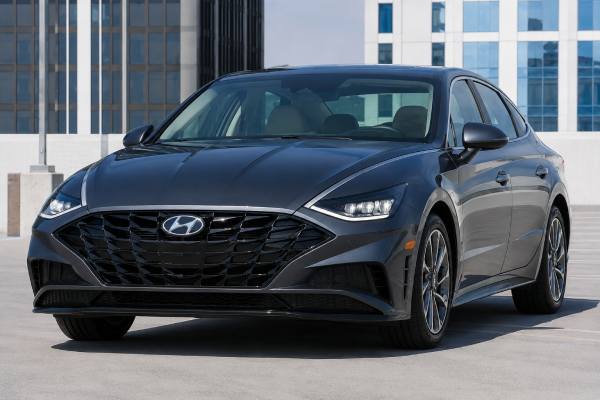
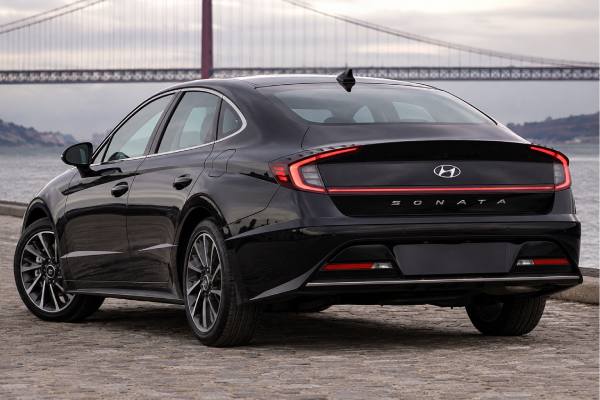
The 2020–2023 Hyundai Sonata DN8 with the Smartstream G1.6 T-GDi is the comfort-focused turbocharged gasoline version of Hyundai’s eighth-generation midsize sedan. It pairs a 180 hp 1.6-liter turbo engine with an 8-speed automatic transmission and front-wheel drive, giving it stronger low-rpm torque than the base 2.5-liter Sonata while staying efficient enough for daily commuting.
For used-car buyers, this Sonata is most appealing as a spacious, modern, well-equipped sedan rather than a sporty one. The key questions are whether the 1.6T powertrain is durable, how the safety equipment varies by trim, what maintenance matters most, and which recalls or service campaigns must be checked before purchase.
Final Verdict
The 2020–2023 Hyundai Sonata DN8 1.6T is a strong used choice for buyers who want a roomy, comfortable, fuel-efficient sedan with modern driver assistance and a refined turbo powertrain. It suits commuters, small families, and highway drivers better than enthusiasts, because its strengths are torque, quietness, equipment, and value rather than sharp handling. The main ownership caveat is recall and service-campaign history, especially the 1.6T fuel-tank/check-valve campaign and any software updates. Buy one only with clear maintenance records, verified recall completion, and no warning lights, fuel smell, rough starting, or abnormal fuel-tank noises.
| Pros | Cons |
|---|---|
| Strong low-rpm torque from the 1.6T turbo engine | Not as sporty as its coupe-like styling suggests |
| Large-car cabin space with a practical 16 cu ft trunk | Rear-seat headroom can feel tighter with panoramic roof |
| Good EPA economy, especially 2021–2023 highway rating | Real-world city economy drops in short-trip use |
| Limited trim brings excellent ADAS and comfort equipment | More sensors and electronics mean more inspection points |
| Conventional 8-speed automatic avoids DCT drivability quirks | ATF is listed as no-service under normal use |
| Strong crash-test structure for the DN8 generation | Updated IIHS tests exposed rear-seat restraint weakness |
Table of Contents
- Detailed Overview of the Sonata DN8 1.6T
- Specifications and Technical Data
- Trims, Options, Safety and ADAS
- Reliability, Common Issues and Service Actions
- Maintenance and Buyer’s Guide
- Driving and Performance
- How the Sonata 1.6T Compares to Rivals
Detailed Overview of the Sonata DN8 1.6T
The Sonata DN8 1.6T is best understood as the premium mainstream gasoline Sonata, not the performance model. It sits above the base 2.5-liter trims in refinement and torque delivery, while the later N Line uses a much stronger 2.5-liter turbo for drivers who want real performance.
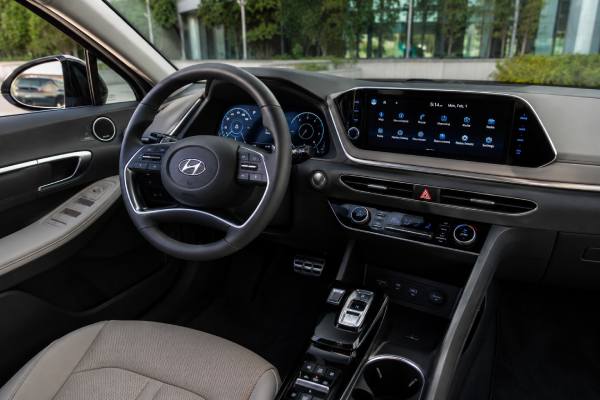
The DN8 generation arrived with a low, fastback-like sedan shape, a long wheelbase, and a cabin that feels closer to a near-large sedan than a compact family car. In the U.S. market, the 1.6T engine was mainly tied to SEL Plus and Limited trims. That matters because most used examples with this engine also bring more equipment than a base Sonata, including larger screens, upgraded interior materials, more advanced driver assistance, and in many cases comfort features such as heated seats, ventilated seats, panoramic sunroof, Bose audio, and a head-up display depending on trim and year.
Mechanically, the Smartstream G1.6 T-GDi is a 1,598 cc turbocharged inline-four. Its headline number, 180 hp, is not dramatic by midsize-sedan standards, but the 195 lb-ft torque plateau arrives early and holds across a broad rev range. That makes the car feel relaxed in everyday driving. It does not need frequent high-rpm operation to keep up with traffic, and the 8-speed automatic suits the car’s calm character better than a dual-clutch transmission would in stop-and-go use.
The Sonata 1.6T is front-wheel drive only. There is no AWD version of this DN8 1.6T sedan in the U.S. trim structure, so buyers in snowy regions should budget for quality winter or all-weather tires rather than expecting drivetrain help. The suspension layout is conventional but well judged: MacPherson struts in front and a multi-link rear axle. The result is a comfortable, stable sedan with better ride quality than many crossover alternatives in the same price range.
The ownership case is strongest for buyers who value space, comfort, fuel economy, and technology. Compared with a compact sedan, the Sonata feels wider, quieter, and more grown-up on the highway. Compared with a midsize SUV, it has a lower seating position and less cargo flexibility, but it is usually more efficient, more settled at speed, and often cheaper to buy used with similar equipment.
The main buying concern is not that the 1.6T is inherently fragile; it is that this exact model has several recall and service-campaign items that should not be ignored. The fuel-tank/check-valve campaign affecting certain 1.6T cars is especially important because symptoms can include check-engine lights, fuel odors, abnormal noises from the rear, starting problems, or fuel-tank deformation. A clean example with completed campaigns and regular oil service is much more attractive than a cheaper one with gaps in its history.
Specifications and Technical Data
The Sonata DN8 1.6T uses a transverse turbocharged gasoline engine, an 8-speed torque-converter automatic transmission, and front-wheel drive. The most important technical points are its early torque delivery, large cabin and trunk, efficient highway gearing, and maintenance-sensitive direct-injection turbo layout. Figures below focus on the 2020–2023 Smartstream G1.6 T-GDi gasoline version.
| Item | Hyundai Sonata DN8 1.6T |
|---|---|
| Engine family | Smartstream G1.6 T-GDi |
| Layout | Inline-4, DOHC, 16 valves |
| Displacement | 1.6 L / 1,598 cc |
| Induction | Turbocharged, intercooled |
| Fuel system | Gasoline direct injection |
| Maximum power | 180 hp / 134 kW at 5,500 rpm |
| Maximum torque | 264 Nm / 195 lb-ft at 1,500–4,500 rpm |
| Bore × stroke | 75.6 × 89.0 mm |
| Recommended fuel | Regular unleaded gasoline |
| Timing drive | Timing chain |
| Item | Specification |
|---|---|
| Transmission | 8-speed automatic with torque converter |
| Manual control | SHIFTRONIC mode; paddle shifters on 1.6T trims |
| Drive type | Front-wheel drive |
| Parking brake | Electronic parking brake with Auto Hold |
| Towing | Not recommended for U.S. Sonata 1.6T models |
| Item | Value |
|---|---|
| Body style | 4-door midsize sedan |
| Seating capacity | 5 |
| Length | 4,900 mm / 192.9 in |
| Width | 1,860 mm / 73.2 in |
| Height | 1,445 mm / 56.9 in |
| Wheelbase | 2,840 mm / 111.8 in |
| Turning diameter | 10.9 m / 35.9 ft curb-to-curb |
| Suspension | Front strut, rear multi-link |
| Passenger volume | About 105 cu ft |
| Luggage volume | 16 cu ft / about 453 L |
| Fuel tank | 15.9 gal / about 60 L on 1.6T gasoline trims |
| Curb weight | About 3,336–3,552 lb, depending on trim and equipment |
| Item | 2020 | 2021–2023 typical 1.6T rating |
|---|---|---|
| EPA city | 27 mpg US / 8.7 L/100 km | 27 mpg US / 8.7 L/100 km |
| EPA highway | 36 mpg US / 6.5 L/100 km | 37 mpg US / 6.4 L/100 km |
| EPA combined | 31 mpg US / 7.6 L/100 km | 31 mpg US / 7.6 L/100 km |
| 0–60 mph estimate | About 7.5–8.0 seconds | About 7.5–8.0 seconds |
| Top speed | Electronically limited in normal market specification | Electronically limited in normal market specification |
| Item | Useful value |
|---|---|
| Engine oil capacity | 4.8 L drain and refill |
| Engine oil grade | SAE 0W-20, API SN PLUS/SP or equivalent listed grade |
| Automatic transmission fluid | 6.5 L system capacity; Hyundai/Kia SP-IV type fluid |
| Coolant capacity | 8.5 L system capacity |
| Brake fluid | DOT 4 |
Trims, Options, Safety and ADAS
For the 2020–2023 U.S. Sonata, the 1.6T engine is most commonly found in SEL Plus and Limited trims. That means the powertrain usually comes with a higher equipment level than the base SE or SEL, but the exact safety and comfort features still depend on trim, package, and model year.
Trims and equipment identifiers
The SEL Plus is the sportier-looking 1.6T trim. It typically has the turbo engine, 8-speed automatic, paddle shifters, sport-style exterior trim, upgraded seats, larger wheels, and a more premium cabin than the base trims. The Limited is the luxury-leaning version. It adds the most desirable technology and comfort features, including the larger navigation screen, Bose audio, ventilated front seats, head-up display, surround-view camera on many examples, Blind-Spot View Monitor, and Remote Smart Parking Assist where equipped.
Quick identifiers for the 1.6T include:
- Engine bay label or build sheet: Smartstream G1.6 T-GDi / 1.6T.
- Trim badge and interior: SEL Plus or Limited is more likely than SE or SEL.
- Transmission selector: shift-by-wire push-button layout on DN8 automatic models.
- Interior tells: Limited models usually have leather seating, head-up display, Bose audio, and extra camera views.
- Wheels: 1.6T trims often use larger alloy wheels than base trims; some years added 19-inch wheels on SEL Plus.
Year-to-year changes were mostly equipment adjustments rather than major mechanical changes. For 2021, SEL Plus equipment shifted toward a more upscale wheel and tire package. Later 2022–2023 examples continued the same broad formula, with the N Line serving as the separate performance trim using the 2.5T engine rather than the 1.6T.
Safety ratings and crash-test context
The DN8 Sonata structure performed well in many major crash tests. NHTSA gave the 2020 Sonata and Sonata Hybrid an overall 5-star rating, and IIHS testing for the redesigned generation showed Good ratings in several core crash categories, including small-overlap and original moderate-overlap front tests.
The important nuance is that newer IIHS test procedures became tougher. The 2023 Sonata received a Poor rating in the updated moderate-overlap front test, mainly due to rear-seat occupant measurements and restraint performance. That does not erase the car’s strong earlier ratings, but it does mean buyers who frequently carry rear-seat passengers should understand that newer test standards are stricter than the original ratings used when the DN8 launched.
Safety systems and driver assistance
All DN8 Sonatas have a strong baseline of passive and active safety equipment for the class. The structure includes front and rear crumple zones, multiple airbags including a driver knee airbag, stability control, traction control, anti-lock brakes, electronic brake-force distribution, brake assist, tire-pressure monitoring, and LATCH lower anchors with upper tethers for child seats.
Common ADAS features include:
- Forward Collision-Avoidance Assist
- Lane Keeping Assist
- Lane Following Assist
- Driver Attention Warning
- High Beam Assist
- Smart Cruise Control with stop-and-go on many trims
- Blind-Spot Collision-Avoidance Assist on higher trims
- Rear Cross-Traffic Collision-Avoidance Assist
- Highway Driving Assist on well-equipped versions
- Surround View Monitor and Blind-Spot View Monitor on Limited
- Remote Smart Parking Assist on Limited where fitted
ADAS calibration matters after windshield replacement, front-end collision repair, wheel alignment, suspension work, or bumper/sensor repair. A used Sonata with warning lights, camera errors, disabled lane functions, or unexplained front radar faults should be scanned before purchase. These systems are useful, but they depend on correct calibration and intact sensors.
Reliability, Common Issues and Service Actions
A well-maintained Sonata DN8 1.6T can be a durable daily driver, but it is not a “buy blind” used car. The most important reliability step is verifying recall and campaign completion by VIN, followed by checking oil-service history, fuel-system symptoms, turbo-related leaks, transmission behavior, and ADAS/electronics operation.
| System | Prevalence | Severity | What to check |
|---|---|---|---|
| Fuel-tank/check-valve campaign | Important on affected 1.6T VINs | High | Recall status, fuel smell, rear popping noise, DTCs |
| Oil service neglect | Occasional | Medium to high | Receipts, oil level, turbo noise, sludge signs |
| Direct-injection deposits | Occasional with short trips | Medium | Rough idle, hesitation, misfires |
| 8-speed automatic behavior | Occasional | Medium | Shift flare, harsh engagement, delayed reverse |
| 12 V battery and electronics | Common with age | Low to medium | Weak start, warnings, infotainment resets |
| Suspension and tires | Normal wear | Low to medium | Uneven wear, wheel noise, alignment pull |
Fuel-tank/check-valve campaign
The headline service action for this exact engine is Hyundai’s check-valve/fuel-tank inspection and ECU update campaign covering certain 1.6T Sonata vehicles. The issue involves a purge-control/check-valve condition that can allow abnormal pressure behavior in the fuel tank. The official remedy path can include check-valve inspection or replacement, fuel-tank inspection, fuel-tank replacement when required, and ECU software update.
Buyer symptoms to take seriously include:
- Check-engine light related to fuel-tank pressure faults
- Fuel odor near the rear of the car
- Abnormal popping or deformation noises from the rear
- Hard starting or no-start events
- Rough running with evaporative-system fault codes
- Visible damage or deformation around the fuel tank area
Do not treat this as a normal minor EVAP fault without checking VIN campaign status. A dealer record showing the campaign was completed is valuable.
Engine and turbo concerns
The Smartstream G1.6 T-GDi uses a timing chain, direct injection, and turbocharging. That combination rewards clean oil, correct viscosity, and reasonable warm-up habits. The main long-term risks are not usually dramatic at low mileage, but neglect can show up as turbo bearing noise, oil seepage around hoses, valve-cover or timing-cover sweating, carbon-related roughness, or misfire complaints.
Typical symptom paths are:
- Rough idle or misfire: worn spark plugs, ignition coil issue, carbon buildup, injector issue, or software-related fueling correction.
- Whistling or siren-like boost noise: intake leak, turbo plumbing leak, or turbocharger wear.
- Oil smell after parking: valve-cover seepage, spilled oil from service, or turbo oil-line seepage.
- Coolant smell or level drop: hose, thermostat housing, radiator, or water-pump inspection needed.
Timing-chain failure is not a routine scheduled service item, but chain rattle, cam/crank correlation faults, poor starting, or persistent timing-related codes should be investigated immediately.
Transmission, chassis and electronics
The 8-speed automatic is generally smoother in traffic than a dual-clutch gearbox, but used examples should be tested cold and warm. Look for delayed engagement into Drive or Reverse, harsh 2–3 or 3–4 shifts, flare under gentle acceleration, or repeated hunting on rolling hills. Some drivability complaints can be software-adaptation related, but fluid condition, mounts, and internal wear should not be ignored on higher-mileage cars.
Chassis wear is usually straightforward: tires, alignment, brake pads, rotors, wheel bearings, and suspension bushings. Large wheels make the car look better but can increase tire cost and impact harshness. Listen for front-end clunks over broken pavement and humming from wheel bearings at highway speed.
Electronics checks should include both keys, infotainment, backup camera, blind-spot functions, lane-assist functions, heated and ventilated seats, panoramic roof operation, trunk release, parking sensors, and the head-up display if equipped. Many faults are not severe, but they can be expensive if a camera, radar, module, or roof mechanism is involved.
Maintenance and Buyer’s Guide
The best Sonata 1.6T to buy is the one with documented oil changes, completed recalls, clean diagnostics, matching tires, and no fuel-system symptoms. Mileage alone matters less than service discipline, especially because this engine is turbocharged and direct-injected.
| Interval | Recommended work |
|---|---|
| Every 5,000 miles / 8,000 km in severe use | Engine oil and filter; especially short trips, heat, traffic, cold, dust |
| Every 8,000 miles / 13,000 km or 12 months | Oil and filter in normal use; rotate tires; inspect brakes and fluids |
| Every 12 months | Cabin filter check, battery test, wipers, brake inspection, ADAS function check |
| Every 24,000–32,000 miles / 39,000–52,000 km | Engine air filter as needed; inspect belts, hoses, suspension, steering |
| Every 48,000 miles / 78,000 km | Spark plugs; brake fluid replacement; inspect fuel and vapor systems |
| 60,000–70,000 miles / 100,000 km severe use | Consider automatic transmission fluid service if used hard |
| 120,000 miles / 200,000 km or 10 years | First coolant replacement; then repeat about every 24 months |
The owner’s manual may list the automatic transmission fluid as “no check, no service required” under normal conditions. In real used-car ownership, many cautious owners still service the ATF around 60,000–70,000 miles if the car sees heavy traffic, heat, hills, or repeated short trips. Use only the correct specification fluid and avoid quick-lube universal ATF.
Fluids, parts and torque values
For decision-making, the key service values are 4.8 L of 0W-20 engine oil for the Smartstream G1.6 T-GDi, DOT 4 brake fluid, about 8.5 L coolant capacity, and SP-IV-type automatic transmission fluid. Wheel-nut torque should be verified from the market-specific owner’s manual or service manual before wheel work, but typical Hyundai passenger-car torque is commonly around 79–94 lb-ft. Always use the official value for the exact wheel and market.
The timing chain does not have a routine replacement interval. It should be inspected when symptoms appear: start-up rattle, timing correlation faults, poor running, or evidence of poor oil maintenance. Replace chain components only when out of specification or symptomatic, including guides, tensioner, and related hardware as needed.
Pre-purchase inspection checklist
Before buying, request or perform:
- VIN recall check through Hyundai or NHTSA.
- Dealer record for the 1.6T check-valve/fuel-tank campaign where applicable.
- Scan of all modules, not just a generic engine-code scan.
- Cold start after sitting overnight.
- Test drive in city traffic and at highway speed.
- Inspection for fuel smell, tank deformation, EVAP codes, or rear popping noises.
- Oil-leak check around valve cover, turbo oil lines, timing cover, and oil pan.
- Coolant-level and cooling-system pressure check.
- Transmission engagement check from Park to Drive and Reverse.
- Tire brand, date codes, tread depth, and even wear.
- Brake rotor condition, especially if the car sat unused.
- ADAS function check for lane assist, radar cruise, cameras, and blind-spot systems.
- Panoramic roof drain and operation check if equipped.
- Trunk latch and emergency release operation on 2020 cars.
The best years to seek are usually later 2021–2023 examples with complete software updates and service records, although a clean 2020 Limited can still be a good buy if all early recalls are documented. Avoid cars with unresolved fuel-system symptoms, repeated check-engine lights, poor oil history, mismatched cheap tires, evidence of accident repair near ADAS sensors, or water intrusion around the roof or trunk.
Driving and Performance
The Sonata 1.6T drives like a refined commuter sedan with useful torque, not like a sports sedan. Its best qualities are smooth acceleration, quiet cruising, stable highway manners, and low effort in daily use.
Around town, the 1.6T feels stronger than its 180 hp rating suggests because peak torque arrives from low rpm. The car moves away cleanly from lights, handles normal passing gaps without strain, and rarely needs aggressive throttle. Turbo lag is mild in normal driving, though a brief delay can appear if the transmission is in a high gear and the driver suddenly asks for quick acceleration.
The 8-speed automatic is a major part of the car’s character. In Normal or Comfort-style driving, it upshifts early to save fuel and keeps engine speed low. Sport mode sharpens throttle response and holds gears longer, but it does not transform the car into a performance model. Kickdown is generally smooth rather than dramatic. On rolling roads, the transmission may shuffle gears when the engine is asked to balance economy and boost, but it is usually less abrupt than a dual-clutch unit in traffic.
Ride quality is one of the Sonata’s strongest points. The long wheelbase helps it feel settled over highway expansion joints, and the cabin remains calm at cruising speed. Large wheels can add impact noise over sharp potholes, so buyers sensitive to ride comfort may prefer examples with smaller wheels and quality touring tires. Steering is light and accurate enough, but feedback is modest. The front end turns in predictably, and the rear multi-link suspension keeps the car composed, but enthusiastic drivers will find more involvement in a Mazda6 or the Sonata N Line.
Braking feel is stable and easy to modulate in normal driving. As with most midsize sedans, used-car braking performance depends heavily on tire quality and rotor condition. A vibration through the pedal or steering wheel usually points to rotor thickness variation, uneven pad deposits, worn suspension parts, or tire issues rather than a fundamental brake-design problem.
Real-world economy depends strongly on trip type. Expect roughly:
- City driving: about 8.5–10.5 L/100 km, or 22–28 mpg US / 26–34 mpg UK.
- Highway driving: about 6.2–7.2 L/100 km, or 33–38 mpg US / 40–46 mpg UK.
- Mixed driving: about 7.3–8.5 L/100 km, or 28–32 mpg US / 34–38 mpg UK.
Short winter trips can reduce economy noticeably because the turbo engine runs richer during warm-up and the cabin heater, defroster, heated seats, and thicker cold fluids add load. Highway drivers are more likely to see the Sonata 1.6T at its best, especially with steady speeds and properly inflated tires.
The Sonata is not rated as a tow vehicle in the U.S. 1.6T specification, so owners should avoid using it for trailer work. It can carry passengers and luggage confidently, but heavy loads will increase braking distance, reduce fuel economy, and make tire pressure and alignment more important.
How the Sonata 1.6T Compares to Rivals
The Sonata 1.6T competes most directly with midsize sedans such as the Toyota Camry, Honda Accord, Nissan Altima, Mazda6, Kia K5, and Volkswagen Passat. Its strongest advantage is the mix of space, equipment, warranty-era value, and fuel-efficient turbo torque.
Compared with the Toyota Camry, the Sonata usually offers more technology and a more distinctive cabin for the money. The Camry has the stronger long-term reputation and a broader powertrain lineup, especially the hybrid and V6 versions. For conservative buyers keeping a car beyond 150,000 miles, the Camry remains the safer default. For buyers who want more features per dollar and a more modern interior, the Sonata 1.6T is very competitive.
Compared with the Honda Accord 1.5T, the Sonata feels more relaxed and less sporty. The Accord has sharper steering, more responsive chassis tuning, and a huge cabin, but some buyers are wary of 1.5T oil-dilution concerns and CVT feel. The Sonata’s conventional 8-speed automatic is a plus for drivers who dislike CVTs, while the Accord is still the better driver’s car.
Compared with the Nissan Altima, the Sonata has a more premium-feeling interior and better technology integration in higher trims. The Altima’s available AWD is a real advantage in snow-belt markets, but its CVT may be a drawback for buyers who prefer traditional automatics. In front-drive form, the Sonata 1.6T generally feels more polished.
Compared with the Mazda6, the Sonata is roomier and more technology-rich, but the Mazda is more engaging to drive and has a more upscale steering and chassis feel. The Mazda6 2.5T is also stronger than the Sonata 1.6T, though it uses more fuel and can cost more to run.
The closest mechanical and market rival is the Kia K5 1.6T, which shares similar corporate engineering. The K5 looks sportier and was available with AWD in some trims, but the Sonata Limited often feels more premium and comfort-focused. Buyers should inspect both for similar fuel-system campaign concerns where applicable.
The Sonata 1.6T makes the most sense when the used price is meaningfully lower than an equivalent Camry or Accord, the trim level is high, and the service history is clean. It is not the most exciting sedan in the class, but as a value-rich, comfortable, efficient, well-equipped family sedan, it remains one of the better used choices from 2020–2023.
References
- 2023 Sonata Product Guide 2022 (Manufacturer Specifications)
- Fuel Economy of the 2023 Hyundai Sonata 2023 (Fuel Economy)
- 2023 Hyundai Sonata 2023 (Safety Rating)
- Normal maintenance schedule 2023 (Owner’s Manual)
- HMA TSB 2025 (TSB)
Disclaimer
This article is for informational purposes only and is not a substitute for professional diagnosis, repair, or inspection. Specifications, torque values, service intervals, procedures, software campaigns, and fitted equipment can vary by VIN, market, production date, and trim. Always verify maintenance, repairs, capacities, and recall status against the official owner’s manual, service documentation, dealer records, and a qualified Hyundai technician.
If this guide was useful, please consider sharing it on Facebook, X/Twitter, or your preferred social platform to support our work.