
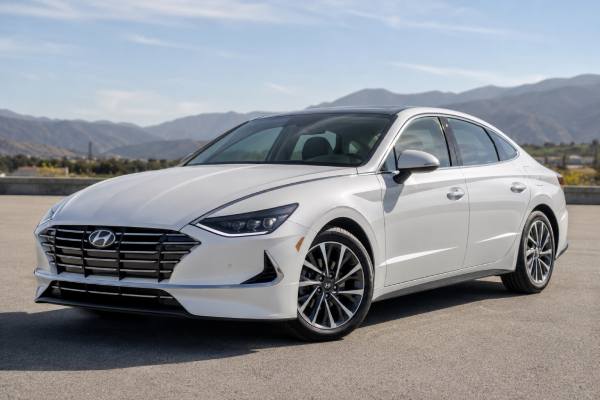
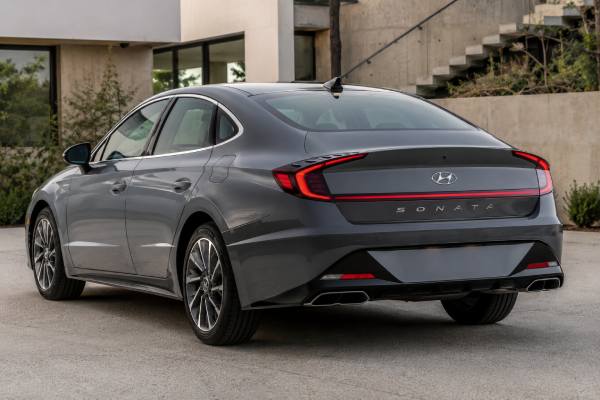
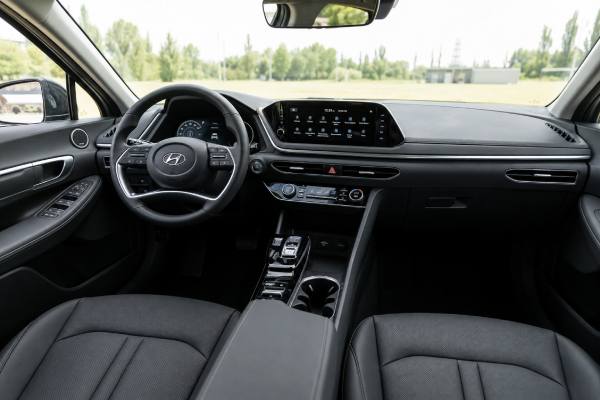
The 2020–2023 Hyundai Sonata DN8 with the naturally aspirated Smartstream G2.5 GDi is the mainstream gasoline version of Hyundai’s eighth-generation midsize sedan. It is not the turbocharged N Line, the 1.6T model, or the hybrid; it is the 191 hp front-wheel-drive Sonata aimed at everyday commuting, family use, long highway trips, and low-stress ownership.
Its appeal is straightforward: a roomy cabin, strong standard safety equipment, good fuel economy for a large sedan, and a modern 8-speed automatic without the complexity of a turbocharger or hybrid battery. The main things to understand before buying one are trim differences, service history, software campaigns, emissions-related fault patterns, and whether the specific VIN has had recalls and service actions completed.
Final Verdict
The 2020–2023 Hyundai Sonata DN8 2.5L Smartstream GDi is a strong choice for buyers who want a comfortable, efficient, well-equipped midsize sedan without turbo or hybrid complexity. Its biggest strengths are cabin space, highway economy, safety technology, and relaxed daily usability. It suits commuters, small families, rideshare-style high-mileage drivers, and buyers who value equipment for the money. The main tradeoff is that the 191 hp engine is smooth rather than sporty, and some cars need proof of ECM updates, emissions-related repairs, and clean service history. Buy the best-maintained example, verify recalls by VIN, and keep oil and fluid service conservative.
| Pros | Cons |
|---|---|
| 191 hp 2.5L engine avoids turbocharger complexity | Acceleration is adequate, not especially sporty |
| Roomy DN8 cabin feels large for the class | Rear headroom is reduced by the sleek roofline |
| EPA economy reaches 32 mpg combined on SE | SEL wheel packages slightly reduce rated economy |
| 8-speed automatic is smoother than many CVTs | Fluid service is often overlooked by used owners |
| Strong standard driver-assistance coverage for the segment | ADAS repairs require proper calibration after collision work |
| Good used-market value versus Accord and Camry | Recall and service-campaign completion must be checked by VIN |
Table of Contents
- Detailed DN8 Sonata 2.5L Overview
- Specifications and Technical Data
- Trims, Options, Safety and Driver Assistance
- Reliability, Common Issues and Service Actions
- Maintenance and Buyer’s Guide
- Driving and Performance
- How the Sonata 2.5L Compares to Rivals
Detailed DN8 Sonata 2.5L Overview
The DN8 Sonata 2.5L is the sensible, non-turbo gasoline version of Hyundai’s 2020–2023 midsize sedan. It delivers the space and technology of the redesign while keeping the powertrain simple: a naturally aspirated four-cylinder, an 8-speed torque-converter automatic, and front-wheel drive.
The DN8 generation marked a major shift from the older Sonata’s conservative sedan shape. It adopted a lower roofline, longer body, broad grille, wide dashboard layout, and a more upscale cabin presentation. In the U.S. market, the 2.5L Smartstream GDi/MPI engine was most commonly associated with SE and SEL trims, while higher-output or more premium variants used the 1.6T, hybrid system, or 2.5T N Line powertrain.
For buyers, the 2.5L version makes the most sense when long-term simplicity matters more than peak torque. It has no turbocharger, no dual-clutch transmission, and no traction battery. That does not make it maintenance-free, especially because the engine uses direct injection along with multi-port injection and relies on correct oil, software calibration, fuel-system health, and emissions controls. But compared with the turbo and hybrid versions, the ownership profile is easier to understand.
The engine’s 191 hp output is enough for daily use. Around town it feels smooth and predictable, and on the highway the 8-speed automatic helps keep engine speed low. It is not a performance sedan, and drivers who regularly carry full loads in hilly areas may notice that it needs revs for confident passing. Still, the Sonata’s light steering, stable chassis, quiet cabin, and good fuel economy make it a strong commuter.
Practicality is one of the car’s best arguments. The long wheelbase gives generous front legroom and a usable rear seat. The trunk is wide and easy to load for a sedan, with about 16 cubic feet of cargo volume. The cabin also feels more modern than many used midsize sedans from the same years, especially in SEL cars with the larger digital display, heated seats, upgraded infotainment, and extra driver-assistance features.
The main buying risk is not one single catastrophic issue; it is incomplete maintenance, missed software campaigns, poor collision repair, or ignored warning lights. These cars are electronically sophisticated, and a small fault in an emissions sensor, connector, battery, or ADAS component can create warning messages that look more serious than they are. A clean diagnostic scan and recall check matter.
A well-kept Sonata DN8 2.5L is best viewed as a value-focused alternative to a Toyota Camry or Honda Accord. It gives up some resale strength and, depending on trim, some powertrain refinement under hard acceleration. In return, it often costs less used, has strong equipment, and can be very pleasant as a daily sedan.
Specifications and Technical Data
The 2020–2023 Sonata 2.5L uses Hyundai’s Smartstream G2.5 gasoline engine paired with an 8-speed automatic transmission and front-wheel drive. The important technical story is its combination of direct and multi-port fuel injection, high compression, regular gasoline compatibility, and a conventional automatic gearbox rather than a CVT or dual-clutch unit.
| Item | Hyundai Sonata DN8 2.5L GDi |
|---|---|
| Engine family | Smartstream G2.5 GDi / MPI |
| Configuration | Inline-4, DOHC, 16 valves |
| Displacement | 2,497 cc / 2.5 L |
| Bore × stroke | 88.5 × 101.5 mm |
| Compression ratio | 13.0:1 |
| Fuel system | Gasoline direct injection plus multi-port injection |
| Induction | Naturally aspirated |
| Maximum power | 191 hp at 6,100 rpm / about 142 kW |
| Maximum torque | 181 lb-ft at 4,000 rpm / about 245 Nm |
| Timing drive | Timing chain |
| Recommended fuel | Regular unleaded gasoline, 87 AKI or higher in U.S. market use |
| Item | Specification |
|---|---|
| Transmission | 8-speed automatic |
| Drive type | Front-wheel drive |
| Front suspension | MacPherson strut |
| Rear suspension | Multi-link independent |
| Steering | Electric power-assisted rack-and-pinion |
| Brakes | Four-wheel disc brakes with ABS and stability control |
| Common tire sizes | 205/65R16, 215/55R17, 235/45R18 depending on trim |
| Wheel bolt pattern | 5 × 114.3 mm |
| Item | Value |
|---|---|
| Body style | 4-door midsize sedan |
| Seating | 5 passengers |
| Length | 4,900 mm / 192.9 in |
| Width excluding mirrors | 1,859 mm / 73.2 in |
| Height | 1,445 mm / 56.9 in |
| Wheelbase | 2,840 mm / 111.8 in |
| Ground clearance | about 135 mm / 5.3 in |
| Turning diameter | about 10.9 m / 35.9 ft |
| Passenger volume | 104.4 cu ft / about 2,956 L |
| Trunk volume | 16.0 cu ft / about 453 L |
| Fuel tank | 14.8 gal / about 56 L on common SE 2.5L data |
| Version | EPA city | EPA highway | EPA combined |
|---|---|---|---|
| SE 2.5L | 28 mpg US / 8.4 L/100 km | 38 mpg US / 6.2 L/100 km | 32 mpg US / 7.4 L/100 km |
| SEL 2.5L | 27 mpg US / 8.7 L/100 km | 37 mpg US / 6.4 L/100 km | 31 mpg US / 7.6 L/100 km |
| Typical 0–60 mph | about 8 seconds | varies by test load | not performance-focused |
| Item | Useful reference value |
|---|---|
| Engine oil viscosity | SAE 0W-20 commonly specified for the 2.5L Smartstream |
| Engine oil capacity | about 5.9 qt / 5.6 L with filter |
| Transmission fluid | Hyundai/Kia 8-speed automatic fluid specification by VIN |
| Spark plugs | Iridium plugs; commonly scheduled around 42,000 miles |
| Wheel-nut torque | 79–94 lb-ft / 107–127 Nm |
| Towing | Not recommended for typical U.S. Sonata passenger-car use |
Trims, Options, Safety and Driver Assistance
For this engine, the most relevant trims are SE and SEL. Higher DN8 trims often moved to the 1.6T, hybrid, or N Line 2.5T, so shoppers should check the engine badge, window sticker, VIN build data, or under-hood emissions label before assuming a Sonata is the 191 hp 2.5L.
Trim and equipment differences
The SE is the cleanest and simplest 2.5L Sonata. It usually has 16-inch alloy wheels, cloth seating, LED lighting, an 8-inch infotainment screen, Apple CarPlay and Android Auto, and the core Hyundai SmartSense driver-assistance suite. It is also the fuel-economy leader because of its lighter equipment and smaller wheel package.
The SEL adds the features many used buyers want: 17-inch wheels, heated front seats, power driver’s seat, blind-spot monitoring, rear cross-traffic alert, proximity key, and more comfort-oriented interior equipment. Depending on year and package, SEL models may also have a panoramic sunroof, larger digital cluster, wireless charging, upgraded audio, and extra convenience features.
Quick identifiers include:
- SE 2.5L: smaller wheels, simpler cloth cabin, no luxury badging, usually the best EPA rating.
- SEL 2.5L: 17-inch wheels, heated seats, blind-spot features, proximity key, more common used-market sweet spot.
- Non-2.5L trims: 1.6T, Hybrid, Limited, and N Line models need separate evaluation because their powertrains and service concerns differ.
Year-to-year changes for 2020–2023 were mostly equipment and packaging changes rather than a major mechanical redesign for the 2.5L. The 2020 model year was the launch year and is the one where campaign completion matters most. Later cars may have benefited from running production updates, but a documented 2020 can still be a good buy.
Safety ratings and structure
The DN8 Sonata performed strongly in major crash-test programs. The IIHS rated the redesigned Sonata well in front crash categories, roof strength, head restraints, and original side testing. The later updated side test was tougher and resulted in a lower but still respectable Acceptable overall evaluation for 2020–2023 applicability. NHTSA testing for the 2020 Sonata produced an overall 5-star rating.
The practical takeaway is that the structure is competitive, but safety performance still depends heavily on condition. Avoid cars with poorly repaired front, side, or rear collision damage. ADAS sensors, radar units, cameras, bumper covers, steering-angle sensors, and windshield-mounted camera calibration all matter after bodywork.
Driver assistance and child safety
Standard and available systems can include forward collision-avoidance assist, lane keeping assist, lane following assist, driver attention warning, high beam assist, blind-spot collision warning, rear cross-traffic collision warning, smart cruise control, parking sensors, rearview camera, and higher-level parking assistance on specific non-2.5L or higher trims.
The Sonata also includes LATCH child-seat anchors for the rear seating area. As with most sedans, rear-facing child seats fit best when the front passenger is not extremely tall. The rear bench is wide, but the sloped roofline can make loading a child seat slightly less easy than in a taller crossover.
ADAS service matters. A windshield replacement, bumper repair, suspension alignment, or front-end collision can require calibration. During a pre-purchase inspection, confirm there are no warning lights for FCA, LKA, blind-spot monitoring, ABS, ESC, TPMS, or airbag systems.
Reliability, Common Issues and Service Actions
The Sonata 2.5L is generally a sound used sedan when maintained well, but it is not a car to buy blindly. The most important reliability checks are oil-change history, recall completion, ECM software campaign completion, diagnostic trouble codes, wiring-connector condition, emissions-system function, and evidence of careful repair after any collision.
| Area | Prevalence | Severity | What to check |
|---|---|---|---|
| 12 V battery and low-voltage faults | Common with age | Low to medium | Slow start, warning messages, battery age over 4 years |
| Brake rotor corrosion or pulsation | Common in wet/salt climates | Low | Vibration, lip wear, rusted rear rotors |
| ECM software campaign faults | Occasional | Low to medium | MIL, P2074, P2422, reduced-power complaints |
| EGR-related P0401 faults | Occasional on affected early cars | Medium | Check-engine light, emissions readiness failure |
| JE202 connector pin-tension faults | Occasional | Medium | Multiple engine/emissions DTCs, intermittent faults |
| Major engine or transmission failure | Rare relative to minor faults | High | Noises, slipping, overheating, poor service records |
Engine and emissions system
The Smartstream G2.5 is not the same ownership story as older Hyundai Theta II engines. It uses a newer architecture, direct-plus-port injection, and a timing chain. That said, buyers should still treat oil quality and oil level seriously. GDI engines run hot around the combustion chamber and fuel system, and extended oil intervals under severe use can accelerate deposits, chain wear, and actuator issues.
Symptoms to investigate include:
- Rattle on cold start: possible timing-chain tensioner, oil-drainback, or accessory noise.
- Rough idle or check-engine light: possible EGR, EVAP, air-metering, injector, or connector issue.
- Oil smell or seepage: inspect valve cover, oil pan area, drain plug, filter housing, and timing cover area.
- Loss of power with warning lights: scan before guessing; some cases relate to ECM logic updates rather than hard part failure.
Direct injection can create intake-valve deposits over high mileage, although the dual-injection strategy helps reduce the risk compared with pure GDI layouts. Short trips, long idle time, poor fuel quality, and infrequent oil changes increase the likelihood of rough idle or deposit-related symptoms. Use the correct oil, keep PCV function healthy, and avoid repeatedly extending service intervals.
Software, TSBs and recalls
Important 2.5L service actions include ECM software updates for DTC P2422 on certain 2020 Sonata 2.5L cars and P2074-related air-measurement plausibility logic on certain 2020–2022 Sonata 2.5L vehicles. These updates are important because they can address false or over-sensitive diagnostic logic, warning lights, and reduced-performance modes.
A 2023 Hyundai bulletin also addresses JE202 joint connector repair on 2020–2023 Sonata 2.5L vehicles with specific DTCs. Another bulletin covers EGR valve replacement for P0401 on certain 2020–2021 production vehicles. These are not reasons to reject every car, but they are reasons to demand a clean scan and dealer service history.
Recall status must be checked by VIN, not by model-year generalization. Some Sonata recalls apply only to certain build dates, trims, or powertrains. For example, a later 2020–2023 fuel-tank recall population involved 1.6-liter turbo cars, not the baseline 2.5L covered here, but a buyer should still run the VIN because mixed inventory listings and incorrect dealer descriptions are common.
Driveline, chassis and electronics
The 8-speed automatic is usually smooth when healthy. Mild shift adaptation behavior after a battery disconnect can be normal, but harsh engagement, flare, repeated hunting, or delayed Drive/Reverse selection should be inspected. Many owners never service the ATF because the schedule may not emphasize replacement under normal use. For a used car you plan to keep, fluid service is wise if mileage and condition justify it.
Suspension wear is typical midsize-sedan wear: front control-arm bushings, sway-bar links, rear shock wear, tire cupping, and alignment drift after pothole impacts. On 18-inch wheel cars, inspect tires carefully because the lower-profile package can transmit more impact harshness and can be more vulnerable to wheel damage.
Electronics are mostly dependable, but used examples can show battery-related warning lights, infotainment glitches, keyless-entry faults, parking-sensor faults, blind-spot sensor warnings, or camera calibration issues after windshield replacement. A proper scan tool that reads all modules is more useful than a generic OBD reader.
Maintenance and Buyer’s Guide
A Sonata 2.5L will age best with conservative oil service, regular brake and tire care, clean cooling-system maintenance, and documented software campaign completion. The car is modern enough that “no warning lights” is not enough; buyers should verify service records and scan all modules.
| Interval | Service items |
|---|---|
| Every 5,000–8,000 miles / 6–12 months | Engine oil and filter; inspect tires, brakes, fluids, belts, hoses, leaks |
| Every 7,500–8,000 miles | Rotate tires; check alignment wear pattern and brake condition |
| Every 15,000 miles | Replace cabin air filter; inspect engine air filter and wipers |
| Every 30,000 miles | Replace engine air filter; inspect fuel system, suspension, steering, exhaust |
| About 42,000 miles | Replace iridium spark plugs where specified for this engine |
| Every 30,000–60,000 miles | Consider ATF service under severe use, heavy city driving, heat, or high mileage |
| Every 3–4 years | Replace brake fluid; test 12 V battery and charging system |
| First 10 years / 120,000 miles, then more often | Coolant service according to official schedule and fluid specification |
| At every major service | Inspect timing-chain noise, accessory belt, hoses, mounts, leaks, and DTC history |
Severe use includes repeated short trips, hot climate operation, long idling, dusty roads, stop-and-go commuting, steep grades, rideshare use, and low-speed urban driving. Many used Sonatas live exactly this kind of life, so a conservative oil interval is safer than stretching service to the maximum.
Fluids, capacities and torque values
For decision-making, the useful service references are simple: the 2.5L commonly uses SAE 0W-20 engine oil, about 5.9 quarts with filter, iridium spark plugs, Hyundai/Kia-compatible 8-speed automatic transmission fluid, and wheel-nut torque around 79–94 lb-ft. Brake fluid should be DOT-rated as specified in the owner documentation, and coolant must match Hyundai’s approved long-life coolant requirements.
Do not rely only on internet charts for fluid specifications. Hyundai can revise specifications by VIN, market, and production date. Before doing major service, confirm the exact oil, ATF, coolant, torque values, and procedures through the official manual or dealer service information.
Pre-purchase inspection checklist
Before buying, request:
- Full oil-change records with mileage and dates.
- Proof of recall completion and service-campaign completion.
- A full-system diagnostic scan, not only a generic OBD scan.
- Cold start from overnight, listening for abnormal rattle.
- Test drive from city speeds to highway speeds.
- Inspection of tires for uneven wear, cupping, or mismatched brands.
- Brake inspection for rotor pulsation, rust, caliper slide condition, and pad thickness.
- Underbody check for corrosion, oil seepage, coolant staining, and collision damage.
- ADAS check for blind-spot, lane, camera, radar, ABS, ESC, and airbag faults.
- Confirmation that engine, transmission, trim, and VIN match the advertised listing.
The best used examples are usually one-owner SE or SEL cars with boring service records, no collision history, and clean diagnostic results. A high-mileage car can be fine if it has frequent oil changes and no unresolved campaigns. A low-mileage car with warning lights, accident history, or missing records can be the worse purchase.
Best years and trims to seek
A 2021–2023 SEL 2.5L is often the sweet spot because it adds useful comfort and safety equipment without changing to the turbo engine. A 2020 can be a good value, but campaign completion is especially important because it was the first DN8 model year. The SE is the best choice for fuel economy and simplicity, while SEL is the better daily-driver value for most buyers.
Long-term durability should be good if the car is serviced properly. The 2.5L’s timing chain should be inspected for symptoms rather than replaced on a fixed belt interval. Replace it only when wear, noise, timing-correlation faults, guide/tensioner problems, or other service-manual criteria justify the work.
Driving and Performance
The Sonata 2.5L drives like a comfortable midsize commuter, not a sport sedan. Its strongest dynamic traits are stability, quietness, easy steering, and fuel economy; its weakest point is modest low-rpm punch compared with turbocharged rivals.
In city driving, throttle response is smooth and predictable. The 2.5L engine does not have the low-end surge of the 1.6T or the 2.5T N Line, but it also avoids turbo lag and turbo heat management concerns. The 8-speed automatic generally shifts cleanly and keeps the engine in a relaxed range unless the driver asks for quick acceleration.
At highway speeds, the Sonata feels planted. The long wheelbase helps straight-line stability, and wind noise is reasonable for the class. Tire noise depends heavily on tire brand and wheel size. SE cars with 16-inch wheels tend to ride more softly and quietly, while SEL models with 17-inch wheels feel a little more responsive. Cars with 18-inch packages can look better but may ride more firmly over broken pavement.
Steering is light and easy in parking lots, with enough accuracy for normal driving. It is not especially communicative, but the chassis is predictable. Body roll is controlled, and the rear multi-link suspension helps the car feel more settled than many economy sedans. Braking feel is normal for a modern sedan: easy to modulate, though rotor condition and tire quality matter far more on a used example than the factory specification.
Real-world economy is one of the 2.5L Sonata’s best traits. A careful driver can see highway results in the high 30s mpg US, sometimes better on steady 60–70 mph trips. Mixed driving often lands around 28–33 mpg US depending on tires, climate, speed, and traffic. Heavy city use, winter warmups, short trips, roof racks, poor tire pressure, and aggressive acceleration can pull economy into the mid-20s.
In metric terms, expect roughly:
- City use: about 8.1–10.2 L/100 km, depending on traffic.
- Highway use: about 5.6–6.8 L/100 km on steady trips.
- Mixed use: about 7.1–8.4 L/100 km for many owners.
- Cold weather penalty: often 5–15 percent worse, especially on short trips.
Passing performance is adequate but requires planning. From 50–80 mph, the transmission will downshift and the engine will rev. That is normal for a naturally aspirated four-cylinder in a large sedan. Drivers coming from a turbocharged Accord, Mazda6 turbo, or Sonata N Line will notice the difference. Drivers coming from older midsize sedans will likely find it perfectly acceptable.
The Sonata is not a towing-focused vehicle in typical U.S. passenger-car use. Treat it as a people-and-luggage sedan. If you regularly carry several passengers and a full trunk through mountain terrain, keep the cooling system healthy, maintain tire pressures, and avoid assuming it has the reserve power of a turbocharged model.
How the Sonata 2.5L Compares to Rivals
The Sonata 2.5L competes best on value, space, safety equipment, warranty coverage when still applicable, and low-stress highway comfort. It is not the default choice for strongest resale value, sharpest handling, or fastest acceleration.
| Rival | Where the Sonata is stronger | Where the rival may be stronger |
|---|---|---|
| Toyota Camry 2.5 | Often better used value and richer equipment | Resale value, available AWD, stronger reputation |
| Honda Accord 1.5T | No turbo, smooth automatic, roomy cabin | Low-rpm torque, sharper driving feel, resale |
| Kia K5 2.5 | More understated styling, sedan comfort focus | Sportier image and similar platform strengths |
| Nissan Altima 2.5 | More upscale cabin feel in many trims | Available AWD and strong highway economy |
| Mazda6 2.5 | Newer tech and stronger rear-seat packaging | Handling feel and interior material richness |
| Subaru Legacy 2.5 | Better fuel economy in FWD use, bolder design | Standard AWD and poor-weather traction |
Against the Camry, the Sonata’s main argument is price and equipment. A used Sonata SEL may offer features that cost more in a comparable Camry. The Camry counters with excellent resale value, a stronger long-term reputation, and available AWD in some years. Buyers who keep cars for a decade may still lean Toyota; buyers shopping by feature-per-dollar may prefer Hyundai.
Against the Accord, the Sonata 2.5L is calmer and simpler. The Accord 1.5T has more useful torque and a more responsive chassis, but it uses a turbocharged engine and CVT. Some buyers like the Accord’s sharper feel; others prefer the Hyundai’s conventional automatic and quieter personality.
The Kia K5 is the closest relative. It shares much of the engineering philosophy but wears a sportier design. The Hyundai feels more mature and understated, while the Kia may appeal to buyers who want a more aggressive look. Mechanical inspection priorities are similar, especially for shared engine and platform components.
The Altima and Legacy matter most for buyers who want AWD. The Sonata covered here is front-wheel drive only. With good tires, it is fine in rain and moderate winter conditions, but it is not the best sedan choice for snowy rural roads, steep icy driveways, or mountain winter use.
Overall, the DN8 Sonata 2.5L is most compelling when bought carefully at the right price. It is a comfortable, efficient, modern sedan with enough power, strong safety equipment, and lower used pricing than some rivals. Its ideal buyer values comfort and ownership practicality more than badge prestige or sporty acceleration.
References
- 2023 Sonata Product Guide 2023 (Specifications). ([Hyundai News][1])
- 2020 Sonata Specifications 2020 (Specifications). ([Hyundai News][2])
- 2020 Hyundai Sonata 2020 (Safety Rating). ([IIHS Crash Testing][3])
- Check for Recalls: Vehicle, Car Seat, Tire, Equipment 2026 (Recall Database). ([NHTSA][4])
- DTC P2074XX ECM UPDATE (SERVICE CAMPAIGN T7M) 2021 (TSB). ([NHTSA][5])
Disclaimer
This article is for informational purposes only and is not a substitute for professional diagnosis, repair, or inspection by a qualified technician. Specifications, torque values, service intervals, software actions, recall applicability, and repair procedures can vary by VIN, market, production date, trim, and equipment. Always verify details against the official owner’s manual, service manual, dealer records, and VIN-specific recall database before buying, servicing, or repairing a vehicle.
If this guide helped you, please consider sharing it on Facebook, X/Twitter, or your preferred social platform to support our work.