
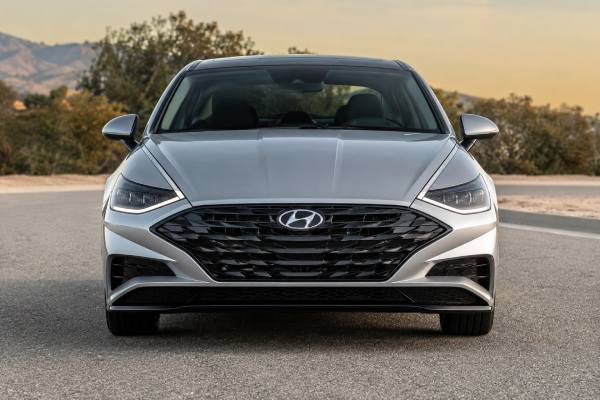
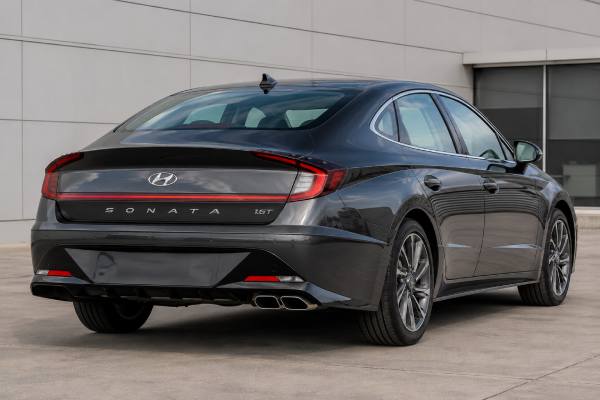
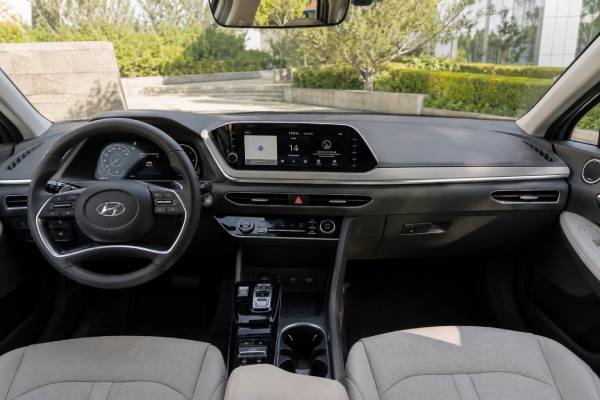
The 2020–2023 Hyundai SONATA Hybrid DN8 is a midsize hybrid sedan built around comfort, high fuel economy, and generous equipment rather than sporty performance. Its 2.0-liter Smartstream GDi hybrid system is unusual in the class because it uses a conventional 6-speed automatic transmission instead of an eCVT, giving it a more familiar driving feel while still returning strong real-world mpg.
This version is most relevant to buyers comparing efficient used sedans such as the Toyota Camry Hybrid and Honda Accord Hybrid. The main things to judge are trim level, wheel package, service history, hybrid-system updates, brake condition, and whether any recall or service campaign work has been completed.
Final Verdict
The 2020–2023 Hyundai SONATA Hybrid DN8 is a very good used choice for drivers who want a roomy, quiet, fuel-efficient midsize sedan with modern safety tech and a more conventional transmission feel than many hybrids. It suits commuters, family use, and high-mileage highway driving especially well. Its main tradeoff is that it is not as engaging or as resale-proof as a Camry Hybrid or Accord Hybrid, and Limited models lose some mpg versus the Blue trim. Buy only with documented maintenance, completed recall/campaign checks, and a hybrid-system scan if the car is out of basic warranty.
| Pros | Cons |
|---|---|
| Blue trim reaches excellent 52 mpg combined EPA economy | SEL and Limited drop to 47 mpg combined |
| 6-speed automatic feels more familiar than many hybrid eCVTs | Not as quick or polished as newer Accord Hybrid systems |
| Large sedan cabin with a useful 16.0 cu ft trunk | Rear-seat and road noise isolation trail some luxury-feeling rivals |
| Strong standard safety tech, including automatic emergency braking | Best IIHS headlight rating depends on Limited projector LEDs |
| Modern infotainment, available Bose audio, HUD, and surround cameras | More electronics mean pre-purchase scans are important |
| Hybrid battery warranty coverage is strong in the U.S. | High-mileage cars still need battery health and campaign checks |
Table of Contents
- Hyundai Sonata Hybrid DN8 Overview
- Specifications and Technical Data
- Trims, Options, Safety and Driver Assistance
- Reliability, Common Issues and Service Actions
- Maintenance and Buyer’s Guide
- Driving, Performance and Efficiency
- How the Sonata Hybrid Compares to Rivals
Hyundai Sonata Hybrid DN8 Overview
The DN8 SONATA Hybrid is best understood as an efficiency-focused midsize sedan with a conventional-car personality. It combines a naturally aspirated 2.0-liter gasoline engine, a 39 kW electric motor, a compact lithium-ion polymer battery, front-wheel drive, and a 6-speed automatic transmission.
This generation arrived for the 2020 model year with a much sleeker body than the previous Sonata Hybrid. The long hood, fastback-like roofline, and wide cabin make it look more upscale than many used hybrids in the same price range. Under the styling, however, the priority is simple: reduce fuel use without making the car feel strange to people coming from a normal gasoline sedan.
The powertrain is not a plug-in hybrid. There is no charging port, no onboard AC charger, and no useful EV-only range figure to compare with PHEVs. Instead, the battery is charged by regenerative braking and by the gasoline engine. The car can move at low speeds on electric power for short periods, but its main advantage is how often it can shut the engine off in traffic and how efficiently it blends engine and motor power.
One of the SONATA Hybrid’s strongest traits is packaging. Earlier hybrids often lost trunk space to battery placement, but the DN8 Hybrid keeps a practical trunk and folding rear seatbacks. That matters for family buyers, airport runs, rideshare-style use, and anyone moving from a crossover who still wants good luggage capacity.
The trim choice affects the ownership experience more than the engine choice, because all U.S.-market 2020–2023 SONATA Hybrids use the same basic hybrid powertrain. The Blue trim is the efficiency leader, helped by lighter equipment and 16-inch wheels. SEL and Limited trims add comfort, infotainment, and driver-assistance features, but their 17-inch tires and added content reduce the official combined fuel economy.
Used buyers should focus less on headline horsepower and more on condition. A good SONATA Hybrid should start smoothly, transition cleanly between engine-off and engine-on driving, show no hybrid warning lights, and have even brake wear. Service records, recall status, and tire choice matter because hybrids are sensitive to rolling resistance, battery state, software calibration, and brake-system neglect.
Specifications and Technical Data
The 2020–2023 SONATA Hybrid uses one core technical layout: a Smartstream 2.0-liter GDi gasoline engine paired with a front electric motor and 6-speed automatic transmission. The important buyer-facing numbers are system output, EPA economy by trim, battery capacity, dimensions, wheel package, and service reference data.
| Item | Specification |
|---|---|
| Engine family | Smartstream G2.0 GDi HEV |
| Engine layout | 2.0L naturally aspirated inline-4 |
| Displacement | 1,999 cc |
| Fuel system | Gasoline direct injection |
| Valvetrain | DOHC, 16 valves, dual CVVT |
| Compression ratio | 14.0:1 |
| Gasoline engine output | 150 hp at 6,000 rpm; 139 lb-ft at 5,000 rpm |
| Electric motor output | 39 kW; 151 lb-ft at low rpm |
| Combined system output | 192 hp |
| Hybrid battery | 1.62 kWh lithium-ion polymer, 270 V max |
| Fuel type | Regular unleaded gasoline |
| Item | Specification |
|---|---|
| Transmission | 6-speed automatic with SHIFTRONIC |
| Drive type | Front-wheel drive |
| Front suspension | MacPherson strut |
| Rear suspension | Multi-link |
| Front brakes | Ventilated discs with regenerative braking |
| Rear brakes | Solid discs |
| Blue wheels and tires | 16 x 6.5J alloy; 205/65R16 |
| SEL and Limited tires | 215/55R17 |
| Wheel nut torque | 107–127 Nm; 79–94 lb-ft |
| Item | Specification |
|---|---|
| Body style | 4-door midsize sedan |
| Seating capacity | 5 |
| Length | 4,900 mm; 192.9 in |
| Width | 1,859 mm; 73.2 in |
| Height | 1,445 mm; 56.9 in |
| Wheelbase | 2,840 mm; 111.8 in |
| Curb weight | About 1,508–1,590 kg; 3,325–3,505 lb |
| Fuel tank | 50 L; 13.2 US gal |
| Trunk volume | 453 L; 16.0 cu ft |
| Version | Official rating or metric |
|---|---|
| Blue EPA economy | 50 city / 54 highway / 52 combined mpg US |
| Blue metric economy | 4.7 city / 4.4 highway / 4.5 combined L/100 km |
| SEL and Limited EPA economy | 45 city / 51 highway / 47 combined mpg US |
| SEL and Limited metric economy | 5.2 city / 4.6 highway / 5.0 combined L/100 km |
| Typical 0–60 mph | About 8 seconds, depending on test and trim |
| Turning circle | About 11.0 m; 36 ft |
| Item | Useful reference value |
|---|---|
| Engine oil capacity | About 5.5 US qt with filter |
| Common oil viscosity | SAE 0W-16 or VIN-specific manual listing |
| Oil drain plug torque | About 29 lb-ft; replace sealing washer |
| Engine coolant capacity | About 3.0 US qt engine loop reference |
| Timing drive | Timing chain; no routine belt interval |
Trims, Options, Safety and Driver Assistance
The SONATA Hybrid trim choice mainly changes equipment, cabin feel, driver-assistance content, wheels, and fuel economy. Mechanically, the Blue, SEL, and Limited use the same 2.0-liter hybrid system and front-wheel-drive layout.
Trims and equipment
Blue is the efficiency-focused trim. It is the best choice for buyers who care most about mpg, long highway range, lower tire costs, and simpler ownership. Its 16-inch wheels help ride comfort and reduce rolling resistance, and it is the only trim rated at 52 mpg combined.
SEL is the middle ground. It adds more convenience equipment and usually feels less basic inside without taking on all the Limited trim’s extra electronics. For many used buyers, SEL is the sweet spot if the price gap to Blue is small and the fuel-economy penalty is acceptable.
Limited is the technology and comfort trim. It can include leather seating, ventilated front seats, head-up display, Bose audio, surround-view camera, Blind-Spot View Monitor, Remote Smart Parking Assist, and upgraded lighting. Early Limited models could have the solar roof; for 2023, the Limited moved to a panoramic sunroof in the U.S. market. Limited is the nicest SONATA Hybrid to live with, but also the most complex to inspect.
Quick identifiers include the Hybrid badge, blue-accent Hyundai badging on some cars, 16-inch aero-style wheels on Blue, 17-inch wheels on SEL and Limited, projector LED headlights on Hybrid Limited, and higher-grade cabin tech on Limited models.
Safety ratings and structure
The DN8 Sonata platform performs well in major crash testing. IIHS ratings for the 2020 Sonata apply broadly across this generation, with Good ratings in the main small-overlap, moderate-overlap, roof-strength, and head-restraint categories, plus an Acceptable result in the updated side test. The Top Safety Pick award depends on headlight equipment, which matters because Limited projector LEDs rate better than the reflector LED units fitted to lower trims.
NHTSA overall ratings for the DN8 Sonata are strong, with the generation receiving a 5-star overall rating in U.S. testing. When shopping, remember that crash ratings usually apply to the tested body structure and equipment assumptions, not to a neglected used car with worn tires, damaged sensors, poor repair history, or unrepaired collision work.
Driver assistance and calibration
Standard safety equipment is a major strength. Core features include forward collision-avoidance assist, lane keeping support, lane following assist, driver attention warning, stability control, ABS, brake assist, tire-pressure monitoring, and a rearview camera. Blind-spot assistance and rear cross-traffic systems are common, with availability depending on year and trim.
Higher trims add more advanced convenience features such as Highway Driving Assist, surround-view monitoring, parking sensors, Remote Smart Parking Assist, and Blind-Spot View Monitor. These features are useful, but they increase the importance of proper calibration after windshield replacement, bumper repair, alignment work, or front-end collision repair. A car with warning lights, unavailable driver-assistance functions, or mismatched tires should not be treated as a simple cosmetic issue.
The rear seat has two complete LATCH positions and a center tether anchor. For family use, test-fit bulky child seats because the sloping roofline and seat contour can matter even when the anchors are present.
Reliability, Common Issues and Service Actions
The 2020–2023 SONATA Hybrid does not have one single widespread failure that defines the model, but it is software- and maintenance-sensitive. The best cars are those with completed campaigns, clean hybrid-system scans, healthy brakes, and no history of collision damage near ADAS sensors or high-voltage components.
| Issue area | Prevalence | Severity | Typical remedy |
|---|---|---|---|
| BMS warning or DTC P1BB20 | Occasional | Medium | Dealer BMS software update |
| EHRS coolant-flow calibration | Campaign-related | Low to medium | HCU and climate-control software update |
| Brake rotor corrosion or pulsing | Common in salt climates | Low to medium | Clean, resurface, or replace affected parts |
| 12 V lithium accessory battery concerns | Occasional | Medium | Battery reset, scan, charging-system diagnosis |
| Direct-injection carbon buildup | Occasional at high mileage | Medium | Diagnosis, intake cleaning if symptoms confirm |
| Infotainment or phone-pairing glitches | Occasional | Low | Software update, reset, map update |
The most important hybrid-specific service item is software status. Certain 2020–2022 Sonata Hybrid vehicles were included in a service campaign for DTC P1BB20, related to 12 V lithium battery cell voltage high, with the remedy handled through a Battery Management System update. Another campaign for 2020–2023 Sonata Hybrid vehicles updated Hybrid Control Unit and climate-control logic to improve coolant flow to the Exhaust Heat Recovery System. A buyer should ask for proof these have been checked by VIN.
There is no plug-in charging system on this car, so there is no onboard charger or charge port to inspect. The hybrid power electronics still include DC–DC conversion functions that keep the low-voltage system supported. Warning signs include repeated 12 V reset events, battery messages, no-start behavior, or hybrid-system faults. These should be scanned with Hyundai-capable diagnostic equipment, not guessed at with a generic code reader.
The high-voltage battery is small compared with an EV battery and normally works within a narrow state-of-charge window. That helps durability. Instead of looking for EV range, watch for unstable battery gauge behavior, sudden mpg drops, frequent engine running at low speeds, warning lights, or stored hybrid-system codes. On higher-mileage cars, a dealer or hybrid specialist can check state-of-health data and history codes.
The gasoline engine is a high-compression direct-injection unit. It should be quiet when warm, idle smoothly, and show no persistent misfire or timing-correlation faults. Oil level should be checked regularly. Some oil use at high mileage is possible on many modern GDI engines, but heavy consumption, blue smoke, catalyst codes, or rough cold starts should be treated as inspection triggers.
The 6-speed automatic is generally less odd-feeling than an eCVT, but it should shift cleanly. Harsh engagement, flare, shudder, or repeated hesitation can come from fluid condition, software, mounts, or unrelated engine/hybrid blending issues. Because the motor and engine work together, a bad test drive should not be dismissed as “normal hybrid behavior.”
Recalls should be checked by VIN. One known recall affecting certain 2020 Sonata and Sonata Hybrid vehicles involved the trunk latch assembly and emergency internal trunk release. Generic Sonata recall searches may also show nonhybrid 1.6-liter turbo fuel-system recalls that do not apply to the 2.0-liter hybrid powertrain, so always verify by VIN rather than model name alone.
Maintenance and Buyer’s Guide
A used SONATA Hybrid is a better buy when it has been serviced on time and inspected as both a gasoline car and a hybrid. The essentials are oil changes, HSG belt care, coolant service, brake inspections, tire maintenance, software campaigns, and proof that warning lights were not ignored.
| Interval | Service items |
|---|---|
| Every 7,500 miles or 12 months | Engine oil and filter, tire rotation, brake inspection, fluid checks |
| Severe use: 3,750–5,000 miles | Short-trip, dusty, hot, cold, or heavy city use oil service |
| Every 15,000 miles | Inspect air filter, brakes, suspension, exhaust, steering, boots |
| Every 15,000–30,000 miles | Cabin filter and engine air filter as condition requires |
| Every 30,000 miles | Inspect brake fluid, fuel lines, vapor hoses, fuel filter system |
| Every 60,000 miles or 48 months | Replace HSG belt; inspect hoses and auxiliary belt condition |
| Every 105,000 miles | Replace spark plugs |
| 120,000 miles or 120 months | First coolant replacement, then shorter follow-up intervals |
| At each major service | Hybrid scan, battery data review, software campaign check |
The timing drive is a chain, not a scheduled timing belt. That does not make it maintenance-free forever. Rattling on cold start, cam/crank correlation faults, poor oil-change history, or tensioner noise should be investigated. Clean oil is the main defense against chain, guide, and tensioner wear.
Brake maintenance deserves extra attention. Because regenerative braking does much of the slowing, the friction brakes may be used lightly. In wet or salted climates this can lead to rusty rotor faces, sticking slide pins, or uneven pad deposits. A good test drive should include several firm stops from moderate speed to confirm smooth, straight braking.
For transmission service, follow Hyundai documentation for the exact VIN and market. Even when a fluid is described as long-life, high-mileage cars used in heat, hills, or heavy traffic benefit from inspection and conservative fluid service by a technician who uses the correct Hyundai specification. Do not use generic ATF.
Pre-purchase inspection priorities:
- Confirm VIN-specific recalls and service campaigns are complete.
- Scan all modules, not only the engine ECU.
- Check hybrid battery state-of-health and stored history codes.
- Test the 12 V battery reset function and ask about repeated no-starts.
- Inspect engine oil level, coolant level, and any seepage around covers or hoses.
- Check HSG belt age and replacement record near 60,000 miles.
- Look for uneven brake rotor corrosion, warped-feeling stops, or sticky calipers.
- Inspect tires for low-rolling-resistance type, matching sizes, and even wear.
- Check ADAS operation after windshield, bumper, or collision repairs.
- Verify both keys, infotainment functions, cameras, parking sensors, and wireless charging.
Best years and trims depend on priorities. A 2022 or 2023 with complete service history and remaining warranty is attractive, especially if campaigns are documented. Blue is the best long-distance economy choice. SEL is often the value trim. Limited is worth buying only when all electronics, cameras, sensors, sunroof or solar-roof equipment, and service records check out.
Long-term durability should be solid when maintained correctly. The main risk is not the hybrid concept itself; it is deferred maintenance, ignored warning lights, collision-repair shortcuts, neglected brakes, incorrect fluids, or buying a high-mileage example without a hybrid-system scan.
Driving, Performance and Efficiency
The SONATA Hybrid drives like a calm commuter sedan, not a performance sedan. Its strongest dynamic traits are smooth low-speed operation, excellent highway economy, a roomy cabin, and predictable handling.
Around town, the electric motor gives the car a useful first step away from traffic lights. The gasoline engine starts and stops often, and in a well-maintained car the handoff should be smooth. The system is most satisfying when driven gently, where it feels quiet and efficient. Ask for sudden acceleration at 40–70 mph and the engine becomes more noticeable, with adequate rather than strong passing power.
The 6-speed automatic changes the character compared with Toyota and Honda hybrids. Some drivers prefer it because it feels like a normal automatic transmission with real shifts. Others may find the best eCVT systems smoother under steady acceleration. Hyundai’s Active Shift Control helps coordinate engine, motor, and gear changes, but a rough, clunky, or confused car should be inspected.
Ride quality depends on tire size. Blue models on 16-inch tires are usually the most comfortable and efficient. SEL and Limited models on 17-inch tires feel a little more tied down but can transmit more road texture. Steering is light and predictable, suitable for commuting and highway use. The chassis is stable at speed, but the car is not as sharp as an Accord Hybrid when pushed.
Real-world economy is a major reason to buy this car. In mild weather, careful drivers can see figures close to the EPA ratings. Blue models are realistic 48–55 mpg US in favorable mixed use. SEL and Limited models often land in the mid-40s to low-50s depending on speed, tires, climate control, and traffic. At 70–75 mph, the SONATA Hybrid remains efficient, which makes it a strong highway commuter.
Cold weather reduces mpg because the engine runs more often for heat, the battery is less efficient, and winter tires add rolling resistance. A 10–20 percent drop in winter is not unusual. Short trips in freezing weather can look much worse because the engine and catalyst never reach ideal temperature.
Braking feel is generally smooth, with the expected hybrid blend between regenerative and friction braking. On neglected cars, the brake pedal may feel uneven if the rotors are corroded or pads are deposited unevenly. A highway-speed brake check during inspection is more useful than simply looking at pad thickness.
There is no EV charging performance to discuss because this is a standard hybrid. The battery charges while driving, coasting, and braking. Drivers who want daily electric commuting should look at a plug-in hybrid or full EV instead.
How the Sonata Hybrid Compares to Rivals
The SONATA Hybrid competes best as a value-rich, comfortable, efficient sedan with strong equipment for the money. It is not the default resale-value champion, but it offers a strong mix of economy, space, warranty coverage, and technology.
| Model | Where it beats the Sonata Hybrid | Where the Sonata Hybrid answers back |
|---|---|---|
| Toyota Camry Hybrid | Resale value, reputation, long-term hybrid familiarity | More distinctive styling and often better used value |
| Honda Accord Hybrid | Stronger driving feel and responsive hybrid system | More conventional automatic feel and rich tech trims |
| Kia Optima Hybrid | Lower used prices in older examples | Newer DN8 platform, better tech, stronger safety suite |
| Hyundai Elantra Hybrid | Lower purchase price and smaller footprint | More cabin space, smoother highway manners, larger trunk |
| Toyota Prius | Ultimate hatchback efficiency and cargo versatility | More sedan comfort, quieter highway feel, premium features |
Against the Camry Hybrid, the Hyundai’s biggest advantage is value. A used SONATA Hybrid often gives you more equipment for the same money, especially in SEL and Limited trims. The Camry counters with excellent reliability reputation, strong resale, and a huge service knowledge base.
Against the Accord Hybrid, the Hyundai feels less athletic but more relaxed. Honda’s hybrid system is very refined and responsive, especially in newer examples, but the SONATA’s 6-speed automatic can feel more natural to drivers who dislike eCVT behavior.
Against smaller hybrids, the SONATA’s advantage is comfort. It gives adults more space, offers a large trunk, and feels more substantial on the highway. The tradeoff is that it is longer, heavier, and not as easy to park as a compact hybrid.
The best reason to choose the SONATA Hybrid is not that it dominates every rival. It is that it balances efficiency, cabin space, equipment, warranty value, and used-market pricing unusually well. The best reason to avoid it is if you prioritize maximum resale value, sharper handling, or the absolute simplest long-term ownership record.
References
- 2023 Sonata Product Guide 2022 (Manufacturer Specifications)
- Fuel Economy of the 2023 Hyundai Sonata Hybrid 2023 (Fuel Economy)
- 2020 Hyundai Sonata 2020 (Safety Rating)
- Service Campaign 9B4: Software Update for DTC P1BB20: 12V Battery Over Voltage Warning – Dealer Notification 2025 (TSB)
- Hyundai – Recalls 2026 (Recall Database)
Disclaimer
This article is for informational purposes only and is not a substitute for professional diagnosis, repair, or inspection. Specifications, torque values, service intervals, fluids, campaign applicability, and procedures can vary by VIN, market, production date, equipment, and later technical updates. Always verify details against the official owner’s manual, warranty booklet, service information, and dealer VIN records for the exact vehicle.
If this guide helped you, please consider sharing it on Facebook, X/Twitter, or your preferred social platform to support our work.