
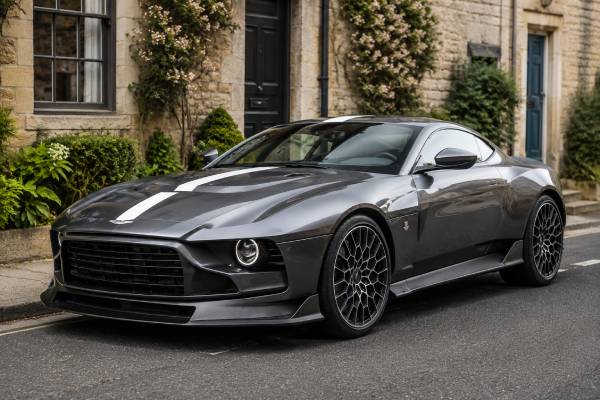
Aston Martin Valour is a 110-car celebration of the company’s 110th anniversary, built around a combination that had never appeared in a series-production Aston Martin: the 5.2-liter twin-turbocharged V12 paired with a bespoke six-speed manual transmission. Its official 715 PS output converts to approximately 705 bhp, matching the assignment’s headline figure, while 753 Nm reaches the rear wheels through a mechanical limited-slip differential. Valour looks backward without being a continuation model. Its carbon-fiber body recalls the DBS V8, the RHAM/1 “Muncher,” and the twin-supercharged V8 Vantage era, but beneath it sits a modern bonded-aluminum structure, adaptive damping, carbon-ceramic brakes, and specially developed 21-inch Michelin tires. Production began in 2023 and deliveries extended into 2024. This article explains what differentiates Valour from related Aston Martin specials, provides verified technical data, and turns its unusual specification into practical guidance for driving, maintaining, inspecting, and buying one of these highly individualized Q by Aston Martin commissions.
Table of Contents
- An Anniversary Car with a Mechanical Purpose
- Valour Specifications and Technical Data
- The V12, Manual Gearbox, and Rear-Drive Character
- Carbon Body, Road Chassis, and Design Engineering
- Driving and Using Valour Properly
- Care, Service, Storage, and Wear Items
- Buying a Valour: Authenticity, Condition, and Value
An Anniversary Car with a Mechanical Purpose
Valour was created to celebrate Aston Martin’s history through driver involvement, not by reproducing an old model. Its defining idea is a modern twin-turbo V12 controlled by three pedals and a visible mechanical gear linkage.
Aston Martin revealed Valour in July 2023 and limited production to 110 examples, one for each year since Lionel Martin and Robert Bamford founded the company in 1913. Production was scheduled to start at Gaydon in the third quarter of 2023, with first deliveries in the fourth quarter. Company reporting later described customer deliveries as completed during 2024, so the assignment’s 2023–2024 span covers the full launch and delivery cycle rather than two ordinary model years.
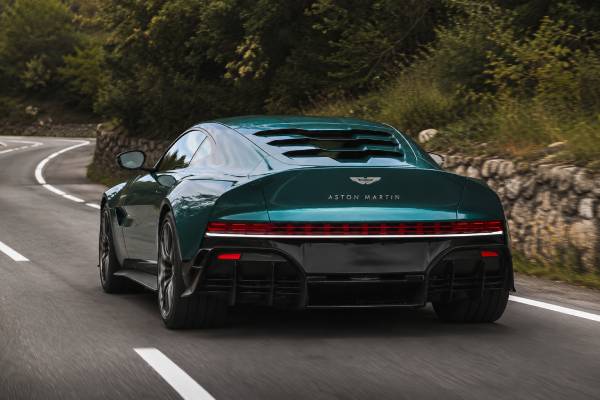
The body uses historic references selectively. The broad grille and round headlights recall 1970s Aston Martin muscle cars. The abrupt Kamm tail, rear graphic, and purposeful proportions point toward the RHAM/1 Le Mans car, nicknamed the Muncher. The overall stance evokes the original V8 Vantage, while the triple central exhaust is a modern first for the marque. None of those references changes Valour’s legal identity: it is a contemporary limited-edition road car with modern emissions, electronics, braking, and safety systems appropriate to its destination market.
Valour also occupies a distinct place among recent specials. Victor is a one-off built from One-77 and Vulcan hardware, with a naturally aspirated 7.3-liter V12. Valiant is the 38-car, Alonso-inspired, track-focused evolution of Valour with more power, active spool-valve dampers, magnesium wheels, and far more aggressive aero. Valour is the road-centered anniversary car: dramatic and demanding, but calibrated around flowing performance, tactile controls, and bespoke craftsmanship rather than maximum circuit load.
Every example was eligible for extensive Q by Aston Martin personalization. Customers could move beyond the standard palette into tinted exposed carbon, special liveries, painted wheels, unusual leather, tweed, cashmere, and other commissioned details. That freedom makes the original build specification part of the car’s identity. A generic equipment list cannot establish whether a feature is original, factory-approved, or added later.
Valour Specifications and Technical Data
Valour is a gasoline-only, front-engined, rear-wheel-drive coupe. The technical core is the AE31-family 5.2-liter twin-turbo V12, a bespoke six-speed manual gearbox, and a mechanical limited-slip differential, supported by adaptive suspension and standard carbon-ceramic brakes.
Aston Martin did not publish every dimension or performance metric in the launch material. The tables therefore avoid inferred acceleration, curb weight, and rear-disc figures that cannot be tied confidently to every production car. Verified, version-specific information is more useful than a full-looking table assembled from related models.
| Specification | Value | Notes |
|---|---|---|
| Engine family | AE31 | Aston Martin twin-turbo V12 family |
| Engine layout | Front-mounted 5.2-liter V12 | Longitudinal installation |
| Induction | Twin turbocharged | Gasoline engine |
| Maximum power | 715 PS (approximately 705 bhp or 526 kW) | Official manufacturer rating |
| Maximum torque | 753 Nm (555 lb-ft) | Official manufacturer rating |
| Second-gear torque delivery | Broad, nearly flat profile from about 1,800 to 7,000 rpm | Aston Martin description; not a maximum-torque plateau specification |
| Exhaust | Lightweight triple-exit center system | Model-specific layout |
| Specification | Value | Ownership relevance |
|---|---|---|
| Transmission | Bespoke 6-speed manual | Exposed shift mechanism |
| Drive type | Rear-wheel drive | No driven front axle |
| Differential | Mechanical limited-slip | Supports traction and driver-adjustable balance through throttle |
| Gear-knob choices | Machined aluminum, titanium, carbon fiber, or walnut | Original choice should match the build record |
| Pedal arrangement | Three pedals | Clutch operation is central to inspection |
| Component | Specification |
|---|---|
| Body panels | Full carbon fiber |
| Underlying structure | Bonded aluminum |
| Body rigidity claim | Aston Martin described Valour as having the stiffest body structure of its production sports cars at launch |
| Suspension tuning | Bespoke springs, dampers, and anti-roll bars |
| Damper type | Adaptive |
| Structural reinforcement | Front suspension brace, rear suspension tower brace, and fuel-tank support shear panel |
| Steering calibration | Valour-specific tuning intended to remove unwanted compliance |
| Specification | Value | Position or context |
|---|---|---|
| Brake type | Carbon-ceramic | Both axles |
| Front disc size | 410 × 38 mm | Front |
| Front caliper | Six-piston | Front |
| Rear disc size | 360 × 32 mm | Rear |
| Rear caliper | Four-piston | Rear |
| Brake mass benefit | 23 kg less unsprung mass | Compared with the referenced cast-iron system |
| Wheel diameter | 21 inches | Front and rear |
| Wheel design | Forged alloy, model-specific honeycomb pattern | Front and rear |
| Front tire | 275/35 ZR21 (103Y) XL | Michelin Pilot Sport S 5 Acoustic AML |
| Rear tire | 325/30 ZR21 (108Y) XL | Michelin Pilot Sport S 5 Acoustic AML |
| Specification | Value |
|---|---|
| Body style | Two-door, two-seat coupe |
| Production limit | 110 cars worldwide |
| Production start | Scheduled for third quarter 2023 |
| First deliveries | Scheduled for fourth quarter 2023 |
| Delivery completion | Reported by Aston Martin during 2024 |
| Exterior identifiers | Round LED headlamps, horseshoe bonnet vent, Kamm tail, vortex-generating rear screen panel, carbon diffuser, and triple center exhaust |
| Interior themes | Two-seat cockpit with carbon-fiber structural trim and highly individualized Q materials |
The official launch information specifies the front disc and caliper and the system-wide mass saving, but it does not publish a rear-disc dimension in the same release. A VIN-specific parts or workshop source should govern service decisions.
The V12, Manual Gearbox, and Rear-Drive Character
Valour’s performance is built around managing torque rather than chasing an automated acceleration number. The manual gearbox makes the driver choose when and how the twin-turbo V12’s 753 Nm reaches the rear tires.
The engine’s broad delivery is important. Aston Martin describes a virtually flat second-gear torque curve from about 1,800 rpm to the 7,000-rpm upper range. That does not mean maximum torque is mathematically constant throughout that span; it communicates that strong thrust is available without waiting for a narrow power band. On the road, the car can accelerate forcefully from a moderate engine speed, which reduces the need to chase the limiter but increases the importance of measured throttle input.
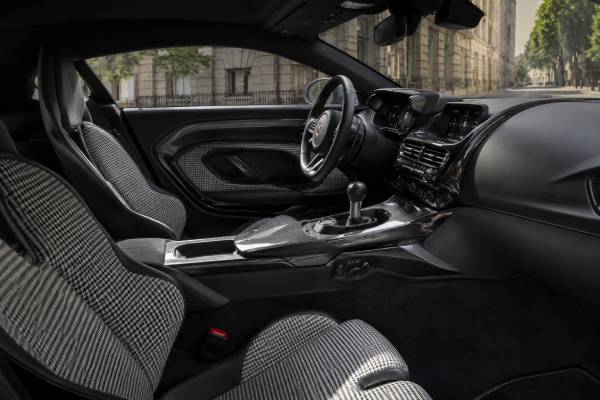
The bespoke six-speed manual is deliberately visible. Its exposed linkage turns gear selection into both a mechanical action and a design feature. The knob could be commissioned in several materials, but the gate and lever movement matter more than the finish. A healthy system should engage cleanly once warm, with consistent clutch take-up and no unexplained resistance, jumping out of gear, abnormal vibration, or change in feel under load.
A mechanical limited-slip differential supports traction without making the car feel front-driven or torque-vectored by an electric axle. Its behavior depends on tire condition, alignment, fluid, road surface, and throttle technique. The driver can use the V12’s broad torque to adjust the car’s attitude, but abrupt inputs can overwhelm the rear tires. Electronic stability systems provide a safety layer; they do not repeal the physics of a powerful manual coupe.
The lack of a published headline 0–60 mph time is not a deficiency in the car’s purpose. A launch figure would depend heavily on clutch technique, surface, tire temperature, and how much mechanical stress the operator is willing to impose. Valour is more revealing in a sequence of braking, downshifting, turn-in, throttle application, and acceleration than in a single automated start.
Driving technique should preserve the machinery. Use a progressive warm-up, avoid heavy boost at very low rpm in a high gear, match engine speed carefully on downshifts, and do not hold the car on the clutch at an incline. After hard use, give the powertrain and brakes a controlled reduction in load rather than stopping immediately after maximum demand. The owner documentation for the exact car remains the authority for temperature, mode, and operating procedures.
Carbon Body, Road Chassis, and Design Engineering
Valour combines a very stiff carbon-skinned structure with road-oriented adaptive damping. The objective is accurate response and a clear connection to the front axle without turning the car into the aero-dominated track special that Valiant later became.
The bonded-aluminum chassis is reinforced by a front suspension brace, a brace between the rear suspension towers, and a shear panel around the fuel-tank support structure. These additions increase structural control so the dampers, springs, and anti-roll bars can work from a more consistent base. Aston Martin also tuned the steering to remove unwanted compliance, sharpening the path between the driver’s hands and the front tires.
Adaptive dampers give Valour a broader operating range than a fixed-rate competition setup. Their calibration works with bespoke springs and anti-roll bars, but they are not the Multimatic ASV units fitted to Valiant. That distinction matters when ordering parts, diagnosing a mode-related complaint, or describing a car for sale. Related appearance does not make the suspension systems interchangeable.
The 21-inch forged wheels carry Michelin Pilot Sport S 5 tires with Aston Martin’s AML marking and acoustic treatment. Manufacturer-specific markings indicate a tire developed or approved for a particular application, not merely a standard tire in the same dimensions. Substituting an unmarked tire can alter steering, noise, breakaway, load response, and electronic-system calibration even if the sidewall size matches.
Carbon-ceramic brakes save 23 kg of unsprung mass compared with the referenced cast-iron system. Lower unsprung mass helps the suspension follow the road, while the ceramic discs provide thermal capacity for repeated high-speed use. They still require the correct pads, fluid, cleaning, bedding, and inspection method. Their remaining life cannot be determined from conventional iron-disc habits alone.
The exterior manages airflow without Valiant’s huge fixed wing and front wheel covers. A horseshoe-shaped bonnet vent extracts heat and relieves pressure. The rear screen carries vortex-generating elements, while the upswept tail, diffuser, and Kamm termination organize airflow at the back. The rear panel between the lights can be finished in exposed carbon or stainless steel, a useful identification detail that should correspond with the original commission.
Inside, carbon fiber forms the door cards, upper center console, transmission tunnel, fascia vents, and performance-seat shells. Customers could combine it with leather, wool, tweed, cashmere, and bespoke stitching. These materials need different cleaning methods. A universal interior chemical can stain natural fabric, polish matte carbon, or alter semi-aniline leather. The build sheet and material-care guidance should be kept with the car.
Driving and Using Valour Properly
Valour is usable as a road car, but its value and mechanical health benefit from planned, complete journeys rather than long inactivity interrupted by short starts. Regular, documented use can be healthier than static display when it follows the approved operating routine.
Before starting, inspect the floor for leaks, check tire pressures and sidewalls, look at carbon edges and wheel rims, and confirm that the battery support equipment has operated normally. Open the door with enough clearance to protect its lower edge, and adjust the seat so the clutch can be fully depressed without locking the knee. Good pedal reach is a safety requirement in a manual car with this performance.
The initial drive should build temperature gradually. Engine coolant alone does not prove that gearbox oil, differential oil, tires, and brakes are ready for full demand. Use moderate revs and loads, move through the gears without forcing the linkage, and test the brake pedal early in a safe location. After washing or damp storage, carbon-ceramic brakes may need careful drying in accordance with the instructions.
Route selection matters. Avoid severe ramp transitions, broken edges, loose gravel, standing water, and parking arrangements that expose the carbon nose or rear diffuser. The wide rear tires can collect debris and are sensitive to cold and water. A front-lift system, where fitted, is an aid rather than permission to ignore approach angle.
Valour can attend track events, but it should not be treated as a substitute for Valiant or a factory race car. Confirm noise limits, tire condition, brake condition, fluid state, alignment, and recovery arrangements. Begin with stability systems in their conservative settings and learn the surface before reducing assistance. A manual downshift made at the wrong road speed can create an engine over-rev or rear-axle disturbance that software may not fully prevent.
After a demanding drive, inspect the tires for cuts and pickup, the wheels for impact marks, the carbon body for debris strikes, and the brakes for visible concerns. Record warning messages and unusual sounds before cycling the ignition, because an intermittent symptom is easier to diagnose with context. Do not pressure-wash hot brakes or direct high pressure at vents, seals, or exposed carbon edges.
Practical use also includes transport. The carrier needs suitable ramp geometry, soft and correctly placed restraints, and written lifting or tie-down information. Photograph the car before loading and after unloading, including the splitter, sills, wheels, diffuser, roof, and interior. Closed transport protects the finish but does not replace proper battery, alarm, and movement planning.
Care, Service, Storage, and Wear Items
Valour requires factory-level documentation and specialist care, even though its basic front-engine layout is more conventional than Valkyrie’s. Low production volume, Q materials, carbon panels, a bespoke manual transmission, and model-specific tires make general Aston Martin familiarity insufficient for some work.
Service should follow the schedule assigned to the exact VIN and destination market. Use current factory information for oil, filters, coolant, brake fluid, gearbox lubricant, differential lubricant, spark plugs, drive belts, fasteners, diagnostics, and software. The shared AE31 engine family does not justify borrowing procedures or parts from another model without confirmation.
Storage priorities are stable temperature, controlled humidity, clean power for the approved conditioner, ventilation, security, and enough space to inspect the whole car. Tires should be kept at the prescribed storage pressure and protected from sunlight, chemicals, and prolonged loading that causes flat spotting. Follow Aston Martin guidance for extended storage rather than periodically starting the engine for a few minutes.
The manual driveline deserves trend-based observation. Record clutch take-up point, pedal feel, shift effort cold and warm, driveline noises, and any fluid loss. A gradual change can be easier and less costly to address than a failed clutch or damaged synchronizer. Avoid resting a hand on the lever or a foot on the clutch pedal during normal driving.
For the brake system, retain measurements and photographs from each inspection. Carbon-ceramic disc condition is judged by the manufacturer’s criteria, not only thickness or surface color. Replace pads with approved material and keep wheel cleaners, tire dressing, and lubricants away from friction surfaces. Brake-fluid intervals may need adjustment after high-temperature use.
Tires should match the approved size, load, speed rating, AML marking, and axle position. Record manufacture dates, punctures, repairs, heat cycles where relevant, and periods of storage. A low-mileage tire can still be unsuitable because of age, cracking, deformation, contamination, or repeated heat exposure.
Carbon panels need inspection under good lighting, especially the lower nose, wheel arches, doors, sills, rear corners, diffuser, and mounting edges. Paint-protection film can reduce chips but may conceal lifting clearcoat, impact marks, or prior repair. Any repair should have a documented scope, materials, cure process, finish specification, and factory or recognized specialist involvement.
The Q interior should be cleaned according to each material. Vacuum natural fabrics gently, test products in an inconspicuous area, and avoid saturating seams or backing. Keep a record of any re-dyeing, replaced trim, repaired weave, or removed personalization. On a 110-car series, a seemingly minor interior change can affect authenticity.
Maintain an ownership file containing invoices, diagnostic reports, software records, campaign confirmations, Q specification, delivery photographs, tire and battery dates, transport reports, and all keys, chargers, covers, books, tools, and accessories. This file protects the next service decision and eventually supports resale.
Buying a Valour: Authenticity, Condition, and Value
Buy the individual Valour, not just the model name. The best example is the one with an unbroken factory specification, documented care, correct market status, and a configuration that fits the intended driver.
Begin by matching the VIN and sale documents to the original Q commission. Review paint codes, exposed-carbon areas and tint, wheel finish, rear-panel material, interior hides and fabrics, stitching, gear-knob material, seat specification, badges, accessories, and delivery set. A feature can be beautiful and professionally installed yet still be non-original; the sales description should say so plainly.
Confirm the car’s dates. A 2023 build first registered or delivered in 2024 is normal for this program and should not be mislabeled as a mechanically revised 2024 model without evidence. Check destination-market emissions equipment, lighting, glazing, tires, software, labels, and registration history, especially after importation.
The technical inspection should be performed by Aston Martin or a specialist accepted for Valour. It should include:
- complete diagnostic scan, software state, campaigns, battery condition, and stored warnings;
- engine behavior from cold to full operating temperature, cooling, turbocharger system, fluids, and leaks;
- clutch wear indicators where available, pedal hydraulics, linkage condition, all six gears, reverse, differential, and driveline vibration;
- adaptive-damper operation, steering, suspension joints, alignment, structural braces, and underbody impacts;
- carbon-ceramic discs and pads, brake fluid, wheel integrity, tire specification, dates, and puncture history;
- carbon panels, bonded structure, paint, protective film, glass, seals, lights, exhaust, and lower aero surfaces;
- cabin materials, seat adjustment, controls, air conditioning, keys, books, tools, charger, cover, and commissioned accessories.
A low odometer is not enough. A car can deteriorate through poor battery care, old tires, damp storage, repeated short starts, or undocumented cosmetic work. Conversely, a higher-mileage example with proper servicing, regular temperature cycles, and transparent records can be the stronger purchase.
Market value depends on rarity, specification, condition, provenance, taxes, geography, and buyer confidence. Anniversary significance and the V12-manual combination support collectability, but the most elaborate Q treatment is not automatically the most liquid. Some buyers prize visible carbon and historic liveries; others prefer restrained colors and broadly usable interiors. Pay for documented quality rather than adjectives.
Before purchase, arrange agreed-value insurance and confirm storage, transport, driver eligibility, territorial coverage, track exclusions, recovery, and repair authorization. Identify the servicing dealer and likely parts lead times. A purchase price that consumes the entire ownership budget leaves no room for tires, transport, corrective work, or preservation.
Valour rewards an owner who wants a powerful modern Aston Martin to feel intentionally mechanical. Its historical references create the atmosphere, but the lasting substance is the interaction among a 715 PS V12, six-speed manual, mechanical differential, stiff structure, adaptive road chassis, and bespoke cockpit. Keeping those elements original, healthy, and documented is the clearest route to both enjoyment and long-term value.
References
- Valour | Retro-Inspired Limited Edition Manual Car | Aston Martin 2026
- Valour Brochure | Aston Martin 2026
- Valour: A spectacular celebration of 110 years of history 2023
- Aston Martin bring high-performance and ultra-luxury to Pebble Beach with unveil of new sports car and thrilling VR technology 2023
- Aston Martin Luxury Car Servicing | Aston Martin 2026
Disclaimer
This article provides general ownership information and does not replace the current workshop, operating, legal, or safety instructions for a specific car. Equipment, specifications, maintenance, software, and compliance requirements can differ by VIN, Q commission, market, and build date; verify all decisions with Aston Martin documentation for the individual Valour. A social share through Facebook, X/Twitter, or a marque-focused group helps support this work.