
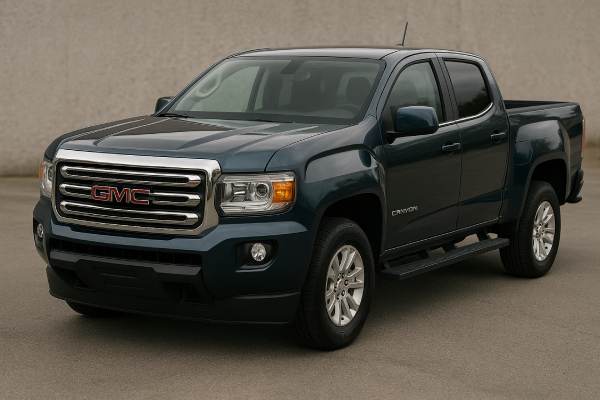
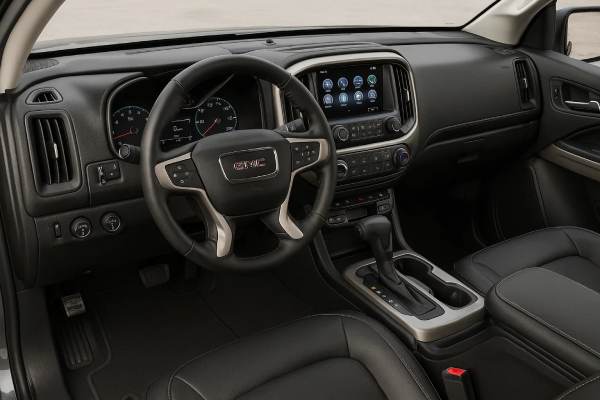
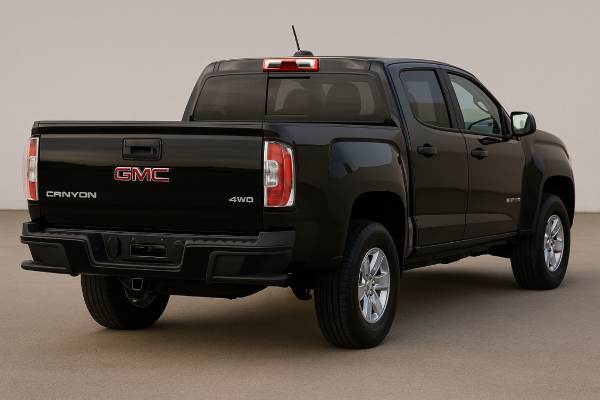
The 2016–2020 GMC Canyon 4WD with the 2.8 litre LWN Duramax diesel is a niche truck with a very specific mission. It combines full-size pickup torque and towing muscle with the footprint of a midsize, plus the all-weather traction of a selectable four wheel drive system. The diesel’s 369 lb-ft of torque, strong low range gearing, and integrated exhaust brake make it comfortable pulling campers, boats, or work trailers without feeling overstressed. At the same time, the Canyon’s cabin and ride quality are closer to a crossover than an old-school work truck, which helps if it doubles as a daily commuter.
Owning one, though, means understanding modern diesel emissions hardware, timing belt service, and the extra fluids that come with 4WD. This guide walks through specs, performance, reliability patterns, maintenance planning, and how the Canyon 4WD diesel compares to rivals so you can decide if it fits your use case and budget.
Owner Snapshot
- Strong 2.8L Duramax torque and 4WD low range support towing up to about 7,700 lb with good control.
- Real-world mixed economy in the low-20s mpg (around 10–11 L/100 km) is achievable if you drive gently and tow moderately.
- Diesel emissions parts (DPF, SCR/DEF, NOx sensors) and 4WD hardware can be expensive if neglected or abused.
- Plan on engine oil services roughly every 7,500 miles (12,000 km) or 12 months for light duty, sooner for heavy towing.
What’s inside
- Canyon 4WD Duramax in Detail
- Engine Specs and 4WD Hardware
- 4WD Trims, Features and Safety
- Reliability, Issues and Fixes
- Service Schedule and Buying Advice
- Driving Impressions and Off-Road Use
- GMC Canyon 4WD Versus Competitors
- Back to top
Canyon 4WD Duramax in Detail
The GMC Canyon diesel 4WD sits at the top of the GMT31XX midsize pickup range for torque and towing. It uses the LWN 2.8L Duramax four cylinder turbo diesel, shared with the Chevrolet Colorado, but wrapped in GMC’s slightly more upscale cabin and trim choices. From 2016 through 2020, the diesel was offered mainly in higher trims and paired exclusively with a six speed automatic and part time four wheel drive.
Compared with a gas V6 Canyon, the diesel 4WD aims at owners who tow frequently, drive long highway distances, or work at altitude. The key advantage is torque delivery: maximum torque arrives around 2,000 rpm, so the truck can hold higher gears on grades and respond with less downshifting. The integrated exhaust brake, standard on Duramax trucks, adds engine braking when descending hills with a load, reducing brake wear and driver fatigue.
The 4WD system uses a two speed transfer case with 2Hi, Auto, 4Hi, and 4Lo modes (availability of Auto varies by trim). In practice, 2Hi is for dry pavement, Auto or 4Hi for slippery surfaces, and 4Lo for slow off-road work, steep boat ramps, or backing heavy trailers. A 3.42:1 rear axle and four wheel disc brakes with GM’s Duralife rotors are standard with the diesel, balancing towing performance with highway rpm and fuel economy.
Body styles for diesel 4WD models are predominantly crew cab with either a short or long bed; extended cabs are less common but exist in earlier years. Payload depends on cab, bed and options, but is typically around 1,500 lb, while gross combined weight ratings let you tow a camper or car trailer within limits without overloading the chassis.
From an ownership viewpoint, the 4WD diesel Canyon works best for:
- Drivers in snowbelt or rural regions who need year round traction.
- Owners who tow regularly in the 3,000–7,000 lb range.
- Buyers who are comfortable with diesel-specific maintenance such as DEF refills and emissions component care.
If most of your driving is short urban trips with little towing, the diesel and 4WD hardware may never play to their strengths and can add cost without much benefit.
Engine Specs and 4WD Hardware
This section focuses on a typical configuration: 2017–2019 GMC Canyon crew cab 4WD short box with the 2.8L Duramax LWN diesel and 6L50 automatic. Exact figures can vary slightly by year and body style, but the fundamentals are consistent across 2016–2020.
Engine and Performance
| Item | Specification |
|---|---|
| Engine code | LWN Duramax turbo diesel I4 |
| Layout and valvetrain | Inline 4, DOHC, 4 valves per cylinder |
| Displacement | 2.8 L (2,776 cc) |
| Bore × stroke | 94.0 × 100.0 mm (3.70 × 3.94 in) |
| Induction | Variable geometry turbocharger with intercooler |
| Fuel system | High pressure common rail direct injection |
| Compression ratio | ~16.5:1 |
| Max power | 181 hp (135 kW) @ 3,400 rpm |
| Max torque | 500 Nm (369 lb-ft) @ 2,000 rpm |
| Emissions hardware | Cooled EGR, diesel oxidation catalyst, DPF, SCR with DEF dosing |
| Timing drive | Belt-driven valvetrain (interference engine) |
| Recommended fuel | Ultra low sulphur diesel (ULSD) only |
Efficiency
| Measure | Value (4WD, 2.8L diesel, crew cab) |
|---|---|
| EPA city | ~20 mpg US (11.8 L/100 km) |
| EPA highway | ~28 mpg US (8.4 L/100 km) |
| EPA combined | ~23 mpg US (10.2 L/100 km) |
| Real world mixed | Many owners report 21–25 mpg US (9.4–11.2 L/100 km) depending on load and speed |
At steady highway speeds around 70–75 mph (110–120 km/h), expect consumption near the EPA highway figure when unloaded, with a noticeable increase (often 20–40%) when towing a tall trailer.
Transmission and Driveline
| Item | Specification |
|---|---|
| Transmission | Hydra-Matic 6L50, 6 speed automatic with manual mode |
| 1st / 2nd / 3rd | 4.06 / 2.37 / 1.55 : 1 |
| 4th / 5th / 6th | 1.16 / 0.85 / 0.67 : 1 |
| Reverse | 3.20 : 1 |
| Rear axle ratio | Typically 3.42 : 1 with diesel/4WD |
| Drive type | Part time 4WD with two speed transfer case (2Hi / Auto / 4Hi / 4Lo, depending on trim) |
| Rear differential | Open or automatic locking (G80) depending on tow/off road packages |
| Transfer case low range | Approx. 2.7–2.8 : 1 reduction (varies slightly by year) |
| Trailer brake controller | Integrated factory controller standard with Duramax diesel |
The 6L50’s spread of ratios, combined with the 3.42 axle, keeps the diesel in its torque band without revving excessively on the highway, while 4Lo gives enough crawl for slow off road work or tight manoeuvring with a heavy trailer.
Chassis and Dimensions
Figures below are for a typical crew cab short box 4WD diesel.
| Item | Specification |
|---|---|
| Frame | Fully boxed high strength steel ladder frame |
| Front suspension | Independent coil over shock with aluminium control arms |
| Rear suspension | Solid axle with leaf springs |
| Steering | Electric power rack and pinion |
| Front brakes | Ventilated discs, Duralife rotors |
| Rear brakes | Solid discs, Duralife rotors |
| Wheel / tyre examples | 17–18 in alloys with 255/65R17 or 265/60R18 all terrain or all season tyres |
| Length | ~5,395 mm (212.5 in) |
| Width (excl. mirrors) | ~1,885 mm (74.2 in) |
| Height | ~1,785–1,795 mm (≈70.5 in) |
| Wheelbase | ~3,258 mm (128.3 in) |
| Ground clearance | ~214 mm (8.4 in) |
| Approach / departure | Roughly 17–18° / 22° depending on air dam and tyre size |
| Turning circle | ≈12.6 m (41 ft) |
| Curb weight | ~2,130 kg (4,700 lb) crew cab 4WD diesel |
| GVWR | ≈2,810 kg (6,200 lb) |
| Fuel tank | ~79 L (21 US gal) |
Performance and Capability
| Measure | Approximate value |
|---|---|
| 0–60 mph (0–97 km/h) | ~9–10 s for 4WD diesel crew cab, unloaded |
| Top speed | ~106–110 mph (170–177 km/h), limited |
| Max conventional tow rating | Up to ~7,700 lb (≈3,493 kg) properly equipped |
| Typical diesel 4WD tow rating | ≈7,600–7,700 lb for crew cab with tow package |
| Payload | Roughly 1,450–1,550 lb (660–700 kg) depending on trim |
| Roof load | Commonly around 150 lb (≈70 kg) – check specific rack system |
Braking distance and exact acceleration numbers vary strongly with tyres and load; the diesel’s exhaust brake helps maintain control on long descents, especially with a trailer attached.
Fluids and Service Capacities (Approximate)
Always confirm capacities and specifications in the manual or service information for your exact VIN.
| System | Spec / Type | Approx. capacity |
|---|---|---|
| Engine oil | Dexos2-approved 5W-30 diesel oil | ~5.7 L (6.0 US qt) with filter |
| Engine coolant | Dex-Cool OAT coolant, 50/50 mix with demineralised water | ~10–11 L (10.5–11.5 US qt) |
| Automatic transmission | Dexron-VI ATF | ≈9–10 L (total dry), less for drain and fill |
| Transfer case | Dexron-VI or equivalent ATF | ~1–1.5 L |
| Front / rear diff | 75W-90 GL-5 synthetic gear oil (rear may require limited slip additive if equipped) | ~1–1.3 L front, ~2–2.5 L rear |
| Power steering | Electric assist (no separate fluid) | — |
| Brake fluid | DOT 3/4 brake fluid | Fill to reservoir spec |
| A/C refrigerant | R-134a (exact charge printed under hood) | Model-specific |
Key torque examples (reference only; always verify):
- Wheel lug nuts: roughly 140 ft-lb (about 190 Nm).
Electrical
| Item | Specification |
|---|---|
| Alternator | Around 150 A 12V alternator on most diesel 4WD trucks |
| 12V battery | Group 48/H6 AGM or flooded; typically 70–80 Ah, around 700–760 CCA depending on factory fitment |
Safety and Driver Assistance (Spec Snapshot)
- Front, side, and head curtain airbags.
- Electronic stability control, traction control, ABS with four wheel discs.
- Rear view camera standard in later model years.
- Optional lane departure warning and forward collision alert on many 2016–2020 trucks.
Detailed ratings and ADAS evolution are covered in the next section.
4WD Trims, Features and Safety
Trims and Option Structure for Diesel 4WD
In North America, the 2.8L diesel with 4WD was typically bundled with mid- to high-level Canyon trims:
- SLE 4WD Duramax – “working” spec with cloth seats, touchscreen infotainment, and available All Terrain appearance/off road package.
- SLT 4WD Duramax – leather, more comfort features, and most towing/off road options available.
- Denali 4WD Duramax – top trim with chrome exterior, upgraded interior materials, and extensive tech and comfort equipment.
Mechanical differences between these trims are modest. All diesel 4WD models share the same engine, transmission, and basic driveline hardware. Key mechanical options to watch for:
- Off road / All Terrain package – usually adds specific wheel/tyre combos, hill descent control, and sometimes slightly different shocks.
- G80 locking rear differential – valuable for slippery boat ramps, mud, snow and off road; often tied to towing or off road packages.
- Trailering package – hitch, 7-pin connector, integrated trailer brake controller, and in some cases higher cooling capacity.
- Wheel and tyre packages – 17 inch vs 18 inch wheels, all terrain vs all season tyres; these meaningfully affect ride and off road bite.
Quick visual identifiers:
- Diesel trucks carry “Duramax” badges and a functional hood scoop on some trims.
- 4WD models will have a rotary 2WD/4WD/4Lo selector on the dash and a front differential visible behind the front axle line.
- Denali adds specific grille, chrome mirror caps and unique leather upholstery.
Year-to-year, the diesel power rating stays constant, but infotainment and safety tech improve: later years gain updated Intellilink/Infotainment systems, Apple CarPlay/Android Auto, and broader availability of driver assistance features.
Crash Test Ratings
The Canyon shares its structure with the Chevrolet Colorado, and most crash testing has been performed on Colorado crew cabs, with results applying to the GMC twin.
IIHS (Insurance Institute for Highway Safety)
For 2016–2020 crew cab models:
- Moderate overlap front: Good.
- Small overlap front, driver side: Good for reinforced later structures.
- Small overlap front, passenger side: Marginal overall, primarily due to footwell intrusion.
- Side impact: Good in original and updated tests.
- Roof strength and head restraints: Good.
- Headlights: Generally Poor ratings; beam performance is a weakness.
- LATCH child-seat anchors: Marginal ease of use.
These results place the Canyon/Colorado crew cab among the safer midsize pickups of its generation in structural terms, but headlight performance and passenger-side small overlap results lag behind some newer rivals.
NHTSA (U.S. National Highway Traffic Safety Administration)
NHTSA testing for a representative model year gives:
- Overall rating: 4 out of 5 stars.
- Frontal crash: 4 stars.
- Side crash: 5 stars.
- Rollover: 4 stars.
These ratings apply across many powertrain/drive combinations; the diesel 4WD configuration shares the underlying safety structure.
Safety Systems and ADAS
Standard safety on diesel 4WD models includes:
- Multiple airbags (front, side, curtain).
- Stability control, traction control and ABS.
- Tyre pressure monitoring.
- Rear view camera (standard by the end of the run).
Available driver assist systems, generally optional on SLE/SLT and often standard on Denali, include:
- Forward collision alert – visual/audible warning only; no automatic braking on this generation.
- Lane departure warning – alerts if you drift across lane markings.
- Rear park assist – proximity sensors in the rear bumper.
Important for service: many ADAS sensors and camera systems require calibration after windshield replacement, front bumper repairs, or suspension/ride height changes. If you lift or level the truck, you may need recalibration to maintain proper warning performance.
Child seat provisions are adequate but not exceptional; the rear outboard seats in crew cab models have LATCH anchors, but access and routing can be a bit tight, contributing to the Marginal rating for ease of use.
Reliability, Issues and Fixes
Overall, the 2.8L Duramax Canyon 4WD has a decent reliability record when maintained properly, but it is more complex than a gas engine truck. Issues cluster around emissions hardware, some driveline components, and typical midsize-truck wear items.
To keep this practical, we’ll group problems by system, frequency and severity.
Engine and Emissions
1. DPF / regeneration behaviour
- Prevalence: Common complaints in city-heavy or short-trip use.
- Symptoms: Frequent active regens, rising fuel consumption, fan running often, occasional warning messages about exhaust filter full.
- Likely cause: The DPF needs heat and sustained higher load to burn soot. Short trips interrupt regen cycles.
- Remedy: Follow manual guidance to allow complete regens (often 20–30 minutes of steady driving), reduce prolonged idling, and avoid repeated short hops. In severe cases, a forced regen or DPF cleaning/replacement may be necessary.
2. DEF (SCR) system components
- Prevalence: Occasional to moderately common as trucks age.
- Symptoms: “Service Exhaust Fluid System” messages, countdown to reduced speed, DEF level warnings that do not match the tank, or check engine lights for NOx sensor faults.
- Causes: Failed DEF tank heaters, level sensors, or NOx sensors; contaminated or aged DEF.
- Remedy: Correct diagnosis with scan tool; replace failed sensors or heaters. Use fresh, sealed DEF meeting ISO standards and avoid topping off with fluid stored for long periods in high heat.
3. Timing belt and related hardware
- Prevalence: Preventive rather than failure-driven, but extremely important.
- Risks: The LWN is an interference engine; a broken belt can cause heavy internal damage (bent valves, possible piston/guide damage).
- Recommended action: Treat the manufacturer belt interval as a hard upper limit; many diesel specialists suggest replacing belt, tensioner, idlers and often the water pump earlier if the truck tows frequently or operates in harsh climates.
Fuel and Cooling Systems
- Fuel system: High pressure common rail components are generally robust when fed clean ULSD and quality fuel filters at the specified intervals. Poor fuel or skipped filter changes can lead to injector issues or pump wear; repairs are expensive.
- Cooling system: Watch for hose aging, seepage at plastic fittings, and radiator core corrosion in salted-road regions. Early attention prevents overheating under load.
Driveline and 4WD Hardware
1. “Service 4WD” messages
- Prevalence: Occasional, more visible on trucks that see frequent mode changes or harsh environments.
- Symptoms: Warning in instrument cluster, 4WD mode not engaging or stuck, sometimes stored codes for transfer case control module or range actuator.
- Causes: Faulty position sensors, actuator motor problems, wiring corrosion, or control module issues.
- Remedy: Scan for fault codes; many cases resolve with actuator or module replacement rather than internal transfer case failure. Keeping connectors clean and avoiding underwater immersion helps.
2. Differential / driveline noises
- Prevalence: Occasional, usually at higher mileages or with heavy towing.
- Symptoms: Whine or growl that changes with speed or load, clunks during shifts or throttle changes.
- Causes: Worn pinion bearings or gear wear (often linked to low or contaminated fluid), worn U-joints or driveshaft slip-yoke issues.
- Remedy: Address early; fluid changes with the proper 75W-90 synthetic, plus U-joint inspection, can extend life. Severe gear wear may require rebuild or axle swap.
Chassis, Body and Corrosion
- Front suspension wear: Control arm bushings and ball joints can wear sooner on trucks used frequently on rough roads or with heavy front accessories.
- Rear leaf springs: Occasional squeaks or corrosion at shackles and hangers; inspect leaf packs and mounts for rust, especially in salt-belt regions.
- Frame and underbody: Some owners and inspectors note surface rust on frames and brake lines, particularly where winter road salt is common. Regular underbody washes and periodic rust protection can slow this significantly.
Recalls, TSBs and Extended Coverage
There have been various Technical Service Bulletins (TSBs) and limited recalls affecting Colorado/Canyon diesels and 4WD systems, including:
- New model features/updates for the Duramax diesel introduction, including guidance on exhaust brake and DPF operation.
- Calibration updates for engine and transmission control modules to smooth shifting, refine regen behaviour, or reduce false diagnostic codes.
- Field fixes for DEF or emissions-related sensors.
Always run the VIN through the official GM or NHTSA recall check and ask a dealer to print a warranty/recall history to confirm completion.
Pre-Purchase Checks
For a used Canyon 4WD diesel, insist on:
- Full service history showing on-time oil, fuel filter and coolant changes.
- Evidence of proper DEF use and no “delete” modifications if you want to stay emissions-legal.
- Confirmation that any outstanding recalls and relevant TSBs have been addressed.
- Inspection of 4WD operation in all modes (2Hi, Auto if fitted, 4Hi, 4Lo).
- Underbody and frame inspection for rust, especially at crossmembers, spring mounts and brake lines.
A pre-purchase inspection by a diesel-savvy shop familiar with modern pickup emissions systems is highly recommended.
Service Schedule and Buying Advice
A diesel 4WD Canyon rewards attentive maintenance. Skipping intervals can turn a relatively efficient tow rig into an expensive repair project. The outline below is generic; always adjust based on your manual, duty cycle and climate.
Core Maintenance Intervals (Typical)
At least every 7,500 miles (12,000 km) or 12 months
- Engine oil and filter (Dexos2 diesel oil).
- General inspection of belts, hoses, tyres, brakes, and visible leaks.
- Check DEF level and top up with fresh fluid if needed.
Every 15,000 miles (24,000 km)
- Engine air filter inspection (replace sooner if dusty/off road use).
- Cabin air filter replacement.
- Tyre rotation and alignment check.
Every 30,000–45,000 miles (48,000–72,000 km)
- Fuel filter replacement – critical on high pressure diesel systems.
- Brake fluid flush (at least every 3 years regardless of mileage).
- Transfer case fluid change, especially if 4WD is used heavily or off road.
- Front and rear differential fluid change under heavy towing or severe service; otherwise by time (for example, every 5 years).
Coolant and long-term fluids
- Engine coolant (Dex-Cool) – usually around 5 years/100,000 miles (160,000 km) for first service, then shorter intervals; follow the manual.
- Transmission fluid – many diesel owners choose 50,000–60,000 mile (80,000–100,000 km) change intervals for the 6L50 when towing.
- Power steering is electric (no fluid to change).
Timing belt and related parts
- Treat the timing belt as a major service item. Manufacturer guidance is often in the 150,000-mile (240,000-km) range, but many owners and diesel specialists opt for earlier replacement (for example, 100,000–120,000 miles / 160,000–190,000 km) especially if towing or operating in extreme climates.
- Replace belt, tensioner, idlers and usually the water pump and cam/crank seals as a kit.
12V battery and electrical
- Test the battery annually after 4–5 years of age; replace pre-emptively if cranking weakens, as voltage stability is important for diesel starting and control modules.
- Inspect ground connections and main power cables for corrosion, particularly in salted regions.
Buyer’s Guide: What to Look For
When shopping for a 2016–2020 Canyon 4WD Duramax:
- Favour highway/towing usage over short-trip city history. Long commutes and trailer towing are actually easier on the DPF than constant short hops.
- Check for 4WD function and warning lights. Cycle all modes and ensure there are no “Service 4WD” or emissions warnings.
- Inspect underbody and frame. Look at frame rails, crossmembers, spring mounts, and brake/fuel lines for rust scale or repairs.
- Look for maintenance evidence. Oil changes, fuel filters and DEF system attention in the records are good signs.
- Ask about timing belt status. If the truck is high mileage and still on the original belt, factor a belt service into your purchase budget.
Recommended configurations for most buyers include:
- Crew cab 4WD diesel with tow package, G80 rear locker, and All Terrain or similar package if you regularly drive in snow or on unpaved roads.
- SLE or SLT trims for a good mix of equipment and value; Denali if you want maximum comfort and appearance upgrades.
If you rarely tow above 4,000 lb and mainly drive in town, the gas V6 4WD may be cheaper to buy and simpler to maintain.
Driving Impressions and Off-Road Use
Ride, Handling and Noise
On the road, the Canyon diesel 4WD feels more like a solid crossover than a bare-bones work truck. The fully boxed frame and independent front suspension give it good directional stability, and the electric steering is light at parking speeds yet reasonably controlled on the highway.
Unloaded, the rear leaf springs can feel a bit firm on patchy pavement, especially with higher-load-rating tyres, but the truck settles nicely with some cargo or tongue weight on the hitch. Cabin noise is well managed; the diesel clatter is noticeable at idle when cold but fades into a muted hum at cruise. Owners stepping out of older diesels or half-tons often remark that it is impressively quiet for a small oil burner.
Powertrain Character
The 2.8L Duramax is all about torque rather than quick sprints. Throttle response is deliberate off the line, then strong and steady once the turbo spools. Around town, it prefers short-shifting into higher gears and riding its low-rpm torque wave. On the highway, it will often hold 6th at modest grades with only a small increase in boost and fuel.
The 6L50’s shifting logic in diesel applications is biased toward efficiency. In normal mode it upshifts early; in tow/haul it holds gears longer, downshifts sooner on grades, and works with the exhaust brake to manage speed downhill. Using manual mode on long descents with a trailer gives very good control with minimal brake application.
Turbo lag is present but predictable; once you’re familiar with the engine, it’s easy to time throttle applications to merge or pass effectively. Passing performance from 50–80 mph (80–130 km/h) is adequate rather than brisk, so leaving extra room when overtaking with a heavy trailer is wise.
Real-World Economy and Range
In light-duty commuting with some highway, many drivers see low-20s mpg (around 10–11 L/100 km) combined. Gentle highway cruising at 65–70 mph (105–115 km/h) can push into the mid-20s mpg, particularly without a load and with stock tyres.
Towing a mid-size camper or car hauler in the 5,000–7,000 lb (2,270–3,175 kg) range often cuts economy into the low- to mid-teens mpg, depending on trailer height and speed. Plan on a 25–40% consumption increase when towing at highway speeds. The roughly 21-gallon tank gives comfortable range for moderate towing stints without constant stops.
Cold weather, frequent short trips, and city driving can all reduce economy further, especially if the truck is repeatedly initiating but not completing DPF regens.
4WD Traction and Off-Road Behaviour
The Canyon’s 4WD system is aimed more at all-weather and light to moderate off road use than hardcore rock crawling, but it is capable when used within its limits:
- 4Hi is excellent for snow covered roads, wet grass, and unpaved tracks.
- Auto 4WD (on trucks so equipped) transparently engages the front axle when the rear slips, useful in mixed conditions.
- 4Lo combined with the diesel’s torque is ideal for steep boat ramps, technical low-speed trails, or carefully manoeuvring heavy trailers.
Ground clearance is reasonable but the front air dam and step bars (if fitted) are the limiting factors. Many owners who off road regularly trim or remove the air dam for better approach angle. All Terrain or similar trims with more aggressive tyres markedly improve loose surface traction.
On moderate trails, articulation is acceptable and the G80 locker (where fitted) helps maintain momentum when a rear wheel unweights. The truck’s width and length do mean you need to choose lines carefully in tight woods or rock gardens; this is a long-bed midsize, not a short-wheelbase crawler.
Load and Towing Manners
Under load, the Canyon diesel 4WD feels composed when properly set up:
- The integrated trailer brake controller makes it easy to dial in trailer braking.
- The exhaust brake and tow/haul programming reduce downshift hunting and brake fade on grades.
- With weight distribution hitches correctly adjusted, highway stability is good even near the upper end of its rating.
As with any midsize truck, hitting max tow ratings leaves little headroom for payload (passengers, cargo, tongue weight), so careful weight planning is essential.
GMC Canyon 4WD Versus Competitors
The diesel 4WD Canyon competes primarily with:
- Toyota Tacoma V6 4×4
- Chevrolet Colorado 2.8L Duramax 4×4 (its mechanical twin)
- Nissan Frontier V6 4×4 (previous generation)
- Honda Ridgeline AWD (gas, unibody)
Where the Canyon 4WD Diesel Shines
- Towing capacity: With up to roughly 7,700 lb of tow rating, the diesel Canyon out-tows most Tacoma, Frontier and Ridgeline configurations of the era.
- Highway economy under load: The combination of low-rpm torque and six speed gearing typically delivers better fuel economy than comparable gas V6 trucks when towing or driving long distances.
- Cab refinement: Ride and noise levels are competitive, and GMC’s interior finishes (especially in SLT and Denali) feel more upscale than some rivals’ work-oriented cabins.
- Size and manoeuvrability: It’s easier to park and thread through tight streets or trails than a full-size Sierra or Silverado, yet still offers meaningful bed space and towing ability.
Trade-Offs Against Rivals
- Emissions complexity vs gas V6: The Tacoma, Frontier and Ridgeline use gasoline engines without DPF/DEF systems, reducing some long-term emissions-related risk, though at the cost of torque and economy under load.
- Passenger-side crash performance: While overall crashworthiness is good, the Canyon’s passenger side small-overlap rating trails some newer designs and the Ridgeline’s strong safety record.
- Off road hardware: Serious off roaders may prefer the Tacoma TRD Off Road/Pro for its dedicated suspension tuning, available manual transmission, and aftermarket support, though the Canyon All Terrain-style trims narrow the gap.
- Total cost of ownership: Diesel fuel, DEF, potentially higher parts cost, and timing belt service may offset some fuel savings depending on annual mileage. For low-mileage users, a gas 4WD may be cheaper to own long term.
In short, the Canyon 4WD Duramax is a strong choice if you frequently tow or haul and want a mid-sizer that behaves like a “scaled-down heavy duty” truck. If your use is light commuting with occasional light towing, a gas V6 4WD or a unibody competitor may provide similar utility with simpler upkeep.
References
- 2.8L Duramax Turbo-Diesel Engine | GM Powered Solutions 2020 (Technical Overview)
- Gas Mileage of 2017 GMC Canyon 2017 (Fuel Economy Data)
- 2018 GMC Canyon Crew cab pickup 2018 (Safety Rating)
- Vehicle Detail Search – 2018 GMC CANYON 2018 (Crash Test and Recall Database)
- 2016 Colorado/Canyon Duramax Diesel New Model Features 2015 (TSB / Technical Description)
Disclaimer
This article is for informational purposes only and is not a substitute for professional diagnosis, repair, or official service literature. Specifications, torque values, capacities, and maintenance intervals can vary by VIN, model year, market, and installed equipment. Always confirm procedures and figures against your vehicle’s owner’s manual, factory service information, and the guidance of a qualified technician.
If you found this guide useful, consider sharing it with other owners or shoppers on social platforms such as Facebook or X/Twitter to help support high quality, independent technical content.