
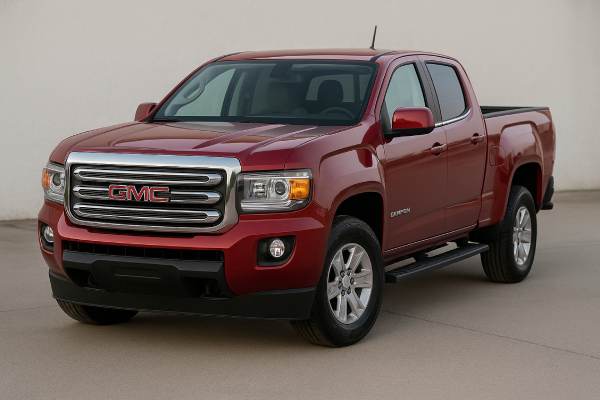
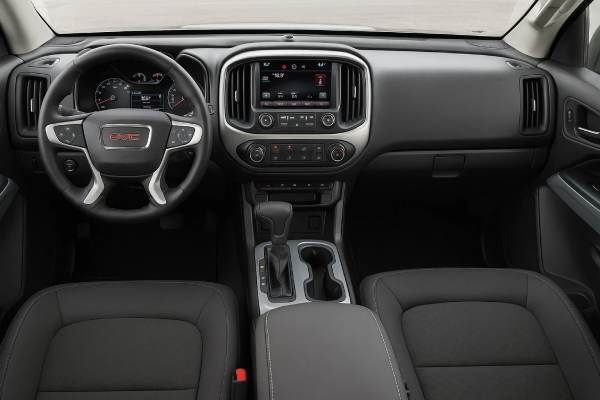
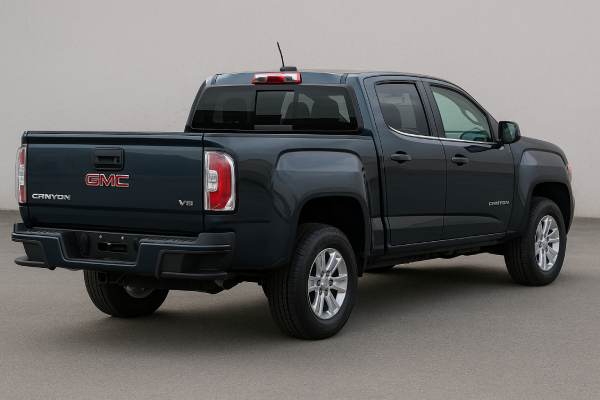
The 2015–2016 GMC Canyon 4WD with the LFX 3.6 litre V6 sits in a sweet spot between full size capability and daily usability. It offers a strong 305 hp gasoline engine, a modern cabin, and genuine 4 wheel drive hardware in a package that still fits in city parking spaces. For many owners, it feels like a “right-sized” truck: powerful enough to tow a mid size camper or boat, yet civilised enough for commuting and family duties.
This guide focuses on the 4WD V6 configuration on the GMT31XX platform and walks through what matters most if you own one now or are shopping used. You will find hard specs, towing and payload data, known issues, realistic maintenance intervals, and how it compares with rival mid size trucks. The goal is not just to list numbers, but to help you decide whether this Canyon matches your needs and how to keep it in good shape for the long term.
Quick Specs and Notes
- 3.6 litre LFX V6 with 305 hp and 269 lb ft provides strong mid size truck performance with smooth revs.
- Robust 4WD system with low range and available off road packages makes this Canyon genuinely capable on rough terrain.
- Payload around 680 kg (about 1,500 lb) and towing up to 3,175 kg (7,000 lb) when properly equipped cover most recreational uses.
- Watch for timing chain wear and carbon build up if oil changes and fuel quality have been neglected.
- Plan engine oil and filter changes every 8,000–10,000 km (5,000–6,000 miles) or 12 months for long engine life.
Section overview
- GMC Canyon 3.6 4WD profile
- LFX V6 4WD specs breakdown
- Canyon 4WD trims and safety tech
- Long term reliability and issues
- Service schedule and buying tips
- On road and off road performance
- Canyon 4WD versus rivals
GMC Canyon 3.6 4WD profile
The GMT31XX generation Canyon reintroduced GMC to the modern mid size truck segment, and the 3.6 litre LFX V6 with 4 wheel drive is its core powertrain. Compared with the older GMT355 trucks, this platform brings a stiffer frame, more refined suspension tuning, and a cabin that feels closer to a contemporary crossover than an old work truck.
Under the hood, the LFX V6 is a direct injected, all aluminium engine shared with several GM passenger cars. In the Canyon it is tuned to around 305 hp and 269 lb ft, delivered through a 6 speed automatic and a selectable 4WD system. That combination gives brisk acceleration for the class and enough torque for moderate towing, while staying smoother and quieter than many competing V6 and inline four engines.
Body styles for 4WD V6 models in 2015–2016 include extended cab and crew cab, with short or long load beds depending on configuration. Most buyers gravitate to the crew cab short box, which balances interior space with a manageable overall length. Inside, the Canyon offers supportive seats, a simple but clear instrument cluster, and GMC’s IntelliLink infotainment with available navigation and smartphone integration for these years.
On the road, the Canyon 4WD feels more agile than a full size truck, especially in tight parking or narrow streets. The steering is light but accurate, and the suspension tuning favours comfort over aggressive off road articulation. With the All Terrain package, you get firmer shocks, specific tyres and visual cues that make it better suited to gravel and light trails.
This V6 4WD configuration targets buyers who want one truck to do everything: commute, haul DIY loads, take family trips, and tow a trailer a few weekends a year. It is not the cheapest Canyon to run, and it is not a rock crawler out of the box, but it covers a broad range of everyday truck tasks with more refinement than many rivals of the same era.
LFX V6 4WD specs breakdown
Engine and performance
| Item | Specification |
|---|---|
| Engine code | LFX |
| Type | 60° V6, aluminium block and heads |
| Valvetrain | DOHC, 4 valves per cylinder, variable valve timing |
| Displacement | 3.6 l (3,564 cc) |
| Bore × stroke | ~94.0 × 85.6 mm (3.70 × 3.37 in) |
| Induction | Naturally aspirated |
| Fuel system | Direct injection, unleaded petrol |
| Compression ratio | ~11.5 : 1 |
| Max power | 305 hp (about 227 kW) @ ~6,800 rpm |
| Max torque | 269 lb ft (about 365 Nm) @ ~4,000 rpm |
| Recommended fuel | Regular unleaded (check manual for market) |
| Emissions standard | U.S. Tier 2 / LEV-equivalent for 2015–2016 |
Typical fuel consumption for a 4WD automatic V6 Canyon is around:
| Driving cycle | L/100 km (approx) | mpg US (approx) |
|---|---|---|
| City | 13.8 | 17 |
| Highway | 9.8 | 24 |
| Combined | 11.8 | 20 |
Real world numbers depend heavily on tyre choice, load, speed and how often you use 4WD.
Transmission and driveline
| Item | Specification |
|---|---|
| Transmission | 6 speed automatic (6L50) |
| Gear ratios | 1st 4.06, 2nd 2.37, 3rd 1.55, 4th 1.16, 5th 0.85, 6th 0.67, Rev 3.20 (typical) |
| Final drive ratio | Commonly 3.42:1 with V6 4WD (check RPO code) |
| Drive type | Part time 4WD with 2HI, Auto, 4HI, 4LO (depending on trim) |
| Transfer case | Electronically controlled, dash mounted selector |
| Front differential | Independent front suspension with open differential |
| Rear differential | Solid axle, available automatic locking rear differential on some trims |
In normal use you will spend most of your time in 2HI or Auto. 4HI is for low traction surfaces at speed, and 4LO is reserved for low speed off road or steep manoeuvres where you need maximum torque and control.
Chassis and dimensions
Figures below refer mainly to a 2015–2016 Canyon V6 4WD crew cab short box; extended cab and long box models vary slightly.
| Item | Specification |
|---|---|
| Platform | GMT31XX, body on frame mid size pickup |
| Front suspension | Independent, coil over shock with control arms |
| Rear suspension | Leaf springs with solid axle |
| Steering | Electric power assisted rack and pinion |
| Front brakes | Ventilated disc (diameter around 300+ mm) |
| Rear brakes | Disc (varies slightly by trim) |
| Length | ~5,400 mm (about 212.5 in) |
| Width (without mirrors) | ~1,880–1,890 mm (about 74–75 in) |
| Height | ~1,780 mm (about 70 in) |
| Wheelbase (crew cab short box) | ~3,260 mm (about 128.5 in) |
| Ground clearance | Roughly 211 mm (about 8.3 in) |
| Turning circle (kerb to kerb) | Around 12.5 m (about 41 ft) |
| Curb weight (typical V6 4WD crew cab) | ~2,000 kg (about 4,400 lb) |
| GVWR | Around 2,630–2,860 kg (about 5,800–6,300 lb) |
| Fuel tank | About 80 l (roughly 21 US gal) |
Performance and capability
| Item | Specification (approximate) |
|---|---|
| 0–100 km/h (0–62 mph) | About 7.5–8.0 s (unladen, V6 4WD) |
| Top speed | Electronically limited, typically around 175–180 km/h (about 108–112 mph) |
| Braking 100–0 km/h | Mid size truck typical distances; tyre choice is critical |
| Maximum towing capacity | Up to about 3,175 kg (7,000 lb) when properly equipped with V6 4WD and tow package |
| Typical payload | Around 680 kg (1,500 lb), varies by configuration |
Always confirm the specific tow and payload ratings on the door jamb label, as they differ with cab, bed length and options.
Fluids and service capacities (typical)
Values below are approximate and may vary; always cross check by VIN.
| System | Specification | Capacity (approx.) |
|---|---|---|
| Engine oil | Dexos1 approved 5W-30 fully or semi synthetic | ~5.7 l (about 6.0 US qt) with filter |
| Engine coolant | Long life organic acid technology (Dex-Cool type), 50:50 mix | ~12 l (about 12.7 US qt) total system |
| Automatic transmission | Dexron VI automatic transmission fluid | ~8–9 l (8–9.5 US qt) for full refill, less for drain and fill |
| Front differential | Synthetic gear oil, often 75W-90 | ~1.1–1.2 l |
| Rear differential | Synthetic gear oil, 75W-90 (locking diff may require specific friction mods) | ~1.5–2.0 l |
| Transfer case | Dedicated transfer case fluid per manual | Typically under 2.0 l |
| A/C refrigerant | R-134a | Approx. 600–700 g (21–25 oz), check label |
| A/C compressor oil | PAG oil type specified by system | Typically a few hundred mL |
Key torque values (verify per manual):
- Wheel nuts: about 190 Nm (140 lb ft).
- Engine oil drain plug: around 25–30 Nm (18–22 lb ft).
- Spark plugs: roughly 25 Nm (18 lb ft) on aluminium heads, with anti seize only if specified.
Electrical equipment
| Item | Specification (typical) |
|---|---|
| Alternator | Around 150 A output on V6 4WD models |
| 12 V battery | ~70 Ah, 600–700 CCA, group size varies by market |
| Spark plugs | Long life iridium, change interval near 100,000 miles (160,000 km) |
| Plug gap | Around 0.7–0.8 mm (0.028–0.032 in), always check label |
Canyon 4WD trims and safety tech
For 2015–2016, the V6 4WD Canyon is commonly found in SLE and SLT trims, with a base trim available in some markets and the All Terrain package layered on top of mid grade models.
Trim and equipment overview (V6 4WD)
- Base / “Canyon” trim (where offered with 4WD and V6) focuses on work use: cloth seats, simpler audio system, manual climate control, and steel wheels. It still includes power windows, air conditioning and basic convenience features, but fewer luxury touches.
- SLE is the volume trim. Expect alloy wheels, upgraded cloth or optional heated front seats, leather wrapped steering wheel, colour driver information display and the IntelliLink touch screen with Bluetooth audio and smartphone integration.
- SLT sits at the top with leather appointed seats, more chrome exterior trim, larger wheels, and additional comfort options such as power driver seat and automatic climate control in some markets.
- All Terrain package (on SLE) adds off road tuned suspension, specific wheels and tyres, body coloured grille and bumpers, and often unique seat trim. It gives a small but real advantage on rough roads and improves approach and departure angles slightly.
Important mechanical and functional differences by trim or package can include:
- Availability of the automatic locking rear differential.
- Standard vs optional towing package (hitch, wiring, and often a heavier duty cooling package).
- Tyre types: highway terrain on comfort oriented trims vs more aggressive all terrain tyres on All Terrain models.
When inspecting a truck, look for build stickers (RPO codes) in the glovebox or door area to confirm axle ratio, locking differential and tow package rather than relying solely on badges.
Safety ratings
The Canyon crew cab performs solidly in crash testing for its era. U.S. safety data for these years shows:
- Strong overall crash test performance in frontal and side impacts for the crew cab.
- Rollover ratings typical for a mid size pickup, reflecting a higher centre of gravity than an SUV or car.
- No advanced front crash prevention systems on 2015–2016 models, which means no automatic emergency braking and no forward collision mitigation beyond warnings.
Extended cab models may have slightly different ratings because of their shorter cab and different rear seating; check the specific configuration if you routinely carry passengers in the back.
Airbags and structural protection
The Canyon offers:
- Front airbags for driver and passenger.
- Side impact airbags for the front seats.
- Full length side curtain airbags that cover both rows in crew cab models.
- A high strength steel safety cage with crumple zones designed to absorb impact energy.
Child seat installation uses LATCH (ISOFIX equivalent) anchors in the rear seats of the crew cab, with clear top tether anchor points. The extended cab’s small rear seats are less convenient for child seats and should be evaluated in person if that is a priority.
Driver assistance and electronic safety systems
Standard systems include:
- Electronic stability control and traction control.
- Anti lock brakes with electronic brake force distribution.
- Hill start assist and (on some trucks) hill descent control.
- Rear view camera, which is especially useful with the tall tailgate.
An optional Driver Alert Package on higher trims adds:
- Forward collision alert (warning only).
- Lane departure warning (audible warning, no active steering).
These systems rely on sensors that may need calibration after windscreen replacement, front end collision repair or suspension modifications, so budget for proper calibration if you buy a truck that has had bodywork or lift kits installed.
Long term reliability and issues
Overall, the 2015–2016 Canyon 3.6 4WD has a reasonable reliability record, especially when serviced on time and used within its design limits. However, like any modern truck, certain patterns appear as mileage and age increase.
Engine and fuel system
Common or notable items:
- Timing chain wear (occasional to common on neglected trucks).
- Symptoms: timing rattle on cold start, check engine light with camshaft correlation codes, rough running.
- Likely cause: infrequent oil changes, low oil level, or prolonged use of poor quality oil leading to accelerated chain and tensioner wear.
- Remedy: timing chain set replacement and inspection of tensioners and guides; software updates where applicable.
- Direct injection intake valve deposits (long term issue).
- Symptoms: loss of low rpm torque, hesitation, misfires, rough idle.
- Cause: oil vapour and blow by deposits on intake valves (no port fuel to wash them).
- Remedy: intake valve cleaning (walnut blasting or equivalent) and crankcase ventilation checks; use of high quality fuel and oil reduces build up but does not fully prevent it.
- High pressure fuel pump noise or seepage (occasional).
A ticking sound from the pump area is somewhat normal, but fuel smell or visible leak demands immediate attention. Replacement of seals or the pump assembly is the usual repair.
Transmission and driveline
The 6 speed automatic in these Canyons is generally durable if fluid is kept fresh.
Typical concerns:
- Harsh shifts, flare or shudder under light throttle (occasional).
- Often improved with a proper fluid exchange using the correct Dexron VI fluid and adaptation reset.
- In stubborn cases, a valve body rework or torque converter replacement may be required.
- 4WD engagement faults (occasional).
- Symptoms: “Service 4WD” messages, failure to shift in or out of 4HI/4LO.
- Causes: transfer case actuator issues, wiring harness faults, or internal transfer case problems.
- Remedy: scan for codes, verify actuator operation and wiring before condemning mechanical components.
- Front axle or differential noise (mainly on high mileage or heavily used trucks).
Regular fluid changes and avoiding heavy shock loads (hard jumps, severe off road abuse) help prolong life.
Chassis, brakes and suspension
- Front suspension wear: lower control arm bushings, ball joints and sway bar links can wear, especially on trucks driven on rough roads or fitted with heavier wheels and tyres. Clunks or looseness over bumps are an early warning.
- Steering system: some owners report intermittent power steering loss or warning messages. Depending on the specific case, remedies range from software updates to replacement of steering components covered by recalls or service bulletins.
- Brake components: factory pads and rotors are adequate but may wear faster on trucks used for heavy towing or urban stop and go driving. Upgraded pads and, where appropriate, rotors can improve both life and feel.
Body, electronics and corrosion
- Water leaks at third brake light or rear window: moisture in the cabin, wet headliner or rear seats can result from aging seals. Resealing or replacing the affected components is the fix.
- Infotainment glitches: occasional freezing, incorrect Bluetooth pairing or random reboots occur on some trucks. Software updates and, in rare cases, replacement of the head unit resolve most issues.
- Corrosion: the GMT31XX trucks typically resist rust better than some older GM frames, but check:
- Frame rails around suspension mounts.
- Rear wheel arches and under the plastic bedliner or spray in liner edges.
- Cab mounts and seam areas, especially in salt heavy regions.
Recalls, service bulletins and extended coverage
For these model years, recall and technical bulletin themes include:
- Steering assist concerns on certain trucks.
- Airbag or seat belt related fixes.
- Software updates for powertrain or safety modules.
For any prospective or current truck, you should:
- Run the VIN through the official recall database in your region.
- Ask the dealer to print a service history showing completed recall and campaign work.
- Verify that any safety critical actions have been performed.
Service schedule and buying tips
A good maintenance plan turns a capable Canyon into a long term asset rather than a short term tool. The factory schedule uses oil life monitoring, but many owners choose simple distance and time rules for clarity.
Practical maintenance schedule (approximate)
Assuming mixed use and some towing or city driving, a cautious but realistic plan is:
- Engine oil and filter: every 8,000–10,000 km (5,000–6,000 miles) or 12 months, whichever comes first. Use Dexos1 approved 5W-30.
- Engine air filter: inspect every 20,000 km (12,000 miles), replace around 40,000–50,000 km (25,000–30,000 miles) or sooner in dusty conditions.
- Cabin air filter: replace every 24–30 months or 30,000–40,000 km.
- Spark plugs: around 160,000 km (100,000 miles), sooner if misfire or rough running appears.
- Coolant: replace every 5 years or 160,000 km (100,000 miles), then check condition more frequently on older trucks.
- Automatic transmission fluid: drain and fill or full exchange every 60,000–80,000 km (37,000–50,000 miles) for trucks that tow or see hard use; up to 100,000 km (62,000 miles) for light use.
- Differentials and transfer case: change fluids every 60,000 km (37,000 miles) if you tow, go off road or use 4WD often; otherwise every 80,000–100,000 km is reasonable.
- Brake fluid: flush every 2–3 years regardless of mileage.
- Brake pads and rotors: inspect at least annually, more often if towing or mountain driving.
- Serpentine belts and hoses: inspect yearly; likely replacement around 100,000–150,000 km (62,000–93,000 miles) or if cracking and glaze appear.
- Alignment and tyre rotation: rotate tyres every 10,000–12,000 km (6,000–7,500 miles) and check alignment if you notice uneven wear or pulling.
- 12 V battery: load test annually after 4–5 years; plan for replacement around the 5–7 year mark depending on climate.
Fluid capacities and torque values given earlier help you decide whether a job is within your DIY comfort zone or better left to a professional.
Buyer’s checklist for a used Canyon 3.6 4WD
When inspecting a truck:
- Paperwork and history
- Look for regular oil changes with correct spec oil.
- Confirm any major repairs (timing chain, transmission, steering) and who performed them.
- Check that all recall work is completed.
- Engine and drivetrain
- Cold start: listen for timing chain rattle or unusual top end noise.
- Warm up drive: feel for shift flare, harsh engagement, or shudder between gears.
- Test 4WD: cycle between 2HI, Auto, 4HI and 4LO (if fitted) on appropriate surfaces and ensure no error messages.
- Chassis and brakes
- Drive over rough surfaces to detect suspension clunks.
- Perform several moderate to hard stops to feel for vibration, pull, or pedal softness.
- Inspect tyres for uneven wear that could signal suspension or alignment issues.
- Body and interior
- Check for water marks or damp carpets, especially under rear seats and around the rear window.
- Inspect frame rails, bed underside and cab mounts for corrosion.
- Verify proper operation of all electric items, including windows, central locking, infotainment and backup camera.
Which years and trims to target
- For this specific engine and platform, 2016 models sometimes benefit from small software refinements and minor option changes compared with early 2015 builds.
- SLE with Driver Alert Package and tow package is a good all rounder: enough comfort, full capability, and commonly available.
- SLT appeals if you want leather and more premium touches, but they often command higher prices.
- Trucks with evidence of fluid changes, especially transmission and driveline fluids, are preferable to lower mileage trucks with no history.
On road and off road performance
The LFX 3.6 V6 gives the Canyon a more car like powertrain character than some rival mid size trucks that still used older engines in this era. It revs freely, sounds smooth, and delivers its strongest pull above about 3,000 rpm, although there is enough torque at lower revs for normal driving.
Powertrain behaviour
Throttle response is generally crisp in normal and tow modes. The 6 speed automatic tends to prioritise fuel economy, upshifting early at light throttle. Under moderate acceleration it drops one or two gears quickly, and full throttle kickdown is decisive though sometimes accompanied by a brief delay as it chooses the right ratio.
In day to day use:
- Around town the combination feels relaxed, with shifts that are mostly smooth and predictable.
- On the highway, downshifts for passing from 80–120 km/h (50–75 mph) are prompt, giving confident overtaking.
- When towing or in hilly terrain, using tow/haul mode helps hold lower gears longer and improves shift logic.
Ride, handling and noise
The GMT31XX platform gives the Canyon a composed ride, especially compared to older leaf sprung small trucks. Empty, you will still feel it is a pickup: the rear axle can hop over sharp bumps and expansion joints. With some load in the bed or when towing, the ride often improves.
- Straight line stability is good at motorway speeds.
- Steering is light and accurate but not especially communicative; this is typical for electric power steering on trucks.
- Body roll is controlled, and the Canyon feels narrower and more manoeuvrable than a full size pickup on twisty roads.
Cabin noise levels are competitive for a mid size truck of this period:
- Engine noise is noticeable during hard acceleration but settles down at cruise.
- Wind noise is moderate; tyre noise depends heavily on tyre choice. Highway terrain tyres are quieter than aggressive all terrain options.
Real world fuel efficiency
Expect something like:
- City driving: 14–16 l/100 km (15–17 mpg US) depending on traffic and how gently you drive.
- Highway at 100–120 km/h (60–75 mph): 10–11.5 l/100 km (20–23 mpg US) in calm conditions on stock tyres.
- Mixed use: around 12–13 l/100 km (18–20 mpg US) for many owners.
Using 4WD frequently, fitting heavier off road tyres, adding lift kits or roof racks, and towing will all raise consumption significantly.
Off road and winter performance
With 4WD engaged, decent ground clearance and an available locking rear differential, the Canyon 4WD is capable on:
- Gravel and forestry tracks.
- Muddy access roads.
- Snow covered roads and moderate winter conditions.
Off road limits are mainly:
- Approach and departure angles compared with purpose built off road trucks.
- The relatively long wheelbase and overhangs on some cab and bed combinations.
- Tyres: highway terrain tyres are the first limiting factor off road.
On steep loose climbs or when crossing ruts, using 4LO and letting the truck crawl at idle often works better than heavy throttle. Stability control can sometimes be a bit intrusive in rough conditions, but turning it off where allowed helps maintain momentum.
Towing and load behaviour
When towing a mid size camper or boat within the rated 3,175 kg (7,000 lb) limit, the Canyon feels composed if the trailer is correctly set up:
- The V6 holds speed on moderate grades but may drop to lower gears on steeper hills.
- Transmission temperatures stay reasonable if the cooling system is healthy and tow/haul mode is used.
- Braking remains stable with a properly adjusted trailer brake controller.
Fuel consumption while towing can rise into the 17–22 l/100 km range (11–14 mpg US) depending on trailer size, shape and speed.
Canyon 4WD versus rivals
In the 2015–2016 mid size truck field, the GMC Canyon 4WD 3.6 competes mainly with its Chevrolet Colorado twin, the Toyota Tacoma, Nissan Frontier and, in some markets, the Honda Ridgeline.
Against Chevrolet Colorado
The Colorado is essentially the same truck under the skin, sharing platform, engines and most hardware:
- The Canyon is positioned slightly more upmarket, with different styling and interior trims that many buyers perceive as more premium.
- Equipment and pricing are similar when you match trims; your choice will often come down to styling, dealer network and specific used examples available.
Against Toyota Tacoma
The Tacoma of this era has a reputation for ruggedness and strong resale value. Compared with it, the Canyon:
- Feels more refined and car like on the road, with a quieter cabin and more modern interior.
- Offers a smoother and more powerful V6 in most scenarios.
- May not match the Tacoma’s track record in very harsh off road duty or extreme high mileage fleets, but it also tends to cost less on the used market for similar age and equipment.
For buyers who prioritise comfort and highway performance, the Canyon often comes out ahead. For those who focus purely on long term abuse tolerance, the Tacoma still has an edge.
Against Nissan Frontier
The Frontier of this generation is an older design:
- Its V6 is durable but less refined and less efficient than the Canyon’s LFX.
- Interior design and safety tech feel dated compared with the Canyon’s more modern cabin and available driver alerts.
- The Frontier can be very good value used, but most shoppers who test drive both trucks notice a clear difference in ride, noise and interior quality.
Against Honda Ridgeline
The first generation Ridgeline of this period is a different proposition: a unibody truck with independent suspension all round.
- The Ridgeline rides and handles more like an SUV and offers clever features like the in bed trunk.
- However, the Canyon’s body on frame construction, low range transfer case and higher tow ratings make it better suited for traditional truck tasks, heavy towing and more demanding off road work.
Who the Canyon 3.6 4WD best suits
This configuration works especially well for:
- Drivers who want a mid size truck that feels mature and refined on the road.
- Owners who tow moderate loads or haul gear regularly but do not need the bulk of a full size pickup.
- Buyers who value a strong V6, modern safety structure and the availability of 4WD and off road packages.
With solid maintenance, the 2015–2016 GMC Canyon 4WD 3.6 can be a long lasting, versatile truck that bridges the gap between work tool and daily driver more gracefully than many competitors.
References
- Manuals and Guides | Vehicle Support | GMC 2024 (Owner’s Manual portal)
- Fuel Economy of the 2015 GMC Canyon 2015 (EPA Fuel Economy Data)
- 2015 GMC Canyon Crew cab pickup 2015 (Safety Rating)
- Safety Issues & Recalls 2024 (Recall Database)
Disclaimer
This article is for informational purposes only and is not a substitute for professional diagnosis, repair or safety inspection. Specifications, fluid types and capacities, torque values, service intervals and procedures can vary by VIN, model year, market and equipment level. Always confirm details against the official owner’s manual, service manual and technical information for your specific vehicle, and follow applicable safety and legal requirements.
If you found this guide helpful, consider sharing it with other GMC Canyon owners or shoppers on social media or enthusiast forums. It is a simple way to support our work and help more people make informed decisions about their trucks.