
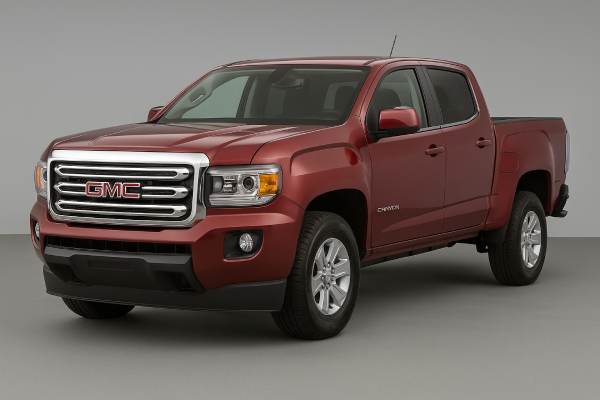
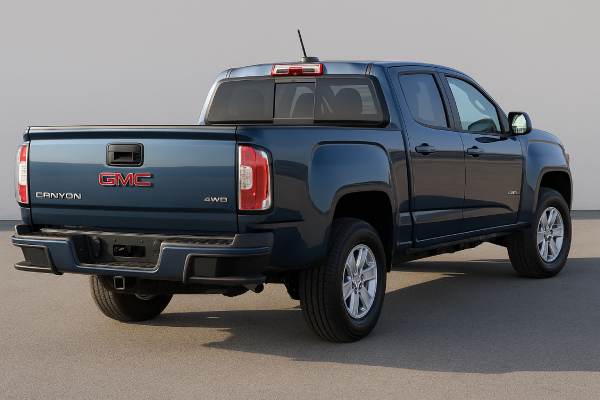
The 2017–2020 GMC Canyon 4WD with the LGZ 3.6 litre V6 sits in a useful sweet spot between compact SUVs and full-size trucks. It offers real body-on-frame toughness, a modern 8-speed automatic, and a high-revving gasoline V6 that still tows up to around 7,000+ lb when properly equipped. Compared with older compact pickups, this generation feels much closer to a half-ton in refinement, with better crash protection, quieter cabins, and much more capable four-wheel drive systems.
For owners, the big questions are how the LGZ/8L45/4WD package holds up over time, what it actually costs to maintain, and how it compares with diesel Canyons or rival Tacoma and Ranger. This guide walks through the engineering details, real-world performance, common issues, and maintenance strategy so you can decide if a 2017–2020 Canyon 4WD V6 fits your use case—whether that is daily commuting, light overlanding, or towing a camper on weekends.
Key Takeaways
- Strong 308 hp 3.6L LGZ V6 and 8-speed automatic deliver brisk acceleration and confident highway passing for a midsize truck.
- 4WD with low range and available off-road suspension gives real dirt and snow capability while still riding comfortably on pavement.
- EPA combined economy is around 19 mpg (about 12.4 L/100 km) for 4WD V6 models; real-world numbers vary with load and gearing.
- Watch for 8-speed torque-converter shudder and occasional “Service 4WD” messages; both are usually addressable with updated fluid or technical fixes.
- Typical oil change interval is 5,000–7,500 miles (8,000–12,000 km) with 0W/5W-30 dexos-approved oil, roughly six quarts (5.7 L) capacity for the LGZ.
Guide contents
- GMC Canyon 4WD LGZ Overview
- 4WD LGZ Powertrain Specifications
- 4WD Trims, Equipment and Protection
- Dependability Concerns and Technical Fixes
- Ownership Maintenance and Purchase Tips
- On-Road and Off-Road Driving Feel
- Canyon 4WD V6 Versus Alternatives
- References
- Disclaimer
- Back to top
GMC Canyon 4WD LGZ Overview
The LGZ-equipped Canyon 4WD arrived for the 2017 model year, replacing the older LFX V6 with a more powerful and efficient 3.6 litre unit and pairing it to GM’s 8L45 8-speed automatic. Output jumped to 308 hp and 275 lb-ft, which made the V6 Canyon one of the quickest trucks in the midsize class at the time.
All LGZ 3.6 models in this generation use the GMT31XX body-on-frame platform shared with the Chevrolet Colorado. That means a boxed frame, independent front suspension, and a solid rear axle on leaf springs. 4WD trucks get an electronic two-speed transfer case with high and low range and, on many trims, an automatic “4WD Auto” mode that behaves like full-time all-wheel drive on changing surfaces.
In practical terms, the 4WD LGZ Canyon is sized to fit city parking while still hauling serious loads. Crew-cab short-box models are roughly 212 in (about 5.4 m) long and a bit over 74 in (1.88 m) wide, significantly smaller than a contemporary Sierra 1500, yet tow ratings up to about 7,000–7,700 lb are possible depending on axle ratio and configuration. This makes it attractive to owners towing small travel trailers, boats, or dual-axle utility trailers who do not want to move into a full-size platform.
Compared with the 2.8 Duramax diesel Canyon, the LGZ 4WD trades some low-rpm torque and fuel economy for lower purchase and maintenance cost, simpler emissions hardware, and better high-rpm performance. Against the 2.5L base engine, the V6 transforms the truck: acceleration, towing reserve, and highway merging all feel more relaxed, especially when fully loaded.
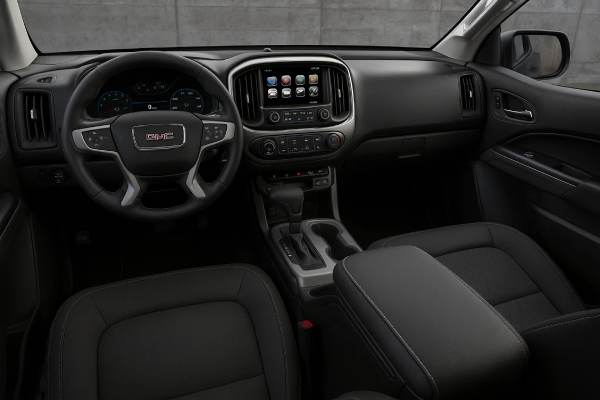
Inside, the Canyon presents more like a compact SUV than a traditional work truck, with car-like seating, touchscreen infotainment, and available active safety features. Noise levels are lower than earlier generations, and ride comfort is very acceptable for daily use, particularly on All Terrain and Denali trims with better interior materials. Overall, the 4WD LGZ Canyon is a versatile choice for drivers who need a genuinely capable pickup that still fits into normal urban life.
4WD LGZ Powertrain Specifications
Engine and Performance
The LGZ is part of a modern high-feature V6 family: an all-aluminium, direct-injected, 60-degree DOHC V6 with continuously variable valve timing on both cam banks.
| Item | Detail |
|---|---|
| Engine code | LGZ |
| Displacement | 3.6 L (3,649 cc) |
| Layout and valvetrain | 60° V6, DOHC, 24 valves (4 per cylinder) |
| Bore × stroke | ~94.0 × 85.6 mm |
| Compression ratio | ~11.5 : 1 |
| Induction | Naturally aspirated |
| Fuel system | Direct injection (DI) gasoline |
| Max power | 308 hp (approx. 230 kW) @ ~6,800 rpm |
| Max torque | 275 lb-ft (≈373 Nm) @ ~4,000 rpm |
| Timing drive | Chain-driven cams, variable cam phasing |
| Emission standard | U.S. LEV III / Tier 3–compliant in North America |
Factory fuel economy for a 4WD V6 crew cab is around 17 mpg city / 24 mpg highway / 19 mpg combined (about 13.8 / 9.8 / 12.4 L/100 km). Real-world results vary with tyre choice, lift kits, and towing; owners who drive gently on stock all-season tyres often report low-20s mpg (≈10–11 L/100 km) on steady highway runs, while lifted trucks on aggressive all-terrains can dip into the mid-teens.
Transmission and Driveline
All 2017–2020 Canyon V6 trucks use the 8L45 eight-speed automatic with a torque-converter lockup clutch and closely spaced ratios.
| Item | Detail |
|---|---|
| Transmission | 8L45 8-speed automatic (Hydramatic) |
| Typical gear ratios (1–8) | 4.62 / 3.04 / 2.07 / 1.66 / 1.26 / 1.00 / 0.85 / 0.66 (approx.) |
| Reverse | ~3.93 |
| Torque-converter features | Electronically controlled lock-up, tuned for smooth engagement |
| Drive type | Part-time 4×4 with 2HI, 4HI, 4LO and often Auto 4WD |
| Transfer case | Electric-shift, two-speed, magnesium case |
| Axle ratio (common) | Around 3.42:1 on many V6 4WD models |
| Differential options | Open rear on many trims, automatic locking rear on off-road/tow packages |
Chassis, Dimensions and Capacities
Figures below are typical for a 4WD crew-cab short-box Canyon V6; extended cabs and long boxes vary slightly.
| Item | Detail |
|---|---|
| Overall length | ≈212–213 in (≈5,390 mm) |
| Width (without mirrors) | ≈74–75 in (≈1,880 mm) |
| Height | ≈70 in (≈1,780 mm), trim-dependent |
| Wheelbase | ≈128.3 in (3,258 mm) |
| Ground clearance | ≈8.1–8.3 in (≈205 mm) |
| Turning circle | ≈41.3 ft (12.6 m) |
| Curb weight | ≈4,450–4,550 lb (≈2,020–2,065 kg) |
| GVWR | ≈5,800–6,000 lb (≈2,630–2,720 kg), trim-dependent |
| Fuel tank | ≈21 gal (≈79 L) |
| Towing (max, properly equipped) | Up to ≈7,000–7,700 lb (≈3,175–3,493 kg) |
| Payload (typical) | ≈1,400–1,500 lb (≈635–680 kg) |
| Bed length (short box) | ≈61.7 in (1,568 mm) inside |
Suspension is independent coil-over at the front and leaf-spring solid axle at the rear, with front and rear disc brakes. Most 4WD V6 models use 17–18 inch wheels with tyre sizes around 255/65R17 or 265/60R18, depending on trim.
Fluids, Electrical and Key Specs
| System | Spec (typical) | Notes |
|---|---|---|
| Engine oil | 5W-30 dexos1-approved, about 5.7 L / 6.0 qt | Use GM-approved oil to protect chain and warranty |
| Transmission fluid | DEXRON HP ATF, around 10–11 L dry fill | Service fill is lower; changed under severe service or shudder TSB |
| 4WD transfer case | GM-spec automatic transfer case fluid | Capacity depends on exact unit |
| Differentials | Typically 75W-90 synthetic gear oil | Locking/limited-slip versions may have extra requirements |
| Cooling system | Long-life OAT coolant, roughly 50/50 mix | Capacity varies with cab/heater options |
| Alternator | Around 150 A on many V6 trucks | Verify by RPO/build |
| 12 V battery | Group 48/47-type AGM or flooded, about 70+ Ah | Higher CCA batteries are common in cold climates |
Exact capacities and torque specs vary slightly by year and configuration, so they should always be confirmed by VIN in the official GMC service information.
4WD Trims, Equipment and Protection
Trim Levels and Mechanical Differences
For 2017–2020, the LGZ V6 4WD configuration was available across most Canyon trims: typically SL/SLT, SLE, All Terrain, and Denali in some years. Equipment content differs, but the core mechanical package—LGZ V6, 8L45 automatic, two-speed 4×4 system—is shared.
Key mechanical and functional distinctions by trim often include:
- Base/SLE-type trims
- Standard 4WD with low range and open differentials.
- 17 inch wheels with all-season tyres tuned for comfort and economy.
- Cloth interiors and fewer driver-assist features.
- All Terrain / Off-road-oriented trims
- Revised off-road suspension tuning with specific shocks and bump stops.
- All-terrain tyres and unique wheel designs.
- Skid plates, hill-descent control and off-road cosmetics on certain packages.
- Denali (with V6 4WD)
- Same basic driveline but more upscale interior, chrome exterior trims, and extra sound insulation.
- Advanced infotainment, premium audio, heated/ventilated seats and other comfort features.
Externally, trims can be distinguished by grille shape, use of chrome or body-colour bumpers, wheel style, and tailgate badging. Inside, seat materials, instrument cluster layout, and steering wheel design help identify the trim. The glovebox RPO label and VIN build sheet provide the most accurate rundown of engine, axle ratio, transfer case, and major options.
Safety Ratings
The Canyon shares safety performance with the Chevrolet Colorado crew cab of the same generation. Independent crash tests for those trucks show:
- Strong performance in moderate-overlap front, side, roof strength, and head restraints.
- Acceptable to good performance in small-overlap tests, depending on model year and side.
- Rollover resistance typical of midsize pickups, with ratings that reflect the higher centre of gravity.
Government testing in similar model years commonly yields an overall rating of four out of five stars, with particularly strong side-impact performance. As with most pickups, rollover risk and some frontal metrics keep it from achieving a full five-star rating.
Airbags, Child Seats and Passive Systems
All 2017–2020 Canyon 4WD V6 trucks include:
- Dual-stage front airbags (driver and passenger).
- Front side-impact airbags.
- Side curtain airbags spanning both front and rear seating rows.
- Three-point belts at every seating position.
- Lower anchors and tether anchors in the rear outboard positions, suitable for most child safety seats.
The structure uses high-strength steel in critical areas to manage energy in frontal and side impacts. Head restraints and seat frames are designed to reduce whiplash in rear-end collisions.
Driver Assistance and Active Safety
Depending on year and trim, the Canyon 4WD may offer:
- Electronic stability control and traction control (standard).
- Hill-start assist and hill-descent control on 4WD and off-road-oriented packages.
- Rear-view camera (standard from around 2018 onward).
- Optional forward collision alert and lane departure warning on higher trims.
Later model years and top trims package more of these features as standard, while earlier or lower trims may require specific option packages. Because the systems rely on cameras and sensors, any windshield replacement, front-end repairs, or suspension modifications should be followed by proper calibration and alignment checks to maintain performance.
Dependability Concerns and Technical Fixes
Overall, the 2017–2020 Canyon 4WD LGZ has a good reliability reputation, especially when maintained on time with the correct fluids. Still, a few recurring issues and technical bulletins are worth knowing about.
Engine and Cooling
The LGZ is generally robust when serviced correctly. It uses timing chains rather than belts, so there is no scheduled belt replacement, but chain health still depends on clean, appropriate oil and sensible change intervals.
Potential issues:
- Carbon build-up (DI-specific)
Direct-injected engines can slowly accumulate deposits on intake valves, particularly with lots of short-trip driving. Symptoms include rough idle, misfires or reduced power at higher mileage. Periodic intake cleaning by walnut-shell blasting is the standard repair. - Oil consumption
Some engines may consume a small amount of oil between services, particularly if driven hard or frequently towed with. Regular level checks are important; running low can accelerate chain and cam phaser wear. - Coolant leaks and hose ageing
Over time, hoses, plastic junctions and radiators can develop seepage. Early detection during scheduled inspections prevents overheating-related damage.
Transmission and Driveline
The most widely discussed issue is torque-converter clutch shudder in the 8L45 automatic. Owners typically notice a faint vibration that feels like driving over mild rumble strips between about 25–80 mph during light throttle cruise.
In most cases:
- The root cause is a combination of fluid characteristics and TCC control strategy.
- The first step is a full fluid exchange with the latest DEXRON HP formulation, often combined with updated software.
- Many trucks respond well to this; those with persistent or severe shudder may require torque-converter replacement.
On the 4WD side, some owners report “Service 4WD” messages, unwillingness to shift into 4HI/4LO, or being stuck in one mode. Causes can include:
- Faulty transfer-case range/position sensors.
- Corroded or damaged wiring and connectors to the TCCM (transfer case control module).
- Internal issues in the shift motor/actuator assembly.
The fix can be as minor as cleaning a connector or as involved as replacing the actuator and reprogramming the module. A scan-tool check for stored codes is key during diagnosis.
Steering, Suspension and Corrosion
Later trucks (2017 onward) are less affected by some early electric power steering recalls, but it is still wise to check recall status by VIN. Over time, normal wear can show up as:
- Looseness or clunks from front ball joints or tie-rod ends, especially on trucks with larger tyres.
- Worn rear leaf-spring bushings creating noise over bumps or minor steering wander.
- Corrosion on frames and suspension hardware in areas that use road salt.
Regular underbody washes and periodic rust inspections around the rear spring mounts, crossmembers, and bed supports go a long way toward preserving structural integrity.
Electronics and Infotainment
Intermittent concerns with the infotainment system—such as freezes, random restarts, or Bluetooth pairing problems—are usually resolved by software updates. Occasional sensor-related warning lights for tyre pressure monitoring, stability control, or airbags should be checked promptly; many are minor but some may indicate wiring or component faults that affect safety systems.
Whenever you buy a used Canyon 4WD, asking a dealer to check for outstanding bulletins, recalls, and software updates is a smart step.
Ownership Maintenance and Purchase Tips
Core Maintenance Schedule (Typical)
The official schedule uses an oil-life monitor and divides use into normal and severe service. As a practical, conservative plan for most Canyon 4WD LGZ owners:
- Engine oil and filter
- Every 5,000–7,500 miles (8,000–12,000 km) or 12 months, whichever comes first.
- Use dexos1-approved synthetic 5W-30 or the viscosity specified in your manual.
- Engine air filter
- Inspect at around 15,000 miles (24,000 km).
- Replace typically every 30,000–45,000 miles (48,000–72,000 km), or more often in dusty conditions.
- Cabin air filter
- Replace every 20,000–25,000 miles (32,000–40,000 km) or two years.
- Spark plugs
- Iridium plugs often have a 90,000–100,000 mile (145,000–160,000 km) interval.
- Consider slightly earlier replacement if you drive hard, tow frequently, or notice performance changes.
- Coolant
- First change at around 5 years or 100,000–150,000 miles (160,000–240,000 km), then at shorter intervals.
- Check level and condition every service.
- Automatic transmission fluid (8L45)
- For severe use or as preventative maintenance, change every 40,000–60,000 miles (65,000–100,000 km).
- Address any hint of shudder promptly with the correct fluid and procedure.
- Front and rear differential fluid
- Replace every 45,000–60,000 miles (72,000–100,000 km), sooner if towing or off-roading heavily.
- Transfer case fluid
- Typically every 45,000 miles (72,000 km), especially if 4WD is used regularly.
- Brake fluid
- Replace every three years regardless of mileage.
- Brake pads and rotors
- Inspect at each tyre rotation; life can range from 30,000–70,000 miles depending on driving and towing.
- Tyre rotation and alignment
- Rotate tyres every 5,000–7,500 miles.
- Check alignment annually and after any significant impact or suspension work.
- Serpentine belt and hoses
- Inspect from 60,000 miles (100,000 km) onward.
- Replace on condition or around 90,000–120,000 miles.
- 12 V battery
- Test yearly after year three.
- Plan for replacement around year 5–7 depending on climate and usage.
Useful Torque Values (Always Verify for Your VIN)
- Engine oil drain plug: typically around 18 lb-ft (≈24 Nm).
- Wheel lug nuts: often around 140 lb-ft (≈190 Nm).
Other fasteners, particularly those in suspension and steering, should always be torqued according to the official service manual for your exact truck.
Pre-Purchase Checklist
When evaluating a used Canyon 4WD LGZ:
- Service history
- Look for documented oil changes using the correct specification.
- Look for paperwork showing transmission fluid service, particularly if the mileage is over 40,000–60,000 and there is mention of shudder.
- 4WD system
- On a test drive, switch between 2HI, 4HI, Auto (if equipped) and 4LO.
- Confirm that each mode engages promptly without grinding noises or warning messages.
- Transmission behaviour
- At cruising speeds between 30–70 mph, gently apply and release throttle and feel for vibrations that could indicate TCC shudder.
- Pay attention to shift smoothness when cold and once warmed up.
- Frame and underbody
- Check rails, crossmembers, spring perches and bed mounts for rust, patches, or collision repairs.
- Look underneath for fluid leaks from the engine, transmission, transfer case and differentials.
- Interior, electronics and ADAS
- Ensure all windows, locks, lighting, infotainment functions, and the rear-view camera work correctly.
- If equipped, verify that forward collision alert and lane departure warning function and that there are no persistent warning lights.
Years and Trims to Favour
- 2018–2020 trucks benefit from incremental software and hardware updates and have standard backup cameras and refined infotainment.
- All Terrain and similar packages suit those who prioritise off-road or winter performance.
- SLT and Denali trims are ideal if you want premium comfort and noise isolation alongside capability.
Avoid trucks with clear, unresolved driveline issues or incomplete recall/TSB work unless the price leaves room to correct them. A pre-purchase inspection by a shop familiar with late-model GM trucks is money well spent.
On-Road and Off-Road Driving Feel
Powertrain Character
The LGZ V6 gives the Canyon a lively, almost SUV-like character. It revs freely and delivers most of its punch between mid and upper revs, while still offering usable torque lower down. The 8-speed automatic makes full use of that curve, using a short first gear to get the truck moving briskly and tall top gears to keep revs low on the highway.
In everyday use:
- Light throttle responses are smooth and predictable, with the gearbox eager to use higher gears for fuel economy.
- Hard acceleration prompts quick multi-gear downshifts and strong mid-range surge, especially useful for highway merging or passing.
- Tow/haul mode sharpens shift points and improves downhill control, which is valuable when towing or crossing mountain passes.
Ride, Handling and NVH
The Canyon 4WD rides more comfortably than earlier compact pickups and many older half-tons.
- Ride quality – Empty, the rear axle can still feel slightly busy on sharp bumps, but the suspension is tuned to avoid harsh impacts. Adding some weight in the bed settles the ride further.
- Handling – Steering is accurate, and the longish wheelbase gives a planted feel on the highway. Body roll in corners is typical of a midsize truck: noticeable but well controlled.
- Noise levels – Wind and road noise are restrained at legal highway speeds, and the V6 is quiet when cruising. Under hard throttle it produces a smooth, muted growl rather than a coarse roar.
Brakes provide confident stopping in normal use, though repeated hard stops when towing near the limit can warm them quickly. Quality tyres, maintained alignment, and fresh brake fluid all contribute to consistent performance.
Real-World Efficiency and Range
With stock tyres and no major lift or armour:
- City – Around 16–18 mpg (14.7–13.1 L/100 km) is typical.
- Highway at 65–70 mph (105–115 km/h) – Many owners see 22–25 mpg (10.7–9.4 L/100 km) in steady-state cruising.
- Mixed driving – Often falls in the 18–21 mpg (13.1–11.2 L/100 km) range.
Heavier off-road tyres, roof racks, bed racks, and bumpers all add drag and weight, which reduce mileage. Towing near the upper end of the rating can cut fuel economy by 30–50%, which is normal for midsize pickups. With a roughly 21-gallon tank, highway range is typically 350–450 miles (560–725 km), depending on configuration and driving style.
Off-Road and Towing Behaviour
The two-speed transfer case, optional off-road suspension, and available locking rear differential (on certain packages) give the Canyon 4WD real capability beyond gravel roads:
- 4HI provides secure traction on snow, mud and loose dirt at moderate speeds.
- 4LO delivers crawl capability for steep climbs, descents, and technical sections.
- With appropriate all-terrain tyres and careful driving, the truck handles mild trails and forest roads with ease.
For towing:
- Properly equipped 4WD V6 models can pull travel trailers, boats and utility trailers up to around 7,000 or more pounds within rating.
- Tow/haul mode, integrated trailer wiring, and available trailer brake controllers support stable towing behaviour.
- As always, correct tongue weight, trailer-brake setup and good tyres are essential for safety.
In deep snow or on muddy sites, the combination of 4HI/4LO and, where available, rear locker gives the Canyon an advantage over many crossovers and 2WD trucks.
Canyon 4WD V6 Versus Alternatives
Within the Canyon lineup, the obvious alternatives are the smaller petrol engine and the Duramax diesel, while cross-shop competitors include the Toyota Tacoma, Ford Ranger, Nissan Frontier and Jeep Gladiator.
Versus Canyon 2.8 Duramax 4WD
- V6 strengths
- Lower initial and maintenance cost.
- No diesel exhaust fluid or diesel-specific emissions hardware to manage.
- Quicker acceleration when unladen, with a higher redline and more responsive character.
- Diesel strengths
- Better fuel economy, especially when towing or on long highway runs.
- Strong low-rpm torque that suits heavy trailers and steep grades.
For owners who tow frequently and keep high annual mileage, the diesel can make sense; for mixed usage and lower complexity, the LGZ is often preferred.
Versus 4×4 Toyota Tacoma V6
The Tacoma offers an outstanding long-term durability reputation and very strong resale value. It also has a rich aftermarket for serious off-road builds. However, its six-speed automatic and Atkinson-cycle V6 can feel less energetic than the Canyon’s 3.6/8-speed combination, especially on the highway or with a trailer. The Canyon’s cabin may feel more refined to some drivers, and on-road manners are often described as more “carlike.”
Versus Ford Ranger 2.3 EcoBoost 4×4
The Ranger’s turbocharged four-cylinder provides impressive torque and can deliver good fuel economy. Its cabin tech is newer, reflecting a more recent design. The Canyon counters with a naturally aspirated V6 that avoids turbo lag and has a simpler hardware setup, which some buyers prefer for long-term ownership and predictability.
Versus Nissan Frontier and Jeep Gladiator
Older Frontiers are tough but dated in safety, ergonomics and efficiency. Gladiator offers serious off-road capability and open-air experiences but is priced higher in many markets and can consume more fuel. The Canyon tends to sit in the middle: more refined and efficient than older designs, more affordable and conventional than hardcore off-roaders.
For many buyers, the 2017–2020 GMC Canyon 4WD LGZ strikes an ideal balance: a genuinely capable midsize truck with a strong, modern petrol V6, comfortable on-road manners, proper low-range 4WD, and ownership costs that stay manageable if maintenance is kept up to date.
References
- Manuals and Guides | Vehicle Support | GMC 2024 (Owner’s Manual)
- Gas Mileage of 2018 GMC Canyon 2024 (Fuel Economy Data)
- 2018 GMC Canyon crew cab pickup 2018 (Safety Rating)
- Vehicle Detail Search – 2018 GMC CANYON | NHTSA 2018 (Crash Ratings and Recalls)
- 2018 Engine Oil Capacities (With Filter) – U.S. and Canada 2017 (Technical Data)
Disclaimer
This article is for informational purposes only and is not a substitute for professional diagnosis, repair procedures, or official manufacturer guidance. Vehicle specifications, torque values, service intervals, and repair steps can vary by VIN, production date, market, trim level, and installed equipment. Always confirm data against the official GMC service information, owner’s manual, and technical bulletins for your specific vehicle before performing maintenance or repairs.
If you found this guide useful, consider sharing it with other owners or enthusiasts on Facebook, X/Twitter, forums, or in your local truck community—it helps support the effort that goes into creating detailed, independent technical resources like this one.