
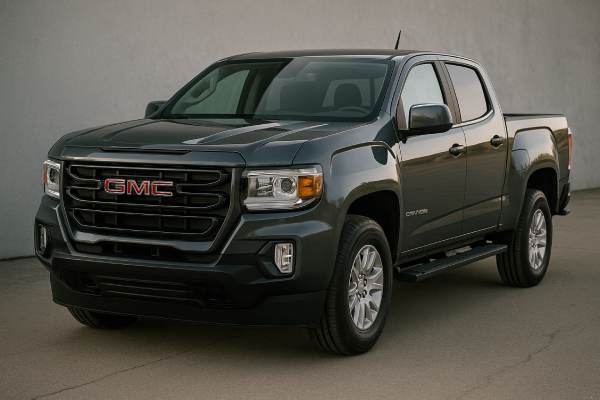
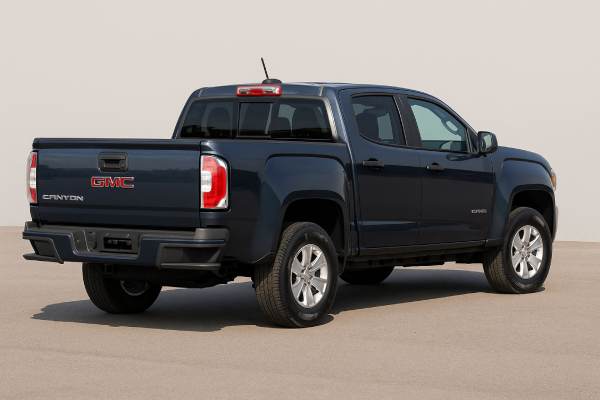
The 2021–2022 GMC Canyon RWD with the LGZ 3.6 litre V6 is the “quick” side of the Canyon range. Where the Duramax diesel focuses on low-rpm pull and economy, the LGZ gasoline V6 delivers stronger acceleration, a higher redline, and simpler ownership for drivers who mostly stay on pavement. Paired with an 8-speed automatic and rear-wheel drive, this configuration suits light towing, commuting, and mixed personal use where all-weather traction demands are moderate.
This facelifted generation keeps the proven GMT31XX chassis but adds more driver assistance, updated infotainment, and detail tweaks to trims and packages. For buyers comparing used mid-size pickups, the RWD V6 Canyon often undercuts 4WD models on price, weight, and complexity while still offering up to about 7,000 lb of towing when properly equipped. This guide walks through the specs, reliability patterns, maintenance strategy, and how the 3.6 RWD stacks up against rivals so you can decide if it fits your use case.
Owner Snapshot
- 3.6 litre LGZ V6 (308 hp) and 8-speed automatic give brisk performance and relaxed highway cruising for a mid-size pickup.
- RWD layout, lighter weight, and Trailering Package allow up to about 7,000 lb (≈3,175 kg) of towing with a simpler driveline than 4WD.
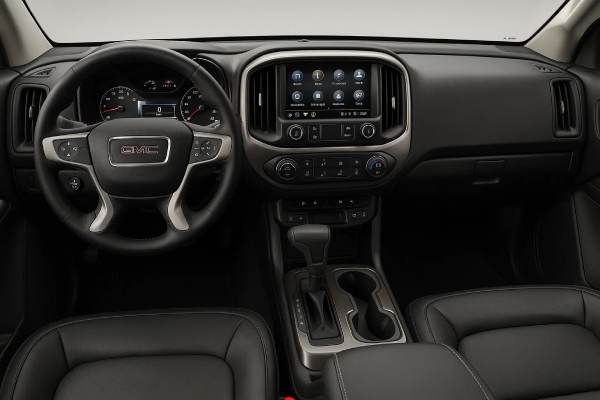
- Cabin is comfortable for daily use, with modern infotainment, good seat comfort, and solid crash protection in most test categories.
- Watch for 8-speed transmission “shudder” and keep fluid fresh; intake valve deposits are a long-term consideration on this direct-injection engine.
- Typical service rhythm: engine oil and filter every 7,500 miles / 12,000 km or 12 months, halved for heavy towing, hot climates, or mostly short trips.
Navigate this guide
- GMC Canyon 3.6 RWD Overview
- LGZ V6 Specs and Data
- RWD Trims, Options, Safety
- V6 RWD Reliability Insights
- Maintenance Plan and Buying Guide
- Driving Feel and Performance
- Canyon 3.6 RWD Versus Rivals
GMC Canyon 3.6 RWD Overview
In 2021–2022, the GMC Canyon RWD with the LGZ 3.6 litre V6 sat at the heart of the lineup for buyers who wanted strong performance without the cost and complexity of four-wheel drive. It shares the GMT31XX platform with the Chevrolet Colorado and uses the same basic chassis and body structure but with GMC-specific styling, trim materials, and tuning details.
The LGZ is a modern, all-aluminium, direct-injection V6 with dual overhead cams and variable valve timing. In the Canyon it produces 308 hp and 275 lb-ft (about 373 Nm) of torque, routed through an 8-speed automatic to the rear axle. Compared with the base 2.5 four-cylinder, the V6 is much smoother and quieter, with noticeably stronger mid-range pull. Compared with the 2.8 Duramax diesel, it trades some low-rpm torque and towing efficiency for better throttle response, higher rev capability, and easier cold-weather starting.
For the facelift years, the RWD V6 is typically found on Elevation Standard, Elevation, and Denali trims with crew cab configurations most common on the used market. AT4 is essentially a 4WD off-road package and is not available as RWD. The RWD layout shaves weight and friction losses compared with 4WD models, which helps real-world fuel economy and gives slightly sharper steering and ride on smooth roads.
In everyday use, the 3.6 RWD Canyon suits:
- Owners in mild or warm climates who rarely need deep-snow traction.
- Drivers who tow small to mid-size trailers (boats, campers, utility trailers) within the roughly 7,000 lb rating.
- Buyers who value car-like driving manners and acceleration but still need a real ladder-frame truck.
If you are comparing multiple Canyons, the RWD V6 variant is often a “sweet spot”: more capable and enjoyable than a four-cylinder work truck, but cheaper to buy and maintain than diesel or 4WD configurations.
LGZ V6 Specs and Data
This section focuses on the 2021–2022 GMC Canyon RWD with the LGZ 3.6 litre gasoline V6 and 8-speed automatic, using typical crew-cab short-bed specifications.
Engine and performance (LGZ 3.6 V6)
| Item | Value |
|---|---|
| Engine code | LGZ |
| Layout and cylinders | 60° V6, aluminium block and heads |
| Valvetrain | DOHC, 4 valves per cylinder, VVT |
| Displacement | 3.6 L (approx. 3,649 cc) |
| Bore × stroke | ≈ 94 mm × 85.6 mm |
| Induction | Naturally aspirated |
| Fuel system | Direct injection (DI) |
| Compression ratio | ≈ 11.5 : 1 |
| Max power | 308 hp (230 kW) @ ~6,800 rpm |
| Max torque | 275 lb-ft (≈373 Nm) @ ~4,000 rpm |
| Timing drive | Chain (no scheduled replacement) |
| Recommended fuel | Regular unleaded (87 AKI) unless towing |
Efficiency and aerodynamics
For 2022 RWD 3.6 V6 automatic:
| Measure | Value |
|---|---|
| EPA combined | 21 mpg |
| EPA city / highway | 18 / 25 mpg |
| Approx. combined | ≈ 11.2 L/100 km |
| Approx. city / highway | ≈ 13.1 / 9.4 L/100 km |
| Real-world highway (120 km/h) | ~10–11 L/100 km (21–23 mpg) when stock |
| Fuel tank | 21.0 US gal (≈79.5 L) |
The Canyon’s aerodynamics are typical for a body-on-frame pickup; drag coefficient and frontal area are not prominently published, but at highway speeds the limiting factor is mostly frontal area and ride height. Bed covers and careful tyre selection can give modest economy improvements.
Transmission and driveline
| Item | Value |
|---|---|
| Transmission | 8-speed automatic, 8L45 |
| Gear ratios (1st–8th) | ~4.62 / 3.04 / 2.07 / 1.66 / 1.26 / 1.00 / 0.85 / 0.66 |
| Reverse | ~3.93 |
| Final drive ratio | Typically 3.42:1 (varies by axle option) |
| Drive type | Rear-wheel drive (4×2) |
| Rear differential | Open or automatic locking (G80) depending on trim |
Chassis, dimensions, and capacities
Crew cab short bed RWD (typical):
| Item | Value |
|---|---|
| Wheelbase | 128.3 in (3,259 mm) |
| Overall length | 212.4 in (5,395 mm) |
| Body width (with mirrors) | 83.9 in (2,131 mm) |
| Bed length at floor | 61.7 in (1,568 mm) |
| Front / rear head room | 41.4 / 38.3 in |
| Front / rear leg room | 45.0 / 35.8 in |
| Curb weight (approx.) | ~4,050–4,200 lb (1,837–1,905 kg) |
| GVWR | ~6,000 lb (2,722 kg) |
| Payload (crew cab RWD) | Up to about 1,578 lb (716 kg) |
| Max towing (3.6 with package) | Up to 7,000 lb (3,175 kg) |
| Seating | 5 |
Brakes and running gear:
| Item | Value |
|---|---|
| Front brakes | Ventilated disc, approx. 320 mm |
| Rear brakes | Solid disc |
| Steering | Electric power rack-and-pinion |
| Suspension (front) | Independent coil-over |
| Suspension (rear) | Leaf-spring solid axle |
| Typical tyre sizes | 255/65R17, 265/60R18, or 255/55R20 (Denali) |
Fluids, electrical, and safety systems (high-level)
| System | Typical Specification |
|---|---|
| Engine oil | Dexos1-approved 5W-30; ≈5.7 L (6.0 US qt) with filter |
| Coolant | Long-life OAT (Dex-Cool type), ~11–12 L total |
| Transmission fluid | Dexron-VI or equivalent; ~9–11 L total capacity |
| Rear axle fluid | 75W-90 synthetic gear oil; ~1.6–1.8 L |
| Alternator | ~150 A (varies by trim) |
| 12 V battery | ~70 Ah; group size varies, AGM on some trims |
| Headlights | Halogen projectors; performance rated as “poor” by testers |
| Basic safety systems | 6+ airbags, ABS, ESC, traction control, tyre pressure monitor |
| Available ADAS | Forward collision alert, lane departure warning, rear park assist, HD rear camera (trim dependent) |
RWD Trims, Options, Safety
For the facelift 2021–2022 model years, the RWD 3.6 V6 Canyon appears mainly in Elevation Standard, Elevation, and Denali trims, almost always with a crew cab. Understanding how trims interact with safety and equipment is key when shopping used.
Trims and equipment highlights (RWD-relevant)
- Elevation Standard (work-oriented):
- Cloth interior, manual seats on most builds.
- 17-inch alloy wheels, simple suspension tune.
- Basic 7-inch infotainment, rear-view camera, standard stability control.
- Trailering Package optional (adds hitch and 7-pin connector).
- Elevation (mid-spec):
- Nicer trim, more colour and wheel choices (18-inch alloys common).
- Available Elevation Premium Package (leather, heated seats, heated steering wheel).
- Optional Driver Alert Package bundling lane departure warning and forward collision alert.
- Trailering Package widely fitted; many used examples will be “tow ready”.
- Denali (luxury-focused):
- Leather upholstery, power and often heated/ventilated front seats.
- Bose audio, 8-inch infotainment with navigation on many trucks.
- 20-inch wheels and more chrome exterior trim.
- Driver Alert features usually standard, plus HD rear-view camera and front/rear parking assist.
RWD is not offered on the off-road-focused AT4; that trim is 4×4 only. If you see an AT4, it will have a transfer case and extra hardware not covered in this RWD-centric guide.
Safety ratings
Crash-test data for the Canyon is shared heavily with the Chevrolet Colorado, since they use the same platform and body structure. Key points for crew-cab models:
- Overall crash performance:
- Good results in moderate-overlap frontal and side impact tests.
- Reinforcements from the 2017 update carry through to 2022, improving driver-side small-overlap performance.
- Passenger-side small-overlap:
- Rated marginal in some protocols due to higher intrusion on the passenger footwell area in legacy tests.
- Roof strength and head restraints:
- Good performance, with a strong cab structure and effective head restraint geometry.
The main weak spot is headlight performance. Standard halogen projector headlights on many trims have been rated poor in independent testing, primarily for inadequate curve lighting and glare. When test-driving at night, pay attention to how far ahead you can see and consider upgrading bulbs or adding auxiliary lighting where legal.
Safety systems and ADAS
All RWD V6 Canyons include:
- Multi-stage front airbags, front side airbags, and side curtain airbags.
- Electronic stability control (StabiliTrak) and traction control.
- Four-wheel disc brakes with ABS and brake assist.
- Tyre pressure monitoring with tyre fill alert.
Depending on trim and options, you may also find:
- Lane departure warning and forward collision alert (Driver Alert Package or standard on Denali).
- Rear park assist (standard on Denali, optional elsewhere; some vehicles require dealer retrofit due to chip-related deletions).
- HD rear-view camera on higher trims.
After collision repairs or windscreen replacement, cameras and sensors may require calibration. When buying used, ask for invoices or service records showing ADAS calibrations if bodywork has been done.
V6 RWD Reliability Insights
Overall, the LGZ 3.6 V6 and the GMT31XX Canyon platform have a solid reliability record when maintained correctly, but there are patterns and known trouble spots worth noting.
Engine-related patterns
- Timing chains:
The LGZ uses chain drive, not a belt. Excessive chain stretch is much less common on this generation than on early HFV6 engines, but neglected oil changes and repeated high-rpm running can still accelerate wear. Symptoms include rattle at cold start and cam/crank correlation codes. Remedy is chain set replacement, which is a labour-intensive job. - Oil consumption and leaks:
Most LGZ engines do not have serious oil thirst, but some owners report light consumption as mileage approaches 100,000+ miles. Regular level checks between services are still wise. Valve cover or front cover seepage can show up with age; usually fixed by gasket replacement. - Direct-injection intake valve deposits:
Over 60,000–100,000 miles, carbon can build up on intake valves because fuel does not wash them. Symptoms include rough idle, hesitation, or misfires under load. Walnut-shell blasting of the intake ports/valves is a known cure, typically combined with new plugs and an induction service. - Cooling system:
Hoses, plastic fittings, and radiators can eventually leak, especially in hot climates or towing use. Catching small coolant smells or drops early prevents overheating and head-gasket stress.
Transmission and driveline
The 8L45 8-speed automatic is a key focus area:
- Torque converter shudder / harsh shifts:
Some trucks develop a rumble-strip vibration or shudder during light-throttle lock-up in the 40–80 km/h (25–50 mph) range. This is often tied to fluid breakdown. The common remedy is a full fluid exchange with the latest-spec fluid, and sometimes a torque-converter replacement on severe cases. Software updates for shift strategy may also be part of dealer fixes. - Driveshaft and differential:
RWD trucks have a simpler driveline than 4WD models but can still experience: - Clunks on take-off (slip-yoke lubrication or wear).
- Limited-slip or automatic locker chatter if diff fluid is old or missing friction modifier.
Proper fluid changes usually prevent long-term damage.
Chassis, electronics, and body
- Front suspension and steering:
As mileage approaches 100,000 miles / 160,000 km, expect control-arm bushings, ball joints, and tie-rod ends to be wear items, especially on trucks that towed heavily or ran larger wheels. Steering racks have a generally good record but should be checked for leaks and free play. - Brakes:
No systemic failures, but trucks used for towing can run hot, warping front rotors. Upgraded pads/rotors and more frequent fluid changes help. - Corrosion:
Frame and underbody corrosion is generally better controlled than on older mid-size trucks, but in snow-belt regions you should closely inspect the rear frame sections, bed supports, and brake/fuel lines.
Recalls, TSBs, and campaigns
For 2022 trucks, an important recall covers front passenger seat frame welds on certain vehicles built with manual passenger seats. The fix is an inspection and, if needed, replacement of the seat cushion frame. Other campaigns may address infotainment issues or specific trim-related concerns.
When evaluating a used Canyon:
- Run the VIN through the official recall check in your market.
- Ask a dealer to print a campaign/TSB completion report.
- Prefer trucks with documented fluid services for engine, transmission, and differential.
Maintenance Plan and Buying Guide
A sensible maintenance plan is the best way to secure long life from a 3.6 RWD Canyon, and it is also what you want to see documented when buying used.
Practical maintenance schedule (typical guidance)
Always confirm intervals and specs in the owner’s manual for your market, but the following is a realistic baseline for mixed use:
- Engine oil and filter:
- Normal use: every 7,500 miles / 12,000 km or 12 months.
- Heavy towing, extreme heat, many short trips: every 5,000 miles / 8,000 km or 6 months.
- Use Dexos1-approved synthetic 5W-30.
- Engine air filter:
- Inspect every 15,000 miles / 24,000 km; replace 30,000–45,000 miles depending on dust levels.
- Cabin air filter:
- Replace every 20,000–25,000 miles / 32,000–40,000 km or 2 years.
- Spark plugs:
- Iridium plugs typically around 97,500 miles / 160,000 km; inspect earlier if misfires occur.
- Coolant:
- Long-life OAT coolant, first change around 5 years/150,000 miles (240,000 km), then about every 5 years or 100,000 miles thereafter.
- Automatic transmission (8L45):
- Fluid and filter service every 45,000–60,000 miles / 72,000–96,000 km is prudent, especially if you tow. Use the latest-spec fluid recommended by GM.
- Rear axle fluid:
- Replace every 45,000–60,000 miles if towing or doing heavy hauling; otherwise around 75,000–90,000 miles.
- Brake fluid:
- Flush every 3 years regardless of mileage.
- Serpentine/aux belts and hoses:
- Inspect at each oil change after 60,000 miles; replace at first signs of cracking or swelling.
- 12 V battery:
- Test annually after year 4; typical life is 4–6 years.
- Alignment and tyre rotation:
- Rotate tyres every 6,000–8,000 miles / 10,000–13,000 km.
- Check alignment any time you notice uneven wear or after impacts/potholes.
Because the LGZ uses timing chains, there is no fixed replacement interval. Instead, listen for chain rattle and investigate any timing-correlation fault codes promptly to avoid more serious damage.
Buyer’s checklist
When shopping for a used 2021–2022 Canyon RWD V6:
- Service history:
- Look for regular oil changes with mileage recorded.
- Evidence of transmission and differential fluid changes is a strong positive sign.
- Transmission behaviour:
- On test drive, pay attention to light-throttle cruising between 40–80 km/h (25–50 mph). Any rumble-strip sensation or shudder may indicate torque converter issues or old fluid.
- Engine condition:
- Cold start should be clean with minimal chain rattle; idle smooth once warm.
- No misfire under load and no check-engine light.
- Chassis and body:
- Inspect frame rails, especially around the rear axle and spare tyre, for rust or previous repairs.
- Look at panel gaps and paint consistency; mismatched panels can indicate accident repairs.
- Interior electronics:
- Check infotainment, Bluetooth, and all cameras/parking sensors.
- Verify that steering-wheel buttons, cruise control, and gauge cluster are fully functional.
- Towing use:
- A factory hitch and 7-pin connector do not necessarily mean abuse, but ask what the truck towed and how often.
- Inspect rear suspension and brakes closely on ex-towing trucks.
For long-term ownership, a well-maintained LGZ V6 Canyon can realistically serve well past 200,000 miles (320,000 km) with mainly wear-and-tear replacements.
Driving Feel and Performance
The 3.6 RWD Canyon is one of the more responsive mid-size pickups in its class, particularly in unloaded driving.
Powertrain character
The LGZ V6 revs freely and feels more like a large car engine than a traditional truck motor. Key traits:
- Low-to-mid-range torque:
Adequate but not diesel-like. The engine wakes up around 3,000 rpm, which is where it starts to feel genuinely strong. - Top-end pull:
It continues pulling up to the 6,500–6,800 rpm range, making highway merges and passing confident. - 8-speed automatic behaviour:
- In normal driving, shifts are smooth and unobtrusive, with plenty of ratios to keep revs reasonable.
- Occasional gear hunting can occur on rolling highways if the truck is in “Drive” and lightly loaded. Using Tow/Haul mode when towing or in hilly terrain helps hold gears and improves control.
Real-world performance figures depend on configuration, but crew-cab RWD V6 trucks can reach 0–60 mph (0–97 km/h) in roughly the high-six to low-seven second range, which is quick for a mid-size pickup.
Ride, handling, and NVH
With RWD only, the Canyon loses the weight and complexity of a transfer case and front drive axle. That brings several benefits:
- Ride quality:
- Unladen ride is firm but controlled; it can feel choppy on broken pavement, as with most mid-size pickups.
- With a few hundred pounds in the bed, the rear suspension settles and ride improves noticeably.
- Handling and steering:
- Steering is light to medium-weight, with predictable response.
- Body roll is present but well-managed; the truck feels secure on freeway ramps and in emergency manoeuvres.
- Noise levels:
- Wind and road noise are reasonable at highway speeds.
- Engine noise is refined at cruise, with more growl during hard acceleration.
Efficiency and range in use
From owner reports and test loops:
- Mixed commuting often lands near the EPA combined figure (around 21 mpg or 11–12 L/100 km).
- Steady 70–75 mph (110–120 km/h) highway runs without load can see 22–24 mpg (9.5–10.5 L/100 km).
- Frequent short trips, cold weather, or heavy cargo can drop economy into the mid-teens mpg.
With a 21-gallon tank, real-world highway range between fills is commonly in the 350–450 mile (560–725 km) window, depending on driving style and load.
Towing and hauling
When properly equipped with the Trailering Package, the RWD 3.6 V6 Canyon can tow up to about 7,000 lb. In practice:
- Stability is good with a correctly set-up trailer and weight-distribution hitch where needed.
- Engine and transmission temperatures stay under control when using Tow/Haul mode and downshifting early on grades.
- Expect a significant fuel-economy penalty when towing nearer the limit: consumption can easily double compared with unladen cruising.
In slippery conditions, remember this is rear-wheel drive. Good all-season or winter tyres and some ballast in the bed can dramatically improve traction, but if you routinely drive in deep snow or on muddy construction sites, the 4WD variant or an AT4 may be a better match.
Canyon 3.6 RWD Versus Rivals
When cross-shopping the 2021–2022 GMC Canyon RWD 3.6 V6 against other mid-size pickups, it occupies a specific niche: strong performance and refinement with a traditional frame, but without 4×4 hardware.
Versus Chevrolet Colorado
The Colorado is the Canyon’s mechanical twin. Differences are mainly styling, interior trim choices, and available option bundles:
- Canyon leans slightly more upscale, especially in Denali form.
- Pricing on the used market can be a bit higher for comparably equipped Canyons.
- Underneath, reliability, performance, and maintenance considerations are effectively the same.
If you prioritise looks and cabin ambience, pick between them on those grounds; if price matters most, shop both badges and focus on condition and service history.
Versus Toyota Tacoma V6 (RWD)
- Tacoma’s 3.5 V6 offers similar headline power but feels less eager at higher revs due to its tuning and transmission strategy.
- Toyota’s reputation for longevity is excellent, and resale values tend to be higher.
- Ride comfort and driving position are often viewed as better in the Canyon, and the GM 8-speed can feel more modern than some Tacoma 6-speed calibrations.
If you want the most “set and forget” long-term ownership and do not mind paying more, a Tacoma is a strong rival; if you want stronger on-road performance and nicer highway manners for the money, the Canyon has an edge.
Versus Ford Ranger (2.3 EcoBoost)
- Ranger’s turbocharged four-cylinder has excellent torque and tuning, making it feel very quick in everyday driving.
- However, turbo complexity and higher boost pressures mean a somewhat different risk profile long term.
- Canyon’s naturally aspirated V6 avoids turbo plumbing and can be appealing if you prefer simpler hardware.
Drivers who value low-end torque and tuning potential may lean Ranger; those who prefer a smoother NA V6 character may prefer the Canyon.
Versus Nissan Frontier and Honda Ridgeline
- Frontier: The 3.8 litre V6 Frontier is another strong performer with a robust reputation and new-generation interior. Frontier tends to feel more “traditional truck” in tuning, while the Canyon straddles the line between truck and crossover in refinement.
- Ridgeline: Unibody, AWD-only, car-like driving manners, and a very comfortable interior. If you never need a traditional ladder frame and high tow ratings, the Ridgeline is a very compelling alternative.
Overall, the 2021–2022 GMC Canyon RWD 3.6 V6 is best suited to buyers who:
- Want a genuinely capable truck but spend most of their time on-road.
- Value strong acceleration and comfortable daily driving.
- Prefer a simpler RWD driveline and lower purchase cost than a comparably equipped 4WD.
If that describes your usage, a well-maintained Canyon RWD 3.6 is an excellent candidate for your shortlist.
References
- 2022 FEATURES, SPECS AND OPTIONS 2022 (Manufacturer Brochure)
- Gas Mileage of 2022 GMC Canyon 2022 (Fuel Economy)
- 2022 GMC Canyon 2022 (Safety Rating)
- Part 573 Safety Recall Report 22V-375 2022 (Recall Database)
- Manuals and Guides | Vehicle Support 2023 (Owner’s Documentation Portal)
Disclaimer
This article is for informational purposes only and is not a substitute for professional diagnosis, repair, or official service procedures. Specifications, fluid types and capacities, torque values, and maintenance intervals can vary by VIN, model year, market, equipment, and software level. Always confirm details against the official service information and owner’s manual for your specific vehicle, and consult a qualified technician before performing any work.
If you found this guide useful, please consider sharing it with other owners or shoppers on social media platforms such as Facebook or X/Twitter. Your support helps keep detailed, independent technical content like this available.