
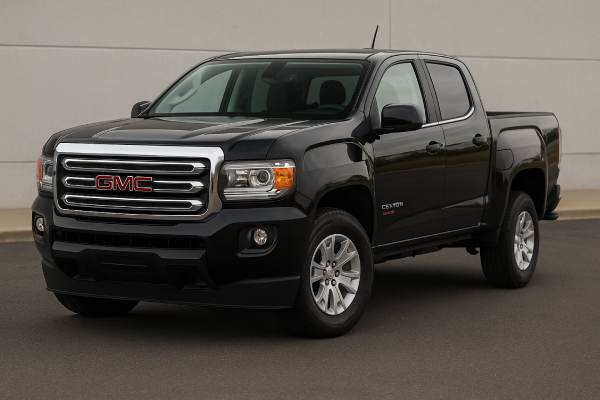
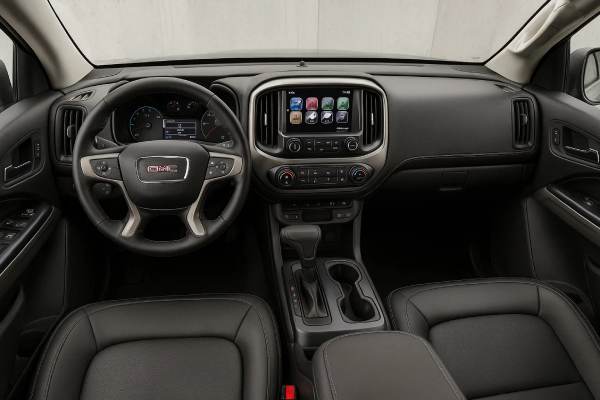
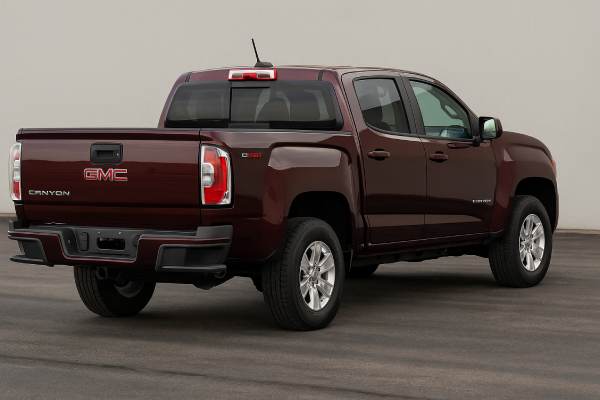
The 2016–2020 GMC Canyon with the 2.8 litre Duramax LWN diesel and rear wheel drive occupies a rare niche: a midsize pickup that tows like a half-ton but sips fuel like a compact crossover. With 181 hp and a hefty 369 lb-ft of torque from its four cylinder turbodiesel, it’s aimed at owners who rack up highway miles, tow moderate loads, or simply want long range between fill ups.
This generation rides on the GMT31XX platform, shared with the Chevrolet Colorado, and is most often seen as a crew cab short bed paired to the 6L50 six speed automatic and a 3.42:1 rear axle. It offers a surprisingly refined cabin, strong towing and payload ratings for the class, and EPA highway figures up to 30 mpg in 2WD diesel form.
At the same time, owners need to understand diesel specific maintenance, a timing belt service at higher mileage, and the realities of modern emissions equipment. Done right, the LWN Canyon can be a very efficient long term workhorse rather than a high maintenance toy.
Fast Facts
- 2.8 litre Duramax LWN turbodiesel makes about 181 hp and 369 lb-ft, giving strong low rpm pull for towing and steep grades.
- EPA rated at 22 city / 30 highway / 25 combined mpg for 2WD diesel models, unusually efficient for a body on frame pickup.
- Properly equipped, diesel Canyons can tow up to about 7,700 lb with a payload near 1,500 lb depending on trim and options.
- Key ownership caveat: emissions system components (DPF, DEF, EGR) and the 150,000 mile timing belt service can be costly if neglected.
- Plan on oil and filter changes about every 7,500 miles / 12,000 km or per the Oil Life Monitor, and a fuel filter roughly every 37,500 miles / 2 years.
Navigate this guide
- GMC Canyon LWN Diesel Overview
- Engine and Specs for LWN Canyon
- Trims, Equipment and Safety Tech
- Reliability and Known Weak Points
- Maintenance Schedule and Buying Tips
- On-Road Performance and Towing
- How Canyon Diesel Stacks Up
GMC Canyon LWN Diesel Overview
The 2.8L Duramax LWN diesel turned the second generation GMC Canyon from a light duty midsize into a serious long distance hauler. Introduced for the 2016 model year and offered through 2020, the LWN engine is an iron block, aluminum head, DOHC inline four with a variable geometry turbocharger and high pressure common rail injection. In the Canyon it is rated at 181 hp at 3,400 rpm and 369 lb-ft at 2,000 rpm, routed through a 6L50 six speed automatic to either rear wheel drive or part time 4×4.
Most Canyon diesels on the used market are crew cab models with either a 5′2″ short box or 6′2″ long box. Wheelbase is about 128.3 in (short bed) or 140.5 in (long bed), with overall length up to roughly 224.6 in for a crew cab long box. Ground clearance sits just over 8 in for 2WD trims, enough for light off road work but still easy to climb into.
Where this configuration stands out is the combination of torque, efficiency, and towing. EPA figures for a 2017 2WD diesel Canyon are 22 mpg city, 30 mpg highway, and 25 mpg combined. Max towing hits about 7,700 lb with the correct axle ratio and trailering package, edging into half ton territory.
The trade offs are typical of modern light duty diesels. You get long range and strong hill climbing, but you also inherit diesel emissions hardware (DPF, DEF, EGR) and a timing belt instead of a chain. Service history and fuel quality matter more than with the gasoline V6. For buyers who understand those needs, the Canyon diesel can be a very efficient, compact alternative to a full size truck.
Engine and Specs for LWN Canyon
This section focuses on a representative 2018 GMC Canyon crew cab, short bed, rear wheel drive with the 2.8L Duramax LWN and 6L50 automatic. Exact figures can vary slightly by year, cab, bed and equipment, so always confirm by VIN and build sheet.
Engine and Performance
| Item | Detail |
|---|---|
| Engine code | LWN Duramax turbodiesel I-4 |
| Layout | Inline 4, DOHC, 16 valves, common rail DI |
| Displacement | 2.8 L (about 2779 cc) |
| Bore × stroke | 94.0 × 100.0 mm (3.70 × 3.94 in) |
| Compression ratio | Around 16.5:1 |
| Induction | Variable geometry turbocharger, air-to-air intercooler |
| Fuel system | High pressure common rail, solenoid injectors |
| Max power | 181 hp (135 kW) @ 3,400 rpm |
| Max torque | 369 lb-ft (500 Nm) @ 2,000 rpm |
| Firing order | 1–3–2–4 |
| Emissions | Oxidation catalyst, DPF, SCR with DEF injection, cooled EGR |
| Official economy (2WD diesel) | 22 city / 30 highway / 25 combined mpg US (≈10.7 / 7.8 / 9.4 L/100 km) |
The engine is tuned for a broad torque plateau rather than high rpm power. Owners will notice that peak pull comes early; by 2,000 rpm the truck feels eager and relaxed, with little need to rev beyond 3,000 rpm in normal driving.
Transmission and Driveline
| Item | Detail |
|---|---|
| Transmission | GM 6L50 six speed automatic |
| Type | Hydraulically controlled, electronically managed, torque converter automatic |
| Gear ratios (typical 6L50) | 1st 4.06, 2nd 2.37, 3rd 1.55, 4th 1.16, 5th 0.85, 6th 0.67, Rev 3.20 |
| Final drive (common diesel RWD) | Around 3.42:1 (some trims vary) |
| Drive type | Rear wheel drive (RWD) |
| Differential | Open rear differential; locking or limited slip available on some off road oriented trims |
The 6L50 is rated comfortably above the LWN’s torque output, giving a margin for towing and hot climate use when properly maintained.
Chassis, Dimensions and Capacities
Figures here reflect a crew cab, short box, 2WD Canyon diesel where available.
| Item | Detail |
|---|---|
| Wheelbase | 140.5 in (crew cab long box) or ~128.3 in (short box) |
| Length | Up to 224.6 in (crew cab long box) |
| Width (without mirrors) | ~74.3 in |
| Height | ~70.6 in (varies slightly by tire and trim) |
| Ground clearance | Around 8.1 in front and rear for many 2WD trims |
| Turning circle | ~44.6 ft curb to curb |
| Curb weight | Typically ~4,300–4,600 lb depending on trim; diesel adds weight over the 3.6L gas |
| GVWR | About 5,800 lb on many crew cab diesel 2WD trims |
| Fuel tank | ≈21 gal (79–80 L) |
Performance and Capability
| Item | Detail |
|---|---|
| 0–60 mph | Roughly mid 9 second range for 2WD diesel crew cab (varies by load and test) |
| Top speed | Electronically limited; typically just over 100 mph |
| Max towing (properly equipped) | Up to about 7,700 lb (diesel, with trailering package and correct axle) |
| Payload | Typically around 1,450–1,550 lb depending on trim and options |
Fluids and Service Basics (LWN diesel)
Exact capacities and specs are in the diesel supplement and owner’s manual, but typical values are:
| System | Spec / Capacity (approximate) |
|---|---|
| Engine oil | Dexos2-approved 5W-30 full synthetic for most climates; ~6.0 qt with filter |
| Coolant | Dex-Cool OAT coolant; service around 150,000 miles or 5 years, then more frequently |
| Transmission (6L50) | Dexron VI ATF; capacity varies (~9–10 qt including torque converter) |
| DEF (diesel exhaust fluid) | Separate tank; consumption roughly 1–3% of fuel usage depending on duty cycle |
| Timing drive | Timing belt; replacement typically due at 150,000 miles (see service section) |
Trims, Equipment and Safety Tech
During 2016–2020, the diesel engine was usually optional on mid and upper Canyon trims rather than base work models. In many markets you’ll see it on SLE, All Terrain, SLT and Denali grades, often in crew cab form.
Trims and options
Key trims that commonly offered the 2.8L LWN diesel in RWD form include:
- SLE – Cloth interior, alloy wheels, basic infotainment with Apple CarPlay/Android Auto in later years, and available trailering or off road packages. The diesel option is typically bundled with the 6L50 auto and higher tow ratings.
- All Terrain / All Terrain X – More off road oriented with unique wheels, all terrain tyres, black trim, and sometimes an automatic locking rear differential and hill descent control. Diesel availability varied by year and region.
- SLT – Leather seats, more sound insulation, additional comfort features (power seats, dual zone climate on some years), and optional driver assistance packages.
- Denali – Top spec with larger wheels, chrome exterior trim, Bose audio, navigation, heated and often ventilated front seats, plus most available driver assistance tech standard.
Mechanical differences between trims are modest on 2WD diesels: spring and shock tuning may vary slightly, and tyres differ (18–20 in road bias tyres on SLT/Denali vs more aggressive rubber on All Terrain). Tow ratings are primarily driven by axle ratio, cooling package, and whether the truck has the full factory trailering package with integrated brake controller and hitch.
Quick ways to identify a diesel Canyon
- “Duramax” fender badges and tailgate badging.
- DEF filler next to or near the fuel cap.
- 4,000 rpm tachometer redline vs 6,500+ on gasoline models.
- Under hood, a compact four cylinder with turbo plumbing instead of a V6.
VIN and build codes (RPO) will show LWN for the engine; the glovebox or build sheet sticker lists all RPO codes.
Safety ratings
Safety performance depends on cab style and test organisation:
- IIHS: The crew cab Canyon (tested similarly to the Colorado) scores Good overall in most major crash tests, with earlier years sometimes earning lower scores for passenger side small overlap. Head restraints and roof strength are generally Good. Headlight ratings range from Marginal to Poor depending on trim and lamp type.
- NHTSA: A 2018 GMC Canyon crew cab 2WD earns a 4 star overall rating, with 4 stars in frontal and rollover and 5 stars in many side impact categories.
For child seats, crew cab models include LATCH/ISOFIX anchors on the outer rear positions. The cushions are fairly firm and upright but usable for rear facing seats; child seat usability scores are acceptable overall.
Safety systems and ADAS
Across 2016–2020, standard safety equipment typically includes:
- Front, side torso and side curtain airbags (rows 1 and 2).
- Four wheel disc brakes with ABS.
- Stabilitrak electronic stability control and traction control.
- Rear view camera (mandatory by 2018).
Available or standard on higher trims and later years:
- Forward collision alert (camera based warning, not always with automatic braking on earlier trucks).
- Lane departure warning on upper trims like SLT/Denali.
- Rear park assist and tyre pressure monitoring with individual pressures on the driver display.
Any collision warning or lane departure systems need a camera calibration after windscreen replacement or front end structural repair. Radar based options in some markets require alignment if bumper covers are removed or the truck is in a moderate crash. After used purchase, verify that any ADAS warning lights are off and that the systems pass a dealer level scan.
Reliability and Known Weak Points
The 2.8L Duramax LWN has proven generally durable in stock form when maintained correctly, but like most small modern diesels, it has a few recurring trouble spots. Below is a high level map of common issues by system and cost tier. Real world experiences vary with duty cycle and climate.
Engine and emissions
- EGR and intake carbon build up (common, low–medium cost)
Symptoms: Gradual loss of power, rough idle, EGR related fault codes, or reduced fuel economy after high mileage or lots of short trip driving. The root cause is soot and oil mist accumulation in the intake and EGR passages. Remedies range from EGR valve replacement to removal and cleaning of the intake manifold and associated pipework. - DPF/DEF system faults (occasional, medium–high cost)
Owners report NOx sensor failures, DEF quality/level sensor issues, and DPF efficiency codes, especially on trucks that rarely reach full operating temperature or that tow heavy at low speeds. When ignored, the truck can enter reduced power “limp” modes and limit speed. Remedies range from sensor replacement to forced regenerations; in severe cases, DPF or SCR replacement. Using correct DEF, avoiding frequent very short trips, and obeying regeneration prompts helps reduce problems. - Turbocharger actuator or boost related issues (occasional, medium cost)
Variable geometry turbo mechanisms and actuators can stick or fail, especially if oil change intervals are stretched or soot loads are high. Symptoms include underboost, limp mode, and changes in turbo whistle. Most fixes involve replacing the turbo or actuator assembly. - Fuel system concerns (occasional, medium–high cost)
High pressure pumps and injectors are sensitive to water and contamination. Delayed fuel filter changes and poor quality diesel increase risk. Symptoms include hard starting, rough running, or metal debris in the fuel system. Proactive fuel filter changes and draining the water separator on schedule are critical prevention.
Timing belt and front end
The LWN uses a timing belt rather than a chain. The diesel maintenance information and independent schedules align on a replacement interval around 150,000 miles (or about 240,000 km).
- Common age/mileage: 150k–200k miles or about 10+ years.
- Consequence of failure: This is an interference engine; a broken belt can lead to valve–piston contact and major engine damage.
- Typical remedy: Replace belt, tensioner, idlers, and usually the water pump while access is open. Labour is significant because of tight packaging at the front of the engine.
Transmission and driveline
The 6L50 itself is generally robust at stock power, but a few behaviours are worth noting:
- Slight shift flare or harshness when fluid is old or after heavy towing. A full fluid exchange with Dexron VI and adaptation reset often helps.
- Occasional driveline clunks on take off or when shifting from R to D, commonly traced to slip yoke movement, diff backlash, or worn propshaft joints. Regular greasing (where applicable) and inspection of U joints and centre bearings is recommended.
Rear axle bearings and differential gears are not known for chronic failure, but severe towing in hot conditions with old fluid can shorten life.
Chassis, steering and corrosion
On the GMT31XX platform, owners and technicians often mention:
- Front suspension bushings and ball joints wearing around 80–120k miles, particularly on trucks that spend time on rough roads or with oversize tyres. Symptoms include clunks, wandering, and uneven tyre wear.
- Steering racks developing play or slight leaks at higher mileage in harsher climates.
- Frame and underbody corrosion in rust belt regions, especially around rear frame rails, leaf spring mounts, and body seams if the underbody was not regularly washed in winter.
Recalls, TSBs and extended coverage
You should always run the VIN through:
- The official NHTSA recall database, and
- GM’s own owner centre or a dealer lookup
to check for any open campaigns. For this generation of Canyon, recalls and service bulletins have included items like power steering assist loss on some trucks, airbag or seat belt sensor related campaigns, and software updates for engine or transmission control modules.
For a pre purchase inspection, ask specifically:
- Proof of completed recalls and any diesel related TSBs.
- Evidence of regular oil changes using Dexos2 diesel rated oil.
- Timing belt documentation (or budget for it if the truck is over ~130k–150k miles).
- Any invoices for DPF/DEF or fuel system work; repeated failures there can be a red flag.
Maintenance Schedule and Buying Tips
Caring for a Canyon diesel is more about consistency than complexity. Below is a practical schedule blending the diesel supplement guidance with independent LWN focused maintenance tables. Always confirm for your exact model year and region.
Core maintenance intervals (typical LWN usage, normal to moderately severe)
- Every 7,500 miles / 12,000 km or 1 year
- Engine oil and filter (or when the Oil Life Monitor prompts).
- General fluid level check (coolant, brake, power steering if equipped, DEF).
- Tyre rotation and pressure check; inspect tread and sidewalls.
- Every 22,500–25,000 miles / ~36,000–40,000 km
- Replace fuel filter (diesel pickup schedules often specify around 37,500 miles or 2 years).
- Inspect drive belts and coolant hoses.
- Every 45,000 miles / 72,000 km or 4 years
- Replace engine air filter.
- Replace cabin air filter.
- Brake service inspection (pad thickness, rotor condition, slide pins, parking brake).
- Every 75,000–90,000 miles / 120,000–145,000 km
- Transmission fluid service on the 6L50 (drain and fill or full exchange depending on history and usage).
- Axle fluid change, especially on trucks used for towing.
- At 150,000 miles / 240,000 km (or 10 years, whichever first)
- Replace timing belt, tensioner, idlers and strongly consider water pump replacement while accessible.
- Service engine cooling system (flush and refill with fresh Dex-Cool or equivalent).
- Every 3 years regardless of mileage
- Brake fluid flush, to maintain corrosion protection and pedal feel.
For fluids, stick with:
- Engine oil: Dexos2 approved full synthetic 5W-30 (0W-40 allowed in very cold climates) as specified in the diesel supplement.
- Fuel: Ultra low sulfur diesel (ULSD); B20 blends are supported but frequent high biodiesel content may require shorter fuel filter intervals.
- DEF: ISO 22241 compliant diesel exhaust fluid from a reputable source; avoid topping off with containers that may have been open for long periods.
Buyer’s guide: what to look for
When shopping for a used 2016–2020 Canyon diesel RWD:
- Service history
- Look for documented oil changes at least as frequent as the Oil Life Monitor suggests.
- Check for fuel filter changes roughly every 30–40k miles.
- Confirm whether the timing belt has been done on higher mileage trucks; a verified belt service adds real value.
- Diagnostic scan and test drive
- Have a shop pull codes from the engine, transmission and diesel emissions modules. Even “stored” or “pending” codes for NOx sensors, EGR performance, or DPF efficiency deserve attention.
- On a test drive, check for smooth shifts, no hesitation under load, and stable coolant temperature when climbing grades.
- Visual checks
- Inspect the DEF tank and lines for leaks or crusted residue.
- Look for excessive soot around the tailpipe (light soot is normal for a diesel; heavy fresh deposits may indicate DPF issues).
- Check underbody for rust, particularly frame rails, bed mounts and brake lines in snowy climates.
- Which years and trims to target?
- Later model years (2018–2020) benefit from incremental software tweaks and sometimes improved safety equipment, but early diesel trucks can still be solid if maintained.
- For a comfortable long distance tow rig, SLT or Denali with diesel and trailering package are attractive.
- For budget conscious buyers, an SLE diesel with cloth seats and simpler electronics may offer lower long term costs.
Overall durability is good when service is on schedule and the truck is kept stock. Aggressive tuning or emissions deletes not only risk legal trouble but place extra stress on the small displacement diesel and 6L50 transmission; they are best avoided on a truck you intend to keep for a long time.
On-Road Performance and Towing
On the road, the Canyon diesel feels very different from the 3.6L gas V6. Instead of revving toward 6,000 rpm, it leans on a broad wave of torque from just above idle.
Powertrain character
Turbo lag is modest; with the variable geometry turbo spooling quickly, boost arrives smoothly by around 1,500–1,600 rpm. In city driving the truck steps off the line with little drama. The 6L50 usually keeps revs in the 1,500–2,500 rpm band under light to moderate throttle, where the engine is quiet and efficient.
Kickdown for passing is not explosive, but it’s strong enough: a drop from 6th to 4th with the engine at 3,000–3,200 rpm delivers good midrange thrust to overtake on two lane roads or merge onto freeways. The diesel’s strength is sustained pull on grades, not sprinting from traffic lights.
Ride, handling and NVH
The GMT31XX platform gives the Canyon a secure, slightly firm ride. Unladen, the rear leaf springs can feel busy over sharp bumps, but with 200–400 lb in the bed the truck settles nicely. Electric power steering is light at parking speeds and reasonably weighted on highways.
Cab noise is well controlled for a diesel midsize pickup. At 70 mph, wind and tyre noise dominate more than engine noise; the LWN spins at modest rpm in 6th, and with good door seals and laminated glass on higher trims, conversation is easy. Owners moving from older heavy duty diesels are often surprised how civil this powertrain feels.
Real world efficiency
From EPA data and road tests:
- 2WD diesel: Expect about 25 mpg combined, with many owners reporting high 20s on long highway runs at 65–70 mph when lightly loaded.
- At 75 mph or into headwinds, consumption climbs, but the truck still often beats a comparable gas V6 Canyon or Tacoma by a meaningful margin.
- Cold weather, short trips, and frequent regenerations can pull averages into the low 20s.
With a ~21 gallon tank, a 2WD diesel Canyon can realistically cover 500–600 highway miles between fill ups if driven sensibly.
Towing and loaded behaviour
The diesel Canyon’s headline towing number of up to about 7,700 lb is impressive for a midsize. In practice, it feels happiest towing travel trailers, boats or equipment in the 3,500–6,000 lb range:
- Stability is good with a properly adjusted weight distributing hitch.
- Transmission temperatures generally stay under control if you use Tow/Haul mode, which alters shift points and increases converter lockup.
- Braking is adequate; an integrated trailer brake controller (if fitted) is a major advantage for heavier loads.
Expect a fuel economy penalty of roughly 25–40% when towing near 5,000–6,000 lb at highway speeds; mid teens mpg are typical. That still compares favourably with many gas V6 midsize rivals in the same situation.
Payload is respectable but not huge; with passengers and tongue weight it’s easy to reach the ~1,500 lb limit, so calculating a real payload budget is important. The rear suspension copes well within ratings, but airbags or helper springs may be helpful for frequent heavy towing.
How Canyon Diesel Stacks Up
In the 2016–2020 timeframe, the GMC Canyon diesel’s primary rivals were the Toyota Tacoma, Nissan Frontier, Honda Ridgeline and its Chevrolet Colorado twin. None of those offered a diesel in North America, so the LWN Canyon is unique in this crowd.
Versus Toyota Tacoma
- Fuel economy: Tacoma V6 2WD is typically rated around 19–21 mpg combined, with real world averages often in the high teens to low 20s. The Canyon diesel’s 25 mpg combined and 30 mpg highway rating give it a clear advantage in range and running cost for long distance drivers.
- Towing: Tacoma V6 can tow up to about 6,700–6,800 lb in certain configurations, while the Canyon diesel reaches up to roughly 7,700 lb.
- Off road: Tacoma TRD Off-Road and Pro trims offer more specialised off road hardware (Bilstein/FOX dampers, crawl control, multi terrain select), while the Canyon All Terrain is somewhat more mild from the factory.
For buyers prioritising traditional long term reputation and off road toys, Tacoma still appeals. For those who value torque, towing and fuel economy, the Canyon diesel is compelling.
Versus Nissan Frontier
The 2018 Frontier uses an older 4.0L V6 with EPA ratings around 16/22 mpg (2WD auto) and towing up to about 6,690 lb. Frontier’s advantages are simplicity and lower purchase prices; its drawbacks are thirstier fuel consumption, a more dated interior and safety tech, and less refined road manners. Canyon diesel wins on efficiency, cabin finish and modern crash structures, but the Frontier can be a cheaper, rugged alternative if fuel cost is less important.
Versus Honda Ridgeline
Ridgeline is a unibody, independent rear suspension truck with carlike manners. It tows up to 3,500 lb in 2WD or 5,000 lb in AWD form and delivers impressive on road comfort and packaging.
- Ridgeline rides more smoothly and handles more like a crossover.
- Canyon diesel can tow more, offers better fuel economy when heavily loaded, and has classic body on frame durability and aftermarket support.
If you never venture off pavement and rarely tow more than 3,500 lb, a Ridgeline may be the better daily, but it can’t match the Canyon diesel’s towing and frame robustness.
Versus Chevrolet Colorado
Colorado diesel is the mechanical twin to Canyon diesel, so the choice is mainly styling, trim details and dealer network. Some years offer slightly different equipment packages, but the underlying strengths and weaknesses are identical.
Who the Canyon diesel best suits
- Drivers who regularly tow mid weight trailers but don’t need a full size truck.
- Long distance commuters who value 500+ mile highway range and low rpm cruising.
- Owners comfortable with diesel maintenance who want a compact, maneuverable pickup with half ton like capability.
For light duty local use and occasional small trailer work, the gas V6 Canyon or a Tacoma may be simpler. But if you plan to use the truck’s capability often, the 2.8L LWN Canyon RWD is one of the most efficient ways to do it in this era.
References
- 2.8L I-4 LWN Duramax® Turbo-Diesel Engine | GM Powered Solutions 2024 (Technical Data)
- 2.8L Duramax LWN Diesel Specs and Information 2023 (Technical Data)
- Gas Mileage of 2017 GMC Canyon 2017 (Fuel Economy)
- 2018 GMC Canyon 2018 (Safety Rating)
- Vehicle Detail Search – 2018 GMC CANYON PU CC | NHTSA 2018 (Recall Database)
- 2020 2.8L Duramax Diesel Supplement 2020 (Owner’s Manual)
- Manuals and Guides | Vehicle Support | GMC 2024 (Owner’s Manual Portal)
Disclaimer
This article is for informational purposes only and is not a substitute for professional diagnosis, repair advice, or official service literature. Specifications, torque values, fluids, intervals and procedures can vary by model year, VIN, market, options, and prior repairs. Always confirm critical data and maintenance steps against the official owner’s manual, diesel supplement and service information for your specific vehicle, and consult a qualified technician before performing any work.
If you found this guide helpful, feel free to share it with other owners or enthusiasts on Facebook, X/Twitter, forums, or your favourite communities to support our work and help more drivers make informed decisions.