
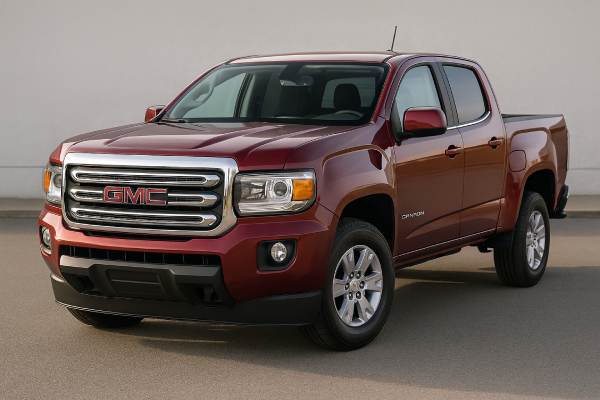
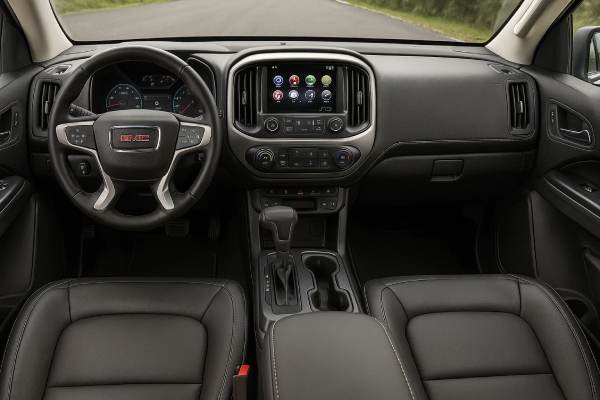
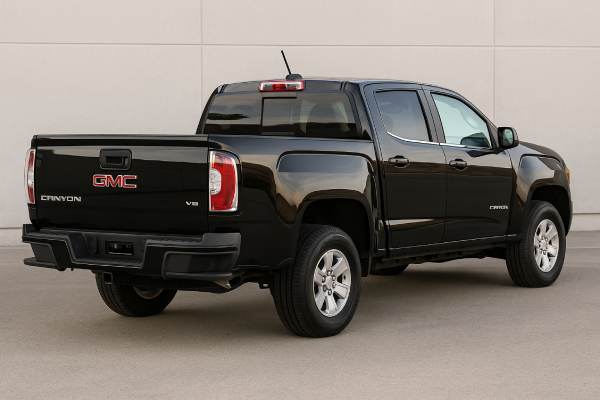
The rear wheel drive GMC Canyon with the LGZ 3.6 litre V6 sits in a sweet spot between light-duty work truck and daily driver. From 2017 onward, the Canyon gained a redesigned V6 and an 8 speed automatic transmission that noticeably sharpened performance while keeping running costs reasonable for a midsize pickup. With 308 horsepower, a 7,000 lb towing rating in most configurations, and a chassis shared with the Chevrolet Colorado, this Canyon suits owners who tow boats, small campers, or equipment but do not need a full-size truck.
In everyday use, the LGZ V6 feels smoother and more refined than earlier Canyon engines, and rear wheel drive helps efficiency and reduces complexity compared with four wheel drive models. Owners shopping 2017–2020 trucks often care just as much about long term reliability, rust protection, and maintenance costs as pure numbers. This guide walks through the detailed specs, typical issues, and what to look for when buying or caring for a Canyon RWD 3.6 V6.
Quick Specs and Notes
- 3.6 litre LGZ direct injection V6 makes 308 hp and about 275 lb ft, paired mainly with an 8 speed automatic.
- Typical tow ratings are 7,000 lbs for V6 RWD trucks when properly equipped, with payload around 1,500–1,700 lbs depending on cab and trim.
- Watch for 8 speed automatic “shudder” under light throttle and A/C condenser leaks; both often have updated repair procedures.
- Engine oil and filter changes are sensible every 5,000–7,500 miles (8,000–12,000 km) or 12 months, even with the oil life monitor.
Explore the sections
- GMC Canyon LGZ RWD Summary
- Engine Specs for LGZ Canyon
- Canyon RWD Models and Safety
- Reliability and Service Concerns
- Maintenance Planning and Buying Guide
- Driving Experience and Performance
- How Canyon LGZ RWD Compares
GMC Canyon LGZ RWD Summary
The 2017–2020 GMC Canyon RWD with the LGZ 3.6 litre V6 represents the “quick gas truck” in the Canyon lineup. It replaced the earlier 3.6 litre LFX with a modern direct injection, dual overhead cam V6 that improved torque spread and fuel efficiency. Power is routed through a 6 speed automatic in some early 2017 configurations, but the key pairing for this engine is the 8 speed automatic, which became widely available and standard with the V6 over this period.
Most retail Canyons in this configuration are crew cab models with either a short (about 5 ft) or long (about 6 ft) bed. Extended cab variants are less common but share the same basic running gear. Wheelbase is roughly 128.3 inches for short bed crew and 140.5 inches for long bed crew, which gives the truck a stable, planted feel on the highway without making it impossible to park in town.
In terms of basic size, this Canyon is shorter and narrower than a contemporary full-size Sierra, which makes it easier to live with on narrow streets or in older garages. Height is about 70.5 inches, width without mirrors around 74.3 inches, and overall length about 212.4 inches for the short bed crew cab. Ground clearance is roughly 8.2 inches, enough for dirt roads and job sites, though this RWD version is not aimed at heavy off-road use.
The LGZ V6 RWD trucks sit above the 2.5 litre four cylinder work trucks but below the diesel in maximum tow and payload. For many owners, however, the gas V6 delivers the best balance of purchase price, power, and maintenance simplicity. It runs happily on regular unleaded, does not require diesel emissions fluid, and avoids some of the complexity of the diesel’s emissions system. That makes the LGZ Canyon RWD well suited for mixed commuting, light commercial use, and recreational towing.
Engine Specs for LGZ Canyon
For this section we assume the common 3.6 litre LGZ V6 with the 8 speed automatic and rear wheel drive.
Engine and Performance
| Item | Detail |
|---|---|
| Engine code | LGZ 3.6L V6 |
| Layout and valvetrain | 60° V6, DOHC, 4 valves per cylinder, continuously variable valve timing |
| Displacement | 3.6 L (3,649 cc) |
| Induction | Naturally aspirated |
| Fuel system | Direct injection petrol |
| Compression ratio | Approximately 11.5:1 (market and calibration dependent) |
| Max power | 308 hp (approx. 230 kW) @ ~6,800 rpm |
| Max torque | 275 lb ft (approx. 373 Nm) @ ~4,000 rpm |
| Firing order | 1–6–5–4–3–2 (typical for this GM V6 family) |
| Emissions standard | US LEVIII / Tier 3 equivalent on gasoline |
On the road, the LGZ is known for strong mid range performance. It likes to rev, but the broad torque plateau means it does not feel weak at low speeds. The 8 speed automatic keeps the engine in its sweet spot more often than the older 6 speed, with closer ratios and taller top gears to reduce rpm at highway cruise.
Efficiency
Typical EPA or official ratings for a 2WD crew cab 3.6 V6 are in this range:
- City: about 18 mpg US (13.1 L/100 km)
- Highway: about 25 mpg US (9.4 L/100 km)
- Combined: about 20–21 mpg US (11.2–11.8 L/100 km)
Real world highway consumption at 120 km/h (75 mph) often falls between 10–11 L/100 km (21–24 mpg US), depending on load, tyres, and wind. City use with frequent short trips can easily drop into the mid-teens mpg (around 15–17 mpg US).
Transmission and Driveline
| Item | Detail |
|---|---|
| Transmission | 8 speed automatic (8L45) on most V6 trucks, some early 2017s with 6L50 6 speed |
| Gear ratios (8L45, approximate) | 1st 4.62, 2nd 3.04, 3rd 2.07, 4th 1.66, 5th 1.26, 6th 1.00, 7th 0.85, 8th 0.65 |
| Final drive ratio | Typically 3.42:1 on V6 RWD Canyon |
| Drive type | Rear wheel drive (RWD) |
| Differential | Open rear differential; some trims offer automatic locking rear differential (G80 option) |
The locking rear differential is particularly helpful on work sites, gravel, or wet boat ramps, and is strongly recommended if you tow or haul frequently with RWD.
Chassis and Dimensions (typical crew cab short box RWD)
| Item | Detail |
|---|---|
| Front suspension | Independent, coil-over shock with stamped lower control arms |
| Rear suspension | Solid axle with leaf springs |
| Steering | Electric power-assisted rack and pinion |
| Front brakes | Ventilated discs, approx. 12.2 in diameter |
| Rear brakes | Solid discs, approx. 12.75 in diameter |
| Wheels and tyres | Common sizes: 255/65R17 or 265/60R18 all-season tyres on 17–18 in rims |
| Overall length | ~212.4 in (5,395 mm) |
| Width (body) | ~74.3 in (1,887 mm) |
| Width (with mirrors) | ~83.9 in (2,130 mm) |
| Height | ~70.5 in (1,790 mm) |
| Wheelbase | 128.3 in (3,259 mm) short box; 140.5 in (3,569 mm) long box |
| Ground clearance | Around 8.2 in (208 mm) |
| Turning circle | About 41.3 ft (12.6 m) |
| Curb weight | Roughly 4,100–4,500 lbs (1,860–2,040 kg) depending on trim and bed |
| GVWR | Typically around 5,500–5,800 lbs (2,495–2,630 kg) |
| Fuel tank | About 21 US gal (79 L) |
Performance and Capability
| Item | Detail |
|---|---|
| 0–60 mph (0–97 km/h) | Roughly 6.0–6.5 seconds for V6 RWD crew cab |
| Top speed | Governed, typically around 98–110 mph (158–177 km/h) |
| Max towing | Up to 7,000 lbs (3,175 kg) for many V6 RWD configurations when properly equipped with tow package |
| Typical payload | Approx. 1,500–1,700 lbs (680–770 kg) depending on trim and wheelbase |
Fluids and Electrical (typical values – always verify for your VIN)
| System | Spec (typical) | Notes |
|---|---|---|
| Engine oil | Dexos1-approved 5W-30 synthetic; capacity roughly 5.5–6.0 qt (5.2–5.7 L) with filter | Use GM-approved oil to protect warranty |
| Engine coolant | Long-life OAT coolant (Dex-Cool type); capacity roughly 11–13 qt (10–12 L) | Maintain correct mix ratio |
| Automatic transmission | Dexron VI or later GM-specified ATF for 8L45/6L50; capacity varies with service method | Often serviced by drain-and-fill or fluid exchange, not full dry fill |
| Rear axle | Synthetic gear oil, typically 75W-90; capacity roughly 2–2.5 L | Locking differential may require specific fluid/friction properties |
| A/C refrigerant | R-134a on these model years | Charge quantity varies by cab and HVAC system |
| Alternator output | Typically around 150–170 A | Higher-output units may be fitted on tow or off-road packages |
| 12V battery | Group 48 or similar, around 70–80 Ah, 600–730 CCA | Battery size and rating vary by equipment level |
Safety and Driver Assistance – Hardware Baseline
- Front, side, and curtain airbags for front and rear outboard passengers
- Stability control, traction control, ABS, tyre pressure monitoring
- Rear vision camera standard on most 2017–2020 trucks
- Available forward collision alert and lane departure warning (Driver Alert Package) on SLE and SLT; standard on Denali in later years
- Some later trucks add low speed automatic emergency braking and newer camera views through package updates
Canyon RWD Models and Safety
Across 2017–2020, the Canyon RWD LGZ 3.6 V6 could be had in several trims and body styles, with varying equipment and tow ratings. Not every trim is available in every year, but the pattern is broadly similar.
Key RWD Trims and Configurations (V6)
- Extended Cab 2WD with 6 ft bed
- Often SLE or SLT with available V6; smaller cab, longer bed
- Slightly lower curb weight than crew cab
- Crew Cab 2WD, short box (approx. 5 ft)
- Very common retail configuration
- Seats five, good mix of bed space and manoeuvrability
- Crew Cab 2WD, long box (approx. 6 ft)
- Longest wheelbase; best for stability while towing and maximum cargo length
Trim Highlights (typical V6 RWD availability)
- Base / SL
- More common with 2.5L four cylinder, but some fleets spec V6 RWD
- Vinyl or cloth seats, simpler infotainment
- SLE
- Volume trim; cloth interior, alloy wheels, upgraded infotainment with smartphone integration
- V6 available or standard depending on year and cab
- SLT
- Leather-appointed interior, more comfort features (power seats, heated seats)
- V6 standard in many RWD crew cabs
- Denali (2017 onward)
- Chrome exterior trim, unique 18 in wheels, premium audio, navigation, and most comfort features standard
- V6 LGZ standard engine; RWD or 4WD available
Visually, Denali trucks are easy to recognise by the chrome grille and Denali badging. SLT models usually have body-colour bumpers and more chrome than SLE. VIN and option codes in the glovebox label can confirm engine, axle ratio, and presence of the locking differential or tow package.
Year-to-Year Changes (RWD V6 highlights)
- 2017: LGZ 3.6 V6 and 8 speed automatic introduced; structural updates to improve crash performance carried over from the platform.
- 2018: Minor feature and infotainment updates; some shuffling of standard and optional safety features.
- 2019: Refinements to infotainment systems, available active safety features begin to broaden.
- 2020: Trim line tweaks and equipment changes more than mechanical updates; still the same LGZ/8 speed core hardware.
Crash Test and Safety Ratings
Although many official tests use four wheel drive examples, the structure and passive safety performance broadly apply to RWD crew cab trucks of the same generation.
- IIHS
- Crew cab Canyon shares crash structure with the Chevrolet Colorado.
- Good overall ratings in moderate overlap front and side impact tests.
- Small overlap driver side improved from 2017 onward due to structural reinforcements.
- Passenger side small overlap results vary with test year but generally show adequate to marginal structure with good injury measures.
- NHTSA
- Overall rating around 4 stars out of 5 for many 2017–2020 Canyon models.
- Frontal crash ratings typically 4 stars; side impacts often 5 stars; rollover risk around 3 stars with a rollover probability in the low 20% range.
Driver Assistance and ADAS by Trim
- Standard on most trucks
- Rear vision camera
- Stability and traction control
- Optional Driver Alert Package (varies by year)
- Forward collision alert
- Lane departure warning
- Denali and higher SLE/SLT configurations in later years
- More advanced infotainment, more camera views, and sometimes additional assistance features as model years progress.
Alignment and camera calibration can be required after front-end repairs, windshield replacement, or suspension modifications. On used trucks, confirm that any aftermarket bumper, levelling kit, or tyre change has not disabled or confused safety systems.
Reliability and Service Concerns
Overall, the 2017–2020 Canyon LGZ RWD sits in the “generally solid but with a few known trouble spots” category. It avoids some of the complex diesel emissions issues but is not completely free of quirks.
Common or Notable Issues
- 8 speed automatic shudder (8L45)
- Symptoms: A subtle “rumble strip” vibration at steady speeds, often between 40–70 mph in higher gears under light throttle.
- Likely cause: Torque converter clutch friction behaviour and early fluid formulations.
- Typical remedy: Updated service procedures usually involve a full fluid exchange with a newer ATF formulation and, in some cases, updated calibrations. In more severe cases, torque converter replacement may be required.
- A/C condenser and refrigerant leaks
- Symptoms: Gradual loss of cooling, oily residue near condenser, frequent recharging needed.
- Root cause: Stone or debris damage, or leakage at known weak points in some model-year condensers.
- Remedy: Replace condenser with updated design, evacuate and recharge system, inspect lines and seals.
- Infotainment and electrical glitches
- Symptoms: Touchscreen freezing, Bluetooth connection drops, occasional warning lights that clear with restart.
- Root cause: Software bugs or module communication issues.
- Remedy: Software updates at the dealer, checking for TSBs and module updates. Many issues improve with updated firmware.
- Minor oil or coolant seepage with age
- Symptoms: Dampness around cam covers, front cover, or coolant hoses; slow level changes over many months.
- Root cause: Age-related gasket or seal hardening, hose clamp relaxation.
- Remedy: Renew affected gaskets or hoses and clamps; monitor levels between services.
- Front suspension and steering wear
- Symptoms: Clunks over bumps, looseness on centre, uneven tyre wear.
- Root cause: Worn ball joints, tie rod ends, bushings, especially on trucks that tow or are driven on rough roads.
- Remedy: Replace worn components, perform proper alignment, and check for uneven tyre wear.
Less Common but Higher Impact
- Power steering assist issues (mainly early years, more common on 4WD but worth noting on RWD)
Sudden loss of electric power steering assist can occur in rare cases. GM has issued various service notes and, in some cases, recall or extended coverage on related platforms. Check the VIN for outstanding campaigns. - Engine internal issues
The LGZ V6 generally avoids the widespread timing chain stretch that affected some earlier GM 3.6 engines when well maintained. Severe neglect or extended oil change intervals can still accelerate wear. Misfires, noisy valvetrain, or timing correlation codes should be investigated quickly.
Recalls, TSBs, and Campaigns
The exact mix of recalls and service bulletins varies by year and VIN, but common themes include:
- Airbag or seat belt system concerns
- Electrical or software updates for various modules
- Shifter or park position interlock issues on some trucks
- Possible fuel system or emissions-related campaigns
For any used Canyon, always:
- Run the VIN through the official recall database for your region.
- Ask the dealer for a printout of completed and outstanding campaigns.
- Verify that any transmission or A/C bulletin work has been performed if there are symptoms.
Pre-Purchase Checks for Reliability
When inspecting a used LGZ RWD Canyon, pay attention to:
- Transmission behaviour on a long test drive, including gentle highway cruising.
- A/C performance on hot days.
- Steering feel and suspension noises over speed bumps and broken pavement.
- Evidence of coolant or oil leaks around the front of the engine, under the truck, and at the radiator and hoses.
- Rust on frame rails, rear leaf spring mounts, and bed crossmembers, especially in salt regions.
A truck with clear service history, documented transmission fluid changes, and up-to-date recalls is a safer bet than a cheaper example with unknown history.
Maintenance Planning and Buying Guide
A well-maintained Canyon LGZ RWD can provide long, reliable service. The goal is to combine the factory schedule with real-world best practices, especially if you tow or see dusty or hot conditions.
Core Maintenance Schedule (typical guidance)
Always cross-check with the owner’s manual and the oil life monitor, but a practical plan for many owners is:
- Engine oil and filter
- Every 5,000–7,500 miles (8,000–12,000 km) or 12 months, shorter if you tow, idle often, or drive mostly short trips.
- Use Dexos1-approved synthetic 5W-30.
- Engine air filter
- Inspect every 15,000 miles (24,000 km); replace every 30,000–45,000 miles (48,000–72,000 km) or sooner in dusty areas.
- Cabin air filter
- Replace every 20,000–25,000 miles (32,000–40,000 km) or 2 years.
- Spark plugs
- Iridium plugs usually specified around 90,000–100,000 miles (145,000–160,000 km). Consider earlier replacement if misfires or hard starting appear.
- Coolant
- First replacement often around 5 years or 100,000 miles (160,000 km), then every 5 years / 50,000–100,000 miles depending on coolant and conditions.
- Automatic transmission fluid (8L45/6L50)
- Many manuals call transmission fluid “lifetime” or only specify severe-service changes, but a 50,000–60,000 mile (80,000–100,000 km) interval is a sensible preventive measure, especially for towing or city use.
- Rear axle fluid
- Every 50,000–75,000 miles (80,000–120,000 km); shorten intervals if towing often or if you have a locking differential.
- Brake fluid
- Every 3 years regardless of mileage.
- Brake pads and rotors
- Inspect at each tyre rotation; replacement intervals vary widely but 30,000–70,000 miles (48,000–113,000 km) is typical depending on use.
- Tyre rotation and alignment
- Rotate every 5,000–7,500 miles; alignment check annually or after pothole impacts or tyre replacement.
- Serpentine belt and hoses
- Inspect from 60,000 miles (100,000 km); replace at first signs of cracking, fraying, or bulging; often renewed around 90,000–120,000 miles.
- 12V battery
- Test annually after year three; plan for replacement around year five to seven depending on climate.
Fluids and Torque Data for Decision-Making (typical, verify for VIN)
- Engine oil drain plug torque commonly in the 25–30 lb ft (34–40 Nm) range.
- Wheel lug nuts typically around 100 lb ft (135 Nm).
- Many suspension and steering fasteners require much higher torque; always consult the service manual.
Buying Guide: What to Look For
When shopping a 2017–2020 Canyon LGZ RWD:
- Service history
- Prefer trucks with documented oil changes at sensible intervals, ideally with Dexos-approved oil.
- Look for evidence of transmission fluid service, especially if the truck has over 60,000 miles.
- Transmission behaviour
- Test at various speeds and loads to check for shudder or odd shift patterns.
- When in doubt, have a trusted shop scan for stored transmission codes or adaptives that hint at issues.
- Rust and body condition
- Check frame rails, crossmembers, rear spring mounts, and bed supports.
- Inspect cab corners, wheel arches, and the underside of the doors in winter-salt areas.
- Towing and work use
- Signs of heavy towing (hitches, in-bed tie-down wear, brake or axle heat discolouration) are not a deal-breaker if maintenance is solid.
- Confirm the tow package, cooling upgrades, and integrated trailer brake controller if fitted.
- Electrical and infotainment
- Test all windows, locks, cameras, sensors, and the infotainment unit.
- Confirm that smartphone integration, navigation (if fitted), and audio all behave normally.
Trims and Years to Favour
- Later model years (2018–2020) benefit from incremental software and component updates.
- SLE and SLT trims often offer the best mix of equipment and value, with Denali appealing to buyers who prioritise comfort and convenience.
- Trucks with the locking rear differential, tow package, and documented fluid services are ideal for practical towing and long-term use.
Driving Experience and Performance
From behind the wheel, the Canyon LGZ RWD feels more like a compact SUV with a bed than a traditional full-size work truck. That is a positive trait for most owners using it as both daily transport and weekend hauler.
Ride, Handling, and NVH
The extended cab and crew cab RWD trucks ride firmly but not harshly when empty. With a modest load in the bed, the rear suspension settles and becomes more composed, reducing bounce over expansion joints. The electric power steering is light at parking speeds and weights up in a predictable way as speed rises, though it is not as communicative as a hydraulic system.
On the highway, the truck tracks straight and feels stable, especially with the longer 140.5 inch wheelbase. Cabin noise is generally low for a midsize pickup, with modest tyre and wind noise and a muted V6 growl when accelerating. Compared with older compact pickups, this generation of Canyon is noticeably quieter and more refined.
Powertrain Character
The LGZ loves revs. Throttle response is crisp, especially in the more aggressive drive modes or with the transmission in a sportier setting. From a standstill, the V6 and 8 speed combination can step off briskly, and passing power at 50–80 mph (80–130 km/h) is strong once the gearbox drops a gear or two.
You may notice:
- Occasional short pauses while the 8 speed decides on a gear when you ask for sudden acceleration.
- Smooth but frequent shifts in city driving, due to the close-ratio nature of the box.
- A willingness to hold lower gears uphill to keep the engine in its power band.
When properly calibrated and filled with updated fluid, the transmission generally behaves well. If you encounter flare, shudder, or harsh shifts on a test drive, budget for a transmission service and possible further diagnosis.
Real-World Fuel Use
For a typical crew cab RWD 3.6 V6:
- Light city use: about 16–18 mpg US (13–15 L/100 km)
- Mixed commuting: around 19–21 mpg US (11–12.5 L/100 km)
- Highway at 65–70 mph (105–115 km/h): 22–25 mpg US (9.4–10.7 L/100 km) in calm conditions
Larger off-road tyres, roof racks, and heavy accessories will increase consumption. Winter fuel blends and short trips can also reduce mileage significantly.
Towing and Load Behaviour
With tow ratings up to 7,000 lbs (3,175 kg) for many V6 RWD configurations, the Canyon can comfortably pull:
- Medium-sized travel trailers within that rating
- Boats, car trailers with small to medium cars, and equipment trailers
- Two-axle utility trailers with building materials or landscaping gear
When towing near the upper end of its rating:
- Expect fuel consumption to worsen by 30–50 percent compared with solo highway driving.
- The V6 will rev higher on grades as the transmission drops gears.
- A weight-distributing hitch and well-set trailer brakes improve stability and braking confidence.
RWD trucks rely more heavily on proper weight distribution and tyre choice than 4WD models in poor traction conditions. For frequent boat ramp or wet grass use, the locking rear differential and good all-terrain tyres are valuable.
Traction and Control
Without front driven wheels, the Canyon RWD is more sensitive to:
- Bed load: a bit of weight over the rear axle can improve traction in rain or light snow.
- Tyre choice: high-quality all-season or light all-terrain tyres make a noticeable difference.
- Stability systems: traction and stability control intervene to keep wheelspin manageable, though heavy right-foot inputs on wet roads can still provoke slip.
If you live in an area with harsh winters or frequent unpaved road use, you may still prefer the 4WD version, but in milder climates, RWD paired with good tyres is adequate for most needs.
How Canyon LGZ RWD Compares
Shoppers typically cross-shop the 2017–2020 Canyon RWD 3.6 V6 against:
- Chevrolet Colorado 3.6 V6 (mechanical twin)
- Toyota Tacoma V6
- Nissan Frontier V6 (older generation)
- Honda Ridgeline V6 (unibody, front drive based)
Versus Chevrolet Colorado 3.6 V6
The Colorado and Canyon share the same platform, engines, and transmissions. Differences are mostly in styling, interior trim, and feature packaging. The Canyon often positions itself slightly more upmarket, with Denali trim and a different front-end appearance. Reliability and ownership costs are broadly similar.
Versus Toyota Tacoma V6 RWD
- Tacoma offers a very strong reputation for long-term durability and resale value.
- The Canyon’s LGZ typically feels stronger and smoother than Tacoma’s V6, and its automatic transmission is more modern.
- The Tacoma may have an edge in aftermarket off-road support and perceived ruggedness, while the Canyon can feel more refined on pavement and easier to drive long distances.
Versus Nissan Frontier V6 (older generation)
- The older Frontier offers a simpler, proven drivetrain but with much older cabin design and safety tech.
- Fuel economy of the Canyon is generally better, and crash performance and driver assistance options are more up to date.
- Frontier purchase prices can be lower, but many buyers are willing to spend more for the Canyon’s modern interior and features.
Versus Honda Ridgeline
- Ridgeline’s unibody construction and front-biased all-wheel drive give it a very car-like ride and excellent on-road manners.
- The Canyon is more traditional body-on-frame, with higher tow ratings in many configurations and a more “truck-like” image.
- For heavy towing and bed work, the Canyon holds an advantage; for purely suburban use and comfort, the Ridgeline often feels more like a crossover.
Where the Canyon LGZ RWD Shines
- Strong performance and tow capacity without the cost and complexity of a diesel.
- Manageable size for daily driving, parking, and urban use, especially in crew cab short bed form.
- Good safety performance for a midsize pickup, with modern crash structures and available driver aids.
- Interior that, especially in SLT and Denali trims, feels more premium than some competitors of the same era.
Where to Be Cautious
- Transmission shudder concerns mean you should factor in potential fluid service or torque converter work.
- RWD traction in snow or mud is limited without good tyres and the locking rear differential.
- Payload and bed length, while adequate for many tasks, may not match a half-ton truck if you regularly haul very heavy loads.
For buyers who value a modern, comfortable midsize truck that can still tow a meaningful trailer and who prefer gasoline over diesel, the 2017–2020 GMC Canyon RWD with the LGZ 3.6 V6 is a compelling choice—provided maintenance and recall history check out.
References
<a href="https://www.gmc.com/support/vehicle/manuals-guides">Manuals and Guides | Vehicle Support</a> 2020 (Owner’s Manual)<a href="https://fueleconomy.gov/feg/bymodel/2018_GMC_Canyon.shtml">Fuel Economy of 2018 GMC Canyon</a> 2018 (Fuel Economy Data)<a href="https://www.iihs.org/ratings/vehicle/gmc/canyon-crew-cab-pickup/2017">2017 GMC Canyon Crew cab pickup</a> 2017 (Safety Rating)<a href="https://www.nhtsa.gov/vehicle/2019/GMC/CANYON/PU%25252FEC/RWD">Vehicle Detail Search - 2019 GMC CANYON PU/EC RWD</a> 2019 (Recall Database)<a href="https://www.cars.com/research/gmc-canyon-2017/">2017 GMC Canyon - Specs, Prices, MPG, Reviews & Photos</a> 2017 (Specifications Overview)
Disclaimer
This article is intended for informational purposes only and does not replace professional diagnosis, repair advice, or the official service information for your vehicle. Specifications, torque values, fluid types and capacities, service intervals, and repair procedures can vary by model year, trim, production date, market, and individual VIN. Always confirm critical data against the official owner’s manual, service manual, and technical bulletins for your specific truck, and consult a qualified technician when in doubt.
If you found this guide helpful, you are welcome to share it on social media platforms such as Facebook or X/Twitter to help other GMC Canyon owners and support our work.