
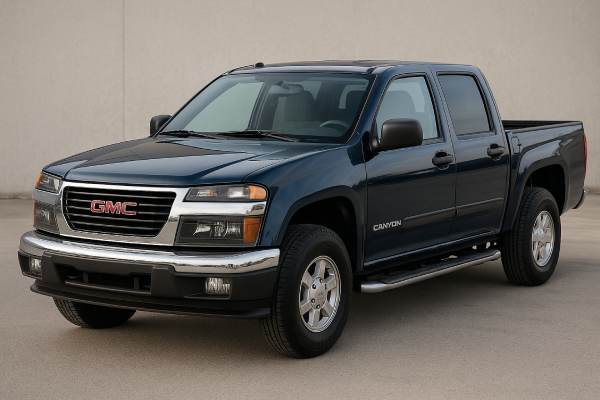
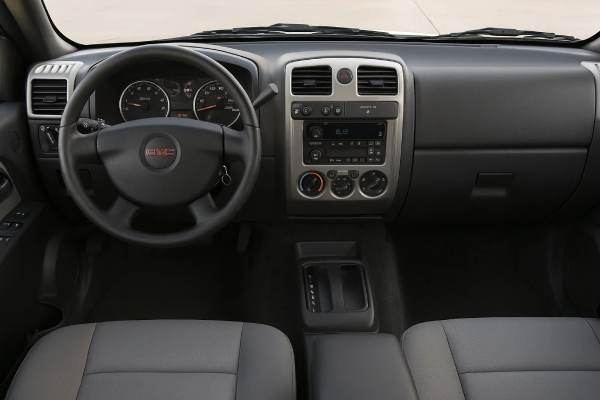
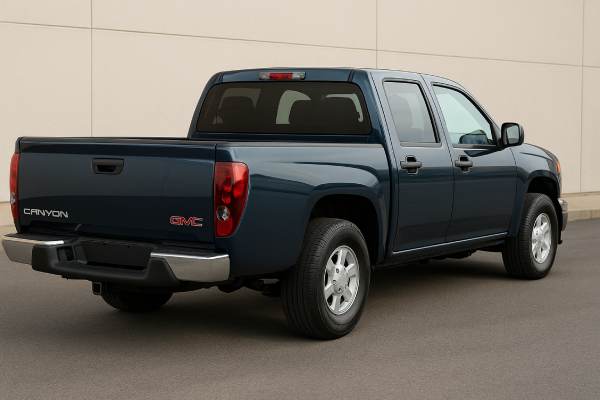
The 2007–2012 GMC Canyon with the 3.7-liter LLR inline-five is a very specific niche in the pickup world: compact by today’s standards, body-on-frame, rear-wheel drive, and tuned to work as a real truck rather than just a lifestyle accessory. You get 242 hp, a stout 4-speed automatic, and a chassis designed for towing and hauling more than its size suggests. At the same time, this generation predates modern driver-assist systems and has a few age-related issues buyers should understand.
In this guide we focus on the facelifted GMT355 Canyon in RWD, 3.7 LLR, 242 hp form, covering specs, dimensions, performance, reliability patterns, safety ratings, maintenance strategy, and how it compares with rivals. The goal is simple: help you decide whether this particular configuration fits your use case, and if you already own one, how to look after it so it continues to do honest work for years to come.
Key Takeaways
- Strong 3.7 LLR inline-five (242 hp, 328 Nm) with simple, proven 4L60-E automatic and RWD, well suited to light towing and mixed work use.
- Compact footprint (≈207 in length, 126 in wheelbase) makes it easier to park and maneuver than many newer midsize trucks, yet still offers over 1,100 lb payload in typical crew-cab trims.
- Crash protection is mixed: good or acceptable frontal ratings, but poor side-impact scores for crew cabs without side airbags; stability control becomes more widely available over the facelift years.
- Watch for timing-chain noise, cylinder-head/valve issues, exhaust manifold cracking, and age-related cooling and suspension wear; neglected trucks can get expensive quickly.
- Sensible interval for a used Canyon 3.7: engine oil and filter every ~8,000 km / 5,000 miles or 6 months, with ATF, coolant, and diffs on a 60,000–80,000 km / 40,000–50,000-mile pattern unless your service records prove recent work.
Guide contents
- GMC Canyon 3.7 Overview
- Engine and Specs for Canyon
- Canyon Trims and Safety Tech
- Reliability and Common Canyon Issues
- Canyon Maintenance and Buying Tips
- Driving Impressions and Performance
- How Canyon Stacks Against Rivals
GMC Canyon 3.7 Overview
The 3.7-liter LLR Canyon sits in the middle of the first-generation lineup, above the 2.9-liter four-cylinder but below the 5.3-liter V8. It is based on GM’s “Atlas” inline-engine family, shared with the Colorado and some SUV models. In facelift 2007–2012 form, the 3.7 makes 242 hp and 328 Nm (242 lb-ft) and is normally paired with a 4L60-E 4-speed automatic.
For rear-wheel-drive (4×2) crew-cab and extended-cab versions, you get:
- Body-on-frame construction on the GMT355 platform.
- RWD with an open rear differential by default; many trucks have the optional G80 automatic locking differential.
- Compact external size: about 207 in (5260 mm) long and 68–69 in wide, which makes it manageable in city parking and older garages.
- Typical curb weight around 1,700–1,850 kg (3,750–4,100 lb) depending on cab, box, and equipment.
The facelift years brought small but important tweaks compared with early trucks:
- Revised front styling and interior trim.
- Power bump for the 3.7 and the availability of the 5.3 V8.
- Stability control (StabiliTrak) introduced and then spread across more trims.
- Incremental improvements in rustproofing and cabin refinement.
On the road, the Canyon 3.7 behaves like a traditional compact pickup: steering is fairly slow but predictable, the rear end is light when unladen, and the truck prefers steady, deliberate inputs over aggressive driving. The payoff is a chassis that feels honest and straightforward to work on, with plenty of aftermarket support.
If you tow a small camper, run light commercial loads, or want a truck that still fits in tight spaces, this configuration can be a sweet spot—provided you go in with open eyes on fuel economy and age-related repairs.
Engine and Specs for Canyon
Engine and performance (LLR 3.7 inline-five)
For the facelift 2007–2012 Canyon, the 3.7 engine is the LLR Atlas inline-five:
| Item | Spec* |
|---|---|
| Engine code | LLR inline-five |
| Layout and valvetrain | DOHC I-5, 4 valves per cylinder, variable valve timing on intake |
| Displacement | 3.7 L (3,654 cc) |
| Bore × stroke | 95.5 × 102.0 mm (3.76 × 4.02 in) |
| Compression ratio | Around 10.0:1 (varies slightly by market and calibration) |
| Induction | Naturally aspirated |
| Fuel system | Sequential multi-point fuel injection |
| Max power | 242 hp (≈180 kW) @ 5,600 rpm |
| Max torque | 328 Nm (242 lb-ft) around 2,800–4,600 rpm |
| Timing drive | Chain-driven camshafts |
| Emissions standard | U.S. Tier 2 / LEV II, roughly Euro 4 equivalent for export markets |
*Exact ratings can vary slightly by model year and market.
Fuel economy (2WD, automatic, 3.7 I-5)
EPA figures for comparable 2WD Canyon/Colorado 3.7 models list roughly:
- City: ~13.8–14.7 L/100 km (16–17 mpg US)
- Highway: ~10.2–10.7 L/100 km (22–23 mpg US)
- Combined: ~12.4–12.7 L/100 km (18–19 mpg US)
Real-world owner reports suggest that:
- At 120 km/h (75 mph) on the highway, expect closer to 12–14 L/100 km (17–20 mpg US) depending on load, tires, and wind.
- Around town with short trips or heavy cargo, consumption can fall to the mid-teens L/100 km (low-to-mid teens mpg).
Aerodynamic data (Cd and frontal area) is not widely published for GMT355, but drag is typical for a boxy, body-on-frame pickup.
Transmission and driveline (RWD focus)
Most RWD 3.7 Canyons use the 4L60-E 4-speed automatic:
| Item | Spec |
|---|---|
| Transmission | 4L60-E 4-speed automatic, electronically controlled |
| Typical gear ratios | 1st 3.06, 2nd 1.63, 3rd 1.00, 4th 0.70, reverse 2.29 |
| Final drive (common) | Often 3.73:1 on many tow-oriented 3.7 trucks; some use 3.42:1 — check the axle RPO code on the glovebox label |
| Drive type | RWD (4×2), live rear axle |
| Differential | Open by default; optional automatic locking differential (G80) on many trims |
| Tow/haul mode | Available on most 3.7 trucks to adjust shift points under load |
The 4L60-E is well-understood in the aftermarket. Fluid spec is Dexron-VI ATF, and total system fill is usually around 11–12 quarts (≈10–11 L), though a simple pan drop replaces much less.
Chassis, dimensions, and capacities (typical crew-cab RWD)
Exact figures vary slightly by cab/bed and trim, but a crew-cab 3.7 RWD Canyon typically looks like this:
| Item | Spec (approximate for 3.7 crew-cab RWD) |
|---|---|
| Suspension (front) | Independent, coil spring with wishbones |
| Suspension (rear) | Solid axle with leaf springs |
| Brakes | Front ventilated discs, rear drums with ABS |
| Wheels/tyres | Commonly 16-inch rims with 235/75R16 or similar all-season tires |
| Length | ≈5,260 mm (207.1 in) |
| Width (body) | ≈1,742 mm (68.6 in) |
| Height | ≈1,720 mm (67–68 in) depending on suspension and tires |
| Wheelbase | 3,200 mm (126 in) |
| Ground clearance | ≈195–260 mm (7.7–10.4 in), depending on suspension package and tires |
| Curb weight | ~1,700–1,850 kg (3,750–4,100 lb) |
| GVWR | ~2,268–2,404 kg (5,000–5,300 lb) |
| Fuel tank | ~72 L (19 US gal) |
| Bed length (crew-cab) | ≈1,560 mm (61.4 in) |
| Cargo volume (bed) | ~1,240–1,250 L (≈44 ft³) |
Performance and towing
- 0–100 km/h (0–62 mph): roughly high-9 to low-11 seconds depending on weight, axle ratio, and conditions.
- Top speed: electronically limited, typically ~160–170 km/h (100–105 mph).
- Maximum towing (properly equipped): up to 2,722 kg (6,000 lb) for extended/crew-cab 3.7 and V8 models with the tow package; some RWD 3.7s will be rated lower — always check the door-jamb sticker and manual for your VIN.
- Payload: commonly around 1,050–1,200 lb (≈475–545 kg) in crew-cab RWD trims.
Fluids, electrical, and key service specs (high-level)
Exact capacities and torque values vary by year and drivetrain. Always confirm against the VIN-specific owner’s or service manual, but in broad terms:
- Engine oil:
- Type: 5W-30 meeting GM specifications (later trucks typically call for dexos1-approved oil).
- Capacity: around 5.7 L (≈6.0 US qt) with filter for the 3.7 crew cab.
- Coolant:
- Type: long-life DEX-COOL OAT coolant in a 50/50 mix with clean water.
- Transmission/ATF:
- Fluid: Dexron-VI ATF for 4L60-E.
- Differential: typically 75W-90 gear oil meeting GL-5 spec (check axle code).
- A/C refrigerant: R-134a-era system; charge quantity varies — confirm on the under-hood label.
- Electrical:
- Alternator outputs and battery sizes vary by trim, but most trucks use a 12 V starting battery in the 600–700 CCA range.
For critical torque specs (wheel lug nuts, suspension hardware, head bolts, etc.), use the official service documentation for your exact year and engine; generic values are not safe substitutes.
Canyon Trims and Safety Tech
Trims and equipment (RWD, 3.7 focus)
Across 2007–2012, the Canyon range varied by market but typically included:
- Work Truck / Base:
- Often 2.9 four-cylinder, but some fleet RWD trucks were ordered with the 3.7.
- Vinyl or basic cloth seats, manual locks/windows, simple audio.
- SLE / SLE1 / SLE2:
- Main trim for private buyers. 3.7 was common here, especially in crew-cab form.
- Power accessories, upgraded cloth, alloy wheels, nicer audio, more color choices.
- SLT / higher trims (in some markets):
- Leather seating, additional power features, and appearance upgrades.
- Packages:
- Z85 standard suspension.
- Z71 Off-Road (more common on 4×4, but some 4×2 trucks share components): firmer suspension, skid plates, all-terrain tires.
- Trailer or towing packages: hitch, wiring, sometimes an auxiliary transmission cooler and revised axle ratio.
Quick visual identifiers for a 3.7 RWD facelift truck:
- “3.7L” or inline-five references in marketing/used listings; check the under-hood emission label for displacement.
- RPO code LLR on the glovebox label confirms the 3.7, while other codes identify different engines.
- RPO G80 indicates the locking rear differential, which is desirable for traction.
Year-to-year, options and trim names shuffle slightly, but the core mechanical spec of the 3.7 RWD Canyon stays essentially the same.
Safety ratings
IIHS
For Colorado/Canyon twins in this generation, tests show:
- Moderate overlap front (extended cab): generally Good overall.
- Moderate overlap front (crew cab): typically Acceptable, with some footwell intrusion.
- Side impact (crew cab, without side airbags): Poor, with high torso and pelvis loads.
- Roof strength and head restraints: often Marginal.
These ratings apply across a range of model years, including the facelifted 2007–2012 trucks.
NHTSA
NHTSA’s 5-star ratings for comparable Canyon 4-door RWD trucks show mid-pack performance for frontal and rollover protection, with detailed results depending on specific body style and drivetrain.
The key takeaway:
- Front crash performance is broadly acceptable for its era.
- Side-impact protection on crew-cab models without side airbags is weak; look for trucks that have side curtain airbags, especially if you regularly carry passengers.
Passive safety and child-seat provisions
- Airbags: dual front airbags standard. Side curtain airbags were optional on many earlier models and more widely available in later years; verify presence by looking for SRS labeling on the A- and B-pillars.
- Child seats: LATCH/ISOFIX anchors are available for rear seating positions in crew-cab models. The rear bench is usable for most forward-facing child seats; large rear-facing seats can be tight if front occupants are tall.
- Structural notes: The cab structure is robust in front crashes but shows notable intrusion in certain side and roof tests; careful seat belt use and proper child-seat installation are essential.
Active safety and ADAS
This generation predates the modern suite of ADAS (no factory automatic emergency braking, lane-keep assist, or radar cruise). What you do get, depending on year and trim, is:
- ABS (anti-lock brakes): standard.
- Traction control and stability control (StabiliTrak): phased in and more common on later facelift models, especially higher trims.
- Tire-pressure monitoring system (TPMS): standard from mid-2000s onward.
When repairing or modifying the truck (alignment, suspension lifts, tire changes), remember that stability-control and ABS calibration assumes the original tire diameter and suspension geometry. Major deviations can alter behavior in emergency maneuvers.
Reliability and Common Canyon Issues
The 3.7 LLR Canyon can be durable — many owners report well over 200,000 miles (320,000 km) — but it demands proper maintenance. The main issues fall into a few patterns.
Engine and top-end issues (LLR/Atlas family)
1. Cylinder head and valve problems
- Symptoms: rough idle, misfire codes (often on a single cylinder), loss of power, sometimes coolant loss, and hard starting.
- Root cause: valve seat wear or valve-guide issues on some Atlas engines, including LLR, can cause poor sealing. GM has published service bulletins that reference valve and head replacement procedures for this family.
- Fix: cylinder-leakage test to confirm; if leakage at valves is found, the official remedy is cylinder-head repair or replacement with updated parts and careful valve seating.
2. Timing chain wear and noise
- Symptoms: rattling or clattering at cold start or hot idle, camshaft position codes, and sometimes poor performance.
- Root cause: chain stretch and/or tensioner and guide wear, often accelerated by infrequent oil changes or low oil level.
- Fix: depending on severity, timing chain, guides, and tensioner replacement. As a pre-purchase check, listen for chain rattle on cold start and when hot at idle.
3. Exhaust manifold cracking
- Symptoms: ticking noise at cold start that quiets when hot, exhaust smell in engine bay, and occasionally engine-bay heat issues.
- Root cause: heat-stressed cast manifolds; known to affect the related 2.9 and 3.7 engines.
- Fix: replace the manifold (and hardware); some owners upgrade to aftermarket manifolds or headers. On used trucks, visually inspect the manifold and listen closely near the firewall on cold start.
Drivetrain and chassis
4. 4L60-E transmission behavior
In RWD Canyon applications, the 4L60-E is generally adequate if fluid is serviced:
- Common symptoms: harsh or delayed shifts, flare between gears, slipping under load, or shudder on upshifts.
- Causes: worn clutches, valve-body issues, degraded or incorrect ATF, or torque-converter wear. High-mileage units that never had a fluid change are especially at risk.
- Pre-purchase checks:
- Ensure the ATF is not burnt (very dark and smelling burnt).
- On a test drive, perform light and moderate acceleration through all gears and check for flares or bangs.
- Fix: in early stages, a full fluid/filter service with Dexron-VI can improve behavior; severe cases require a rebuild or replacement.
5. Suspension, steering, and wheel bearings
- Front ball joints and control-arm bushings can develop play, causing clunks, vague steering, and uneven tire wear.
- Rack-and-pinion steering may show on-center slop at higher mileages.
- Rear leaf-spring bushings and shackles can rust and squeak, especially in salted climates.
These issues are typical for body-on-frame trucks of this age rather than unique defects.
Cooling system and electrical
- Cooling: thermostat problems, partially clogged radiators, and aging hoses can lead to slow warm-up or overheating if ignored. Regular coolant changes help.
- Electrical: aging door-lock actuators, window switches, and instrument-cluster bulbs are common small annoyances; major wiring faults are less frequent.
Recalls, TSBs, and extended coverage
Notable factory actions affecting Colorado/Canyon trucks include:
- Special coverage for certain cylinder-head/valve issues on earlier Atlas engines, with procedures for replacing heads and valves when leakage is confirmed.
- Coverage and technical documents addressing exhaust manifold fractures on related inline engines, which share similar design principles with the 3.7.
Always run the VIN through:
- GM’s owner portal or local distributor lookup.
- The official NHTSA recall database (for U.S.-market trucks) or equivalent in your region.
Ask for printed service records showing recall and service-campaign completion.
Reliability verdict and what to monitor
When serviced on time with quality oil and coolant, the 3.7 LLR is generally considered robust; many owners highlight its longevity compared with some later, more complex engines.
Key monitoring points:
- Chain noise and oil level (check at every fuel fill for a newly acquired truck until its consumption is known).
- Smooth hot idle with no misfire; persistent misfire deserves prompt diagnosis.
- Exhaust manifold tick and any coolant smells.
- Transmission shift quality as mileage approaches or exceeds 160,000 km / 100,000 miles.
Canyon Maintenance and Buying Tips
Practical maintenance schedule (guideline)
Intervals below are general best-practice for a used Canyon 3.7 and may be shorter than GM’s original recommendations. Always adjust based on your VIN-specific manual, driving conditions, and oil-life monitor.
Engine and ignition
- Engine oil and filter: every 8,000 km / 5,000 miles or 6 months, whichever comes first; sooner if you tow or do many short trips.
- Engine air filter: inspect every 20,000 km / 12,000 miles; replace around 40,000 km / 25,000 miles or sooner in dusty use.
- Cabin air filter: if equipped, replace every 24–36 months.
- Spark plugs: iridium plugs typically around 160,000 km / 100,000 miles; many owners choose 100,000 km / 60,000 miles for peace of mind.
- Fuel filter: if fitted externally, 80,000–100,000 km is sensible.
Cooling and belts
- Coolant (DEX-COOL): replace every 5 years or 160,000 km (100,000 miles); with a used truck of unknown history, treat the first flush as urgent.
- Thermostat and radiator cap: consider replacing preventatively around 10+ years or 160,000 km if you are already draining coolant.
- Serpentine/aux belt: inspect annually; replace at the first signs of cracking or glazing, or around 100,000 km / 60,000 miles.
- Hoses: squeeze-test annually and replace if soft, swollen, or cracked.
Driveline and brakes
- Automatic transmission (4L60-E):
- Drain and refill with filter every 60,000–80,000 km / 40,000–50,000 miles, particularly on trucks that tow or see city use.
- Rear differential: gear oil change every 80,000–100,000 km / 50,000–60,000 miles; more often if towing.
- Brake fluid: flush every 2–3 years regardless of mileage.
- Pads and rotors: inspect at each tire rotation; rear drums deserve internal inspection at least every second pad change up front.
- Alignment and tire rotation: rotate every 10,000–12,000 km (6,000–7,500 miles) and check alignment annually or after hitting large potholes.
Electrical and other
- 12 V battery: test annually after year 4–5; many last 4–6 years in harsh climates.
- A/C performance: if cooling weakens, have the system leak-checked rather than just “topping off” refrigerant.
Buyer’s checklist for a used Canyon 3.7 RWD
When inspecting a truck:
- Service records and recalls
- Look for evidence of regular oil changes, coolant service, and transmission fluid changes.
- Ask for a printout of completed recalls and special coverages from a dealer.
- Engine health
- Cold start: listen for timing-chain rattle and exhaust manifold tick.
- Warm idle: feel for misfires; the 3.7 should idle with only a faint inline-engine thrum.
- Check coolant reservoir and oil filler cap for contamination.
- Transmission and driveline
- Test drive through all gears, light and heavy throttle. Shifts should be smooth, without big flares or bangs.
- Check for driveline clunks on on-off throttle transitions. Mild play is normal for a pickup; loud clunks are not.
- Suspension, steering, and brakes
- Listen for front-end knocks over bumps.
- Check for uneven tire wear indicating alignment or suspension issues.
- On a brake test from moderate speed, the truck should track straight with no pulsation.
- Rust and body
- Inspect frame rails, rear leaf-spring mounts, and fuel-tank straps for corrosion (especially in salt-belt regions).
- Check cab corners, rocker panels, and bed seams.
- Safety equipment
- Confirm the presence of side curtain airbags if they matter to you.
- Check that ABS and stability-control lights come on at key-on and go out after startup.
Which years and specs are most attractive?
- Later facelift years (2009–2012) with documented maintenance, stability control, and — if available — side curtain airbags tend to be the best all-rounders.
- Trucks with the G80 locking differential are more confident in wet, snow, or loose surfaces.
- Avoid heavily lifted or heavily tuned examples unless you can confirm the work was done professionally and the usage was reasonable.
Long-term durability is good when the truck is serviced and not continuously overloaded. As with any older pickup, budgeting for some catch-up maintenance in the first year (fluids, belts, bushings) is wise.
Driving Impressions and Performance
Powertrain character
The 3.7-liter LLR inline-five has a distinct feel compared with typical four- or six-cylinder pickups:
- Low-to-mid-range torque is adequate rather than strong; the engine wakes up above about 2,500 rpm.
- The 4L60-E’s wide 1st gear (3.06:1) helps the truck step off the line reasonably well, even when loaded.
- At part throttle, the transmission tends to upshift early for fuel economy; using “3” instead of “D” around town can keep revs where the engine feels more responsive.
In everyday driving:
- Expect a smooth but slightly growly engine note; the five-cylinder firing order gives a characteristic hum.
- On long grades, the truck will often drop to 3rd and hold ~3,000–3,500 rpm; this is normal behavior.
- Kickdown response is acceptable but not instantaneous; planning overtakes is advisable.
Ride, handling, and NVH
By modern standards, the Canyon feels old-school:
- Unladen ride can be choppy, especially over broken pavement, because the rear leaf springs are tuned to handle payload.
- Steering is relatively slow but stable; the truck likes smooth, deliberate inputs and feels secure at highway speeds.
- Cabin noise is moderate: wind and tire noise are noticeable on coarse asphalt, and the engine is clearly audible at high revs, but it’s generally comfortable for long trips at legal speeds.
With weight in the bed (say 200–300 kg / 400–600 lb):
- Ride quality improves noticeably.
- Rear-axle hop is reduced, and traction on wet or gravel surfaces is much better.
Real-world efficiency and range
Using EPA and owner data as a baseline, a healthy Canyon 3.7 RWD typically delivers:
- City: 14–16 L/100 km (15–17 mpg US).
- Highway at 100–110 km/h (60–70 mph): 11–12 L/100 km (19–21 mpg US), if you keep speeds moderate.
- Highway at 120 km/h (75 mph) or with a light trailer: 12–14 L/100 km (17–20 mpg US).
With a 19-gallon (~72 L) tank, realistic range is:
- About 430–500 km (270–310 miles) in mixed driving, assuming a comfortable fuel-reserve margin.
Towing and load behavior
When optioned and configured correctly (hitch, cooler, and appropriate axle ratio), the RWD 3.7 Canyon is rated to tow up to 2,722 kg (6,000 lb), though many owners find the practical sweet spot lower, especially in hot or hilly regions.
In use:
- With a 1,500–2,000 kg (3,300–4,400 lb) trailer, the truck is capable but will spend a lot of time in 3rd gear; transmission temperature management (cooler, clean fluid) becomes important.
- Stability is decent as long as tongue weight is correct and suspension and shocks are in good shape.
- Braking performance depends heavily on trailer brakes; without them, stopping distances increase significantly, as with any midsize pickup.
Under full payload:
- The rear suspension squats but remains composed if leaf springs and shocks are healthy.
- Steering gets lighter and more sensitive to crosswinds, so careful loading (keeping heavy items forward in the bed) helps.
Traction and control
For a RWD-only truck, traction in rain and snow depends highly on:
- Tire quality and type (all-season vs all-terrain vs winter tires).
- Whether the truck has a G80 locking differential, which greatly improves traction when one rear wheel is on a slippery surface.
Electronic stability control, when fitted, intervenes earlier than some drivers expect but can be a safety net in emergency maneuvers. In low-grip situations without weight in the bed, a careful right foot is still essential.
How Canyon Stacks Against Rivals
When new, the 2007–2012 Canyon 3.7 RWD competed with:
- Toyota Tacoma (2.7 and 4.0 V6)
- Nissan Frontier (2.5 and 4.0 V6)
- Ford Ranger (last narrow-body generation)
- Its own twin, the Chevrolet Colorado
Here’s how the 3.7 Canyon RWD compares in key areas.
Strengths
- Manageable size with real truck capability
- Shorter and narrower than many newer midsize pickups, yet with competitive payload and respectable towing in the right configuration.
- Simple, well-known mechanical package
- Naturally aspirated engine, conventional automatic, and body-on-frame construction make it relatively straightforward to service.
- The Atlas engine family has seen enough volume that parts and knowledge are widely available.
- Value on the used market
- Compared with Tacomas of the same era, used Canyons usually cost less for similar condition and mileage.
- For buyers willing to stay on top of maintenance, this can make the Canyon a cost-effective work or hobby truck.
Trade-offs
- Crash-test performance
- The Tacoma and later Frontier generations generally fare better in side-impact and roof-strength ratings.
- The Canyon’s poor side ratings without side airbags are a notable disadvantage if safety is at the top of your list.
- Fuel economy
- The 3.7 L inline-five is not particularly efficient compared with some four-cylinder rivals or more modern V6/4-cyl turbo trucks; expect mid-teens mpg in mixed driving.
- Interior and refinement
- Materials and ergonomics feel dated compared with newer midsize trucks.
- Road and wind noise are higher than many modern competitors, although this is true of most mid-2000s pickups.
Who the Canyon 3.7 RWD suits best
This configuration makes the most sense if:
- You want a compact, body-on-frame pickup that still fits in a standard garage.
- You value simple, proven hardware over the latest tech.
- You’re comfortable accepting somewhat higher fuel use and some age-related fixes as the price of entry.
If you prioritize:
- Top-tier crash performance,
- Modern driver-assist tech, or
- Excellent fuel economy,
then a newer generation Canyon, a Tacoma, or even a unibody pickup/SUV may be a better fit. But for owners who appreciate its straightforward character, the 3.7 RWD Canyon remains a capable and honest work partner.
References
- Manuals and Guides | Vehicle Support 2025 (Owner’s Manual)
- Vehicle Detail Search – 2009 GMC CANYON 4 DR RWD | NHTSA 2025 (Recall Database)
- 2009 GMC Canyon 2025 (Safety Rating)
- Gas Mileage of 2009 GMC Canyon 2025 (Fuel Economy Data)
- GMC Canyon I Crew cab 3.7 (242 Hp) Automatic 2024 (Specifications)
Disclaimer
This article is for informational purposes only and is not a substitute for professional diagnosis, repair, or safety advice. Specifications, torque values, service intervals, and equipment details can vary by model year, VIN, market, trim level, and installed options. Always verify critical information against the official owner’s manual, factory service documentation, and current technical bulletins for your specific vehicle, and consult a qualified technician before performing repairs or modifications.
If you found this guide useful, you’re welcome to share it with other owners or shoppers on your preferred platforms (Facebook, X/Twitter, forums, etc.) to help support accurate, practical car information.