
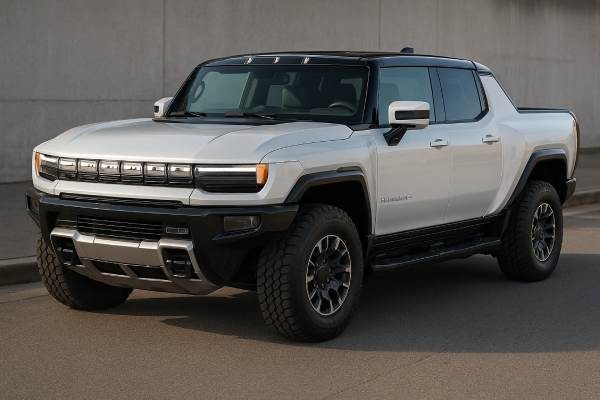
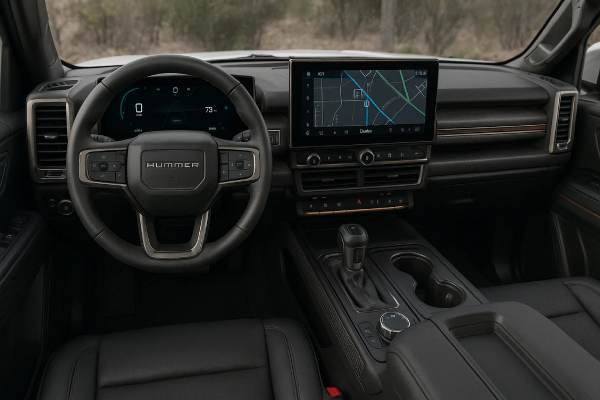
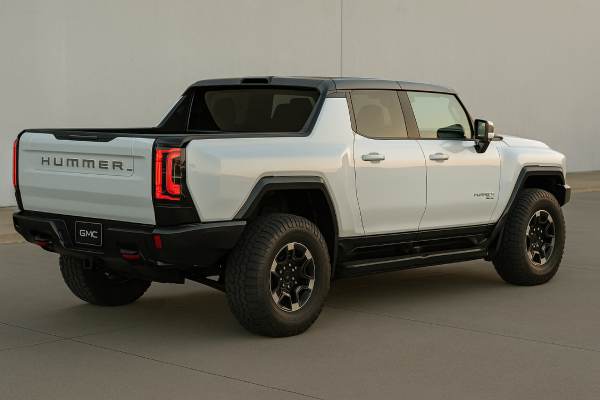
The GMC Hummer EV Pickup takes the old Hummer idea—huge presence, extreme off-road ability—and rebuilds it around GM’s Ultium electric platform. In tri-motor EV3X and Edition 1 form, it delivers up to 1000 hp, Watts To Freedom launch mode, four-wheel steering with CrabWalk, and serious off-road hardware, all wrapped in a luxury-oriented cabin.
At the same time, it is a Class 3 heavy-duty electric truck weighing around 9,000 lb, which has real implications for efficiency, tire wear, braking, and safety considerations on the road. Official range certification and ratings have been complicated by its heavy-duty classification, and multiple battery-related recalls mean early-build owners should pay close attention to service records.
This guide focuses on the tri-motor Ultium-drive pickup (BT1 platform) from 2021 to the present, with an emphasis on how it actually lives and drives: specs and charging, reliability and recalls, maintenance expectations, and how it stacks up against other electric trucks like the Rivian R1T, Ford F-150 Lightning, Cybertruck, and Silverado EV.
At a Glance
- Tri-motor Ultium e4WD delivers up to 1000 hp, CrabWalk four-wheel steering, and Watts To Freedom launches around 3.0 s 0–60 mph.
- Huge 24-module pack (around 246.8 kWh gross, about 212.7 kWh usable) enables up to roughly mid-300-mile rated range, but real-world efficiency is poor versus rivals.
- Early trucks have battery-pack sealing and high-voltage connection recalls that can cause loss of propulsion; verifying recall completion is essential for any used purchase.
- Tire rotation and brake/thermal-system inspections about every 7,500 miles or 12 months are a realistic minimum; home AC charging at up to 19.2 kW typically means an overnight 0–100% charge.
Explore the sections
- GMC Hummer EV Pickup Overview
- Hummer EV Pickup Specs and Data
- Hummer EV Trims, Safety and ADAS
- Reliability, Issues and Service Actions
- Maintenance Schedule and Buying Guide
- Driving Experience and Performance
- Hummer EV Versus Other Electric Trucks
GMC Hummer EV Pickup Overview
The Hummer EV Pickup rides on GM’s BT1 skateboard platform and was the first Ultium-powered flagship truck to reach customers, starting with the Edition 1 in late 2021. In tri-motor form (one motor front, two rear), the truck uses GM’s Ultium Drive e4WD system, combining massive power with torque-vectoring capability and rear-wheel steering.
GM markets the tri-motor pickup at “up to 1000 hp” with a headline torque figure quoted at the wheels through gearing rather than raw motor output. Independent analyses place combined motor torque in the four-digit lb-ft range, which still makes it one of the most powerful production pickups ever sold.
The Edition 1 and EV3X trims pair this power with unique features such as:
- Watts To Freedom (WTF): a preconditioned launch mode that lowers the air suspension and primes the battery for supercar-grade 0–60 mph runs.
- Four-wheel steering with CrabWalk: rear wheels can steer in phase with the fronts at low speed, enabling diagonal movement to slip around obstacles or line up in tight off-road situations.
- Adaptive air suspension with Extract Mode: raises the truck significantly to clear rocks and obstacles on the trail.
Physically, the pickup is enormous, roughly 5.5 m (about 216 in) long and over 2.1 m (about 86 in) wide, with a curb weight around 9,000–9,200 lb depending on trim. It is classified as a Class 3 heavy-duty vehicle with a GVWR above 10,000 lb, which exempts it from some light-vehicle regulations and conventional crash tests.
That size and weight are core to the Hummer EV’s personality. Off-road, the wide stance, low battery-mounted mass, and sophisticated 4×4 hardware (locking e-diffs, 35-inch tires in off-road packages) let it walk through technical terrain that challenges smaller trucks. On-road, the same mass translates into very high energy consumption, long braking distances compared with lighter EVs, and increased wear on tires and suspension. Many owners treat it as a halo toy, adventure rig, or brand statement more than an everyday work truck.
Hummer EV Pickup Specs and Data
This section focuses on the tri-motor Edition 1 and EV3X pickup with the 24-module Ultium battery, which represents the full 1000 hp configuration.
Powertrain, Battery, and Efficiency
The tri-motor Hummer EV uses three permanent-magnet motors—one on the front axle and a twin-motor e-axle at the rear—driven by GM’s Ultium high-voltage platform.
| Parameter | Value | Notes |
|---|---|---|
| Drive motors | 3 × permanent-magnet synchronous (1 front, 2 rear) | Ultium Drive e4WD layout |
| System voltage | Up to 800 V DC fast-charge; about 400 V nominal per pack segment | 24-module pack can reconfigure for 800 V charging |
| Battery chemistry | Nickel-manganese-cobalt large-format pouch cells | Ultium family |
| Traction battery | ≈246.8 kWh gross / ≈212.7 kWh usable; 24 modules | One of the largest packs in a consumer EV |
| Max power | Up to 1000 hp (~746 kW) | Tri-motor pickup configuration |
| Rated range (24-module 3X) | Roughly low-to-high 300 miles depending on wheels and options | 18″ off-road vs 22″ street wheels change range noticeably |
| Rated range (20-module 3X) | Roughly high-200 to low-300 miles | Lighter but smaller pack |
| Real-world highway (75 mph) | Roughly 45–47 kWh/100 km, about 280–300 miles | Heavily affected by wheel/tire choice and weather |
| Aerodynamics | Boxy body, high frontal area | Significantly worse aero than crossover EVs |
The key takeaway is that the Hummer EV trades efficiency for capability and presence; its pack is closer in size to heavy-duty commercial EVs than to most passenger trucks.
Driveline and Charging
The Hummer EV uses single-speed reduction gearboxes on each e-axle and supports both high-power DC fast charging and strong onboard AC charging for home or workplace use.
| Parameter | Value | Notes |
|---|---|---|
| Transmission | Single-speed reduction gears front and rear | No multi-speed gearbox |
| Drive type | e4WD (front + rear e-axles) | Torque vectoring via dual rear motors |
| Charging connector (AC/DC) | CCS1 in North America | Future models may adopt NACS via adapters or factory ports |
| Onboard AC charger | Up to 19.2 kW | Requires 240 V, 80 A circuit for full rate |
| DC fast-charge peak | Around 300–350 kW on compatible hardware | Best conditions: warm pack, low SOC, powerful charger |
| Typical DC window | Strong output from about 10–55% SOC, taper above ~70% | Plan trips around 10–80% |
| 10–80% DC time | Roughly 40–45 minutes in good conditions | Varies with temperature and charger |
| AC 0–100% time | About 12–14 hours at 19.2 kW | Slower on 11.5 kW or 7.2 kW home chargers |
| Battery preconditioning | Via navigation to DC fast charger | Warms or cools pack before arrival |
| Bidirectional capability | Limited V2L-style usage publicly discussed so far | Less bidirectional marketing than Silverado EV or Lightning |
Performance and Capability
| Parameter | Value | Notes |
|---|---|---|
| 0–60 mph | ≈3.0 s (Watts To Freedom), around 3.3–3.5 s in normal modes | Extremely quick for a full-size truck |
| Top speed | ~106 mph (170 km/h) | Software-limited |
| Braking distance | Long by performance-car standards due to mass | Depends heavily on tires and conditions |
| Towing capacity | Around 7,500–12,000 lb (3,402–5,443 kg) | Higher ratings tied to specific 3X configurations |
| Payload | Roughly 1,300 lb (≈590 kg) | Limited by GVWR and pack weight |
| Bed | Short crew-cab-style bed with MultiPro tailgate | Lifestyle-focused rather than heavy work |
Under towing near the limit, expect range to roughly halve. That is typical of current EV trucks, but the Hummer’s efficiency deficit amplifies the effect.
Chassis and Dimensions
| Parameter | Value | Notes |
|---|---|---|
| Suspension | Independent front and rear with adaptive air suspension | Extract Mode provides additional lift |
| Steering | Electric power steering with rear-wheel steer | Rear steer greatly aids low-speed maneuvering |
| Brakes | Large four-wheel discs with regenerative blending | Friction brakes still work hard on long descents |
| Ground clearance | Around 10 in in normal height; significantly more in Extract Mode | Varies with suspension setting |
| Length / width / height | ≈216 in × 86+ in × about 79 in | Very large footprint |
| Wheelbase | ~135 in | Comparable to crew-cab full-size pickups |
| Turning circle | Much tighter than size suggests | Thanks to rear-wheel steering |
| Curb weight | Around 9,000–9,200 lb | Varies by trim and options |
Safety and Driver Assistance
The Hummer EV pickup uses GM’s latest electronics for both ADAS and infotainment, including Super Cruise on many higher trims.
Key points:
- Crash-test ratings: as a Class 3 heavy-duty truck, it has not been widely tested or rated by NHTSA or IIHS; many databases list it as “Not rated.”
- Airbags: front, side, and seat-mounted airbags are present, but the pickup lacks side curtain airbags because of the removable roof structure, which raises rollover ejection concerns in severe crashes.
- ADAS suite typically includes forward collision warning with automatic emergency braking, lane-keep assist, blind-spot monitoring, rear cross-traffic alert, surround-view cameras, and available Super Cruise with hands-free highway driving and automatic lane changes.
AD
AS calibration after collision repairs, windshield replacement, or suspension work is important, especially on trucks with larger off-road tires or altered ride heights.
Electrical and Service Fluids
GM does not publish all component-level specs publicly, but a few high-level points are clear:
- Ultium vehicles use an integrated power electronics module, liquid-cooled pack and inverters, and separate coolant loops for battery and drive units.
- The Hummer EV uses a conventional 12 V battery to support accessories and safety systems; testing it periodically is important because many EV issues start as low-voltage problems.
- Coolant specifications and change procedures are EV-specific; mixing incorrect coolant can damage the battery or power electronics.
For exact fluid capacities and torque values for high-voltage connectors, drive units, and wheels, owners should always reference official GM service information rather than generic truck data.
Hummer EV Trims, Safety and ADAS
Over 2021–present, the Hummer EV pickup lineup has centered on three main trims: Edition 1, EV3X, and later 2X/2, with different motor counts and battery-module configurations.
Edition 1 (2022 launch)
- Tri-motor, 24-module pack, 1000 hp configuration with off-road focus.
- Standard Extreme Off-Road package: 35″ mud-terrain tires, beadlock-capable wheels, underbody armor and skid plates, front and rear lockers, and dedicated off-road camera views.
- Distinct white exterior with Edition 1 badging, specific interior trim, and high equipment content, including Super Cruise and the removable Infinity Roof panels.
EV3X
- Succeeds Edition 1 as the ongoing tri-motor halo trim.
- Offered in two main battery configurations: 24-module (maximum range) and later 20-module packs with lower range but reduced weight and cost.
- Available in “on-road” guise with 22″ wheels for higher towing ratings and better range, or with the Extreme Off-Road package on 18″ mud-terrains for maximum off-road ability.
Lower trims (2X / 2)
- Two-motor variants with lower output and, in some cases, smaller pack configurations and reduced tow ratings.
- Outside the 1000 hp scope of this article, but relevant for buyers prioritizing cost over maximum performance.
From a quick-identification standpoint:
- Most tri-motor trucks carry “Edition 1” or “3X” badging and often ride on either 18″ off-road wheels or 22″ street wheels with unique designs.
- VIN and build codes in GM systems indicate motor count and pack size; dealers can pull exact module configuration and any battery replacement history.
Safety ratings and structure
Because it is a Class 3 heavy-duty vehicle, the Hummer EV pickup falls outside core light-duty crash-test programs. Structural design uses the large Ultium battery pack as part of the floor structure, with strong rock rails and underbody protection on off-road trims.
However, the enormous weight and high front end raise concerns about crash energy imparted to lighter vehicles and vulnerable road users. The open-roof design with removable panels also means no side-curtain airbags; seat-mounted bags provide some side protection, but ejection risk in rollovers remains higher than in fully framed trucks.
ADAS feature evolution
Across Edition 1 and EV3X, common systems include:
- Forward collision alert with automatic emergency braking (vehicle and pedestrian).
- Lane-keep assist with lane-departure warning.
- Blind-spot monitoring and rear cross-traffic alert.
- Rear parking assist and 360° surround-view camera system, with specialized off-road camera views.
- Adaptive cruise control and Super Cruise hands-free highway driving on mapped roads, often including automatic lane changes and, in newer model years, enhanced towing support.
After collision repairs or suspension changes, ADAS sensors and cameras may need recalibration. Because many Hummer EVs run big tires and adjustable suspension heights, alignment and calibration should follow GM’s exact specifications.
Reliability, Issues and Service Actions
As one of the first Ultium products and a complex halo truck, the Hummer EV Pickup has seen several important recalls and service campaigns. Treating recall completion and software currency as non-negotiable is essential.
High-voltage battery and pack sealing (common / high severity)
Two major campaigns address water ingress and internal high-voltage connections:
- Improper urethane sealing of the high-voltage battery pack enclosure can allow water to enter, potentially leading to a no-start or loss of propulsion. The remedy is to replace the entire high-voltage battery pack and related components.
- Certain internal high-voltage connections within the pack may be out of position or incorrectly seated, risking high-resistance joints and loss of propulsion. The fix again involves pack replacement and updated diagnostics.
Symptoms typically include warning messages, reduced power, or failure to start. Packs replaced under these recalls are usually of updated design, which is a significant plus on a used truck. Always verify with a VIN recall check and a dealer service printout.
Charge-port, high-voltage connector corrosion, and satisfaction programs (occasional / medium–high severity)
Some customer-satisfaction programs address high-voltage connectors that can corrode and allow water into the pack area, again risking no-start or reduced propulsion. Upgraded parts, improved sealing, and stricter service procedures for connector handling aim to mitigate this.
Lighting and electronics recalls (occasional / low–medium severity)
- Tail lamp control software on some early trucks can leave lamps inoperative or stuck on. The remedy is updated taillight software or replacement of the taillamp assemblies.
Software and calibrations
Ultium vehicles rely heavily on software for battery management, charging curves, torque delivery, and ADAS. Over-the-air and dealer-applied updates have refined:
- Battery management system behavior, including diagnostics for sealing issues, cell imbalances, and thermal anomalies.
- Drive-unit calibration for smoother torque application and improved traction off-road.
- Charging behavior, including power limits after pack replacements or at high state-of-charge.
Often the official remedy for intermittent warnings or charging quirks is a software reflash or control-module update; replacing hardware without updating software can lead to repeat issues.
Chassis, brakes, and corrosion
- The combination of extreme curb weight and big off-road tires leads to relatively fast tire wear and high brake demands if regenerative braking is limited (for example, with a full pack or during heavy towing).
- Suspension bushings, ball joints, and steering components face large loads, especially with frequent off-road use or oversized aftermarket tires; early trucks should be carefully inspected for play and uneven tire wear.
- Underbody armor and the battery enclosure should be checked for corrosion or damage, particularly in salt-belt climates where de-icing chemicals can accumulate under skid plates.
High-voltage isolation and water ingress
Water intrusion into the battery enclosure is the headline issue for this truck. Typical symptoms include warning messages, no-start, sudden loss of propulsion, or unusual contactor noises. Diagnostic steps involve high-voltage isolation checks, inspection through dedicated drain/inspection ports, and strict handling and quarantine procedures for suspect packs.
These are high-skill operations reserved for EV-certified GMC dealers; independent shops without the proper tooling and training should not attempt high-voltage pack service.
Pre-purchase reliability checklist
When considering a used Hummer EV Pickup, request:
- Full GM service history, including recall completion and any pack replacements.
- Documentation of high-voltage connector or charge-port repairs.
- A current battery state-of-health report, noting remaining capacity versus the warranty threshold (typically 75% of original capacity within the battery warranty window).
- Evidence of regular tire rotations, brake inspections, and suspension checks.
Given the truck’s complexity and cost, a pre-purchase inspection at an EV-certified GMC dealer is strongly recommended.
Maintenance Schedule and Buying Guide
While the Hummer EV does not need oil changes, it is still a heavy, high-performance truck with significant maintenance needs. Official warranty and maintenance documentation provide the baseline, but a practical schedule looks like this.
Practical maintenance schedule (typical use)
Approximate intervals (whichever comes first):
- Every 7,500 miles or 12 months
- Rotate tires; inspect tread and sidewalls.
- Inspect brake pads, rotors, and calipers; confirm regenerative braking operation.
- Multi-point inspection of suspension joints, steering components, and underbody shields.
- Every 15,000 miles or annually
- Replace cabin air filter; check HVAC performance.
- Inspect high-voltage battery cooling system (hoses, fittings, radiator area for debris).
- Every 30,000 miles (or 2–3 years)
- Inspect drive-unit / reduction-gear fluid per GM guidance; replace only if specified by a technical bulletin or severe-use schedule.
- Replace brake fluid around 3–5 years to maintain corrosion resistance and pedal feel; confirm exact interval from the owner’s manual.
- Thorough inspection of charge port seals, wiring harnesses, and underbody high-voltage connectors for corrosion or damage.
- Every 5 years or roughly 100,000–150,000 miles (or per GM guidance)
- Coolant service for battery and power electronics loops if specified. Even if coolant is long-life, severe use (towing, hot climates, frequent DC fast charging) warrants careful inspection.
- Annually
- 12 V battery test, especially in hot or very cold climates.
- ADAS sensor and camera function check, especially after any windshield or body repairs.
Because GM does not publish all torque specs in owner-facing documents, owners should avoid guessing wheel-nut torques or high-voltage fastener values; instead, those procedures should be done by technicians following GM Service Information.
Buyer’s guide: what to check
1. Traction battery health
- Ask for a state-of-health report or energy-capacity readout from a GMC dealer. Under warranty, GM usually repairs or replaces packs that fall below a specified capacity threshold within the warranty period.
- Compare indicated range at 100% charge with GM’s expected range for that configuration (wheel size, off-road package, 20 vs 24 modules). An obviously low range can indicate degradation or unresolved faults.
2. Charging hardware
- Inspect the charge port for broken latches, damaged pins, or missing seals; water intrusion at the port can lead to corrosion further down the high-voltage chain.
- Confirm both AC and DC charging work as expected; watch for unusually slow DC rates, which may indicate pack temperature issues, BMS limits, or aging cells.
- Verify that all supplied cables and adapters are included and in good condition.
3. Cooling and thermal management
- Look for coolant staining around front heat exchangers, pump housings, and battery connections.
- In cold weather, confirm that cabin heat and any heat-pump-based battery conditioning operate normally, with no unexplained power-reduction messages or refusal to fast charge.
4. Chassis and body
- Examine the underbody and battery enclosure for dented skid plates, deep scrapes, or corrosion around fasteners—common on heavily off-roaded trucks or those used in rust-belt regions.
- Check suspension joints, control-arm bushings, and steering links for play; larger off-road tires accelerate wear.
- Inspect the bed, MultiPro tailgate hardware, and roof panels for leaks or damage from accessory installation.
5. Electronics and OTA updates
- Confirm that all ADAS features (Super Cruise where equipped, lane-keeping, blind-spot, cameras) operate correctly and that no error messages appear.
- Ask the dealer to confirm that the vehicle is on the latest software for battery management, drive units, and infotainment; some improvements are delivered via dealer updates rather than full over-the-air updates.
Recommended configurations
- For maximum range and tow rating, a tri-motor 3X with 24 modules, 22″ wheels, and no Extreme Off-Road package is preferable.
- For heavy off-road use, Edition 1 or 3X with the Extreme Off-Road package, 18″ mud-terrains, and skid plates makes sense—but buyers should accept higher energy use and more mechanical wear.
Long-term durability will largely hinge on battery campaign completion, charging habits, and how hard the truck has been used off-road or for towing.
Driving Experience and Performance
Despite its size, the Hummer EV tri-motor feels shockingly quick and surprisingly maneuverable in many situations. Straight-line performance is supercar-grade by truck standards.
Ride, handling, and NVH
The low-mounted Ultium battery lowers the center of gravity compared with a similar gas truck, helping body control in corners. On pavement, the adaptive air suspension delivers a plush, slightly floaty ride; the truck feels heavy but composed at highway speeds. Rear-wheel steering dramatically tightens low-speed maneuvering, making U-turns and parking far easier than the dimensions suggest.
Steering feel is light and somewhat numb—typical of many modern trucks—but accurate. Larger off-road tires introduce additional road noise and some squirm on broken pavement, whereas the 22″ street-oriented setup feels more tied-down but can transmit sharper impacts. Cabin noise is generally well controlled, but wind noise around the removable roof panels and large mirrors can be noticeable at highway speeds, especially with the roof open.
Powertrain character
From a standstill, the tri-motor e4WD system delivers massive torque with virtually no delay. In everyday driving, throttle calibration is reasonably gentle, but engaging Watts To Freedom turns launches into an event: the truck squats, lowers, primes the battery, and then hurls itself toward 60 mph in around 3 seconds.
Mid-range punch (50–80 mph / 80–130 km/h) is also very strong, which helps for highway passing even when the truck is loaded or towing. The dual rear motors can apportion torque across the axle, aiding traction on loose surfaces and during aggressive corner exit.
Regenerative braking
The Hummer EV supports multiple regenerative braking modes, including strong deceleration that enables near one-pedal driving in many conditions. Transition between regen and friction braking is generally smooth, though some tests show long stopping distances simply because there is so much mass to manage.
Drivers should periodically do a few firm brake stops to keep rotors clean, especially if the truck spends a lot of time in urban driving where regenerative braking does most of the work.
Real-world efficiency and range
In mixed driving at moderate speeds, owners and testers commonly see consumption in the 40–50 kWh/100 km range, which is significantly worse than lighter EV pickups.
- City / suburban: The truck can come close to official range figures if driven gently, with effective regen in stop-and-go conditions.
- Highway (100–120 km/h or 60–75 mph): Expect consumption closer to mid-40s kWh/100 km and real ranges of roughly 280–300 miles on a full charge for tri-motor 24-module trucks in good conditions.
- Cold weather and strong HVAC use can cut range by 20–30 percent or more, especially on short trips where the pack and cabin must be reheated repeatedly.
Frequent DC fast charging, especially at very high state-of-charge, can accelerate battery wear on any EV; with such a large pack, planning trips around 10–80 percent rather than frequent 0–100 percent fast charges is a better long-term strategy.
Charging performance in daily use
At home, a dedicated 19.2 kW Level 2 setup can add roughly 45–50 miles of range per hour of charging in favorable conditions. For many owners, an overnight 8–10 hour session easily covers typical weekly driving.
On road trips, high-power 350 kW DC chargers can deliver impressive bursts of energy, but the taper above roughly 70–80 percent state-of-charge means it is still more time-efficient to plan around shorter 10–80 percent charging sessions. Battery preconditioning via navigation to a fast charger is especially important in winter to avoid cold-pack power limits.
Traction, control, and towing behavior
Off-road, the combination of torque, rear steer, CrabWalk, and locking e-axles makes the Hummer EV feel like a capable rock crawler despite its size. The camera system and underbody views add confidence in tight or technical terrain.
When towing, the chassis feels stable, but range drops significantly—as it does with all current EV pickups. Real-world tests of similar electric trucks suggest a 40–60 percent range penalty when pulling near-rated loads at highway speeds; expect the Hummer EV to behave similarly or slightly worse due to its mass and aerodynamics. Careful route and charging planning is essential for long-distance towing.
Hummer EV Versus Other Electric Trucks
Direct rivals to the tri-motor Hummer EV Pickup include the Rivian R1T, Ford F-150 Lightning, Tesla Cybertruck, and Chevrolet Silverado EV. Each takes a different approach to power, range, and capability.
Versus Rivian R1T
The Rivian R1T is smaller, lighter, and more efficiency-focused while still offering serious off-road credentials. Quad-motor R1Ts produce very high output and can tow up to around 11,000 lb, matching the Hummer EV’s tow capability on paper but with much better energy use and range for a given battery size.
- R1T advantages: tighter packaging, higher efficiency, strong software and OTA update track record, clever storage (gear tunnel), and widely praised ride/handling balance.
- Hummer EV advantages: more dramatic presence, larger pack for higher absolute range in some 24-module configurations, and unique features like CrabWalk and removable roof panels.
Versus Ford F-150 Lightning
The F-150 Lightning stays close to the conventional F-150 formula, with a familiar cab and bed and strong integration with home backup power systems. Extended-range models offer up to around 320 miles of EPA range and up to 10,000-lb towing when properly equipped.
- Lightning advantages: better efficiency, more practical bed and cab for work, strong dealership and upfitter ecosystem, and sophisticated home-power integration.
- Hummer EV advantages: more off-road technology out of the box, more extreme performance, and a more distinctive ownership experience.
Versus Tesla Cybertruck
Tesla’s Cybertruck focuses on stainless-steel bodywork, sharp aerodynamics, and strong on-paper specs, with dual- and tri-motor variants, high tow ratings, and solid range estimates.
- Cybertruck advantages: better efficiency than the Hummer EV thanks to lower mass and more aero-friendly design, plus access to the Supercharger network for DC fast charging.
- Hummer EV advantages: more traditional truck layout, richer interior, strong off-road modes, and GM’s Super Cruise system, which many drivers find natural to use on mapped highways.
Versus Chevrolet Silverado EV
The Silverado EV shares Ultium roots with the Hummer but takes a very different shape. It is designed more as a practical long-range truck, with up to roughly 440–450 miles of range and up to 12,500-lb towing in some trims, often with a smaller battery than the Hummer EV’s 24-module pack.
- Silverado EV advantages: leading range, more bed length and pass-through flexibility (Midgate), and more work-focused packaging.
- Hummer EV advantages: halo styling, open-air roof, off-road features like CrabWalk and Extract Mode, and the emotional punch of the tri-motor 1000 hp configuration.
Bottom line
If you value efficiency, range per kWh, or low operating costs, the Hummer EV Pickup is not the rational choice. Rivian, Ford, Tesla, and Chevrolet all offer more efficient trucks. But if you want an electric truck that feels like a showpiece, with outrageous acceleration, heavy-duty off-road hardware, and a strong “event car” vibe, the tri-motor Hummer EV remains uniquely compelling—provided you go in with clear expectations about its recalls, maintenance demands, and energy appetite.
References
<a href="https://www.gmc.com/electric/hummer-ev/pickup-truck">2026 HUMMER EV Truck | Electric Pickup Truck | GMC</a> 2024 (Model overview)<a href="https://contentdelivery.ext.gm.com/content/dam/cope/en_us/public/pdf_assets/active/warranty_manuals_browse/22_GMC_Hummer_EV_WM_en_US_U_15835627B_2024DEC17_2P.pdf">2022 GMC HUMMER EV Limited Warranty and Owner Assistance Information</a> 2024 (Warranty Manual)<a href="https://insideevs.com/news/682686/gmc-hummer-ev-epa-range-efficiency/">GMC Hummer EVs Receive Shocking EPA Rating</a> 2023 (EPA range and efficiency data)<a href="https://www.cars.com/research/gmc-hummer_ev-2022/recalls/">2022 GMC HUMMER EV Recalls</a> 2022 (Recall Database)<a href="https://static.nhtsa.gov/odi/rcl/2022/RCLRPT-22V771-6664.PDF">Part 573 Safety Recall Report 22V-771</a> 2022 (NHTSA Recall Report)
Disclaimer
This article is for informational purposes only and is not a substitute for professional diagnosis, repair, or official service literature. Specifications, torque values, maintenance intervals, and repair procedures can vary by VIN, market, production date, and installed equipment. Always verify critical data and procedures against your vehicle’s official owner’s manual, warranty booklet, and GM Service Information, and have high-voltage work performed only by properly trained technicians at an EV-certified facility.
If you found this guide useful, you are welcome to share it on platforms such as Facebook or X/Twitter to help other owners and shoppers make more informed decisions.