
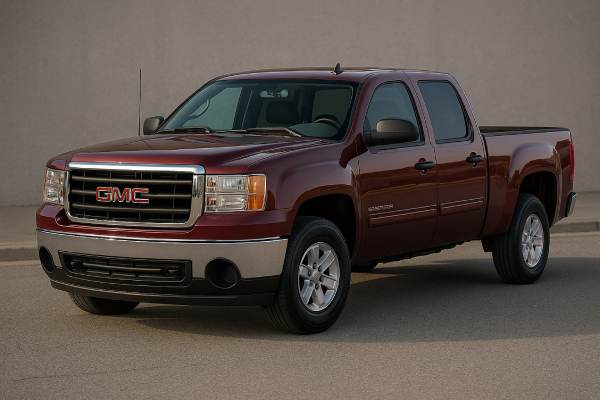
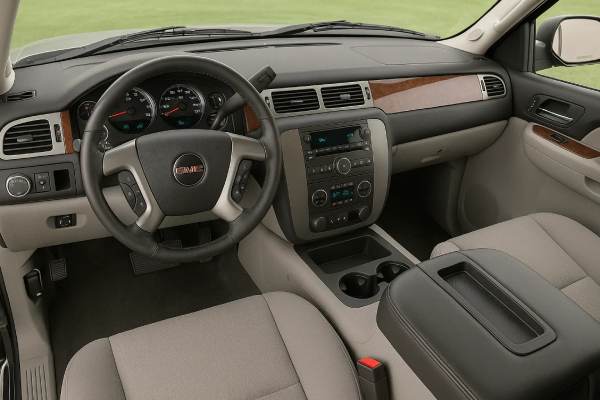
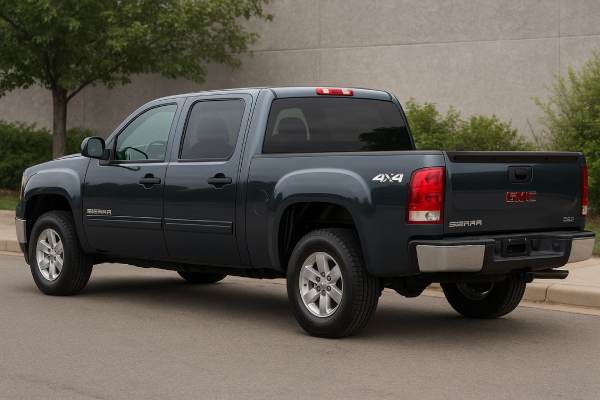
The 2007–2009 GMC Sierra 1500 4WD with the 6.0 litre L76 VortecMAX package sits in a sweet spot between work truck and performance pickup. Built on the GMT900 platform, it pairs a stout full-frame chassis with a high-output small-block V8, heavy-duty cooling and serious towing hardware. Compared with the more common 5.3 V8 trucks, the L76 6.0 brings extra power, a stronger transmission package and higher tow ratings, especially when combined with the Max Trailering or VortecMAX options.
These trucks are now old enough that condition and maintenance matter more than original window stickers. Shoppers want to know how the 6.0 performs, what it really tows, where it tends to rust, and which common failures are expensive versus easy to manage. Owners want clear guidance on fluids, intervals and upgrades that preserve reliability. This guide walks through the 2007–2009 Sierra 1500 4WD L76 in detail so you can buy, run and enjoy one with eyes open.
Owner Snapshot
- 6.0 l L76 V8 with around 367 hp and 375 lb-ft gives strong, relaxed towing and confident highway passing in a half-ton chassis.
- GMT900 frame, 4WD hardware and available G80 locking rear differential make it capable off-road and secure in poor weather.
- Simple pushrod V8 with chain-driven cam and proven 4-speed/6-speed automatics keeps parts availability high and repairs straightforward.
- Watch for AFM lifter issues, transfer case pump rub and frame/rocker corrosion on trucks used in rust-belt climates.
- Oil and filter every 5,000–7,500 miles (8,000–12,000 km) or 6–12 months; shorten intervals if towing or idling heavily.
Navigate this guide
- GMT900 Sierra 4WD overview
- Sierra 1500 6.0 technical data
- Trims, equipment and safety
- Reliability and known issues
- Maintenance and buyer guidance
- Driving impressions and towing
- Sierra 1500 versus rivals
GMT900 Sierra 4WD overview
The 2007 model year marked the launch of the GMT900 generation for GMC’s full-size pickups. Compared with the outgoing GMT800 trucks, the new Sierra 1500 brought a stiffer frame, more refined interiors, better crash performance and improved aerodynamics. Underneath, the core recipe stayed traditional: fully boxed hydroformed frame rails, independent front suspension with torsion bars on 4WD models, and a solid rear axle on leaf springs.
The L76 6.0 litre V8 was positioned as a premium engine option. In the Sierra 1500 4WD, it delivered roughly 367 hp at 5,500 rpm and 375 lb-ft of torque at about 4,300 rpm, depending on exact calibration and market. It used aluminum heads on an iron block, variable valve timing and, in many applications, Active Fuel Management (AFM) cylinder deactivation to improve highway fuel economy. In practice, it provided a noticeable step up in power over the more common 5.3 l engines, particularly when towing or climbing grades.
Four-wheel drive models used a part-time system with an Autotrac two-speed transfer case offering 2HI, Auto 4WD, 4HI and 4LO. Most L76 trucks were paired with towing-oriented axle ratios (often 4.10:1) and could be ordered with the G80 automatic locking rear differential. That combination gave strong low-speed traction in mud, snow or on boat ramps and unlocked the higher tow ratings associated with the VortecMAX and Max Trailering packages.
Body styles during 2007–2009 included Regular Cab, Extended Cab and Crew Cab, with short and standard bed options. Many L76 trucks were sold as well-equipped Extended or Crew Cabs, often in SLE or SLT trim, with options like dual-zone climate control, Bose audio, leather seating and power-adjustable pedals. Even so, these are still work-capable pickups, with payloads commonly in the 1,500–1,800 lb (680–820 kg) range and tow ratings that can approach or exceed 9,500–10,000 lb (4,300–4,500 kg) when properly equipped.
Fuel economy is not the primary reason to buy an L76 Sierra 4WD. Expect mid-teens mpg (US) in mixed driving and high teens on the highway if driven gently and unloaded. In return, you get a powertrain that feels relaxed at interstate speeds and does not need to work hard to maintain pace with a trailer in tow.
Today, these trucks appeal to buyers who want a simple, strong V8 and real 4WD hardware without the complexity of modern turbocharging or 10-speed transmissions. The trade-offs are age-related: rust, worn suspension and the known quirks of AFM-era small-blocks all need to be understood and managed.
Sierra 1500 6.0 technical data
This section focuses on typical 2007–2009 GMC Sierra 1500 4WD configurations equipped with the L76 6.0 l V8 and towing-oriented packages. Exact figures vary slightly by cab, bed, axle ratio and model year; always verify against the glovebox RPO label and official documentation for your VIN.
Engine and performance
| Item | Value |
|---|---|
| Engine code | L76 Vortec 6000 |
| Configuration | 90° V8, cast-iron block, aluminum heads |
| Valvetrain | OHV, single cam-in-block, 2 valves per cylinder |
| Displacement | 6.0 l (5,967 cc) |
| Bore × stroke | 101.6 × 92.0 mm (4.00 × 3.62 in) |
| Induction | Naturally aspirated, composite intake manifold |
| Fuel system | Sequential multi-port fuel injection (MPFI) |
| Compression ratio | Around 9.6:1 (truck calibration) |
| Max power | ~367 hp (274 kW) @ 5,500 rpm |
| Max torque | ~375 lb-ft (508 Nm) @ 4,300 rpm |
| Timing drive | Chain |
| Cylinder deactivation | Active Fuel Management (AFM) on many applications |
| Recommended fuel | Regular unleaded (87 AKI) |
| Emissions standard | US EPA Tier 2 / Bin 5 era |
| EPA economy, 4WD (typical) | About 14 mpg city / 19 mpg highway (US) |
Highway fuel economy improves when AFM can keep the engine in four-cylinder mode at light loads. Towing, short trips and idling all push real-world consumption well below the official highway rating.
Transmission and driveline
| Item | Value |
|---|---|
| Automatic transmissions | 4L70E 4-speed auto on many 2007–2008 trucks; 6L80 6-speed on some 2009 models |
| Typical 4L70E gear ratios | 1st 3.06 · 2nd 1.62 · 3rd 1.00 · 4th 0.70 · Rev 2.29 |
| Typical 6L80 gear ratios | 1st 4.03 · 2nd 2.36 · 3rd 1.53 · 4th 1.15 · 5th 0.85 · 6th 0.67 · Rev 3.06 |
| Transfer case | Autotrac 2-speed, electronic shift (2HI, Auto 4WD, 4HI, 4LO) |
| Drive type | Part-time 4WD with automatic mode |
| Common axle ratios | 3.73:1 or 4.10:1 with Max Trailering/VortecMAX |
| Rear differential | Open or G80 automatic locking differential (Eaton locker) |
The 4L70E is a strengthened evolution of the 4L60E, while the later 6L80 6-speed improves both acceleration and cruising rpm. Trucks with 4.10 gears feel particularly strong off the line and under load.
Chassis and dimensions
Representative figures for a 4WD Crew Cab Short Box:
| Item | Value |
|---|---|
| Platform | GMT900, fully boxed hydroformed frame |
| Front suspension | Independent, torsion bar with upper/lower control arms |
| Rear suspension | Solid axle with semi-elliptic leaf springs |
| Steering | Power-assisted recirculating ball |
| Front brakes | Ventilated discs, twin-piston calipers |
| Rear brakes | Drums (many 1500 models) |
| Wheels/tyres | 17–20 in wheels; typical 265/70 R17 or 265/65 R18 |
| Overall length | ≈ 5,840 mm (≈ 230 in) |
| Width (excluding mirrors) | ≈ 2,030 mm (≈ 80 in) |
| Height | ≈ 1,870 mm (≈ 73–74 in) |
| Wheelbase (Crew Cab) | ≈ 3,645 mm (≈ 143.5 in) |
| Ground clearance | Around 230–250 mm (≈ 9–10 in) |
| Turning circle | Around 14.0–14.5 m (≈ 46–48 ft) |
| Curb weight | Roughly 2,200–2,450 kg (4,850–5,400 lb) |
| GVWR | Around 3,175–3,310 kg (7,000–7,300 lb) |
| Fuel tank | ≈ 98 l (26 US gal) |
| Cargo box lengths | ≈ 1,727 mm (5 ft 8 in) or 1,981 mm (6 ft 6 in) |
Performance and capability
Exact figures vary by axle ratio, body style and transmission, but typical ranges are:
| Metric | Value |
|---|---|
| 0–60 mph (0–97 km/h) | Roughly 6.5–7.5 s for unloaded L76 4WD trucks |
| Top speed | Limited, usually around 95–105 mph (153–169 km/h) |
| Towing capacity | Around 8,000–10,500 lb (3,630–4,760 kg) properly equipped |
| Payload | Roughly 1,500–1,800 lb (680–820 kg) |
| Roof load | Typically limited to ~200 lb (90 kg) with racks |
Always verify tow and payload ratings from the door-jamb sticker and owner’s manual for the specific truck; modifications and overweight loading can quickly exceed design limits.
Fluids and service capacities
Approximate values; consult the correct owner’s or service manual for your VIN:
| System | Specification | Capacity (approx.) |
|---|---|---|
| Engine oil | 5W-30 meeting GM6094M / dexos equivalent | ~5.7 l (6.0 US qt) |
| Engine coolant | Dex-Cool OAT, 50/50 with distilled water | ~13–15 l (≈ 3.5–4.0 US gal) |
| Automatic transmission | Dexron-VI ATF | 10–12 l total fill; ~5–7 l for pan service |
| Transfer case | GM Auto-Trak II fluid (blue) | ~1.9–2.0 l (≈ 2.0–2.1 US qt) |
| Front differential | 75W-90 GL-5 gear oil | ~1.3–1.5 l (≈ 1.4–1.6 US qt) |
| Rear differential | 75W-90 GL-5; with G80 locker use friction-mod-safe oil | ~2.0–2.4 l (≈ 2.1–2.5 US qt) |
| Power steering | GM power steering fluid or compatible | ~1.0–1.2 l |
| A/C refrigerant | R-134a | Charge varies by configuration |
Electrical basics
| Item | Typical value / notes |
|---|---|
| Alternator | Around 145–160 A depending on RPO |
| 12 V battery | Group 48/78 types common, ~600–750 CCA |
| Spark plugs | Platinum or iridium, heat range to GM spec |
| Plug gap | Typically around 1.0–1.1 mm (0.040–0.044 in) |
Trims, equipment and safety
During 2007–2009, the Sierra 1500 4WD lineup offered several trim levels, with the L76 6.0 l engine usually bundled into higher-spec or trailering-focused configurations.
Core trims with the 6.0 l
Exact availability varied by market, but in North America you would typically see:
- SLE
Cloth interior, power options, alloy wheels and basic audio. L76-equipped SLE trucks often included towing packages, upgraded cooling and 17–18 inch wheels. - SLT
Leather seating, dual-zone automatic climate control, Bose audio, power-adjustable driver’s seat, steering-wheel controls and more sound insulation. Many L76 SLT trucks are Crew Cabs with convenience options like remote start and parking aids. - Denali (selected markets)
Some regions offered Denali-branded trucks with 6.2 l engines rather than the L76 6.0. If your focus is specifically the L76, check the RPO codes carefully; Denali badges alone do not guarantee this engine.
The L76 often appeared as part of VortecMAX or Max Trailering packages that added heavy-duty cooling, higher-capacity alternator, larger rear axle, 4.10 gearing and higher tow ratings. Identifying stickers on the box or tailgate may remain, but RPO labels in the glovebox (codes such as L76, GT5 for 4.10 axle, G80 for locking differential) are more reliable.
Functional differences by package
Key mechanical changes between a standard 5.3 V8 4WD truck and an L76-equipped Max Trailering truck typically include:
- Higher output V8 with stronger mid-range torque.
- Shorter final drive ratio (often 4.10 vs 3.73 or 3.42).
- Larger or upgraded cooling system: radiator, transmission cooler and engine oil cooler.
- Heavy-duty rear axle and, when fitted, G80 locking diff for better off-road and low-speed traction.
- Higher GVWR on some configurations.
For buyers prioritising towing or hauling in hilly terrain, these changes are worth seeking out.
Safety equipment and ratings
Safety kit on 2007–2009 Sierra 1500 4WD trucks usually includes:
- Front airbags and available side curtain airbags.
- Four-wheel ABS.
- Tire Pressure Monitoring System (TPMS).
- Stability control (StabiliTrak) standard on many configurations, particularly later years and higher trims.
- LATCH child-seat anchorages in the rear outboard positions.
Crash-test performance for comparable 2007–2009 full-size GM pickups was generally solid in front and side impact tests by US agencies, with rollover ratings typical for tall body-on-frame trucks. Head restraints, side-curtain airbags and stability control are worthwhile features to prioritise if you carry passengers regularly.
ADAS and driver aids
These trucks pre-date the modern wave of advanced driver assistance systems. You will not find factory adaptive cruise, lane-keeping or autonomous emergency braking. However, available equipment did include:
- Rear parking assist on many SLT and later-model SLE trucks.
- Auto-dimming mirrors and optional backup cameras on some late GMT900s or dealer-installed systems.
- Trailer wiring harnesses and integrated trailer brake controller on selected packages or dealer upgrades.
Any truck that has had aftermarket towing or safety equipment added should be inspected for wiring quality and proper fuse protection.
Reliability and known issues
The GMT900 Sierra 1500 with the L76 6.0 V8 is generally regarded as a durable workhorse if maintained properly. However, age, mileage and common design quirks mean there are predictable issues to watch for.
Engine and fuel system
For the L76:
- AFM lifter problems
On engines equipped with Active Fuel Management, the special lifters that collapse in four-cylinder mode can stick or fail. Symptoms include ticking, misfires on specific cylinders and loss of power. The remedy ranges from lifter replacement to full top-end refresh; many owners choose to delete AFM in the process. - Oil consumption and PCV issues
Some engines exhibit higher oil use, especially with extended intervals or heavy towing. Sticking oil-control rings and PCV system design contribute. Shorter oil-change intervals and careful monitoring reduce risk. - Exhaust manifold bolt failure
Broken exhaust manifold bolts are common on these trucks, leading to ticking sounds at cold start and potential exhaust leaks. Repair usually involves bolt extraction and new hardware; in severe cases, manifolds crack and must be replaced. - Knock sensor and wiring
Corrosion in the valley area can affect knock sensors and harnesses, causing codes and reduced performance. Proper sealing and replacement with updated parts resolve the issue.
Cooling system reliability is generally good if Dex-Cool is maintained and mixed correctly. Neglected coolant can lead to internal corrosion, heater-core issues and gasket wear over time.
Transmission, transfer case and axles
The 4L70E and 6L80 transmissions are capable units but sensitive to heat and neglected fluid:
- Torque converter clutch wear and shift flare
Hard towing without sufficient cooling or long fluid intervals can cause shudder, slipping or harsh shifts. Proactive fluid changes and cooler upgrades help preserve longevity. - 6L80 internal wear
On high-mileage 6L80 units, issues such as harsh 2–3 shifts or delayed engagement can indicate clutch or valve-body wear. Early diagnosis and quality rebuilds are key. - Transfer case pump rub
Some Autotrac transfer cases suffer from an internal pump that can wear a hole through the case, causing fluid loss. Aftermarket case-saver plates are a common preventive fix; if ignored, the case can fail from oil starvation. - Front hub bearings and CV joints
4WD trucks used extensively in harsh climates or off-road conditions often need front hub assemblies and CV axles replaced by 150,000–200,000 km (90,000–125,000 miles). - Rear differential noise
Trucks with the G80 locker can develop clunks or chatter if the fluid is old or low. Regular fluid changes with the correct oil help extend life.
Suspension, steering and brakes
Wear items are predictable on heavy, older pickups:
- Idler and pitman arms, tie rods, ball joints
Steering feel and alignment degrade as these joints wear. Excessive play is a common inspection fail on older trucks. - Leaf-spring and bushing wear
Sagging rear springs, cracked leafs and worn shackle bushings are frequent on trucks that have hauled or towed heavily. - Front brake wear and rotor warping
Repeated heavy stops with trailers can warp front rotors and glaze pads. Upgraded pads and quality rotors help, but technique and trailer brakes matter just as much.
Body, frame and corrosion
On 2007–2009 GM trucks used in salt-belt regions:
- Corroded rocker panels and cab corners
Inner and outer rockers often rust from the inside out, as do cab corners behind the rear doors. Repair is labour-intensive and can be costly. - Frame and crossmember rust
Surface rust is common; advanced rust around rear spring mounts, fuel-tank straps and brake-line brackets is more serious. Inspect carefully, especially around the rear half of the frame. - Tailgate and bed corrosion
The bed floor around wheel wells and the tailgate bottom edge can trap dirt and moisture.
Electrical and interior
Known trouble spots include:
- Failing instrument cluster stepper motors that cause erratic gauges.
- Blower motor resistors and fan speed control issues.
- A/C blend door actuators clicking or failing to move through full range.
- Door harness wiring fatigue causing intermittent power-window or lock faults.
Recalls and technical service bulletins over these years covered items such as heated windshield washer modules (fire risk), airbag components and various software updates. Any truck being considered should be checked via official recall databases and dealer records.
Maintenance and buyer guidance
Practical maintenance schedule
For a Sierra 1500 4WD L76 working a mix of daily driving, light towing and occasional heavy loads, a conservative schedule looks like:
- Engine oil and filter – Every 5,000–7,500 miles (8,000–12,000 km) or 6–12 months; lean toward the shorter end for AFM engines, towing, idling or short-trip use.
- Engine air filter – Inspect at 15,000 miles (24,000 km); replace at 30,000–40,000 miles (48,000–64,000 km) or sooner in dusty conditions.
- Cabin air filter (if fitted) – Every 20,000–25,000 miles (32,000–40,000 km) or 2 years.
- Spark plugs – Around 100,000 miles (160,000 km), or sooner if misfires or heavy towing.
- Coolant – Replace roughly every 5 years or 100,000 miles (160,000 km), then every 3–5 years.
- Automatic transmission fluid – Drain-and-fill every 30,000–50,000 miles (48,000–80,000 km); more often for frequent towing.
- Transfer case fluid – Every 50,000 miles (80,000 km); earlier if you use Auto 4WD often.
- Front and rear differential oil – Every 50,000–60,000 miles (80,000–96,000 km), or 30,000 miles (48,000 km) for regular towing or off-road.
- Brake fluid – Every 2–3 years regardless of mileage.
- Brakes – Inspect pads, shoes and rotors/drums at least annually; more often if towing or mountain driving.
- Steering and suspension – Annual check of tie rods, ball joints, bushings and wheel bearings.
- 12 V battery – Test annually after year 4; expect 5–7 years of life in typical climates.
AFM engines benefit especially from clean oil at reasonable intervals. If a truck has a history of very long intervals, consider proactive lifter and AFM hardware inspection.
Fluid specs and key torque values
When in doubt, choose fluids that meet GM specifications:
- Engine oil: 5W-30 meeting GM 6094M or later dexos standards.
- ATF: Dexron-VI for both 4L70E and 6L80 unless otherwise specified.
- Gear oils: 75W-90 GL-5 in axles; if G80 locker is fitted, ensure the oil is compatible (many modern synthetics are).
- Transfer case: GM Auto-Trak II only, not generic ATF unless your exact transfer case specifies otherwise.
Typical torque values (always confirm for your truck):
- Wheel nuts: usually around 190–190+ Nm (140 ft-lb) on 1500 trucks.
- Oil drain plug: commonly around 25–30 Nm (18–22 ft-lb) with a new washer.
- Spark plugs: in the 20–25 Nm range (15–18 ft-lb), applied to clean, lightly anti-seized threads if specified.
Buyer’s checklist
When evaluating a used 2007–2009 Sierra 1500 4WD with the L76 6.0:
- Confirm the engine and driveline
- Check the glovebox RPO label for L76, GT5 (4.10 axle), G80 (locking diff) and NP codes for the transfer case.
- Confirm 4WD engages cleanly in 2HI, Auto, 4HI and 4LO.
- Inspect for rust
- Look underneath at frame rails, especially near rear spring mounts, crossmembers and the area around the fuel tank.
- Check rocker panels and cab corners from below and inside the door openings.
- Listen and drive
- Cold start: listen for lifter tick, manifold leaks and timing-chain noise.
- On the road: feel for transmission slip or flare, shudder under light throttle (converter), steering play and brake pulsation.
- Review maintenance history
- Prefer trucks with documented regular oil changes and periodic transmission, diff and transfer case services.
- Ask about AFM-related repairs; a properly done AFM delete with tuning can be a reliability positive if emissions rules are respected.
- Check interior and electrics
- Verify all gauges behave properly, HVAC modes work, 4WD switch responds, and there are no persistent warning lights.
- Test all windows, locks and seats; wiring through the door jambs can fatigue.
- Verify recalls and campaigns
- Use official recall lookup tools (manufacturer and government) with the VIN to ensure safety campaigns are complete.
A well-maintained Sierra 1500 4WD L76 can be a long-lived tow and work partner. A neglected, rusty or heavily abused example can absorb far more money than its purchase price in deferred maintenance and repairs.
Driving impressions and towing
On the road, a healthy L76 Sierra 1500 4WD feels relaxed and muscular rather than outright fast by modern performance-car standards. The V8 idles smoothly with a subdued burble. Throttle response is linear, with strong torque from about 2,000 rpm and a solid mid-range surge that makes merging and passing easy even with a moderate trailer in tow.
With the 4L70E 4-speed, you will feel wider ratio steps and higher cruising rpm. At typical highway speeds, especially with 4.10 gears, the engine sits in the mid-2000 rpm range, which helps response but costs fuel. The later 6L80 6-speed keeps revs lower on the highway while sharpening acceleration thanks to its shorter first gear and closer spacing.
Ride quality reflects the truck’s mission. Unladen, the rear leaf springs can feel choppy over broken surfaces, particularly on short-wheelbase and light-spec trucks. Crew Cab models with some load in the bed are more settled. Steering is light, with modest on-centre feel typical of recirculating-ball systems, but the truck tracks well once aligned and running on good tyres.
Noise, vibration and harshness improved significantly over the previous generation. Wind noise at speed is well controlled, and tyre roar is acceptable on stock-sized all-season tyres. Aggressive all-terrain tyres or mud-terrains will add notable hum, especially on concrete highways.
Under braking, the pedal is generally firm with decent modulation. However, when towing near the upper limits, you are relying heavily on trailer brakes. The truck’s own front discs and rear drums can overheat on long downhill grades if you ride the pedal; using tow/haul mode, downshifts and proper trailer brake setup is essential.
In 4WD, the Autotrac system offers a useful Auto mode that engages the front axle only when slip is detected. This makes it friendly in mixed conditions where full-time 4HI would bind, such as patchy snow or wet pavement with dry sections. For off-road or deep snow, 4HI and 4LO provide predictable traction, while the G80 locker automatically engages when a rear wheel spins significantly faster than the other, helping you climb or pull through.
Fuel economy in real use typically falls around:
- City / stop–go: 12–14 mpg (US) for a 4WD L76, depending on driving style and axle ratio.
- Mixed driving: 14–17 mpg (US) is realistic with moderate loads.
- Highway cruising: 17–19 mpg (US) at steady speeds when unloaded and with AFM functioning.
Towing a medium-size travel trailer or loaded equipment trailer can pull consumption into the single digits (US mpg), especially at higher highway speeds or in hilly terrain.
For long-distance towing, the Sierra 1500 4WD L76 is competent as long as you remain within ratings and keep up on cooling and transmission maintenance. If you tow near maximum weight frequently, stepping up to a 2500-series truck may offer more margin in brakes, axle, frame and cooling.
Sierra 1500 versus rivals
In the late 2000s half-ton market, the 2007–2009 GMC Sierra 1500 4WD with the 6.0 L76 competed directly with:
- Ford F-150 with the 5.4 Triton V8.
- Dodge/Ram 1500 with the 5.7 Hemi.
- Toyota Tundra 5.7 V8.
- Nissan Titan 5.6 V8.
- Its own corporate cousin, the Chevrolet Silverado 1500 with similar drivetrains.
Compared with the Ford F-150 5.4 of the same era, the L76 Sierra typically offers:
- Stronger high-rpm power and often better towing performance at or near GCWR.
- Fewer timing-chain and cam-phaser issues, but more AFM-related lifter concerns if equipped.
- Similar rust exposure in salt-belt regions; both require careful underbody inspection.
Against the 5.7 Hemi Ram 1500, the Sierra’s strengths include:
- A slightly more refined ride and cabin in many trims.
- A widely understood small-block architecture with excellent parts availability.
- Less sensitivity to cam and lifter design flaws that plagued some Hemi engines, although both families can suffer if maintenance is neglected.
The Toyota Tundra 5.7 often scores highly for long-term reliability and strong towing performance. However, the Sierra counters with:
- Broader availability and lower buy-in price on the used market.
- Easier parts sourcing and more aftermarket support in some regions.
- Simpler integration for those already familiar with GM platforms.
Compared with the Nissan Titan 5.6, the Sierra generally offers:
- A wider range of body styles and packages.
- More robust dealer and parts networks.
- An interior that many buyers find more comfortable for long trips.
The closest rival is arguably the Chevrolet Silverado 1500 with the same L76 6.0 and 4WD hardware. Mechanically, they are nearly twins; choice often comes down to styling, trim preferences and availability of specific packages. GMC tended to position the Sierra slightly more upscale in cabin finishes and option packaging, which can matter if you live in the truck on long workdays.
Where the Sierra 1500 4WD L76 stands out is in its balance of simplicity and capability. It delivers:
- A naturally aspirated, large-displacement V8 with strong mid-range torque.
- Traditional 4WD hardware with real low range and available locking rear diff.
- A chassis that can be maintained and upgraded by independent shops without specialised diagnostic tools.
Its weaknesses are mostly age-related rather than design catastrophes: corrosion in harsh climates, AFM hardware on some engines, and the usual wear items for a heavy vehicle. Buyers who prioritise ease of DIY maintenance, towing ability and a proven platform will find plenty to like, as long as they select carefully and budget for the inevitable reconditioning that comes with any 15+ year-old truck.
References
<a href="https://www.gmc.com/support/vehicle/manuals-guides">Manuals and Guides | Vehicle Support</a> 2024 (Owner’s Manuals Portal)<a href="https://www.fueleconomy.gov/feg/bymodel/2008_GMC_Sierra.shtml">Gas Mileage of 2008 GMC Sierra</a> 2008 (Fuel Economy Data)<a href="https://www.manuals.ca/gmc/sierra-2009/manual">GMC Sierra (2009) manual</a> 2009 (Owner’s Manual)
Disclaimer
This article is for informational purposes only and is not a substitute for professional diagnosis, repair or purchase advice. Specifications, torque values, service intervals and available equipment can vary by model year, market, trim level, options and individual vehicle history. Always confirm critical data against the official owner’s manual, workshop or service documentation and information specific to your VIN, and consult a qualified technician before performing maintenance, repairs, modifications or towing at or near rated limits.
If you found this guide helpful, you are welcome to share it with other owners and enthusiasts on social media or forums to support accurate, independent technical information.