
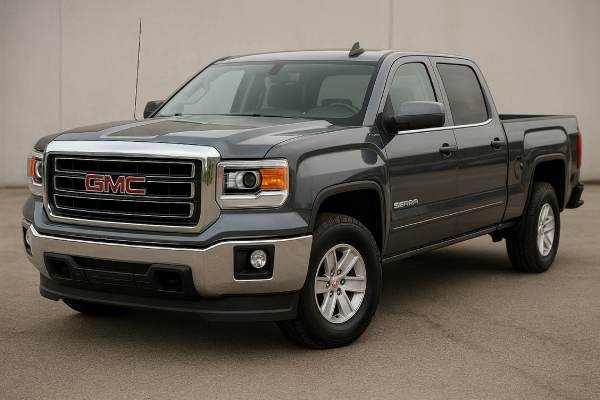
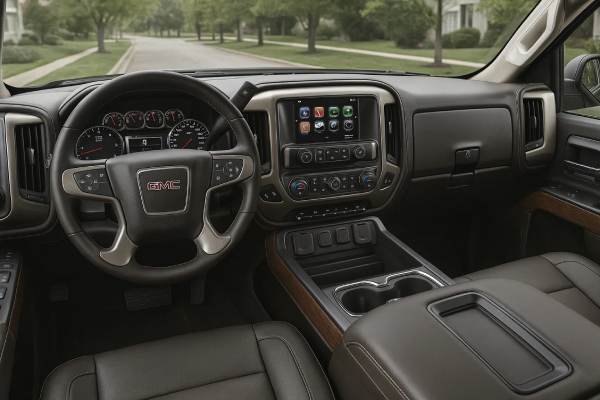
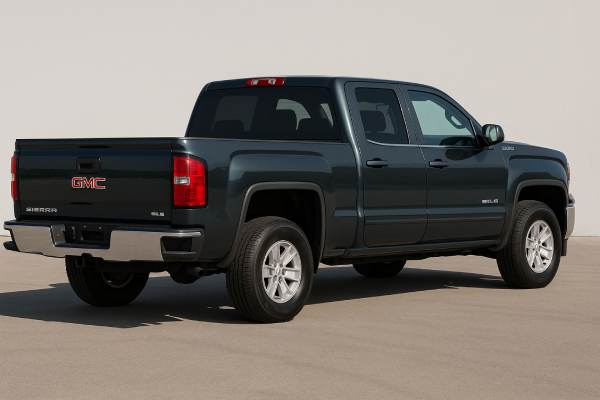
The 2014–2018 GMC Sierra 1500 4WD with the LV3 4.3 litre V6 is the “quiet workhorse” of the K2XX generation. On paper, many shoppers focus on the 5.3 or 6.2 V8s, but the EcoTec3 4.3 V6 is more than a budget option. It delivers solid low-end torque, respectable fuel economy for a full-size 4×4 pickup, and a simpler ownership picture than the larger engines in some use cases.
This guide focuses specifically on the 4WD LV3 configuration: what it is like to own, how it performs, which specs matter, and what to watch for as the truck ages. You will find real-world maintenance guidance, reliability patterns, and buying tips alongside hard data on towing, payload, fluids, and safety ratings. Whether you tow a mid-size trailer, run a small business, or just want a durable 4×4 daily driver, this article will help you decide if the 4.3-litre Sierra 4WD matches your needs—and how to look after one already in your driveway.
Top Highlights
- LV3 4.3 litre V6 offers strong low-rpm torque and adequate towing with lower fuel and purchase costs than V8 Sierras.
- K2XX chassis brings quieter cabins, better corrosion protection, and improved ride versus the old GMT900 trucks.
- 4WD system with two-speed transfer case gives useful low range and good snow/off-road traction when tyres are appropriate.
- Maintenance caveat: oil and coolant neglect can accelerate timing chain, cooling system, and lifter issues as mileage climbs.
- Typical oil change interval is 8,000–10,000 km or 12 months; shorten to 5,000–7,500 km if you tow, idle a lot, or drive in dust.
Start here
- GMC Sierra 4.3 4WD background
- Sierra 4.3 4WD specs and data
- Trim levels and safety equipment
- Reliability patterns and service actions
- Maintenance schedule and buying advice
- Driving feel and 4WD performance
- How this Sierra compares to rivals
GMC Sierra 4.3 4WD background
When GMC launched the K2XX-generation Sierra 1500 for 2014, the LV3 4.3 litre V6 was engineered as a “scaled-down” member of the Gen V small-block family. Instead of a carry-over truck V6, the LV3 shares architecture with the 5.3 and 6.2 V8s: aluminium block, direct injection, variable valve timing, and cylinder deactivation. The result is a compact, torque-rich engine that feels more like a small V8 than a traditional base V6.
In 4WD form, this powertrain sits on a boxed-frame chassis with coil-over front suspension and leaf-spring rear, tuned to balance work-truck durability with surprisingly refined road manners. Compared with the outgoing GMT900, the K2XX Sierra brings a stiffer frame, tighter body control, improved aerodynamics, and substantially better noise isolation. Owners often notice the quieter cab and more composed ride immediately when moving from an older truck.
The 4.3 V6 4WD combination is particularly popular in:
- Regular and double-cab work trucks where payload and low-end torque matter more than outright acceleration.
- Fleet and contractor use, where fuel and maintenance costs must be predictable.
- Mixed-use owners who need 4×4 capability but rarely tow at the upper limit of what a half-ton can handle.
Key advantages of this configuration include a lower initial purchase price, simpler front-end weight distribution than the heavier V8s (which can help steering feel and tyre wear), and fewer timing chain and lifter complaints than some of the high-mileage 5.3 and 6.2 engines when serviced on time.
However, this is still a modern, complex engine. The LV3’s direct injection and cylinder deactivation place more importance on oil quality, software calibration updates, and fuel quality than older pushrod V6s. In addition, the 6-speed automatic and 4WD transfer case introduce their own fluid-service needs if you want smooth shifting and long service life. The rest of this guide breaks all of that down in practical terms.
Sierra 4.3 4WD specs and data
Powertrain and Efficiency (LV3 4.3 V6)
| Parameter | Value |
|---|---|
| Engine code | LV3 EcoTec3 |
| Configuration | 90° V6, pushrod (OHV), 2 valves/cyl, aluminium block/heads |
| Displacement | 4.3 L (4,300 cc) |
| Bore × stroke | ~99.0 × 92.0 mm (3.90 × 3.62 in) |
| Induction | Naturally aspirated |
| Fuel system | Direct injection (DI) |
| Compression ratio | ~11.0 : 1 |
| Max power | 285 hp (213 kW) @ 5,300 rpm |
| Max torque | 305 lb-ft (414 Nm) @ 3,900 rpm |
| Timing drive | Chain |
| Emissions standard | U.S. Tier 2 / LEV III equivalent, depending on state |
| Cylinder deactivation | Active Fuel Management (AFM) under light load |
Official fuel-consumption figures for a 2014 Sierra 1500 4WD with the 4.3 and 6-speed automatic are around 17 mpg city / 22 mpg highway / 19 mpg combined (roughly 13.8 / 10.7 / 12.4 L/100 km). Real-world owners at 120 km/h (75 mph) usually see closer to 12–13 L/100 km depending on cab, bed length, tyres, and load.
Transmission and Driveline
Most LV3 4WD Sierras use the Hydra-Matic 6L80 6-speed automatic with a two-speed transfer case.
| Parameter | Value |
|---|---|
| Transmission | 6-speed automatic (Hydra-Matic 6L80) |
| Drive type | Part-time 4×4 (2HI, 4HI, 4LO; AutoTrac on many trims) |
| Transfer case | Two-speed, electronically shifted |
| Typical axle ratios | 3.23, 3.42, or 3.73 (varies by trim/tow package) |
| Front differential | Open (traction control / brake-based torque vectoring) |
| Rear differential | Open or automatic locking (G80) depending on option |
Chassis and Dimensions (typical 4WD regular/double cab)
Values vary slightly by cab and bed configuration; the figures below are representative.
| Parameter | Value (approximate) |
|---|---|
| Frame | Fully boxed high-strength steel |
| Front suspension | Independent coil-over shock, aluminium control arms |
| Rear suspension | Solid axle with leaf springs |
| Steering | Rack-and-pinion with electric power assist |
| Brakes | 4-wheel disc with ABS |
| Length | ~5,220 mm (205.6 in) |
| Width (without mirrors) | ~2,030 mm (80.0 in) |
| Height | ~1,880 mm (74.0 in) |
| Wheelbase (regular cab std. box) | ~3,020 mm (119 in) |
| Ground clearance | ~230–250 mm (9–10 in), trim-dependent |
| Curb weight | ~2,250–2,450 kg (4,960–5,400 lb) |
| GVWR | ~3,175–3,310 kg (7,000–7,300 lb) |
| Fuel tank | ~98 L (26 US gal) |
Performance and Capability
Exact numbers depend on gearing, cab, and bed, but for a typical 4.3 4WD double cab:
| Metric | Typical value |
|---|---|
| 0–100 km/h (0–62 mph) | ~7.5–8.0 s unladen |
| Top speed | ~170–180 km/h (106–112 mph), electronically limited |
| Braked towing capacity | Up to ~3,450 kg (7,600 lb) with proper tow package |
| Payload | ~700–900 kg (1,500–2,000 lb) depending on configuration |
| Roof load | Typically ~90–100 kg (200–220 lb) including rack |
GMC’s own trailering guides emphasise that maximum tow ratings require specific axle ratios, cooling packages, and hitch setups; always verify the sticker in the door jamb and the trailering chart for your exact VIN.
Fluids and Service Capacities (typical LV3 4WD)
Always confirm for your VIN and market, but the following is a practical starting point:
| System | Spec / Type | Capacity (approx.) |
|---|---|---|
| Engine oil | Dexos-approved 5W-30 (or 0W-20 where specified) | ~5.7–6.0 L (6.0–6.3 qt) with filter |
| Engine coolant | Long-life OAT (Dex-Cool type) | ~11–13 L (11.5–13.7 qt) total system |
| Automatic transmission | Dexron VI ATF | ~9–11 L (varies; partial drain far less) |
| Transfer case | Specific GM transfer case fluid (often AutoTrak II) | ~1.8–2.0 L |
| Front differential | 75W-90 synthetic gear oil | ~1.0–1.2 L |
| Rear differential | 75W-90 synthetic gear oil | ~2.0–2.5 L |
| A/C refrigerant | R-134a | Charge around 700–800 g (varies) |
| A/C compressor oil | PAG oil | ~120–180 mL typical |
Key torque specs to treat with care include wheel-lug torque, drain-plug torques, and suspension fasteners; these are best taken directly from the official service manual for your specific year.
Electrical and Safety
| Item | Typical spec |
|---|---|
| Alternator | ~150–170 A on most 4.3 trucks |
| 12 V battery | Group 48/94R style, 600–730 CCA typical |
| Spark plugs | Long-life iridium, 8-year/160,000 km interval in many schedules |
| Airbags | Front, side-impact, and side-curtain for front and rear on most cabs |
For 2014–2018, the Sierra 1500 generally earns strong crash-test scores with four- or five-star NHTSA overall ratings for popular 4WD crew-cab configurations, and good IIHS crashworthiness in most categories, though headlight performance can be rated lower (Marginal/Poor depending on trim and lamps).
Trim levels and safety equipment
Across the 2014–2018 run, the LV3 4.3 V6 appears mostly in work-oriented and mid-level trims rather than fully loaded luxury models. Availability varies by market and cab style, but the general pattern is similar.
Typical trim availability with LV3 4WD
- Base / “Sierra” / W/T (Work Truck):
- Vinyl or basic cloth seats, minimal chrome, steel wheels on early trucks.
- Radio or basic infotainment with small display on 2014–2015; later trucks gain more integrated touchscreens.
- 4WD with manual or electronic selector on dash.
- LV3 is common here, especially in regular and double-cab trucks.
- SLE:
- Adds alloy wheels, upgraded cloth interior, more sound insulation, and expanded infotainment.
- LV3 appears in some SLE trucks, especially in fleet or cost-sensitive builds.
- More likely to include towing packages, locking rear differential, and larger wheels/tyres.
- Elevation / Special Edition packages (later years, certain markets):
- Cosmetic upgrades such as body-colour trim, unique wheels, and badging.
- LV3 trucks are less common but do exist; many special editions pair appearance packages with V8 engines.
Luxury-oriented trims like SLT and Denali frequently default to V8 engines and may not be available or commonly ordered with the 4.3.
Options that change how the truck drives
When shopping used, look for the following mechanical and functional features:
- Max trailering / HD cooling packages:
- Larger radiators, transmission coolers, and sometimes different axle ratios.
- Make a meaningful difference for owners who tow near 3,000+ kg regularly.
- Automatic locking rear differential (G80):
- Greatly improves traction in mud, snow, and on job sites when one rear wheel loses grip.
- Simple, mechanical solution; worth seeking on a 4WD truck used in slippery conditions.
- Off-road packages (e.g., Z71 on related Chevy models):
- Skid plates, off-road tuned shocks, all-terrain tyres, and different styling.
- On a Sierra, similar content may be packaged differently, but look for underbody protection and specific shock part numbers.
Safety and driver-assistance
On the early 2014 trucks, safety is mostly passive:
- Standard stability control, traction control, ABS, and multiple airbags.
- Tyre-pressure monitoring on all four wheels.
- Optional rear-view camera (standard on more trims after 2015 as regulations phased in).
Over the 2014–2018 period, GMC gradually adds more driver-assistance features, though full suites like automatic emergency braking become common only on later refreshes and high trims:
- Rear park assist and rear camera: Widely available, important for hitching trailers.
- Lane departure warning: Optional on some higher trims; basic warning only, not lane-centering.
- Forward collision alert: Uses visual/audible alerts, not automatic braking on most of these trucks.
For a used-truck buyer, the key safety differentiators are cab configuration (crew cabs typically perform best in crash testing), headlight type (projector vs reflector), and whether a camera and parking sensors are fitted.
Reliability patterns and service actions
The LV3 4.3 V6 and K2XX 4WD driveline have a generally solid reputation if maintained correctly, but there are patterns to know. Think in terms of probability (how often) and cost (how painful).
Engine and fuel system
- Oil-related wear (timing chains, lifters, AFM hardware)
- Symptoms: Rattles on cold start, rough idle, check-engine lights for cam/crank correlation.
- Root cause: Extended oil-change intervals, poor oil quality, or low oil level accelerating wear.
- Remedy: Shorter oil-change intervals, correct Dexos-approved oil, and timely repair if rattle and fault codes appear (chain set, tensioners, possibly lifters in severe cases).
- Carbon build-up on intake valves (DI engines)
- Symptoms: Hesitation, reduced power, misfire codes over very long mileage.
- Root cause: Direct injection sprays fuel directly into the cylinder, so intake valves do not self-clean with fuel.
- Remedy: Good-quality fuel, regular highway runs, and—if symptomatic—professional intake valve cleaning (walnut blasting or equivalent).
- Cooling system ageing
- Symptoms: Leaks at hoses, water pump seepage, sludgy coolant if neglected.
- Root cause: Old coolant, hard use such as towing or hot-climate operation.
- Remedy: Coolant flush at or before the recommended interval, inspection of water pump, hoses, and radiator; prompt repairs if overheating occurs.
Transmission, transfer case, and axles
- 6L80 shift quality issues (flare, shudder, harsh shifts)
- Symptoms: Harsh 1–2 or 2–3 shifts, occasional shudder on light throttle, delayed engagement.
- Root cause: Ageing fluid, software calibration, or internal wear.
- Remedy: Proactive ATF changes using the correct fluid, potential software updates, and in some cases torque-converter or internal repairs if problems are ignored too long.
- Transfer-case and differential wear
- Symptoms: Whine or growl at steady speeds, clunks on engagement, fluid contamination.
- Root cause: Lack of fluid changes, heavy towing, or frequent off-road use.
- Remedy: Regular fluid renewals, careful inspection for metal debris, and rebuilding or replacing units that show strong noise or excessive play.
Chassis, steering, and body
- Front suspension and steering components
- Symptoms: Clunks over bumps, vague steering, tyre wear.
- Root cause: Worn ball joints, tie-rod ends, control-arm bushings, or steering-rack issues at higher mileage.
- Remedy: Inspection at each service, replacement with quality components, and proper alignment afterwards.
- Brake corrosion and backing-plate deterioration (rust-belt trucks)
- Symptoms: Grinding, uneven braking, parking-brake issues.
- Root cause: Road salt and winter conditions.
- Remedy: Frequent under-body washing, regular brake inspections, and timely replacement of discs, pads, and corroded hardware.
- Frame and under-body corrosion (improved vs GMT900, but still a concern in harsh climates)
- Symptoms: Flaking coating, rust at welds and seams, especially around rear wheel arches and bed supports.
- Remedy: Inspection, rust treatment and cavity wax where necessary, and cautious evaluation of heavily corroded trucks before purchase.
Recalls and service actions
Over the production run, GM has issued various recalls and technical service bulletins (TSBs) for Sierra 1500 models—some relating to airbags, electronics, and driveline concerns. A few key points:
- Recall coverage and TSBs can differ by year, cab, and drivetrain, so always run the VIN through the official recall database and ask a dealer for TSB history.
- Some software updates (engine, transmission, and body-control modules) improve drivability, shift quality, and occasional warning-light behaviour; reflashes are sometimes the official fix.
- Later GM actions on transmission software and driveline behaviour on full-size pickups show the importance of up-to-date calibrations, even if your particular truck or year is not mentioned by name in summaries.
Pre-purchase checklist:
- Confirm all recalls are closed via an official VIN check.
- Review service history for regular oil, coolant, and ATF changes.
- Listen for cold-start rattles, driveline clunks, and test 4HI/4LO operation.
- Inspect for rust, especially on frame rails, bed supports, and brake lines.
Maintenance schedule and buying advice
A conservative, real-world maintenance plan for an LV3 4WD Sierra looks like this (adapt to local conditions and official guidance):
Practical maintenance intervals
- Engine oil and filter:
- Every 8,000–10,000 km or 12 months in light use.
- Every 5,000–7,500 km if towing, idling, or frequent short trips.
- Use Dexos-approved oil of the correct viscosity and a quality filter.
- Engine air filter:
- Inspect every 15,000 km; replace 30,000–45,000 km or sooner in dusty areas.
- Cabin air filter:
- Replace every 24,000–30,000 km or 2 years.
- Coolant:
- First complete flush around 5 years / 160,000 km, then every 4–5 years thereafter or as official schedule states.
- Spark plugs:
- Long-life iridium plugs typically at 160,000 km or 8 years; earlier if misfires or poor economy appear.
- Fuel system:
- Consider in-tank fuel filter “lifetime,” but practical inspection/pressure checks and injector cleaning around 160,000–200,000 km.
- Automatic transmission (6L80):
- Fluid and filter service every 60,000–80,000 km, especially for trucks that tow or see heavy use.
- Transfer case and differentials:
- Fluid changes every 60,000–80,000 km, sooner if you tow, off-road, or see water crossings.
- Brake fluid:
- Flush every 3 years to reduce internal corrosion and maintain pedal feel.
- Brakes (pads, rotors):
- Inspect at least annually; many trucks need front pads/rotors around 60,000–90,000 km, rears somewhat later.
- Tyres and alignment:
- Rotate every 10,000–12,000 km; check alignment annually or after suspension work or heavy pothole impacts.
- Serpentine/auxiliary belt and hoses:
- Inspect from 100,000 km; replace by 150,000–180,000 km or at first sign of cracking or noise.
- 12 V battery:
- Test yearly after 4–5 years; plan replacement in the 5–7-year window in harsh climates.
Buyer’s guide: what to prioritise
When shopping for a used 2014–2018 Sierra 1500 4WD with the 4.3 LV3, focus on:
- Usage profile
- Prefer trucks that have mixed highway/light work over those that have towed heavy trailers constantly or ploughed snow every winter.
- Service records
- Look for evidence of regular oil changes, coolant renewals, and at least one transmission/transfer case fluid service by 150,000 km.
- Driveline condition
- Test 2HI, 4HI, and 4LO engagement on a loose surface.
- Listen for knocks and clunks when shifting from Park to Drive/Reverse and when modulating throttle at low speed.
- Rust and under-body
- Inspect the frame, bed cross-members, cab mounts, and brake lines. Fresh undercoating without documentation can hide repairs; be cautious.
- Suspension and steering
- Check for uneven tyre wear, steering play, and noise over bumps. Budget for control-arm bushings or ball joints if the truck has high mileage and original parts.
- Options that add value
- A locking rear differential, tow package, and camera/park-assist system improve day-to-day usability and resale value.
Long-term durability outlook
With sensible maintenance and realistic expectations, the LV3 4.3 4WD Sierra is capable of high mileage:
- Engines that see regular oil changes and coolant care commonly exceed 250,000–300,000 km before major internal work.
- Transmissions last longest when fluid is changed before it looks or smells burnt, and when heavy towing is done within factory ratings and with auxiliary cooling.
- Chassis longevity depends heavily on climate: in dry regions, the K2XX frame can remain sound for decades; in rust-belt environments, rust prevention is essential.
For many owners, the 4.3 4WD configuration hits a practical sweet spot: strong enough to tow medium trailers, economical enough for daily commuting, and simple enough to maintain without chasing every last horsepower.
Driving feel and 4WD performance
On the road, the LV3 4.3-litre V6 is tuned for usable torque rather than high-rpm thrills. Peak torque arrives below 4,000 rpm, so the truck moves away smartly from intersections and handles moderate towing without constantly hunting gears. At light throttle, cylinder deactivation and tall gearing keep revs low, which helps fuel economy and reduces cabin noise.
The 6L80 automatic typically behaves smoothly if its fluid is fresh and software is current. In normal driving, it will reach top gear quickly and then unlock the torque converter gently as you climb hills. Under heavier throttle, it will drop one or two gears and use the 4.3’s mid-range torque to build speed. Manual mode is useful when descending long grades with a trailer, letting you hold a lower gear for engine braking.
Ride, handling, and NVH
The K2XX platform is notably more refined than the GMT900 that came before:
- The cab is better sealed, so wind and road noise at 110–120 km/h are relatively low for a body-on-frame truck.
- The independent front suspension gives predictable turn-in and decent steering feel once the tyres are aligned and properly inflated.
- Unladen, the rear end can still feel firm over broken pavement, but the truck settles nicely with a moderate load in the bed.
With 4WD engaged, the Sierra feels secure on wet or snowy roads, especially when equipped with all-terrain or quality all-season tyres. Auto-4WD (where fitted) lets the system send power to the front axle only when slip is detected, which is handy in changing conditions.
Off-road and towing behaviour
While not a hardcore rock-crawler, the 4.3 4WD Sierra copes well with:
- Forest tracks, hunting trails, and muddy job sites.
- Winter driving with ploughed roads, rutted side streets, and occasional deep snow.
- Towing travel trailers, boats, or equipment within the 2,000–3,000 kg range.
Engaging 4LO significantly improves control in steep, low-speed situations such as boat ramps or rough climbs. The limiting factors off-road are usually tyre choice, ground clearance under the side steps and front valance, and the absence of front/rear locking differentials (unless the truck has the G80 rear locker).
Under tow, the 4.3 works best when you respect realistic limits:
- Expect a noticeable drop in fuel economy (often to the mid-teens mpg or ~16–18 L/100 km) at highway towing speeds.
- Use tow/haul mode to adjust shift points and reduce unnecessary upshifts.
- Watch transmission fluid temperature on long grades; downshift early and moderate speed rather than forcing high-load, high-gear climbs.
Overall, the LV3 4WD Sierra feels competent and predictable rather than dramatic. It may not match V8 trucks in outright acceleration when fully loaded, but for many owners the trade-off in running costs is worthwhile.
How this Sierra compares to rivals
In the 2014–2018 full-size 4×4 pickup market, the GMC Sierra 1500 4.3 4WD competes directly with:
- Chevrolet Silverado 1500 4.3 4WD (mechanically almost identical)
- Ford F-150 3.5-litre naturally aspirated V6 and later EcoBoost V6 options
- Ram 1500 3.6-litre Pentastar V6 4×4
- Toyota Tundra 4.6/5.7 V8 (no mainstream V6 competitor in many markets)
Strengths relative to its peers
- Engine character:
- The LV3’s torque delivery is closer to a small V8 than many rival base V6s, giving it a relaxed feel around town and in light towing.
- Chassis refinement:
- The K2XX Sierra offers a quiet, solid ride and a well-finished interior in most trims, comparing favourably to equivalent-year rivals in perceived quality.
- Simplicity vs turbo V6 rivals:
- Compared with turbocharged V6 options in some F-150 variants, the naturally aspirated 4.3 has fewer components that can fail and more predictable behaviour when heavily loaded.
Where rivals may have the edge
- Fuel economy and performance at higher price points:
- Some turbocharged Ford F-150 engines and Ram’s later mild-hybrid systems can beat the Sierra 4.3 4WD on both power and efficiency, especially in highway towing.
- Cabin tech and driver aids in later years:
- Depending on trim and year, rival trucks may offer more advanced driver-assistance systems, more modern infotainment, and extra comfort features.
- Rear suspension comfort:
- Ram’s coil-spring rear suspension often rides more smoothly unladen than leaf-spring setups such as the Sierra’s.
Who the Sierra 4.3 4WD suits best
You are an ideal match for this truck if:
- You value a straightforward, naturally aspirated engine in a modern chassis.
- You want 4WD capability but rarely tow at the maximum limits of a half-ton pickup.
- You are willing to follow a sensible maintenance schedule and keep rust at bay.
If you routinely tow close to 3,500 kg, want the quickest possible acceleration, or prioritise cutting-edge driver-assist tech, a 5.3/6.2 V8 Sierra or a higher-spec rival may suit you better. But for many owners, the 4.3-litre 4WD Sierra offers a sweet balance of capability, comfort, and total cost of ownership.
References
<a href="https://www.gm.com/content/dam/company/docs/us/en/gmcom/Performance/ecotec3-4-3l-v6-lv3.pdf">EcoTec3 4.3L V-6 LV3 Engine Overview</a> 2013 (Technical Overview)<a href="https://www.gmfleet.com/content/dam/gmownercenter/gmna/dynamic/manuals/2015/Chevrolet/Silverado%201500/2k15chevroletsilverado1500qtg.pdf">2015 Chevrolet Silverado 1500 Trailering Guide</a> 2014 (Tow Ratings and Capacities)<a href="https://one.nhtsa.gov/nhtsa/vehicles/tests/ratings/2014/GMC/Sierra1500/crew-cab-4wd">2014 GMC Sierra 1500 Crew Cab 4WD Crash Test Ratings</a> 2014 (Safety Rating)<a href="https://www.iihs.org/ratings/vehicle/gmc/sierra-1500-crew-cab-pickup/2014">GMC Sierra 1500 Crew Cab Pickup 2014 Ratings</a> 2014 (Safety Rating)<a href="https://www.fueleconomy.gov/feg/Find.do?action=sbs&id=34326">2014 GMC Sierra K15 4WD Fuel Economy</a> 2014 (Fuel Economy Data)
Disclaimer
This article is for informational purposes only and is not a substitute for professional diagnosis, repair, or official service information. Specifications, torque values, fluid capacities, and maintenance intervals can vary by VIN, model year, market, and installed equipment. Always confirm details against the official owner’s manual and service documentation for your specific vehicle, and consult a qualified technician before carrying out repairs or modifications.
If you found this guide helpful, please consider sharing it with other owners or enthusiasts on Facebook, X/Twitter, or your favourite forum—it helps support the effort that goes into creating and maintaining independent technical content like this.