
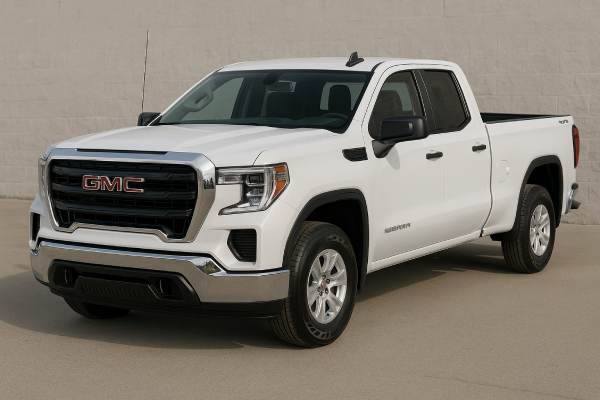
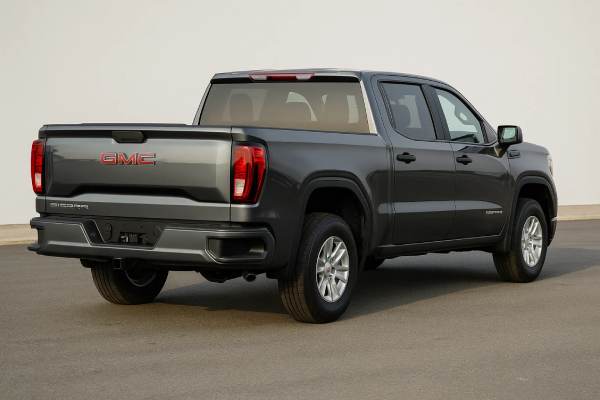
The 2019–2021 GMC Sierra 1500 4WD with the LV3 4.3 litre V6 is the work-truck heart of the T1XX generation. While most brochures highlight the bigger 5.3 and 6.2 litre V8s, many fleets and private owners quietly choose this V6 because it blends old-school durability with modern fuel injection, cylinder deactivation, and a well-matched six speed automatic. It is aimed at buyers who tow and haul regularly, but do not always need maximum capacity, and who value predictable running costs over headline power figures.
In this guide, we focus specifically on the 4WD, 4.3 V6 Sierra 1500 built on the T1XX platform from 2019 to 2021. You will find detailed specifications, service capacities, real world fuel use, typical problem patterns, and clear maintenance guidance. If you are evaluating a used truck or running one hard in daily service, the goal is to give you enough detail to talk confidently with dealers, technicians, and sellers.
Fast Facts
- Strong low rpm torque and simple pushrod design make the LV3 V6 well suited to towing and stop start work.
- 4WD models offer useful traction and payload without the weight and cost of a V8, especially in regular and double cab configurations.
- Owners report that smooth shifting and braking depend on regular fluid changes for the transmission and transfer case every 60,000–80,000 km (40,000–50,000 miles).
- Watch for drivetrain shudder, corrosion on underbody hardware, and carbon build up on intake valves as mileage moves beyond 150,000 km (90,000 miles).
- Engine oil and filter changes at 8,000–10,000 km (5,000–6,000 miles) are a sensible interval for mixed towing and city use.
Navigate this guide
- Sierra 4.3 4WD essentials
- Sierra 4.3 4WD specs
- Trims, options and safety tech
- Reliability, faults and recalls
- Maintenance schedule and buying tips
- Driving feel and real performance
- How Sierra 4.3 4WD compares
Sierra 4.3 4WD essentials
The T1XX generation introduced for the 2019 model year moved the Sierra 1500 onto a lighter yet stronger frame, with new bodywork, updated interiors, and revised drivetrains. The LV3 4.3 litre V6 carries over from the earlier K2XX trucks but is recalibrated for the new chassis. It remains a classic 90 degree, iron block, overhead valve engine with direct injection, active fuel management (cylinder deactivation), and variable valve timing. Power is rated at about 285 hp at 5,300 rpm and 305 lb ft of torque at 3,900 rpm.
In 4WD form, the engine is paired with a six speed automatic transmission and a two speed transfer case with low range. This combination is most common in work oriented trims with regular or double cabs, steel wheels, and simpler interiors, but you will also find it in some crew cab and appearance packages. The 4.3 truck is best thought of as a “heavy duty light duty”: a half ton with driveline simplicity closer to older three quarter ton pickups.
Payload and towing numbers vary with cab, bed, and axle ratio. A typical 4.3 4WD double cab with a standard bed and 3.42 axle can tow around 3,400 kg (about 7,500 lb) when properly equipped, leaving meaningful payload in reserve for passengers and gear.
Compared with the 5.3 and 6.2 V8s, the V6 trades some highway passing strength and maximum trailer ratings for lower initial cost and slightly better fuel use in light duty work. It is also mechanically simpler: two fewer cylinders, no turbo, and a long running architecture familiar to many independent mechanics. That combination makes the 4.3 4WD Sierra an appealing choice for owners who plan to keep the truck through high mileage and are comfortable servicing suspension, brakes, and fluids on schedule.
Sierra 4.3 4WD specs
This section focuses on the LV3 4.3 litre V6, six speed automatic, and 4WD driveline as typically fitted to 2019–2021 Sierra 1500 models.
Engine and performance
| Item | Specification |
|---|---|
| Engine code | LV3 EcoTec3 |
| Layout and cylinders | 90° V6, OHV, 2 valves per cylinder |
| Displacement | 4.3 l (4,300 cc) |
| Bore × stroke | 99.6 × 92.0 mm (3.92 × 3.62 in) |
| Induction | Naturally aspirated |
| Fuel system | Direct injection, often flex fuel capable |
| Compression ratio | About 11.0:1 (market dependent) |
| Maximum power | 285 hp (213 kW) @ 5,300 rpm |
| Maximum torque | 305 lb ft (414 Nm) @ 3,900 rpm |
| Timing drive | Chain driven cam-in-block |
| Cylinder deactivation | Yes, under light load |
| Emissions standard | Typically U.S. EPA Tier 3 / LEV III for North America |
Factory fuel economy for 4WD 4.3 models typically falls around 15 mpg city and 20–21 mpg highway, giving a combined figure near 17–18 mpg, depending on cab and axle ratio.
Transmission and driveline
| Item | Specification |
|---|---|
| Transmission | 6 speed automatic, torque converter |
| Typical transmission code | Often 6L80 (varies by year and GVWR) |
| Drive type | Part time 4WD with 2H, 4H, 4L; Auto 4WD on some trims |
| Transfer case | Two speed, electronically shifted |
| Front differential | Open or limited slip (depending on axle package) |
| Rear axle ratios | Commonly 3.23 or 3.42:1 with LV3 engine |
| Rear differential | Open; automatic locking differential available (G80) |
Chassis, dimensions and weights
Figures below are typical for a double cab standard bed 4WD LV3 truck; other configurations vary.
| Item | Approximate value |
|---|---|
| Overall length | ~5,880 mm (231.5 in) |
| Overall width (without mirrors) | ~2,065 mm (81.3 in) |
| Height | ~1,910 mm (75.2 in) |
| Wheelbase (double cab standard bed) | ~3,745 mm (147.4 in) |
| Ground clearance | Around 220–230 mm (8.5–9.0 in), trim dependent |
| Turning circle | About 13.0–13.4 m (42–44 ft) |
| Curb weight | Roughly 2,150–2,300 kg (4,740–5,070 lb) |
| GVWR | Commonly 3,175–3,447 kg (7,000–7,600 lb) |
| Fuel tank capacity | About 91 l (24 US gal) on most 4WD models |
| Cargo box volumes | Approx. 1,780–2,000 l (63–70 ft³) depending on bed length |
Performance and capability
| Item | Typical range (configuration dependent) |
|---|---|
| 0–100 km/h (0–62 mph) | Around 8.5–9.5 s (unladen) |
| Top speed | Usually limited to roughly 160–175 km/h (99–109 mph) |
| Braked towing capacity | Around 3,200–3,450 kg (7,000–7,600 lb) when properly equipped |
| Max payload | Often between 800–1,000 kg (1,750–2,200 lb) |
| Roof load | Usually 75–100 kg (165–220 lb), depending on rack system |
Exact values depend heavily on cab, bed, gearing, and option packages, so always confirm with the specific VIN and trailering label in the door jamb or on the hitch.
Fluids and service capacities (typical)
Values vary slightly by model year and axle; always verify in the service information.
| System | Fluid type (typical) | Approx. capacity |
|---|---|---|
| Engine oil | Dexos1 Gen2 0W-20 | ~6.0 l (6.3 US qt) with filter |
| Engine coolant | OAT long life (e.g. Dex Cool) 50/50 | ~13–15 l (13.7–15.8 US qt) |
| Automatic transmission | Dexron VI ATF | ~9–11 l (system); 4–6 l for pan drop |
| Transfer case | GM specified transfer case fluid | ~1.5–2.0 l |
| Front differential | 75W-90 synthetic gear oil | ~1.3–1.5 l |
| Rear differential | 75W-90 synthetic gear oil (plus additive if specified) | ~2.0–2.5 l |
| A/C refrigerant | R-134a or R-1234yf (by market) | Charge weight on underhood label |
Electrical, safety and driver assistance basics
| Item | Typical specification |
|---|---|
| Alternator | Around 170 A on most 4WD work and mid trims |
| 12 V battery | Group 48 or similar, ~70–80 Ah, 700+ CCA (equipment dependent) |
| Spark plugs | Iridium; service life often 150,000 km (90,000+ miles) |
| Headlights | Halogen or LED, performance varies by trim |
| ADAS availability | Forward collision alert, automatic emergency braking, lane keep assist, blind spot monitoring and rear cross traffic alert available or standard on higher trims and later years |
Trims, options and safety tech
In 2019–2021, the LV3 V6 was positioned as the entry engine in the Sierra 1500 range. It appeared mainly in:
- Base and “Sierra” work trims
- Some SLE and Elevation models in North America
- A mix of regular, double, and crew cab configurations with standard or short beds
Higher trims such as SLT, AT4, and Denali almost always used the 5.3 or 6.2 V8 or, later, the 3.0 Duramax diesel.
From a mechanical standpoint, the engine may be the same across trims, but gearing, suspension, and towing hardware vary:
- Axle ratios: fleet oriented base trucks often use a 3.23 rear axle; towing packages and some Elevation trucks step up to 3.42 for better low speed pull.
- Suspension: Z85 standard suspension is tuned for a balance of ride and payload. Off road package trucks (X31 Off Road or similar) add monotube shocks, hill descent control, skid plates, and different tyre options.
- Brakes and wheels: entry trucks use 17 inch steel wheels and all season tyres; appearance or off road packages add 18 or 20 inch alloys with different tread patterns and sometimes heavier duty brakes.
Trim identifiers and options
Quick tells that you are looking at a 4.3 LV3 4WD truck include:
- Option label (RPO) in the glovebox or driver’s door listing LV3 for the engine and a matching six speed automatic code.
- Many LV3 trucks carry simple “Sierra” or “SLE” badging without “5.3L” or “6.2L” callouts on the fenders.
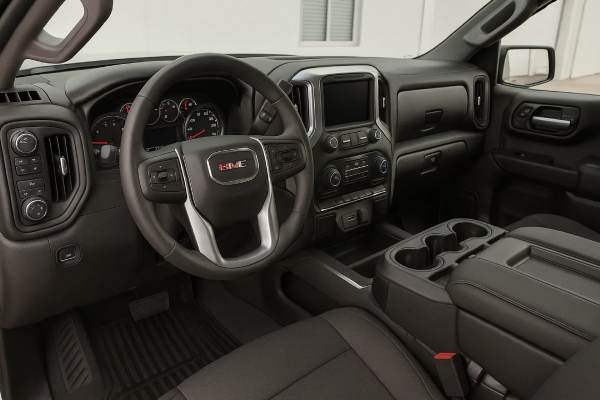
- Fleet trucks may have vinyl floors and cloth bench seats, while SLE and Elevation models bring carpet, split benches or buckets, and upgraded infotainment screens.
Option packages worth noting for buyers:
- Trailering package: typically adds hitch receiver, 7 pin wiring, trailer brake controller, upgraded cooling, and tow specific programming for the transmission and stability control.
- X31 Off Road (or regional equivalent): adds skid plates, all terrain tyres, off road suspension tuning, and sometimes a locking rear differential, which meaningfully improves traction on muddy sites and snow.
- Safety packages: Driver Alert packages can add rear cross traffic alert, blind spot monitoring, front and rear park assist, and more advanced collision warning features.
Safety ratings and ADAS evolution
The T1XX Sierra 1500 crew cab earns mostly strong crash test ratings in moderate overlap front, small overlap driver side, and side impacts in major testing programs. Passenger side small overlap performance varies by year and structure updates, and headlight performance is very trim dependent, with basic halogen units generally scoring lower than some LED configurations.
Advanced driver assistance systems were initially limited on lower trims in 2019 but became more widely available or standard as the model years progressed, particularly for automatic emergency braking and lane keeping support. Regardless of trim, all trucks include stability control, traction control, multiple front and side airbags, tyre pressure monitoring, and child seat anchors for second row seating in double and crew cabs.
For a used truck, confirm which safety systems it actually has: visual checks for camera pods, parking sensors, and steering wheel buttons, plus scanning the VIN build sheet, will reveal more than trim names alone.
Reliability, faults and recalls
The LV3 4.3 V6 has a reputation as one of the more durable engines in the modern Sierra lineup when serviced regularly. Its iron block, relatively low specific output, and simple valve train give it a robust base. However, as with any contemporary direct injection truck engine, there are patterns to watch.
Engine and fuel system
Common to occasional issues include:
- Carbon build up on intake valves: direct injection means little fuel washes over the valves. High mileage engines that have seen lots of short trips can develop deposits leading to misfires, rough idle, or loss of power. Walnut blasting or chemical cleaning of the intake ports and valves can restore performance.
- Active fuel management (cylinder deactivation) hardware wear: while more notorious on some V8s, the lifters and oil control systems still need clean oil. Extended oil change intervals, especially with heavy towing, raise the risk of lifter noise or collapse. Shorter intervals and correct oil quality help reduce this risk.
- Oil leaks at gaskets and seals: rocker covers, oil pan, and rear main seals can seep as trucks age. Early detection keeps repairs smaller and protects the clutch packs in the automatic transmission from contamination.
Transmission and driveline
The six speed automatic used with the 4.3 V6 is generally more predictable than some later eight speed units, but it is sensitive to fluid condition:
- Harsh shifting, flare, or delayed engagement often respond well to a fluid service with filter and, if needed, updated programming from the dealer. Neglect can allow clutch material to circulate, accelerating wear.
- Transfer case and differential noises (whine, clunk on take off, or chatter in tight turns) frequently trace back to old or incorrect fluid, worn universal joints, or, less often, internal wear of bearings and gears. Regular fluid changes greatly extend component life.
Chassis, electronics and corrosion
On the T1XX Sierra 1500:
- Front suspension wear (ball joints, tie rod ends, and control arm bushings) shows up sooner on trucks that see heavy off road use or carry plows or heavy equipment.
- Brake lines and underbody hardware can corrode in road salt climates. Regular washing of the frame and close inspection of hard lines around their clips is essential.
- Electrical and infotainment issues – intermittent backup cameras, radio reboots, or sensor warnings – are usually traced to software updates, poor grounds, or harness chafing rather than core component failure.
Recalls, service campaigns and checks
Across 2019–2021 there have been multiple recalls on Sierra 1500 models for items such as seat belt components, brake systems, and electronic controls. The exact applicability depends on body style, driveline, and build date. The safest approach is:
- Run the VIN through the official recall check at the relevant transport authority or manufacturer site.
- Ask for printed or digital records showing recall and service campaign completion.
- On fleet trucks, match service stickers and invoices to the vehicle to confirm the odometer history.
Trucks that have seen regular fluid changes, completed recalls, and sensible modifications (for example, stock tyre sizes, no extreme lifts without supporting work) tend to age well, even beyond 250,000 km.
Maintenance schedule and buying tips
A clear, conservative maintenance plan is the easiest way to keep an LV3 4.3 4WD Sierra out of trouble. The following intervals assume mixed use with regular towing or heavy loads. For lighter duty or primarily highway use you may safely extend some items within the limits of the official schedules, but shorter intervals rarely hurt.
Practical maintenance schedule (typical)
- Engine oil and filter: every 8,000–10,000 km (5,000–6,000 miles) or 12 months, using Dexos approved 0W-20. Sooner if the oil life monitor drops quickly under heavy use.
- Engine air filter: inspect every 20,000 km (12,000 miles); replace as needed, or at least every 40,000 km (25,000 miles) in dusty conditions.
- Cabin air filter: every 24–30 months, more often if you tow in dusty areas.
- Spark plugs: typically around 150,000 km (90,000+ miles), but consider earlier replacement if misfires are present.
- Coolant: replace at 5 years or 160,000 km (100,000 miles), then at shorter intervals depending on climate and test strip results.
- Automatic transmission fluid: drain and fill or service with filter around 60,000–80,000 km (40,000–50,000 miles) if towing or working hard; up to 100,000 km (60,000 miles) in light duty.
- Transfer case and differentials: 60,000–80,000 km (40,000–50,000 miles) under load; inspect sooner if water crossings or deep mud are common.
- Brake fluid: flush every 3 years regardless of mileage.
- Serpentine belt, hoses and cooling system hardware: inspect at each service after 100,000 km; replace at first signs of cracking, glazing, or swelling.
- Alignment and tyre rotation: rotate tyres every 10,000–12,000 km (6,000–7,500 miles); check alignment annually or after impacts and suspension repairs.
- 12 V battery: test yearly after 4 years and replace at the first sign of weakness or unstable voltages.
Fluid choices and torque examples
When planning work yourself or specifying jobs to a shop:
- Use Dexos1 approved synthetic oil to protect the active fuel management system.
- Stick to GM specified ATF and transfer case fluids; mixing universal fluids can cause chatter or shift problems.
- Wheel lug torque is typically in the 190–210 Nm (140–155 lb ft) range; always confirm for your wheels.
- Drain and fill plugs for differentials and the transfer case must be properly torqued to avoid stripped housings or leaks; avoid impact tools on these plugs.
Buyer’s guide and inspection checklist
When inspecting a used Sierra 1500 4.3 4WD:
- Underbody: look for frame rust, soft spots near cross members, and corrosion around brake and fuel lines. Surface rust is normal; flaking or swelling is not.
- Engine bay: check for oil or coolant leaks, aftermarket wiring, and “stop leak” signs around the radiator or heater hoses.
- Transmission and driveline: test for smooth shifts in all gears, including manual downshifts, and listen for clunks when engaging drive and reverse. In 4H and 4L, engagement should be quick and without grinding.
- Suspension and steering: drive over rough roads and speed bumps, listening for knocks; watch for wandering or uneven steering effort.
- Electrical: test every window, lock, lighting mode, and the infotainment system. A clean electrical bill is a good sign the truck has not been heavily modified.
- Service history: look for records documenting regular oil changes, transmission and differential services, and recall completion.
Well maintained LV3 4WD trucks can realistically serve for 10–15 years and well over 250,000 km with only normal wear items, making them attractive long term purchases for owners who value predictability over maximum features.
Driving feel and real performance
On the road, the 4.3 V6 feels different from both turbo fours and large V8s. Power builds steadily, with a clear swell of torque in the mid range rather than a sudden surge. Around town, the engine is smooth and quiet once warm, and the six speed automatic keeps revs low in gentle driving. Kickdown for overtakes is deliberate rather than snappy, but the response is acceptable when you plan passes with a bit of room.
The part time 4WD system is straightforward. In 2H, the truck behaves like a conventional rear wheel drive pickup. Switching to 4H locks the front and rear axles together, aiding traction on snow, gravel, or work sites. On trucks with Auto 4WD, the system will engage the front axle as needed during slip, which is helpful in changeable weather. Low range (4L) is reserved for serious off road work, hill starts with heavy trailers, or manoeuvring on steep grades.
Ride quality depends heavily on wheelbase, tyre choice, and bed load. Empty regular cab trucks on stiff suspension can feel busy over sharp bumps, while crew cabs with a few hundred kilograms in the bed ride more calmly. Noise levels at highway speed are reasonable: wind and tyre noise dominate over engine noise once in top gear.
Real world fuel economy for 4.3 4WD trucks usually lands a bit below official ratings when driven with mixed city and highway use. Many owners report mid teens mpg (around 15–17 mpg US, roughly 16–14 l/100 km) in town and high teens to low twenties on the highway when cruising near 110–120 km/h (70–75 mph). Towing a moderate trailer can pull those numbers into the low teens mpg or worse, so planning fuel stops becomes more important on long trips.
Under maximum tow, the V6 works hard but remains tractable if geared correctly and kept within its rated limits. Grades require downshifts, and it will not climb at the same speeds as larger V8 or turbo engines, but it does so predictably and without drama when cooling systems are healthy and transmission fluid is fresh.
How Sierra 4.3 4WD compares
In the 2019–2021 full size pickup market, the Sierra 1500 4.3 4WD sits in an interesting niche.
Compared with its sibling, the Chevrolet Silverado 1500 4.3, the differences are mostly in trim and styling. The GMC aims slightly more upmarket with distinct front end design, interior materials, and option structures, though mechanically they are near twins.
Against core rivals:
- Ford F-150 3.3 V6 and 2.7 EcoBoost: the Ford 3.3 naturally aspirated V6 is similar in power but revvier and paired with a ten speed automatic. The 2.7 turbo outguns the LV3 in torque and towing but brings greater complexity and different long term maintenance risks.
- Ram 1500 3.6 Pentastar with eTorque: smoother and more refined, with a mild hybrid system that improves stop start behaviour and low speed torque. However, the DOHC V6 is more complex to service and can be tighter to work around in bay.
- Toyota Tundra (prior generation 4.6 and 5.7 V8): these engines offer strong outputs and a conservative, well proven design, but they burn more fuel and the platform is older in design terms than the T1XX Sierra.
Where the Sierra 4.3 4WD stands out:
- Simple, robust engine architecture with good access for service.
- Honest towing and payload figures that match real world experience when the truck is properly maintained.
- Interior and cabin ergonomics that many find more straightforward than some rivals, especially in work trim.
Where it trails:
- Fewer advanced powertrain options than some competitors, especially for buyers prioritising maximum fuel efficiency.
- ADAS availability on lower trims lags some rivals in the early years; buyers must pay close attention to option content.
- Headlight performance in some configurations is weaker than the best in class.
For owners who value mechanical simplicity, 4WD capability, and a balance of towing and running costs, the Sierra 1500 LV3 4.3 4WD remains a strong candidate in the used truck market.
References
- 2019 GMC Sierra 1500 Base 4WD Crew Cab 6.6 ft. Box 147.4 in. WB Specs 2019 (Specifications)
- 2019 GMC Sierra 1500 crew cab pickup 2019 (Safety Rating)
- Manuals and Guides | Vehicle Support 2021 (Owner’s Manual)
- GMC Trailering Guide 2021 (Trailering Data)
- Vehicle Detail Search – 2020 GMC SIERRA 1500 PU CC | NHTSA 2020 (Safety and Recall Database)
Disclaimer
This article is for informational purposes only and is not a substitute for professional diagnosis, repair, or official service information. Specifications, torque values, fluid types, intervals, and procedures can vary by VIN, market, model year, body style, and installed equipment. Always confirm details against the official owner’s manual, workshop manual, and technical service information for your specific vehicle, and consult a qualified technician when in doubt.
If you found this guide useful, please consider sharing it with other owners or prospective buyers on Facebook, X/Twitter, forums, or in your local truck community. Your support helps others make better informed decisions and maintain their vehicles more safely.