
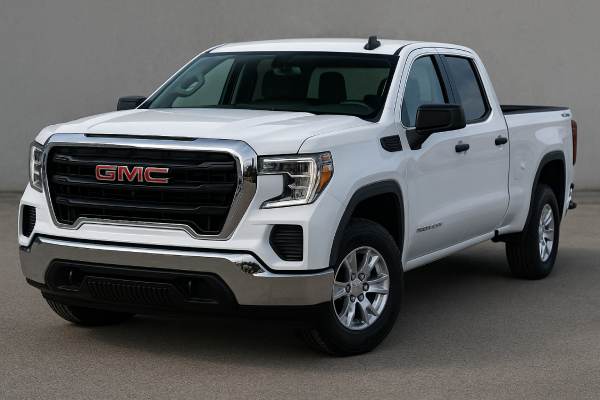
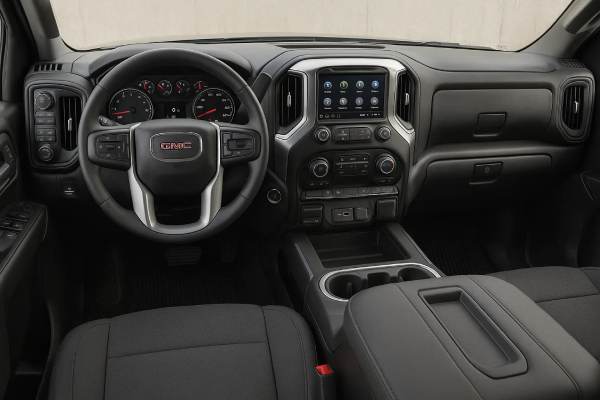
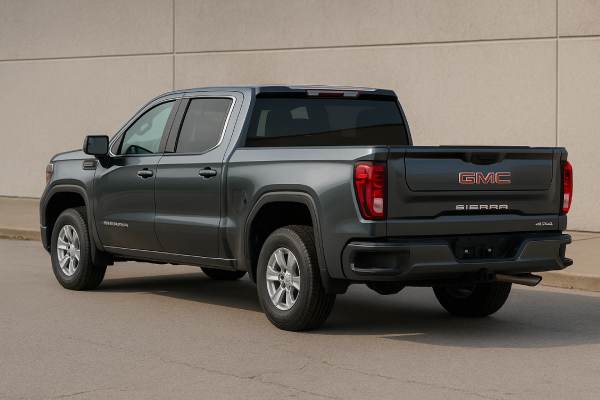
The 2019–2021 GMC Sierra 1500 4WD with the L3B 2.7 litre turbo four is a very modern take on a full size pickup. Instead of relying only on big V8s, GMC built a purpose designed turbocharged four cylinder that aims to deliver the low and mid range torque truck owners expect, with lower weight and better efficiency. Paired with the T1XX chassis and a part time 4WD system, this Sierra is designed for drivers who split their time between highways, job sites, and light off road use.
For owners, the attraction is balance. The 2.7 turbo makes strong torque at low revs, the 4WD system adds confidence on wet, snowy, or unpaved roads, and the lighter engine improves steering response compared with heavier V8 trucks. At the same time, fuel consumption can be meaningfully lower than older V8 models when the truck is driven sensibly and kept close to stock. This guide focuses on the 4WD 2.7 turbo Sierra 1500 from 2019–2021, covering its specs, real world behaviour, reliability, and what to look for when buying or maintaining one.
Fast Facts
- 2.7 litre L3B turbo four offers diesel like low rpm pull with less weight over the front axle than a V8, improving turn in and ride.
- 4WD system with low range and electronic aids makes this Sierra more secure in snow, mud, and on loose surfaces than RWD versions.
- Eight speed automatic responds well when serviced regularly; updated fluid and calibrations help address early shift quality complaints.
- Direct injection and turbocharging make timely oil changes and clean intake air particularly important once past 150,000 km (93,000 miles).
- As a working truck with mixed use, aim for engine oil and filter replacement every 8,000–10,000 km (5,000–6,000 miles), rather than stretching the maximum oil life.
Section overview
- Sierra 2.7 4WD in depth
- Key specs for 2.7 4WD
- Trim levels and 4×4 safety
- Long term reliability notes
- Service schedule and buying tips
- On road and off road behaviour
- How Sierra 2.7 4WD compares
Sierra 2.7 4WD in depth
When GMC introduced the T1XX generation Sierra 1500 for 2019, the headline engine for many buyers was not a big V8 but the new L3B 2.7 litre turbocharged four cylinder. This engine is built specifically with truck duty in mind. It uses a long stroke, sturdy bottom end, and a twin scroll turbo to deliver strong low and mid range torque rather than chasing high rev horsepower. With around 310 hp and torque in the mid 300 lb ft range, it can move a full size pickup confidently while towing and hauling.
In 4WD form, the Sierra combines this engine with a part time four wheel drive system. Most of the time you drive in 2HI (rear wheel drive), which keeps wear and fuel use down. When conditions demand, you can engage 4HI for extra traction on wet, snowy, or loose surfaces, and 4LO for low speed torque and control on steep grades or when pulling heavy loads out of difficult spots. Depending on trim and options, some trucks add an automatic 4WD mode that manages engagement for you.
The 2.7 turbo’s lightweight aluminium construction and compact size mean less mass over the front axle than the 5.3 or 6.2 litre V8s. That helps the truck feel more agile in everyday driving and can soften impacts over rough pavement when unloaded. The trade off is character: instead of a deep V8 burble, you get a quieter, more subdued four cylinder sound and a stronger emphasis on mid range surge.
From an ownership standpoint, the 2.7 4WD combination targets drivers who need real truck capability but do not tow at the maximum rating every weekend. It works well for contractors with mixed city and highway routes, outdoor enthusiasts who reach trailheads on gravel or snow covered roads, and families wanting a full size pickup that is more manageable in fuel cost than an older V8. The key is respecting its design envelope: keep up on maintenance, avoid unnecessary modifications that stress the drivetrain, and match trailers to rated capacities, and the truck can deliver a long, useful service life.
Key specs for 2.7 4WD
This section outlines the main technical data for the L3B 2.7 turbo four and the 4WD system in 2019–2021 Sierra 1500 models. Exact values vary slightly with cab style, bed length, axle ratio, and regional tuning, so always confirm against the label and documentation for your specific truck.
Engine and performance data
| Item | Specification (typical) |
|---|---|
| Engine code | L3B TurboMax 2.7 Turbo |
| Configuration | Inline 4, aluminium block and head |
| Displacement | 2.7 l (approx. 2,700 cc) |
| Bore × stroke | About 92.25 × 102.0 mm (3.63 × 4.02 in) |
| Valvetrain | DOHC, 4 valves per cylinder, variable valve timing |
| Induction | Single twin scroll turbocharger, intercooler |
| Fuel system | High pressure direct injection |
| Compression ratio | Around 10.0:1 (market dependent) |
| Maximum power | About 310 hp (231 kW) @ ~5,600 rpm |
| Maximum torque | Roughly 348 lb ft (472 Nm) across low to mid rpm band |
| Timing drive | Chain driven camshafts |
| Emissions | Designed to meet contemporary US and Canadian light duty standards |
Factory fuel economy estimates for 4WD 2.7 trucks typically sit around the high teens mpg combined (about 12–13 l/100 km). Expect slightly lower consumption than a comparable V8 in mixed driving, but not by a dramatic margin when heavily loaded or towing.
Transmission, transfer case and driveline
| Item | Specification (typical) |
|---|---|
| Transmission | 8 speed automatic with torque converter |
| Drive modes | 2HI, 4HI, 4LO, and in some trims Auto 4WD |
| Transfer case | Electronically controlled, two speed |
| Front differential | Independent front suspension with front axle disconnect |
| Rear differential | Open differential; automatic locking rear differential available (often RPO G80) |
| Common axle ratios | 3.23 or 3.42:1; tow packages may use shorter ratios |
| Traction aids | Stability control, traction control, trailer sway control |
Compared with RWD models, the 4WD trucks add a front differential, transfer case, extra driveshafts, and related mounting hardware, increasing curb weight and slightly reducing fuel efficiency.
Chassis, size and weight (typical crew cab short bed 4WD)
| Item | Approximate value |
|---|---|
| Overall length | About 5,880 mm (231.5 in) |
| Overall width (body) | About 2,065 mm (81.3 in) |
| Height | Roughly 1,920–1,950 mm (75.6–76.8 in) depending on suspension and tyres |
| Wheelbase | Around 3,745 mm (147.4 in) for crew cab short bed |
| Ground clearance | Commonly 220–230 mm (8.7–9.1 in) in 4WD trims |
| Turning circle | Around 13.0–13.7 m (43–45 ft) |
| Curb weight | Roughly 2,100–2,250 kg (4,630–4,960 lb) |
| GVWR | Typically 3,175–3,311 kg (7,000–7,300 lb) |
| Fuel tank | Around 91 l (24 US gal) |
| Approach angle | Around 18–19° (trim dependent) |
| Departure angle | Around 22–23° (trim dependent) |
Capability metrics
Values vary by configuration and tow package; always confirm on the door label and in the trailering guide.
| Item | Typical range |
|---|---|
| 0–100 km/h (0–62 mph) | Approximately 7.0–7.7 s (unladen, 4WD) |
| Top speed | Usually electronically limited to around 175–185 km/h (109–115 mph) |
| Max braked towing | Often in the 3,400–4,000 kg (7,500–8,800 lb) range when properly equipped |
| Max payload | Roughly 750–980 kg (1,650–2,160 lb) depending on trim |
| Roof load rating | Usually 75–100 kg (165–220 lb) with appropriate rack system |
Fluids, capacities and electrical highlights (typical)
| System | Fluid / component | Approximate capacity or spec |
|---|---|---|
| Engine oil | Dexos1 approved 0W-20 synthetic | About 6.0–6.6 l (6.3–7.0 US qt) |
| Engine coolant | Long life OAT coolant | Around 11–13 l total |
| Automatic transmission | GM specified ATF for the 8 speed | Around 9–11 l total (4–6 l on pan service) |
| Transfer case | GM transfer case fluid | Around 1.5–2.0 l |
| Front differential | 75W-90 synthetic gear oil | Around 1.3–1.7 l |
| Rear differential | 75W-90 synthetic gear oil | Around 2.0–2.5 l |
| A/C refrigerant | R-1234yf or R-134a depending on market | Charge mass listed on under bonnet label |
| Alternator | Typically 170–220 A depending on tow and electrical packages | |
| 12 V battery | Group 48 or similar, around 70–80 Ah, 700+ CCA |
Safety and driver assistance hardware (airbags, sensors, radar modules, cameras) varies by trim and option package, and is covered further in the next section.
Trim levels and 4×4 safety
The 2.7 turbo 4WD powertrain appears across several trims in the 2019–2021 Sierra lineup. It is positioned as a mainline engine choice rather than a bare minimum fleet motor, especially in markets where fuel prices and emissions rules push buyers away from large V8s.
Where the 2.7 4WD typically appears
Common trim pairings include:
- Sierra and SLE 4WD: core work and family trucks with cloth interiors, solid feature sets, and optional trailering and safety packages.
- Elevation 4×4: appearance oriented models with body colour trim, black wheels, and often the 2.7 turbo as a standard or popular engine choice.
- Regional packages: off road appearance or value packages in some markets may also pair the 2.7 with skid plates, all terrain tyres, and uprated shocks.
Higher luxury trims such as SLT, AT4, and Denali generally lean toward the 5.3 or 6.2 litre V8 or the 3.0 diesel, but there can be overlap depending on region and specific ordering.
Trim and option differences that affect behaviour
Mechanically and functionally, you will see differences in:
- Axle ratios: some base 4WD trucks use 3.23 gearing for highway efficiency, while those with max trailering or off road packages use 3.42 or similar to improve launch, grade climbing, and low speed control.
- Suspension tuning: standard on road tuned suspension suits mixed use; off road packages may add twin tube shocks, different bump stops, and slightly higher ride height.
- Tyre packages: highway terrain tyres work well for noise and fuel economy; all terrain tyres add grip on loose surfaces but increase rolling resistance and noise.
- Brake hardware: larger wheels often bring larger brake packages; trailering content may include upgraded cooling and rotors.
Identifying 4WD equipment and RPO codes
Beyond the obvious “4×4” badging and the presence of a 4WD mode selector inside the cabin, you can confirm configuration using the RPO (Regular Production Option) label, usually found in the glovebox or on a door pillar. The engine code should list L3B, while codes for transfer case, axle ratio, and differential type give a more detailed mechanical picture.
Safety ratings and protection
The T1XX Sierra platform is designed to perform well in major crash test protocols, especially in crew cab form. While exact ratings depend on the cab configuration and headlight type, most 2019–2021 Sierra 1500 trucks achieve high scores in frontal moderate overlap, side impact, and roof strength categories. Head restraint and seat geometry also typically rate well.
Cab and occupant protection elements include:
- Airbags: dual front, front side, and side curtain airbags are fitted on most cab configurations, protecting both front and rear outboard passengers.
- Seat belt pretensioners and load limiters: designed to manage occupant deceleration during frontal crashes.
- Child seat provisions: lower anchors and top tethers in the rear seating positions on crew and double cabs support ISOFIX/LATCH installation.
Driver assistance systems (ADAS)
Availability of ADAS improves with trim and model year. Key systems you may find, depending on specification, include:
- Forward collision alert with automatic emergency braking.
- Lane keep assist with lane departure warning.
- Blind spot monitoring with rear cross traffic alert.
- Rear park assist and, on higher trims, front park assist.
- Adaptive cruise control on select models.
- Multiple camera views for easier parking and trailer manoeuvring.
Because ADAS hardware and software are sensitive to alignment and calibration, any significant suspension, body, or glass work should be followed by appropriate calibration procedures. When buying used, inspect for warning lights or messages related to these systems and consider a diagnostic scan to confirm all modules are communicating correctly.
Long term reliability notes
The L3B 2.7 turbo and its 4WD drivetrain are newer than GMC’s long standing V8s, so long term data is still building. However, patterns are emerging from early high mileage trucks and service experience.
Engine and induction system
The 2.7 uses direct injection and forced induction, both of which place particular demands on lubrication and air management:
- Carbon deposits on intake valves: with fuel injected directly into the cylinder, intake valves no longer benefit from fuel washing. Over time, oil vapour and blow by gases can leave deposits, leading to rough idle, misfires, or reduced power. Preventive measures include regular long drives at full operating temperature and occasional intake cleaning. Severe build up may require walnut shell blasting of the intake ports.
- PCV and crankcase ventilation issues: a restricted PCV system or excessive blow by can increase oil consumption and send oil into charge pipes and the intercooler. Symptoms range from blue smoke at start up to oil traces in the intercooler. If consumption rises, PCV function and turbo seals should be evaluated before assuming deeper mechanical damage.
- Boost leaks: clamps, boots, and intercooler joints can develop leaks, especially on trucks used on rough roads or with aftermarket tuning. Reduced power, hissing noises under boost, and underboost fault codes are typical indicators.
Fuel and ignition components
Under boost, the fuel and ignition systems work harder than in a naturally aspirated engine:
- High pressure fuel pump and injectors: faults can show up as hard starting, rough runs under load, or fuel pressure codes. Differentiating between low side (in tank pump, filters) and high side issues is important for effective repair.
- Ignition coils and plugs: individual coil or plug failures are not unusual in higher mileage turbo engines. Misfires under load, especially in specific cylinders, call for plug inspection and coil swap testing. Using the specified heat range and gap is critical.
Transmission, transfer case and differentials
The eight speed automatic and 4WD hardware are generally durable when maintained, but some concerns show up in owner reports:
- Shift quality and torque converter shudder: some trucks experience shudder at steady speeds or abrupt shifting. Updated transmission fluid formulations and recalibrated software often improve this significantly. Ignoring symptoms can shorten converter and internal transmission life.
- Transfer case fluid condition: neglected fluid can darken and develop odour, increasing wear risk. Trucks used in 4LO or heavy towing benefit from more frequent fluid changes.
- Differential wear and noise: howling or whine at steady speeds may indicate gear wear or bearing issues, especially if fluid changes have been skipped.
Chassis, suspension and corrosion
Full size pickups are often used hard, and the Sierra is no exception:
- Front suspension wear: control arm bushings, ball joints, and tie rods wear faster on trucks with heavy accessories or oversized wheels. Symptoms include clunks, vibration, and vague steering.
- Rear leaf spring and shackle issues: high payload use can accelerate wear on bushings and introduce squeaks or rear end misalignment.
- Rust hotspots: in salt belt regions, pay particular attention to frame rails, rear spring mounts, cross members, and underbody seams. Surface rust is expected; structural corrosion is not.
Electronics and software
Modern Sierras rely on extensive networking between modules:
- Infotainment glitches: screen freezes, reboots, or lost audio are usually addressed with software updates rather than hardware replacement.
- Camera and sensor faults: dirt, impact, or wiring issues can disable ADAS features; a scan tool helps identify specific modules or circuits.
- Software updates: engine, transmission, and ADAS modules may receive revised calibrations over time to improve driveability and fix known issues. Ensuring these updates are applied can make the truck feel noticeably better and avoid repeat complaints.
Recalls, TSBs and extended coverage
As with any modern vehicle, the 2019–2021 Sierra 1500 has seen recalls and technical service bulletins touching on items such as seat belts, braking, fuel systems, and electronic modules. Before purchase, or as part of ongoing ownership:
- Run the VIN through official recall tools for your region.
- Ask for records showing recall completion, customer satisfaction campaigns, and field service actions.
- Keep copies of major repair invoices, especially for engine, transmission, and 4WD components, in case goodwill or extended coverage policies apply later.
A 2.7 4WD Sierra maintained by the book, with updated software and quality fluids, has a good chance of delivering long service life with manageable repair risk.
Service schedule and buying tips
Turbocharged engines and 4WD drivetrains reward proactive maintenance. While the official service schedule gives maximum intervals, many owners prefer shorter, more conservative timing to protect the engine, transmission, and 4WD system under real world conditions.
Practical maintenance schedule (typical mixed use)
The following intervals suit trucks used for commuting, light to moderate towing, and occasional off road driving:
- Engine oil and filter: 8,000–10,000 km (5,000–6,000 miles) or 12 months, whichever comes first, using Dexos approved 0W-20 synthetic oil. Hard use, frequent idling, or short trips justify the shorter end of this range.
- Engine air filter: inspect at 20,000 km (12,000 miles); replace every 40,000 km (25,000 miles) or sooner if operating in dusty conditions.
- Cabin air filter: every 24–30 months, or more often if airflow is reduced or odours develop.
- Spark plugs: generally around 150,000 km (90,000+ miles) under normal conditions. Replace earlier if misfires, rough running, or poor fuel economy appear.
- Coolant: first change at around 5 years or 160,000 km (100,000 miles), then based on coolant condition and manufacturer guidance.
- Automatic transmission fluid: 60,000–80,000 km (40,000–50,000 miles) on trucks that tow, haul, or see heavy city duty; up to 100,000 km (60,000 miles) for light duty use if fluid condition remains good.
- Transfer case fluid: 60,000–80,000 km for regularly used 4WD; more frequent changes if you use 4LO often or tow in hot conditions.
- Front and rear differential fluid: 60,000–80,000 km with heavy use, around 100,000 km for lighter service.
- Brake fluid: flush every 3 years, regardless of mileage.
- Brake pads and rotors: inspect at least annually; more often for trucks that tow or run in hilly terrain.
- Serpentine belt and hoses: comprehensive inspection after 100,000 km, then at each scheduled service; replace at the first signs of cracking, glazing, or soft spots.
- Tyre rotation and alignment: rotate every 10,000–12,000 km (6,000–7,500 miles); check alignment yearly or after any major impact or suspension work.
- 12 V battery: test annually after the fourth year; replace at the first sign of weak cranking or unstable voltage.
Always use the specified fluid types, and when in doubt, consult the owner’s or service manual for your VIN.
Fluid specifications and torque examples
A few practical notes for planning maintenance:
- Use only oil that meets the required standard for turbocharged, direct injection gasoline engines. Generic oils without the correct certification can lead to deposits and timing system wear.
- Stick to the exact transmission and transfer case fluids listed for the eight speed and associated 4WD hardware; friction characteristics matter for shift feel and component life.
- Lug nuts typically require high torque; using a torque wrench rather than relying on an impact gun reduces the risk of warped rotors or damaged studs.
Buyer’s checklist for used 2.7 4WD Sierras
If you are evaluating a used 2019–2021 Sierra 1500 2.7 4WD, a structured inspection helps quickly separate strong candidates from trucks that will need immediate investment.
- Exterior and underbody
- Look for mismatched paint, uneven panel gaps, or overspray indicating accident repairs.
- Inspect the frame, cross members, and suspension mounting points for corrosion, dents, or bending.
- Check bed condition, tie down points, and hitch receiver for signs of overload or abuse.
- Engine bay and fluids
- Remove the oil filler cap and inspect for sludge or thick deposits.
- Look for coolant stains, wetness around hoses, and crusting near clamps.
- Check for oil traces around charge pipes and intercooler joints, which may signal leaks or excessive crankcase vapour.
- Test drive
- Cold start: confirm smooth, prompt starting and stable idle.
- Acceleration: feel for consistent boost and note any flat spots, hesitation, or pinging noises.
- Transmission: shifts should be predictable and smooth; no persistent shudder at steady speeds.
- 4WD system: engage 4HI and, in a safe area, 4LO to confirm mode changes and absence of grinding or binding.
- Chassis and brakes
- Listen for clunks, rattles, or knocking over bumps.
- Perform a firm stop to check for steering pull, pedal pulsation, or noise.
- Electronics and ADAS
- Verify operation of all windows, locks, lights, wipers, and infotainment functions.
- Check that all warning lights illuminate at start up and then go out.
- Confirm camera views and any listed driver assistance features function correctly.
- Documentation
- Look for consistent maintenance records, especially for oil and fluid services.
- Ask for proof of recall completion and any major repairs.
A 2.7 4WD Sierra that drives smoothly, shows even tyre wear, and comes with verifiable service history is a strong candidate for long term ownership.
On road and off road behaviour
The way a truck feels day to day matters as much as its spec sheet. The 2.7 4WD Sierra aims to combine the stability and comfort of a modern half ton with the extra security of four wheel drive and the response of a turbocharged engine.
Ride, handling and refinement
On paved roads, the Sierra’s independent front suspension and coil over shock layout give a stable, predictable feel. The lighter 2.7 engine helps keep front end weight down, so turn in can feel slightly more direct than on heavier V8 variants. Body roll is present, as expected in a full size pickup, but mostly well controlled in normal driving.
Ride quality depends heavily on wheel size and tyres:
- Trucks on 17 or 18 inch wheels with sensible sidewall heights tend to ride the best, smoothing out sharp edges and expansion joints.
- 20 inch wheels sharpen steering response but transmit more noise and impact harshness over broken surfaces.
- All terrain tyres add grip on loose surfaces at the cost of extra noise and a slight reduction in fuel efficiency.
Cabin noise is respectable for a truck in this class. Wind and tyre noise are more noticeable than engine sound at highway speeds, especially once the eight speed settles in top gear.
Powertrain character
The 2.7 turbo builds boost quickly, delivering a satisfying surge from low revs. Around town, the automatic transmission keeps revs low and upshifts early to use this torque. When you press more firmly on the accelerator, it downshifts promptly and the engine pulls strongly through the mid range. The character leans more toward a modern turbocharged petrol than a traditional big bore V8, with less rumble but more mid range punch.
Drive modes and 4WD settings influence behaviour:
- Normal mode: best for everyday commuting, balancing fuel use and responsiveness.
- Tow/haul mode: holds gears longer, sharpens shifts, and improves engine braking on descents when towing or hauling heavy loads.
- 4HI: adds traction on slippery surfaces, though steering effort and turning radius change slightly when the front axle is engaged.
- 4LO: for low speed, high torque situations such as steep grades, deep snow, or moving heavy trailers slowly.
Real world efficiency
Real world fuel economy varies with climate, terrain, load, and driver behaviour. Typical owners can see:
- City use: mid teens mpg (around 15–17 mpg, roughly 14–16 l/100 km), depending on traffic and idling.
- Highway cruising: high teens to low twenties mpg (around 18–23 mpg, roughly 10–13 l/100 km) at legal speeds with stock tyres and no significant lift.
- Mixed driving: usually somewhere between these figures, with 4WD usage and payload shifting the balance.
Larger tyres, lifts, roof racks, and heavy accessories all increase aerodynamic drag and rolling resistance, reducing efficiency and sometimes affecting transmission behaviour.
Off road and low traction performance
The 4WD system transforms the 2.7 Sierra from a pavement focused truck into a genuinely capable all weather and light off road vehicle:
- Snow and ice: 4HI combined with good winter or all terrain tyres provides much more confidence than RWD, especially when starting on inclines or manoeuvring in unploughed areas.
- Gravel and dirt roads: 4HI helps reduce rear end step out and wheelspin when the surface is loose, particularly when unladen.
- Mild trails and fields: the combination of low range, ground clearance, and traction control lets the truck handle rutted tracks, grassy fields, and modest obstacles, assuming sensible driving and appropriate tyres.
This is not a hardcore rock crawler out of the box, but it is well suited to the use cases most buyers have in mind: accessing job sites, rural properties, campsites, and trailheads all year round.
Towing and load behaviour
When towing within its rating, the 2.7 4WD Sierra remains composed provided the trailer is properly set up with correct tongue weight and, where appropriate, a weight distributing hitch:
- Acceleration is adequate for highway merges and grade climbing, though higher revs and more frequent downshifts are normal compared with running empty.
- Tow/haul mode makes a noticeable difference in shift strategy and engine braking.
- Stability control and trailer sway control add confidence in crosswinds, though no electronic aid can fully compensate for poor loading or unsafe speeds.
Under heavy tow, expect fuel consumption to drop into the low teens mpg (around 18–20 l/100 km) or lower, similar to V8 trucks.
How Sierra 2.7 4WD compares
In the competitive world of full size pickups, the Sierra 1500 2.7 4WD sits at an interesting intersection of efficiency, capability, and modern engineering. Comparing it both within GMC’s own lineup and against rivals helps clarify its strengths and limitations.
Within the Sierra family
- Versus the 4.3 V6 (where offered): the 2.7 turbo delivers more torque across a broader range, feels stronger under load, and usually posts better fuel economy. It also benefits from more advanced engine technology but introduces turbo and direct injection complexity.
- Versus the 5.3 V8: the V8 offers a familiar sound, higher peak towing ratings in some configurations, and long proven durability. The 2.7 counters with better everyday drivability in light to moderate use and the potential for lower fuel consumption, especially in mixed driving.
- Versus the 6.2 V8 and 3.0 diesel: these engines are top choices for heavy towing, performance, and high mileage highway work. They provide more headroom but cost more to buy and can be more expensive to maintain.
For drivers who want 4WD but seldom exploit the maximum tow rating, the 2.7 offers a compelling balance of performance and running cost.
Against key rivals
- Ford F-150 2.7 EcoBoost 4×4: Ford’s twin turbo V6 typically produces more torque and can deliver stronger tow numbers on paper, but with two turbos and more cylinders, there is extra complexity under the hood. The GMC’s single turbo four is simpler and lighter at the front, though absolute performance and refinement may favour the Ford in some trims.
- Ram 1500 3.6 eTorque 4×4: Ram’s mild hybrid V6 offers smoothness, a refined ride, and competitive efficiency, but it relies on revs rather than turbo torque. The Sierra feels punchier in the mid range and may be the better choice for frequent towing in moderate weight ranges.
- Toyota Tundra V8 4×4 (previous generation): the Tundra’s V8 is known for robustness but consumes more fuel and is backed by an older chassis design in this time frame. The Sierra feels more modern inside and more efficient day to day.
Who the 2.7 4WD is best for
This powertrain and drivetrain combination fits best if:
- You drive in mixed conditions with real winters or unpaved roads and value the security of 4WD.
- You tow or haul moderately but not at the maximum limit every week.
- You want a modern truck with a lighter front end, good mid range torque, and fuel economy that is easier to live with than a traditional big V8.
It may not be ideal if you regularly tow at or near the truck’s maximum rating in hot or mountainous regions, or if you strongly prefer the sound and feel of a large naturally aspirated engine. In those cases, one of the V8 or diesel options may be a better long term match.
For many owners, though, the 2019–2021 GMC Sierra 1500 2.7 turbo 4WD is a smart, well rounded choice that combines contemporary engineering with the practical versatility expected from a full size pickup.
References
- Manuals and Guides | Vehicle Support 2021 (Owner’s Manual)
- 2019 GMC Fuel Economy 2019 (Fuel Economy Data)
- 2021 GMC Sierra 1500 | Pickup Truck 2021 (Model Information)
- 2019 GMC Sierra 1500 crew cab pickup 2019 (Safety Rating)
- Vehicle Detail Search – 2020 GMC SIERRA 1500 PU 4WD 2020 (Recall Database)
Disclaimer
This article is for general informational purposes only and is not a substitute for professional diagnosis, repair, or safety evaluation. Specifications, torque values, service intervals, and procedures can vary by VIN, production date, market, body style, and installed options. Always verify critical information against the official owner’s manual, workshop manual, and current technical bulletins for your specific vehicle, and consult a qualified technician before performing maintenance or modifications.
If you found this guide useful, please consider sharing it with other owners and shoppers on Facebook, X/Twitter, or your favourite forums. Thoughtful sharing helps more people operate, maintain, and choose their trucks with better information.