
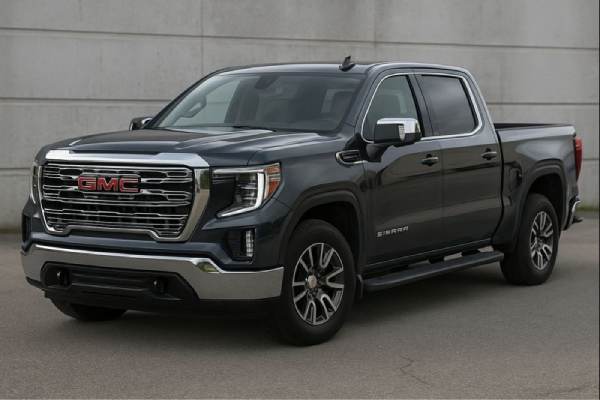
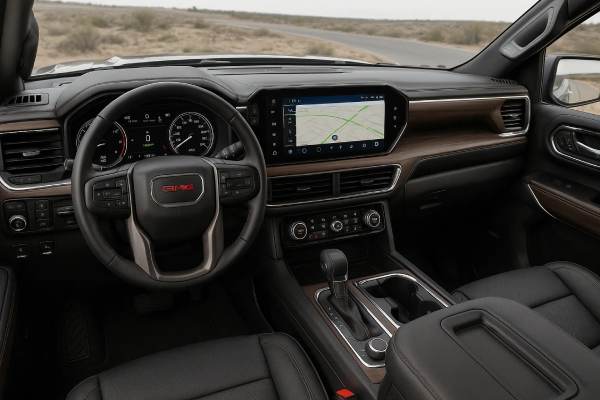
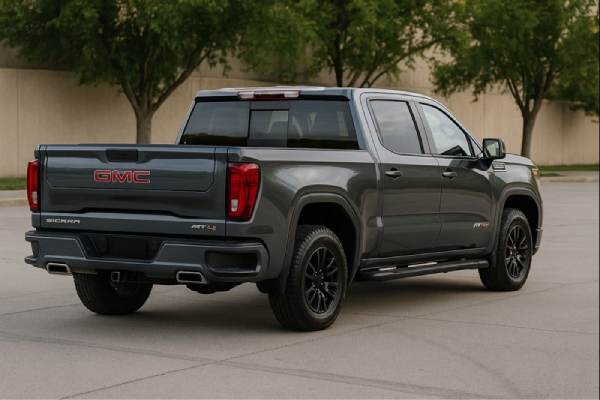
The 2022–present facelifted GMC Sierra 1500 4WD with the L87 6.2-liter V8 is the most muscular gas-powered half-ton in GMC’s lineup. It combines a traditional body-on-frame truck platform with a thoroughly modern interior, advanced driver assistance, and serious towing hardware. The facelift brought a redesigned dash with a large touchscreen, richer materials, new top trims like Denali Ultimate, and expanded availability of features such as Super Cruise hands-free driving on certain models.
Under the hood, the naturally aspirated 6.2-liter V8 delivers 420 hp and 460 lb-ft through a 10-speed automatic and part-time or automatic 4WD, giving strong acceleration even with a trailer attached. For owners, the big questions are how it tows, how it holds up over time given recent engine recalls, and which trims and options make the most sense. This guide walks through specs, real-world performance, reliability patterns, maintenance planning, and how the Sierra 6.2 compares with rival trucks.
Fast Facts
- 6.2-liter L87 V8 makes 420 hp and 460 lb-ft with a 10-speed automatic and 4WD, providing very strong acceleration even in heavy crew-cab trims.
- Max conventional towing for 6.2 4WD trucks with the Max Trailering Package is rated up to 13,000 lb, with payload typically around 1,650–1,850 lb depending on configuration.
- The L87 engine family is subject to an ongoing recall and investigation for potential bearing and crankshaft-related failures; buyers should confirm recall status by VIN.
- Typical oil change interval is 5,000–7,500 miles (8,000–12,000 km) or annually; heavy towing or short-trip use justifies the shorter end of that range based on severe-service guidance.
Quick navigation
- GMC Sierra 1500 6.2 Overview
- GMC Sierra 6.2 Key Specifications
- Sierra 6.2 Trims and Safety
- Reliability and Known Issues
- Maintenance and Buying Advice
- Driving Experience and Real Performance
- How Sierra 6.2 Compares Rivals
GMC Sierra 1500 6.2 Overview
The facelifted 2022–present Sierra 1500 rides on GM’s T1XX platform but feels like a major step up versus earlier trucks. The big story is that the 6.2-liter L87 V8, paired with a 10-speed automatic, is now positioned as the premium gas engine above the 5.3 V8 and 2.7-liter turbo four. It is available only on 4WD models and primarily on higher trims such as SLT, AT4, AT4X, Denali, and Denali Ultimate.
The facelift reshaped the front fascia, lighting signatures, and grille designs, but the more dramatic change happens inside. Most 2022+ Sierra 6.2s get the updated cockpit with a 13.4-inch central touchscreen, 12.3-inch digital cluster, and optional 15-inch head-up display on certain trims. Denali and Denali Ultimate add upgraded leather, wood, and metal trim that push the truck close to luxury SUV territory.
Mechanically, the 6.2 L87 is a pushrod, direct-injected V8 with variable valve timing and GM’s Dynamic Fuel Management cylinder deactivation, allowing it to run on fewer cylinders at light loads to save fuel. In this generation it produces 420 hp at 5,600 rpm and 460 lb-ft at 4,100 rpm. The 10-speed Hydra-Matic 10L80 automatic offers close ratios and a tall top gear for highway efficiency. Max towing for a 6.2 4WD crew cab with the Max Trailering Package reaches 13,000 lb, with a gross combined weight rating (GCWR) up to 19,100 lb.
The 6.2-equipped Sierra targets buyers who care about strong acceleration, high towing ratings, and a more upscale cabin. It also appeals to those who prefer a naturally aspirated V8 over turbocharged alternatives in rival trucks. However, that performance comes with notable trade-offs: higher fuel consumption than diesel or smaller gas engines, premium fuel recommendation, and, more recently, attention around engine reliability due to bearing and crankshaft-related recalls and investigations on L87 units built from 2021 onward.
For many owners, the Sierra 1500 6.2 is at its best as a comfortable, long-distance tow rig or daily driver that can handle a large boat, camper, or car trailer while still providing a refined interior and modern tech.
GMC Sierra 6.2 Key Specifications
This section focuses on a typical 2022–present GMC Sierra 1500 Crew Cab Short Box 4WD with the 6.2-liter L87 V8 and 10-speed automatic, which is the most common configuration. Figures can vary slightly by trim, wheels, and options and should always be verified for a specific VIN.
Engine and Performance
| Item | Specification |
|---|---|
| Engine code | L87, EcoTec3 6.2-liter V8 |
| Layout | 90° V8, OHV (pushrod), 2 valves per cylinder, VVT |
| Bore × stroke | 4.06 × 3.62 in (103.25 × 92 mm) |
| Displacement | 6.2 L (6,162 cc) |
| Compression ratio | About 11.0:1 |
| Fuel system | Direct high-pressure fuel injection |
| Induction | Naturally aspirated |
| Max power | 420 hp (313 kW) @ 5,600 rpm |
| Max torque | 460 lb-ft (624 Nm) @ 4,100 rpm |
| Cylinder deactivation | Dynamic Fuel Management (variable cylinder shutoff) |
| Recommended fuel | Premium gasoline (can run on regular with reduced performance) |
| EPA fuel economy (typical 4WD 6.2) | Around 15 mpg city / 20 mpg highway / 17 mpg combined |
| Real-world mixed | Around 15 mpg observed in many independent tests for Denali/Denali Ultimate |
At a steady 70–75 mph (110–120 km/h), owners and tests typically see high-teens mpg (around 12–13 L/100 km) in unloaded driving, dropping significantly when towing a heavy trailer.
Transmission and Driveline
| Item | Specification |
|---|---|
| Transmission | 10L80 10-speed automatic |
| Gear ratios (1st–10th) | 4.70 / 2.99 / 2.16 / 1.78 / 1.53 / 1.28 / 1.00 / 0.85 / 0.69 / 0.64 |
| Reverse | 4.87 |
| Final drive ratios | Typically 3.23 or 3.42 with 6.2 gas; Max Trailering uses 3.42 |
| Drive type | Part-time or automatic 4WD, two-speed transfer case (on most 6.2 trims) |
| Rear axle | 9.76-inch axle on Max Trailering Package; available electronic locking differential |
Chassis and Dimensions
(crew cab, short box, 4WD, typical 6.2 configuration)
| Item | Specification |
|---|---|
| Frame | Fully boxed steel ladder frame |
| Front suspension | Independent, coil-over shocks, control arms |
| Rear suspension | Solid axle with leaf springs |
| Brakes (front/rear) | Ventilated discs; roughly 330 mm front / 345 mm rear on many trims |
| Wheels/tires | 18–22 in alloys; e.g., 275/50R22 on Denali Ultimate |
| Length | About 233 in (5,931 mm) |
| Width (without mirrors) | About 81 in (2,077 mm) |
| Height | About 75–76 in (1,918–1,927 mm) depending on trim |
| Wheelbase | 147.4 in (3,744 mm) |
| Ground clearance | Approx. 8–10 in depending on trim and tire package (AT4/AT4X higher) |
| Curb weight | Around 5,550–5,750 lb for a 4WD crew cab 6.2, depending on trim and equipment |
Performance and Capability
| Item | Specification |
|---|---|
| 0–60 mph (empty) | Around 5.4–5.9 seconds depending on trim and tires |
| Quarter mile | About 13.9–14.2 sec @ roughly 96–100 mph for high-trim 6.2 models |
| Top speed (governed) | Around 106–210 km/h (varies with tire rating and trim) |
| Braking 60–0 mph | Roughly 128–182 ft depending on trim, wheels, and tires |
| Max conventional towing (6.2 4WD) | Up to 13,000 lb (5,897 kg) with Max Trailering Package |
| GCWR (6.2 Max Trailering) | Up to 19,100 lb |
| Typical payload (6.2 4WD crew cab) | Around 1,640–1,840 lb depending on trim |
Fluids, torque specs, and electrical details are best taken from official service information. As a rough guide, the 6.2 V8 uses close to 8–9 qt of 0W-20 synthetic oil and may be fitted with a 220-amp alternator on certain towing and snow-plow packages, but always verify by VIN.
Safety and Driver Assistance (High-Level)
Key systems available on 2022+ Sierra 1500 include: Forward Collision Alert, Automatic Emergency Braking, Front Pedestrian Braking, Lane Keep Assist with Lane Departure Warning, Following Distance Indicator, IntelliBeam auto high-beams, Blind Zone Alert, Rear Cross Traffic Braking, Rear Park Assist, and HD Surround Vision, grouped within GMC Pro Safety and GMC Pro Safety Plus packages. Super Cruise hands-free driving with driver monitoring and trailering support is available only on specific Denali and Denali Ultimate models.
IIHS data for the crew cab indicate an Acceptable overall rating in the updated side test, with generally Good protection for the driver and a Marginal torso injury metric for the rear passenger. Other crashworthiness categories, such as moderate overlap and small overlap front, have historically scored well, but the Sierra does not currently earn an IIHS Top Safety Pick, in part due to headlight and crash-avoidance performance on certain trims.
Sierra 6.2 Trims and Safety
The 6.2-liter engine sits near the top of the Sierra 1500 range and is not available on every trim. For the facelifted 2022–present trucks, the 6.2 4WD combination is offered primarily on:
- SLT – more upscale than SLE, with leather seating, upgraded audio, and plenty of towing equipment available.
- AT4 / AT4X – off-road oriented with factory lift, off-road suspension and tires, skid plates, and selectable locking differentials (AT4X adds Multimatic DSSV dampers and front/rear lockers).
- Denali – luxury-focused with chrome exterior treatment, magnetic ride control, premium interior finishes, and extensive standard driver assistance.
- Denali Ultimate – flagship trim with Super Cruise (when available), CarbonPro composite bed, 22-inch wheels, and the most upscale cabin.
The 6.2 is always paired with a 10-speed automatic and 4WD. Some trims (like AT4/AT4X) emphasize off-road geometry and underbody protection, while Denali trims prioritize comfort and technology.
Options and packages that matter for 6.2 buyers:
- Max Trailering Package – raises GCWR and axle ratings, adds a 220-amp alternator, revised rear springs and shocks, and higher tow ratings (up to 13,000 lb).
- X31 Off-Road Package (on non-AT4 trims) – off-road suspension, all-terrain tires, locking rear differential, skid plates, and additional cooling.
- Sierra Safety Plus / Technology Packages – add surround-view cameras, Trailer Side Blind Zone Alert, Rear Cross Traffic Braking, Rear Pedestrian Alert, head-up display, and adaptive cruise control.
Safety ratings and ADAS behavior
From a crash-test point of view, the Sierra 1500 shares its structure with the Chevrolet Silverado. Official ratings for the crew cab show an Acceptable overall rating in the updated side test, with generally Good protection for the driver and some mixed results for the rear passenger. Other crash tests are generally favorable, but headlight and front-crash prevention performance can vary by trim and options.
Government crash-test programs publish frontal and side crash ratings by body style and drivetrain, with results generally competitive with other full-size pickups. Exact star ratings can vary by cab style, bed length, and drive type. Owners should check their specific VIN on the official database for the most accurate information, especially if considering a used truck that may have been repaired.
ADAS nuances:
- GMC Pro Safety is standard on many trims and includes the core AEB, lane-keep, and automatic high-beam functions.
- GMC Pro Safety Plus / Sierra Safety Plus add blind-spot and cross-traffic systems plus parking sensors and enhanced camera views, making a big difference in everyday usability, especially with the long crew cab.
- Super Cruise allows hands-free highway driving on mapped roads with automatic lane changes and, on newer trucks, trailering support. It requires calibration after windshield replacement or front-structure repairs, which adds complexity to some body or glass work.
For family use, rear seat space is generous, there are LATCH anchor points and top tethers in the crew cab, and high trims offer excellent outward visibility with multiple camera angles. However, the tall ride height can be challenging for smaller passengers, so power running boards are worth seeking on higher trims.
Reliability and Known Issues
The Sierra 1500 6.2 (L87) is a modern version of GM’s long-running small-block architecture, but recent years have brought well-publicized concerns. Reliability assessment should separate normal wear items from systemic issues tied to specific build ranges.
Engine-related concerns
- L87 bearing and crankshaft defects (recall-related)
- Certain 2021–2024 GM trucks and SUVs with the 6.2 L87 are covered by a safety recall for connecting-rod and crankshaft manufacturing defects that can lead to engine damage or failure.
- Symptoms include knocking noises, warning lights, power loss, and, in severe cases, sudden engine shutdown.
- Remedies involve inspection and, if necessary, engine replacement, along with updates to oil specifications and in some cases oil cap changes.
- Severity is high (complete engine failure possible), but the proportion of affected engines is relatively small compared with total production. Any buyer should run a VIN check through GM or the national safety database and ensure recall work has been completed.
- Valve lifter issues on GM V8s
- GM has acknowledged valve lifter concerns on some 5.3 and 6.2 V8 engines with cylinder deactivation, issuing service updates for affected lifters.
- Symptoms typically include ticking noises on cold start, misfires, or loss of power if a lifter collapses.
- Many trucks never experience the failure, but it is common enough to be a known risk factor. Using the correct synthetic oil and timely changes helps minimize risk.
- Oil consumption and AFM/DFM behavior
- Some owners report higher oil consumption, particularly under heavy towing or extended high-rpm use. AFM/DFM systems are sensitive to oil quality and level; neglect can accelerate wear.
- Regular oil-level checks between services are essential, especially for trucks used for towing or in hot climates.
Driveline and chassis
- 10-speed automatic (10L80) – Generally shifts smoothly and is well-matched to the 6.2, though a minority of owners report harsh shifting, shudder, or delayed engagement. Software updates and fluid changes address many complaints; true mechanical failures are less common but expensive when they occur.
- Transfer case and 4WD system – Most issues stem from lack of fluid changes or hard off-road use: noises, binding, or delayed engagement. Regular fluid service and avoiding long-distance driving in 4HI on dry pavement help.
- Suspension wear – Heavy trucks with large wheels tend to wear front-end components (ball joints, tie rods, control-arm bushings) faster on rough roads. AT4/AT4X trucks used heavily off-road may need earlier suspension refreshes.
Electronics and ADAS
- The facelifted interior comes with a complex infotainment system that integrates Google services. Reported issues include occasional freezing, blank screens, or connectivity glitches, often resolved by software updates or module resets.
- ADAS systems (lane-keep, AEB, Super Cruise) require proper camera and radar calibration after windshield, bumper, or grille repairs; miscalibration can trigger warning messages or reduced functionality.
Pre-purchase checks for used Sierra 6.2s
- Full GM service history, with particular attention to oil-change frequency and whether synthetic oil with the correct viscosity was used.
- VIN-based confirmation of all recalls, including the L87 bearing/crankshaft recall and any lifter-related service campaigns.
- Evidence of recent transmission, transfer case, and differential fluid changes if the truck has towed regularly.
- Cold-start inspection for ticking noises, misfires, or warning lights.
- Underbody and frame inspection for corrosion, especially in rust-belt regions and on trucks with plow prep packages.
Overall, the Sierra 6.2 can be durable if maintained carefully, but buyers should treat engine recall documentation and oil/maintenance records as non-negotiable.
Maintenance and Buying Advice
A well-maintained Sierra 1500 6.2 can comfortably run past 150,000–200,000 miles, but the engine’s sensitivity to oil quality and the truck’s weight and performance demands call for a thoughtful maintenance plan.
Core maintenance schedule (typical guidance)
(Always confirm in your owner’s manual for your year and market.)
- Engine oil and filter: Every 5,000 miles (8,000 km) or 6 months if you tow, idle, or short-trip frequently; up to 7,500–8,000 miles (12,000–13,000 km) for mostly highway use. Use dexos-approved full synthetic oil of the specified viscosity (often 0W-20).
- Engine air filter: Inspect at 15,000 miles (24,000 km); replace around 30,000–45,000 miles depending on dust conditions.
- Cabin air filter: Replace every 20,000–30,000 miles (32,000–48,000 km) or 2 years.
- Spark plugs: Around 90,000–100,000 miles (145,000–160,000 km).
- Coolant: Check annually; replace typically at 5 years/100,000 miles and then at the shorter intervals specified by GM.
- Accessory belts and hoses: Inspect annually after 60,000 miles; replace if cracking, fraying, or noisy.
- Automatic transmission fluid (10L80): Many owners treat 45,000–60,000 miles (72,000–96,000 km) as a prudent change interval, especially if towing. Official “normal service” intervals can be longer, but earlier changes are cheap insurance.
- Transfer case and differentials: Change fluids roughly every 45,000–60,000 miles under heavy towing/off-road use; 75,000 miles or so for light duty.
- Brake fluid: Replace every 3 years regardless of mileage.
- Brake pads and rotors: Inspect at every tire rotation; heavy towing or large-wheel trims can accelerate wear.
- Alignment and tire rotation: Rotate every 5,000–7,500 miles; align yearly or whenever you see uneven wear or steering pull.
- 12V battery: Test annually after 4–5 years; typical life 5–7 years.
Fluids and basic torque guidance
Use only fluids that meet GM’s specifications (dexos-approved engine oils, appropriate Dexron automatic transmission fluids, GM transfer case and axle oils). For critical fasteners such as wheel lug nuts and tow-hitch bolts, torque specs will vary by wheel size and hitch class; always use the values in your owner’s manual or service information. When in doubt, have a professional handle wheel and suspension torqueing.
Buyer’s guide: what to look for
When shopping for a Sierra 6.2:
- Preferred trims:
- Denali / Denali Ultimate if you want luxury and highway comfort (plus Super Cruise on some trucks).
- SLT with Max Trailering if you want maximum tow ratings with less chrome and cost.
- AT4 / AT4X if off-road use matters more than fuel economy or tire replacement costs.
- Years to focus on:
- 2022–present for the refreshed interior and updated tech.
- For 2021–2024 trucks with the 6.2, scrutinize recall completion and ask whether the engine has been inspected or replaced under the bearing/crankshaft campaign.
- Inspection checklist:
- Confirm cold-start sound quality (no persistent ticking or knocking).
- Check for oil leaks around the oil pan, valve covers, and front cover.
- Drive at highway speed and under gentle acceleration to feel for transmission shudder or hunting.
- Engage 4HI and 4LO on a test drive (in safe conditions) to confirm proper operation.
- Inspect frame rails, bed supports, and cab mounts for rust, especially in salted-road regions.
- Scan for diagnostic codes, even if the dash shows no warning lights.
With recall work up to date and fluids kept fresh, the Sierra 6.2 can be a capable long-term tow vehicle and daily driver, but buyers should budget more for fuel, tires, and maintenance than they would for smaller-engine trucks.
Driving Experience and Real Performance
On the road, the Sierra 1500 6.2 feels closer to a performance SUV than an old-school work truck. Independent testing has shown 0–60 mph times around 5.4–5.9 seconds for crew cab 4WD models, which is quick for a full-size pickup.
Powertrain character
The 6.2 L87 makes its best power above about 3,000 rpm, but thanks to the 10-speed’s short first and second gears, it launches strongly even at light throttle. Under heavy acceleration, it delivers a broad, smooth wave of torque and a classic V8 sound that many owners consider a key reason to choose this engine over smaller alternatives.
The 10-speed automatic usually shifts unobtrusively, although some trucks may exhibit occasional low-speed shuffle or higher-gear hunting if driven gently with frequent grade changes. Tow/Haul mode tightens shift logic, holds gears longer, and improves downhill engine braking. Cylinder deactivation is mostly seamless; you may notice subtle vibrations or slight changes in exhaust note as the engine switches cylinder counts at light loads.
Ride, handling, and NVH
- Denali / Denali Ultimate trucks with magnetic ride control have impressively smooth and controlled ride quality for a body-on-frame pickup, even on 22-inch wheels, though sharp impacts can still feel firm.
- AT4 / AT4X prioritize off-road performance and ground clearance. Their softer, longer-travel suspension and all-terrain tires add some body motion and tire noise but pay off on rough surfaces and trails.
- Steering is light but reasonably precise, and high-speed stability is good. Wind and road noise are competitive for the class, particularly in Denali trims with additional sound insulation.
Braking performance varies with wheel/tire package and weight. Instrumented testing shows 60–0 mph stopping distances around 128–180 ft depending on trim; lighter trucks with more modest wheel packages tend to stop shorter.
Real-world efficiency and towing behavior
In everyday mixed driving, owners often report:
- City driving: 12–15 mpg (19–16 L/100 km), depending on traffic and payload.
- Highway at 65–75 mph: 17–20 mpg (13.8–11.8 L/100 km) unloaded on all-season tires.
- Towing 7,000–9,000 lb: Fuel economy can drop into the 8–11 mpg range (29–21 L/100 km), particularly in hilly terrain.
Under tow, the 6.2 maintains strong power on highway grades; tests show good control and stability even with heavy loads, though large 22-inch wheels can make the ride more jittery when towing on rough roads.
Off-road and low-traction performance
With 4WD, locking differentials on AT4X, and various terrain modes, the Sierra 6.2 can handle moderate off-roading, snow, and gravel with ease. Off-road trims include skid plates, higher ride height, and aggressive tires. However, the long wheelbase and overall size limit breakover angle in truly technical terrain. The 6.2’s linear throttle and abundant low-end torque make it easy to modulate on loose surfaces.
For winter climates, proper all-terrain or winter-rated tires and smart use of 4HI and drive modes matter more than raw power. Stability control systems are tuned to intervene early, but tow/haul and off-road modes relax interventions somewhat.
Overall, the Sierra 6.2’s driving experience is defined by effortless power, quiet cruising, and a refined cabin—balanced against higher fuel consumption and the need to stay on top of maintenance.
How Sierra 6.2 Compares Rivals
When cross-shopping the Sierra 1500 6.2 4WD, most buyers also consider the Chevrolet Silverado 1500 with the same engine, Ford F-150 (5.0 V8 or 3.5 EcoBoost), Ram 1500 (5.7 Hemi eTorque), and Toyota Tundra (3.5 twin-turbo V6 hybrid or non-hybrid). Each truck has its own strengths.
Versus Chevrolet Silverado 1500 6.2
- Mechanically almost identical: same chassis, engine, transmission, and similar tow ratings.
- The Sierra differentiates itself through styling, interior design, and trim structure. Denali and Denali Ultimate offer a more upscale look and materials than most Silverado trims, while sharing Super Cruise availability and many features.
- Pricing is generally higher for equivalent equipment, but resale values tend to reflect that.
Versus Ford F-150 (5.0 V8 / 3.5 EcoBoost)
- The F-150 3.5 EcoBoost typically matches or beats the Sierra 6.2 in towing and torque while delivering better fuel economy, especially when unloaded.
- Ford’s turbo V6s, however, add turbo complexity and can be sensitive to maintenance; some buyers prefer the Sierra’s naturally aspirated V8 for perceived simplicity and sound.
- F-150 offers features like the Pro Power Onboard generator and a very broad range of configurations; Sierra counters with Super Cruise on upper trims and a more “luxury SUV” interior feel in Denali models.
Versus Ram 1500 5.7 Hemi
- Ram 1500 is often praised for ride quality due to its coil-spring (or air-spring) rear suspension, which can feel smoother unladen than the Sierra’s leaf-spring rear.
- The Hemi 5.7 with eTorque delivers strong performance but usually trails the 6.2 Sierra slightly in outright acceleration and towing when similarly configured.
- Ram’s interiors, especially in higher trims, rival or exceed Sierra Denali’s in perceived quality; the choice often comes down to interior layout and brand preference.
Versus Toyota Tundra twin-turbo V6
- The Tundra’s twin-turbo 3.5-liter V6 and hybrid variants prioritize efficiency and torque while moving away from V8s entirely.
- The Sierra 6.2 offers a more traditional V8 character, with more linear power delivery and a different sound profile, but its fuel economy lags behind modern turbo V6 competitors.
- Toyota’s reputation for long-term reliability remains a strong pull, while GM’s recent L87 engine recall may give risk-averse shoppers pause.
Who the Sierra 6.2 suits best
- Owners who tow regularly and want strong acceleration with a naturally aspirated V8.
- Drivers who value a luxurious interior and advanced driver-assistance systems, particularly Super Cruise, in a full-size pickup.
- Buyers comfortable with higher fuel and maintenance costs and willing to insist on proper recall documentation and service records.
For shoppers who prioritize absolute fuel efficiency, lowest total cost of ownership, or maximum off-road capability, diesel or turbocharged rivals—or GM’s own 3.0 Duramax in the Sierra—may be a better fit. For those who want a premium-feeling V8 half-ton with serious tow capacity and a polished cabin, the Sierra 1500 6.2 4WD remains a compelling choice.
References
<a href="https://www.gmc.com/content/dam/gmc/na/us/english/index/about/download-brochures/2022-models/02-pdf/GMTR22CT100FO_MY22_GMC%20SIERRALD_080822.pdf">NEW SIERRA MODELS 2022 FEATURES, SPECS AND OPTIONS</a> 2022 (Owner’s Manual/Brochure)<a href="https://www.gmc.com/explore-gmc/safety-features">Explore GMC Safety & Driver Assistance Technology</a> 2024 (Safety Features Overview)<a href="https://www.iihs.org/ratings/vehicle/gmc/sierra-1500-crew-cab-pickup/2022">2022 GMC Sierra 1500</a> 2024 (Safety Rating)<a href="https://www.nhtsa.gov/vehicle/2022/GMC/SIERRA%201500/PU/CC/2WD">Vehicle Detail Search - 2022 GMC SIERRA 1500 PU CC | NHTSA</a> 2022 (Crash Test and Recall Database)<a href="https://www.auto-data.net/en/gmc-sierra-1500-v-gmtt1xx-facelift-2022-crew-cab-short-box-6.2-v8-420hp-4wd-automatic-34019">GMC Sierra 1500 V (GMTT1XX, facelift 2022) Crew Cab Short Box 6.2 V8 (420 Hp) 4WD Automatic | Technical specs, data, fuel consumption, Dimensions</a> 2023 (Technical Data)
Disclaimer
This article is for informational purposes only and is not a substitute for professional diagnosis, repair, or safety advice. Specifications, torque values, service intervals, and equipment details can vary by model year, market, trim level, and individual VIN. Always confirm critical information using the official owner’s manual, service documentation, and manufacturer or regulatory databases for your specific vehicle, and consult a qualified technician before performing repairs or modifications.
If you found this guide useful, you’re welcome to share it on social platforms like Facebook or X/Twitter so that other GMC Sierra owners and shoppers can benefit from it as well.