
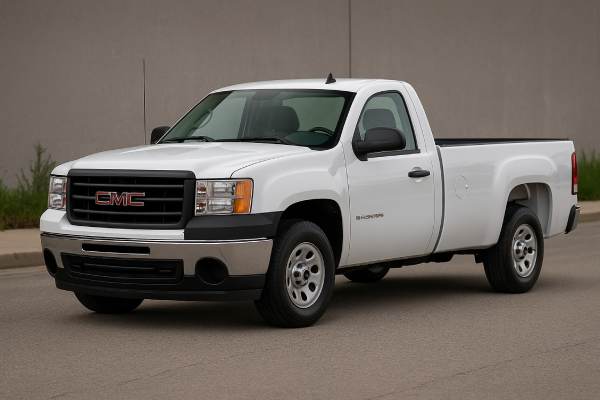
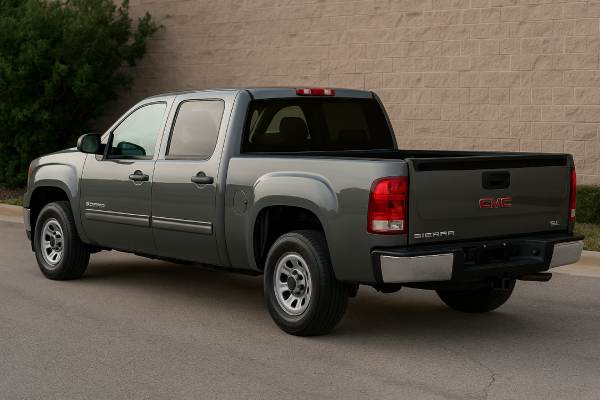
The GMT900-generation GMC Sierra 1500 with the LY2 4.8 litre V8 is the quiet workhorse of the lineup. Slotted between the base 4.3 V6 and the popular 5.3 V8, it offers a useful bump in power without the complexity of cylinder deactivation or direct injection. In rear wheel drive form, it is especially common as a regular or extended cab truck for fleets, tradespeople, and owners who value durability over luxury.
With around 295 hp and roughly 305 lb-ft of torque, the 4.8 V8 delivers stronger acceleration and easier towing than the V6, yet it remains relatively simple to service. The iron-block small-block architecture, hydraulic lifters, and chain-driven camshaft are all well-proven. At the same time, these trucks are now well over a decade old, and condition varies widely depending on rust exposure, towing history, and maintenance. This guide focuses on the 2007–2013 Sierra 1500 RWD with the LY2 4.8 V8 and what owners and buyers should know before committing.
Key Takeaways
- LY2 4.8 V8 offers about 295 hp and 305 lb-ft, giving real gains over the 4.3 V6 while staying simpler than AFM-equipped 5.3 engines.
- Rear wheel drive layout keeps weight and complexity down and can be more economical than 4×4 for highway and city use.
- Many trucks were used as fleet or work vehicles; rust, cosmetic wear, and interior condition often matter more than odometer alone.
- Common long-term concerns include rusted brake lines, front suspension wear, and potential 4L60E transmission issues at high mileage.
- Plan on engine oil and filter changes every 5,000–7,500 miles (8,000–12,000 km) or about once per year, adjusted for usage severity.
Navigate this guide
- GMC Sierra 4.8 RWD profile
- LY2 4.8 V8 specs and data
- Trims, packages and safety gear
- Reliability patterns and known issues
- Service schedule and buying advice
- On-road performance and driving feel
- How the 4.8 Sierra stacks up
GMC Sierra 4.8 RWD profile
Within the GMT900 generation (2007–2013), the LY2 4.8 litre V8 serves as the smaller of the two mainstream V8 options. It is part of the LS-based “Vortec 4800” family, sharing architecture with the 5.3 and 6.0 engines but using a shorter stroke and slightly smaller bore. In the Sierra 1500, it is usually rated at about 295 hp at 5,600 rpm and around 305 lb-ft of torque at 4,600–4,800 rpm, depending on year and calibration. This is a healthy step up from the 4.3 V6 and gives the truck more relaxed performance, especially when towing or hauling.
Most LY2 RWD trucks were sold as regular or extended cab models in Work Truck (WT) or mid-level trims. A typical configuration is:
- Regular cab, long box, rear wheel drive
- 4L60E/4L70E automatic transmission
- 3.23 or 3.42 rear axle ratio
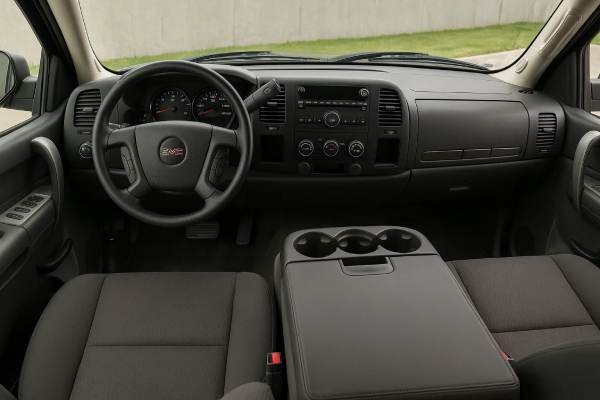
- Steel wheels and straightforward interior
Crew cabs and higher trims more often paired with the 5.3 or larger engines, though 4.8 V8 crew cabs exist.
Owners are drawn to the LY2 because it avoids some of the more complex features introduced on larger V8s, such as active fuel management (cylinder deactivation) and direct injection. That lowers the risk of lifter-related failures and reduces the number of components that can age badly. The trade-off is that fuel economy is not dramatically better than a comparable 5.3 when the truck is driven hard or heavily loaded.
For many buyers today, the 4.8 RWD Sierra is a sweet spot: more power and towing confidence than the V6, without the cost or potential complexity of the top engines. The key is to find a truck with a solid frame, clean maintenance history, and transmission and rear axle still in good health.
LY2 4.8 V8 specs and data
This section outlines typical specifications for a GMT900 GMC Sierra 1500 RWD with the LY2 4.8 V8, focusing mainly on regular or extended cab trucks.
Engine and performance (LY2 Vortec 4800)
| Item | Specification |
|---|---|
| Engine code | LY2 Vortec 4800 V8 |
| Displacement | 4.8 l (4,807 cc), approx. 293 cu in |
| Layout | 90° V8, iron block, aluminium heads, OHV, 2 valves per cylinder |
| Bore × stroke | ~96.0 mm × 83.0 mm (3.78 in × 3.27 in) |
| Compression ratio | About 9.1:1 |
| Induction | Naturally aspirated |
| Fuel system | Sequential multi-port fuel injection |
| Max power | Around 295 hp (220 kW) @ 5,600 rpm in Sierra 1500 applications |
| Max torque | Around 305 lb-ft (414 Nm) @ ~4,600–4,800 rpm |
| Firing order | 1–8–7–2–6–5–4–3 |
| Recommended fuel | Regular unleaded (87 AKI) |
Approximate fuel economy for a 4.8 RWD automatic (varies by cab, axle and driving style):
| Usage | Typical consumption |
|---|---|
| City | 15–16 mpg US (14.7–17.0 l/100 km) |
| Highway | 19–21 mpg US (11.2–12.4 l/100 km) |
| Combined | 16–18 mpg US (13.0–15.0 l/100 km) |
Transmission and driveline
Most LY2 RWD Sierras use:
| Item | Specification |
|---|---|
| Transmission | 4L60E or later 4L70E 4-speed automatic, electronically controlled |
| Gear ratios (typical) | 1st 3.06 / 2nd 1.63 / 3rd 1.00 / 4th 0.70 / Rev 2.29 |
| Drive type | Rear wheel drive (RWD) |
| Rear axle | Solid axle with leaf springs |
| Axle ratios | Commonly 3.23 or 3.42; 3.73 available on some tow packages |
| Differential | Open as standard; limited-slip optional (often RPO G80) |
Chassis and dimensions (typical RWD long-box regular cab)
Exact figures differ slightly by cab/bed, but a representative RWD long-box 4.8 V8 Sierra is roughly:
| Item | Specification |
|---|---|
| Overall length | ~5,700–5,850 mm (224–230 in) |
| Width (without mirrors) | ~2,030 mm (80 in) |
| Height | ~1,870–1,880 mm (73–74 in) |
| Wheelbase | ~3,380 mm (133 in) regular cab long box |
| Ground clearance | ~200–230 mm (8–9 in) |
| Turning circle | Around 14–15.5 m (46–51 ft), depending on wheelbase |
| Curb weight | Typically 2,000–2,300 kg (4,400–5,100 lb) |
| GVWR | Roughly 2,900–3,100 kg (6,400–6,800 lb) |
| Fuel tank | Around 98–128 l (26–34 US gal), depending on tank option |
| Bed length | Standard box ~2,000 mm (6.5 ft); long box ~2,500 mm (8 ft) |
| Bed volume | Around 1,500–2,100 l (53–75 cu ft) depending on bed |
Suspension and brakes:
- Front: Independent suspension with coil-over or torsion-bar arrangement, anti-roll bar.
- Rear: Solid axle with semi-elliptic leaf springs.
- Brakes: Front ventilated discs, rear drums on most 4.8 RWD work trucks; ABS standard.
Performance and towing
With the LY2 V8 and appropriate gearing, a typical RWD Sierra 1500 4.8 will:
- Accelerate 0–60 mph in roughly 8.5–9.5 seconds when unloaded.
- Reach a governed top speed in the 95–105 mph (153–170 km/h) range.
Towing and payload vary by configuration, but many 4.8 RWD trucks offer:
- Braked trailer ratings around 7,000–8,500 lb (3,175–3,850 kg).
- Payload capacities between about 1,500 and 2,000 lb (680–910 kg).
For light to moderate trailers (small campers, boats, equipment trailers), the 4.8 is quite capable when driven sensibly. For frequent towing near max ratings, the 5.3 or 6.0 engines will feel less stressed.
Fluids and key service capacities (typical)
Always verify per VIN and model year, but typical values are:
- Engine oil: ~5.7–6.0 l (6.0–6.3 qt) of 5W-30 meeting GM specifications.
- Coolant: ~13–15 l (14–16 qt) of Dex-Cool OAT coolant.
- Automatic transmission: Total fill around 11–12 l (11.5–12.5 qt); 4–6 l on pan drop and filter change.
- Rear axle: ~1.6–2.0 l (1.7–2.1 qt) of 75W-90 synthetic gear oil.
Common torque values (always double-check):
- Wheel nuts: ~190 Nm (140 lb-ft).
- Spark plugs: ~25 Nm (18 lb-ft).
- Oil drain plug: ~25–30 Nm (18–22 lb-ft).
Trims, packages and safety gear
Trims and options with the LY2 4.8 V8
The 4.8 V8 appears across several trims, but it is especially common in:
- Work Truck (WT):
- Vinyl or basic cloth seats
- Rubber flooring, simple audio system
- Manual or basic power windows and locks
- Steel wheels and minimal exterior chrome
- SL / SLE (lower levels):
- Cloth seats and carpet
- Better sound insulation and upgraded audio
- Power features and keyless entry on many trucks
- Alloy wheels and appearance packages on some configurations
Higher trims, such as SLT and Denali, usually paired with the 5.3 or larger engines, but a few early or fleet-oriented models may carry the 4.8.
Key mechanical packages that matter if you are shopping:
- Towing and trailering packages: Extra cooling, hitch receiver, wiring harness and sometimes shorter axle ratios.
- Suspension options: Codes like Z71 (off-road) or Z85 (handling/trailering) change shock tuning, anti-roll bars and sometimes wheel/tire sizes.
- Differential options: The G80 locking differential is desirable for low-traction surfaces.
Quick visual and build-code identifiers:
- Glovebox RPO sticker listing LY2 (engine code), GT4/GT5 (axle ratios), and suspension/tow options.
- Bed-side “Sierra” and trim badges; some WTs have minimal chrome and plain bumpers.
Safety ratings overview
Safety performance depends on cab type and equipment, but as a platform the GMT900 Sierra 1500 generally performs respectably for its era:
- Independent tests show Good ratings in moderate-overlap frontal crashes for crew cab models, with Acceptable side-impact and head restraint scores on many variants.
- Government 5-star frontal and side-impact ratings are commonly 4–5 stars overall, with rollover ratings in the 3–4 star range, reflecting the high center of gravity typical of full-size pickups.
Note that regular cab and extended cab trucks may have differences in side-impact performance versus crew cabs, and early models often have fewer airbags.
Safety systems and equipment
Typical safety features on 2007–2013 LY2 RWD Sierras include:
- Dual front airbags across all years.
- Optional head curtain and seat-mounted torso airbags, becoming more common in later years and higher trims.
- Four-wheel ABS and StabiliTrak stability control on most trucks, especially toward the middle and end of the generation.
- Tyre pressure monitoring system and seatbelt reminders.
Advanced driver-assistance systems such as autonomous emergency braking, lane-keeping, and blind spot monitoring are not fitted on this generation. Some trucks have rear parking sensors or cameras (especially later and higher trims), but many 4.8 RWD work trucks do not.
For child seats, crew and extended cabs are far more practical thanks to rear seating and LATCH anchor points. Regular cab trucks can be challenging for rear-facing child seats and may not be ideal for family duty.
Reliability patterns and known issues
The LY2 4.8 V8 and GMT900 chassis are generally robust, but age, mileage, climate and usage patterns all influence reliability. It helps to think in terms of engine, transmission, chassis, and corrosion.
Engine reliability (LY2 4.8 V8)
Overall, the 4.8 is well regarded for:
- Strong bottom-end design with six-bolt main caps.
- Chain-driven camshaft and no timing belt to replace.
- Avoiding cylinder deactivation hardware used on some 5.3/6.0 engines.
Common or occasional issues include:
- Oil leaks:
- Valve cover gaskets, oil pan gaskets and rear main seals can seep with age.
- Usually more of a mess than a crisis if caught early, but leaks need monitoring.
- Exhaust manifold bolts:
- Broken manifold bolts can cause ticking noises on cold start and eventually exhaust leaks.
- Fix can range from bolt extraction with the manifold in place to full removal and re-sealing.
- Knock sensors and harnesses:
- Moisture intrusion under the intake can corrode knock sensor wiring.
- Symptoms include check-engine lights and timing pulled back under load; the remedy is to clean, reseal or replace sensors and harness.
- Cooling system wear:
- Radiators, hoses and water pumps age; a neglected cooling system can contribute to overheating under load, especially in hot climates.
Catastrophic internal failures are relatively rare on well-maintained engines; most problems arise from leaks or ancillary components.
Transmission and driveline
The 4.8 RWD Sierra typically uses the 4L60E/4L70E family of 4-speed automatics. Known behaviours include:
- Torque converter shudder or shift flares:
- Often tied to old or overheated fluid; early fluid and filter changes help.
- Severe cases may require rebuilds or converter replacement.
- Loss of 3rd/4th gears at high mileage:
- Worn 3–4 clutch pack is a classic 4L60E issue in hard-worked trucks.
- Signs include slipping, high RPM with little acceleration, and burnt-smelling fluid.
- Driveline clunks:
- Commonly due to slip-yoke movement, differential backlash or worn universal joints.
- Many are benign; addressing them involves greasing or replacing worn parts.
Chassis, suspension and brakes
Age and use introduce predictable wear points:
- Front suspension:
- Worn ball joints, control-arm bushings, tie-rod ends and idler/pitman arms lead to loose steering and uneven tyre wear.
- A high-mileage truck may benefit from a front-end rebuild and alignment.
- Brakes:
- Rust-prone regions see rotors, backing plates and steel brake lines corroding.
- Dragging calipers or seized sliders can cause uneven pad wear and overheating.
- Steering intermediate shaft:
- Many GMT800/900 trucks develop a light clunk in the steering column over bumps.
- Solutions include lubrication or replacement with updated shaft designs.
Corrosion hotspots
Rust is often the life-limiting factor, particularly in salt-belt areas:
- Frame rails around the rear axle, fuel tank straps and spare tyre mounts.
- Brake and fuel lines following the frame.
- Rocker panels, cab corners and wheel arches.
A structurally rusty frame or heavily corroded brake lines can turn an otherwise sound truck into a poor investment.
Recalls and service actions
Across the GMT900 range, recalls and technical service bulletins have addressed items such as:
- Airbag wiring or deployment issues.
- Brake system concerns and line routing.
- Instrument cluster and electrical faults.
For any specific truck, a VIN check through official safety databases and a dealer service history printout are essential steps to confirm recall completion and any goodwill repairs.
Service schedule and buying advice
Practical maintenance schedule (typical guidance)
Intervals must be tailored to use (especially towing, idling, dust and temperature), but the following is a sensible framework:
- Engine oil and filter:
- 5,000–7,500 miles (8,000–12,000 km) or 6–12 months, depending on severity.
- Shorter intervals for frequent towing, heavy loads or mostly short trips.
- Engine air filter:
- Inspect annually; replace every 30,000–45,000 miles (48,000–72,000 km), more often in dusty use.
- Cabin air filter (if fitted):
- Replace every 15,000–25,000 miles (24,000–40,000 km) or every second year.
- Spark plugs:
- Iridium plugs often rated for around 100,000 miles (160,000 km).
- Checking around 60,000–80,000 miles is wise on older trucks.
- Fuel filter:
- On external-filter systems, change roughly every 50,000–60,000 miles (80,000–100,000 km).
- Some later trucks have in-tank filters that are not serviced separately.
- Coolant:
- Dex-Cool is often rated to 5 years/150,000 miles (240,000 km) from new; on older trucks, a 4–5 year or ~100,000 km interval is safer.
- Automatic transmission fluid and filter:
- 50,000–60,000 miles (80,000–100,000 km) in mixed or severe use; up to 100,000 miles if lightly used.
- Fresh fluid is particularly important if the truck tows regularly.
- Rear axle oil:
- 60,000–75,000 miles (96,000–120,000 km) in general use; shorter intervals for heavy-duty towing.
- Brake fluid:
- Flush every 3 years regardless of mileage.
- Serpentine belt and hoses:
- Inspect annually from about 8 years of age; replace at the first sign of cracking, fraying, swelling or glazing.
- Tyres and alignment:
- Rotate every 6,000–8,000 miles (10,000–13,000 km).
- Align if you see uneven wear, the truck pulls, or after suspension work.
- 12 V battery:
- Load test annually after year 4–5; many batteries last 5–7 years in typical climates.
Fluid specifications (typical)
- Engine oil: 5W-30 meeting GM petrol engine specs (later dexos1-approved oils are a good benchmark).
- Coolant: Dex-Cool OAT coolant; do not mix with conventional green coolant.
- Transmission: Dexron-VI automatic transmission fluid.
- Rear axle: Synthetic 75W-90 GL-5 gear oil; add friction modifier if specified for locking differentials.
Buyer’s checklist for the LY2 4.8 RWD
When evaluating a used Sierra 1500 4.8 RWD:
- Rust first:
- Inspect frame rails, especially around the rear axle, shock mounts and spare tyre carrier.
- Check brake and fuel lines, rocker panels and cab corners.
- Engine health:
- Listen on cold start for ticking, knocking or exhaust leaks.
- Look for oily residue around valve covers, oil pan and rear main area.
- Scan for codes (misfire, catalyst, knock sensor, EVAP).
- Transmission and rear axle:
- Confirm smooth shifts at light and moderate throttle; no slipping or harsh flares.
- Listen for humming that changes with speed, pointing to bearings or differential wear.
- Check ATF colour and smell; burnt or very dark fluid suggests neglect.
- Suspension and steering:
- Test for play at the steering wheel and over bumps.
- Inspect tyres for cupping or uneven wear patterns.
- Electrics and interior:
- Confirm gauges, lights, windows, locks, HVAC and radio all behave.
- Look for damp carpets or leaks, which can accelerate rust.
- History and documentation:
- Seek records of oil changes, coolant service, and any transmission or differential work.
- Verify recall completion via official databases.
A well-kept, lightly used truck from a drier climate is often worth paying extra for compared with a cheaper but rusty example from a heavy-salt region.
On-road performance and driving feel
Powertrain character
Compared with the 4.3 V6, the LY2 4.8 V8 noticeably improves:
- Off-the-line response: The V8 pulls more confidently from low revs, even in a long-bed truck.
- Highway merging and passing: Downshifts are still necessary, but acceleration is less strained, especially with a light trailer.
- Towing behaviour: The 4.8 holds speed on moderate grades better than the V6, though it still has to work harder than a 5.3 or 6.0 when heavily loaded.
The four-speed automatic feels old-school but predictable. It tends to:
- Upshift early at light throttle to save fuel.
- Drop to 3rd and stay there on moderate hills if you maintain steady throttle.
- Hunt a bit in rolling terrain when towing if you drive right at the shift thresholds.
Working with the gearbox—using tow/haul mode where fitted, moderating your speed and throttle—makes a big difference in comfort and longevity.
Ride, handling and NVH
The Sierra 1500 RWD rides much like other GMT900 half-ton trucks:
- Ride quality:
- Empty, the rear leaf springs can jiggle over broken pavement, especially in short-wheelbase trucks.
- Add a moderate load in the bed, and the ride settles and feels more composed.
- Handling:
- Steering is light and reasonably accurate, with some body roll in fast corners.
- Grip depends heavily on tyre type; highway all-seasons provide good stability but limited off-pavement traction.
- Noise, vibration and harshness (NVH):
- At cruising speeds, the V8 is relaxed and unobtrusive.
- Wind and road noise are moderate rather than luxury-quiet, but acceptable for long trips.
Interior comfort scales with trim: WTs are durable and simple; SLE and similar trims feel more refined, with better sound insulation and seating.
Real-world economy and load behaviour
In mixed use, many owners see:
- 14–16 mpg US (16–17 l/100 km) in mostly city usage.
- 17–20 mpg US (12–14 l/100 km) on steady, moderate highway runs.
- Combined averages around 16–18 mpg US (13–15 l/100 km).
Towing or carrying heavy loads increases consumption substantially; a 25–40% penalty is normal with large trailers. Temperature also plays a role; winter fuel and cold starts can push city consumption higher.
Under load, the 4.8 RWD Sierra remains stable if you:
- Keep speeds reasonable.
- Use a properly set-up hitch and trailer brakes when required.
- Ensure brakes, tyres and shocks are in good condition.
The limiting factor is not usually structural strength, but the modest displacement and four-speed gearing; for heavy, frequent towing, a larger V8 or newer truck with more gears is more comfortable.
How the 4.8 Sierra stacks up
When cross-shopping, owners often compare the LY2 4.8 RWD Sierra with:
- The same-generation 4.3 V6 and 5.3/6.0 V8 Sierras.
- Ford F-150 with 4.6 or 5.4 V8s of the era.
- Ram 1500 with 4.7 or early Hemi engines.
- Toyota Tundra 4.7/5.7 V8s.
Versus other Sierra engines
Compared with the 4.3 V6:
- Noticeably stronger performance, especially when towing or hauling.
- Similar maintenance needs and basic architecture.
- Slightly higher fuel consumption in light use, but not dramatically so.
Compared with the 5.3 V8:
- Slightly less torque and towing headroom.
- Fewer complexities (no AFM on LY2) and fewer lifter-related horror stories.
- Real-world fuel consumption often close, as the 5.3 can run more relaxed in some scenarios.
Compared with the 6.0/6.2 V8s:
- Cheaper to buy and insure.
- Less performance but also lower risk of being over-trucked for your needs—useful if you mainly tow moderate loads.
Versus rival half-ton trucks
Relative strengths of the 4.8 RWD Sierra include:
- Wide parts and aftermarket support, shared with Silverado and other GM trucks.
- Proven small-block V8 design with robust internals.
- Good towing and payload ratings for a “smaller” V8.
Trade-offs to weigh:
- Only four gears in the automatic, compared with six or more in some rivals by the end of this generation.
- Interior feel and ergonomics that, while solid, may not match the best-equipped competitors in comfort and tech.
- Safety and driver-assistance tech that lag far behind modern trucks.
Who the 4.8 RWD Sierra suits best
This truck is a strong fit if you:
- Need a work-first half-ton primarily for hauling, moderate towing and daily use.
- Prefer a simple, naturally aspirated V8 with no cylinder deactivation hardware.
- Want to keep purchase and running costs in check while still having adequate power.
On the other hand, drivers who:
- Frequently tow at or near maximum ratings,
- Want the latest safety and infotainment tech, or
- Expect modern-SUV levels of ride and refinement
may be better served by a larger V8 Sierra, a newer-generation half-ton, or a different platform entirely.
References
- GMC Sierra 1500 III (GMT900) Regular Cab Long Box 4.8 Vortec V8 (295 Hp) Automatic – Technical Data 2023 (Specifications)
- GMC Sierra 1500 III (GMT900) Crew Cab Short Box 4.8 Vortec V8 (295 Hp) Automatic – Full Specifications 2023 (Specifications)
- LY2 4.8L Engine Specs: Performance, Bore & Stroke, Cylinder Heads, Cam Specs & More 2019 (Engine Data)
- GM / Chevy LY2 Vortec 4800 2020 (Engine Specifications)
- 2011 GMC Sierra 1500 crew cab pickup – Vehicle ratings 2011 (Safety Rating)
Disclaimer
This article is intended for informational purposes only and does not replace professional diagnosis, repair, or safety advice. Specifications, torque values, fluid types, and service intervals can vary by VIN, model year, market and equipment level. Always confirm critical data and procedures with the official owner’s manual, factory workshop documentation, and current manufacturer or regulatory guidance before performing any work or making purchasing decisions.
If you found this guide helpful, please consider sharing it on platforms such as Facebook or X/Twitter to help other GMC Sierra owners and support our work.