
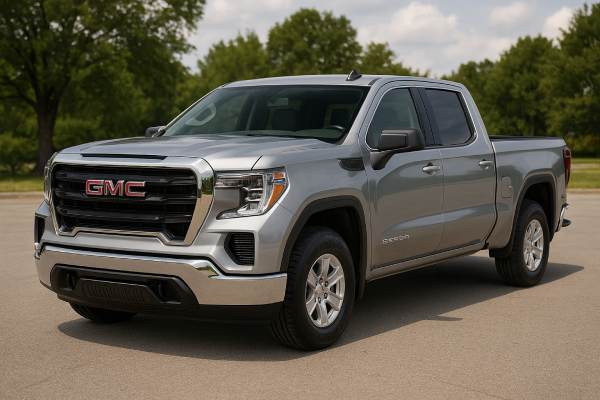
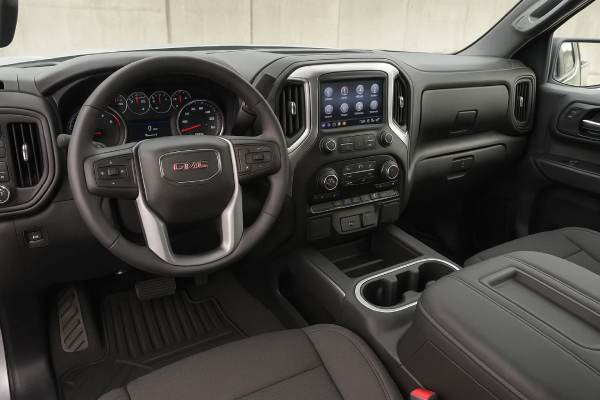
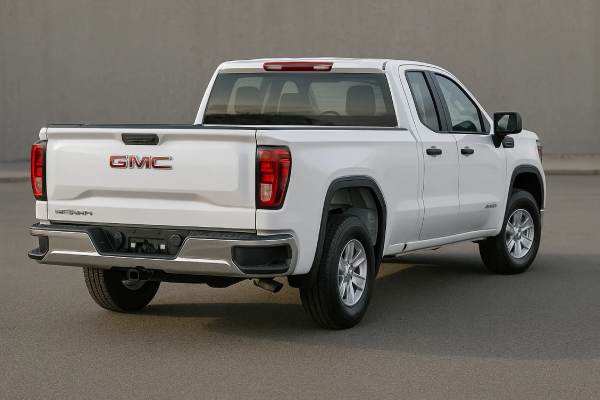
The 2019–2021 GMC Sierra 1500 RWD with the L3B 2.7 litre turbo four is a modern answer to a very old pickup question: how do you get V8 like usable torque without carrying the fuel bills and weight of an actual V8? Built on the T1XX platform, this engine pairs an all aluminium block, direct injection, and a twin scroll turbocharger with an eight speed automatic and a lighter rear wheel drive layout.
For owners, the appeal is clear. The truck can tow and haul like a traditional half ton, yet feels more responsive in everyday driving than many naturally aspirated V8s. At the same time, there is less mass over the front axle, slightly better fuel efficiency, and surprisingly refined on road manners when unladen. This guide focuses on the 2.7 turbo RWD Sierra 1500 from 2019 to 2021, covering specifications, maintenance, reliability patterns, safety equipment, and how it stacks up against rivals and other engines in the Sierra lineup.
Key Takeaways
- L3B 2.7 turbo delivers strong low and mid range torque with lighter nose weight than a V8, improving everyday drivability and turn in.
- RWD configuration is more efficient and mechanically simpler than 4WD, ideal for warm climates, on road fleets, and highway commuters.
- Early eight speed automatics benefit from regular fluid services and, where available, updated calibration to minimise shudder or harsh shifts.
- Turbocharged, direct injection design makes clean oil and good quality fuel important, especially beyond 150,000 km (93,000 miles).
- Plan engine oil and filter changes every 8,000–10,000 km (5,000–6,000 miles) for mixed towing and city use, regardless of maximum indicated oil life.
What’s inside
- Sierra 2.7 RWD overview
- Sierra 2.7 RWD specs
- Trims, options and safety
- Reliability, issues and fixes
- Maintenance plan and buying
- Driving impressions and performance
- Sierra 2.7 versus rivals
Sierra 2.7 RWD overview
When GMC launched the T1XX generation Sierra 1500 for 2019, the L3B 2.7 litre turbocharged four cylinder was one of the headline changes. Instead of relying solely on V6 and V8 engines, GMC engineered a purpose built truck four with a long stroke, robust bottom end, and a large turbo designed for low rpm torque and sustained towing rather than high rev power.
Output is rated around 310 hp at roughly 5,600 rpm with torque in the mid 300 lb ft range from low in the rev band. In practice, the engine behaves like a small displacement diesel in the way it delivers torque, but without diesel emissions hardware or fuel sensitivity. The block uses a deep skirt design, forged crank, and strong rods to tolerate boost and heavy duty cycles. Direct injection and variable valve timing help efficiency and response.
In rear wheel drive form, the 2.7 turbo is paired with an eight speed automatic transmission and a selection of rear axle ratios geared towards both fuel efficiency and usable towing performance. Removing the front differential, transfer case, and associated shafts reduces weight and complexity, which owners notice as slightly sharper steering and lower maintenance overhead compared with comparable 4WD models.
The 2.7 RWD combination is most commonly found on base Sierra, SLE, and Elevation trims, usually in double cab and crew cab configurations. While the 2.7 is technically the “entry” gasoline engine in the lineup, it is not a stripped back budget unit; it is a sophisticated powertrain designed to handle real work as well as commuting. For many owners who stay on pavement and tow within the truck’s rated limits, it provides a very balanced mix of performance, comfort, and operating cost.
Sierra 2.7 RWD specs
This section focuses on the key technical data for the L3B 2.7 turbo and its rear wheel drive drivetrain in 2019–2021 Sierra 1500 models. Exact figures vary by body style, axle ratio, and equipment, so treat these numbers as typical values and verify against your specific VIN.
Engine and performance
| Item | Specification |
|---|---|
| Engine code | L3B TurboMax (2.7 Turbo) |
| Layout and cylinders | Inline 4 cylinder, aluminium block and head |
| Displacement | 2.7 l (2,700 cc) |
| Bore × stroke | Approx. 92.25 × 102.0 mm (3.63 × 4.02 in) |
| Valvetrain | DOHC, 4 valves per cylinder, variable valve timing |
| Induction | Single twin scroll turbocharger, intercooler |
| Fuel system | Direct injection, high pressure |
| Compression ratio | Around 10.0:1 (market dependent) |
| Maximum power | 310 hp (231 kW) @ ~5,600 rpm |
| Maximum torque | Around 348 lb ft (472 Nm) @ ~1,500–4,000 rpm (tune dependent) |
| Timing drive | Chain driven camshafts |
| Emissions standard | U.S. Tier 3 / LEV III for North America |
Factory fuel consumption for RWD 2.7 trucks typically falls near 20 mpg city and 23–26 mpg highway, depending on configuration, giving a combined figure around 21–22 mpg (roughly 10.5–11.5 l/100 km).
Transmission and driveline
| Item | Specification |
|---|---|
| Transmission | 8 speed automatic, torque converter |
| Typical transmission family | 8L series (e.g., 8L90/8L80 depending on application) |
| Drive type | Rear wheel drive (RWD) |
| Rear axle ratios | Commonly 3.23 or 3.42:1, some trucks with 3.73 in specific towing packages |
| Differential options | Open rear differential; automatic locking differential available (G80 code) |
| Traction aids | Electronic stability control, traction control, available trailer sway control |
RWD models lack a transfer case and front differential, simplifying the driveline and improving service access.
Chassis, dimensions and weights
Values below describe a typical crew cab short bed RWD Sierra 1500 with the 2.7 turbo.
| Item | Approximate value |
|---|---|
| Overall length | ~5,880 mm (231.5 in) |
| Overall width (without mirrors) | ~2,065 mm (81.3 in) |
| Height | ~1,900 mm (74.8 in) |
| Wheelbase (crew cab short bed) | ~3,745 mm (147.4 in) |
| Ground clearance | Around 205–215 mm (8.1–8.5 in), trim dependent |
| Turning circle | About 12.8–13.4 m (42–44 ft) |
| Curb weight | Roughly 2,000–2,150 kg (4,410–4,740 lb) |
| GVWR | Typically 3,084–3,266 kg (6,800–7,200 lb) |
| Fuel tank capacity | Around 91 l (24 US gal) |
| Cargo box volume | Roughly 1,780–2,000 l (63–70 ft³), depending on bed length |
Performance and capability
| Item | Typical range (configuration dependent) |
|---|---|
| 0–100 km/h (0–62 mph) | Around 6.8–7.5 s (unladen, RWD) |
| Top speed | Usually limited to about 175–185 km/h (109–115 mph) |
| Braked towing capacity | Often 3,400–3,855 kg (7,500–8,500 lb) when properly equipped |
| Max payload | Typically 800–1,000 kg (1,750–2,200 lb) |
| Roof load | Usually 75–100 kg (165–220 lb), depending on rack system |
These figures put the 2.7 RWD comfortably within traditional half ton expectations for real world towing and payload.
Fluids and service capacities (typical)
Always cross check with the owner’s or service manual for your exact truck.
| System | Fluid type (typical) | Approximate capacity |
|---|---|---|
| Engine oil | Dexos1 Gen2 0W-20 synthetic | ~6.0–6.6 l (6.3–7.0 US qt) |
| Engine coolant | Long life OAT coolant (e.g., Dex Cool) | ~11–13 l (11.6–13.7 US qt) |
| Automatic transmission | Dexron VI or later GM specified ATF | ~9–11 l total; 4–6 l for pan service |
| Rear differential | 75W-90 synthetic gear oil | ~2.0–2.5 l |
| Power steering | Electric power steering on most trims (no fluid service) | |
| A/C refrigerant | R-1234yf or R-134a (market dependent) | Charge weight on underhood label |
Electrical, safety and driver assistance highlights
| Item | Typical specification |
|---|---|
| Alternator | Often 170–220 A depending on equipment and tow package |
| 12 V battery | Group 48 or similar, ~70–80 Ah, 700+ CCA |
| Spark plugs | Long life iridium; service interval usually near 150,000 km (90,000+ miles) |
| Airbags | Front, side, and side curtain airbags depending on cab |
| ADAS availability | Forward collision alert, automatic emergency braking, lane keep assist, blind spot monitoring and rear cross traffic alert offered as options or in safety packages on many trims |
Trims, options and safety
The 2.7 turbo RWD powertrain is positioned as a primary engine choice for value focused and mid grade trims rather than a bare bones fleet only option. In 2019–2021, you will most often see it in:
- Sierra base and Sierra trim trucks aimed at fleets and cost conscious buyers
- SLE models with more comfort and technology features
- Elevation appearance packages pairing the 2.7 with blacked out exterior details and larger wheels
Higher luxury trims such as SLT, AT4, and Denali usually use the 5.3 or 6.2 litre V8 or the 3.0 Duramax diesel, though regional exceptions exist.
Trim and option differences that matter
Mechanical differences tied to trim and options can change how a 2.7 RWD truck feels and what it can tow:
- Axle ratios: base trucks often have 3.23 rear gears, optimised for fuel economy. Tow packages and some Elevation models move to 3.42 or similar ratios for better low speed pull and grade performance.
- Suspension tuning: standard Z85 suspension is tuned for a blend of comfort and payload. Some appearance packages bring slightly firmer tuning to suit larger wheel and tyre packages.
- Wheels and tyres: base 17 inch wheels with taller sidewalls give the best ride and impact absorption. 20 inch alloys look sharper but transmit more harshness and can reduce ultimate tow and load ratings if tyre load indexes differ.
- Trailering packages: these add an integrated trailer brake controller, hitch receiver, 7 pin wiring, enhanced cooling, and software for haul and tow modes, significantly improving the towing experience.
Identifying a 2.7 RWD Sierra
Quick ways to confirm configuration include:
- The option (RPO) sticker listing L3B for the engine and the relevant eight speed transmission code.
- Lack of “4×4” badges and absence of a front differential or transfer case when viewed underneath.
- Instrument cluster displays and gear selector including tow/haul mode but no 4WD selector switch on the dash.
Safety ratings and ADAS equipment
Structurally, the T1XX Sierra 1500 performs well in most major crash tests, particularly in crew cab form, with strong scores in moderate overlap front, side impact, and roof strength tests. As usual, smaller cab styles may not have identical ratings, and headlight performance varies with equipment.
Advanced driver assistance systems evolved during 2019–2021. Early trucks sometimes reserved the full suite for higher trims, while later model years made automatic emergency braking and forward collision alert available or standard on more configurations. Key systems to check for on a used truck include:
- Forward collision alert and automatic emergency braking
- Lane keep assist with lane departure warning
- Blind zone monitoring and rear cross traffic alert
- Rear park assist and, on some trims, front parking sensors
- Surround view or enhanced backup camera systems on more optioned models
Because ADAS content is bundled differently by region and year, always confirm actual equipment via VIN decoding and a physical inspection rather than trimming alone.
Reliability, issues and fixes
The L3B is a relatively new engine family compared with GMC’s long running V8s, but early field experience suggests it can be a durable unit when serviced correctly. As with any modern turbocharged, direct injection powertrain, certain patterns are emerging.
Engine and induction system
Common to occasional issues include:
- Carbon build up on intake valves: direct injection engines do not wash valves with fuel, allowing deposits to accumulate over time. Symptoms include rough idle, misfires, power loss, and poor cold start behaviour. Preventative driving (regularly letting the engine reach full operating temperature) and periodic intake system cleaning can help; heavy deposits may require walnut shell blasting of the intake ports.
- PCV and oil mist management: elevated blow by or a restricted PCV system can lead to oil consumption, fouled intercoolers, or charge pipes carrying oil film. If oil use rises, check for leaks, PCV function, and turbo seals before assuming ring problems.
- Turbocharger issues: outright turbo failures are not widespread, but leaks at charge pipe joints or intercooler connections can cause low boost pressure and loss of power. Listening for unusual whines or whooshing noises under load and monitoring boost related fault codes helps catch problems early.
Fuel and ignition
The high pressure fuel system and ignition coils must work harder in a boosted, high torque environment:
- High pressure pump and injector faults can manifest as long cranks, rough idle, or “reduced power” warnings. Proper diagnostics to distinguish between low side and high side fuel issues are important before replacing parts.
- Coil packs and plugs can fail individually, especially if the truck has seen extended intervals on heavily loaded ignition components. Misfires under load or at specific rpm ranges call for careful plug and coil inspection and, in some cases, cylinder specific fuel trim checks.
Transmission and driveline
The eight speed automatic paired with the 2.7 has improved over time, but owners and technicians still see some recurring behaviours:
- Torque converter shudder and harsh shifts: felt as a vibration at steady speeds or abrupt upshifts and downshifts. In many cases, a full fluid flush with the latest specified ATF and a software update significantly improves behaviour. Long term neglect, however, can lead to internal wear requiring rebuild or replacement.
- Driveline clunks and slack: felt during transitions from drive to reverse or on/off throttle manoeuvres. Often this is normal play in splines and joints, but worn universal joints, differential backlash, or loose mounts should be ruled out.
Chassis, electronics and corrosion
- Front suspension wear: ball joints, tie rod ends, and control arm bushings can wear faster on trucks with large wheels, low profile tyres, or heavy accessory use (racks, tools). Clunks over bumps or wandering steering are early signs.
- Brake components: caliper slide pins and backing plates may corrode in road salt regions. Periodic cleaning and lubrication help preserve braking performance and avoid uneven pad wear.
- Electronics and infotainment: intermittent camera function, sensor warnings, or infotainment resets are usually addressed with software updates, harness repairs, or ground point cleaning rather than major component replacements.
Recalls, service bulletins and extended coverage
Across the 2019–2021 range, Sierra 1500 trucks have received recalls related to seat belts, brakes, electronics, and in some cases powertrain components. There are also technical service bulletins (TSBs) addressing transmission shift quality, engine noises, and ADAS calibration.
For any candidate or existing truck:
- Run the VIN through the official recall website for your country or region.
- Ask for printouts or screenshots showing recall and customer satisfaction program completion.
- Request evidence of transmission and differential services, especially if the truck has lived a hard towing life.
A 2.7 RWD Sierra with completed recalls, up to date software, and documented fluid services is far more likely to deliver low drama ownership into high mileage.
Maintenance plan and buying
Turbocharged engines reward proactive maintenance. The good news is that the L3B and its RWD drivetrain are straightforward to service once you understand the priorities.
Practical maintenance schedule (typical)
The following intervals assume mixed use with periodic towing or heavy loads:
- Engine oil and filter: every 8,000–10,000 km (5,000–6,000 miles) or 12 months with Dexos approved 0W-20 synthetic. Shorten intervals if the truck sees frequent short trips, idling, or heavy towing.
- Engine air filter: inspect at 20,000 km (12,000 miles); replace every 40,000 km (25,000 miles) or sooner in dusty environments.
- Cabin air filter: every 24–30 months, more often in urban or dusty conditions.
- Spark plugs: around 150,000 km (90,000+ miles) under normal use; earlier if misfires are present.
- Coolant: initial replacement at 5 years or 160,000 km (100,000 miles), then at shorter intervals guided by coolant condition.
- Automatic transmission fluid: fluid exchange with pan service around 60,000–80,000 km (40,000–50,000 miles) for trucks that tow or work hard; up to 100,000 km (60,000 miles) for light duty use within manufacturer limits.
- Rear differential fluid: 60,000–80,000 km (40,000–50,000 miles) under towing or heavy loads; otherwise about every 100,000 km.
- Brake fluid: flush every 3 years regardless of mileage.
- Serpentine belt and cooling hoses: detailed inspection at each service once the truck has passed 100,000 km; replace at signs of aging.
- Tyre rotation and alignment: rotate tyres every 10,000–12,000 km (6,000–7,500 miles); perform an alignment annually or after any suspension work or significant impact.
- 12 V battery: test annually after year four; replace at the first sign of weak cranking, unstable voltage, or repeated electronic glitches.
Fluid specifications and torque examples
When discussing work with a shop or doing your own maintenance:
- Specify Dexos1 approved oil to meet both lubrication and emissions system requirements.
- Use the exact ATF type indicated for the eight speed transmission; the blend and friction modifiers matter for shift quality.
- Confirm wheel lug torque (often in the 190–210 Nm / 140–155 lb ft range) for your wheel type, and use a torque wrench rather than an impact gun for final tightening.
- Follow proper torque procedures for sump, differential, and drain plugs to avoid stripped threads or leaks.
Buyer’s guide checklist
If you are shopping for a used 2019–2021 Sierra 1500 2.7 RWD:
- Exterior and frame: inspect the frame rails, cross members, and rear spring mounts for rust, deformation, or signs of accident repair.
- Engine bay: look for oil leaks, evidence of improper aftermarket tuning hardware, and non factory wiring. Check for coolant staining and smell around the reservoir and hoses.
- Test drive: confirm smooth cold start, quiet idle, and progressive boost under load. Note any hesitation, flat spots, or knock-like noises under acceleration.
- Transmission behaviour: on a warm drive, ensure shifts are consistent in normal, tow/haul, and manual or low gear settings. Lightly loaded cruising should be smooth without shudder.
- Steering and brakes: watch for pulls, vibrations, or noises under braking; test emergency stops in a controlled environment to gauge pedal feel and straight line stability.
- Interior and electronics: verify all windows, locks, lighting modes, cameras, and infotainment functions. Check for stored fault codes with a scan tool if possible.
- History and paperwork: request full service history, recall completion proof, and, for ex fleet trucks, written confirmation of maintenance policies.
A truck that passes these tests and has clear, consistent maintenance records is a strong candidate for long term ownership.
Driving impressions and performance
On the road, the 2.7 turbo RWD Sierra feels different from the larger V8s in a way many drivers find pleasant. There is less weight over the front axle, so steering feels slightly lighter and more eager to turn in. The engine builds boost quickly from low rpm, offering a broad plateau of torque that gives brisk initial acceleration and confident in traffic performance.
Around town, the eight speed automatic tends to keep revs low, shifting early to make use of the engine’s torque. When you press deeper on the throttle, downshifts are prompt and the engine pulls strongly through the mid range. The soundtrack is more refined four cylinder thrum than classic V8 burble, but it is subdued at cruise and rarely intrusive.
Ride quality depends heavily on wheel and tyre choice. Trucks on 17 or 18 inch wheels with sensible tyres ride comfortably and manage broken pavement well, especially with some load in the bed. Larger 20 inch wheels sharpen steering response but add impact harshness over potholes and expansion joints. Cabin noise at highway speeds is generally acceptable for a full size pickup, with wind and tyre noise more noticeable than engine noise once in top gear.
Real world fuel economy often compares favourably with naturally aspirated V8s. Many owners see high teens to low twenties mpg (roughly 10–13 l/100 km) in mixed driving with RWD 2.7 trucks, provided they are not lifting the truck substantially or fitting aggressive off road tyres. Highway numbers around 22–25 mpg (about 9–11 l/100 km) at 110–120 km/h (70–75 mph) are achievable in mild conditions. Towing a medium trailer will bring economy back into the low to mid teens mpg, similar to V8 trucks but with a slightly smaller tank to draw on.
Under load, the 2.7 turbo holds gears confidently and manages grades well as long as the trailer weight stays within rated limits. Tow/haul mode adjusts shift points and converter lockup to control heat and reduce hunting between ratios. Compared to a V8, you may notice more frequent downshifts and higher revs on long climbs, but the truck remains composed when cooling systems and fluids are in good condition.
Because this is a rear wheel drive truck, traction in snow or mud depends heavily on tyres and load. Good all season or winter tyres, appropriate weight over the rear axle, and careful throttle application are essential if you regularly drive in slippery conditions. Stability and traction control can help, but they cannot fully substitute for the benefits of 4WD in deep snow or soft ground.
Sierra 2.7 versus rivals
Against other full size pickups of the 2019–2021 era, the Sierra 1500 2.7 RWD carves out a niche as a modern, efficient, and still properly capable half ton.
Within GMC and Chevrolet’s own lineup:
- Compared with the 4.3 V6, the 2.7 turbo offers noticeably stronger mid range torque and better fuel economy at highway speeds, with smoother performance when worked hard.
- Against the 5.3 V8, the 2.7 can match or beat unloaded acceleration in many real world situations and uses less fuel when driven sensibly, though maximum tow ratings and long grade performance still favour the V8.
- The 6.2 V8 and 3.0 diesel remain the choice for heavy towing or performance oriented owners but bring higher purchase cost and, in the diesel’s case, more complex emissions systems.
Versus key competitors:
- Ford F-150 2.7 EcoBoost: Ford’s twin turbo V6 generally offers stronger headline torque and, in some cases, better peak tow figures. However, it adds two more cylinders and a second turbocharger, making under bonnet access and some repairs more involved.
- Ram 1500 3.6 with eTorque: the Ram feels very refined and offers a smooth mild hybrid system, but it relies on revs rather than low rpm turbo torque. Fuel economy is competitive, yet the power delivery character is different.
- Toyota Tundra 4.6/5.7 V8 (previous generation): offers proven V8 strength and durability, but at the cost of meaningfully higher fuel consumption and an older platform in this period.
Where the Sierra 2.7 RWD shines:
- Strong torque and brisk real world performance despite modest displacement.
- Balanced combination of capability and efficiency, especially for owners who tow occasionally rather than at maximum capacity.
- RWD simplicity with fewer driveline components to maintain than a 4WD truck.
Where it may not be ideal:
- Regular heavy towing near the top of the range, especially in hot or mountainous conditions, where a V8 or diesel provides more margin.
- Frequent operation on unpaved, muddy, or snowy surfaces where 4WD is a clear advantage.
- Buyers who strongly prefer the sound and feel of a traditional V8.
For many owners operating mostly on pavement, carrying tools and equipment, and towing moderate loads, the 2.7 RWD Sierra 1500 offers a smart compromise between old school truck capability and new generation efficiency.
References
- Manuals and Guides | Vehicle Support 2021 (Owner’s Manual)
- 2019 GMC Fuel Economy 2019 (Fuel Economy Data)
- 2019 GMC Sierra 1500 crew cab pickup 2019 (Safety Rating)
- Vehicle Detail Search – 2020 GMC SIERRA 1500 PU RWD 2020 (Recall Database)
- GMC Trailering Guide 2021 (Trailering Data)
Disclaimer
This article is intended for general informational purposes only and does not replace professional diagnosis, repair, or official service documentation. Specifications, torque values, fluid types, intervals, and procedures can vary by VIN, production date, market, body style, and installed options. Always confirm critical data using the official owner’s manual, workshop manual, and technical bulletins for your specific vehicle, and consult a qualified technician before performing maintenance or repairs.
If you found this guide helpful, please consider sharing it with other owners or shoppers on Facebook, X/Twitter, forums, or in your local community. Thoughtful sharing helps more people maintain and use their trucks safely and effectively.