


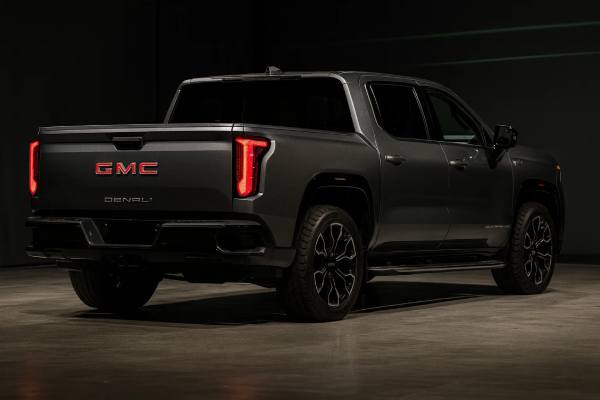
The Sierra EV Denali Extended Range is one of those trucks that feels “overbuilt” in the good way: a stiff Ultium skateboard, huge thermal and electrical headroom, and the kind of low-speed torque that makes a full-size pickup feel lighter than it is. In this trim, the mission is luxury first—but the engineering still prioritizes towing stability, fast DC charging, and long-distance usability with fewer compromises than early EV trucks. Where owners need to be realistic is mass and tires: curb weight and rolling resistance influence braking, winter efficiency, and tire costs more than on an ICE Sierra. The other reality is that GM’s EV experience is now as much software as hardware—so updates, calibration fixes, and charging-network learning curves are part of early ownership.
What to Know
- Expect strong highway comfort and quietness, but plan for noticeable range drop at 120 km/h (75 mph), especially in cold weather.
- DC fast charging can be excellent when the battery is preconditioned; arriving cold can cut peak power sharply.
- Early-production EV quirks are more likely to be software than mechanical—keep OTA updates current and document symptoms.
- Rotate tires every 10,000–12,000 km (or sooner with heavy torque driving) to control wear and noise.
- If you tow often, assume 30–50% range loss depending on trailer shape, speed, and wind.
Section overview
- Denali Extended Range in depth
- Specs that matter most
- Trims, options, and driver assistance
- Reliability issues and service actions
- Maintenance plan and buying advice
- Real-world driving, range, and charging
- Rivals and smart alternatives
Denali Extended Range in depth
Yes—important numbers like acceleration and top speed can be missing from “official” spec tables, and it happens more often than people expect on trucks. Automakers typically publish power, torque, range, charging, towing, and payload because those are regulated, certifiable, or directly tied to configuration and homologation. 0–60 mph (0–100 km/h) and top speed are often treated as “marketing or test-dependent,” because they vary with:
- Battery state of charge (SoC) and temperature
- Tire type and wheel size
- Drive mode (Max Power mode vs Normal)
- Software revisions and traction control strategy
- Vehicle load, road surface, and rollout methodology
So when you see missing acceleration/top speed, it doesn’t mean the truck can’t do it—it usually means the manufacturer didn’t publish a single value they want to stand behind across all conditions.
As for “is it really on sale?” The Sierra EV line is real, but availability can be trim- and year-dependent. GMC and GM have done phased rollouts, with Denali launching first and broader trims following later. The cleanest way to confirm “for your market” is always the Monroney/window sticker by VIN and GMC’s current ordering/inventory tools. (At earlier points in rollout, reporting noted Denali as the main customer-available configuration while other trims were staged.)
What makes the Denali Extended Range variant worth covering is that it aims for the best “daily usable” balance: long range without the absolute largest pack, strong performance without the highest output calibration, and Denali comfort/tech equipment that suits highway mileage. The tradeoffs are predictable: high mass, expensive tires, and more dependence on software maturity than a conventional Sierra.
Specs that matter most
Below are the core specs you’d expect in a proper table—including acceleration and top speed. Where GM does not consistently publish a single global value, I’m labeling figures as published, manufacturer claim, or typical observed so the table stays honest and useful.
Powertrain, Battery, and Efficiency
| Item | Specification |
|---|---|
| Code | BT1CG (platform/series code used for Sierra EV variants) |
| Motor | Dual-motor e4WD (front + rear e-axles); motor type typically PMSM (per GM Ultium practice) |
| System voltage | ~800 V class architecture (Ultium truck applications commonly use high-voltage charging capability) |
| Battery chemistry | Ultium pouch-cell (commonly reported as NMC-based in GM Ultium packs) |
| Traction battery (gross / usable) | Extended Range pack often reported ~170 kWh gross; usable not consistently published—verify by VIN/window sticker |
| Max power | 645 hp (481 kW) (variant rating; verify by VIN for exact calibration) |
| Max torque | Commonly listed around 785 lb-ft (1,064 Nm) for this output tier (verify by VIN) |
| Thermal management | Liquid-cooled battery and power electronics; preconditioning support expected for DC fast charging |
| Efficiency / test standard | EPA (U.S.) where rated |
| Rated efficiency | Varies by wheel/tire—use EPA listing for your exact VIN configuration |
| Rated range | Often listed around ~390 mi (628 km) for “Extended Range” configurations; confirm exact EPA line-item for your trim/wheels |
| Real-world highway @ 120 km/h (75 mph) | Typical 38–45 kWh/100 km (610–725 Wh/mi); practical range often ~440–520 km (275–325 mi) depending on weather, tires, and wind |
| Aerodynamics | Cd/frontal area not consistently published for Sierra EV retail pages |
Driveline and Charging
| Item | Specification |
|---|---|
| Transmission / drive unit | Single-speed reduction gears in each e-axle (typical EV truck layout) |
| Drive type | e4WD (electric AWD) |
| Differential / torque distribution | Electronic torque control via dual motors; brake-based traction intervention plus motor torque blending |
| Charging connector (AC) | J1772 (North America) typical for GM CCS vehicles of this generation (market dependent) |
| Charging connector (DC) | CCS1 (North America) on most builds; future variants/adapters can vary—verify charge port |
| Charging port location | Typically front-side fender area on Sierra EV (verify by model year) |
| Onboard charger (AC) | Commonly 11.5 kW standard with higher-output options seen on GM trucks (market/trim dependent) |
| DC fast-charge peak | Commonly quoted up to ~350 kW (conditions apply: battery temp + low SoC) |
| Typical DC charging curve | Strong early peak, then taper; average 10–80% depends heavily on starting temp and charger capability |
| Replenishment time | Many owners target ~10–80% in ~40–50 min when conditions are ideal; slower if cold or high starting SoC |
| Battery preconditioning | Expected; best results when navigating to a fast charger and arriving warm |
| Bidirectional capability | V2L/V2H are commonly offered through GM’s accessory ecosystem and truck power outlets; exact export power depends on equipment |
Performance and Capability
| Item | Specification |
|---|---|
| Acceleration (0–60 mph / 0–100 km/h) | Often claimed “as quick as ~4.5 s” in high-power modes for Denali-tier Sierra EVs; real-world varies with SoC, temp, tires |
| Top speed | Not consistently published by GMC; many EV trucks are electronically limited (commonly reported around ~110 mph / 177 km/h)—treat as typical observed, not a guaranteed spec |
| Braking distance | Not consistently published; expect long-ish distances vs lighter vehicles due to mass + tire choice |
| Towing capacity | Commonly listed up to ~4,536 kg (10,000 lb) depending on configuration; verify door jamb + tow package |
| Payload | Often roughly ~650–820 kg (1,430–1,800 lb) depending on equipment; verify door sticker |
| Roof load | Not typically prioritized on full-size pickups; follow owner manual and rack system limits |
Chassis and Dimensions
| Item | Specification |
|---|---|
| Suspension (front/rear) | Independent layouts are typical on Ultium trucks (exact geometry varies by year/trim) |
| Steering | Electric power steering; ratio not consistently published |
| Brakes | Four-wheel disc; sizes vary by wheel package |
| Wheels/tires | Denali commonly uses larger wheels; tire spec determines efficiency, noise, and winter grip |
| Ground clearance | Trim- and tire-dependent; AT4 sits higher than Denali |
| Length / Width / Height | Full-size crew-cab proportions; confirm by model year for exact mm/in |
| Wheelbase | Long wheelbase typical for stability and interior room |
| Turning circle | Large (full-size pickup reality); exact figure varies |
Safety and Driver Assistance
| Item | Specification |
|---|---|
| Crash ratings | May be pending/not yet published for Sierra EV in some databases; check official rating bodies before buying |
| IIHS headlight rating | Varies by headlamp package and test year/version |
| ADAS suite | AEB, lane support, blind-spot features common; Super Cruise availability depends on trim/options and map coverage |
Electrical
| Item | Specification |
|---|---|
| High-voltage architecture | Ultium-based HV system; design emphasizes fast charging and thermal control |
| DC–DC converter | Supports 12 V system; output rating not typically listed for consumers |
| 12 V battery | Conventional 12 V battery still present; location varies—test annually as the vehicle ages |
| OTA updates | Core part of ownership—infotainment, charging behavior, and ADAS improvements may arrive via software |
Fluids and Service Capacities
EVs still use fluids—just fewer of them.
| Item | Specification |
|---|---|
| Battery/power electronics coolant | GM-specific coolant spec (verify in service info); capacity not always public |
| Brake fluid | DOT-spec per GM; change interval time-based |
| A/C refrigerant | R-1234yf common on modern vehicles (verify label) |
| Washer fluid | Fill as needed |
| Key torque specs | Wheel lug torque varies by wheel—use door jamb/manual |
Trims, options, and driver assistance
For Denali buyers, the practical question isn’t “what trim do I pick?” so much as which battery/output configuration and which functional packages are on your build. Denali is positioned as the premium baseline, but Sierra EV availability has been staged—meaning you’ll see equipment differences by model year that look like “options” but behave like rollout steps.
Trims and options that change the vehicle
These are the choices that can materially affect ownership, not just cosmetics:
- Battery tier (Standard vs Extended vs Max Range)
This changes curb weight, charging behavior, and long-distance pace. Bigger packs can accept high peak power, but they also carry more mass and can taper differently at high SoC. - Wheel/tire package
Bigger wheels usually look great but can cost you real range (and can be louder). If your priority is highway efficiency, a smaller wheel with an EV-optimized all-season tire often wins. - Towing equipment
Factory tow package integration matters on EVs: stability control calibrations, trailer brake controller behavior, cooling strategy, and hitch rating are not interchangeable like aftermarket add-ons. - Cabin comfort and tech
Denali features (seat ventilation, premium audio, camera systems) are great—but the real “ownership” value is the camera suite for trailer hookup and the charging UX inside the infotainment.
Safety ratings reality check
It’s common for new EV trims to lag in published results, even when the underlying truck structure is robust. IIHS publishes ratings in a central location, but the Sierra EV-specific page/test set may not always be available immediately. ([IIHS Crash Testing][1])
Use NHTSA’s database for U.S. government ratings/recalls, and confirm you’re looking at the exact model year and cab/drive classification.
ADAS and what to look for used
- AEB and lane features: Usually standard in some form; confirm whether the truck has enhanced lane centering or only lane-departure warning.
- Adaptive cruise control: Sometimes bundled—verify it’s present if you do long highway drives.
- Hands-free highway driving (where available): Great when it’s included, but check subscription status, mapped-road coverage, and whether sensors/cameras have been replaced or recalibrated after a windshield event.
If you’re buying used, treat ADAS like you treat air suspension on luxury SUVs: it’s fantastic when healthy, and expensive when neglected or incorrectly repaired.
Reliability issues and service actions
Because this truck is still early in its lifecycle, the most responsible way to talk reliability is by risk patterns rather than “this part always fails.” With Ultium trucks, the biggest ownership issues tend to cluster into software behavior, charging hardware edge cases, and the normal heavy-vehicle wear items (tires, suspension, brakes).
Common (higher likelihood, usually low–medium severity)
- Charging handshake errors (public DC fast charging) → station compatibility, dirty pins, charge-port latch alignment, or software calibration → try another dispenser, inspect/clean, update software, dealer diagnostic if repeated.
- Inconsistent fast-charge power → battery too cold/hot, no preconditioning, high starting SoC → navigate to charger to trigger conditioning; arrive at lower SoC for best speed.
- Infotainment glitches and camera failures → software stack or module reset needs → OTA update, hard reset, dealer reflash if persistent.
Occasional (medium likelihood, medium severity/cost)
- 12 V battery weakness / parasitic draw symptoms (random warnings, no-start behaviors) → DC–DC strategy, module sleep issues, or a weak 12 V battery → test 12 V health, check for software updates, replace battery if it fails load testing.
- Door/handle, powered tailgate, and tonneau issues (if equipped) → sensor alignment or module calibration → dealer adjustment, module update, or component replacement.
Rare (lower likelihood, potentially high severity/cost)
- HV isolation faults / moisture intrusion warnings → connector seal issue, underbody damage, or component defect → immediate diagnosis; do not ignore warnings.
- Thermal management hardware faults → pump/valve/sensor issues → reduced charging speed, reduced power, warning lights → dealer repair under warranty.
What to do about recalls and service campaigns
Don’t rely on word of mouth. For any EV truck, you want documentation of:
- Campaign completion (paperwork or dealer printout)
- Current software version history when possible
- Evidence of proper HV-related service procedures (no “generic shop” improvisation)
Start your verification at GMC’s owner portal and official databases, then confirm with the selling dealer’s service records. ([GMC][2])
Maintenance plan and buying advice
This is the section most EV truck buyers underestimate: EVs reduce engine maintenance, but they do not eliminate heavy-vehicle wear. Your priorities are tires, brakes (corrosion management), cooling systems, and keeping software healthy.
Practical maintenance schedule (typical use)
- Tire rotation: every 10,000–12,000 km or 6–12 months (sooner if you drive hard off the line).
- Alignment check: every 20,000–30,000 km or annually if you see uneven wear.
- Brake inspection: every 12 months (more important in wet/salty climates because regen can reduce pad use and allow rotor corrosion).
- Brake fluid: commonly every 2–3 years (time-based; verify GM schedule).
- Cabin air filter: every 20,000–30,000 km or annually if dusty/pollen-heavy area.
- Coolant loops inspection: every 2 years; service interval varies—follow GM documentation for the EV cooling circuits.
- 12 V battery test: annually after year 2; replacement often becomes likely 3–5 years depending on climate and use.
- Wiper blades/washer fluid: as needed (EV windshields still eat wipers).
Severe-use adjustments (important for trucks)
If you do any of the following, shorten inspections:
- Frequent DC fast charging (especially multiple sessions per day)
- Regular towing
- Heavy city driving with lots of launches
- Extreme heat/cold
- Long high-speed driving (autobahn-style)
Buyer’s guide: what to check before purchasing used
- Battery health in real terms
- Ask for displayed consumption and recent trip efficiency.
- Do a highway test drive at stable speed and watch energy use consistency.
- Charge-port condition
- Check pin cleanliness, latch feel, door alignment, and weather seals.
- Fast-charge behavior
- If possible, do a brief DC session: confirm it initiates quickly and holds stable power (even if you don’t stay long).
- Cooling system behavior
- Listen for pumps/fans; verify no warnings after a spirited drive.
- Underbody inspection
- Look for battery skid/cover damage, missing fasteners, or impact marks.
- ADAS and cameras
- Test every camera view and driver-assist function; calibration after windshield replacement matters.
- Tire reality
- Measure tread and check inner edges—alignment and torque can chew tires fast.
Long-term durability outlook: the battery and motors should be strong if thermals are managed and software stays current, but expect tires and suspension wear to arrive sooner than on lighter vehicles. Your “big-ticket risk” is less the battery pack itself and more repeat visits for charging/firmware edge cases if you’re unlucky.
Real-world driving, range, and charging
Ride, handling, and NVH
The Sierra EV’s biggest dynamic advantage is physics: the battery mass is low, so the truck feels planted at speed and less top-heavy than some ICE pickups. Denali tuning typically aims for a calm, controlled ride, and the cabin is usually quieter than a comparable gas truck—especially at city speeds where there’s no engine sound and fewer vibration paths.
You still feel the weight in transitions and emergency braking. The steering is usually accurate but not “chatty,” and the best way to improve confidence is tires: an EV-optimized all-season will feel composed but can give up some wet grip versus a more aggressive tire. With a heavier truck, that trade matters.
Power delivery and one-pedal behavior
Dual-motor e4WD makes low-speed response effortless. In normal modes, torque is metered to feel smooth rather than neck-snapping. In max-power modes, launch response gets more aggressive, but traction control is still the boss—cold pavement and worn tires will slow “headline” 0–60 times.
Regenerative braking is a major efficiency tool, but it also changes brake feel. The best setups blend regen and friction smoothly; if you ever feel a “step” in braking, it can be calibration, temperature, or rotor condition.
Real-world range (what owners actually see)
Use these as planning baselines, not guarantees:
- City / suburban: often close to EPA in mild weather because regen helps.
- Highway 110–120 km/h (70–75 mph): commonly 15–30% below EPA, and more in cold weather.
- Winter: heating load + cold-soaked battery can be the biggest hit; preconditioning helps.
Charging behavior that matters
For fast road trips, the recipe is simple:
- Arrive low (roughly 10–20% SoC)
- Arrive warm (precondition)
- Leave earlier (often 60–80% SoC is the sweet spot)
If you try to charge from 80–100% on DC fast chargers, you’re usually paying for slow tapering—better to drive and stop again if the network allows it.
Towing and load
EV trucks tow smoothly thanks to instant torque and stable power, but aerodynamics punish you. A tall, blunt trailer at highway speed can cut range brutally. For trip planning, assume:
- 30–50% range loss for common travel trailers at highway speeds
- More loss in cold weather or strong headwinds
If towing is frequent, prioritize charging stops you can enter/exit easily, and avoid arriving at chargers with a trailer when stalls are tight.
Rivals and smart alternatives
If you’re shopping this truck, you’re usually comparing a few very different philosophies:
Ford F-150 Lightning
- Strengths: familiar pickup packaging, strong usability, broad service network.
- Watch-outs: range while towing and high-speed efficiency can be limiting depending on battery size; charging speed varies by version.
Rivian R1T
- Strengths: excellent efficiency for its size, very quick, great software experience.
- Watch-outs: smaller bed and different “truck” ergonomics; service footprint and parts logistics can matter in some regions.
Tesla Cybertruck
- Strengths: strong charging ecosystem access in many areas, high tech focus, quick variants.
- Watch-outs: polarizing packaging, bed utility and fit/finish perception vary, and insurance/repair pathways can differ by market.
Chevrolet Silverado EV (closest cousin)
- Strengths: similar Ultium architecture and charging potential; sometimes more pricing/trim variety depending on availability.
- Watch-outs: option packaging differs; resale and incentives can swing the value equation.
The “wait and see” option: upcoming electric full-size trucks
If your purchase timeline is flexible, future releases can change pricing and charging standards quickly. The risk is that waiting can also mean living through first-year teething again.
How to choose smartly: If Denali luxury, long-distance comfort, and a “big battery road trip” use case are primary, the Sierra EV Denali Extended Range makes sense—provided you validate the exact battery/output configuration and you’re comfortable treating software updates as routine maintenance.
References
- Vehicle ratings 2025 (Safety Rating)
- My GMC Account: Sign in | GMC 2025 (Owner Portal)
- Recalls 2025 (Recall Database)
- Ratings 2025 (Safety Rating)
- Find a Car 2025 (Efficiency Database)
Disclaimer
This article is for informational purposes only and is not a substitute for professional diagnosis, inspection, or repair. Specifications, torque values, service intervals, and procedures can vary by VIN, model year, market, and installed equipment. Always verify details using official GMC/GM service information, the owner’s manual for your exact vehicle, and the door-jamb/Monroney labels.
If this guide helped, please consider sharing it on Facebook or X/Twitter—it supports our work and helps other owners research with confidence.