
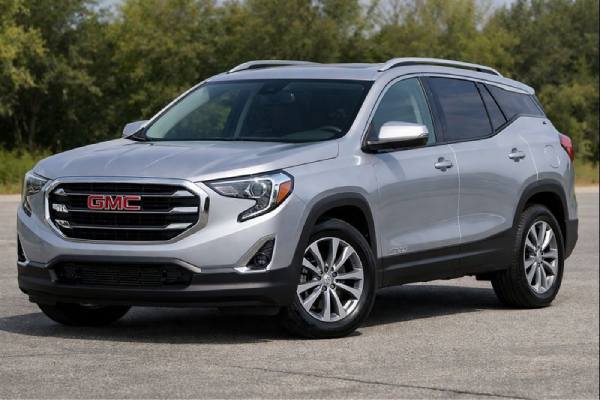
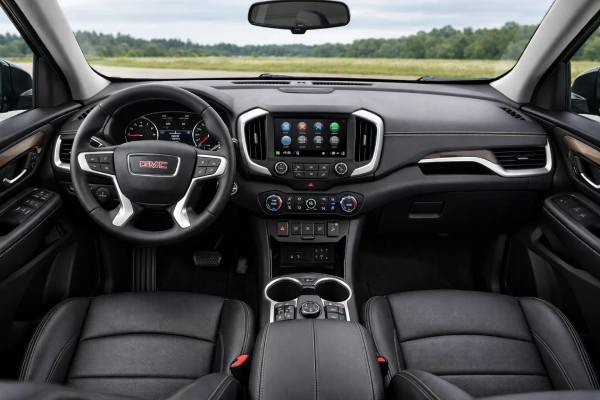
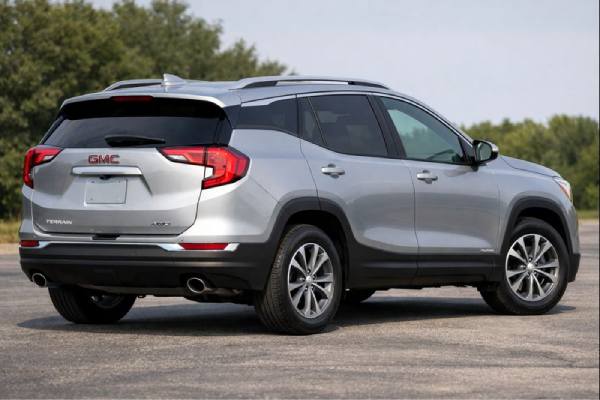
The 2018–2019 GMC Terrain AWD with the 1.6L LH7 turbodiesel is a niche but appealing setup: a compact SUV body with long-legged highway efficiency and a torque-heavy engine that suits steady cruising. The AWD system adds year-round traction and confidence on wet roads or light snow, but it also adds mechanical complexity and a small fuel-economy penalty versus FWD. In ownership terms, this Terrain rewards drivers who do regular longer trips (which help the diesel emissions system stay healthy) and who follow fluid service intervals more closely than the “oil changes only” mindset that some crossovers get away with. If you shop carefully—prioritizing service history, emissions-system health, and correct fluids—this configuration can be a comfortable, economical commuter with strong mid-range pull and a calm highway character.
Quick Specs and Notes
- Strong highway efficiency for an AWD compact SUV, especially at steady speeds.
- Diesel torque makes merging and climbing grades feel easier than the power number suggests.
- AWD improves wet and winter traction but adds extra fluid services and wear items.
- Short-trip use raises the risk of diesel aftertreatment issues (DPF and DEF-related faults).
- Plan engine oil and filter changes about every 10,000–12,000 km (or 12 months), sooner for heavy city use.
Navigate this guide
- Terrain AWD diesel profile
- LH7 diesel AWD specifications
- Equipment and safety setup
- Failure patterns and fixes
- Ownership upkeep and inspection list
- Road feel and consumption
- Rivals and value position
Terrain AWD diesel profile
This D2XX-generation Terrain is the more “car-like” evolution of the model: lighter on its feet than older truck-based SUVs, quieter at highway speed than many economy crossovers, and laid out for daily comfort. In diesel AWD form, it becomes a very specific tool—best for drivers who rack up motorway kilometers, commute long distances, or simply prefer the way a turbodiesel delivers effort without needing high rpm.
What the LH7 diesel changes day-to-day
- Torque-first behavior: Even with a modest horsepower figure, the diesel’s low-rpm shove makes the Terrain feel relaxed in typical driving. You’ll often use less throttle to keep pace, and the transmission doesn’t need to downshift as aggressively on mild hills.
- Highway calm: The diesel’s efficiency sweet spot usually lines up with steady cruising. Expect the best results on longer runs where the engine stays warm and load is consistent.
- Diesel emissions hardware becomes “part of the car”: Modern diesels rely on aftertreatment systems—primarily a diesel particulate filter (DPF) and selective catalytic reduction (SCR) using diesel exhaust fluid (DEF). That hardware is reliable when used properly, but it dislikes frequent cold starts and short trips.
Why AWD matters on this model
The Terrain’s AWD is aimed at traction and stability, not rock crawling. Think of it as a system that helps you get moving and stay composed when grip is limited—rainy highways, slushy hills, gravel driveways—rather than a system designed for deep mud or serious off-road abuse. Compared with FWD, you gain:
- Better low-speed traction in poor conditions (especially with proper tires).
- More stable acceleration on wet pavement.
- A small trade-off in fuel economy and added drivetrain service points (rear drive unit, coupling, additional seals).
Who should seek this configuration
- Drivers doing regular 20–30+ minute trips where the engine reaches full temperature.
- Owners who value fuel economy at speed and a relaxed powerband.
- Buyers willing to follow a maintenance plan that includes AWD-related fluids and attention to diesel-specific warning signs.
Who should skip it
- Mostly short-trip, stop-start city use (higher DPF and EGR stress).
- Owners without access to reputable diesel-aware service support.
- Buyers looking for strong towing or sporty performance—this is more “efficient cruiser” than “muscle SUV.”
The big upside is simple: for the right driving pattern, this Terrain can deliver a comfortable cabin and excellent highway economy without the “high-rev” feel of a small gasoline turbo.
LH7 diesel AWD specifications
Below are practical, owner-focused specs for the 2018–2019 GMC Terrain AWD with the 1.6L LH7 turbodiesel. Some technical fields can vary by market calibration and production change; always verify by VIN in official service information.
Engine and performance
| Item | Specification |
|---|---|
| Code | LH7 |
| Engine layout and cylinders | Inline-4 (I-4), DOHC, 4 cylinders, 4 valves/cyl (16V) |
| Displacement | 1.6 L (≈ 1,598 cc) |
| Induction | Turbocharged |
| Fuel system | Common-rail direct injection (diesel) |
| Max power | 137 hp (≈ 102 kW) @ rpm (varies by calibration) |
| Max torque | Typically about 320–325 Nm (≈ 236–240 lb-ft) @ low rpm (varies by calibration) |
| Emissions and efficiency standard | Market-dependent (U.S. EPA in the U.S.) |
| Rated efficiency (AWD, EPA) | 7.4 L/100 km (32 mpg US) combined; 8.4 L/100 km (28 mpg US) city; 6.2 L/100 km (38 mpg US) highway |
Transmission and driveline
| Item | Specification |
|---|---|
| Transmission | 6-speed automatic (application-specific; verify by VIN) |
| Drive type | AWD |
| Differential | Open (traction managed by brake-based stability/traction control) |
Chassis and dimensions (typical D2XX Terrain range)
| Item | Specification |
|---|---|
| Suspension (front/rear) | Front strut; rear independent (multi-link style) |
| Steering | Electric power steering |
| Brakes | 4-wheel disc (trim-dependent rotor sizes) |
| Common wheels/tires | 17–19 in wheels (package-dependent) |
| Length | ≈ 4,630–4,660 mm (≈ 182–183 in), market/bumper-dependent |
| Width | ≈ 1,840 mm (≈ 72.5 in) |
| Height | ≈ 1,660–1,680 mm (≈ 65–66 in), roof rail dependent |
| Wheelbase | ≈ 2,725 mm (≈ 107.3 in) |
| Turning circle | ≈ 11.3–11.7 m (≈ 37–38 ft), tire/trim dependent |
| Fuel tank | Typically mid-50 L range (market dependent) |
| Cargo volume | Approx. ~30 cu ft seats up and ~63 cu ft seats down (method dependent) |
Performance and capability (realistic expectations)
| Item | Typical value |
|---|---|
| 0–100 km/h (0–62 mph) | ~10–12 s (tire/load/conditions dependent) |
| Highway passing feel | Stronger than hp suggests due to torque; best in midrange |
| Towing | Often limited vs larger engines; verify rating by VIN and hitch package |
Fluids and service capacities (verify by VIN)
Because diesel and AWD variants can differ by production change and market, treat these as decision-support values and confirm for your exact vehicle:
- Engine oil: GM-approved low-ash diesel oil (commonly dexos-class approvals); typical capacity around ~5 L with filter.
- Coolant: Long-life OAT coolant (often Dex-Cool type), usually 50/50 mix.
- ATF: GM automatic transmission fluid spec (often Dexron family); drain-and-fill is much less than total capacity.
- Rear drive unit / AWD module: Separate fluid service item; small capacity, easy to neglect.
Safety and driver assistance (high-level)
| Item | Notes |
|---|---|
| Crash ratings | Vary by year and test body; see IIHS and NHTSA results for your configuration |
| ADAS | AEB and other features often depend on trim and option packages |
If you only take one thing from the spec sheet: this AWD diesel is an efficiency-and-torque package, not a high-performance one—so buy it for economy, comfort, and steady traction rather than raw acceleration.
Equipment and safety setup
For 2018–2019, Terrain trims commonly follow a familiar GMC ladder—base-oriented versions up through premium interiors and appearance packages. Diesel availability can be narrower than gasoline engines depending on market and year, so your real-world search should focus less on the badge and more on the option content and service history.
Trims and option packaging (what changes ownership)
Common trims you’ll see
- SLE: Often the “value” core of the lineup—good place to find diesel availability in some markets. Look for comfort packages that add heated seats and upgraded driver aids.
- SLT: Adds interior upgrades (often leather, power seat features) and may be more likely to include advanced safety options.
- Denali: More luxury and appearance content, but the diesel drivetrain may be less common here depending on market availability.
Options that matter more than cosmetics
- Driver-assistance packages: These can add automatic emergency braking (AEB), lane support features, blind-spot monitoring, and rear cross-traffic alert. For many buyers, these packages are worth more than wheel upgrades.
- Headlight package: Some trims use different headlamp designs that can significantly affect nighttime visibility—and insurance test ratings often reflect that.
- Cold-weather content: Heated steering wheel, heated rear seats, and mirror defrost features can change winter comfort more than you’d expect.
Quick identifiers when shopping used
- Diesel confirmation: Check the emissions filler setup (DEF fill location varies by market), underhood emissions label, and VIN/service listing. Don’t rely only on seller text.
- AWD confirmation: Verify the AWD system status in the vehicle menus and check for rear driveline components underneath (and that they are not wet with fluid).
- Package clues: Cameras, radar/sensor modules, and steering-wheel buttons can hint at ADAS equipment. A flat “base” steering wheel button set often means fewer driver aids.
Safety ratings and what they mean in practice
Safety scores are only meaningful if you align them with the exact vehicle configuration (trim, headlights, and optional crash-prevention tech). In this generation, the Terrain’s safety story is often split into two practical parts:
- Structure and crashworthiness: The underlying body structure tends to perform well in the major crash modes tested by rating agencies.
- Crash avoidance and lighting: Results depend heavily on whether the vehicle has the optional front crash prevention system and which headlights are fitted.
Safety systems and ADAS considerations
Expect core systems such as:
- Multiple airbags (front, side, and curtain coverage depending on market).
- Stability control and traction control (important on AWD because it manages wheel slip and can reduce stress on driveline parts).
- Tire pressure monitoring.
If your Terrain has AEB and lane support features, plan on two ownership realities:
- Windshield and bumper repairs can become calibration jobs. After a glass replacement or front-end collision repair, cameras and radar may require calibration to keep ADAS working correctly.
- Battery health matters. Weak 12V batteries can create false sensor faults and odd warning cascades—especially as the vehicle ages.
A well-optioned diesel Terrain can be a very safe, comfortable daily driver—just make sure you’re evaluating the exact equipment fitted, not the “typical” trim brochure.
Failure patterns and fixes
A modern diesel compact SUV can be very reliable, but it has more systems that must all stay healthy: turbocharging, high-pressure injection, and emissions aftertreatment. Below is a practical “map” of issues owners and technicians tend to watch for on a diesel AWD crossover like this Terrain. Think of it as symptoms first, then likely causes, then what usually fixes it.
Common (higher likelihood) issues
1) DPF loading and regeneration complaints (medium cost if ignored)
- Symptoms: Frequent fan running after shutdown, reduced power, “service emissions” messages, rising fuel consumption, or repeated regen cycles.
- Likely causes: Short trips, lots of idling, soot accumulation, or a sensor (pressure/temperature) giving poor data.
- Best remedy: Confirm sensors and software updates; adjust driving pattern (longer steady runs); address exhaust leaks; service-related regen where appropriate.
2) DEF/SCR-related warnings (medium cost)
- Symptoms: DEF range countdowns, emissions warnings, derate messages, NOx sensor codes.
- Likely causes: Crystallized DEF from poor-quality fluid, heater issues in cold climates, NOx sensor faults, or wiring/connector corrosion.
- Best remedy: Use fresh DEF from sealed containers, inspect heaters and wiring, replace faulty sensors, and confirm the latest calibrations.
3) EGR and intake contamination (medium cost)
- Symptoms: Rough idle, hesitation, soot-related codes, increased smoke, or reduced efficiency.
- Likely causes: EGR deposits and soot/oil mist buildup—more likely with short trips.
- Best remedy: Correct root cause (stuck EGR, sensor faults), clean/replace affected components when needed, and keep up with oil changes to reduce contamination.
Occasional issues (seen, but not universal)
Turbo control faults
- Symptoms: Underboost/overboost codes, limp mode, inconsistent power.
- Likely causes: Actuator issues, boost leaks, sticky vanes (use-pattern related), or sensor faults.
- Remedy: Smoke-test for leaks, verify actuator operation, replace failed components rather than guessing.
High-pressure fuel system sensitivity
- Symptoms: Hard starting, rail pressure codes, injector balance issues.
- Likely causes: Fuel contamination, water in fuel, poor filter maintenance (where applicable).
- Remedy: Use quality fuel, keep water separation practices (if equipped), and address filter intervals. On any diesel, contamination prevention is cheaper than repair.
Rare but high-impact concerns
Aftertreatment component replacement
- Symptoms: Persistent emissions faults that don’t clear with sensor replacement or software, repeated derates.
- Likely causes: DPF ash loading beyond limits, SCR catalyst deterioration, repeated improper regens.
- Remedy: Correct diagnosis is critical; replacement is expensive, so insist on proper test results.
AWD-specific wear points (usually medium cost)
- Rear drive unit or coupling leaks: Look for wetness at seals and around the rear unit.
- Vibration under load: Can indicate driveline issues, uneven tires, or mounts—don’t assume it’s “just diesel vibration.”
- Neglected fluids: AWD systems often fail earlier when owners skip rear unit fluid services.
Software, calibrations, and “official fixes”
On late-model vehicles, some drivability and warning-light issues are solved through updated control software rather than parts:
- ECU updates can adjust regen strategy, reduce nuisance warnings, or refine torque management.
- Transmission control updates can improve shift logic.
- ADAS updates (less common) may address sensor behavior.
When shopping used, ask for service records that show whether the car received dealer-level diagnostics and updates when faults appeared. A diesel that was repeatedly driven with emissions warnings “because it still runs” is a higher-risk buy than one that got prompt, documented fixes.
Ownership upkeep and inspection list
If you want this Terrain to stay economical instead of becoming a warning-light machine, treat maintenance as a system—not a checklist. Diesel aftertreatment health, AWD fluid condition, and strong electrical basics (battery and grounds) matter just as much as oil changes.
Practical maintenance schedule (distance or time)
Use this as an owner-friendly baseline and tighten intervals for heavy city use, frequent idling, or harsh winter operation:
- Engine oil and filter: every 10,000–12,000 km or 12 months (sooner if mostly city).
- Fuel system care: use quality diesel; if your market specifies a fuel filter interval, follow it strictly.
- Engine air filter: inspect every 15,000–20,000 km, replace as needed (dusty climates shorten life).
- Cabin air filter: every 15,000–20,000 km or annually if allergies/dust are common.
- Brake fluid: every 2 years (moisture control matters for ABS/ESC performance).
- Coolant: follow the long-life interval in official documentation; inspect level and condition at every service.
- Transmission service: a drain-and-fill interval around 60,000–80,000 km is a sensible ownership strategy for longevity (earlier if driven hard).
- AWD rear unit fluid: inspect and service roughly every 50,000–80,000 km depending on use; earlier for frequent bad-weather driving.
- 12V battery testing: test annually after year 4; replace proactively if it tests weak (diesels and ADAS are less tolerant of low voltage).
- Tires: rotate every 8,000–10,000 km, maintain matching tread depths front-to-rear to reduce AWD stress.
Fluids, specs, and “decision-level” details
- Oil quality matters more than brand. Use the correct low-ash diesel-approved oil for emissions-system compatibility, and don’t stretch intervals if the car does short trips.
- DEF quality matters. Buy sealed, fresh DEF and avoid containers that have been open or stored in heat.
- AWD fluids are easy to forget. Add them to your maintenance log the day you buy the car.
Buyer’s guide: what to check before you commit
Service history requests
- Proof of regular oil changes (with correct oil type).
- Any emissions-system repairs, sensor replacements, or software updates.
- AWD rear unit and transmission service records (even one documented service is a good sign).
Inspection checklist (quick but meaningful)
- Cold start behavior: should be clean and stable after initial idle; excessive shaking, smoke, or roughness deserves scanning for codes.
- Warning-light status: insist on a scan for stored and pending codes—not just “no light right now.”
- DPF and SCR health: ask for diagnostic data if possible (soot load, regen history, NOx readings).
- Leaks underneath: check rear drive unit, transmission area, and turbo plumbing connections.
- Tire match: all four tires should be the same size and similar wear; big tread differences can stress AWD systems.
- Electrical health: look for slow cranking, dim lighting, or random warnings—often a battery/charging issue.
Durability outlook (realistic)
This configuration can be a durable long-haul commuter if it’s used as a long-haul commuter. The biggest ownership swing factor is trip length: regular longer drives keep the diesel emissions system happier, while short-trip use pushes it toward expensive faults. Buy the cleanest history you can find, then maintain it like a diesel—because it is one.
Road feel and consumption
The diesel AWD Terrain doesn’t try to feel sporty; it tries to feel composed. Most owners notice this in three places: how it moves off the line, how it behaves at motorway speed, and how it stays settled on poor surfaces.
Ride, handling, and NVH (noise and vibration)
- Ride quality: Generally comfortable, with a suspension tune that favors isolation over sharp turn-in. Bigger wheels can make potholes more noticeable.
- Steering feel: Light to medium effort, typical of electric power steering. It’s easy in parking lots, but feedback is limited compared with enthusiast-oriented SUVs.
- Cabin noise: At steady speed, the Terrain is often quieter than older compact SUVs. The diesel adds a different sound signature—more low-frequency engine note—especially under load, but it usually settles once cruising.
Powertrain character in real use
- Throttle response: Stronger midrange than a similar-power gasoline engine, but not “snappy” off idle like a performance turbo.
- Passing and hills: This is where the diesel makes sense. It tends to pull grades with fewer downshifts and less drama.
- Transmission behavior: Expect smooth, efficiency-oriented shifting. If you feel hunting or flare, it’s worth checking for software updates and fluid condition rather than ignoring it.
Real-world fuel economy (what to expect)
Official EPA figures for the AWD diesel configuration commonly land around:
- City: 28 mpg US (≈ 8.4 L/100 km)
- Highway: 38 mpg US (≈ 6.2 L/100 km)
- Combined: 32 mpg US (≈ 7.4 L/100 km)
In the real world, your results will swing with speed, temperature, and trip length:
- Steady 100–120 km/h cruising: often the best case for this engine; many drivers see results close to the highway rating when conditions are mild.
- Cold weather: expect a noticeable drop, especially on short trips where warm-up time dominates. Diesel emissions systems also need heat to operate efficiently.
- Urban stop-start: economy can fall quickly, and frequent short trips increase the chance of DPF regen interruptions.
AWD traction and control
AWD helps most in two scenarios:
- Starting traction: pulling away on wet pavement, slush, or gravel.
- Stability under power: smoother acceleration when grip is uneven side-to-side.
Two key ownership tips improve AWD performance and longevity:
- Buy the best tires you can. A good all-season or winter tire does more for traction than AWD alone.
- Keep tire tread depths close. Big differences can force the AWD system to work harder than intended.
Towing and load (keep expectations modest)
Even if towing is allowed for your specific VIN and hitch package, the diesel Terrain is typically better thought of as a light towing vehicle. If towing matters, confirm:
- Your exact rating for braked towing.
- Cooling system condition and service history.
- Transmission service schedule.
In short: this Terrain is at its best when it’s doing what diesels do well—steady travel, efficient cruising, and confident traction in mixed weather.
Rivals and value position
The diesel AWD Terrain competes in a crowded compact SUV space, but it plays a different game than most gasoline rivals. Your decision usually comes down to whether you value diesel efficiency and torque enough to accept diesel complexity and parts cost.
Closest “like-for-like” alternatives
Chevrolet Equinox 1.6 diesel AWD
- Mechanically similar in many respects (same corporate platform family).
- Often the best direct comparison for parts and service expectations.
- Choose based on equipment, condition, and price rather than badge.
Volkswagen Tiguan (gasoline)
- Strong cabin packaging and a refined feel, but typically won’t match diesel highway economy.
- Service network and parts costs vary widely by region.
Mainstream gasoline rivals (different strengths)
Toyota RAV4 / Honda CR-V
- Strong reliability reputations and simpler emissions hardware (gasoline).
- Often cheaper to maintain long-term if your driving is mostly short trips.
- Typically less “torquey” at low rpm than a diesel, but plenty quick enough.
Mazda CX-5
- More engaging steering and handling than the Terrain.
- Economy can be good for gasoline, but the diesel-like “effortless pull” is not the focus.
Ford Escape (era-dependent)
- Often competitive on tech and value, but long-term durability depends heavily on engine choice and maintenance.
Where the diesel Terrain wins
- Highway economy with AWD: This is the headline advantage, especially for high-mileage drivers.
- Relaxed torque delivery: Great for rolling terrain and steady-speed travel.
- Comfort-first tuning: A pleasant long-distance companion.
Where it loses
- Complexity for low-mileage drivers: If you do mostly short trips, a gasoline rival often makes more sense.
- Emissions-system costs: When diesel aftertreatment parts fail, repairs can be expensive.
- Limited buyer pool: Resale can be a double-edged sword—sometimes cheaper to buy used, but also harder to sell.
The smart value play
This vehicle is a strong buy when:
- It comes with documented maintenance and a clean diagnostic history.
- Your driving pattern includes regular longer trips.
- You can find an example with the safety tech and headlights you want.
If your routine is mostly city errands and short commutes, the “best rival” is usually not another compact SUV—it’s simply a gasoline version with fewer diesel-specific failure modes. Match the vehicle to your usage, and this Terrain can be an excellent tool.
References
- 2019 GMC Terrain AWD 4 cyl, 1.6 L, Automatic 6-spd, Diesel 2019 (Official Fuel Economy Data)
- 2018 GMC Terrain AWD 4 cyl, 1.6 L, Automatic 6-spd, Diesel 2018 (Official Fuel Economy Data)
- 2019 GMC Terrain 4-door SUV 2019 (Safety Rating)
Disclaimer
This article is for informational purposes only and is not a substitute for professional diagnosis, inspection, or repair. Specifications, torque values, fluid capacities, service intervals, and procedures can vary by VIN, market, production date, and equipment. Always verify details using official owner literature and service information for your exact vehicle.
If this guide helped, please consider sharing it on Facebook, X/Twitter, or your favorite forum to support our work.